Libeled Lady (1936)

Poster_-_Libeled_Lady_01Libeled Lady has screwball comedy written all over it and that’s perfectly alright with such a glorious cast. Myrna Loy and William Powell reunite once again (for one of their 13 pairings), but we also get Jean Harlow and Spencer Tracy. Amazing!

The set-up is easy and pretty self-explanatory. Warren Haggerty (Tracy) is the managing editor of the New York Evening Star, but while he is reluctantly getting ready to walk down the aisle, he gets the horrific news that the paper sent out a misinformed scoop by mistake. Now Haggerty is faced with a $5,000,000 libel suit from wealthy socialite Connie Allenbury (Loy), and it brings his weddings proceedings to a halt, much to the chagrin of his peeved fiancee (Harlow). This isn’t the first time that their big day has been postponed after all.

Stuck between a rock and a hard place, he goes to one of his former reporters, Bill Chandler (Powell), who really rubs Haggerty the wrong way, but he also happens to be a whiz when it comes to libel. He’s the only man who can get the paper out of the major jam so he leverages his position. Things go down like this. Chandler will ingratiate himself to Ms. Allenby and soon afterward Gladys Benton (Harlow) posing as his wife, will rush in on them. Presto! The suit will be dropped. Simple, right?

It’s the consequences that get even dicier. At first, Gladys absolutely despises being cooped up in a hotel with Chandler and she’s still fed up with Warren. But over time, the close quarters cause Chandler to grow on her. Meanwhile, Chandler tries to learn everything he can about angling, to charm Allenby’s father (Walter Connolly), who is a fishing aficionado.

From the start, his daughter has Chandler pinned as a fake (which of course he is), but by some act of heaven his act actually works and he wins them both over. Worse, Connie is falling for him and he’s reciprocating, but Haggerty is still waiting for the plan to be executed. Gladys is waiting impatiently for her “husband” who she seems to genuinely miss. It’s all a big mess to be sure.

The finale involves the four leads together for one final climactic barrage of pandemonium and spouse swapping. As you would expect everyone ends up with the right partner, but it was sheer craziness to get there. It had been a while since I had seen a screwball, and Libeled Lady is a striking reminder why the genre is so fun. It had me laughing pretty hard whether it was the utter absurdity of the fishing sequence or any of the other madcap moments. It boasts quite the cast too. It’s crazy to think that in only a year Jean Harlow would be gone, a short but vibrant career behind her.

4/5 Stars

People Will Talk (1951)

peoplewill1People Will Talk is in this weird gray area between genres. It has humor but it’s not screwy enough to be a screwball. It has drama, but it’s not intense enough to be a full-fledged melodrama. And underlining all this are issues that reflect such areas as the medical industry, the Korean War, and most definitely the witch hunts that were going on in the nation — bleeding into the Hollywood industry.

Written and directed by Joseph L. Mankiewicz, this is a minor classic about a doctor named Noah Praetorius (Cary Grant), who is under investigation from one of his by-the-book colleagues Dr. Elwell (Hume Cronyn), who dislikes the good doctor’s unorthodox and thoroughly effective approach to his trade. Praetorius by now is a preeminent physician who started his own clinic and also teaches classes at a local med school.

One of these individuals happens to be Mrs. Deborah Higgins (Jeanne Crain). She is not a student but sits in the lecture because her former partner was a medic. A date with a cadaver proves to be too much for her and she faints. Seems normal enough right? Wrong. After examining her, the Dr. tells her she’s pregnant. The truth comes out that she’s not really married and the father is dead. Her own father would be greatly distressed to learn about her condition, since he cannot provide for her.

That’s where Dr. Praetorious comes into the picture, and he takes great concern in Ms. Higgins condition. He attempts to allay her anxiety by saying she’s not really pregnant, and she runs away from his clinic out of embarrassment, since she is falling in love with him. He goes with his stoic friend Mr. Shunderson to the farm owned by Deborah’s uncle.

Deborah turns out to have a strange mix of aloofness and lovesickness, but when she realizes the Doctor’s true motive for being there (before he even does) she is wholly relieved. They share a passionate kiss and leave the farm behind to get married. Of course, the Doctor still hasn’t told her about the pregnancy.

Meanwhile, the whole storyline culminates with a concert conducted by Praetorious himself, but it just so happens that the hearing to analyze his conduct is happening simultaneously. Some mysterious truths about Mr. Shunderson are given in his own words, and stale Mr. Elwell’s case is dumped. Everything wraps up nicely as you expect with a happy marriage and Grant free to direct the symphony in one last glorious crescendo.

So you see if you really look at this film, there are these two main story arcs. One is a response to McCarthy’s witch hunts, the other an equally subversive love story about a doctor marrying a woman who had a pregnancy out of wedlock. When you put it that way this film seems chock full of controversy, and yet it is all veiled in a palatable comedy-romance. Walter Slezak is a welcomed addition to the cast as the nutty colleague and Hume Cronyn has taken on better roles, but nonetheless, he is always an enjoyable character actor. Obviously, this is a lesser Grant performance, but his pairing with Jeanne Crain is still a fun one.

4/5 Stars

My Favorite Wife (1940)

My_Favorite_Wife_posterThis is a film that I arrived at by a rather roundabout route indeed. Let me explain. I genuinely loved Cary Grant and Irene Dunne’s chemistry in The Awful Truth, but I wanted to watch My Favorite Wife before moving onto their final film together Penny Serenade. Time passed and I found two other films.

First, Something’s Got to Give which was Marilyn Monroe‘s final project that remained unfinished after her death. Only about 30 minutes were completed and it was scrapped, only to be reincarnated a year later as a Doris Day vehicle co-starring James Garner. Being a fan of Day and especially of the late-great Garner, I had to indulge in this romantic comedy Move Over, Darling.

All that is to say that the Monroe film and ultimately the Doris Day film were both based on this same basic plot. A man just recently gets married only to learn that his wife who has been missing for seven years is alive. He must figure out how to break it to his new wife, only to learn that she was shipwrecked on a tropical island with a strapping young man.

After three renditions it certainly feels over-trod, but the beauty of each adaptation is that they only have this basic framework intact. A lot of the really juicy bits are filled out by the cast. Of course, your stars change. Because James Garner is no Dean Martin is no Cary Grant. And the same goes for Monroe, Day, and Dunne. However, the same goes for the crotchety judge, the desk clerk at the hotel, the bookish shoe salesman who takes part in a deception, or even the friendly neighborhood insurance salesman.

It becomes a fun game of compare and contrast, but these different performances also free you up to watch these films on their own merit and enjoy that three times over. I have found myself to often be a proponent of characters over plot and this is another case of that.

Grant and Dunne are a lot of fun together once more even if I have seen these predicaments before because Day and Garner are great to watch, but for different reasons. And of course, all the locales and fashion trends changed a lot in two decades.

Also, I will not pass judgment on who my favorite wife was out of the three and, truth be told, I saw them out of order — I would usually pick the original. In this rendition, the judge played by Granville Bates was a real scene stealer so I was sorry to discover he passed away the same year and had very few other roles.

My only question is, would this film have been propelled to greater status if Leo McCarey had been able to direct it? Also, I am now excited I finally feel clear to watch Penny Serenade and I might just have to go back and revisit The Awful Truth because it has been a while.

3.5/5 Stars

Review: The Apartment (1960)

The_apartment_trailer_1What has always stood out to me about Billy Wilder’s films and the writing behind them is that you can almost always observe cynicism paired with wit. They are continually sharp, often funny, but they also are underlined by more serious topics altogether. This quality is what allowed him to make films as diverse as Double Indemnity and Some Like it Hot. There’s a subversion of the norm that sometimes is dark, sometimes is funny. His second pairing with Jack Lemmon in The Apartment seems to fall somewhere in between.

The legend is that this story formed in Wilder’s mind after watching a Brief Encounter, about a tryst between an English man and woman. What interested him was a very small detail indeed. What type of person would allow his place to be the location of such a rendezvous? And in such a question came the inception of C.C. Baxter a man who was unwittingly funny, but also pitiful as played by Lemmon.

He’s a man trapped in the bureaucracy, attempting to climb the corporate ladder of a  company. He’s fighting in this game of survival of the fittest and trying to get ahead the only way he knows how. Lending his flat out to higher-ranking executives who are looking for a place to take their dates and have a good time. Baxter is somewhat of a hapless stooge though. He’s far from shrewd and his high ranking pals like him for it. He follows their requests. Does what they want. He’s a perfect cog in their plan. He’s one of them. Even Baxter’s neighbor Dr. Dreyfuss and his landlady get the impression that he’s a real high flyer since there’s always music emanating from his suite and bottles piling up outside his door. But he lives the charade and spends many a frosty evening waiting for his customers to clear out. It’s certainly a sorry existence, but he doesn’t mind at first since it pays off handsomely as he moves up the ranks.

One of the more personable employees in this mass of humanity is elevator gal Fran Kubelik (Shirley MacClaine), who is always friendly with Mr. Baxter since he is a true gentleman. However, she is also caught in an affair with top exec Mr. Sheldrake (Fred MacMurray) and she is actually in love. It’s a messy situation made even more complicated when Sheldrake asks Baxter for the use of his flat. He enthusiastically agrees, but he has no idea who else will be there. That’s one of those painful moments of dramatic irony where our opportunistic nonetheless lovable protagonist gets hurt. Lemmon is good at playing the drama movingly and filling his scenes with organic humor (much like the late Robin Williams).

At this point, C.C. Baxter becomes the general scapegoat for his colleagues and even his neighbors. Everyone gives him a hard time for things he has not done or does not really deserve. Sheldrake leaves his wife and looks to solidify things with Fran, and this moment is paramount because Baxter finally mans up. He may have lost his job, but he got to finish the best game of gin rummy of his life.

I must admit the themes of The Apartment are not always my favorite. I am much more partial to Some Like it Hot or even The Odd Couple, but Lemmon makes the film for me. Whether he’s straining spaghetti through a tennis racket or trying on his new suave business bowler for size, it’s hard not to like him. Ray Walston, Fred MacMurray, and about every other character is a cad. Shirley Maclaine is pretty good, but then again she’s never been the most captivating for me actress-wise.

When it’s all said in done, this is not Wilder at his absolute best, but teaming up with IAL Diamond elicited another classic vehicle with Jack Lemmon. Now shut up and deal!

4/5 Stars

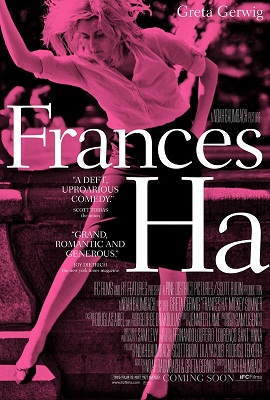
Frances Ha (2012)

Frances_Ha_poster“You look older but a lot less grown up…” 

People as diverse as Buddy the Elf, Holly Golightly, and Annie Hall call New York their stomping ground and along with these iconic figures comes Frances Halladay. Her bubble does extend to France and California, but New York is really her home base. In Noah Baumbach’s film, we follow this enigma as her address constantly changes, and she strives to follow her dream of becoming a professional dancer. We are allowed time to examine and analyze her in all sorts of situations because plot usually gives way to various asides showcasing the free spirit who is Frances.

She worries about money, can’t pay rent, wants to play fight with her best friend, and is a self-proclaimed “undateable.” She acts like a five-year-old one moment and yet has an almost unknowing beauty about her.  In other words, she’s a real winner. We cannot help but fall in love with her since she wins us over with all her oddities from beginning to end. Her friend Sophie cannot stay mad at her forever either. It’s just not possible. They have to make up.

Frances settles down one final time, after trying her hand rather successfully at choreography and moving back to Washington Heights. There we get one last little nugget. We finally can chuckle knowingly about the title of this film. It’s so Frances and it’s the perfect cherry on top of the sundae.

In the tradition of New York films, Baumbach’s effort has a visual style that was meant to hearken back to the austere black & white of Woody Allen’s Manhattan (1979). In some sense, it acts as another character altogether. Whether he is pandering to us or not, there is no doubt that I am a sucker for the cinematography and it made things just a little bit more magical.

Thankfully Greta Gerwig helped craft this script and in her character, she found the perfect paradox. An individual so extremely quirky, but still somehow believable in the same instance. Her foibles and pratfalls only help to solidify her character in our mind. The fact is that each of us probably knows some variation of Frances. Those individuals who dance to a different drum and give every single day that they live on this earth a certain degree of pizzazz. I speak for all the cautious, rationally minded human beings out there. We need the Frances Has to make us laugh and to shake up our normality at least a little bit.

4/5 Stars

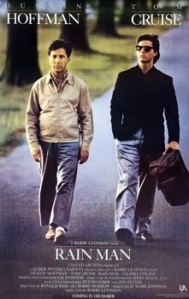
Rain Man (1988)

Barry LevRain_Man_posterinson doesn’t have a masterpiece per se, but he has some thoroughly enjoyable films in his filmography including Diner and Good Morning Vietnam as two prime examples. Rain Man is similar in that it is an interesting film and a heartfelt film, but not, dare I say, a great film.
Tom Cruise plays his typical stuck-up jerk named Charlie Babbit who learns what really matters in life, over time. He starts off as hotshot car dealer in Los Angeles who is trying to swing a big deal while balancing a vacay in Palm Desert with his girlfriend. However, when he gets news that his estranged father has passed away, he must change course for Ohio.

It’s there that he rehashes his old bitterness towards his father, and it is there that he learns something life-changing. He has a brother. An older brother to be exact, named Raymond. Except he never heard about him, since Ray is living in Wallbrook, a mental institution for individuals with autism.

He lives on a regimented schedule that he adheres to without fail. He loves books, baseball, and Jeopardy! among other hobbies. Whenever he gets nervous he starts into a monotone monologue of “Who’s on First.” He seems completely at odds with the world of his younger brother, but the catch is that all their father’s wealth is essentially given over to Raymond.

So in the name of equality, Charlie takes his brother away and holds him at a kind of ransom so Ray’s doctor will hand over half of the family fortune. The doctor doesn’t budge, however, so Charlie is left to travel with his brother to California. Matters are complicated because Ray will not fly on planes, citing the many fatalities in the past. Thus, this story of two brothers turns into a road film where Charlie begins to learn how special Ray really is.

True, he constantly sticks to his regiment (ie. Lights out at 11 and such), but he also has amazing abilities including doing extraordinary calculations and having tremendous recall ability. At first Charlie’s girlfriend, Sussana is upset with how he treats Raymond and she leaves. That was unfortunate because she for a time was my favorite character. However, it does allow for Cruise and Hoffman to share more scenes together. They take Vegas by storm and Raymond is a success while Susanna finally rejoins them. Most importantly Charlie has a newfound respect for his brother and what he is able to do. Dr. Bruner wants to take Ray back to the institution, and despite his objections, Charlie can do little about it. He will have to find solace in the fact that he will be visiting his brother next Wednesday.

In Rain Man I found Tom Cruise to generally be a jerk because that was the part he was playing and he was made for that type of role. Dustin Hoffman, on his part, gave an extraordinary performance which managed to be emotionless and robotic at times. However, he seemed to capture the humanity and reality of an individual with autism so well. Just because they act differently than what we are used to does not mean they are not just as human and relatable. They have feelings and emotions too that matter. That being said, it is understandable why he would be hard to deal with sometimes. Valeria Golino was a fairly good addition because she brought some more energy and seemed to generally care about Raymond. Although Charlie did eventually come around, thanks to a few revelations about his “Rain Man.”

3.5/5 Stars

Stage Door (1937)

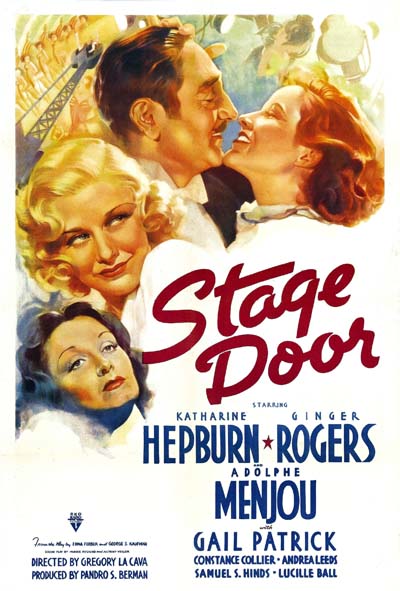
Stage_Door_(1937)Watching Stage Door illustrates one of the pleasures of film because it’s an unassuming classic that very easily could be overshadowed by other films. Its main stars are Ginger Rogers and Katharine Hepburn, who both have numerous films more well known than this one.

However, this story about a boarding house for aspiring stage actresses is a light piece of sassy fun while still finding moments for poignancy. Rogers is a cynical dancer named Jean, and she is not too pleased to be getting a new roommate. The last one moved elsewhere after constant fighting. But the new girl, Terry Randall (Hepburn), is different. She is from a well to do family, but she is pursuing a career in acting so that she might stretch herself.

The other girls look on with an air of contempt thanks to her fine clothes and pristine manners. She doesn’t fit the mold of many of the other struggling actresses looking for their big break. Many spend their evenings trying to grab hold of a sugar daddy such as famed theatrical producer Anthony Powell (Adolph Menjou). Several of the girls have their eyes on him as they try and land a role in his next big production.

Kay Hamilton is the most well-liked girl in the house and arguably one of the most gifted performers. She opened the year before in a production that won her rave reviews, however, a year later she has yet to get another break, and she is running out of funds. Powell’s show is her last big chance. Thus, when Powell cancels her audition last minute for a trivial reason, Kay faints and an irate Terry bursts into his office to confront him. He is initially turned off, but then he chooses her for the lead role of the upcoming Enchanted April.

Although the girls were beginning to warm to Terry, Jean has trouble forgiving her as tragedy strikes. In fact, Terry almost refuses to go on stage altogether, and yet she goes out and gives an emotional performance that is hailed by critics. In the end, Terry and Jean are reconciled which is far more important than any type of fanfare.

In many ways, Gregory La Cava’s Stage Door feels similar to The Women (1939). Both films have casts with women in the primary roles and the stories are at times volatile, with so much drama and many zinging comebacks. Some of this was courtesy of the supporting cast which included such legendary comediennes as Lucille Ball and Eve Arden. Ann Miller is even present, but at its core Stage Door is Ginger and Katharine’s film. Pardon my curiosity, but did Fred and Spencer ever do a film like this?

4/5 Stars

Dinner at Eight (1933)

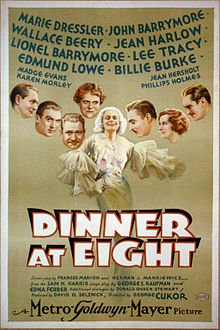
220px-Dinner_at_Eight_cph.3b52734Dinner at Eight is another all-star slug fest from MGM meant to capitalize and top the success of Grand Hotel from the previous year. This time around, well to do wife, Millicent Jordan is setting up a charming dinner party for a wealthy English couple Lord and Lady Ferncliffe who are traveling to New York. The hostess is frantically trying to figure out dinner guests for the big occasion because everything must be perfect. Observant viewers will notice that the high strung lady of the house is played by Billy Burke (more widely known as the Good Witch Glenda). Her husband Louis (Lionel Barrymore) is a kindly shipping magnate, who was hit hard by the depression, and his health is also failing as a result. Their daughter has problems of her own since she does not really love her fiancee and has fallen for the much older, and washed-up alcoholic actor Larry Renault (John Barrymore).

Next on the list of probable invitees is Carlotta Vance (Marie Dressler), the formerly prominent actress, who is now still in the twilight years of her career, but she still carries on a lavish lifestyle with furs and all. She is old friends with Louis, and she is always ready and willing to reminisce, fish for compliments, and offer a little sage advice on the side. She’s a character we like.

The most dynamic pair is most certainly Wallace Beery and Jean Harlow. They play the gruff, crooked businessman and his equally feisty wife, Dan and Kitty Packard. They’re hardly together because he’s working and she’s buying up clothes and caught up in an affair. When the two of them finally are together in the same room, they are constantly at each other’s throats. No punches or barbs are spared. And yet on the invitation to the Jordan’s they both pull their act together. He wants to meet the highly prestigious Ferncliffes, and she wants a chance to get dressed up. They’re quite the match.

With a title like Dinner at Eight, you expect the drama to take place around the table with the guests all seated together. However, that would be rather stuffy, I suppose, and instead, the dinner only acts as the culminating event to push the plot along. We actually never see the guests at the table, only the action leading up to it. Millicent is in a tizzy, especially when she hears the Ferncliffes have a change of plans. Her husband’s health is slowly deteriorating at the same rate as his company. The arrogant actor Larry Renault bickers with his agent about his next role. Honestly, this was the most unsatisfying of the threads, and it did ultimately end in tragedy. However, I’d be interested to know how close this parody actually came to John Barrymore’s actual life, because sometimes it’s hard to know how to parse the fiction from the reality when they seem to overlap.

Once all the guests are assembled it’s a rather ragtag group, but it is a fun mix of characters, and Millicent gets her cousin Hattie to attend along with her Garbo-loving husband who is unenthusiastic about the whole affair. It’s a satisfying overall result and an enjoyable enough ensemble that George Cukor directs with relative ease.

4/5 Stars

Miracle of Morgan’s Creek (1944)

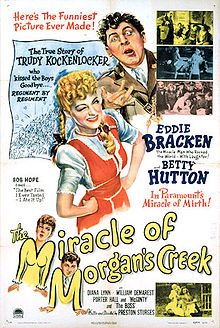
220px-The_Miracle_of_Morgans_Creek_1944_posterPreston Sturges was a revelation when I first saw Sullivan’s Travels and then The Lady Eve. His scripts are always wildly hilarious and full of memorable characters, whether they are headliners or just supporting the stars. The Miracle of Morgan’s Creek (1944) was a lesser known film to me, starring Eddie Bracken and Betty Hutton, but I was ready to see what this screwball could deliver.

With the start of the war, there began a push on the home front to strengthen morale by throwing parties and drinking victory lemonade in honor of the boys going overseas. Young Trudy is intent on dancing the night away with a lot of soldier boys. She just wants to do her part in the war effort after all. Her grumpy and domineering daddy Mr. Kocklenlocker (William Demarest) forbade her from taking part in such a shindig.

She sullenly goes to the movies with Norval Jones (Eddie Bracken), the young man who has been infatuated with her since they were kids. However, she somehow talks Norval into letting her go off to a party, and she spends the night living it up, while he waits dejectedly at the theater. When she finally returns its late morning of the next day and Norval knows her father will kill him.

However, Trudy also discovers a ring on her finger signifying that she married a soldier in her wild stupor the night before. The only problem is she cannot remember who it was, there were so many soldiers that she danced with after all. On top of that, add the prospect of a baby and you have a real doozy that has small-town scandal written all over it.

Norval tries his best to help remedy things for Trudy, only to wind up in jail with a big to-do building up — even making its way to the governor! Things don’t look good for poor Norval until Trudy gives birth and it’s a MIRACLE! When he finds out about what happens he has a little fainting spell.

That’s the craziness that is the Miracle of Morgan’s Creek, thanks to the rapid-fire dialogue and caricatures created by Preston Sturges. William Demarest is especially memorable as the hard apple Mr. Kocklenlocker who is always bossing his daughters around, but he’s not all bad. By now Morgan’s Creek looks dated, but all the same, it is still a memorable piece of WWII homefront cinema. Supposedly it was standing room only back in the day and honestly, it’s surprising that this film ever got past the censors. Bigamy, pregnancy, and so much more all comically mentioned in a 1940s film. Who would have thought?

4/5 Stars

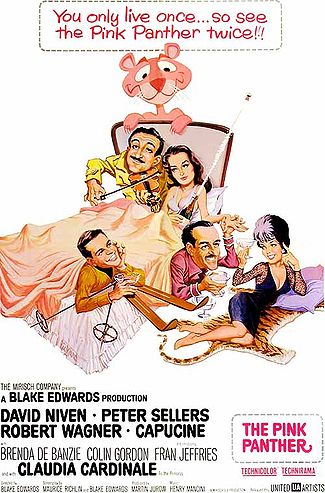
The Pink Panther (1963)

Pink_panther63I came into the Pink Panther with a bit of prior knowledge about the franchise and Henry Mancini’s legendary theme music. In all honesty, the first film I ever saw in the series was A Shot in the Dark (1964). Peter Sellers‘ Inspector Clouseau is the undisputed star of that film which came out only a year later.

That’s why this initial installment from Blake Edwards was rather surprising, to begin with. This is a David Niven vehicle with him playing a modern Don Juan of sorts who also is a world renown thief known as “The Phantom.” He and his female accomplice have their eye on the equally well-known diamond christened the Pink Panther. It now is in the possession of a beautiful young princess (Claudia Cardinale), but the people of the country believes the diamond belongs to them. Into this seemingly serious story of theft and international relations waltzes in the ever-bumbling but good-natured Inspector Clouseau.

Sir Charles Lytton (David Niven) has his eyes on Princess Dala, surveying her every movement. What he doesn’t know is that his young nephew (Robert Wagner) is up to some tricks of his own, and he flees the United States in search of his uncle. Clouseau leaves France with his lovely wife Simone (Capucine) and follows the princess to a ski resort to see if he can sniff out the culprit. They turn out to be a lot closer than he realized.

It’s during a chaotic masquerade ball when the diamond is in jeopardy, with several costumed apes having their eyes on it. The bumbling Clouseau clumsily tries to set a trap, and yet he unwittingly stumbles upon the culprits leading to a chaotic car chase. In fact, The Pink Panther has a rather odd ending with the culprits getting away and Inspector Clouseau getting the blame. Don’t be too worried, however, because Sellers brought the character back numerous other times.

Despite being initially relegated to a supporting role, there is no doubt that Sellers steals his scenes with his ad-libbing and numerous brilliant pieces of slapstick. He might be stepping on his Stradivarius in the dark or getting his hand jammed in a beer stein.  It’s all the funnier when everyone else is playing the scenes relatively straight. There were some other humorous sequences of deception as the culprits try and pull the wool over the Inspector’s eyes. It’s not all that difficult because he’s an utter buffoon. But lovable. Did I mention that?

3.5/5 Stars