Love and Death (1975)

3e061-loveanddeath2Most every Tom, Dick and Harry has heard of the great Russian epic War and Peace. Love and Death is Woody Allen’s companion piece. It has nods to Tolstoy, Dostoevysky and channels a bit of the Marx Brothers. As one would expect, Boris aka Woody Allen comes from your typical Russian family where he is atypical in his stereotypical, bookish and misanthropic way. He was not made for 19th century Russia trading in valor and facial hair for his glasses and nihilistic philosophy. But he winds up going to war anyway watching his beloved second cousin (Diane Keaton) marry herself off to a run of the mill fishmonger.

Eventually, Boris is able to get his true love back and they are wed. It’s a union full of philosophical debates as only Woody Allen could have. But the invasion of Napoleon puts all this on hold as Sonja resolves to go and assassinate the Little Corporal. Boris hesitantly agrees to accompany her. In an ending fit for a Woody Allen film  parodying Bergman, Sonja goes through a life altering conversation while the recently executed Boris skips off with The Grim Reaper. It’s hard to beat Annie Hall but this still fairly early Allen piece has its quintessentially Woody Allen moments that are quirky and fun poke at Russian culture.

3.5/5 Stars

White Christmas (1954)

58e88-white_chrismas_filmMany times I feel like a broken record (this time playing a Christmas tune), but White Christmas is one of those classics that I never get tired of. It is so ingrained, so integral to my childhood memories, that I have difficulty analyzing it or finding fault.

Wonderful, visceral films stop being something that must be thought about and simply become an all out experience. That’s what White Christmas is for me. A full blown Christmas experience courtesy of Bing Crosby, Danny Kaye, Rosemary Clooney Vera-Ellen, Dean Jagger, director Michael Curtiz and of course Irving Berlin.

I mean this as a compliment, but at a basic level, I always thought of White Christmas as a Christmas-like version of Singin’ in the Rain. We have a talented and dashing leading man in Crosby (Bing Crosby) and his mischievous and hilarious partner in crime (Danny Kaye). They are never better than during their parody of the sister’s act (It’s a priceless gem of a moment). Although, there is constant chemistry throughout the film thanks to the bickering and back and forth between two buddies.  Similarly to Singin’ in the Rain, you also have big spectacles, lavish sets, great songs, dancing, and constant quotability. It brings out the most reluctant of crooners and even the guys with two left feet. But what about the story?

White Christmas follows those two war buddies as they make it big as a boffo double act. Along the way, they help out a pair of sisters as well as their washed-up former commander General Waverly (Dean Jagger), who owns an inn in snow-less Vermont. Although, it’s lacking in business,  it’s the perfect locale for matchmaking, acts of kindness, and misunderstandings courtesy of local innkeeper and resident eavesdropper Emma (Mary Wickes). But what we end up receiving is a joyous romance with plenty of Christmas cheer and sentiment to go around.


Bing Crosby’s pipes are as good as ever (“Count Your Blessings”) and Danny Kaye can make his voice crack like no other. Vera-Ella has a talented pair of legs and Rosemary Clooney can carry a tune in her own right opposite Crosby. Whether it’s “Snow,” “Sisters,” or the eponymous track, there’s so much to offer. Weather any slow sections and you will be rewarded thanks to the even-handed direction of Michael Curtiz (Casablanca), paired with the ever memorable compositions of Irving Berlin. Now go spend the holidays with your kith and kin. Vermont must be nice this time of year, all that snow.

4/5 Stars

Boyhood (2014)

13113-boyhood1Surely others have said this already but Boyhood struck a chord with me and it was the prettiest of melodies.  Pure and simple in its brilliance.

This is not my childhood by any means or my life or my family, but there are glimpses of it here. Quick flashbulbs or touchstones that for a brief instant take me back. Sometimes many years ago or just one or two. Nostalgia is the strangest type of memory for a young person, because we are transcending the space between the here and now, which we are so used to, and going to the “back then.”

12 years is a long time but even more so when you have fewer years under your belt. Thus, Boyhood in comparison to my own life is an epic film in every sense of the word. Whereas it might only be a wonderful coming-of-age tale for older generations, there is a feeling that this film in some small way represents where I’m coming from.

A film could never fully encapsulate or perfectly represent what it is to grow up in adolescence. It’s different for every child depending on where they live, what their family is like, and so on. But Boyhood is an unprecedented depiction of what that existence looks like to many young people. There is certainly something special and important in that.

1cce5-boyhood2There are so many different vignettes, almost like short films, characterizing each and every year in Mason Jr.’s life. We are given no blatant indication of time and place. It is all context clues, cultural references, and watching Mason and his family grow and evolve around him. Always innovative Richard Linklater does not hold out a giant megaphone saying this happened that year or this year. Instead, Mason’s story plays out like it would in the so-called “real world.” There are some major milestones or life-shaping moments that are shown, but most of this journey has to do with the little caches of time that make up life.

I feel drawn to do something that I don’t normally do, but Boyhood is such a unique film it deserves to be approached in a different light since to put it truthfully, it cannot be pigeonholed into any standard category.

Instead of trying to acknowledge the entire narrative of Mason’s life, which would be as impossible with him as with anyone else, I want to give reference to the many moments and bits and pieces that Linklater placed either by accident on purpose. The fact is Boyhood is chock full of these markers of the passage of time which make it a fascinating journey of human life.

Here we go, get ready:

Coldplay’s Yellow over the credits
Britney Speares fandom
Star War dilemma: Yoda vs. Grievous
Game Boys and Wave Boards
The Astros’ Rocket Roger Clemens
Harry Potter and the Half Blood Prince
The Landlord – Will Ferrell
High School Musical – We’re All in This Together
Wii Boxing with a Nunchuk
Presidential Election in 2008
Facebook profiles
The Dark Knight
Phoenix – 1901
Twilight books
War in Iraq and Afghanistan
Lady Gaga and Beyonce
Iphone Facetiming
Gotye – Somebody That I Used to Know
Atlas Genius – Trojan

and on and on….

c94ae-boyhood3Against this backdrop, the separation of Mason’s parents (Ethan Hawke and Patricia Arquette) takes center stage. Next, follows another failed relationship riddled with abuse. Switching cities and starting a new life followed by another step-dad and another failed marriage. Then, dad (Hawke) gets remarried and it actually works out. There’s peer pressure and experimentation. Girls become a big deal. Photography is a passion. Sister (Lorelei Linklater) goes through the rebellious phase. High School graduation comes around and college soon after. Breakups happen and life still continues ever onward.

You could make an argument that Linklater could have gone on longer. He could have wrapped everything up nice and neat or cheated and fast forwarded to the end. But that was not his way out and it did not have to be. College is a major moment of change, confusion, and finding oneself, so in a sense, it is a fitting place to leave Mason behind.

He remained introspective, philosophical, and aloof for the majority of his life, despite family of origins issues and the like. It is mind-boggling to think of all the people cycled in and out of his life. Ever changing and often forgotten.

Thus, Boyhood is a gift to us for a multitude of reasons, but hopefully, its visual biography of Mason Jr. will lead us down memory lane and cause us to consider our path. For most of us, we have more than 12 years in front of us. Let us use our time well and wholeheartedly navigate the realities of life whether it is movie worthy or not. It’s our life and that’s all that matters.

4.5/5 Stars

The Grand Budapest Hotel (2014)

35f8c-grandbudapest3

The farthest Eastern boundary of the European continent makes the perfect landscape for a new addition to the quirky Wes Anderson canon. But more on that later. First our story.

It gains inspiration from the writings of forgotten Viennese author of the 30s and 40s Stefan Zweig. In fact, the author’s own plot device is used in this story of friendship, love, and murder. An inquisitive writer (Jude Law) from the 1960s becomes intrigued by the aging proprietor of the Grand Budapest Hotel Zero Moustaffa (F. Murray Abraham).

The rather mysterious figure is glad to tell his story and how he came to acquire the iconic hotel. And that’s where our real story begins, back in 1932, with concierge and small time celebrity M. Gustave (Ralph Fiennes). He is a dying breed of a man, full of culture, a bit effeminate, and known to wine and dine older patrons. He also has an immense affinity for poetry.

It was under his leadership that the young, stoic bellboy Zero got his start. What an exciting beginning it was.  One of Gustave’s most faithful patrons, Madame D (Tilda Swinton), dies suddenly and he is bequeathed the priceless painting Boy with Apple.

The family of the deceased is in an uproar led by belligerent son Dmitri (Adrien Brody). Soon Gustave has become the strangest of fugitives as he is wanted for the murder of the old lady.

During that time, young love springs up and Zero meets the love of his life Agatha (Saoirse Roman), a spunky baker who returns his affection.

Now the imprisoned Gustave takes part in an escape attempt a la Le Trou except this rendition is successful to a degree. Faithful Zero meets up with his mentor, and Gustave turns to the only ones he can. The concierges from all the surrounding area. They oblige, getting the two fugitives away, but soon Dmitri’s cold-blooded assassin Jopling (Willem Dafoe) is on their tails at a local monastery.

War is imminent and back at the Grand Budapest things do not look promising.  The ever fearless Agatha agrees to go fetch Boy with Apple, but she is soon spotted and pursued by the ever brutish Dmitri who tries to use his gun. That’s not a smart thing when all the rooms are full of quartered soldiers and a chaotic gunfight ensues.

In the aftermath, a second will is uncovered that makes M. Gustave the sole owner of the Grand Budapest and many other possessions that Madame D owned. In a Deja Vu moment, Gustave and Zero ride the train once again before getting boarded and questioned. Always the gentlemen, Gustave defends Zero who is targeted for his immigration status. It was in that way the story ends and returns to the young author and elderly Zero Moustaffa.

He never could bear to give up the Grand Budapest despite the toll of Communism. It’s not because of Gustave, but his dear Agatha who died only two years after. It’s his only link to the happiest times of his life.

What The Grand Budapest Hotel ends up being is an odd mix of black comedy and romantic sentiment all wrapped up in an Anderson world.

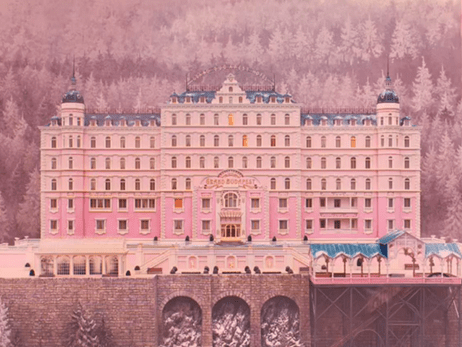
His shots are often framed symmetrically and muted pastels abound as well as scaled miniatures, creating his always distinctive mise-en-scene. He is also a fan of a smooth moving camera often involving zooms.

Anderson is obviously a student of cinema and his film at times are reminiscent to 30s fair such as Grand Hotel and The Rules of the Game. He also channels another famed Viennese Ernst Lubitsch who was a master of highbrow romantic comedies.

Hotel also boast a superb cast comprising most of Anderson’s stock company. If there’s anyone who has been in more than one of his movies, they are probably in this one, even for just an instant.

So given the normal Wes Anderson flair or eccentricities, this film is visually pleasing and quite entertaining. It is a worthy follow up to Moonrise Kingdom, darling.

4/5 stars

The Party (1968)

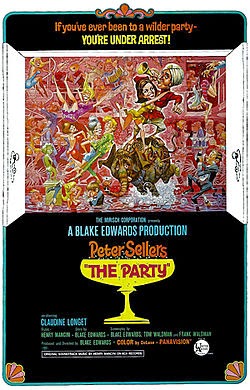
7af4c-party_movieWhen you begin to watch the Party it becomes obvious that it is less of a comedy film and more of a comedy concept. Peter Sellers in all his glory is a bumbling Indian actor who is mistakenly invited to an elegant party. He is in many ways very similar to Mr. Hulot. Both are likable mess ups who are constantly getting themselves into trouble.

I am of the opinion that Seller’s comic genius alone could carry a film. However, the Party has a great multitude of weirdos and snobs that create a great comedic collaboration. Possibly the best example would be the constantly inebriated waiter. Furthermore, by the end the Party is no longer distinguishable and it culminates in a surreal world of bubbles and groovy music. This was the only collaboration of Sellers and Blake Edwards that was not Pink Panther and it honestly is not half bad! We even get a performance from a young Claudet Longet.

This is one of those films that might be lacking in plot at times but it is more fun simply to sit back and watch the fireworks begin.

3.5/5 Stars

The Women (1939)

 6d603-womenHere is a film full of personalities. In fact there is so much personality that it nearly bowls you over with its impact and frenetic force.

In the center of it all is Norma Shearer who is the respectable socialite who is losing her husband to another woman. Joan Crawford is the gold digging woman who is as detestable as ever. Rounding it out is the equally repulsive gossip played to a tee by Rosalind Russell. There is the ever innocent Joan Fontaine and a spunky divorcee played by Paulette Goddard. Throw in numerous other memorable women and you have a cast that completely overwhelms, but in a good way.

Husbands and lovers seem to being switching hands so easily and the whole film is focused on the women who are swapping them. It begins with Mary Haines’ husband only to continually get more complicated as more gossip is divulged and mud is thrown. Not to mention a few angry fists and slaps to go with the caustic words.

There is a lot to admire about this film, because it does what it set out to do very well. It creates some empathy, some laughs, and yes, a whole lot of loathing.

However, as I contemplated the film I realized although the Women is from 1939 and the clothes often seem laughable, the people and issues in the film often seem all too real. Divorce hits close to many homes literally and gossip certainly has not gone instinct. Thus, despite the passage of time, in many ways this film still feels fresh and relevant today.

4/5 Stars

Drinking Buddies (2013)

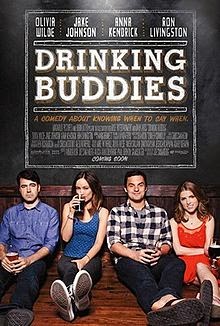
fd0b8-drinking_buddies_posterHere is an interesting little film that while not great has a lot of interesting things to say. It is about relationships, friendships, and life in general. It really revolves around two coworkers who work at a brewery together and also are almost constant drinking buddies.

With this territory comes often complicated lines and boundaries because they both are invested in other relationships with a significant other. The buddy status remains only to be taxed as Kate gets dumped by her boyfriend and struggles through her coping process. The one who ultimately gets most deeply affected is Luke. For one he does not want to see his friend this way, but it probably does not help either that he has deep feelings for her, as a buddy or otherwise.

There is an insanely large quantity of beer consumed which is not surprising given the name. However, what I really found interesting about the film was the “buddies” aspect. It looked at relationships and friendship between the opposite genders through a seemingly real and genuine lens. Sometimes it can be difficult, complicated, awkward, and most definitely painful. It is not anything like a movie. I guess that’s why I was content that the film did not try to tie itself up in a neat bow.

All the matters is that Kate and Luke are buddies again. Sure, there may be some unresolved stuff for them to work out, but then again aren’t our lives always complicated like that? I know mine certainly is and I suppose I wouldn’t want it any other way. As long as I have my buddies to go through it along side of me.

3.5/5 Stars

Review: Airplane! (1980)

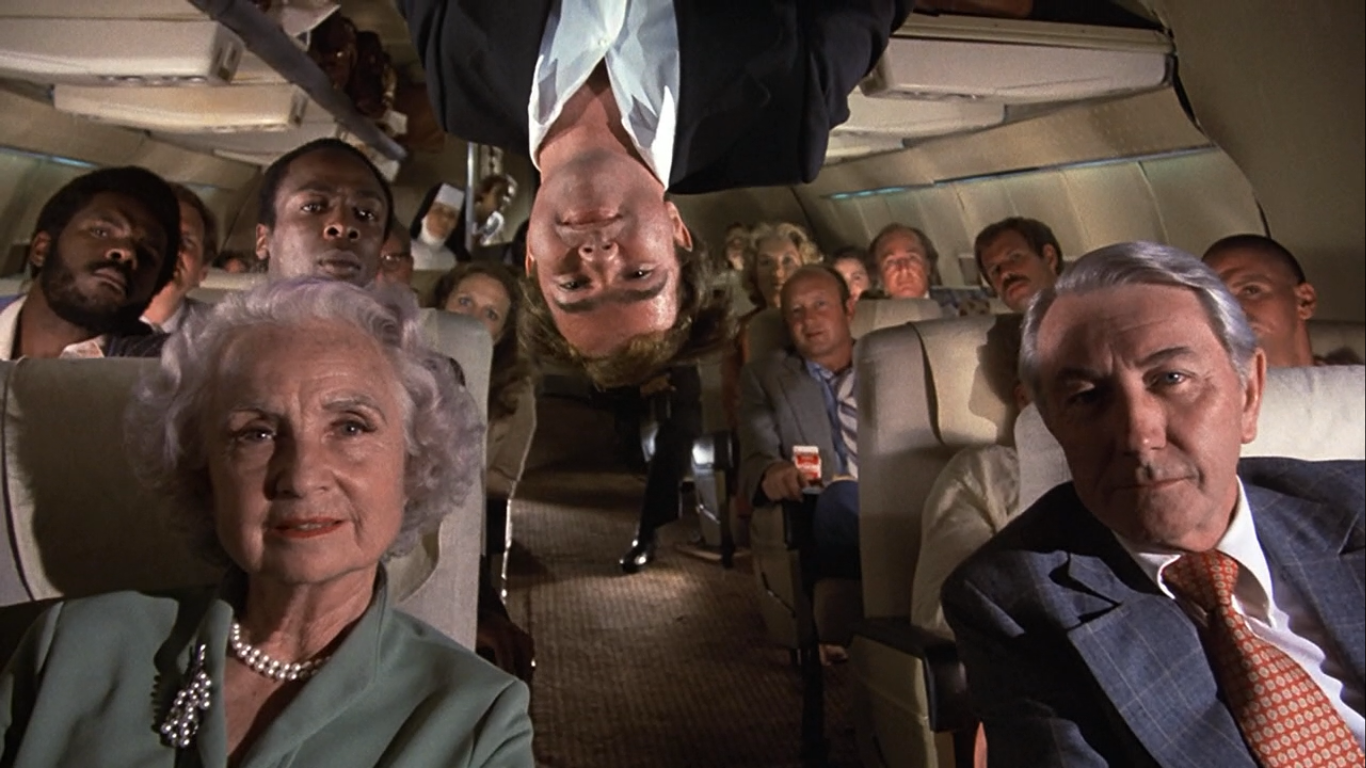
754a5-airplane2In the wake of Jaws came another film almost just as riveting in its intense thrills and human drama. Let’s hear it for Airplane! Okay, well it may be the farthest thing from a real melodrama, but that does not take away from the good ol’ fashioned fun of it all. It’s quirky. It’s goofy. And it has the prototypical ZAZ humor laden with sight gags and boatloads of puns with an accompanying score courtesy of everyone’s favorite comic composer Elmer Bernstein.

The faux drama stems from former war pilot Ted Striker (Robert Hays), who has an aversion to flying due to his devastating experiences and a drinking problem to boot. Now all he does is drive a taxi, and it has cost him his love, the airline stewardess Elaine (Julie Hagerty), who lost all faith in him because he lost confidence in himself. Things used to be so marvelous when they first met in the throes of romance and yet…

Who am I kidding? This film hardly has any plot, but instead, it’s one big excuse for often childish, sometimes innuendo-filled, off the wall antics. Seriously though, Airplane! rifts off a lot of things from gushy romances, to disaster films, and old Hollywood serials. But this plane is only a vehicle for gags. There’s a whole scene about a little girl who is deathly ill just so Captain Oveur (Peter Graves) can say over the telephone resolutely, “Give me ham on five hold the mayo.”

Then there’s co-pilot Kareem Abdul-Jabbar moonlighting as Roger Murdoch. He eventually breaks out of character following the nagging of a little boy named Joey (You try dragging Walton and Lanier down the court)! Why is he even in this film? We don’t know and it doesn’t matter because it’s hilarious.

There’s a kiss parodied straight out of From Here to Eternity, an appearance by the always loud-mouthed Ethel Merman, and even a jab at incumbent president Ronald Reagan. And of course who else would know how to speak jive with the two African-American passengers but June Cleaver or Barbara Billingsley? I’m not sure which one is funnier.

What stands out most about this film is all of its old vets playing this insanely wacky film straight. From Peter Graves to Leslie Nielsen on the plane, to Robert Stack and Lloyd Bridges down in the tower, their performances are priceless.

By the way, what ever happened to that guy in the taxi? If I’m not mistaken the meter’s still running.

4/5 Stars

“We have clearance, Clarence.”
“Roger, Roger. What’s our vector, Victor?”

Kelly’s Heroes (1970)

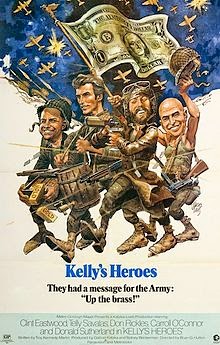
89761-kellyKelly’s Heroes suffers from the same deliberate pacing problem that The Dirty Dozen has. However, if you accept that and accept that this is not your typical war film, you will learn to enjoy it. With a name that hearkens back to Hogan’s Heroes, Clint Eastwood plays Kelly, a man intent on going behind enemy lines to grab his weight in gold bars during WWII.

The lure of gold proves tempting enough to bring many men on board for this ludicrous mission. Among the gang you have Telly Savalas, the always whining Don Rickles,  Donald Sutherland, Gavin Macleod, and Stuart Margolin. Overall the cast was a fun mix of stars of the big and small screens. Do not assume that this is simply a comedy. It has its fair share of explosions and drama. In other words this film has Don Rickles (comedy) sure, but it has Clint Eastwood (action) to bring it back.

All in all Kelly’s Hereos is a decently fun romp right up there with The Dirty Dozen and Where Eagles Dare.

3.5/5 Stars

Little Big Man (1970)

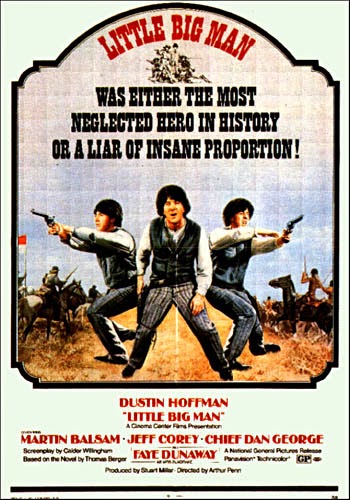
9a376-little_big_manAlthough the film certainly had so good parts for some reason it did not quite jell with me. Focusing on the positive first, this was a revisionist western that tried to depict an alternative picture of the American west from the eyes of Native Americans. Although not perfect it was trying. Dustin Hoffman also gave an impressive performance that found him drifting between the worlds of “the White man” and “the Indians.”

Here is where I get into the main problem that I had with the film. Most of it had to do with age and casting. It was brave and somewhat strange that Dustin Hoffman portrayed his character from his teen years up until he was over a century old. For the most part Hoffman pulled it off. I also was kind of uncomfortable with his sister Caroline who looked like she was 30 even though she was only supposed to be a child. Then, you have Faye Dunaway. That had to be the strangest thing in the film. Although younger in real life, she was Dustin Hoffman’s adopted mother for a time and she played it up.

In some ways this film reminded me a bit of The Butler because we have a main character who grows old in front of us and he ultimately has a role in many diverse bits of history. Like that film, Little Big Man is quite interesting and at times entertaining, but the implausibility of the plot can get to you.

In defense of this film, I really did not know what I was getting myself into and so it surprised me with its mix of violent drama and a sprinkling of comedy. I would have liked to have seen more of Faye Dunaway and Martin Balsam, but it is what it is. Chief Dan George was the breakout character for sure. He was very enjoyable to listen to as he mentored Little Big Man.

3.5/5 Stars