The Accused (1949)

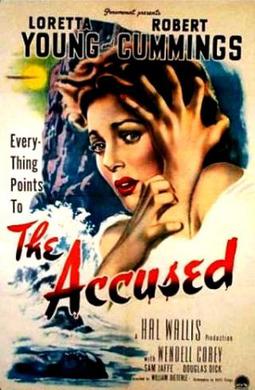
Loretta Young must own a pair of the most luminous eyes in the history of Hollywood, and in black and white, she’s incandescent. More important than that, she’s one of the great sympathetic heroines of Classic Hollywood. In The Accused, she plays both a woman in danger and a working professional. They don’t have to be mutually exclusive, and it makes for a far more nuanced character, especially for the post-war 40s.

Like poor Ida Lupino in Woman in Hiding, we meet her in the dead of night on the road. It’s evident she’s frantic and on the run from something. She gets picked up by a truck driver, though she’s not much for conversation, and he lets her off without much consequence.

A flashback introduces her pre-existing life as Dr. Wilma Tuttle, a professor of psychology at an unnamed university in L.A. It’s finals week as students take their exams and classes wind down.

We get an inkling of drama as we watch the wordless interaction between the fidgety teacher with a leering male student, mirroring her every move and, no doubt, turning in a Bluebook analyzing her own personal psychoses from biting on pencils to tugging on her hair. It’s a queasy relationship because, although she’s in a position of authority, she also seems helpless to do anything.

Douglas Dick does well as the slimy, if charismatic, co-ed who looks ready to entrap his teacher; he’s a kind of skeevy-eyed homme fatale playing teacher’s pet and coaxing his favorite instructor along — first offering her a ride home and then stopping by the seaside in Malibu.

Without using too much equivocation, it becomes a movie about assault and trauma, with the feminine victim becoming the accused, much like Anne Baxter in Blue Gardenia. There needn’t be a movie, but in the 1940s, she operates out of a position of fear in a predominantly male world.

Wilma’s internal monologue gets a bit oppressive, becoming a monotonous crutch, but the cavalcade of performers who come alongside Young are a worthwhile reason to stay the course. Robert Cummings and Wendell Corey aren’t showstoppers necessarily, and still, they have the prerequisite appeal to see them through the career of a reliable actor in Hollywood.

We meet lawyer Warren Ford (Cummings) and Lt. Ted Dorgan (Corey) together at Malibu police headquarters. The former was the boy’s guardian, and the policeman is investigating the case. After the boy’s body washed up on the beach, it was deemed an accident and no foul play.

No fingerprints were found in the car. Immediately, as an audience, we’re doing our mental calculations. Could this be, or is it merely a glaring plot hole? I’ll save you the trouble. Young was wearing gloves as a true lady does in the 1940s. Or else she wiped them…

The film’s asset comes with how it ties all of its primary relationships into twisted knots, all in the name of interpersonal tension. Warren has some personal connection with the deceased, but he quickly becomes enamored with the lady professor, and why wouldn’t he be? They effectively mix work and play, with Cummings being the smooth silk to Corey’s abrasive sandpaper approach.

In its latter half, The Accused becomes a Columbo episode from the inside out. We have our Hollywood star. There’s an opening prologue before the police get involved, and she falls in love. She also begins to feel trapped by what otherwise would be everyday occurrences as she tries to protect herself and cover her tracks.

One of her pupils is a primary suspect. She’s also requested to drop off the dead boy’s Bluebook, which might incriminate her. The truck driver who picked her up in the dead of night is called in as an eyewitness. Then, there’s the business of a missing note that she left for the dead boy and then misplaced. She must find and incinerate it.

Corey’s character is difficult to read. There’s something horrid about him, far worse than his incarnation in Rear Window, and yet he tries to play it off as an act or all part of the game he’s embroiled in on the daily as he does his job. It’s a bit of a curious surprise to see both Henry Travers and Sam Jaffe taking up positions in the police lab. There’s a rational inevitability about the work they do.

Wilma feels the heat, and a date at a boxing match brings out all her latent traumas to the surface again as she transposes the boxer in the ring with the boy she killed. In one sense, there needn’t be a movie because she is a victim, though she digs a bigger hole for herself.

Ultimately, the movie’s denouement is open-ended. The courtroom proceedings are just beginning, and her fate is far from settled, but as we stare into the dazzling eyes of Loretta Young, it’s easy enough to know she will beat the rap with a hedge of innocence around her.

If you dwell a little too much on the implications, the optics that Dorgan also observes might be a flaw in the justice system — if sympathetic appearances are taken as everything. However, in a movie about a woman who is assaulted and then plays the culprit out of fear, it’s at least par for the course.

There’s also a couple of oddities: Corey flirts with her in the courtroom, and Cummings is effectively defending her for killing his “nephew,” though they weren’t close. And still, Corey’s impish sense of humor and Cummings’s passionate orations for his beloved don’t change the bottom line.

This is Loretta Young’s movie, and even as she plays an intelligent woman often hassled and infantilized by the world around her, there’s something so winsome and generous about her performance. The noir elements burn off to make it a story of reclamation and vindication of a life. If you go digging, it does feel like a movie moderately ahead of its time, courtesy of screenwriter Ketti Fring and Young, respectively.

3.5/5 Stars

The Unsuspected (1947)

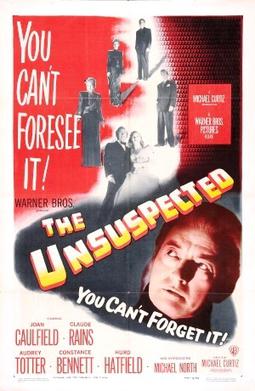
The Unsuspected has a delicious opening dripping with a foreboding chiaroscuro atmosphere. It’s the dead of night. There’s a woman on the telephone tucked away in a back room. The familiar face of Audrey Totter picks up on the other end of the line. She’s out enjoying herself at a club with some male company.

Someone emerges and descends on the flustered secretary. Moments later, she winds up hung from the ceiling — a grisly murder framed as suicide. For ’40s Hollywood, it doesn’t pull punches.

Since Totter is a consummate femme fatale, it’s easy to question what angle she could possibly have in this whole affair. We don’t have the answers, and so we must follow the rest of the film to find out; it’s a genuine pleasure to be afforded the opportunity.

If it’s not apparent already, we are in the hands of professionals with Warner Bros. stalwart Michael Curtiz directing a screenplay by Ranald MacDougall and the director’s wife, Bess Meredyth.

The film is dressed up nicely for a bit of noirish drama with the added benefit of the shadowy, gothic interiors when the story moves to the abode of one Victor Grandison (Claude Rain), a revered radio mystery performer who is reeling after the death of his secretary and the loss of his beloved niece who perished recently at sea.

Rains is an actor with such poise and regality, but building off his turn in Notorious, he plays another complicated figure. It’s a role worthy of his talents, and he anchors a packed menagerie of the usual suspects.

Totter as the sultry Althea always seems to take vindictive pleasure in playing the venomous harlot, and she’s just about one of the best from the era. With her arched eyebrows and intense eyes, she reflects the perfect epitome of an opportunistic, venomous vamp. Though it’s possible she only looks the part. Other people are willing to stoop to murder.

Her inebriated wet noodle of a husband (Hurd Hatfield) feels like a non-entity in comparison, and that’s precisely the point. Fred Clark always has a shifty authority about him, and he’s a close associate of Grandison. Over time, we realize he’s actually the local police detective, a handy man to have as a friend…

The ubiquitous Classic Hollywood heavy Jack Lambert is introduced in one lingering shot, looking out the window of some dive hotel window. What could he have to do with all of this? It’s difficult to implicate him immediately, but we know he’s waiting there for something.

Constance Bennett might just be the finest addition to the cast. She was the wit and experience like Eve Arden a la Mildred Pierce, both beautiful and able to trade banter and wisecracks with just about anyone. She lends a sense of levity to a movie that might otherwise feel oppressively dour. In some ways, she lives above the fray of everyone else, providing a kind of narrative escape valve for the audience.

If you think you already have a line on The Unsuspected, it’s a joy to mention it’s a movie full of perplexing wrinkles. A mysterious stranger (Michael North) shows up on their doorstep unannounced like a specter, and he asks to see Grandison. His next claim is even more outlandish: This young man, Steven Howard, was secretly married to Grandison’s niece Matilda.

Then, a dead person is resurrected like an apparition. Joan Caulfield’s character suffers from a cruel lapse in memory. What happened to her? I should have noted it sooner, but she has the aura like Gene Tierney in Laura, down to the portrait.

Like that picture, it’s a movie spent deciphering people’s motives; it feels like everyone is keeping secrets and no one wants to tell. Is it a case of elaborate gaslighting? It’s not unthinkable in the noir worlds of the 1940s, and Caufield is a ready victim, so sweet and innocent.

What are we to think? Who can we trust? In taxicabs, we find conspirators of a different kind — those trying to ascertain the truth behind a suicide. Because they know there is more than meets the eye.

Matilda returns to her home, lighting it up with the glow of her virginal white countenance in the dark recesses of the family mansion. It feels like oil and water. She does not belong there, but the story is still unresolved. There are several skin-crawling moments as Matilda is subjected to danger with a touch of Hitchcock’s Suspicion (1941). Something’s not quite right, but perhaps her mind is playing tricks…We know she’s not crazy.

It might be low-hanging fruit, but the crucial nature of the antagonist makes the film feel like an early precursor to the Columbo series. Although we don’t know everything right away, eventually the audience is given the keys to the murder, and we must sit back in earnest to watch how they play out, from botched murders to car chases with the police toward the city dump.

I’m also intrigued by the trappings offered by murder mystery radio programs, and though they are used in other films like Abbott and Costello’s Who Done It?, to my knowledge, they aren’t as prevalent in Classical Hollywood as one might imagine.

There’s a delightful meta-quality with Grandison narrating plotlines that played out in the story around him, adding another perturbing layer for the filmmakers to play with. It feels especially fitting here, thanks to Rains’s mellifluous voice and the continued prevalence of mystery and true crime stories to this day. It seems like we still can’t get enough of them over 75 years later. The Unsuspected represents the best of Warner Bros. and the mystery genre, wrapped up in a movie that rarely gets talked about.

4/5 Stars

The Chase (1946)

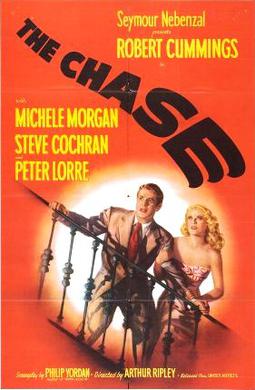
The Chase opens as a wonderful contrivance of noir done up in a couple of successive visuals. A bedraggled man (Robert Cummings) stares through a shop window at a griddle laden with fresh bacon and hot cakes. He leans in so his hat brim mashes up against the glass, and proceeds to cinch up his belt. He doesn’t have any dough.

Then, he looks down right at that precise moment and notices a wallet at his feet stacked with cash. Any person in the real world would have seen it immediately, but it’s set up perfectly for the camera. He proceeds to treat himself to breakfast and a cigar, and after he has a full belly, he decides to pay a visit to the address inside the wallet.

You get a sense of the milieu with a mention of a standoffish Peter Lorre staring through a peephole and questioning what the stranger wants. Our hero is unwittingly cryptic, saying he wants to see one Eddie Roman — he has something to give him…

It could be a belly full of lead or something more innocuous, and, of course, it’s the latter. They give him the once over and reluctantly let him in. The room’s stacked high with statues and ornate antiquities; somehow, they make the interiors feel not just capacious but hollow.

Who lies down the corridors is anyone’s guess because this isn’t where ordinary folks dwell, only cinematic creations. Sure enough, the ex-Navy man Chuck Scott has just happened to fall in with a psychotic lunatic (Steve Cochran). We’re introduced to his temperament when he gives his manicurist a slap for screwing up and sends her simpering out the front door.

Still, he’s impressed by Chuck: An honest guy shows up on his doorstep, and he even tells him he treated himself to breakfast for a dollar and a half (those were the days!). For being such a standout guy, he repays him with a gig as his chauffeur. When you’re destitute, you don’t bite the hand that feeds you.

There’s an uneasy tension in everything Cochran and Lorre, his right-hand man, have their hands in. The controlling Eddie is married to a young lady (Michèle Morgan) named Lorna; he’s hardly allowed her out of the house in 3 years. It says so much about their relationship.

The sadistic slant of the movie becomes increasingly apparent as they stick a different dinner guest in the wine seller to be ripped apart by Eddie’s prized pooch. He has something they want for their business dealings, and any semblance of hospitality burns off as his bubbly conversationalism quickly turns into despair.

For a time, The Chase becomes a kind of contained chamber piece drama. It’s not obvious if it will break out and be something more as Chuck forms an uneasy existence between the backseat driving of his new boss and the despondency of Lorna, who stares out at the crashing waves of the ocean, all but bent on presaging Kim Novak in Vertigo by jumping in and ending it all.

Lorna and her newfound advocate book two tickets to Havana and are prepared to skip out together. Even these scenes evoke a foreboding mood more than anything more concrete because there’s only a vague sense of plot or purpose. From here, it builds into this debilitating sense of obscured conspiracy in the bowels of Havana.

There are obdurate carriage drivers, slinking foreigners, and cloak-and-dagger antics that find his woman harmed and Chuck fleeing from the authorities. The surreal tones of the story just continue to proliferate with novel characters and new environs materializing rather than moving systematically from one scene to the next.

This inherent sense of surreal atmosphere might place the picture ahead of its time, with a select few films of the era. However, it comes off as rather stultifying after auspicious beginnings because it doesn’t accomplish what many of the great Classical Hollywood films managed by telling compelling three-act stories with a sense of economy.

The underlying perplexing tension set against a dreamscape, siphoned from Cornell Woolrich’s source material, is not enough for The Chase to fully pay off on the goods. It feels more like an intriguing experiment than a successful crime drama.

3/5 Stars

Keeper of The Flame (1942)

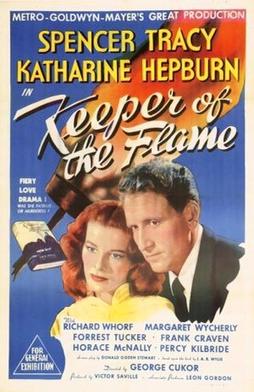
Keeper of The Flame strikes me as good ol’ fashioned Hollywood storytelling. It’s conveyed through a fatal opening car crash and a flashing montage of newspapers spelling the death of that great American institution, Robert Forrest. We’re hooked immediately as the story keeps on rolling.

The world itself in the formerly sleepy town has the definitive consciousness of Home Front America, full of interiors and then exterior-looking interiors, all on the studio lot. Moreover, there’s a frantic industry and a general chaos in the face of shortages, bringing out American know-how and good humor in the face of everyday adversity.

Namely, a bevy of journalists and well-wishers descending on the place not fit to handle such an overflow, especially during wartime. A harried Donald Meek monitors the telephone line and does his best to get the flood of people in front of him booked in any vacant rooms still available.

Steven O’Malley (Spencer Tracy) wanders in unannounced and mostly unseen. He pays respects to an old friend who barely recognizes him. It’s the eyes. He gives Janey (Audrey Christie) that quiet congenial Spencer Tracy look, and she asks quizzically if it hurt much when Hitler gave him the boot.

We glean he must have been a war correspondent, either based in a concentration camp or the Berlin press bureau. Their jokes are casual. You know they must do this in their line of work and in 1942, we can hazard a guess they don’t know the full extent of what they’re saying.

Christie has the whip smart repartee of a journalistic working woman a la Rosalind Russell. Since the house is packed, she coyly registers him as her “husband,” though there’s another colleague up for her affections (a young Stephen McNally).

O’Malley has an aspiration to get into the grieving Mrs. Forrest so he might share her husband’s story with the people. Riffing off of It Happened One Night, his pals quip that she’s the Queen of Jericho and he’s no Joshua. The walls of her castle won’t come down for just anybody. Though Tracy always had a certain dogged tenacity about him, and that’s what makes him a compelling, active hero.

Algonquin Round Table alum Donald Ogden Stewart builds out his screenplay in the opening act with all these intriguing nooks and crannies and characters who seem capable of existing of their own accord with intricate backstories.

Howard Da Silva is a guarded vet of the Argonne and de facto groundskeeper of the Forrest estate. A little boy (Darryl Hickman) grieving the wake of this great man from a lamppost; we learn he too has an intimate connection to the deceased.

There’s another relation to Mrs. Forrest who’s equally distrustful of the press and drinks his sorrows away with ginger ale. The dead man’s bespectacled press secretary (Richard Whorf) chooses a different approach: He’s highly elegiac and accommodating because his job requires levels of PR, though there’s plenty he’s not letting on about.

Beyond Christie, a personal favorite is the peculiar old cabbie (Percy Kilbride), laconic and chewing his cud while offering up homespun wisdom. He provides O’Malley transportation to and fro as the journalist pokes around for his story.

We know from a fair distance Keeper of The Flame is a kind of grade-A American propaganda piece, and it finally becomes most explicit when Tracy gives a little soft-spoken speech to Daryll Hickman about not letting the unseen enemy make them slaves and kick them around by putting chains on their minds and tongues.

In its defense, it’s mostly soft-pedaled moralizing because Tracy’s soapbox is small and he has a way of making the serum of slightly hokey words tolerable thanks to his usual candor.

However, the local doctor (Frank Craven) provides one of the most telling remarks after paying a house call to the imposing estate: “Ever since we’ve been falling out of touch with God, we’ve become pushovers for hero fever.” When he speaks of a young woman who was sent away, he surmises,  “You don’t fall in love with a god, you just worship him.” He’s a sympathetic fellow and in making his opinion of Forrest quite clear, it’s one of the first dubious signs we have to go on.

These ideas are thematically rich with potential, not to mention controversy. The movie becomes less so with the tinges of forested and thunderous gothic melodrama. Coincidentally, it’s not material I would immediately attribute to George Cukor although the 1940s were replete with such fare.

And it’s true there is a vague Citizen Kane-like bend to the story of a prominent man now dead. Although I also think of Welles’s other great figurehead Harry Lime for casting a shadow over the film, which is not too dissimilar to Hitchcock’s Rebecca, albeit gender swapped. These are mostly uncharitable comparisons and few can argue the point.

Katharine Hepburn might seem uncharacteristic in something so grim and restrained, but she proves her capacity for it. While I always am skeptical of her as a shy wallflower in a picture like Undercurrent, she handles this tormented role with a certain inscrutability. Although I don’t know if even she can manage keeping the story from getting out of hand.

There’s something in it on the tip of my tongue tying into almost John Fordesque mythmaking, whether it be Fort Apache or The Man Who Shot Liberty Valance. Sometimes you print the legend to protect people because the truth is too destructive to reveal. Except Tracy isn’t squeamish about giving the electorate a sober reality check.

In this regard, it feels like a daring sort of picture and you wonder if this was the saving grace, making it a draw for audiences beyond the conspicuous nature of the romance and brooding genre elements.

Still, the initial propaganda moments burn off only to come back like a raging conflagration. Hepburn brings them back again and she drops them right in our laps when she mentions fascism as embodied by her late husband. In one sense, it’s an impressive rallying cry and also an utter disappointment given the film’s best parts.

The finale of literal fire and water is all things histrionic and ham-fisted. Hardly the film’s finest achievement. All of this comes with a convenient ending, but I suppose in wartime you give the people what they want — assuming this was it.

Even with the underlying sentiment, Keeper of The Flame still has its moments that feel downright groundbreaking, and better yet, the wit of the supporting characters lives on in the mind’s eye. Alas, this was not meant to be.

Most of all, I regretted characters like Audrey Christie and Percy Kilbride fading away without consideration; I suppose they were sacrificed on the altar of a greater cause. I understand the sentiment and still, it feels like a waste of a stellar set-up for such conventional ends — even if it was for the sake of galvanizing wartime propaganda.

Perhaps this is all the more reason to want more out of the film. This is a good impulse because it means there are more than a few things worthy of praise.

I’ve only one final thought. In many ways the movie presages what Jacqueline Kennedy chose to do in the wake of her husband’s tragic death. More than once in the movie, an allusion is made to Abraham Lincoln, and Jackie made sure her husband had a funeral evoking that of the nation’s first slain president.

Then, at his final resting place in Arlington Cemetery, there burns an eternal flame. She was the keeper of that flame — solidifying his stature for generations of Americans. I won’t get into conjecture about her husband’s legacy, but it does play as an intriguing counterpoint to this film’s central figure.

3.5/5 Stars

Jerry Schatzberg Films (1970-73)

Puzzle of a Downfall Child (1970)

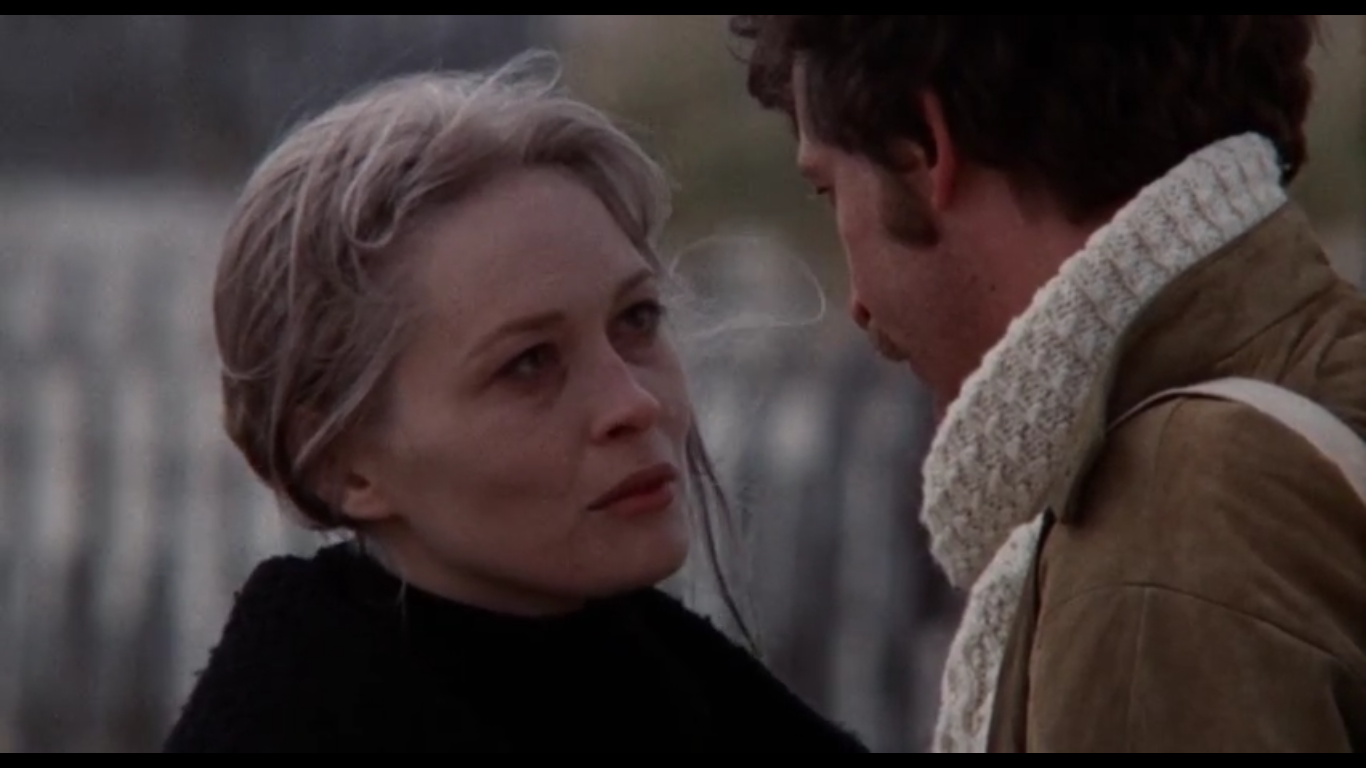
Jerry Schatzberg took his career as a fashion photographer and integrated it into a splintering portrait of a model based partially on his experiences with real-life inspiration Anne St. Marie. Like Blow-Up it is a film about the image, but in this case the visuals often play against disembodied voices obscured from view. The camera also seems to have a general infatuation with lips and speaking voices.

Out of these inspirations, the film becomes a stellar showcase for Faye Dunaway at the height of her powers, giving a scintillating performance — striking and yet perilously fragile. Her very diction fascinates, how it’s stunted — rising and falling — in a very particular cadence, attempting to modulate. It’s just precisely false enough to suggest instability and the film is built on this theme. She is the cypher — the puzzle to be put back together.

As she confides in friends, the picture charts this fractious course of Lou’s career, personal relationships, and insecurities. She slaloms through her memories, past and present, stitching together her life into a disordered patchwork. It becomes a perplexing ever more morose portrait of a woman in need of comfort and support in her vulnerable mental state. But the film really functions best as form over content.

The intrigue comes not in any manner of narrative cohesion but precisely because of the dissolution, a woman becoming more and more fragmented with time. It’s not an altogether original concept. Many great actresses have tried their hand with much success. Still, Carole Eastman’s spin on the dimensions of a gorgeous woman with faltering psychology feels like a nexus in the tradition. It’s also an unjustifiably underseen showing by one of the ’70s biggest attractions. Faye Dunaway admirers take note.

3.5/5 Stars

Panic in Needle Park (1971)

“Needle Park” is a nod to the shorthand of heroin addicts and it totally throws itself in their world and subsequently became one of the most harrowing depictions of drug use in the ’70s. The screenplay was written by none other than Joan Didion and John Gregory Dunne from a novel by James Mills.

We get the opportunity to watch an up-and-coming stage actor, Al Pacino, submerging himself in a role and showcasing a depth that would become the bedrock of all his successes throughout the 1970s. He would join a group of actors, the De Niros, Nicholsons, and Hoffmans, who would help come to define the New Hollywood as it was being formed on the spot.

From the outset, it’s easy to be a bit wary of his mannerisms, the lip-smacking, and the sense of bravado. Then, he proceeds to go for the jugular.  It’s an ugly, tawdry sort of world dictated by sex, drugs, and theft. This is how people subsist if you can call it a living at all. Where everyone’s brother is a two-bit crook and everyone else has done a stretch of time.

It’s a film that has very much a Midnight Cowboy milieu. We have the walk and talks down the streets of New York, but like Schatzberg’s next film, Scarecrow, it’s also fundamentally a film founded on a relationship of two.

If they have so many demons, the one thing they have is their tight-knit community. However, they are personally crippled by relational turbulence, always desperate to find their latest fix. It drives their desires and turns them into momentary ghosts of human beings, self-serving and a shell of their best selves.

Kitty Winn is naturally beautiful like audiences grew accustomed to seeing in the ’70s with actresses like Ali McGraw and Katherine Ross.  However, her particular meekness plays well with the raw ferocity of Al Pacino, and they remain the nucleus of the drama. It doesn’t have to be about much. It simply needs to keep them at its core.

Pacino would get The Godfather next partially on the shoulders of this performance and it’s almost inconceivable to think of Michael Corleone without those deep, searching eyes of his. It’s so easy to look in their eyes — Winn’s too — and see an inkling of who they are. You can condemn their self-destructive tendencies and then turn right around and pity them.

3.5/5 Stars

Scarecrow (1973)

With Schatzberg, the salient features connecting his movies isn’t overtly apparent, but it does feel like the material really guides the output. So much relies upon and flows out of the sense of performance whether Dunaway, Pacino, or Hackman and Pacino here in Scarecrow. But first, can we take a moment to acknowledge what a stroke of luck it is: Pacino and Hackman in a movie together, a movie predicated on character, and they could not be two more disparate personalities.

Because this was on the other side of The French Connection and The Godfather, two of the biggest hits of the ’70s so far, and yet our two stars find it within themselves to do a picture like this. It’s not big budget, with a lot of thrills or prestige, but they more than make it something worth watching regardless of scale.

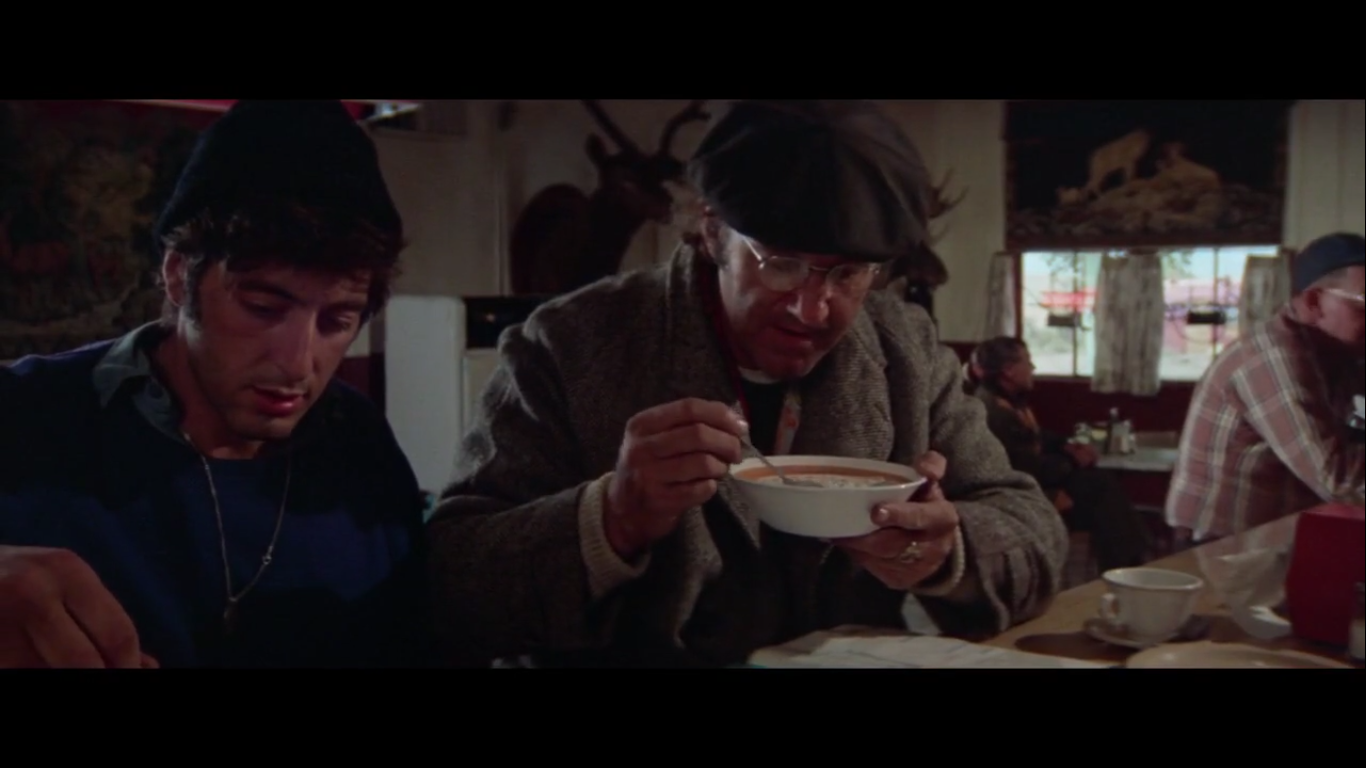
It feels a bit like Waiting for Godot with tumbleweeds rolling by as photographed by Vilmos Zsigod . Finally, they trade words and make their way to a diner. Their odd brand of friendship is born.

Like any good drifter you might find in the work of John Steinbeck, Max’s idea of a slice of paradise is getting his own car wash. In truth, if the Monterey laureate had been alive and kicking in the ’70s, Scarecrow is exactly the kind of story he might write because it almost feels suspended in time. They have a friendship and camaraderie that feels deeply indebted to George and Lennie. It is almost difficult to unsee it once you’ve drawn the parallels.

Pacino’s philosophy in life is a lot more amenable if a bit eccentric. To borrow the film’s main analogy, he believes scarecrows are not frightening. They actually look so ridiculous that they got the crows laughing and they fly away. So while Max is bellicose, constantly taking umbrage with others, running off his mouth, and getting in brawls, Lion’s always there to provide some equilibrium. As performers and actors, they feel totally at odds and yet we’re ceaselessly fascinated to have them together as a creative battery.

There’s a scene where Hackman tries to chat up the bodacious Frenchy. She’s brought them beers as they move items in the junk heap. But all throughout the scene, Pacino is clunking around making a racket and getting in his way. In another moment of lunacy, he’s sprinting through a department store as a diversion that winds up leaving his accomplice flabbergasted. Max’s so hoodwinked by it all, he sets back down the purse he planned to nick.

Because Lion’s a bit of a jester, simpler in spirit, yet fiercely loyal. Even when they have a spat, he’s hesitant to leave his friend. Hackman’s performance is founded on his irascible nature. He’s loud and obnoxious, begrudging, and yet his slivers of goodness begin to show. He becomes a friend and protector to his buddy. It’s heartbreaking when he finally reveals his tender-hearted feelings. That car wash and Pittsburgh seem so far away. But then again, it was hardly a real place to begin with.

3.5/5 Stars

Jaws (1975) at 50

I remember my dad telling a story about the first time he saw Jaws back in 1975, now 50 years ago. He was on a road trip visiting a childhood friend in the Midwest, and though he had spent all his life in California, he was grateful to be in a place that was landlocked when the movie came out. 

If my dad was representative of the general populous, this reaction was not unusual, and for any number of reasons, Jaws was a true cultural phenomenon. It changed the playbook of what a movie could be as a summer blockbuster, even as Steven Spielberg willfully built off the formula of Alfred Hitchcock while bringing his own youth and flair for storytelling to the fore.

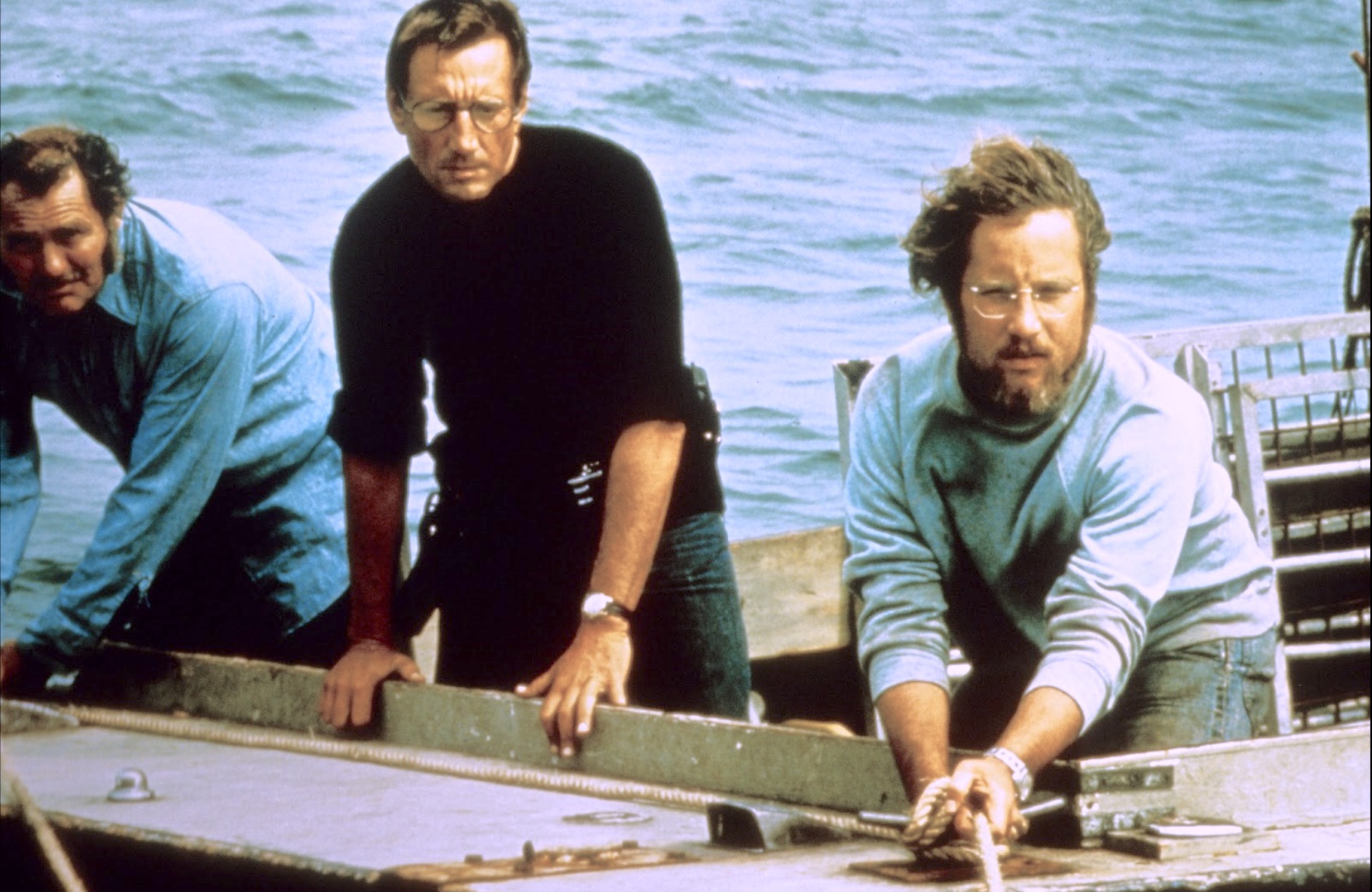
It struck me watching the film this time how it is really split into two sections. There are the scenes in the island getaway town of Amity where Police Chief Martin Brody (Roy Scheider) is introduced as a New York City transplant (Coincidentally, it’s convenient to read The French Connection as a bit of backstory). We soon get a sense of his family life, his happy marriage with his better half (Lorraine Gary), and the small-time responsibilities that come with the incoming tourist trade. He also hates the water…

These are the throes of summer, on the verge of the July 4th weekend, and a town like this thrives and even relies on out-of-town business. The first inkling of a shark attack comes when the mangled body of a young woman is found washed up on the shore.

Then, there’s the moment for all time when Brody tries to relax in the arms of his wife on the seashore, only to see an ominous creature emerge from the water and confirm all his worst fears.

A friend pointed out how Spielberg pays homage to Hitchcock with the “Vertigo Effect” or dolly zoom, which gives us as an audience such a perturbing sensation as we are physically reeled into the moment. From then on, it’s not just a threat, but a battle that Brody must wage, dealing with the local repercussions, backroom politics, and general hysteria that gets dredged up in the face of such a news story. As the police chief, it feels like the weight of the whole fiasco falls on him, and what’s worse is that he has so little support.

It all comes to a head when a grieving mother (Lee Fierro) confronts him with a public slap to the face: She found out he knew about the shark threat, and he still kept the beaches open. We know what actually happened, but still, as a beacon of safety, it falls on him, and he internalizes the outrage. Because he has a conscience and a family, too. 

Then there are the later scenes where three men go out on a mission to hunt down the Great White terrorizing the town. It is an elemental story of man vs. nature. The cast thins out with the three primary stars and a big shark playing out a game of cat and mouse on a boat against a vast ocean. It’s an isolating, harrowing undertaking.

Put in these terms, and it feels like an entirely different movie, and yet there’s not a moment when they don’t feel anything but intimately related. A lesser film would have simply shot the second part — extended it — added some more sharks, guts, and explosions, and made it the movie (I haven’t seen the Jaws sequels, so I’m not sure if this formula applies). Although I’m sure this is what drew Spielberg to Peter Benchley’s source material. 

However, this movie is made better by how it builds out an entire world, and we see how it develops the context and creates the stakes and emotional resonance for the entire story.

Scheider is also the only one who can kill that shark in the end. He moved away from the urban jungle to have a quieter life. But the movie calls for him to face this threat head-on, and he does it in an extraordinary way, aided by Richard Dreyfuss and Robert Shaw’s characters.

They both provide two sides of an ethos appeal that lend credence to the evolutionary brutality of this underwater leviathan. Because one represents youthful intellect and scientific know-how of an oceanographer, while the other is a veteran of the sea, grizzled and tenacious. But we know intuitively that the trajectory of the story revolves around Scheider coming face to face with his own fears. It’s inevitable. No one else can save him. 

These words don’t always go together, but Jaws has some delightfully effective expositional scenes. I think of the opening hook where a bunch of young people are on the beach mingling together. The eyes of a young man and woman meet. Then, the camera pulls away as they have their meet-cute. We understand everything without hearing, and the next thing we know, they’re racing off toward the water to skinnydip… 

There’s also the scene where oceanographer Matt Hooper (Dreyfuss) pays a house call. It’s been a tumultuous day, and the police chief has grown introspective, jaded by the day’s events. Hooper awkwardly has two bottles of wine, and he’s wearing a tie. It becomes a scene with the wife talking to the young man, and we learn about both of our leads with this lovely sense of organic humor. 

Then there’s Quint’s moment on the boat one evening, recounting his harrowing experience on the U.S.S. Indianapolis in 1945 on a mission related to the atomic bomb. Ultimately, they were sunk, and many of the survivors were picked off by swarms of sharks in the ensuing hours. An event like that forms a man for life. 

Moments like these are chilling and give the moments of levity even more import. It’s like an escape valve for the tension. Spielberg does an admirable job of choreographing the hubbub of the town with frantic conversations and characters speaking over one another in a manner mirroring real life.

In another scene, Brody is deep in his thoughts, obviously distressed, then, right next to him at the dinner table, his little boy mimics his every move. It’s such an endearing moment of childlike warmth and affection. Or later, a drunken Shaw and Dreyfuss partake in some one-upmanship as they trade tattoo stories gaily after being at one another’s throats for most of the journey. 

Spielberg, at such a young age, already feels adept at creating a total immersive experience in film (You only have to look at his work on Columbo and Duel to see the work he put in before Jaws).

The underwater POV shots from below as human bodies tread above the waterline draw us in, and the notes of John Williams’ score never cease to cause my feet to tense up in my shoes. There are even jump scares I had forgotten about. The cumulative effect is still overwhelming. 

There’s an extraordinary blending of visual compositions that tell us the story succinctly, sprinkled with the kind of humor, exposition, and personal conflict that give the broader drama of Jaws a genuine meaning. Because we are not animals; we are not evolutionary machines. We are embodied creatures. We have hearts, limbs, eyes, voices, and feelings that make us who we are. It’s difficult to extricate ourselves from these realities, and what kind of unfeeling Social Darwinism would that leave us with? 

The Mayor (Murray Hamilton) is a character who is easy to dislike. He does come off as a kind of irrefutable sleaze, and yet when he visits the hospital to give his condolences and reluctantly sign off on Quint’s hunt, he finally makes an admission. His kids were on the beach too, where the attacks happened. For a moment, he is as human as anyone else. 

Because he’s emblematic of a story about locals trying to protect a way of life, and outsiders trying to maintain their own lives somewhere new. It’s a pleasure to watch Jaws and see it not simply as a historical lodestar in the blockbuster age, but 50 years on, it still remains a captivating saltwater thriller showing a young up-and-coming filmmaker on the ascendancy. 

I’ve rarely seen my dad set foot in the ocean during my lifetime. It’s probably coincidental, although Steven Spielberg (and John Williams) might have something to do with this, too. 

5/5 Stars

Star Trek IV: The Voyage Home (1986)

“The Cast and Crew of Star Trek wish to dedicate this film to the men and women of the spaceship Challenger whose courageous spirit shall live to the 23rd century and beyond…”

The opening remarks of The Voyage Home honoring the “courageous spirit” of those lost on The Challenger is a perfect encapsulation of the ethos of Star Trek.

Because it was always very much a franchise that was a social allegory for our world and by taking place in a sci-fi future, it was able to champion all that was good and valorous of people living through a space age even as they tried to reconcile with living with one another on earth with fraternity.

As a kid, Voyage Home was always my favorite Star Trek movie, and probably still remains so now. I’m not quite sure what it was exactly, though I do have some ideas. It’s important to acknowledge it right out front. Voyage Home has a wild and wonky premise full of a certain incredulity, but it’s also a good deal of fun.

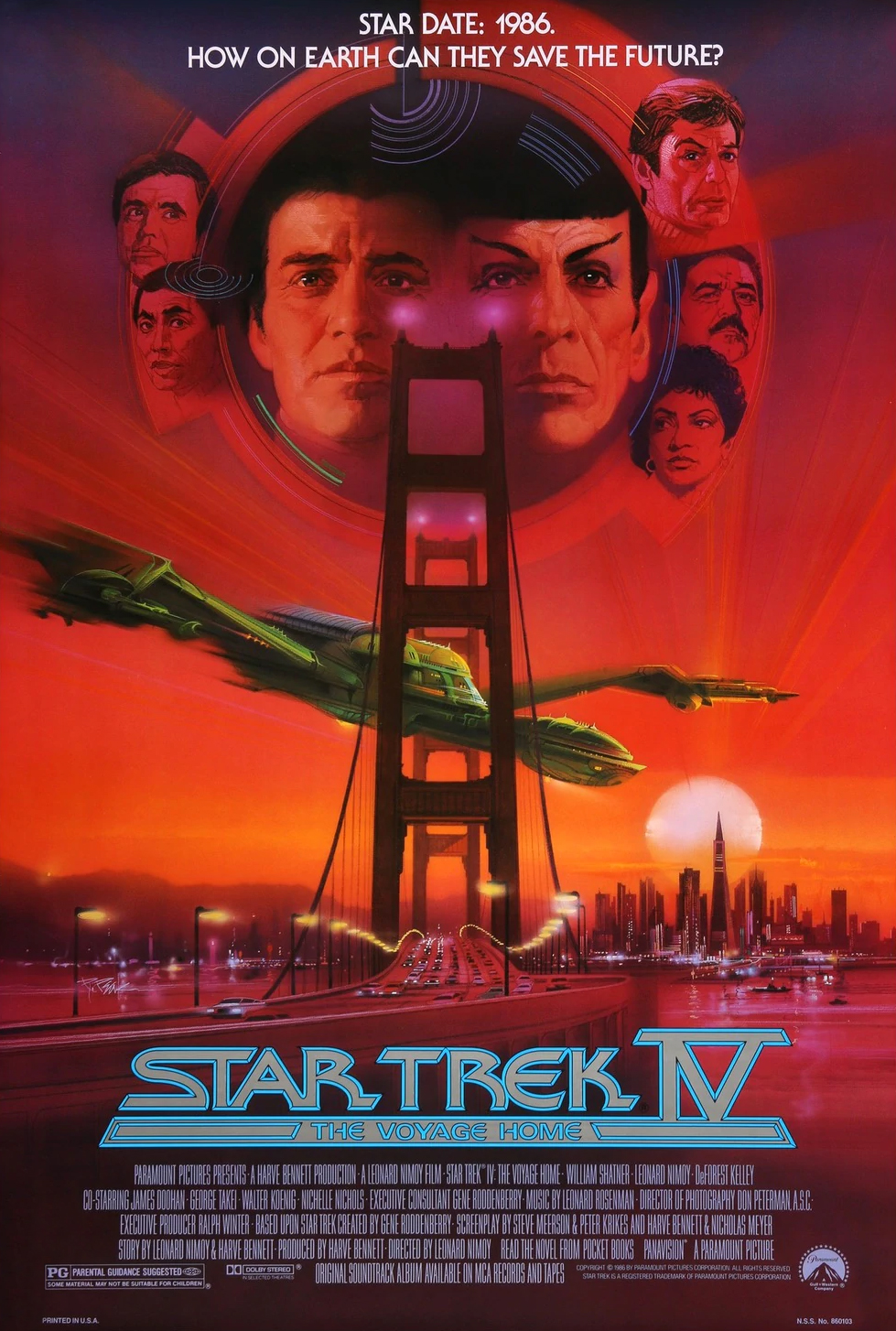
Spock is back after Star Trek III, but now there is a new problem: Not only is Kirk a wanted man, but a frequency of humpback whale calls is causing chaos to reverberate all throughout the galaxy. Yes, you heard that right.

Kirk leads his fugitive compatriots on a Klingon ship with cloaking capabilities to time travel to the past — that is, the contemporary moment the film came out — 1986. The wheels start turning.

I’m no Star Trek savant, but it didn’t evade me that this is a subtle twist on the notable “City On The Edge of Forever” episode that sent Kirk and Spock (with his ear-concealing bandana) back in time to the soup lines of the Great Depression.

Voyage Home mines most of its comedy from your typical fish out of water premise, in this case pitting the Enterprise Crew of highly intelligent and advanced space cadets against a world that feels so analog and decidedly archaic to their sensibilities. Meanwhile, to the average guy on the street they look like helpless weirdoes.

A particularly memorable vignette involves a spiky-haired punk rocker on the bus with his blaring boombox. He does look rather like an alien to anyone left unawares from a different century. A little Vulcan nerve pinch gets the whole bus clapping with appreciation for curbing the noise.

Pairing Bones and McCoy off together is a pleasure in its own right, though it need not be expounded upon in depth here. The rest of the crew is entrusted to build a tank to carry the whales across the galaxy and also locate a nuclear reactor to help power their ship home.

Spock’s coming up to speed with the modern vernacular offers its own hilarity as does his commune with the whales in their enclosure at a Sausalito aquarium. It’s in plain view of everyone and another breach of societal norms. This just isn’t done in the 20th century. Spock has greater concerns as Kirk tries to guide him through this strange world like a blind man leading a blind Vulcan.

The resident biologist Dr. Gillian Taylor (Catherine Hicks) is incensed. She cares about these animals’ well-being deeply. Later, she offers a ride our two lovable nut jobs up in her pickup because she has a penchant for hard-luck cases.

The addition of Hicks in a fairly substantial role begins as a screwball comedy with her skeptical incredulousness around Kirk and Spock. It then builds into a kind of swelling romantic comedy served with a side of pizza pie. Somehow it plays as the less tragic inverse to Joan Collins turn in “City on The Edge of Forever.”

Because they push the boundaries of her belief and still, if she doesn’t quite have faith in their clear-eyed tall tales, she recognizes their shared mission to protect the whales. If it’s not quite faith, then her trust in them is rewarded in an extraordinary way as an unimaginable world of the 23rd century opens up before her eyes.

She always feels a bit out of step with the world around her, and then she finds these like-minded people, a little eccentric, and yet they suggest to her that she was made for so much more. It’s an extraordinary development.

Chekhov gets captured in a restricted area and is shipped off to a hospital in the city after he suffers an injury. Kirk and Bones lead a search and rescue mission masquerading in scrubs, then Gillian finds out the whales were shipped off early. They have to intercept them en route if they ever hope to save the whales and thereby the galaxy. No big deal.

Hanging out with the crew of the Enterprise in San Francisco sounds like a good time, and it’s a pleasure to assure everyone that it is. For such gargantuan stakes, Voyage Home feels surprisingly lightweight, lithe, and generally fun because we rarely feel burdened by them. It’s not bogged down by a lot of self-importance and this is to its credit. So it worked then, in my childhood, and it still holds up now eliciting the same kind of stirring reactions.

3.5/5 Stars

Star Trek II: The Wrath of Khan (1982)

If I had to take a stab at the age-old distinction, I would differentiate Star Trek and Star Wars like so.  Star Wars was a sci-fi Fairy tale and became something more. Star Trek began as a sci-fi allegory on TV and became something more. In a word: beloved.

The Wrath of Khan opens with a scenario involving the usual suspects on the USS Enterprise, except standing in for Kirk is a  Vulcan named Saavik; they must rescue the crew of the Kobayashi Maru, and it all goes terribly wrong.

Moments later we learn that the entire escapade was a simulation.  Kirk (William Shatner), now an admiral, was watching from the wings. It turns out the Kobayashi Maru is a “No-win scenario” elucidating the character of the ship’s commander. You can probably imagine how Kirk handled it in his day, very unconventionally.

Bones (DeForest Kelley) chides his friend to get back out there. He’s not made for a desk job; he’s meant out there on the edges of the galaxy with his crew and wits about him tackling the universe’s most pressing problems. The pull of the movie means he has no choice in the matter.

Captain Clark Terrell (Paul Winfield) and Chekhov (Walter Koenig) lead the crew of the USS Reliant to an uninhabited world; it’s part of an interdisciplinary project to use the newly devised Genesis technology’s immense power to revitalize desolate planets.

There’s something ominous about it after they beam down, and it’s true they are not alone getting ambushed by the vengeful Khan (Ricardo Montalban) who still holds a vendetta for Captain Kirk leaving him to die (see “Space Seed”).

Among his entourage of scavengers he keeps some burrowing creatures as pets and they make his two hostages highly compliant. Khan’s quick to commandeer the ship, and we know what his aims are before he’s put them into action.

A trap gets set to lure Kirk. The USS Enterprise is alerted and comes face to face with The USS Reliant. Their purported friends have treacherous intentions looking to blow them out of space from close range.

There’s a robust theatricality to Montalban’s villain that feels large and provocatively cunning as he holds onto a grudge going back to Star Trek‘s TV days. It’s an inspired piece of work not only in building out the story, but in having the actor back for another installment because he already has a built-in history.

It turns it in a fine chess match and a space opera with Kirk and Khan crossing wits and playing out their old grievances in outer space. It takes this scope and the unfamiliar if appreciated world of space ships, phasers, and light speed, distilling them down into something so intimate and human.

If you’re a cynic, you could say the action mostly involves the two foes talking to each other over video screens. If memory holds, they never actually share the same frame. Still, regardless of what you think of the special effects or the sheer eightiesness of the film’s sets and wardrobe, the story is grounded in a conflict that feels so primal and compelling.

And if that is what gives us a movie, then we must also consider the other relationships. Kirk once had a romantic relationship with one of the head technicians of the Genesis project Carol Marcus (Bibi Besch); her grown son has followed in her footsteps and has a major chip on his shoulder when it comes to Kirk. His notoriety certainly precedes him.

The film is at its best when its heroes are put under duress. Echoing the film’s opening, Kirk and Spock look to rescue them from an untenable situation as they fight back against Khan’s unreasonable demands and Scottie tries to salvage what’s left of the Enterprise in the obliterated engine room. Radioactivity is contained, but with a busted engine, prospects are grim.

Like the second installment in the Star Wars franchise, Empire Strikes Back, Khan is a film about the ultimate sacrifice for the ones you love. If Han Solo did just that in the prior film, Spock does it here. It’s hard to think of two more beloved characters to watch suffer and giving them up hurts.

It’s fitting that the movie references A Tale of Two Cities with Kirk quoting Sidney Carton in the closing moments, “It is a far, far better thing that I do, than I have ever done; it is a far, far better rest that I go to than I have ever known.” This injection of classic Dickens reinforces how Star Trek is always grounded in traditional human history even if it’s pushed onward into future centuries.

Our hero is laid to rest with Scottie’s bagpipes. It always feels a bit anachronistic and then we hear the refrains of “Amazing Grace” in deep space suggesting it can touch even the far reaches of the galaxy.

Kirk eulogizes his buddy saying, “Of my friend, I can only say this: of all the souls I have encountered in my travels, his was the most… human.” That is the profound paradox of this friendship.

Spock’s a fundamentally rational character, and yet all these human impulses are pleased to dwell inside of him. It’s part of what makes him compelling because if we required a manual to read and comprehend him, it would be seem straightforward.

Kirk is the live wire, the unconventional one, who hates to lose — most of all he hates to lose his crew and the people he cares about. Yet in their camaraderie, we see something so formative, and Spock to the end is a noble, loyal friend.

It’s true he does bear the most human of traits and that’s why we hold him so dear because he knows what it is to love and care about other people. He has a heart to go along with his head, continually surprising us with the depth of his humanity despite his stoic countenance.

Like all the great adventure films, Khan has drama grounded in deep relationships, including the primary villain. In such a pressure cooker, every minute of action feels pregnant with real meaning and consequence. It also helps when characters we love and respect are at stake caught up in the middle of it all.

4/5 Stars


Marty (1955)

To my mind, Marty is the only movie adapted from TV to win an Oscar and certainly to get as much publicity as it did. During the surge of the Golden Age of Television, Paddy Chayefsky was king and Marty became a pinnacle of what could be accomplished by a writer with a singular voice.

It’s a triumph of the small screen brought to the large, breaking down the boundaries and some of the prejudices that come with it thanks to the particular story it chooses to tell.

Marty is easy enough to place. He takes up residence in the territory Chayefsky would canvass in many of his stories including later efforts like The Catered Affair or Middle of The Night. There’s a “write what you know” imperative to his work. If it’s not quite realism — the words are too precise in their cadence and meter — then it certainly makes for unadorned cinema away from the normally watchful eyes of Hollywood.

Marty is a butcher and an unmarried man who lives with his mother. He’s kindly enough cutting up meat as the ladies of the neighborhood chide him that he should be getting married. All his siblings are hitched, and he’s the eldest and still alone.

It’s the earnest simplicity of the story that always appealed to me in the past. But as I grow older Marty speaks to me more and more. Because you begin to see it differently in light of new experiences and the kind of tensions that come with familial relationships and adulthood in general.

As I’ve gotten older and recall periods of singleness in my life and the lives of others, I’m all the more moved by Ernest Borgnine’s performance. He was always relegated to heavies. Like Raymond Burr, the only way to play the hero was on the small screen. Burr got Perry Mason and Borgnine got, well, McHale’s Navy. But before that, there was Marty (1955), and it was an unassuming film that proved to be a stirring success. It’s an underdog story in an industry predicated on prestige, star power, and publicity. Borgnine plays it beautifully.

On a Saturday night, he and his best bud Angie (Joe Mantell) drink beer together perusing the newspaper and quibbling over what they’ll do for the evening like a pair of vultures out of The Jungle Book.

At his mother’s behest, they make their way to the Stardust Ballroom to hopefully meet a couple of “tomatoes.” It feels a bit like a watering hole with dancing and fast music. All the various enclaves stand around looking for mates and finally stirring up the courage to meet someone. It’s a space where everyone gives everyone else the once-over before making a decision.

Social psychologists tell us that certain traits like facial symmetry, height in men, or hip-to-waist ratio in women have been the unconscious cues throughout the history of humankind. We’ve progressed toward swipes and likes and what have you, from the dance hall circuit, but it’s not too dissimilar. Just less personal and more commoditized.

It’s all still founded on the same premise of surface-level attraction. Obviously, there’s something to this. But whatever generation you hail from, it’s still a game of wooing and putting the best version of yourself out there.

Flaws and vulnerability might come but far later down the line when you know someone and can let your guard down. What makes Marty is how this butcher, who feels chewed up and spit out by the world’s mating game, finds someone to connect with on a far less superficial level. It begins with an observation.

He notices someone else’s humiliation and reaches out to her because he knows what it is to be looked down upon and disregarded. And just like that Marty and Clara (Betsy Blair) are brought together into one another’s orbits. They start to share about their livesb and we learn she’s a school teacher who still lives with her parents. Marty gets so comfortable in her presence and starts babbling incessantly — it’s over the top — but it’s also lovable.

Borgnine and Blair are cast so well together, and it’s not because ’50s Hollywood assumed them to be plain. There’s such a sincere candor about them that comes out on the screen, and the movie requires this for their chemistry to work and for the sake of the story. We like them because they feel like us.

Marty admits, “Dogs like us, we’re not really as bad as we think we are.” He’s internalized the language of the culture at-large, but in the presence of a kindred spirit, he feels happy and more like himself, totally at ease in her presence. It makes me think of the advice that you should enjoy talking with your future spouse because contrary to popular belief, that’s probably what you’ll be spending most of your life doing together. Spending mundane moments in one another’s company.

They have a bit of a bubble for themselves of near-delirious happiness; the drama comes from all the outside forces weighing on them. The guys like Angie and that crowd are gruff and crude. They try and set Marty up with other girls and tell him Clara’s not attractive. Meanwhile, their conversations are full of vulgarities involving Mickey Spillane novels and magazine centerfolds.

But this is not the only criticism. Marty also hears from his mother, a deeply devout Catholic and Italian mother who cares about her family and her boys. She does not want to be discarded as an old maid and worries her son’s new, non-Italian girl will cause a rift between them like she’s already seen in their extended family.

It’s almost too much for him. Marty lives under the lie that he must conform and listen to what others speak into his life, and certainly there is some truth in considering the counsel of those around you.

However, sometimes it can also be pernicious and he realizes amid this sea of tedium and insecurity being projected onto him, he has something worth pursuing. Why would he ever consider giving that up? And so he gives up everything miserable, lonely, and stupid in pursuit of a priceless gift. In his relationship with Clara, Marty is a richer man than most.

4/5 Stars

Mickey 17 (2025)

It was my pleasure to see Mickey 17 and it was because I was in the company of new friends. The film itself comes with complex feelings. 

Bong Joon Ho joins forces with Robert Pattinson for a story that defies easy categorization. It’s full of a myriad of ideas in line with the South Korean’s usual preoccupations including class and pervasive humor. There are some potentially cute creatures and, if not cute, then they are decidedly more sympathetic than many of the humans we come in contact with. 

While watching the film following Mickey Barnes, a schlub of a man who signs his life away for an excursion to outer space, I couldn’t help but return to two reference points. The first being Star Wars: The Empire Strikes Back and then Ridley Scott’s Blade Runner.

We meet Mickey as he is discarded in a snow cave on an icy planet — ostensibly left for dead. Given his costume and the circumstances, it’s difficult not to see echoes of a frozen Luke Skywalker facing imminent danger in a Wampa’s lair. Except we are dealing with a drastically different world.

Because this is actually the umpteenth iteration of Mickey, and he is part of a program that prints copies of human beings to do the morally dubious dirty work no one else is willing to undertake. 

After all, since he can just come back as a new version of himself every day, what’s it to him if he contracts a deadly virus or gets eaten alive by a snow creature all in the service of the greater good? Most of the early montage is made up of Pattinson being moved around like a ragdoll Frankenstein constantly being tested and incinerated when his utility is used up. 

As you might imagine the connection I see to Blade Runner are these fundamental questions of what it means to be human and who we give dignity to. In other words, is this an inalienable human right? Because although he was a nobody back on earth, on the run with a wily conspirator Timo (Steven Yeun), Mickey still is a human with thoughts and feelings even as he’s relegated to second-class citizenship. He doesn’t want to die any more than anyone else, but he resigns himself to the cycles of life. 

Pattinson channels an accent like you’ve never heard from him before that has a bit of a young Steve Buscemi in it. It’s a bold choice but then for the entire movie, Pattison just goes for it because there’s no vainglory in a part like this if you’re squeamish about taking it to bizarre ends. 

For me, Bong’s latest film works best as a cosmic character piece with Pattinson front and center. There could be a version following his existential arc in outer space as he comes to terms with his station in life while falling in love.

However, because it’s 2 hours and 15 minutes, Mickey 17 attempts to be about a lot more with an epic scale. The primary problem is there doesn’t seem to be a compelling narrative thrust even as Mickey is part of a vague expedition to colonize a distant planet. 

The film’s most obvious villain is the failed political figurehead Kenneth Marshall (Mark Ruffalo), who now has aspirations to colonize space with a superior race of human beings no doubt made in his image; he’s no Marcus Garvey, and I won’t even begin to guess if he’s a caricature of other political figures as Ruffalo hams it up with all the self-aggrandizing buffoonery he can muster.

Toni Colette plays his wife who is primary confidante and probably the brains behind the operation a la Angela Lansbury in the Manchurian Candidate. However, the deficiency here is that they do feel too much like cartoons. What are their genuine motivations besides being easy to tear down and be infuriated by?

On a positive note, Naomi Ackie plays a security officer on the ship who, for some inexplicable reason, falls for Mickey becoming his advocate and protector. It is an ongoing theme in the movie that the women are strong, but with Nasha we would like to believe she sees something genuine and unsullied in Mickey’s personhood.

However, when she’s on screen it feels like Nasha stands for something as both a romantic being and a person of principle who heroically champions good. In the fashionable parlance of the age, she speaks truth to power. Still, Ackie plays it in such a way that the performance feels modulated and not simply driven by a platform or plot mechanics but by her genuine affection for Mickey. 

Two other notable heroines are the timorous scientist Dorothy, who becomes an ally with her chosen expertise, and then Kai, a grieving security officer who comes to Mickey’s aid when he goes before Kenneth Marshall for an arranged dinner. Marshall wants her for her superior genes, perfect for colonizing his new planet, but she turns out to be a person of compassion too — something he couldn’t care less about. It feels like a turning point in the story even as she all but disappears from much of the final act. 

The great leader has deigned to have this expendable at his table where he feeds him raw meat, and they pray and sing hymns with a bombastic faux religiosity. He prays only to be heard by others thinking he will be heard because of his flowery words.  

It’s one of many moments where we see this state-sanctioned religion derided for what it is by Bong. There is an irreverence that is prototypical for Bong, but it seems as if it is directed at what we might call “Christendom” or in this case the accouterments of religious culture that feels disingenuous and more about propping up leaders to accrue power than any kind of piety or true virtue. 

However, much like Parasite, if we dig under the surface, the framework of the world still functions on logic that we all comprehend. There are the aforementioned questions about what it means to be a human and whether or not that should ascribe us a certain dignity. 

And in the same sense, while Marshall and his wife prove to be a pernicious, narcissistic tandem as they look to eradicate the endemic ‘creepers’ in a contentious standoff, they fall into the age-old fallacy.

Because their whole economy is predicated on showmanship and creating fear around the “other.” Mickey knows these creatures have more to them because he has come face-to-face with them. In a weird way he is an intercessor so even as the humans cause destruction and needless death, there is a requirement for a scapegoat. Someone to atone for the blood that has already been shed…

So while Bong’s latest film is not without merit and there’s plenty to quibble about, it feels like the film falls admittedly short in one primary department. It languishes in telling a focused story even as there are plenty of individual performances to single out.

As an Asian-American, it seems like Steven Yeun has currently cornered the market on these kinds of skeevy or despicable characters which feels like his well-won prerogative to upend a generation of model minority stereotypes. He’s played ceaselessly interesting characters of late. Even Steve Park gets a chance in the limelight as he continues to build a wonderful second act for himself thanks to Wes Anderson. 

Mickey 17 gets his happy ending and in a sense, it feels well-deserved. In this way Bong allows himself to be a romantic at heart even in a world beholden to his comically dark proclivities. I commend the movie more for its themes than its storytelling and given Bong’s track record it seems a shame because he’s one of the foremost genre smugglers working today. 

3/5 Stars