
 Two hallmarks of the political film genre are Mr. Smith Goes to Washington and All the President’s Men. The latter starred The Candidate’s lead, Robert Redford. However, in this case, the candidate, Billy McKay, is perhaps a more tempered version of Jefferson Smith. He’s a young lawyer, good looking and passionate about justice and doing right by the people.
But this is not a film about a monumental struggle between good versus evil. There are no blatant moments of scandal or obvious skeletons lurking in the closets (although there’s the suggestion that McKay has a slight fling). Still, both men, both the Democrat and the Republican seem like generally amiable individuals — not venomous monsters. If you were with them around a dinner table, no matter your political bent, it would probably be easy to strike up a conversation. But both men, the incumbent, Crocker Jarmon, and the young challenger are playing this game called politics to win the state of California. There’s no doubt about it.
It’s fascinating that the film was actually penned by the real-life speechwriter of Senator Eugene J McCarthy, Jeremy Larner, so you get a sense that there is inherently some truth to the backroom conversations going on between campaign managers, newscasters, and the Senate hopeful. There’s an ethos being elicited and it helps that The Candidate gives off the aura of documentary more often than film.
But what we do see, is the progression of a man. McKay begins resolutely in his ambitions. He’s not at all a politician and he was not planning to become one until he is called upon by a veteran campaign manager. Marvin Lucas (Peter Boyle) thinks the lawyer has the pedigree (his father was a governor) and the genuine charm to win over votes. And finally, Bill agrees to it all as long as he gets to say what he wants. But as things continue to evolve, this beast that is the political machine begins to churn rather insidiously.
There’s not some dramatic moment of epiphany but there is a sense that McKay has started to allow himself to be sucked into this political popularity contest. His advisors are constantly setting up their next moves, putting together press junkets and public appearances to bring their candidate before the people. Meanwhile, his wife (Karen Carlson) is trying to support his cause and his famous father (Melvyn Douglas) eventually looks to get in on the publicity as well. And McKay is certainly candid and likable but he also soon learns what is expected of him. His answers become vague, he toes the line closer and ladles out the type of rhetoric the masses want to hear. The sad thing is that it’s this strategy which begins helping in the polls. Not astronomically but it’s a systematic shift giving him a good chance to win the contest.
But by election night, the votes are being cast, both sides are frantically preparing and Bill realizes he might be on the edge of a precipice he never foresaw. He’s being hoisted up as a champion of the people and yet he realizes he doesn’t want to be there but by this point, it’s too late. He can’t turn back. He can’t reimagine himself because he played the game already.
It’s hard to decipher where the film goes from here — what truly is next? His staff is happy. His wife is happy. His father is happy. Everyone else seems happy too. But the candidate is left to get whisked away by a mob — still wearing a glum face of bewilderment. In some ways, he’s a Jefferson Smith for the modern era. Duped by a system that he thought he could reform, only to find out he sold out. It’s somehow both comic and cynical — in a rather unnerving way — striking a tender nerve. Imagine if you have an election as volatile as the latest one. This film is no less true even over 40 years later. In some ways, everything still functions like a nefarious game. The question is, who is the joke really on?
3.5/5 Stars
 As I’ve grown older and, dare I say, more mature, I like to think that I’ve gained a greater appreciation for those moments when I don’t understand, can’t comprehend, and am generally ignorant. Now I am less apt to want to beat myself up and more likely to marvel and try and learn something anew. Thus, Marienbad is not so much maddening as it is fascinating. True, it is a gaudy enigma in form and meaning, but it’s elaborate ornamentation and facades easily elicit awe like a grandiose cathedral or Renaissance painting from one of the masters. It’s a piece of modern art from French director Alain Resnais and it functions rather like a mind palace of memories–a labyrinth of hollowness.
 In fact, although this film was shot on estates in and around Munich, I have been on palace grounds similar to the film. There’s something magnificent about the sprawling wide open spaces and immaculate landscaping. But still, that can so easily give way to this sense of isolation, since it becomes so obvious that you are next to nothing in this vast expanse. Marienbad conveys that beauty so exquisitely, while also paradoxically denoting a certain detachment therein.
 Do we understand this bit of interaction at this stately chateau? Probably not. In fact, I’m not sure if we are meant to know the particulars about last year in Marienbad. That doesn’t mean we still can’t enjoy it for what it is. Because Alain Resnais is perennially a fascinating director and he continued to be for many years. Whether you think this is a masterpiece or a piece of rubbish at least give it the courtesy and respect it is due. Then you can pass judgment on it, whatever it may be.
 It’s the bane of my literary existence, but I must admit that I have never read Joseph Heller’s seminal novel Catch-22. Please refrain from berating me right now, perhaps deservedly so, because at least I have acknowledged my ignorance. True, I can only take Mike Nichol’s adaptation at face value, but given this film, that still seems worthwhile. I’m not condoning my own failures, but this satirical anti-war film does have two feet to stand on.
 The Chaplain (Anthony Perkins) doesn’t feel like a man of the cloth at all, but a nervously subservient trying to carry out his duties. An agitated laundry officer (Bob Newhart) gets arbitrarily promoted to Squadron Commander, and he ducks out whenever duty calls. Finally, the Chief Surgeon (Jack Gilford) has no power to get Yossarian sent home because as he explains, Yossarian “would be crazy to fly more missions and sane if he didn’t, but if he was sane he’d have to fly them. If he flew them he was crazy and didn’t have to; but if he didn’t, he was sane and had to.” This is the mind-bending logic at the core of Catch-22, and it continues to manifest itself over and over again until it is simply too much. It’s a vicious cycle you can never beat.
 But the tonal shift of Catch-22 is important to note because while it can remain absurdly funny for some time, there is a point of no return. Yossarian constantly relives the moments he watched his young comrade die, and Nately (Art Garfunkel) ends up being killed by his own side. It’s a haunting turn and by the second half, the film is almost hollow. But we are left with one giant aerial shot that quickly pulls away from a flailing Yossarian as he tries to feebly escape this insanity in a flimsy lifeboat headed for Sweden. It’s the final exclamation point in this farcical tale.
 This is an Otto Preminger film about politics. That should send off fireworks because such a divisive topic is only going to get more controversial with a man such as Preminger at the helm — a man known for his various run-ins with the Production Code. All that can be said is that he didn’t disappoint this time either.
 As the film opens we watch a foot slowly wiggling its toes. It’s nothing extraordinary because we’ve undoubtedly seen this millions of times. If not on film then at least in our own lives. But it’s what the foot does that piques our interest. Quite dexterously but still straining, it manages to pull a record out of its sheath, set it down on the player, and lay down the needle before music finally emanates out. This simple act gives us some profound insight into the story that we are about to invest ourselves in.
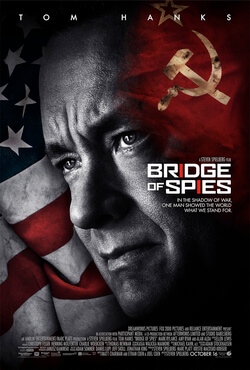 Steven Spielberg is this generation’s
 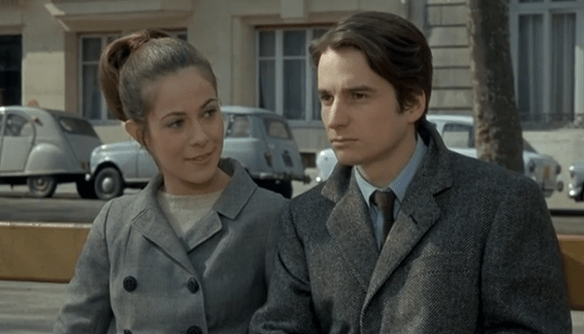 Charles Trenet’s airy melody “I Wish You Love” is our romantic introduction into this comedy-drama. However, amid the constant humorous touches of Truffaut’s film, he makes light of youthful visions of romance, while simultaneously reveling in them. Because there is something about being young that is truly extraordinary. The continued saga of Truffaut’s Antoine Doinel is a perfect place to examine this beautiful conundrum.
 In fact, all in all, if we look at Doinel he doesn’t seem like much. He’s out of the army, obsessed with sex, can’t do anything, and really is a jerk sometimes. Still, he manages to maintain an amicable relationship with the parents of the innocent, wide-eyed beauty Christine (Claude Jade in her spectacular debut). Theirs is an interesting relationship full of turbulence. We don’t know the whole story, but they’ve had a past, and it’s ambiguous whether or not they really are a couple. They’re in the “friend zone” most of the film and really never spend any significant scenes together. Doinel is either busy tailing some arbitrary individual or fleeing pell-mell from the bosses wife who he has a crush on.
 By the time he’s given up the shoe trade and taken up tv repair he’s already visited another hooker, but Christine isn’t done with him yet. She sets up the perfect meet-cute and the two young lovers finally have the type of connection that we have been expecting. When we look at them in this light, sitting at breakfast, or on a bench, or walking in the park they really do seem made for each other. Their height perfectly suited. Her face glowing with joy, his innately serious. Their steps in pleasant cadence with each other. The hesitant gazes of puppy love.
 While
While  Whereas the previous Torn Curtain was generally concerned with life behind the Iron Curtain, Topaz is decidedly more continental moving swiftly between Russia, France, America, Cuba, including a few pitstops at international embassies. However, the film does end up spending a lot of time focused on Cuba which can very easily be juxtaposed with the East German scenes in the former film. Hitchcock once more creates an illusion of reality using the Universal backlot and the adjoining area to craft Cuba, and he makes into a place of sunshine and romantic verandas, but it also runs rampant with totalitarian militia. It’s perhaps more exotic and welcoming than East Germany, but no less repressed. In both cases, they become a perilous locale for our protagonists. Still, rather unlike the previous film, Topaz lacks a truly A-list star like Paul Newman or Julie Andrews.
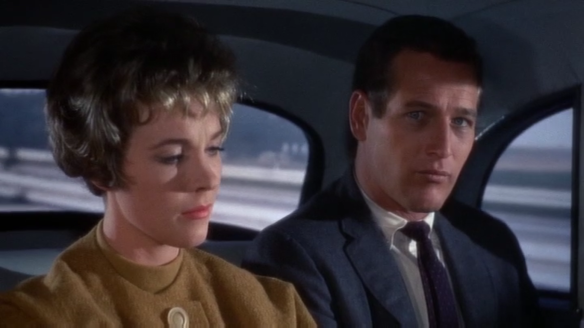 Torn Curtain was
  However, when you watch any Hitchcock film you do wait to be dazzled with some twist or trick because he was always one to bring humor and fascinating aesthetic qualities into his films. Torn Curtain has a few such moments that quickly come to mind. The most prominent has to do with the editing of the sequence in the farmhouse. It is here where Gromek is murdered by Armstrong and the housewife, but it is cut in such a fascinating way. It contrasts with Psycho’s shower sequence quite easily as they try and murder him first by strangling and then anything they can get a hold of whether it’s guns, knives, shovels. There is no score to speak of. Soon it becomes a methodical rhythm of cutting between contorted faces as they slowly but surely move towards the stove. The brutality and length of the ordeal suggest how ugly and laborious it is to kill a man. Hitchcock certainly does not glorify it in any sense.
 We are definitely in the age of the well-wrought period piece and Brooklyn has all the trappings you could want. Adapted from Colm Toibin’s novel the film showcases a pure, noble heroine in Eillis Lacy who like many others makes the journey from her homeland of Ireland to the golden-paved streets of New York.
 4 Star Films