
 As I’ve grown older and, dare I say, more mature, I like to think that I’ve gained a greater appreciation for those moments when I don’t understand, can’t comprehend, and am generally ignorant. Now I am less apt to want to beat myself up and more likely to marvel and try and learn something anew. Thus, Marienbad is not so much maddening as it is fascinating. True, it is a gaudy enigma in form and meaning, but it’s elaborate ornamentation and facades easily elicit awe like a grandiose cathedral or Renaissance painting from one of the masters. It’s a piece of modern art from French director Alain Resnais and it functions rather like a mind palace of memories–a labyrinth of hollowness.
There are figures existing in a defined mise-en-scene without voices or at the most backed by puzzling voice-overs. Almost behaving like specters at times against this backdrop of baroque ornateness. Still, the loose narrative, following a solitary man and aloof woman he’s convinced he met only the year before, is firmly planted in the worlds of architecture, sculpture, and painting in so many ways overlapping and coinciding with this cinematic creation of the moving image. In fact, there is the juxtaposition of images, two figures in the bar, low light only to be contrasted with the gaiety of a girl bathed in sunlight within a bedroom. Later it is followed by a rapid repetition of shots of that same woman.
There’s immense power here, because there is no tie to any narrative strand, allowing complete freedom to go any direction it may so choose. There’s the ambiguity between fantasy, reality, truth, and fiction, all the while backed by the wailing organ music that becomes almost exhausting with its persistence. The camera is constantly tracking, the “story” shifting between time and place with ease.
It’s art at its most unadulterated and audacious, although it does admittedly lack a general geniality or heart. Its predecessor Hiroshima Mon Amour feels imminently more personal and intimate, compared to this truly somber affair. It’s not quite so stiff and stuffy, but Marienbad is still masterclass in other ways.
 In fact, although this film was shot on estates in and around Munich, I have been on palace grounds similar to the film. There’s something magnificent about the sprawling wide open spaces and immaculate landscaping. But still, that can so easily give way to this sense of isolation, since it becomes so obvious that you are next to nothing in this vast expanse. Marienbad conveys that beauty so exquisitely, while also paradoxically denoting a certain detachment therein.
With some films, it becomes hard to decipher fantasy and reality but there usually is at least some initial dividing line before distinctions get fuzzy. That often holds true for the works of Bergman or Fellini. However, here such a dichotomy seems of little consequence. Instead, images become fascinating, architecture is to be examined, and there is hardly a need to know everything. As an audience that frees us up to be mesmerized and truly entranced by what we are being met with.
 Do we understand this bit of interaction at this stately chateau? Probably not. In fact, I’m not sure if we are meant to know the particulars about last year in Marienbad. That doesn’t mean we still can’t enjoy it for what it is. Because Alain Resnais is perennially a fascinating director and he continued to be for many years. Whether you think this is a masterpiece or a piece of rubbish at least give it the courtesy and respect it is due. Then you can pass judgment on it, whatever it may be.
I for one am still mesmerized by that mathematical strategy games, but that’s only the half of it. When it is all and said and done, I have no cogent, well-informed answer. The most striking thing that stayed with me is how Last Marienbad is rather like strolling through a gallery of art. Each framed image acting as its own distinct entity, crossing mediums and really engaging with the viewer. While I am all for Film as a purely visceral form of entertainment, there’s seems to be a necessity for such visionary pieces as Resnais’ work here with screenwriter Alain Robbe-Grillet. What they did is extraordinarily remarkable. That’s the best I can do. You need to see it for yourself.
4.5/5 Stars
 It’s the bane of my literary existence, but I must admit that I have never read Joseph Heller’s seminal novel Catch-22. Please refrain from berating me right now, perhaps deservedly so, because at least I have acknowledged my ignorance. True, I can only take Mike Nichol’s adaptation at face value, but given this film, that still seems worthwhile. I’m not condoning my own failures, but this satirical anti-war film does have two feet to stand on.
 The Chaplain (Anthony Perkins) doesn’t feel like a man of the cloth at all, but a nervously subservient trying to carry out his duties. An agitated laundry officer (Bob Newhart) gets arbitrarily promoted to Squadron Commander, and he ducks out whenever duty calls. Finally, the Chief Surgeon (Jack Gilford) has no power to get Yossarian sent home because as he explains, Yossarian “would be crazy to fly more missions and sane if he didn’t, but if he was sane he’d have to fly them. If he flew them he was crazy and didn’t have to; but if he didn’t, he was sane and had to.” This is the mind-bending logic at the core of Catch-22, and it continues to manifest itself over and over again until it is simply too much. It’s a vicious cycle you can never beat.
 But the tonal shift of Catch-22 is important to note because while it can remain absurdly funny for some time, there is a point of no return. Yossarian constantly relives the moments he watched his young comrade die, and Nately (Art Garfunkel) ends up being killed by his own side. It’s a haunting turn and by the second half, the film is almost hollow. But we are left with one giant aerial shot that quickly pulls away from a flailing Yossarian as he tries to feebly escape this insanity in a flimsy lifeboat headed for Sweden. It’s the final exclamation point in this farcical tale.
 This is an Otto Preminger film about politics. That should send off fireworks because such a divisive topic is only going to get more controversial with a man such as Preminger at the helm — a man known for his various run-ins with the Production Code. All that can be said is that he didn’t disappoint this time either.
 As the film opens we watch a foot slowly wiggling its toes. It’s nothing extraordinary because we’ve undoubtedly seen this millions of times. If not on film then at least in our own lives. But it’s what the foot does that piques our interest. Quite dexterously but still straining, it manages to pull a record out of its sheath, set it down on the player, and lay down the needle before music finally emanates out. This simple act gives us some profound insight into the story that we are about to invest ourselves in.
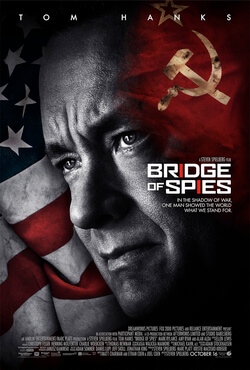 Steven Spielberg is this generation’s
 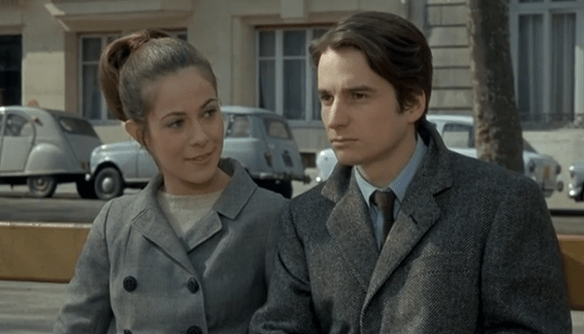 Charles Trenet’s airy melody “I Wish You Love” is our romantic introduction into this comedy-drama. However, amid the constant humorous touches of Truffaut’s film, he makes light of youthful visions of romance, while simultaneously reveling in them. Because there is something about being young that is truly extraordinary. The continued saga of Truffaut’s Antoine Doinel is a perfect place to examine this beautiful conundrum.
 In fact, all in all, if we look at Doinel he doesn’t seem like much. He’s out of the army, obsessed with sex, can’t do anything, and really is a jerk sometimes. Still, he manages to maintain an amicable relationship with the parents of the innocent, wide-eyed beauty Christine (Claude Jade in her spectacular debut). Theirs is an interesting relationship full of turbulence. We don’t know the whole story, but they’ve had a past, and it’s ambiguous whether or not they really are a couple. They’re in the “friend zone” most of the film and really never spend any significant scenes together. Doinel is either busy tailing some arbitrary individual or fleeing pell-mell from the bosses wife who he has a crush on.
 By the time he’s given up the shoe trade and taken up tv repair he’s already visited another hooker, but Christine isn’t done with him yet. She sets up the perfect meet-cute and the two young lovers finally have the type of connection that we have been expecting. When we look at them in this light, sitting at breakfast, or on a bench, or walking in the park they really do seem made for each other. Their height perfectly suited. Her face glowing with joy, his innately serious. Their steps in pleasant cadence with each other. The hesitant gazes of puppy love.
 While
While  Whereas the previous Torn Curtain was generally concerned with life behind the Iron Curtain, Topaz is decidedly more continental moving swiftly between Russia, France, America, Cuba, including a few pitstops at international embassies. However, the film does end up spending a lot of time focused on Cuba which can very easily be juxtaposed with the East German scenes in the former film. Hitchcock once more creates an illusion of reality using the Universal backlot and the adjoining area to craft Cuba, and he makes into a place of sunshine and romantic verandas, but it also runs rampant with totalitarian militia. It’s perhaps more exotic and welcoming than East Germany, but no less repressed. In both cases, they become a perilous locale for our protagonists. Still, rather unlike the previous film, Topaz lacks a truly A-list star like Paul Newman or Julie Andrews.
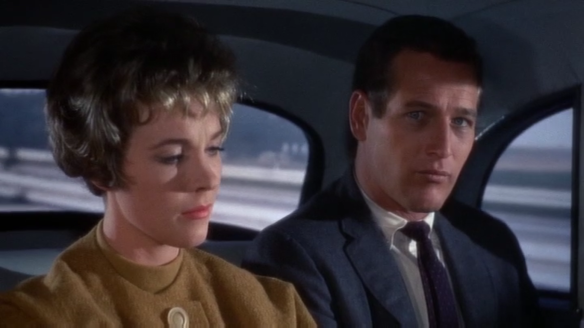 Torn Curtain was
  However, when you watch any Hitchcock film you do wait to be dazzled with some twist or trick because he was always one to bring humor and fascinating aesthetic qualities into his films. Torn Curtain has a few such moments that quickly come to mind. The most prominent has to do with the editing of the sequence in the farmhouse. It is here where Gromek is murdered by Armstrong and the housewife, but it is cut in such a fascinating way. It contrasts with Psycho’s shower sequence quite easily as they try and murder him first by strangling and then anything they can get a hold of whether it’s guns, knives, shovels. There is no score to speak of. Soon it becomes a methodical rhythm of cutting between contorted faces as they slowly but surely move towards the stove. The brutality and length of the ordeal suggest how ugly and laborious it is to kill a man. Hitchcock certainly does not glorify it in any sense.
 We are definitely in the age of the well-wrought period piece and Brooklyn has all the trappings you could want. Adapted from Colm Toibin’s novel the film showcases a pure, noble heroine in Eillis Lacy who like many others makes the journey from her homeland of Ireland to the golden-paved streets of New York.
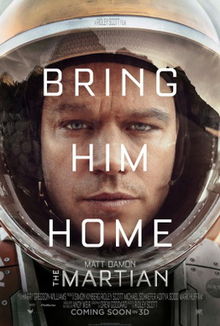 The Martian is not the film you first expect. It’s a space thriller. It has tense moments assuredly, but it also has an astute sense of humor that pulses through the film as its lifeblood. It makes Ridley Scott’s latest endeavor, based on the novel by Andy Weir, all the more palatable because it lends a fresh face to space exploration.
