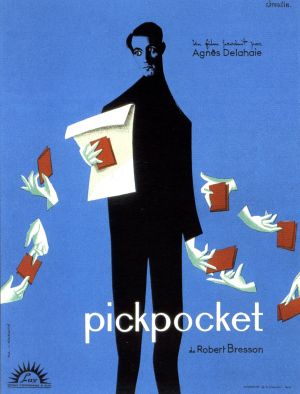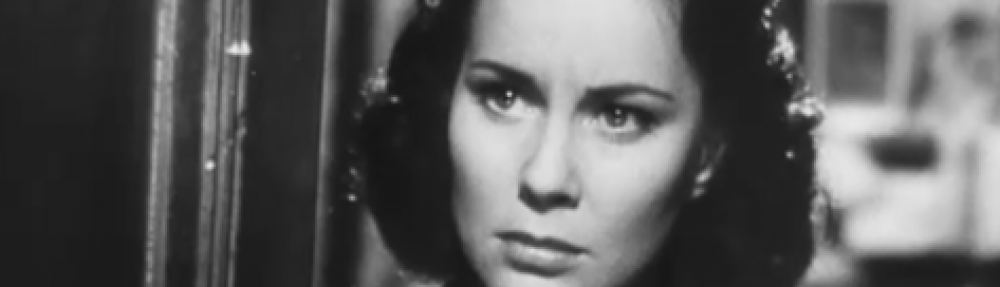
Lola (1961)

Lola1961As the debut of Jacques Demy, Lola has some qualities that, for lack of a better term, are very un-Demy. First off, he was a member of the French New Wave period of filmmakers and yet he resigned himself to making mostly musicals, taking inspiration from Hollywood and setting them in his own unique world. He was not concerned with the experimenting or political undertones of many of his peers. However, this is probably the most typical looking of his work and thus a jumping off point for the rest of his career.

Not quite as elegant in camera movements as Max Ophul’s work which received a nod, Lola still has a pleasing sleek visual style representative of the French New Wave. Its silky smooth, black and white cinematography courtesy of Raoul Coutard (Breathless), however, makes the film look more like something from Godard.

Lola is what Demy himself coined “a musical without music,” I suppose because it lacks the signature singing of his later films, but keeps the music and some of the other elements. Demy’s film also has a sense of cinematic realism with characters crossing paths with one another in various coincidental moments. It may be highly unbelievable in its plotting and yet it works within the Demy world of romance and fatalism which he would often revisit later on.

lola3This film follows a cabaret singer named Lola (Anouk Aimee) in a small seaside village called Nantes. She has a young son and a lover who she has long waited for. In the meantime, childhood friend Roland Cassard (Marc Michel) trudges on with his life without much drive. He is a befriended by a lady and her daughter Cecile at the local bookstore where they strike up a quick friendship. Then, by chance Cassard runs into to Lola, or Cecile as he used to know her when they were children. It’s been many years and although she has been getting together with an American sailor (Alan Scott) named Frankie, she is excited to go out for an evening with Roland. However, in another interesting meeting young Cecile runs into Frankie while buying a comic book and they have some fun together.
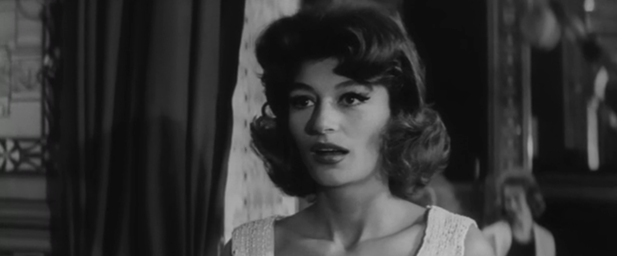
lola6In the end, Lola tells Roland that she will never truly love him and they must remain friends. It’s a bitter time for Roland as he decides to leave like he was originally planning. Finally, Michel returns and Lola is reunited with her love. It’s another bittersweet tale of love from the mind of Jacques Demy. Whimsical, poignant, and wistful too. That’s not the last we will see of Roland, though his luck doesn’t get much better (Umbrellas of Cherbourg), and  Lola returns too (Model Shop). Now only to go back and watch The Blue Angel (1930) from von Sternberg and Lola (1981) by Fassbinder which both bookend this work by Demy also chronicling a cabaret singer. There’s a lot of history here still to be seen and Jacques Demy is a worthy addition to the lineage even if this is not his best film.

4/5 Stars
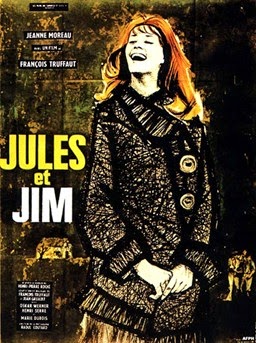
Jules et Jim (1962)

Jules et Jim (1962)Directed by Francois Truffaut, this film begins before WWI with two friends, the timid Austrian writer Jules and the more outgoing Frenchman Jim. Both men become enchanted by a statue that a friend had seen and soon Jules meets the free spirited Catherine after being with several women before her. Although he begins a relationship with Catherine, she soon casts her spell on both of them causing them to have a very close relationship. 
Just before the Great War begins Jules and Catherine are married but when the fighting starts the two men are on opposite sides. Fortunately, they both come out of the war and Jim comes to stay with his friends in their mountain home. Now they have a daughter but their marriage is difficult because Catherine has had several affairs. She begins to flirt with Jim and Jules gives his blessing hoping Catherine will still be present in his life. 
Catherine and Jim end up separating however when they struggle to have a child. Later, they reconnect in Paris but Jim resolves to marry another girl much to Catherine’s jealousy. They meet one last time and Catherine goes on a drive with Jim that ends fatally. Jules is left to grieve for his best friend and his true love.
It is interesting how Catherine is really the main character here despite the title suggesting otherwise. Jeanne Moreau does not seem like your typical beauty either and yet Truffaut makes her character truly special. If you want to become acquainted with Truffaut and the style of French New Wave this one of the films you need to go to. The 400 Blows first, Jules and Jim soon after. 
4/5 Stars

The Umbrellas of Cherbourg (1964)

umbrellas1 It is hard to remember a time when I was so devastatingly sad due to a film, and it does not leave a deep hurt but a more wistful despondency that is far more real. However, that’s enough misery for the time being. Directed by Jacques Demy and starring an exquisitely young Catherine Deneuve, this cinematic opera is a moving musical piece that looks to be conventional and turns out to be quite the opposite. 

The story begins in November of 1957 with a young mechanic named Guy (Nino Castelnuovo) who is deeply in love with the beautiful 16-year-old Genevieve (Deneuve). Guy cares a great deal for his godmother Elise who has a caregiver to look after her. Genevieve helps out her mother in running a small umbrellas shop in Cherbourg which allows them to scrape by. They must sell some family heirlooms to a kindly jeweler who is smitten with Genevieve. However, Genevieve and Guy have plans of marriage until Guy learns suddenly that he has been drafted for the war in Algeria. They spend their last hours together, and she vows to wait for his return. 

umbrellas7In the following months, it becomes evident that Genevieve is pregnant, but her mother tells her that Guy has probably forgotten her already. The jeweler, Roland Cassard (Marc Michel), professes his love for Genevieve and agrees to adopt her unborn child. Thus, partially on the urging of her mother Genevieve accepts his proposal and they are soon married leaving Cherbourg for good. 

Finally, Guy returns from the war and things have changed. He now has a limp and is fed up with his old work at the garage. Furthermore, the Umbrellas shop is sold and Genevieve is wed and gone. Adding insult to injury his godmother soon passes away. With no one else to turn to, he looks to the caretaker Madeleine, and he realizes her love for him. They get married and he turns his life around with her help. 

The years pass, and now during Christmas of 1963, a car pulls into Guy’s new gas station. After many years, the two former lovers come face to face once more. Now they have marriages and children, and their interactions are painfully aloof. They have moved on with their lives and they have moved on from their passionate romance. 

umbrellas13True, their lives have become sensible, but in this opera that Demy has constructed, this conclusion is sad and bittersweet. And yet if this were the only painful moment that would be one thing, but there are so many that touch the heart and move the viewer. When Guy goes off to the army and takes off on the train we can feel the great weight of anguish. More often than not, you can read the sadness on the face of these characters which complement the beautiful ballads they utter. In other words, it’s one thing to recount the plot and quite another to watch the events unfold.

I have to say that I had never seen a film that played out entirely through song, and even in the opening sequence, Demy consciously melds the diverse forms of film and opera. Umbrellas has the vibrancy and color of movies and takes the dramatic story line and songs of opera, to create a unique piece of musical artistry complete with acts and all. Its colors are bright and vibrant–utterly distinct in their composition. Everything from the bikes to the umbrellas and even back alleyways are beautiful. Although there are many magnificent melodies, rather surprisingly there is not one specific song that stands out (Well, maybe the theme), but instead, it plays rather like one continuous song with different sections and overtures that complement while not overshadowing each other.

umbrellas4Demy’s earlier film Lola also gives an interesting insight into the character of Roland Cassard who once again becomes acquainted with a mother and her daughter in a shop. This time around he has accomplished his dream of traveling the world as a diamond merchant, however, Lola is still heavy on his heart. Another thing that is remarkable about the film is the weather which in many ways plays as another character. The varying degrees of rain and snow dictate the mood and shift with the changing seasons. There’s no doubt that Jacques Demy and his collaborator Michel Legrand created something special here that elevates the musical to a heartfelt tragedy of romance. That’s something many men would not be brave enough to do. 

4.5/5 Stars

Review: Playtime (1967)

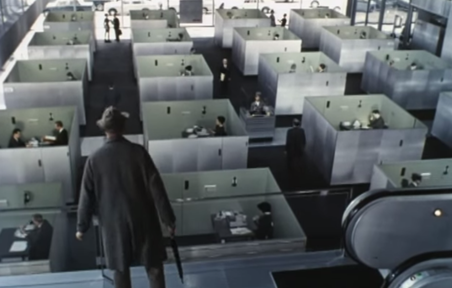
playtime1Playtime is a film that really can be broken into a number of set pieces elaborately constructed by director Jacques Tati. The vignettes begin, surprisingly enough, in an airport terminal, and a group of excited Americans are getting ready for a Parisian vacation. Mr. Hulot (Tati himself) is waiting to have a meeting in a glass office building, however, he soon gets lost in a maze of cubicles, playing cat and mouse with his contact.

Quite by accident, he wanders into an international trade exhibition and the tourists just happen to be there too. While there they are introduced to the latest gizmos, gadgets, and inventions to move society forward. They include silently slamming doors and retractable glasses. In typical Tati fashion, he gives us a glimpse of the old world from Mon Oncle. All that is left is one meager flower stand and a brief reflection of the Eiffel Tower.

Bumping into an old war buddy, M. Hulot is invited over and thus begins a long sequence in an apartment building. What makes it unusual is that the audience is left out on the street, but we can see multiple interiors through the glass. Thus, the conversation becomes unimportant, and the charades inside paired with the street noise is all we notice.

One of the most substantial sequences takes place in a place called The Golden Corkscrew. It is a packed house and the nightclub barely seems prepared for such an evening. Tiles are loose, food runs out, a band member comes late, the chairs leave marks on the backs of patrons, and much much more. Hulot stumbles in and comes in contact with several previous acquaintances. He also makes a few new friends including a boisterous American and a friendly female tourist.

After the crazy night, the morning comes and Hulot says goodbye to his new American friend but not before leaving her with a parting gift to remember her memorable time in Paris. It may not be the Paris of old, but it is still a cheery place made by its people who still remain the same even when the times change.

Jacques Tati’s Playtime took numerous years to complete and it was the most expensive French production at the time. It makes sense though because it truly is a magnificent piece of cinema. It is full of beautifully choreographed sequences and elaborate sets. Mr. Hulot often finds himself wandering through this labyrinth of modern Parisian humanity. Tati teases us, however, filling his world with Hulot doppelgangers.

Even when the gangly protagonist is on screen, he often pops off and on for minutes on end. He is no longer the primary focus of the film. Tati also takes great interest in the sterile modern society of glass, steel, and technology. The screen is filled with a wide array of individuals, which makes it fascinating to simply people watch. Furthermore, Tati almost refuses to use closeups, thus allowing the camera to capture more.

Playtime is slightly slower, to begin with than I remember, but it has wonderfully subdued humor paired with social commentary. Tati’s film may not have a lot of decipherable dialogue, but there sure is a great deal of noise. His sound effects seem to rival The Three Stooges in comical impact, often filling the void usually devoted to talking. It is moments like these where you see similarities to the old silent comics like Chaplin and Keaton.

Playtime is all about the minutiae and these moments are probably exhibited best at the nightclub. So much happens and much of it goes unnoticed, but oftentimes when you pick up on something the payoff is great because you slowly begin to notice more and more. Tati does not have to announce it, but he puts it there to be seen. For instance, there is the fish that is never served but is constantly being seasoned. Then, the doorman who opens the door without any glass. Finally, there is the waiter who gets all the ripped, torn and otherwise ruined articles of clothing. Together all these moments create some immensely funny sequences.

Another thing about Tati’s film. There is really no conflict. He is addressing the changing times, but at its heart, Playtime is just that. Light-hearted recreation.

5/5 Stars

The Diving Bell and the Butterfly (2007)

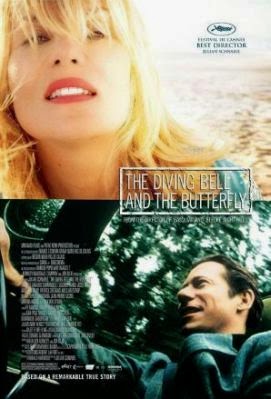
ca161-divingbellbutterflympIt’s beyond me how a film about a man who is all but paralyzed, except for his left eye, could be interesting. The main plot point follows his struggle to write a memoir using a tedious system where he blinks his eye for an assistant to transcribe. Maybe this does not sound all that engaging, but it most definitely is. No question. It has to do with how the film narrative is developed.

Bauby’s struggle is experienced first hand by the audience as we are stuck inside his head for the first portion of the film. It is a disconcerting perspective as we begin the film as helpless and confused as he is. We are there for every painfully difficult piece of progress, every one-sided conversation that Bauby (Mathieu Amalric) is unable to respond to, and every moment when he is powerless to act out. It is absolutely eye-opening. No pun intended. It’s simply the truth.

His progression is absolutely extraordinary. Beginning as a supposed “vegetable” who wished to die, to a man with an imagination that he was able to share with the world. He still had the ability and the passion for sharing his thoughts, memories, and desires with the world. He was physically so powerless and yet mentally so empowered.

Fragments of his story are given to us in pieces, although we still continue to return to the limited perspective he himself experiences. It is not easy to be sure. He must have others bathe him. The television channel is out of his control. There are doctors, therapists, friends, and family coming to see them, and he has no ability to physically interact. He still has feelings for his mistress, but the mother of his children still cares deeply for him. Sundays are hell with no one around.

Despite all that seems to drag him down, Bauby still is able to flutter above it all like a butterfly. With the help of his assistant and a strong will, he completed his memoir. 10 days later he would die, but his mission was accomplished. Maybe it seems like a rather unfortunate ending, but even if the lack of closure is unsatisfying, how it ended is the truth. Bauby was undoubtedly content because, despite the seemingly surmountable obstacles, he never lost his humanity. Being Locked-in could never take his mind from him. Ultimately, he was a winner and so his story ends on a somber yet powerful note.

It has been a while since I have been so affected by a film. I hope I will see another one like it very, very soon.

4.5/5 Stars

The Passion of Joan of Arc (1928)

6d281-passionarcAs cliche as it will sound, this is one of those films that transcends the years for me. It is still that powerful after so many decades.

Using low angles and numerous close ups Carl Theodor Dreyer pulled me into this story early on. It was tense and claustrophobic causing the viewer to become emotionally involved in the trial and the plight that surrounded Joan.

The actors that he chose have wonderfully expressive visages that are so distinct even with out makeup of any kind. Then there is Falconetti who undoubtedly has a pair of the most expressive eyes ever shown on the silver screen.

I watched the film without any score so the complete silence was a new experience for me, but it forced me to pay particular attention to the images. Those were enough to keep my attention by  making me squirm and empathize the entire time.

By the end of the film there is an immense connection for Joan built because she seems an innocent victim. A martyr to be sure who reflects the sufferings of Christ. That is the story of The Passion of Joan of Arc. Certainly a simple tale but a master work of silent cinema nonetheless.

I am intrigued to see more from Carol Theodor Dreyer especially because his filmography is so sparse.

4.5/5 Stars

Le Silence de la mer (1949)

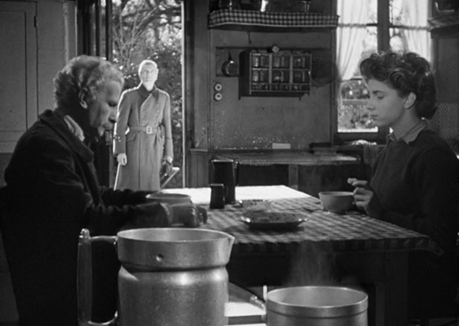
f9677-lesilence1Out of the many titans of French film, I found a personal favorite in Jean-Pierre Melville. Aside from changing his name in honor of the American author who wrote about the great white whale, Melville was also a member of the French Resistance during WWII. Thus, he seems to be the perfect man to helm a film based on a novel that was secretly published during the Nazi occupation. You would think that it would be brimming with political agenda and underhanded controversy.

Instead, Melville gifts us a nuanced and sympathetic film about a German Lieutenant who is quartered in the home of a French gentleman and his young niece. In many ways, much of the story plays out as an extended monologue rattled off by Werner von Ebrennac, and it becomes the perfect narrative device for an intimate character study. He is met by silence and passive aggression from his hosts, who hate his guts and the situation they have been placed in. He represents everything they despise, and his mere presence also reminds them of the shameful fact that France has fallen.

And yet he is far from the stereotype, and Melville never allows this German Lieutenant to succumb to our preconceptions. This has to be one of the most sympathetic depictions of a German soldier ever seen captured on film. It turns out that Ebrennac is a perfect gentleman, cultured in literature (Moliere, Rascine, Cervantes, Dante, Shakespeare, and Goethe), and a seasoned musician. His head is full of romantic ideals about the reviving of France as it is taken under the wing of its new conqueror.

His words are always met with a quiet contempt as uncle and niece continually sit reading and knitting. It never seems to change or stop. There is never a change in temperate or a word spoken. Just the words of Ebrennac every evening after he gets back and the voice-over of the older gentlemen constantly illuminates us about the unspoken workings of his mind.

Soon, however, the Lieutenant learns the reality of the war from Treblinka to the Nazi ideology pervading the psyche of all the German military. Friends have been brainwashed, and his view of the German war is completely dashed. There is nothing left to do but apply for a transfer and resign himself to the hell that has been created. Uncle and niece reluctantly bid farewell to a man who was the exception.

This was Jean-Pierre Melville’s first feature, but I really enjoyed it as simple as it is. He seems to understand the ambiguities of war. It often is difficult to decipher who is in the right or the wrong. Germany was the odious villain and France the obvious victim. However, in this domestic drama the tables are seemingly switched in stark contrast.

4/5 Stars

Wages of Fear (1953)

2c3da-salairedelapeurr350Directed by Henri-Georges Clouzot, this international thriller stars a cast headed by Yves Montand. The film opens in a hell-hole of a town in South America where many jobless drifters spend their days. The joke is that it is really easy to get there, you just can never get out again. 

A Frenchman named Mario (Montand) is one of these vagabonds who has little to do except make eyes at a pretty girl (Vera Clouzot), and sit around the local hangout. Then a massive fire breaks out at a nearby oil field of the corrupt, American Southern Oil Company (SOC). In order to stop the devastation, the solution is to use explosions triggered by nitroglycerin. But the journey to the fields is extremely dangerous so there is the brilliant idea of finding four eager vagrants to transport two trucks of nitro on this 300-mile suicide mission. In need of a break, most of the town jumps at the opportunity. However, only four men actually get this “privilege.” 
One is Mario, another his jovial roommate Luigi, and then the closed off and menacing Bimba. The fourth man who eventually joins this trio is Jo who is an older French fellow who befriended Mario. Then, Mario and Jo leave in one vehicle followed by Bimba and Luigi with the fun just beginning. They must navigate the treacherous roads full of not only bumps but barricades and giant boulders. All the while they are worn thin physically and psychologically. 

Soon the confident Jo turns into a sickly coward, but the other three must keep on going if they want their payoff. In the end, this mission turns out to be too much for some. Eventually, Mario gets ready to return to his girl with $4,000 in toe, a deliriously happy man.
First off, when it is said that this film is a “thriller,” we are not talking about a Hollywood thriller here, with overwhelming action followed by twist after turn. What makes the Wages of Fear so powerful is the sustained intensity because every moment that the nitroglycerin is in the picture you half expect something to go wrong. As such a thriller, I almost came to expect the ending because I really do not think it could have ended any other way. In many ways, it is not simply a critique of the American oil industry, but also the American film industry, and it confidently defies both.

4.5/5 Stars

Three Colors: Red (1994)

 3a286-threecolorsred3Kieslowski’s films are mostly character driven and yet he often uses high drama to create a far more complex lens to observe his subjects. In Blue, the inciting incident was a deadly car accident. It seems only fitting that he would end this story with the catastrophic sinking of a ferry. He takes the same bleak, no-nonsense approach with little fanfare that he used before. It’s his way.

In fact Three Colors: Red as a whole is another simplistic film in plot, and yet the irony is that the film is chock full of complexity because its major point of interest is interpersonal relationships (as suggested by the intertwining phone lines shown early on). There is nothing more tangled and intricate about humanity than our relationships.

As such, this final installment is in many ways a story about love, romance, and friendship, and yet Kieslowski does not find it necessary to preach to us. He is better and more thoughtful than that, laying out the story for us to ponder and mull over. This is the story or better yet the parable he created.

Valentine (Irene Jacob) is a young student and model who is constantly an innocent and sympathetic figure with a pair of doe eyes. She is often shown in profile which continually reveals her youthful and even sullen beauty. She is even the somber poster girl of a gum campaign plastered around town. There’s a boyfriend in her life who she desires the affection of, and then there’s a brother who is hooked on drugs. In other words, life is far from rosy and secure.

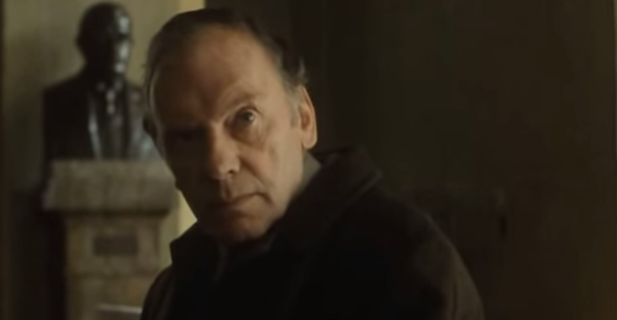
One day she accidentally runs over a dog that she takes to the owner (Jean-Louis Trintignant,) who seems surprisingly unconcerned by the event. She does the only thing she can do with a clear conscious which is taking the dog to the vet and then taking care of it herself. Soon after, Valentine finds herself walking the dog by the old man’s house once more and she discovers what he does all day. It turns out he is a retired judge, and he spends his solitary existence eavesdropping on the conversations of others (including Valentine’s neighbor Auguste).

Later, through the grapevine, she finds out that a retired judge had a suit filed against him, and she rushes to his house to assure him she had no part. He already knows because he was the one who turned himself in.

Over the next days, Valentine begins to empathize more and more with Mr. Kern’s existence. As a former judge, he was forced to make decisions far more difficult than most. In fact, why do people follow laws? Is it out of goodness or purely self-serving? Is morality all relative? What really is good and bad, because how would we act in the other man’s shoes? By this point, we see Kern’s struggle a little better.

Finally, Valentine invites her new found friend to her last fashion show before she heads to England for a few weeks. It’s a touching moment when he pays her a visit after the show, but it also reveals the pain in the old man’s past. It may be a lucky guess but all we know is that Valentine figures him out. It just shows that you cannot judge others by first impressions.

So as it goes, Auguste’s life practically mirrors that of a younger Kern, and thus, so many parallels become evident. Aside from the obvious, I only figured it out after the film was done, but they are both judges, struggle in love and the like. At the end of the film when Kern sees the news about the ferry with Valentine and Auguste aboard, the only thing we know for sure is that there were seven survivors (guess who!). In a somewhat subtle way, the trilogy is connected and Kieslowski ends his tale on a fitting note. It freezes and just like that the career of one man was done for good. A couple years later he would already be gone. But he went out on top and Three Colors cemented his legacy. I always loved the color red the best. Here’s yet another reason why.

4.5/5 Stars

Pickpocket (1959)

6593f-pickpocketposterThis French film directed by Robert Bresson, begins with voice-over narration of a man recalling his past. Michel is a nondescript person who was down on his luck. Then, one day he ineptly tried his hand at pick pocketing and was caught. He got off and over time he sharpened his skills and teamed up with two other men. They successfully bring in a great deal and it becomes Michel’s livelihood. At the same time Michel’s mother is becoming ill and he meets a young neighbor named Jeanne. Michel’s best friend is falling for this girl while Michel himself is continually tempted to steal. This leads to a little trouble from a police inspector and yet he stays out of jail.

However, after further discussion with the chief and Jeanne, Michel leaves Paris. He returns later still impoverished, to find Jeanne with a child but unmarried. He resolves to support her and yet after trying to work, he reverts back to his past vice. This time his guard is down and he winds up in jail. Jeanne comes to visit him a great deal and through this devotion he realizes they both are in love with each other.

This film has simple but intriguing topic. Sometimes the pick pocketing scenes are shown almost as a choreographed dance which is done so fluidly. Overall Pickpocket has a striking resemblance to Doestoevsky’s Crime and Punishment but it reflects the wonderful simplicity of Robert Bresson’s realistic style. Is it just me or does Marika Green look like Natalie Portman in black and white. I certainly think so.

4.5/5 Stars