Tokyo Pop (1988)

Since my time living in Tokyo, I’ve continued to be fascinated with how Japanese culture will create these hyper-specific niches of popular fandom. Japanese people take their hobbies very seriously and they go all in. You often meet teenagers or straight-laced salarymen who can barely string together sentences in English, only to discover they have some unique knowledge about American culture, especially in the realm of music.

There was a businessman who loved Olivia Newton-John; his go-to English-language Karaoke song was “Physical.” There was a student who jammed out to Korn, or one of my fellow teachers who shared a love of Sam Cooke and taught me about jazz musicians like John Coltrane and Charlie Parker.

Japanese popular culture was arguably at its height during the 1980s. You had the economic miracle or the “bubble,” which led to unprecedented prosperity in the country and with it greater disposable income and thriving youth subcultures.

Tokyo Pop feels like a perfect time capsule for this precise moment. There are evocations of pop culture that blend Japanese tradition with Western influence. Front and center are a Mickey Mouse ryokan in Iidabashi, then iconic brands like KFC, McDonalds, and Dunkin Donuts.

There were even a couple of times I sat up in my seat because I felt like I knew where a storefront or restaurant might be below the neon lights of the city. However, some of the most famous landmarks are unmistakable. We get views of Shibuya near the Hachiko statue or greasers and punks hanging out in Harajuku near Yoyogi Park.

I don’t need much plot to enjoy the movie, but here it is. Wendy Reed (Carrie Hamilton) isn’t having much luck on the music circuit in America. When she receives a postcard from a friend, plastered with Mount Fuji on the front, she makes the impetuous decision to make the trip. However, she arrives only to realize her girlfriend has already moved on.

So she’s left high and dry bumming around Tokyo like a helpless baby who doesn’t know the culture, can’t speak the language, and is quickly running out of money. Hiro Yamaguchi (Diamond Yukai) spies her at a street vendor where he’s eating late at night with his buddies, and they bet him that he can’t get lucky with her. He takes them on. It’s a trifle, a cliché-filled scenario, but it’s easy to excuse the film based on what it excels at.

Carrie Hamilton and Yutaka “Diamond” Yukai try and go through the paces of antagonism, however, it’s their genuine camaraderie and shared appreciation of music that really shines through. In one sequence he serenades his American flame with an acoustic rendition of “You Make Me Feel Like a Natural Woman.”

Meanwhile, his band spends their time trying to get to a prominent Tokyo tastemaker named Doda who can make or break their careers. When all their ploys fail, Wendy finally takes the very direct approach waltzing into his office and commanding the room.

Eventually they make it big playing poppy covers of “Blue Suede Shoes” and “Do You Believe in Magic.” We see their rapid ascension as media personalities and global sensations, but at what cost? The couple’s able to get their own apartment and they should be happy, but their art suffers. They’ve pigeonholed themselves doing something that isn’t life-giving. They want to rock out.

Tokyo Pop‘s alive with so much youthful energy and, I would argue it has an even more perceptive viewpoint than later works like Lost in Translation. Although it has an entry point for American audiences, so much of it feels attuned to aspects of Japanese culture; they’re the type of moments I see and totally recognize, not as foreign and other, but authentic.

Japanese lavishing effusive praise on their fellow countrymen for any nominal use of English. Shoes taken off at the entryway. Every taxi driver’s fear of foreigners. Karaoke and alcohol as one of the most beloved forms of socialization, and the kindness of elderly men and women who will walk you where you need to go in spite of any language barrier.

In its day, Fran Rubel Kuzui’s movie was quite a success at Cannes only to fall away thanks to a distributor that went defunct. For a film that’s so perfectly in my wheelhouse, it’s a joy to see it resurrected from obscurity in a fancy new print that does wonders in making the images of the 1980s explode off the screen. There’s a tactile sense that we are there in the moment.

During an interview, the director acknowledged, only years later when friends told her, that she and her Japanese husband Kaz Kuzui were basically Wendy and Hiro. If not in actuality, then certainly it mirrors how their relationship crossed cultural bounds.

It’s also easy to draw parallels between Tokyo Pop and Lost in Translation for how they capture a moment in time (and coincidentally they both feature Diamond Yukai). Although the former film is more upbeat, and lacks much of the alienation of Coppola’s work, you do still see the darker, lonelier edges of Tokyo on the fringes.

From passionless love hotels to getting lost in the masses of humanity, and the crippling societal expectations of Japan, it’s still present. Because while Lost in Translation is always about the western perspective incubated in Tokyo’s fast-paced modernity, it seems like Kuzui’s international marriage gives her a more perceptive and localized understanding of Japan.

I’ve long been a fan of John Carney and there’s some of that energy here where music is so integral in constructing the story. No matter how humble the means, the production of the music functions as a platform and a showcase for the performers in such an authentic way. By the end, we appreciate the music and by extension the characters as well. But they both work in tandem to supersede the plot.

Some of the songs feel like absolute knockouts like “Hiro’s Song,” which can stand on its own two feet. They leave the film on a feel-good high that extends beyond the credits. With the latest reissue of the film for its 25th anniversary in 2023, it seems ripe for rediscovery by a new audience.

3.5/5 Stars
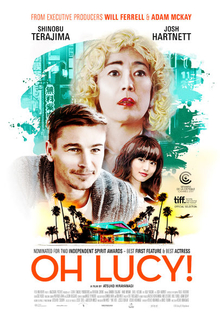
Oh Lucy! (2017)

As an American who made my home in Japan for several years, the transcontinental cultural space between the two nations fascinates me to no end. It occurs to me that Oh Lucy is a film that navigates the disparities between these two worlds.

One element is American culture and the linguistic differences between the English-speaking world and Japan. There are many, and they come into play in director Atsuko Hirayanagi’s adaptation of her eponymous short film. She comes at this subject matter from the other side. Namely, she was an exchange student in the U.S., who now makes her home here. It’s easy for me to appreciate the point of view she brings to the movie.

Something like the office environment is familiar to anyone who has worked in Japan. There are many salient features: the rows of desks, the paperwork, the stamps, and the gossip, which always has a way of coming out when people are stone-cold drunk after hours.

Setsuko (Shinobu Terajima) is our protagonist, a Japanese office lady who faithfully serves her company quietly and without much passion. She’s a cog in the machine. She also has a drawer in her desk full of “omiyage” (that is, treats and little souvenirs that people bring back from their vacations for the sole purpose of not feeling shame).

It’s a ritualistic action of altruism so ingrained in the culture that most everyone provides them to everyone else. Of course, this is resoundingly cynical, but there’s also some collective truth in this. Is Lucy’s uneaten stockpile an act of rebellion?

It speaks to something of her character. Maybe she’s one of those nails sticking out as the old proverb (or kotowaza) says. Eventually, she will be hammered back into place. However, if this is a silent act of nonconformity, her next leap of faith comes with agreeing to an English school that her spunky niece pleads her to join.

She goes to a trial lesson in a building that looks more dubious than its rather innocuous interiors. It’s in her first meeting with John (Josh Hartnett) that Setsuko is christened with a new name “Lucy,” and in a whirlwind of American forwardness, she learns how to awkwardly hug and enlist a more rounded pronunciation with a ping pong ball wedged in her mouth.

It’s the strangest English curriculum I’ve ever seen, but there’s also something disarming about it. “Lucy” wants more and she wants to see more of John too. Although she’s still contained in her shell and hesitant with English, she’s drawn to this world so different than her own. Here we have the core of all the cultural contrasts.

Without transcribing all the turn of events, Oh Lucy has a few surprises, fashioning itself into a lightweight take on the American road trip movie. It’s not quite Paris, Texas, but it does become a sort of outsider’s tale of what America represents even as our heroine comes to terms with what she wants out of life.

If you sit thinking about what this story is about, it’s easy for the pieces to fall apart, but if you just let the story happen, you can learn much about this space in-between. Disparate cultures with relatives chafing, one against the other.

In some ways, I have a great appreciation for Josh Hartnett’s character. He starts out as the most cartoonish American caricature (He might easily have his own NHK segment). I have very little context with him as a matinee idol, but since the years have passed, it feeds into his portrayal. John feels like a bit of an adult in neutral. He’s never grown up and never managed to get his life together.

As such, there are decisions he makes and aspects of him that feel wholly unsympathetic. He’s everything other people envy about Americans on the outside — on the first impression — and if you’re American, he reflects much of what we might be ashamed of in ourselves.

Still, he’s also something of a cultural mediator. Bridging the gap between Japanese folks who have the wrong perception of America and then Americans who have little patience for anyone or anything different than themselves. Helping Lucy and her nagging sister order food at a diner is only one example. Earlier they also share a genial conversation with a fellow passenger (Megan Mullaly in a cameo).

I know these moments well on both sides of the pond. The movie continually exists in these spaces I often frequented and without being too dialogue-heavy, it strives for some kind of mutual understanding since differences and barriers always crop up. Somehow there are still universal aspects that draw us to one another and cause us to reach out of our comfort zones.

One old friend who makes a welcomed appearance is Koji Yakusho as a fellow English learner. He strived for a similar kind of self-expression in Shall We Dance?, which feels a bit like a modern classic now.

Rather unfortunately, Oh Lucy makes several violent lunges at melodrama that don’t quite suit it. This is to its detriment. It functions best acknowledging quirks in opposition to the predisposed understatement of Japanese culture. So while these are my misgivings about the movie, a hug on a train platform does feel like a resounding thunderclap and a radical act.

In a culture where you can simultaneously be crammed together in a train and yet never have any meaningful physical contact of any kind, I certainly found myself starved for it at times. There are laughs and a decent amount of heartbreak and animosity strung throughout before we finally have some solace.

Lucy comes home to find a silent rebel not unlike herself, quietly revolting against the status quo, and sometimes that is a very healthy thing. It does each of us good to open up our worlds.

3/5 Stars

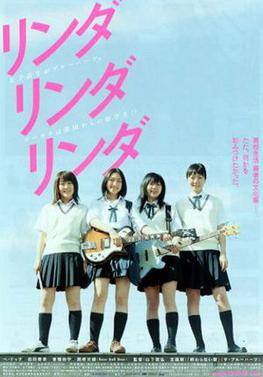
Linda, Linda, Linda (2005)

“Like a rat, I want to be beautiful. Because you have a beauty that can’t be reflected in pictures” -sung by Linda, Linda, Linda

During the grainy opening scene of Linda, Linda, Linda there’s some time spent figuring out how these characters relate to our story as two AV nerds look to video a high school girl who is introducing a school’s forthcoming cultural festival.

It’s not so important to get to know who they are as to realize they will become the bookend for the movie and the parameters of its world. Because when you are a Japanese student, “Bunkasai” really is your chance to shine in front of your peers.

Linda, Linda, Linda captures this environment better than any other film I’ve seen thus far, and it’s because there’s really an ecosystem built out. Each class has their own task, game, or food vendor that they’re preparing for. Sports teams will have exhibitions. Clubs will have booths. Bands put on performances on the big stage for everyone.

However, this canvas wouldn’t work without the human drama we come to expect with high school. One girl hurts her hand and petty disagreements lead to the dissolution of an all-girl rock band. Three of its members, Kei, Kyoko, and Nozomi, decide to form a new quartet without their lead singer. Son (Bae Doona), the unblinking Korean exchange student is quickly found as her replacement.

Some western audiences might not recognize what an odd choice Son is to be their lead singer. Japanese is not her first language. They often have trouble communicating with her (A stunted bus stop interaction brought back all sorts of personal memories from my time overseas). She has to learn all the lyrics to their setlist and she’s a bit kooky. Still, it fosters a beautiful kind of relationship.

There’s something leisurely and unhurried about the pacing of the movie. Characters are put in front of us, and yet we don’t feel like there’s some objective to be obtained. It’s about getting to know them and observing their situations.

My primary avenue to consider this film is through the filter of my own experience. I went to a cultural festival like this. There was giant Jenga and classrooms turned into rollercoasters and carnival games. We had boba, sweet potatoes, and frankfurters (while supplies last). But the best part was the music. I saw many of my students come into their own, witnessing sides of them you never see in the classroom. Raging fuzz-filled guitar solos, singers coming out of their shells, and girl guitar gods rocking out.

In fact, I was up on that stage too. Rather like Son I was an outsider. I got asked to sing a song in English and so without any musical training or a voice to speak of I agreed spending several weeks learning a One Direction tune. It’s not quite The Blue Hearts, but I’m not much of a singer. Son spends her time training at a karaoke drink bar.

If that experience was hardly a highlight of my life, I fall back on the experiences I got to witness. Linda Linda Linda has that same raucous joie de vivre we rarely attribute to Japanese culture. That’s what made it so joyous watching my students rock out to One OK Rock and Green Day.

It’s the same energy making Linda, Linda, Linda buzz with a pervasive joy. The audience imbibes the energy, cheers it on, and the musicians feed off of it. Nerves die away. They give themselves over to the music and enjoy themselves. If it’s like my school, these kids will probably never be professional musicians, but that’s hardly the point. Music has joys going beyond fame and monetary gain.

I was once taken by the idea of James Carse with his infinite games. Finite games have winners and losers. In infinite games, the players seem to be cooperative feeding into something bigger than themselves and utilizing a different, intrinsic rubric for success.

Although Linda…deviates mostly from the similar-sounding Swing Girls, what they share beyond a frantic slap-dash finale, is this performative exhilaration found most often in music. Soon enough, the festival is over and that’s the end of it.

But for a couple shining moments in the middle of the setlist, they were at the center of something spectacular. It’s easy to be a sucker for these kinds of stories when they feel so closely tied to my own fond memories. Long live Linda, Linda, Linda.

4/5 Stars

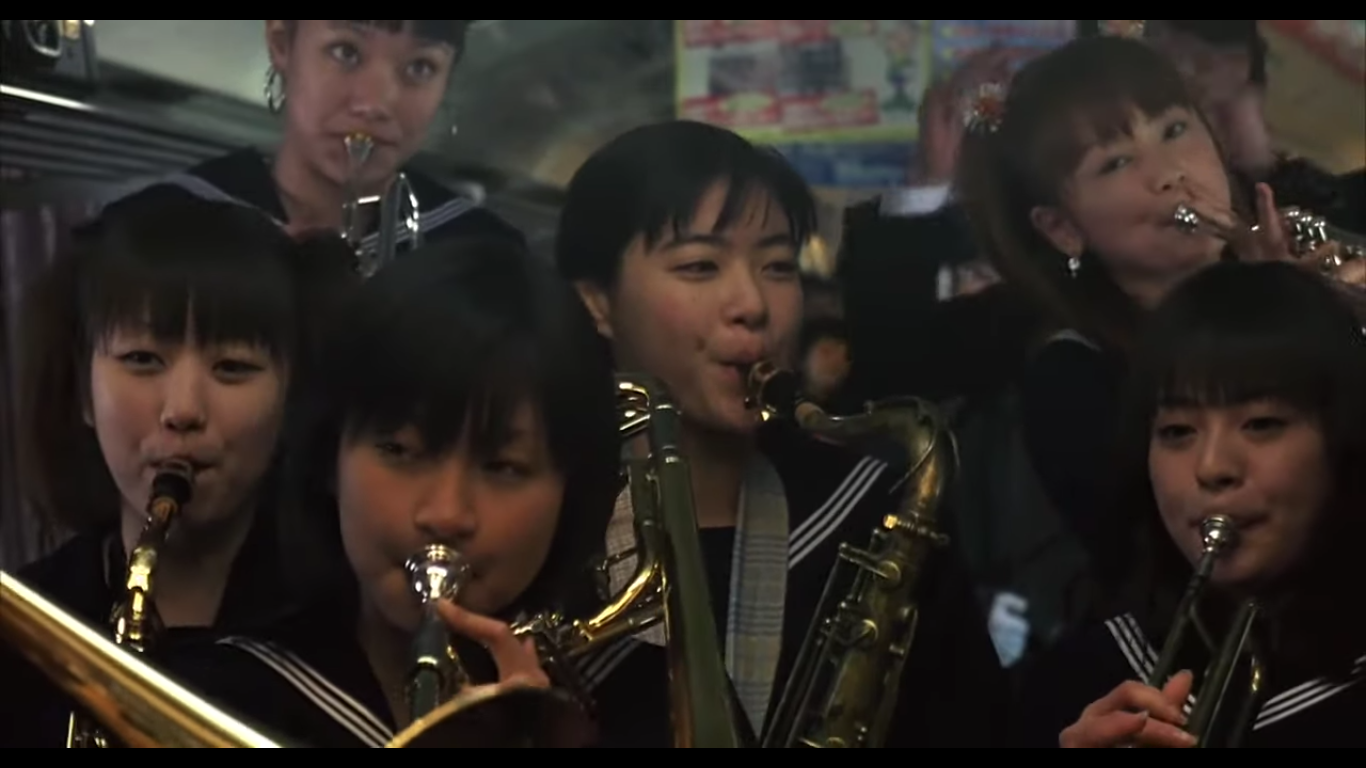
Swing Girls (2004)

“There are two kind of people in the world. Those who swing and those who don’t.”

I’ve already talked about this phenomenon ad nauseam, but having lived abroad in Japan, worked at a school, and interacted with many Japanese people, it fascinates me to learn about their cultural proclivities.

I hesitate to call much of what the Japanese do musically cultural appropriation because they seem to totally recontextualize the artifacts we know. One prime example is “Take Me Home Country Roads” by John Denver being featured so whimsically in Ghibli’s Whisper of The Heart. They somehow take cultural touchstones we know and pluck them out of a moment in a kind of reverent homage (One peculiar counterexample might be the animatronic JFK featured in Sans Soleil).

Writer-Director Shinobu Yaguchi’s Swing Girls is a film positively swimming in teen culture. Like a School of Rock, it feels like a movie looking for a wide audience, and it will easily repay those desiring a crowd-pleaser.

It introduces its world by gladly playing into high school tropes and stereotypes. Tomoko is our primary conduit in a clique of girls who seem generally bored with school and crazy about cute boys, fashion, and the like. They’ll do anything to get out of a summer make-up class and reclaim their adolescent freedom.

When the school’s band regrettably forgets their order of bentos for their gig miles away, the girls volunteer to hand-deliver them by train. It begins the madcap craziness as they miss stops, take to walking on foot, and unintentionally bake the food into oblivion. When all the band comes down with deadly food poisoning, their failed charade is up.

It’s a bit ridiculous. Where can a movie like this go? There’s only one answer and Yaguchi does his best work leaning into the big-hearted absurdity of it all. Having single-handedly wiped out the band, Tomoko and her compatriots consider joining the one male member not sidelined. It’s yet another convenient way to get out of summer school.

As an audience, we are able to laugh at the incongruity as all these girls who have never handled a musical instrument in their lives try their hand at forming a Big Band. They’re of the assumption that Jazz is for fuddy-duddies and intellectual types swirling brandy snifters. I can’t fault them because I was of a similar persuasion until I saw the light.

Takuo (Yuta Hiraoka) sets them up with a training regimen conditioning like athletes and introducing them to the likes of “Take The A Train” by Duke Ellington and Billy Strayhorn, a song that was integral to my own jazz appreciation. It feels like this mixture of oil and water, but then that’s the entire novelty of the premise. Whether or not it’s realistic, they do get better and more ambitious.

The girls take up part-time jobs to try and cobble together some second-hand instruments. They take part in all manner of good-natured fun and games like fleeing a wild boar and engaging in a euphoric snowball fight. Still, they still have a goal to realize, preparing their audition tape for the big high school competition.

Swing Girls is a film that keeps on building on itself until the height and width of its sizable heart overwhelms us with warmth and laughter. It grows to a crescendo as they frantically try to make it to their big day, first serenading their tour bus, and then performing the real thing.

They pad their performance with renditions of Glenn Miller and then Benny Goodman’s “Sing, Sing, Sing.” This second song is noteworthy to me because the band at the high school I worked at performed this same song. I have no inclination if this choice was inspired by the film or the fact Goodman was one of the swing era’s heavyweights. The particulars don’t really matter.

Swing Girls is best in its goofiness, giving us a story easily transferable into the Hollywood arena with feel-good moments and cheering acts of redemption. There’s actually not too much romance which is actually a nice surprise. However, in it, a closeted jazz enthusiast can come out of the woodwork to fulfill his dreams, and a classroom full of dead-end girls can come together to create something quite spectacular.

It provides a new context for Japan’s long-lasting love affair with jazz music, and I was pleasantly taken with it. Wonders never cease. All I can say is I want to be one of those people that swings. I can see it bringing the utmost joy into my life.

4/5 Stars

His Motorbike, Her Island (1986) and The Rocking Horsemen (1992)

His Motorbike, Her Island (1986)

There’s an immediate aesthetic artifice to His Motorbike, Her Island. Our hero is cool and simultaneously cruel representing a husky-voiced, brusque masculinity that feels no doubt appealing and equally toxic. He recounts his life’s observations through voiceover — the monochrome dreams making up his memories — and as such the movie slaloms easily between black & white and color.

It feels perfectly at home in its moment as part ’80s biker movie full of style. Some of this no doubt comes from director Nobuhiko Obayashi who always seems to have a propensity for commercial pop culture imagery. I would hesitate to call him a technician, and yet since he both edited and directed many of his films, maybe I don’t want to use the label because it sounds too austere.

His films are suffused with a vibrant energy and although the comparison misses the mark, the only reference I could think of was Richard Lester. I’d be interested in hearing who others bring up.

The movie’s premise is quite simple. Koh Hashimoto (Riki Takeuchi) runs errands on his motorcycle part time. His idle hours are taken up with a docile beauty name Fuyumi. He even gets in a duel with the girl’s older brother, who’s worried for her honor. Whether the outcome impacts his view of her or not, Koh, breaks it off. By his estimation, she’s boring (all she knows is crying and cooking).

Koh is looking for the Japanese version of the aloof dream girl, and he finds it in Miiyo. She captivates him with her confident vivacity, taking pictures of him, chatting in the onsen, and ultimately taking up his first love of motorcycles.

Their relationship blossoms when he visits her hometown out in the country during Obon, and we witness how the summer holiday is rooted in both a veneration and a celebration of dead loved ones. Koh’s captivated watching Miiyo dance during the festival proceedings. It’s something about her spirit he finds so attractive.

It also signals the film’s dangerous edges. Because if I wanted to distill His Motorbike, Her Island, down to its essence, we would need to talk about the intoxicating and reckless abandon of youth. It’s mesmerizing when it’s projected up on the screen in all its glory existing without worldly consequence of any kind.

Miiyo follows Koh and becomes infatuated by his singular passion: a 750cc Kawasaki. But it’s not just a supercharged motorcycle, and it’s not so much about an object made of chrome and an engine. It’s the adrenaline hit and emotional high of riding a motorcycle and riding it fast. It’s almost a dare for life to come at you head-on. For them, living life on on the edge like this is an obvious antidote to the malaise.

It’s both what attracts them to one another and threatens their ultimate undoing. Live fast, die young, has a poetic inevitably to it. I feel like I will need to watch the movie again down the road sometime, but there’s a pervasive sense that this motorbike, this island, this young man and this young woman take on a kind of mythic proportion.

Just like I never caught onto a perceptible rhythm of the monochrome and color, what we witness is not always an objective, tangible world. It exists in the hinterlands of memory, love, passion, and emotions just out of reach. The irony is obvious.

Sometimes, to feel alive, people need to get as close to death as possible. I’m not sure if this star-crossed, high-octane hedonism is still en vogue, but it’s easy to understand how it could seem attractive albeit misguided. There’s a hubris to it.

3.5/5 Stars

The Rocking Horseman (1992)

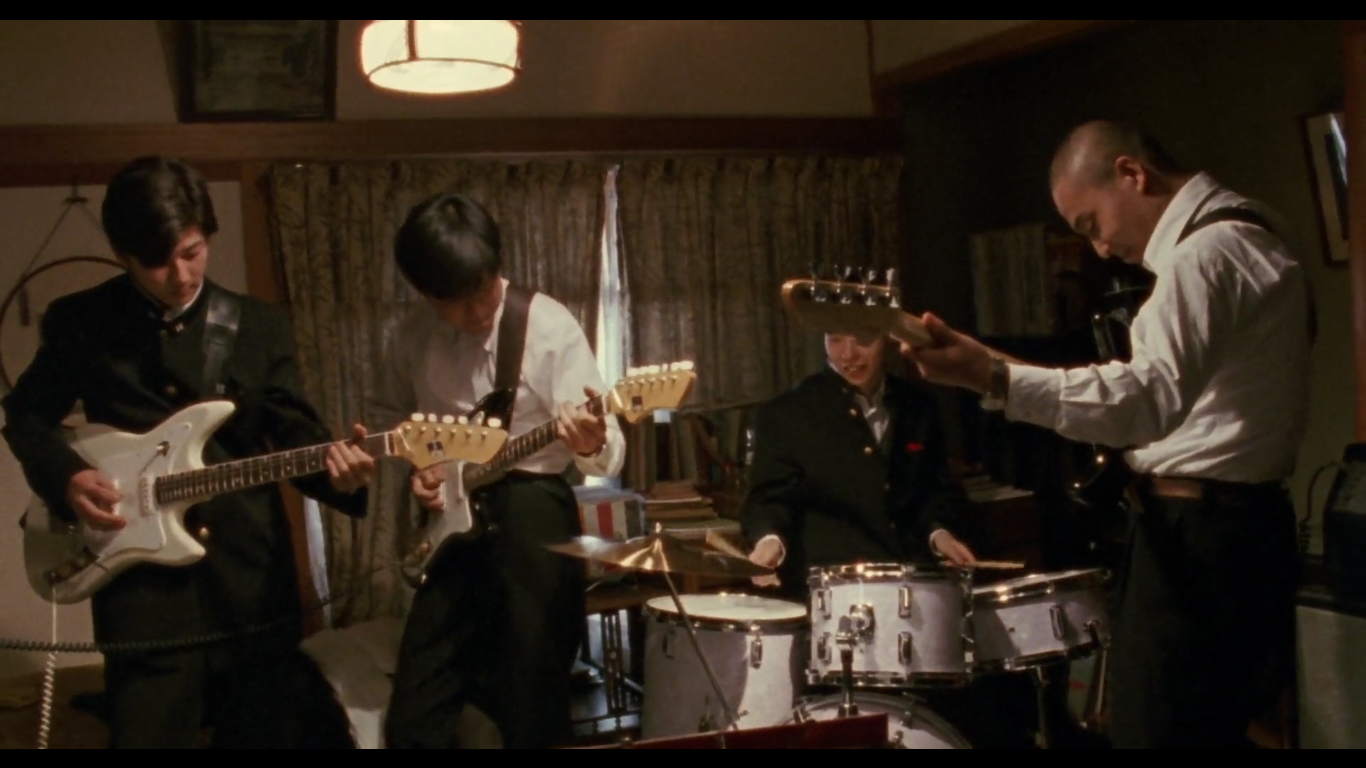
When I lived in Japan, I was flabbergasted to learn that there was a group that was bigger in Japan during the ’60s than the Beatles. It was The Ventures! This instrumental act kicked off the “Eleki Boom” as their iconic onomatopoeic glissandos (deke-deke-deke) captivated a generation of youth. These teenagers subsequently rushed out to buy their electric guitars and start their own bands during the “Group Sounds” explosion.

Although I didn’t think about it at the time, I’m a sucker for a good musical coming-of-age movie, and this landscape was ripe for such a story. Recently, when I came upon The Rocking Horsemen, I realized a void in the cinematic landscape had been filled thanks to Nobuhiko Obayashi

Fujiwara (Yasufumi Hayashi) feels like the most innocent and congenial of Obayashi’s boy heroes, a Ferris Bueller-type who instantly takes us into his confidence by not only providing voiceover but speaking directly to us.

OB’s films are easily placed in this provincial milieu outside the hustle and bustle of the big city. This gives them a kind of comfortable intimacy, and it’s only a small jump to place them in the past. In this case, Japan during the 1960s. I already mentioned that the movie covers a subgenre I have a private preoccupation with: form-a-band origin stories. That includes That Thing You Do! and Sing Street to The Commitments, Nowhere Boy, and School of Rock. What sets this one apart is the unique context and cultural moment.

Now I’ve been inculcated from an early age that the Beatles had the greatest music, but Fujiwara is coming of age with an ear raised to the admonitions of his elders. Pop music is puerile entertainment, cultural dregs compared to the sophistication of classical music. The Beatles included.

Then, his radio played “Pipeline” and he is changed forever. Any kind of snobbery quickly dissipates. The new sound assaults him as he reclines in his bedroom. There’s no escaping its force, and he converted for good, caught up in the same boom I read about. It was electric liberation.

Since a rock musician can’t look like a Buddhist acolyte, the first course of action was to grow out his hair. It occurs to me that one of the reasons I find these movies compelling is it involves some kind of youthful industry. When you’re young you don’t need to be told the odds. If you want to start a band, and that’s you’re impetus, you can go ahead and do it. No permission is necessary (parents notwithstanding).

In this way, Fujiwara meets his future bandmates. The first shares his interest in rock and turns his back on the more traditional setlist the school club follows. The rest of the members include a priest’s son, who’s the band’s source of worldly wisdom, and then a gawky dork who gets coerced into playing the drums for them.

If initially they fall together organically enough, they also premeditate how to best go about their business. In the end, they resolve to get summer jobs at a local manufacturing plant to save up to buy their instruments. These scenes are mostly transitory — only an end to the means — but as “Woolly Bully” plays over their assembly line, there’s a sense of optimism. They’re getting closer to their goal.

Ittoku Kishibe shows up again after Lonely Heart as a good-natured teacher who supplies American lyrics and ultimately offers to become their club advisor. It’s a small addition, but his tacit affirmation of their endeavors speaks volumes.

I’m fascinated by how pop culture can infiltrate and suffuse through the cracks of a society, especially in an international context. I met Japanese folks with very specified knowledge about Korn or Olivia Newton-John, Sam Cooke, Jazz or Punk music. Or think of the two teens in Mystery Train who go on a pilgrimage to Memphis in search of The King. Where does this come from?

While I wouldn’t call the general Japanese populous particularly aware of world culture, you do find these hyperspecialized niches of expertise. These boys glean their inspirations thanks to radio and import records, even older siblings who pass down a love of Nat King Cole.

A perfect example is Jan and Dean’s “Little Old Lady from Pasadena” played as our hero rides his bike through his neighborhood. It’s a totally different context from the California surf culture I was born and bred in. But it still reaches them on the other side of the world. The same might be said of The Animals, “Don’t Let Me Be Misunderstood.”

It doesn’t feel like a mistake that the first time the new band convenes and brandishes their new name — The Rocking Horsemen — they start playing, and it’s a flawless rendition of “Pipeline” (exactly like the Ventures recording). They make their debut at a show during Christmas with mixed results, but they disregard the critics and play their hearts out. What’s more, they gel and become galvanized as a group. How can you not under the circumstances?

But as school comes to a close, their journey together winds down too. Their first and last big show comes at the annual school cultural festival and with a set list including “I Feel Fine” and “Johnny B. Goode,” they can’t miss. We’ve seen this moment before in many a movie so it’s a kind of expected wish-fulfillment watching them go out.

When you’re an adolescent these are the kind of memories that stay with you. And in a final act of solidarity, Fujiwara now listless and despondent over the future, has his newfound brotherhood to come around him. They christen him their “Bandleader for Life.” So even as their journey as a band might have met its logical conclusion more than an impasse (not many make it like The Beatles), The Rocking Horsemen do have some amount of closure. The music and those relationships will never leave them.

4/5 Stars

Lonely Heart (1985)

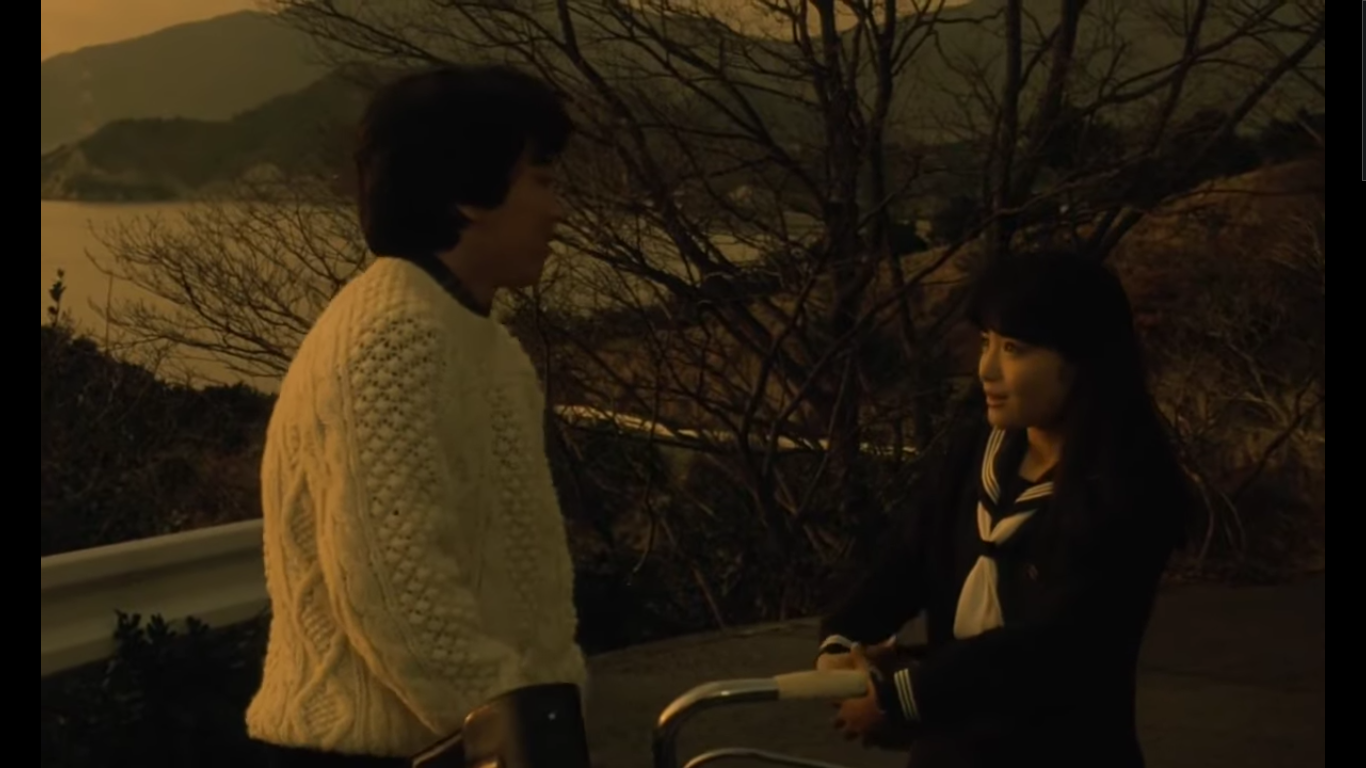
Lonely Heart is a film bathed in the golden hues of nostalgia (“natsukashii” in Japanese). It also boasts a rural landscape with a topography that’s the utter antithesis of Tokyo’s urban skyline. This in itself already evokes a certain quaintness, regardless of the story being told almost 40 years ago.

Hiroki (Toshinori Omi) envisions his world through the shutter of his camera — though he rarely has actual film to use — and so he imagines what he might capture. After school, he can be found scampering through the village streets in his school uniform with his two best friends doing backflips and cracking all manner of jokes. They have a youthful ingenuity that’s clever when it’s not getting them in trouble.

For instance, their use of Bunsen burners, forceps, and various pieces of lab equipment to cook up a delectable meal is inspired. Then, Hiroki’s friends razz him about following his father’s footsteps to be a Buddhist monk — he must give up meat lest he goes to hell for cutting corners on the road to enlightenment — and they’ll gladly eat his portion.

The next moment, they’re ushered off to the principal’s office to clean as a minor punishment. Instead, they teach vulgarities to the principal’s prized parrot and their mothers have the ignominy of coming into school to atone for their indiscretions. Hiroki’s mother is your typical portrait of a Japanese parent, at the very least because she’s always on her son to study more and pick up his grades. Their underlining failure to communicate is a universal adolescent struggle.

But his life stage is also about love, something that still feels naïve and untarnished by regrets and ample experience. He often looks through his camera viewfinder at the mystery girl, “Lonely Heart,” as she plays the piano, rides her bike, and takes the ferry home. If this was all it was, Lonely Heart might be a fairly rudimentary exploration of youth — another boyish awakening where the girl is cast as an object rather than a human being with a unique inner life.

Some of this happens in the movie with the ethereal Yasuko Tomita, but there’s also a parallel tale leaning into these themes in a more profound way. In fact, it takes them a step further. Hiroki receives a visitation from an impish ghost of a girl who materializes on numerous occasions even going so far as berating his mother and toying with her.

This seems like a curious development, but then Japanese culture has a greater tolerance for ghosts. If you’ve seen some of Miyazaki’s movies (arguably Japan’s most beloved cinematic export), you already know there’s a kind of acceptance of these things. They aren’t so much supernatural and if she’s labeled as “weird,” she’s also more or less accepted as fact.  Just as magical realism and surrealism can often permeate Japanese cinema.

This is easier to accept as I often have trouble with Japanese humor because it feels broad (whatever that means). The film is full of juvenile shenanigans and adult caricatures who overwhelm the screen from time to time blindsiding us with absurdity.

However, in juxtaposition, there are these instances of sensitivity playing out in Lonely Heart’s more pensive parts, personifying what Hiroki grapples with all throughout the film. It’s this long-lost love — the deep longing within all of us — resigning us to be these lonely creatures.

In Japanese culture, there’s also something innately beautiful about this sacrificial melancholy for the sake of some greater good or greater call. If I didn’t get my cultural signals crossed, it ties into the essence of “mono no aware” — an impermanence or transience of things. I’m not sure if Japanese culture would speak about love with these same terms, but please allow me to, even if only momentarily.

I’ve gotten to a juncture in my film-viewing life where, if I haven’t quite matured, I’m willing to take things on their own terms. Lonely Heart does not function within our western logic. If you asked me to explain everything away I’d be hard-pressed to say all the whys and wherefores. And yet something about this movie, mixed in with all its various forms and flights of fancies, left me with an indelible sense or feeling that will remain with me.

Somehow it reminded me of the more recent gem Petite Mamman. It has to do with honing in on a magical and poignant connection between parents and children. It developed differently than what I was expecting — the fantasy has a unique kind of functionality — and so by the time the movie’s over it has done work on us.

It’s offered up a quiet epiphany that we might tuck away for later enjoyment. Hopefully, if you get the chance to watch the film you’ll understand exactly what I mean. However, I wouldn’t dream of divulging that here.

3.5/5 Stars

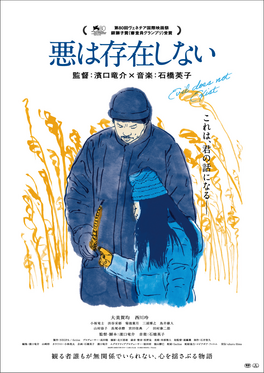
Evil Does Not Exist (2024)

From watching one of director Ryusuke Hamaguchi’s interviews, it’s made clear he started Evil Does Not Exist by using the music of Eiko Ishibashi as inspiration. There’s a swelling breadth to it augmenting everything it touches. At times doleful and then evolving into a plinking intensity looking for release.

It plays against a backdrop of austere forests, trickling streams, and fresh dustings of snow outside the prying eyes of the Tokyo metropolis. The score becomes a viable metaphor for the movie itself.

The film’s relationship with its characters is also distinct. There’s something Bressonian about it. Because the famed French director famously envisioned his actors as models and often cast non-professionals. He wasn’t looking for performances in the conventional sense.

I don’t know Hamaguchi’s filmography all that well, but it doesn’t feel like he has a stock company. Rather he likes to use different actors for what they offer in each distinct context. We spend the opening minutes watching this man named Takumi (crew member Hitoshi Omika) exist and act, though not in the way we normally think of it in film.

It is slow cinema in the sense that we watch him in the paces of his life from collecting stream water to chopping wood. This tells us more about him than any amount of dialogue might, but it also signals to us what kind of movie we’re in for.

Hamaguchi is prepared to steady your heart rate, and I could use much more of this amid the daily grind. However, it is a tightrope because it’s so easy to lose your audience as they grow potentially disillusioned by the pacing and elongated editing schemes. Seeing as Drive My Car was over 3 hours and Happy Hour over 5 hours, there’s something about Evil Does Not Exist that feels, if not economical, at least more contained.

Takumi’s relationship with his quizzical daughter is rather reminiscent of Leave No Trace (2018). So much of their affection and relationship is facilitated through their shared love of nature with the father passing down his knowledge to his girl.

The movie’s dramatic conflict comes with an impending land development. A Tokyo-based talent agency has plans to install a Glamping site, which ostensibly is little more than a ploy to get a coveted tax subsidy.

Like any conscientious Japanese company, they do their due diligence by holding an open forum for the locals to voice their concerns. The subsequent extended community scene is trademark Hamaguchi with a sprawling dialogue exchange. While it’s not a Park and Rec episode, maybe it’s the Japanese alternative.

There’s something tight-knit about this small community rubbing up against the wary encroachment of the Tokyo firm. Their concerns are well-founded and measured. They see through everything with a clarity that no formal Japanese double-speak can totally obfuscate.

Their opposition, if you will, are the archetypes of a veteran salaryman and his deferential associate who hasn’t quite detached from her empathy. The audience I sat with was mostly quiet if attentive, but there was more than one occasion I found myself chuckling to myself, either from a line of Japanese dialogue or an interaction.

I found this section of the movie especially rich with behavioral humor. There’s a youthful rebel in baggy pants who tramples over the typical decorum and has to be held back. The ritualistic bowing is met with contempt and even Takumi is brusque. They want to try to recruit him as an advisor for their glamping endeavor. He has no business card to give them as is customary, nor does he want their token gifts or pleasantries.

These might be subtle, but it’s a pleasure to watch how these locals eschew what feels like traditional norms. Because so much of Japanese life feels like a tug of war between exterior and interior identity. We say don’t judge a book by its cover and here it holds true on more than one occasion. Many of these characters seem perceptive and ultimately nuanced.

One of the other surprises is how Hamaguchi turns the “enemy” into real people over an extended car ride back to the countryside. They know they’re not dealing with idiots, but their superior encourages them to return and ensure they stay on schedule. It feels like an untenable mission. Having seen both sides, we feel for them. Their hearts aren’t in it.

They trade their hopes, aspirations, and dating prospects in a way that you rarely see in Japanese work culture without alcohol as a social lubricant. Despite the modest scope, I’m not sure if others are aware of how radical this feels.

Takumi takes his guests out into the natural world and allows them to walk alongside him in his daily tasks. Later that same evening his daughter disappears and darkness is closing in. There’s something dismal and inevitable about it as the entire population mobilizes to try and find her.

Without drawing it out too much, they do discover the girl as well as a fawn and doe who feel like semiotic creatures. It’s no coincidence there was a movie called The Deer Hunter. He lives on the fringes of the frame here with his bullets flying in a game of offscreen roulette.

The willfully oblique ending is inexplicable, but I could not look away. You can take it one of two ways: either with mystified displeasure or a contentment in not understanding everything. I fit in the latter category. It was like staring at a mesmerizing spell.

Somehow it feels like a pleasure and a privilege to get these moments in time slowed down for us — sequences that are purposefully meditative. I couldn’t help thinking how much of a backward society we live in that it takes a screen in the dark projecting images in front of us to draw a person out of the hubbub and back into nature. Are we so removed that moving pictures are one of the last vestiges of the natural world in the urban jungle? Because it’s not the real thing.

I would find it instructive for the director to expound on his themes at length — that’s what I want — and yet the movie leaves the results up to us. Still, if nothing else, Hamaguchi gives us a reminder of our imperative ties to the natural world lest we forget where we originate. As much as we try, life cannot always be domesticated comfort. There’s wild beauty out there we would do well to remember.

I think we share an appreciation of the natural world. Maybe it’s semantics or a mere positive affirmation, but if evil does not exist, we could also conjecture, like The Deer Hunter, that interpersonal discord, war, and death are natural in a chaotic world. 

However, I would not say that humans nor beasts are inherently good. For the time being, we live in a broken, fallen world and this is just a reality. Our world is full of entropy, but this is not meant to be our resting state.

It’s all the more reason to do our utmost to look after our environments, be kind to our neighbors, and work toward human flourishing. Of course, that’s easier said than done, but like Thomas Aquinas posited I would like to believe that good can exist even without evil. We’re not there yet, but I’m still hopeful.

3.5/5 Stars

Beijing Watermelon (1989)

Nobuhiko Obayashi is known to a pocket of western moviegoers for his crazy, unhinged haunted house flick Hausu (1977), but as I’ve gotten more familiar with at least some of his filmography, I’ve come to appreciate his more grounded works.

Using this phrase has the danger of giving the wrong impression about him. This doesn’t imply boring or anything of the sort. Still, some of his later works are told with such humanity through relationships, humor, and often a wistful nostalgia that comes on the tails of youthful optimism.

Beijing Watermelon hardly makes a blip on the radar. I consider myself fairly well-versed in film (albeit with many noticeable blind spots), but I had never heard of it.

Still, this film spoke to me through its simple rhythms. It’s easy enough to introduce the premise and still fail to totally articulate what makes this movie such a meaningful experience for the right person. Because it a mundane slice of life tale following a grocery store owner who comes to form a bond with a contingent of Chinese students studying and living in Japan.

It begins inauspiciously enough when a poor Chinese student tries to barter with him. He’s a bit offended by it — his prices are already reasonable — but events cause him to take an interest in the young man’s life and his well-being. He meets Li and a host of local students who are many miles away from home. It feels inexplicable at first, but as time progresses, they form an unalienable connection. I’m not sure if other’s find this cross-cultural relationship to be unbelievable or at the very least somewhat whimsical.

As someone who has lived abroad in Japan of all places and relied on other people’s good graces, there was something so resonant about this scenario. It spoke to me on a profound level, and it was not in spite of the mundane nature but rather because of it.

The comedian “Bengal” who stars as the greengrocer Haruzo Horikoshi, somehow reminds me of the Tora-san character. It’s almost like he’s an extension of the Japanese comic prototype. He’s at times a buffoon and outlandish, and yet he’s imbued with so much heart and by extension pathos. If we stretch the Tora-San metaphor, he feels a bit like the Japanese everyman who brings back nostalgic reminisces of a different era. There’s something hilarious and tragic and warm about him all at the same time.

I must admit that there’s a point where it feels like the Chinese students are taking advantage of Mr. Haruzo. Perhaps it’s just a cultural difference and a way of showing good-humor and affection, but as an outside observer and someone who has a modest appreciation for Japanese courtesy I felt bad for the man.

At the same time, he continues to grow more and more accustomed to providing them discount goods, maintaining letter correspondence with Li when he returns home, and then picking up a new arrival at the airport named Zhang.

As a side note, there are two airport sequences that feel so authentic. The callow student looks downs and realizes his bags are missing! Of course, they are nearby where a thoughtful lady has set them aside out of the way. Also, a local Japanese man brags about his English prowess. Except the moment an English-speaking tourist asks for directions, he has no help to offer and sheepishly walks away.

By this point, we must ask the question: why does Mr. Haruzo feel compelled to do all this? There’s something in his constitution that makes him different, causing him to go against the tide of Japanese convention. Because what he does transcends polite niceties and keeping up appearances. Dare I say, it’s true sacrifice.

Could it be he’s slowly falling in love with the earnest Pingping? A lesser film would have played this up for the sake of drama. But while the affection is evident, it never goes further than that.

Meanwhile, his local neighbors joke that he’s caught the “Chinese disease.” If that’s so I’d probably wish I had it too. Of course, eventually it seems to derail his life. His business isn’t profitable anymore, he’s less present with his family. His long-suffering wife (Masako Motai) is trying to pick up the slack because he feels mostly absent. His kids feel ashamed by how he’s acting. Even his shaggy-haired employee vows to go to a rival supermarket where he won’t be a laughingstock.

It feels like Mr. Haruzo’s ruined — entirely thrown away his life — and soon the tax board comes to impound his belongings while he’s also detained for a hilarious public disturbance while requesting a loan. The heightened blood pressure leads to an extended stay at the hospital. Surely this cannot be the fruit of his troubles? He’s in such a dejected space with his family unsure what to make of him.

It’s a bit on the nose, but I think of that immortal line that “no man is a failure who has friends” and of course, the friends Mr. Haruzo has in his life come to his aid when he needs it most. It’s a beautiful sentiment and something I’m sure many of us recognize if we’ve ever been enmeshed in a close-knit community.

The watermelon becomes one of the substantive cultural metaphors of the film, and as someone who lived in Japan as a westerner and has spent many years working in international spaces, this film speaks to me on a deep level.

Surely you don’t need this in order to appreciate the film, but as I watch this Japanese man build cultural bridges and become a kind of local institution with a spread in the paper and then getting treated like a king by all his grateful beneficiaries, I was fundamentally moved.

I think of the people in my life overseas who watched over me at my most vulnerable or lifelong friends my parents and siblings have made when they were abroad. If we let it, film can be one of the great universal unifiers, a language unto itself that connects us and transcends cultural origins or international borders. That’s what it’s often been for me and Beijing Watermelon is such a winsome portrait of what I aspire to in my life.

I’m not sure if anyone else has made this comparison, but Haruzo Horiko feels a bit like a Japanese Mr. Chips because with his name comes a lasting legacy and impact. It turns out to be an extraordinary life.

There is one last aspect of Beijing Watermelon that deserves some comment. I acknowledged already that this is one of Obayashi’s more formally traditional films, and yet he still breaks out of narrative convention — not for want of ostentatious showmanship — but because it serves the story he wishes to tell.

I could not track down any definitive details, but Beijing Watermelon is supposed to be based off real events that happened. However, Obayashi takes this biography and gives it a Brechtian ending, somehow working with the negative space of the film and what it does not show.

Bengal speaks to us and tells us we are back on a Japanese set in a studio. He and his movie wife journey to China and yet it’s made explicit that they are in the cabin of a plane set and not an actual plane for a reunion with all their Chinese friends.

If you’re like me, you question why have this break with the cinematic reality? The movie was humming along beautifully without the distraction. But then it slowly becomes more apparent the longer you sit with it, especially considering the cultural moment and what was happening in China — the Tiananmen Square massacre of June 4, 1989 being a particular inflection point…

Because even if you are not aware of any of this, there’s something imperceptible and still intuitive about the melancholy that comes over the viewer. It’s all there in the movie both the warm feelings welling up inside of us, but also this inherent sense of sadness carried with those Chinese students as they play and sing their bittersweet song on the beach with the credits rolling against them. The postscript of the movie is what does it for me as a final rallying cry and call for greater cultural understanding:

“We dedicate this film to all our young Chinese friends.”

What an extraordinary film. I hope more people can search it out and enjoy it as much as I did.

4.5/5 Stars

Hiroshima, Mon Amour (1959), Nevers, and Casablanca

“Like you I know what it is to forget.”

Recently I’ve been meditating a lot on the impact of the atomic bombs in part because of the resurgence of the life and work of Robert Oppenheimer; he will be inextricably tied to Hiroshima and Nagasaki for posterity’s sake. Thanks to Alain Resnais’s film, Hiroshima and Nevers will always have a connection in the minds of cinephiles everywhere. 

Although I have walked the streets of Nagasaki and been to the memorial museum there, most of what I know of Hiroshima is gleaned from John Hersey’s journalistic account. The documentary footage from this film never ceases to scald my senses. I have to avert my gaze when the images grow harsher than any horror film imaginable. 

Hiroshima, Mon Amour gets much of its thematic resonance out of filming in Hiroshima itself because it comes with an abundance of inbred meaning; it will be ground zero of devastation and a beacon of peace for perpetuity now, ever since that day on August 6, 1945. 

This lays the groundwork for the film’s first half as we consider Hiroshima – the images primarily being juxtaposed with two bear bodies of a couple intertwined. 

It slaloms so effortlessly through time and space like few films before or after. Although as it progresses, the way the film and its characters are set adrift by the editing is increasingly unnerving. This in itself feels honest to where our characters find themselves. 

There’s something rhythmic, repetitive, and still poetic about their questions and responses conjured up by the voiceover penned by Marguerite Duras. It builds this contrast between the French actress filming an international movie in Hiroshima and the Japanese Architect that she’s having an affair with on-location. They only have one day together before time and space will pull them apart, potentially forever. 

In truth, once you know a little bit more about Resnais, it gets harder and harder to separate his film from this kind of relativism of the age where truth seems to be subjective and everything we seemed to take for granted before, from absolute truths to morals, seem to have totally eroded around us. 

Even with this perplexing development denoted by Resnais’s fairly oblique style, brought to even greater fruition in Last Year at Marienbad, it’s hard to discount the swaths of beauty in his film. And if it is mostly an agnostic film, one cannot totally dismiss this point of view in a world coming to terms with carnage and the brutality of the atomic bomb. Because this disillusionment does have an amount of warrant, arguably more than any other time in modern history. 

The movie becomes this roving portrait involving a want of intimacy and closeness in a world ravaged by so much pain and suffering. Is it any wonder that in the post-war years plagued with the atomic threat, the world hit its baby boom. Couples coming together to start their nuclear families as a balm to the hysteria in the world at home and abroad. 

They both say they are a happily married man and a happily married woman, but even this I read almost ironically seeing the connection they form. If they are culturally worlds apart, somehow they share in the same traumas of a post-war, post-atomic generation coming to terms with all that entails. 

He has the specter of Hiroshima to contend with and she was castigated for loving the enemy during wartime: imprisoned, her head shaved, while also seeing her lover die in her arms. They’re different experiences and still share something endemic to both their realities. Thus, they gladly share a real-world romance on the edge of the apocalypse as time is slipping away from them. For now, they have tangible passion and meaning that they can caress in their arms. 

There is a passage in the movie that felt reminiscent of the jaded pessimism of the ancient wisdom literature of Ecclesiastes: 

He: Maybe it’s possible for you to stay.
She: You know it’s not. Still more impossible than to leave.
He: A week
She: No.
He: Three days.
She: Time enough for what? To live from it? To die from it?
He: Time enough to know which.
She: That doesn’t exist. Neither time enough to live from it. Nor time enough to die from it. So I don’t give a damn.

There’s a fluidity to the night and their relationship as the clock ticks and they know they will be pulled apart. Eventually, they make their way to a late-night cafe called Casablanca. The name carries with it all these connotations: Rick & Illsa, “As Times Goes By,” “La Marseillaise,” and even bits of your favorite dialogue.

Of course, one of the finest remembrances is “We’ll always have Paris.” Nothing can strip these memories away from the Casablanca couple regardless of sacrifice. Somehow there’s something honest about Hiroshima, Mon Amour in that it recognizes all these things are transient – these memories of love will pass away. They are already dissipating, and not as eternal as we would like to believe. 

More and more I see the shared vision of Agnes Varda’s La Pointe Courte and Hiroshima, Mon Amour – finding their form as part documentary, part romantic treatise. It’s the blending of the two giving them body and making them sublime. 

Here the performers also work wonders. Emmanuelle Riva has the most vibrant eyes in the cinema. They are a delight to look at in the light of the camera both glassy and at times equally melancholy. It’s her film debut and you would never know it. She’s youthful and lithe, yes, but there is so much depth to her. Call it self-confidence with the prerequisite vulnerability. 

Eiji Okada seems ruggedly handsome, but not without the capacity for gentleness. It feels as if he’s experienced an entire lifetime during the war years which in part was true. The only reason he foregoes the horrors of Hiroshima is that he was off fighting in the war with the Imperial Army. 

I read that all his French dialogue was memorized phonetically and if that is the case, although I don’t always have an ear, it came together splendidly, never pulling me out of the story. It felt real and believable to have these two people relate in such a way. 

What’s more, as someone who grew up in a culturally mixed environment, Hiroshima, Mon Amour stands as a groundbreaking depiction of a couple who plow through the societal conventions of the times.

When I watch this film it’s about so much more than the bomb. On the surface, it’s about an illicit affair that cannot be, it’s about two people coping with the fallout of war, and one woman’s struggle to hold onto her memories and cling to the love that’s still there in her life before it evaporates before her. How she cannot forget this man in Hiroshima or that man in Nevers because they are tied to emotions and specific moments in time – times when she felt something.  

Somehow it parallels what the film itself represents. Because it is a document as much as a piece of art. It came out about 14 years after the bombs were dropped. Somehow still fresh and a minor lifetime away from the fallout. These people have living memories to contend with. 

Someone like me does not and so the film is as much about these character’s memories as it is the visual representation of the film itself so we might never forget what those places represent in the cry for universal peace. 

Watching it in a theater I could sense a level of perplexity in the air. It’s not an easy film. Not everything makes sense, and there’s some troubling conclusions that you can come to. Also, one earth-shattering slap in a cafe is hard to deal with. Still, in the wake of all of this, it’s hard to reject the moments of beauty present here. I don’t think this is a mere justification. 

Rather I watch a movie like Hiroshima, Mon Amour where not everything is summed up or painted in full. We must leave with the impressions, the maddening anti-literalism of the piece that has no point-for-point attributions we can easily plug in. Nothing comes out in a nice bow nor do we get a true emotional resolution. It just kind of hangs in the air for us to consider in full.

But sometimes this hard work when something is perplexing feels all the more worthwhile because it provides something worth going back to so we might cull for something new. I’m never going to understand every grain of this film, and that’s okay. 

The distinction is having something to fall back on. When memories fade and we forget and the world seems to be fragmenting around us, it helps to have some standard or reference point outside ourselves to mediate the chaos. 

Otherwise, what’s the point if there’s no time to live and no time to die? What hope is left in such a debilitating landscape? On top of that, there’s a bomb that might just easily blow us all to smithereens. We require something more. 

4.5/5 Stars

A Colt is My Passport (1967)

Nikkatsu studio’s reputation for these kinds of down and dirty pieces of noir pulp employed action and gangster plots to entice the youth market. Obviously, the influence of the American canon cannot be disregarded, and yet the films came into their own given Japan’s own turbulent history with syndicated crime.

However, A Colt is My Passport does something more with the genre archetypes. It starts with this mythical weapon, not traditionally of mobsters and hitmen, but western heroes and villains dueling out on the range. Wherever the firearm might have progressed, it always carries this mythos about it.

As such, the movie is introduced with a whistling, stringed, and partially staccato score that might as well be plucked out of a  spaghetti western. Further strengthening the ties is Quick Draw Joe, a movie Joe Shishido starred in that was also directed by Takashi Nomura. Now half a dozen years they meet again to build on their collaboration.

The initial beats are familiar if you’ve seen any of these types of pictures. There’s a target to knock off. His name’s Shimazu, and when he’s not constantly being shadowed by a bodyguard, he’s stashed away behind bulletproof glass. It’s a tough job with only one day to see it out.

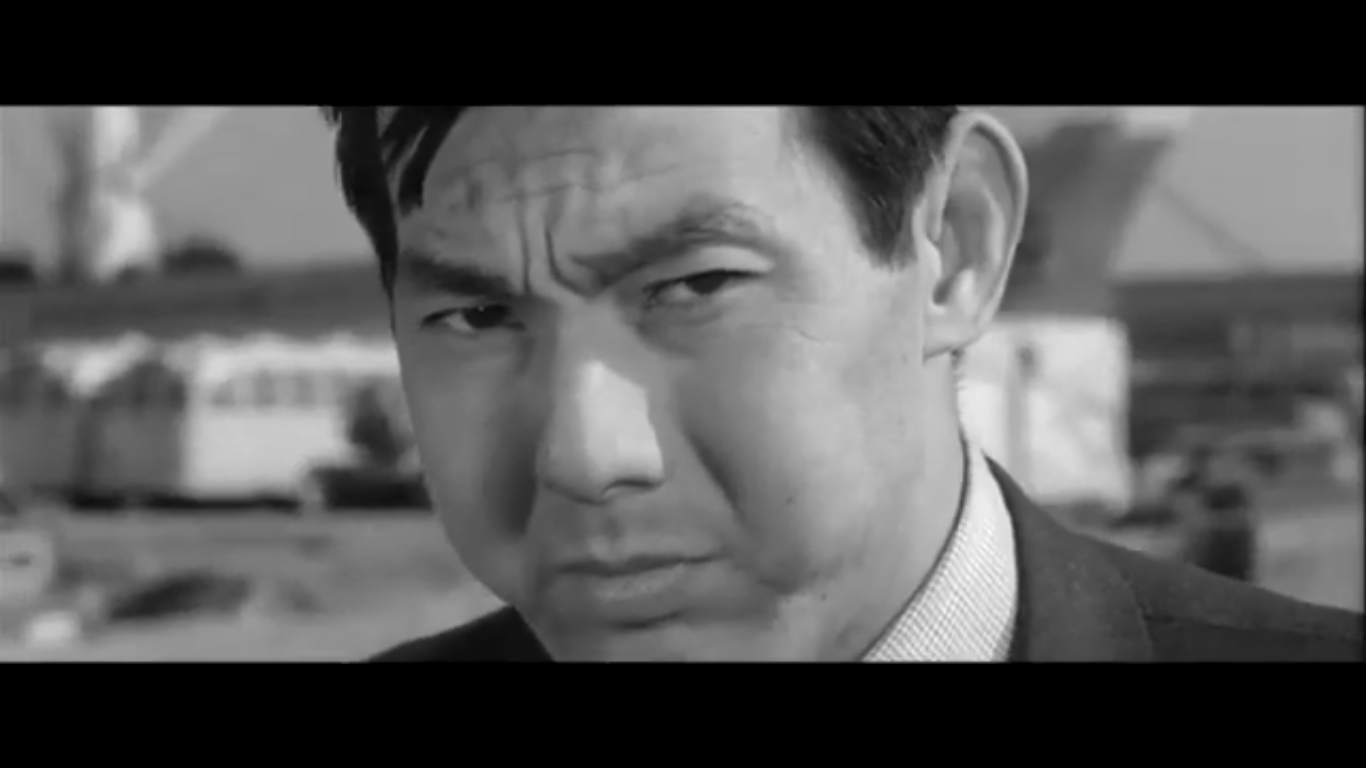
In this world of guns and souped-up automobiles, Shishido, the chipmunked-cheeked cult hero of cool, somehow feels right at home. It’s all part of his work as he studies his target, sets himself up with a hotel room, and then prepares to get in and get out with surgical precision behind his sniper rifle.

If there’s a methodology here it suggests how Colt is a film built out of a regimen and the setting of its protagonist in an architectural world. He is always completely cognizant of his location and how he functions in relation to the spaces around him. Thus, it becomes as much about mood and milieu as it is focused on action and violence.

Take for instance, how the story is constantly switching contexts. It’s in a car, about getting to a plane at the airport, holding up in a hotel, then fetching a barge out of the country, and when that fails, commandeering a big rig to retaliate against the enemy.

Of course, there must be a love interest. In the subplot, Mina, a young woman who works at the Nagisakan hotel, offers them asylum from their pursuers. What draws her to them? She says the god of death follows in her wake. Her former beau must have been like them, and as she spends her days serving the riffraff and sewer rats always loitering around, she looks to take back her life in some way. This is her form of rebellion in a world generally dominated by men.

However, even with the proliferation of gangster imagery and this kind of masculine bravado, the contours are the film consistently emulate the West with its own recurring motifs. There’s a musical aside of guitar not unlike Ricky Nelson or Dean Martin might knockback in Rio Bravo (Your star is a lonely little star…but now your face is a ghost town in the mist”).

It’s a way to bide the time before inevitable showdowns while also distilling this sense of male camaraderie in such a way as to make it palpable. It evokes the loyalty forged between two men, one mentor and his pupil, who have been through so much together. He shields his partner by giving himself up.

He knows where he must go. Where else would we end up but a deserted, windswept landfill where we half expect to see a tumbleweed roll by? Instantly the urban world and streets, even the maritime port of Yokohama, all but evaporate and fade into the periphery. The entire film culminates in one definitive moment where the sides are drawn up all but prepared to have it out in an instant. While the final showdown is fairly spare, it still manages to blow the lid off the picture with its gritty cross-pollination of the noir, western, and yakuza inspirations.

It’s hardly drawn out — finished in what feels like a few suspended moments of chaos — and yet it might be one of the most monumental standoffs you’ve ever seen. As Shishido digs a hole (what might as well be his grave), then sets a charge of dynamite, which might as well be a self-destruct mechanization, and then finally fights for his life, we are inundated by the full brunt of the impact.

There’s hardly any mistaking who came out victorious, but then again it might be just as difficult to claim a hero as a man totters away from the wreckage.  I’m not altogether familiar with the etymology of “borderless action” cinema as marketed by Nikkatsu, but here it feels like one meaning is about this unabashed melding of genre and inspirations.

Shishido channels hitman, gunslinger, and jaded antihero all rolled into one. He’s got a dash of Eastwood, maybe a bit of a Melville assassin, but also a distinctly Japanese sensibility. It creates this pleasing amalgamation that finds something rather gripping in its myriad of influences. There’s an indiscriminate and still somehow an artful freedom to it drawing me in all the more. 

4/5 Stars