Review: This is Spinal Tap (1984)

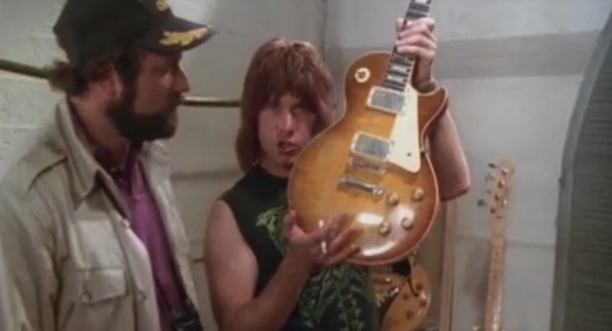
thisisspinal1Director Rob Reiner makes an appearance in his own film as documentarian Marty Di Bergi. It’s tongue in cheek, but no one seems to have told Spinal Tap or anyone else in the film for that matter. For all intent and purposes, they are a real band with a real camera crew following their every move. The lines between fiction and reality are very easily blurred, because Spinal Tap seems more legitimate than some bands that come together, with one original album attached to the film and two subsequent albums that followed. That’s the funny part, or maybe it’s sad, depending on how you see it. It mocks, it parodies, and it attempts for the overly-dramatic, and yet it doesn’t fall too far from the actual music industry.

This mockumentary, rockumentary, or whatever you want to call it, follows Spinal Tap during their not-so-long-awaited tour in the States. Their trajectory mirrors all the great rock bands of their day and age. Right now they’re in the Zeppelin or Aerosmith stage, but led by their two founding members David St. Hubbins (Michael McKean) and Nigel Tufnel (Christopher Guest), they started a skiffle band back in Mother England. It was a humble beginning, with numerous arbitrary name changes, a hippy phase (much like the Beatles), and finally the genesis of their big-haired, hard rock 1980s persona. After all, their amps go up to eleven, one higher than the typical amplifier. They’ve cranked things up to new levels, but it doesn’t help that they’re album Smell the Glove is getting some negative backlash for its cover art.

What follows is a less than promising tour with failed autograph signings and malfunctioning props onstage. All the while, the immature musical nucleus of the band Nigel and David begin fighting. It feels very Lennon/McCartney and their Yoko Ono is David’s girlfriend Jeanine (June Chadwick). When their original manager quits in a huff, Jeanine steps in and things keep on going downhill. Bassist Derek Smalls (Harry Shearer) just seems like he’s along for the ride, and their most recent drummer is just happy he hasn’t met the unfortunate fate of spontaneous combusting like his predecessors. No one seems to care about the keyboardist Viv. Ain’t it the truth.

Then, the fateful day comes when the band splits up, or at least Nigel finally leaves having had enough of it all. But as they play second-bill to a puppet show at an amusement park in lovely Stockton, California, the boys realize they need Nigel back. Although the U.S. wasn’t too welcoming to them, they look to have a bright future in Japan with popular hits like “Sex Farm” “Big Bottom” and “Stonehenge.” They’re very popular over there, and of course, their amps still go up to eleven.

4/5 Stars

That Thing You Do! (1996)

thatthing6Recently I’ve seen a lot of films about music, musicians, and the like. There’s Llewyn Davis, who seems to have talent and yet gets little recognition for what he does. There’s the street musician in Once, who also has a lot of talent and we like to think that he makes the big-time, although the film leaves his fate open-ended. One is steeped in melancholy and the other has a raw beauty. Tom Hanks directorial and screenwriting debut That Thing You Do! seems to have very little in common with those films except in that features music. But that deserves some explanation.

Hanks’ film is a nostalgic trip for anyone wanting to get sent back to the 1960s via the 1990s. It’s a thoroughly enjoyable little romp that revolves around a group of typical teens in Pennsylvania, who go from a small-time talent show to one-hit wonders touring the state. But that’s exactly it. They’re one-hit wonders, who lack the talent of older more experienced musicians. In reality, they’re just a group of kids, still wet behind the ears, and just excited for the ride they are about to embark on. Even over the course of the film, their one smash hit, the eponymous “That Thing You Do!” can feel repetitive, and it is easy to realize that this is not the type of music that real connoisseurs want. It’s for the masses. The shrieking girls and the guys who want to dance with the shrieking girls. It’s certainly superficial, and yet there’s something quaint and at the same time infectious about it.

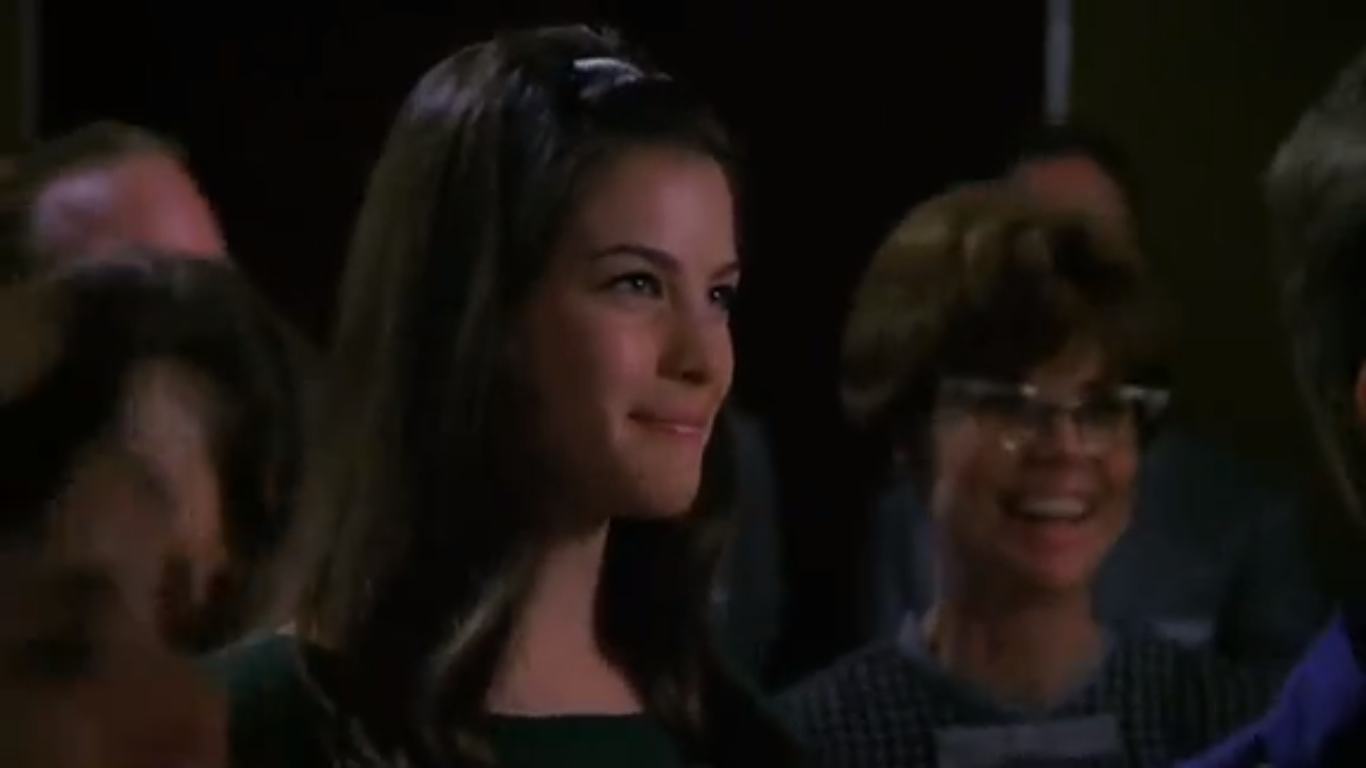
thatthing2We can readily get behind this little band christened The Oneders and modified to The Wonders for easier pronunciation because they’re a lovable bunch. Their members include appliance seller-turned flashy drummer Guy (Tom Everett Scott), lead singer and serious-minded Jimmy (Jonathon Schaech), the jokester Lenny (Steve Zahn), the “other guy,” and, of course, the ever-present Faye (Liv Tyler).

In many ways, they shadow The Beatles. They ditched one drummer for a better one. They both lost their first bass player. Their first hit took a ballad and sped it up to great effect. The little similarities are undoubtedly put there by Hanks, but with all the similarities it only serves to point how different these boys are. They’re not going to end up music royalty like the lads from Liverpool. And that’s okay.

thatthing3We can get satisfaction out of their first airplay on the radio or the genesis of a romance that we were always expecting. In a way, this film is like a lesser American Graffiti even going so far as giving its characters an epilogue. It takes us back to that time and place, makes us feel good, and gets a few of us nostalgic for the olden days. Although, the old televisions and dishwashers don’t exactly look like fun now.

But let’s get back to that romance. The film Starter for 10 had a similar enigma when it came to the blond or the brunette. I suppose you could call it a trope, but on one side you have the primped and provocative Charlize Theron and on the opposite side of the spectrum is Liv Tyler, who acts as the honorary fifth member of the Wonders. She is constantly faithful and encouraging in the boys rise to the top, and they are better because of her. That’s the kind of girl you’re supposed to get and the right guy gets her.

3.5/5 Stars

Note: I watched the version of the film with 39 minutes of added footage and what it really did was develop these characters a little further so you grow to appreciate them even more. Otherwise, I’m sure the original cut gives you the same narrative so either version is probably fine.

Inside Llewyn Davis (2013)

insidel2More often than not Llewyn Davis turns out to be a worthy character and I mean that in the sense that he is readily watchable. This probably isn’t the real folk scene of the 1960s, but it is the time and place seen through the Coen Brothers’ somber lens. Inspired by musician Dave Von Ronk, Llewyn is his own unique entity entirely. The film itself has a dreary look of washed out tones mimicking the days that most of us now know from black and white imagery. There are folk tunes wall to wall, befitting such a melancholy film, adding layers of melody and ambiance to this austere world of isolation.

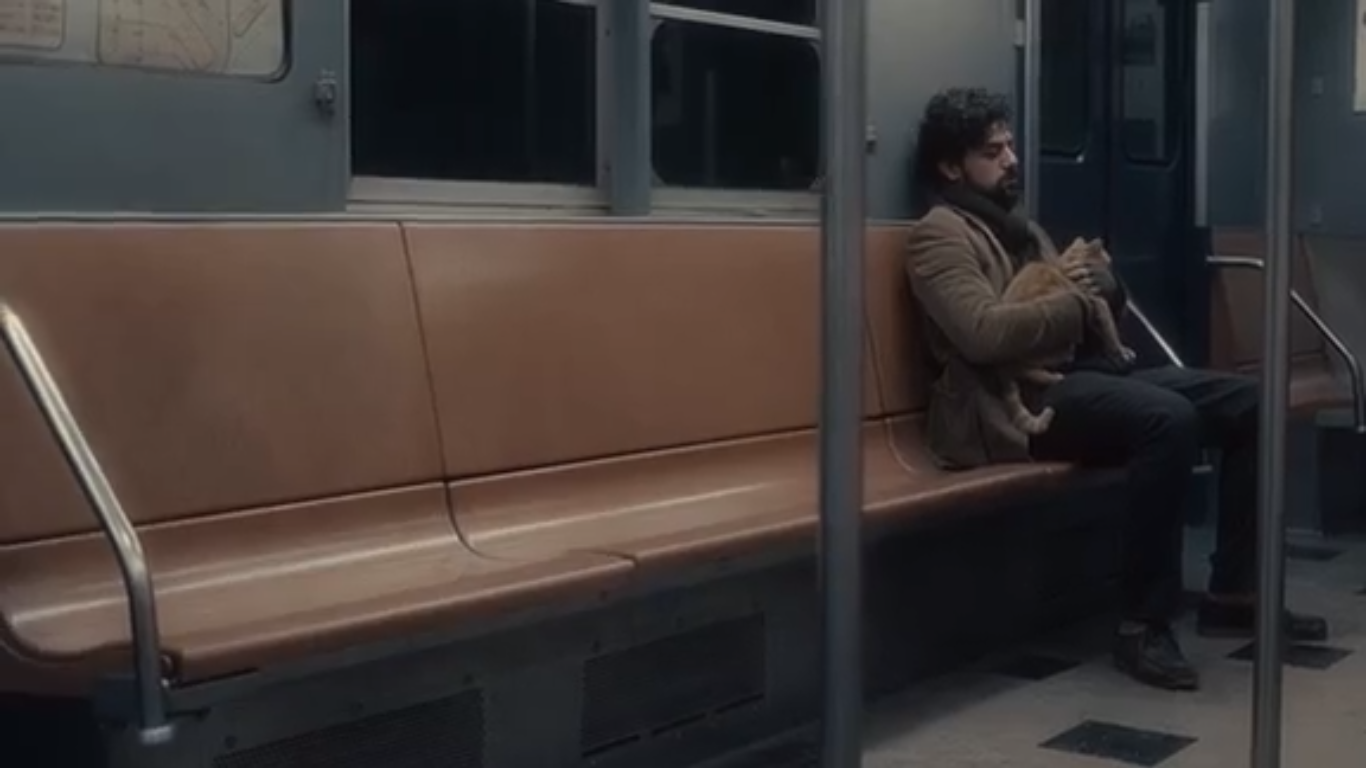
In fact, we first meet Llewyn in a low lit bar singing the ode “Hang me, Oh hang me.” He’s not some budding talent or has-been. He had a partner once, who committed suicide by jumping off a bridge. They had a record that came and went out almost as fast. The unsold copies sit in a warehouse somewhere rotting away with the rats. That’s really Llewyn’s life. He’s couch hopping his way through Greenwich Village, a pitiful wanderer with the cat he was entrusted with in one hand and his guitar in the other. In the frigid winter air, he doesn’t even have a real overcoat. He can barely afford it.

insidel4The film goes so many places only to return to where it was. So much goes on without anything happening and so on. Llewyn has it out with Jean, a transformed and caustic Carey Mulligan, who doesn’t know who the father of her baby is. How it could ever be Llewyn’s doesn’t make much sense, since she seems to despise his guts. Why would she sleep with him?

Llewyn alienates his sister with his misanthropic outlook and foul mouth. He loses and tries to recover the cat of his folk-loving friends the Gorffeins. How they ever became friends we’ll never know. A spur of the moment trip to Chicago comes up and with it, there’s the token John Goodman performance that feels like an absurd aside to the entire plot. Then again, the film’s only plot is the wanderings of Davis, so if meeting passengers while hitchhiker marks his journey it seems pertinent.  A trip to the Gate of Horn for an impromptu audition turns out to be unfruitful and it is the film’s most difficult scene. Davis lays all his heart and soul out there in a poignant performance and all he gets from the producer Bud Grossman (F. Murray Abraham) is that he should join a trio. He’s not solo material.

insidel5Llewyn returns to Greenwich dejected and things continue going poorly for him. So we end up leaving him about where we started. Bob Dylan, Joni Mitchell, Joan Baez would come in time, but it’s the musicians like Davis that are a sadder tale. Those who faded away over the years. Who lay beat up in an alley for heckling a performance in a hole-in-the-wall bar. It’s the circle of life of a folk singer and you wonder if he would ever have it any other way. Undoubtedly this folk oasis was a more hopping, more welcoming place than the Coen’s painted it, but it does suggest something powerful.

Why would somebody subject themselves to this type of lifestyle? Unless they’re insane and like to suffer, it must be that they really believe in the music. They believe in bearing their heart and soul because the music makes them feel alive. Obviously, there is more to life than music, some would argue that point, but it is a brilliant starting point. We can respect someone who sticks by their convictions and their passions. Even if it means chasing through the streets of Greenwich Village looking for a cat. You would never see me doing that. Maybe if it were a dog. Maybe.

4/5 Stars

Royal Wedding (1951)

royalwedding1The Wedding of Queen Elizabeth and Prince Phillip was a once in a lifetime experience. They’re still together to this day and yet when they got married she was not even queen yet. It’s hard to believe. It’s only fitting that a momentous occasion like that would get a film, and Stanley Donen‘s musical is a bouncy little dance fest that uses the wedding as its backdrop, hence the title.

The story follows the brother-sister dance team extraordinaire of Tom (Fred Astaire) and Ellen Bowden (Jane Powell), who after a smashing opening weekend of their show Every Night on Sunday, get a call to perform in London in the wake of the big occasion. So they get aboard the first ocean liner available and head abroad. Tom is more interested in work than love, and Ellen leaves behind a string of beaus behind, but none of them meant much to her. She finds a budding romance with Lord Brindale (Peter Lawford), and it looks like it might actually amount to something. Quite by chance, Tom finds out a woman he meets on the street happens to be part of their production, the dancer Anne Ashmond (none other than Winston Churchill’s daughter Sarah). So of course, we have these two budding romances forming as the show gets into high gear and siblings must balance their obligations with love. It’s not always easy or without heartache, but it ends up just as glorious as the Royal Wedding.

Fred Astaire is an ageless wonder looking as spry as he ever did, and his individual numbers are probably the film’s best. His coat rack dance in the gym seemingly pays homage to his friend Gene Kelly and shows his brilliance at breathing life and vitality into inanimate objects. They become his partners in the dance. His inspiration for expression.

royalwedding2Furthermore, his dance on the ceiling looks as remarkable now and feels just as magical as it probably was back then. It’s a marvel because we look for any sign of a trick, but everything looks so fluid. Thus, it’s so easy to quickly forget the technical aspect and simply be blown away by the inventiveness of Astaire.

Jane Powell is a wonderfully bright young beauty and a lovely co-star for Astaire in both song and dance. It was refreshing not to have them playing romantic leads opposite one another and the brother-sister dynamic fittingly mirrored Astaire’s own longtime real-life partnership with his sister Adele. All in all, it’s a light and elegant bit of fun that’s an exuberant delight. It does what it sets out to do and that’s about all you can ask for.

3.5/5 Stars

Review: West Side Story (1961)

westside1Look at West Side Story through a simple lens and you might see a Shakespearian classic given a 1950s facelift and set to music. It might seem antiquated, perhaps not as politically correct as we have come to expect, and maybe a bit regressive. However, this musical based off of the bard’s famed Romeo and Juliet is most definitely a thematic spectacle pulsing with song and dance. It’s full of romance, full of angst, all expressed through the motions of the human body. In an age where we often feel like we have come so far and know so much, maybe a film like this is good for us if we take a step back for a moment.

Robert Wise’s film opens over the skies of New York and we are quickly introduced to the two competing forces that rule the streets with a “snappy” opening number. You have the local street gang, the Jets made up of delinquents of New York and the Sharks consisting of young immigrant Puerto Ricans. They hate each other for different reasons, but the bottom line is that they hate each other, and there’s no other way to slice it. A tiny scuffle broken up by Lt. Schrank and Officer Krupke is only a small tremor of what is to come, but it sets the tone.

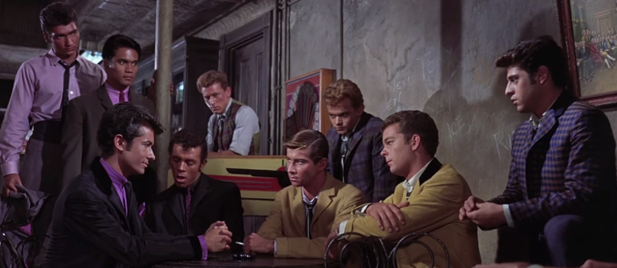
The Jet’s leader Riff (Russ Tamblyn) is looking to have a rumble with their bitter rivals and the neutral territory at the local dance is the perfect opportunity to set things up. Although people are having fun and it’s a grand ol’ time you can tell there’s unrest between the factions bubbling under the surface. The indubitably funny John Astin makes a valiant effort to get them all to be friends, but it doesn’t work so well. Bernardo (George Chakiris) the leader of the Sharks accepts the offer to have a war council because he wouldn’t mind getting a piece of one of the Jets.

The glue that holds the narrative altogether, of course, is the romance that buds on the dance floor when our star-crossed lovers Tony (Richard Beymer) and Maria (Natalie Wood) first meet. This is important because Tony use to be a Jet and is still the best friend of Riff. Meanwhile, Maria happens to be the younger sister of head Shark Bernardo. This is a relationship that’s not supposed to happen and yet their inhibited, naive passion disregards all else. He’s obsessed with a girl named “Maria.” That’s all he has, a name to go with a face and yet he’s infatuated. The singing of “Tonight” reflects how caught up in this dream they really are. And finally “I Feel Pretty” is Maria’s own exuberant reaction to the turn of events.

As an aside, Richard Beymer supposedly wanted play Tony rougher around the edges instead of a hopeless romantic, but ultimately it seems alright that he did not. Only because this film is not simply a drama where a nuanced performance would be suitable, but it is also a musical and a romance. In many ways, we need his character to be as love-struck and idealistic as he is. Because his song and his love story are a striking contrast with the world he and Maria live in.

westside2With the rumble afoot the following night, it can only spell trouble for all involved. The moment that Tony promises Maria that he will try to stop the fighting, he is part of it. Things turn out as he could never have imagined. In fact, no one wanted things this way, revealing how big a difference one single day makes. Tragedy hits with a vengeance, making this a marvelous piece of cinematic expression, but also a jarring indictment of this broken world we live in.

All the choreography in the film is directed by Jerome Robbins, and it is beautiful to see the melding of something so graceful like ballet crossed with the street gangs of New York. There’s something inherently contradictory about it and yet the culture, as well as the angst, is revealed so beautifully. It can be smooth and slick with a group of buddies or violent with arms flailing, heads contorting, and bodies all over the place. But it’s never vulgar, the people might be, but the dance never is. It is always enjoyable to see George Chakiris dance, and he’s not the only one, from Rita Moreno to a whole host of others. They move with such grace but it is never dull because it has feeling. And that extends to their entire performances. In fact, Chakiris and Moreno are probably the most enjoyable, because they are far removed from the dreamy-eyed couple of Tony and Maria.

The composition by Leonard Bernstein is obviously outstanding and this is one of the famous soundtracks in musical history including the “Jet Song”, “Maria”, “Tonight”, and “I Feel Pretty.” However, I think I was especially interested in “America” and “Gee Officer Krupke.” The first puts to song the two conflicting perspectives that lead to civil unrest. There’s the idea that America is this land of opportunity and yet there’s also a negative flip side to this ideal. Also, the second song in a comical way, comments on the treatment of the youth of America. From a film that might seem outdated, it has some pretty frank analysis of the never-ending cycle that goes on.

westside3In fact, if we give our society a good hard stare, have things really changed? Are our discrimination and racism better than that of Lt. Schrank or just veiled behind greater open-mindedness? Are people still hating one another, even when they might be more similar than they realize? Is our society working towards collective good or are we slowly “killing” it through our acts of hate? Even a likable fellow like the drugstore owner Pop (Ned Glass) brings into question those who are against the violence but don’t really seem to do much about it. Words don’t act unless the people behind them do. That can go both ways.

All this pops into my mind because of a musical from over 50 years ago where, yes, Natalie Wood was, unfortunately, playing a Puerto Rican. But hopefully, we can look past that for a moment and see the artistic merit here and then think for a moment what themes we might glean from this West Side Story.

4.5/5 Stars

Begin Again (2013)

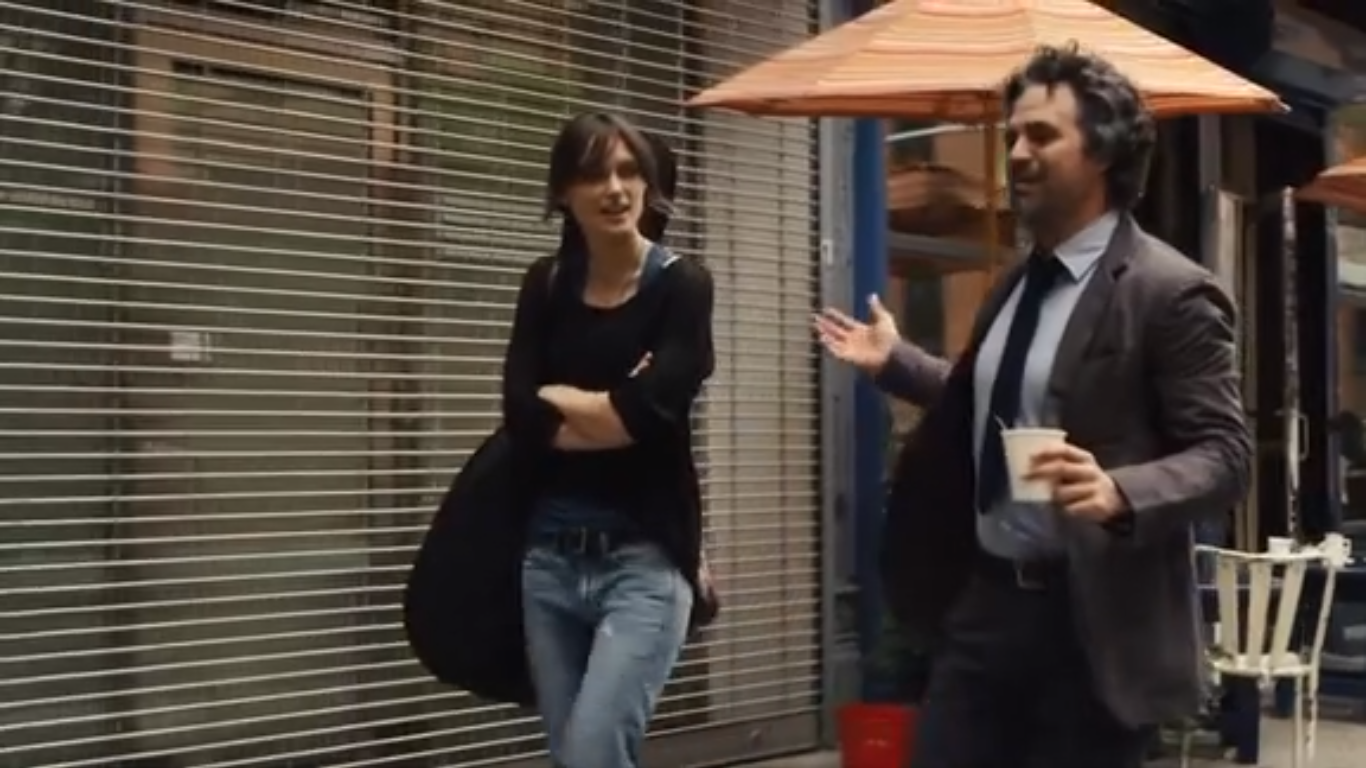
beginagain1Unfortunately, John Carney’s Begin Again loses the unassuming charm of his earlier musical effort Once, with higher production values, bigger names, and a more crafted sound. However, it still rides easily on the charisma of its big-name stars Keira Knightley and Mark Ruffalo. They are two individuals who have their lives wrecked and this crazy, fractured mess of a city becomes the perfect backdrop for two equally broken lives.

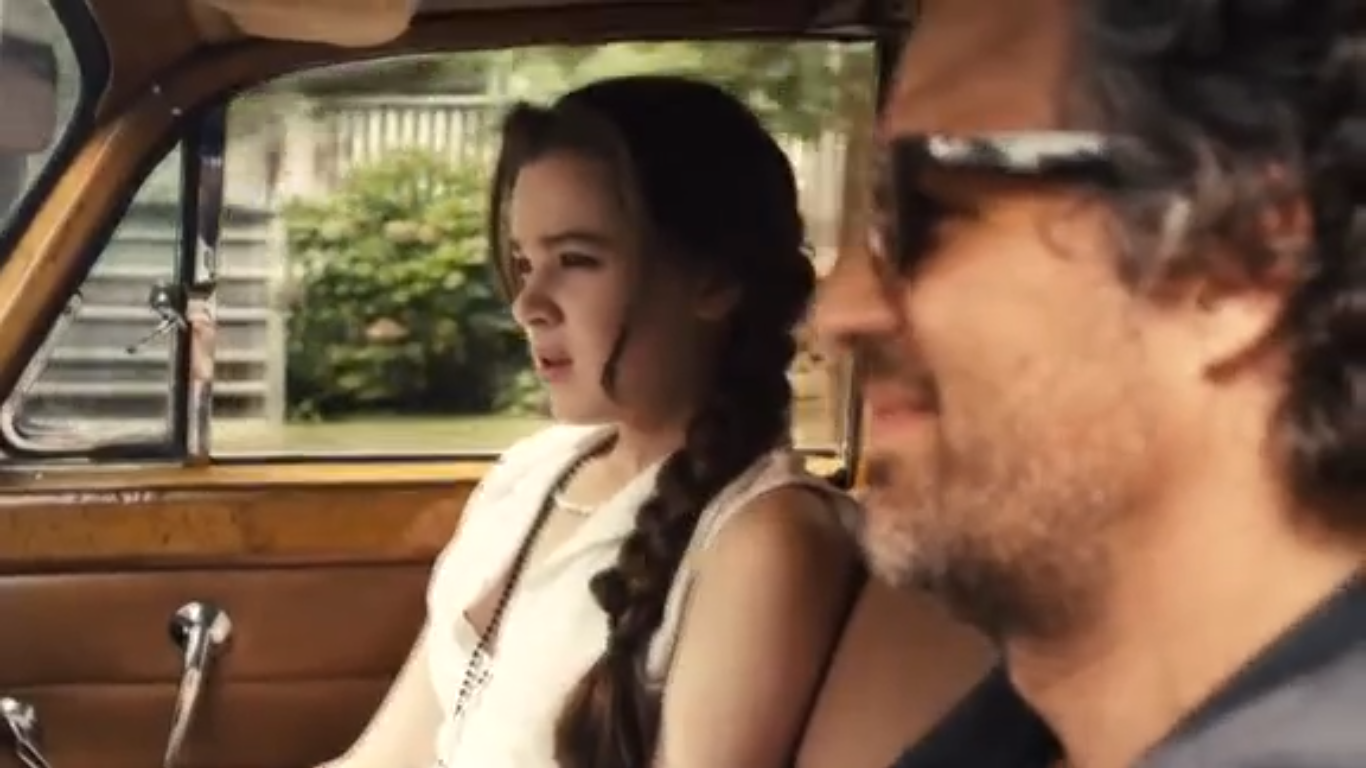
The film opens with differing perspectives on one point in time at a bar in New York. Dan Mulligan used to be a big recorder label exec maybe 10 or 15 years ago, but now his partner has pushed him out because he hasn’t acquired any new clients in ages. He’s all washed up and his family life isn’t much better. He’s estranged from his wife (Catherine Keener) and hardly sees his teenage daughter (Hailee Steinfeld). Given the situation, he heads to the bar to drown his sorrows after an awful day in and out of the office.

beginagain4Meanwhile, Gretta James (Keira Knightley) arrived at that same nightclub by very different circumstances. She is the girlfriend of up-and-coming pop singer Dave Kohl (Adam Levine), but she has a penchant for songwriting on the side. It’s nothing major and yet she certainly has a passion for it. However, with increasing busyness and the fame going to his head, Kohl and Gretta have a falling out. The first place she can turn is her old friend (James Corden) and he invites her to a night of music which she reluctantly agrees to.

That’s how she ends up in front of the microphone playing one of her personal tunes for the mildly interested audience. And yet one man is very interested. Dan is almost pulled out of his stupor by the song’s beauty and he immediately goes over to sign her. She thinks it’s a joke or at least she’s not at all interested in the fame. She independent and she wants to keep her work her own.

But he’s eventually able to cajole her into a unique musical endeavor. They won’t record her songs in your typical studio, but instead, all of New York will be theirs for the using. Thus, the joy of music brings a ragtag group of musicians and aficionados together to make something special and ultimately beautiful.

beginagain5Gretta is able to straighten things out with her boyfriend content with where she leaves them. As for Dave, he gets back with his wife and there is a newfound connection forming with his daughter thanks in part to his new friend’s undue influence. In some sense, this film has a Lost in Translation type friendship. Two very different people in two very different life stages, but they have one important connection. In this case music, and it could be made into something romantic, but it doesn’t force its characters into that.

I’m a bit doubtful that they had splitters back when Ruffalo was first with his wife, but what do I know? No matter, it makes for a fun jaunt through New York listening to the tunes of Sinatra, Wonder, and Casablanca. If you are a lover of music, Begin Again is a thoroughly enjoyable film. It begs the question, what do you do the music for? What’s at the heart of it? Is it about the money, the fame, or the pure joy that comes with creating and sharing your craft with those who you hold most dear?

3.5/5 Stars

Review: Top Hat (1935)

tophat1Perhaps Astaire and Rogers most famous film together, Top Hat has them in top form once more, seemingly defying gravity at the full peak of their powers. The beauty of their partnership is that they’re able to tell the progression of a love story through dance, but they do it with such ease and grace it looks like so much fun. For a brief moment, you almost forget what the plot line of the movie is even about. It doesn’t seem to matter. All that matters is these two harmonious beings in perfect unison with each other.

But for those who take some interest in the plot, it is once more a simple screwball story of mistaken identity and romantic entanglements. Jerry Travers is supposed to perform in the show of one Horace Hardwicke, played impeccably by the stuttering Edward Everett Horton. However, Jerry gets smitten with the girl downstairs, but she gets the wrong idea. After all, he is staying in Horace’s suite. They rendezvous in Italy at a lavish gondola getaway where they meet up with Horace’s wife Madge, the always entertaining Helen Broderick. She’s playing matchmaker for Jerry because he has a girl named Dale Tremont (Rogers), who she wants him to meet. Of course, they already know each other, but again she mistakenly believes he’s Horace.

It’s all very awkward, however, all Travers knows is that he’s infatuated with this girl so he goes headlong after her. She’s aloof with him and eventually tries to marry the overly-honorable Alberto Beddini as a defense. Horace over the entire course of the film is bickering with his butler Bates (Eric Blore) and it seems like he’s constantly getting thrown under the bus. But this time Bates does something that makes everyone happy. All that matter is that Astaire and Rogers are back together because in their universe anything else would be unthinkable.

Astaire’s opening number “Fancy Free” is especially lively setting the tone of the story, while “Isn’t a Lovely Day” taking place under the gazebo in the rain is an important starting point for the love story. “Top Hat, White Tie, and Tails” honestly is not one of my favorite numbers, but it is worth it alone to see Astaire twirl around with his stick using it to develop rhythm and act as almost a third leg.

An American classic from Irving Berlin, “Cheek to Cheek” is undoubtedly the apex of this film, because by now our stars are in love and in this dance they have entered almost a suspended state of bliss personified by their floating forms. All the other players fade away and the dynamic dancing duo gracefully glides into heaven together.

The final number “The Piccolino” is rather decadently extravagant to match the flamboyant set, but again when all else fades away and we are left with only Astaire and Rogers, that’s when the scene truly feels magical. It’s as if within all the noise there is once again a moment of beautiful intimacy. But intimate in the sense of two wonderful performers being seemingly so connected in their art form. They hold the sinews of the screwball romance together if only through their exquisite dances.

Most opinion on film is essentially subjective, and in my opinion Swing Time (1936) from the following year is a stronger picture. It has a few more memorable numbers and it is perhaps a little more well balanced all around. Although you do lose Edward Everett Horton for Victor Moore, a lot of the other players remain the same. Also, Top Hat‘s script feels a little weaker, not that it’s of great importance. Because after all, most people don’t go into a film like this ready to analyze the script. We want to be dazzled by two of the great icons of Hollywood, as much now as during the Depression years, and they certainly do that to perfection.

4.5/5 Stars

Review: Swing Time (1936)

swingtime1I wondered to myself, after watching Swing Time once again, if anyone else might have easily taken Fred Astaire and Ginger Rogers’ places as films greatest dancing couple, and then I quickly discarded this heretical idea. They appeared in 10 films together with this film directed by George Stevens being there six pairing. By now they’re a well-oiled, beautifully elegant dancing machine.

As with many of their films the genre is a hybrid of a screwball comedy and a musical which of course most importantly showcases their legendary dancing prowess.

Astaire is the carefree gambler and hoofer “Lucky” Garnett who gets duped out of his marriage by his buddies and must head to New York to prove himself to his fiancees’ father. He goes off with his faithful friend “Pop” (Victor Moore), who also has a penchant for card tricks. They have nary a penny in their pockets and he meets a pretty young dance teacher (Ginger Rogers) over a stolen quarter.

From her point of view, he just won’t stop leaving her alone and he just wants to get the chance to dance with her. Astaire and Rogers’ first number together, “Pick Yourself Up,” is a peppy piece that sets the bar for the rest of the film. They swivel, glide, and sway, perfectly in sync, orbiting one another. And for the rest of the film whenever they dance together they never seem to lose that innate connection.

As far as the screwball aspect goes, Lucky is tight on money resorting to gambling for some new duds, but his chance to dance with Penny is his big break. They just need an orchestra to accompany them. The only problem is someone else owns the orchestra and the orchestra leader Ricardo is also madly in love with Penny. In a shady set-up all across the board they draw cards for the contract and “Lucky” wins. He and Penny have a growing connection, but he still feels guilt based on his attachment to his fiancee Margaret. And of course his life catches up with him and Penny finds out while simultaneously the orchestra is taken away from him.

It must happen this way so they can realize how much they mean to each other and share one final dance together. Out of all the misunderstandings comes a lot of big laughs and in the end, everybody thinks it’s funny. Since Ricardo loses his pants, Penny decides to marry Lucky after all and everything is right in the world of Astaire and Rogers.

You don’t necessarily watch a film like this for the acting, but thanks undoubtedly to the studio system we have a colorful supporting cast including the two-timing but lovable Pop, Mabel is a wisecracking riot in her own right, and although his screen time is short, Eric Blore is enjoyable as the hissy dance studio boss Mr. Gordon.

“The Way You Look Tonight” is an absolute crooner classic and aside from the initial number it can be heard throughout the film in refrains. The same goes for “A Fine Romance” which feels antiquated, but it still manages to be thoroughly enjoyable in all of its reprises. But the main attraction is, of course, the dancing, from the personified joy of “Waltz in Swing Time” to the graceful gliding of “Never Gonna Dance.” If you set aside the unfortunate blackface for a moment the Bojangles shadow dance is a stroke of creative genius that gives off an amazing result while showcasing Astaire’s individual skill.

From someone with two left feet, this film makes me want to at least attempt to dance because Fred Astaire and Ginger Rogers turn dancing into an almost mystical experience. How does he prance and twirl so effortless on the floor? How does she do it equally as beautifully and in heels no less? It looks like they’re having so much fun and yet, in reality, they practiced for hours upon hours to get it right.  Amazing stuff.

4.5/5 Stars

Once (2007)

once1Only sometime after the film ended did I come to the realization that we never learn the names of our two protagonists. And yet we build such a connection with them through music, through their bits of humanity, and from being a part of their lives for a short time. Because Once really does feel like a documentary. It feels like we’re meeting these people and peering into their lives for an hour an a half of sheer delight.

The guy (Glen Hansard) is an Irish street performer who can be found on the street corners, guitar case open, strumming away, hoping to get a buck or two. He’s good but nobody much seems to notice him. It’s as if people see you doing such a gig and think you must not be very important. I must admit I’m guilty of such a fallacy myself many a time.

But there is one person who does come up to him. It’s a girl (Marketa Irglova), very straightforward and direct, and we learn she is Czech. What could two such people have in common? Music. Of course. The universal language even more so than English. Because she obviously has an accent and he does too, to my American ears, but their music transcends cultures.

It’s easy to forget Once technically functions as a modern-day musical because more often than not the genre seems like a dying breed. The songs in this film are beautifully melodic, with wonderfully earnest lyrics, and equally well-wrought instrumentation. But it fits into the narrative and nothing feels like a forced plug to get our respect.

They’re laying it out there. Letting us into their homes and keeping all their feelings out in the open. Really they both have a humble existence, and each has had their own romantic pasts. He has memories of a love who now lives in London and despite her young age, the girl has a husband she left behind in her home country. It’s a surprise to him and the audience both.

once2Their ride on a motorcycle, for a brief instant, brought to mind the Vespa ride in Roman Holiday, although their excursion is a little less chaotic. There’s still an innate playfulness of people with wonderful chemistry and whether they are acting or not is anyone’s guess.

Everything goes back to the music though since that acts as the heart and soul of this story. When the pair of them are able to get a recording studio it looks like he might get his big chance. He invites her to sing because he really wants her to be a part of it. He rounds up a few more street musicians and they’re set. When they get to the recording studio and the tape starts rolling what follows is a performance bursting with passion and energy. You can feel the electricity.

It feels as if we’re on the ground floor of something special, unwinding right before our eyes and yet we don’t know exactly what is going to happen. He’s about to head off to London to show off his sample and perhaps catch up with an old flame. She is preparing to make amends with her husband. But before leaving the guy drops a very big present on her doorstep to thank her for all she’s done for him.

Their tune “Falling Slowly” plays in refrain summing up this music-infused love story. The question is, is this an actual love story? I would answer in the affirmative. There is no sex in the contemporary sense, but this film does most certainly have love, whether or not it becomes physical. And it acknowledges the clear distinction between sex and love. These are two people who deeply care about each other and share a connection more intimate than most people can manage.

4/5 Stars


Review: A Night at the Opera (1935)

ANATOcontract“That’s in every contract, that’s what you call a sanity clause.” – Groucho

“You can’t a fool a me there ain’t no sanity clause” – Chico

The Marx Brothers had a set formula, where everyone else played the drama straight and they did whatever they wanted. So essentially there is no formula, lending itself to the anarchic comedy that they will be forever known for. However, if you put A Night at the Opera up against there earlier work at Paramount (this was their first film with MGM), you can see some important changes. Wunderkind Irving Thalberg wanted to give their films a more concrete plot line and in an effort to make them more sympathetic figures, all their antics were aimed at obvious “villains,” while they helped those who needed help. In this case, it was the aspiring opera star Rosa (Kitty Carlisle) and her beau Ricardo (Allan Jones), who get a helping hand from the boys.

This restructuring worked out because although the film plays out dramatically under the direction of Sam Wood, the Marx Brothers are still up to their old tricks, pulling off the same stunts that they used to. In fact, A Night at the Opera would be a very boring operatic drama by itself. Some of the interludes including song and dance are rather dull even in their extravagance. But Chico, Harpo, and Groucho inject the film with their brand of comedy that is difficult to top.

Groucho’s quips are aimed once more at the oft-abused Margaret Dumont. And then Harpo and Chico help befuddle the conceited opera star Lasparri, an Opera Company magnate (Sig Ruman), and the police among others.

ANightattheOperaStateroomThe film borrows the stowaway storyline from Monkey Business (1931) so the brothers and their friend  Ricardo can follow the opera to New York. This lends itself to the now iconic stateroom scene where a total of 15 individuals are crammed together into Groucho’s tiny ocean liner abode.

Earlier on Chico and Groucho have fun drawing up and ripping apart a contract for their new partnership (including the famed Sanity Clause at the end). It ends up that the three fugitives are on the run from the authorities and Groucho is thrown out of his job finally.

But everything culminates at the opening performance at the opera and the Brothers are in high form. Chico and Harpo invade the orchestra pit, insert “Take Me Out the Ballgame” into the arrangement, and join the cast as a pair of gypsies. Meanwhile, Groucho delivers his usual quips from the box above, much to the dismay of all the patrons. To top it off, Harpo goes swinging up above the performance making a shambles of Lasparri’s big night, and Rosa and Ricardo are able to win over the audience. But it goes without saying, it’s the Marx Brother’s who steal the show. Groucho is as rude as ever. Harpo is always ready to knock someone out, and Chico is just waiting to join in on the ruckus. It’s comic mayhem at its apex.

4.5/5 Stars