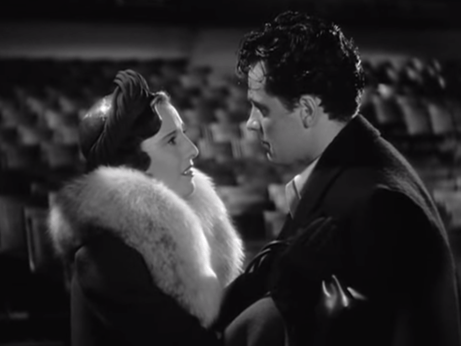
The Breaking Point (1950): Updating Hemingway and Hawks

the breaking point 1.png

Michael Curtiz, to all those who revere him, has far more than Casablanca (1942) on his resume. It’s stacked with classics including The Adventures of Robin Hood (1938), Mildred Pierce (1945), White Christmas (1954) and even a less-heralded picture like The Breaking Point.

Those familiar with the original source material, from Ernest Hemingway, might also realize an earlier version of the story was made starring Humphrey Bogart opposite his future wife, Lauren Bacall, in her crackling debut.

Director Howard Hawks helmed To Have and Have Not (1944), which proved to be very loosely based on the eponymous material indeed. About the only elements comparable between the two renditions are the oceanic atmospherics with salty seafaring types and other undesirables mixed together liberally. Though donning a new name and casting a new star in John Garfield, it’s easy to make the case that The Breaking Point is a lot more authentic.

To Have and Have Not is a delight because it is such a cinematic creation with indelible characters filling up a world, not unlike Casablanca, ironically. But its successor unfurls qualities that feel less done up and artificial in a still delightfully atmospheric Hollywood fashion.
the breaking point 3.png

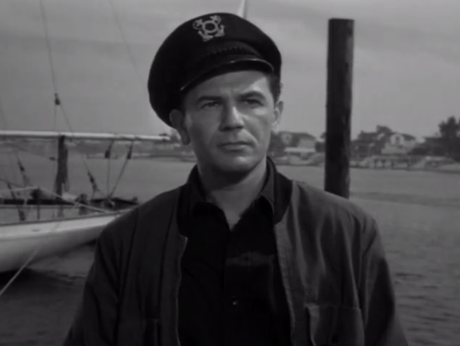
One could wager it begins with a location that’s very much a real place. In fact, it’s a place I have known quite well in my lifetime. I was first tipped off to its whereabouts when Garfield gives money to his daughters to go see a movie and tells them to be careful on Marine Ave.

As I only know one Marine Ave., I double checked the film’s shooting locations and looked ever more closely at the exteriors. All this confirmed the fact The Breaking Point was shot in and around Balboa Island in Newport Beach, California. I know the area well as I used to spend some summer days there as a kid. The exteriors are most obvious when our protagonist comes back from the bar, walking by the docks, and he’s already day drunk.

We have yet to describe any of the narrative but already we have something vastly different from its predecessor. The main character is a family man, a seaman, and simultaneously trying to drown his sorrows in alcohol. What adds insult to injury is the fact Harry Morgan (Garfield) was a highly commended Navy Seamen during the war. Except, ever since coming back from the war a hero, he’s never been a somebody and that’s hard to take for a proud human being.

All he knows is the sea and so he’s tried to make a go of it obdurately, working furiously to subsist off his boat but it seems like everyone is pushing his head underwater. Try as he might, he can never get ahead. He needs dough for the reasons we all do. To pay the bills. To put food on the table. To take care of his wife and daughters.
the breaking point 2.png

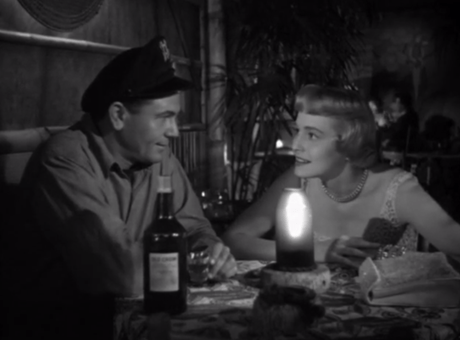
Soon Harry’s peddling a would-be fisherman and his gal pal (Patricia Neal) off the coast of Mexico. Of course, the shyster runs out without paying and leaves his girl behind. Harry’s been played for a sucker, stuck on the wrong side of the Mexican border, without any fare to get home. He’s kept his nose clean thus far but times are desperate. In a dive joint, he gets approached by a slimy undesirable, chomping on cigars and proposing a shady business proposition. Momentarily, our hero has been submerged back into the world of Bogart and Hawks.

He’s tasked with sneaking a group of Chinese passengers into American water illegally. However, following an altercation with his contractor (Victor Lee Seung), with Ms. Charles (Neal) and his mate Wesley (Juano Hernandez) aboard, he backs out leaving the Chinese behind. He’s escaped for now, his mores still intact.

But that doesn’t help him when he gets home. The Coast Guard soon confiscate his livelihood. His wife takes on work at home to try to compensate and he has one last chance to save his boat from being taken away from him in order to make ends meet. He feels compelled to take a second job bringing him back into cahoots with the same cruddy opportunist named Ducan, albeit reluctantly.

It’s in these dire straights where it becomes evident The Breaking Point is on the same moral plane as The Bicycle Thief (1946), where our protagonist is forced to make horrible decisions, all for the sake of his family. Should we blame him for the deadly finale that follows? It’s so difficult to enact decisive judgment.

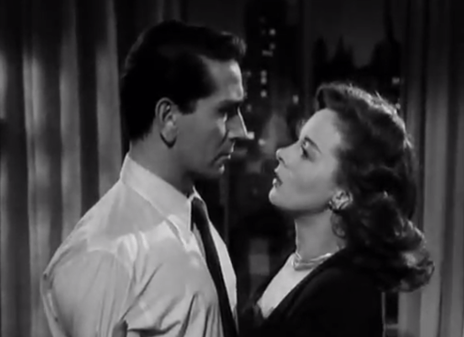
Surely Patricia Neal has the flashy role because she’s the flirtatious blonde who’s never tied down and seems ready to get with anyone. But Phyllis Thaxter, even as she competes with the other woman, dying her hair in an attempt to win back her husband’s affection, has a softer more vulnerable tremor in her voice that feels so very transparent.

When we look into her eyes and see her get angry with her husband for not throwing in the towel and taking up a life on her father’s farm, the concern there is so very real. We understand it because it’s plaintive and deceptively unprepossessing. Because there are deep wells of beauty inside of her making the film’s romantic dynamics that much more intriguing.

John Garfield maintains the working-class persona he always seemed to flaunt so easily but here he’s surrounded by a family — two daughters and a loving wife, making his struggle all the more relatable.

He’s also a loving father bringing his daughters trinkets from his trips, cradling them in his arms affectionately, and slipping them change so they can go to the picture show again. The same goes for his wife. Even as they struggle and fight fairly regularly, over the kitchen table, there are other moments where he makes his love and faithfulness supremely evident. He compliments her looks and the new hairstyle she’s trying after the girls criticize it.
the breaking point 4.png

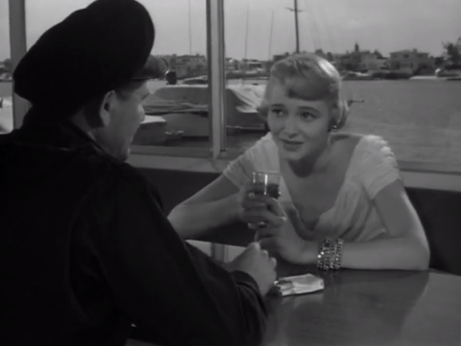
Because the one thing The Breaking Point is not is a story of infidelity. Sure, it comes close on multiple occasions with Neal playing the tantalizing siren but Garfield unreservedly loves his wife. He’s honest with her in that sense, even as he keeps other secrets on the side. He thinks it’s a way to protect his family and his friends. The waters of the film are undoubtedly choppy, even perilous; that’s partially what makes the solid rock of the marriage at its core all the more refreshing.

Any relationship with a firm foundation is predicated on transparency. There’s no other way if you don’t want to harm your spouse and push them further and further away. I admire The Breaking Point deeply for this unflinching portrayal of marriage that, while not always polished, feels inherently real.

4.5/5 Stars

Review: Bonnie and Clyde (1967)

bonnie and clyde.png

Fifty years on and Bonnie and Clyde remains a cultural landmark as the harbinger proclaiming a new American movie had arrived on the scene. As a cinematic artifact, it is indebted as much to the 60s themselves as it is the Depression Era where its mythical crime story finds its roots.

The spark of an idea came from screenwriter Robert Benton’s own knowledge of his father’s fascination in real crime novels, which even led the elder Benton to attend the actual funerals of Clyde Barrow and Bonnie Parker. It’s youth rebellion and a free love revolution by way of the 1930s mythology.

Formalistically, Bonnie and Clyde was an effort by producer Warren Beatty and director Arthur Penn, collaborating with their screenwriters, to channel the French New Wave. It’s true that at a time, two of the movements titans, Francois Truffaut and then Jean Luc Godard, were both attached to the project. Ultimately, it didn’t pan out but the spirit they’re pictures were imbued with remain even as this effort is undeniably American.

Bringing the exciting and at times challenging art pictures of Europe to the American mainstream with a jolt of new blood, squibs included free of charge. Even if everyone didn’t realize it at the time, it signaled a rebirth of a style and philosophy that was fully alive. It only took generations of new film school filmmakers to run with it and in subsequent generations eventually, kill it.

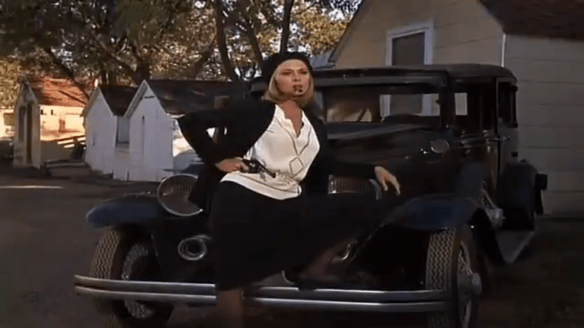
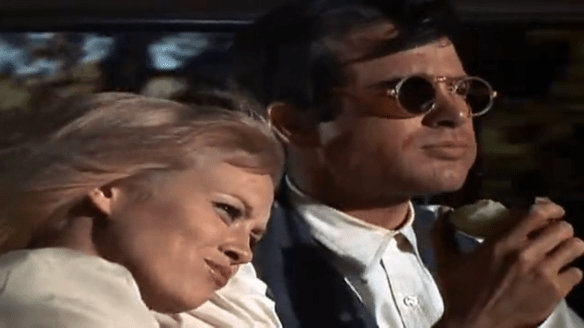
For now, we had the fateful meet-cute, Bonnie Parker (Faye Dunaway) scantily clad, bored out of her mind, and spying the boy trying to nab her mama’s car. She catcalls him and he welcomes her — nay, challenges her — to join him. He’s Clyde Barrow (Warren Beatty) a small-time criminal who did a stint in prison and has two missing toes to prove it (It was his gag to get off a work detail a few days before he was paroled). They share a drink over Coca-Cola in the noonday sun. He’s intent on being a big shot and she’s disillusioned by her waitressing gig.

In a moment, he brandishes a gun to exert his manhood and he’s further coaxed on by Bonnie to rob the cash register in her quaint town. She doesn’t believe he has the gumption. A minute later he rushes out with the wad of cash and they’re on their way to a giddy life of crime so thrilling, at first, with its bouncy jangle of banjo strings. This is only the beginning. They aren’t big name criminals yet. That notoriety is born out of three words: We Rob Banks!

Yes, they do. They bring on slow-witted but able mechanic C.W. Moss (Michael J. Pollard) to keep their gears constantly turning so they can handily outrun the police and dot their native Texas with bank job after bank job. Clyde kills his first man after Moss botches their getaway and the papers start to document their harrowing exploits on the wrong side of the law.

A family reunion follows for Barrow as his older brother Buck (Gene Hackman) and Buck’s quibbling wife Blanche (Estelle Parsons), the daughter of a preacher, join their merry company. It should be noted the ladies take an immediate disliking to each other. Bonnie’s not agreeable to the domesticated lifestyle and she’s wary of Blanche, a woman she deems has no guts. It’s a perceptive observation.

bonnie and clyde 2.png

As their reputation grows, so do the prices riding on all of their heads. First, the cops look to ambush them on their holiday in Missouri. Then it’s a lone Texas Ranger (Denver Pyle) who winds up getting his picture taken to be plastered all throughout the newspapers. He’s not one to forget the humiliation and he’s aiming to make them pay.

Each and every time they take to the road again, starting up their rampage across the countryside a new, casing bank after bank, while gaining a bit of mystique with the common folk. Along the way, they pick up some extra passengers (Gene Wilder and Evans Evans) to terrorize and then make a pilgrimage to the Parker home due to Bonnie’s homesickness.

But even this move is extremely dangerous and soon another police ambush follows on their latest residence that is deadlier still. It’s a downward spiral with an ever larger target being pinned on their backs. Soon they’re picked off like ducks in a shooting gallery with Buck being mortally wounded and Blanche subsequently goes hysterical and spills her guts to the authorities all but sealing the fate of our antiheroes. Bonnie was right about her.

The other three escape by the skin of their teeth though badly battered. With nowhere else to turn, they seek asylum with C.W.’s father who extends some southern hospitality. Although, behind closed doors, he isn’t too keen about his son’s new lifestyle with tattoos and all.

We know the story must end even as Bonnie has successfully canonized their legend nationwide with a poem she penned subsequently published around the country. And they are as in love as they ever were promising to get married and dreaming of a different life where they could settle down and be normal folks. They take what they can get and love each other while they can. Because justice is swift and it comes with a vengeance.

bonnie and clyde 3.png

The old mores are upheld but utilizing a new language that was aberrant and gratuitous in comparison to the traditions of the past. But that was just it. Bonnie and Clyde was somehow the perfect vehicle of antiestablishment both in form and function. It was like the perfect storm of a cultural revolution and a medium to reflect the angst of a generation.

There’s a madcap raggedness to their crime spree that’s almost comical and Penn plays it like a comedy at first. A bunch of hicks out on a road comedy caper, only it’s underscored by graphic blood-spattered violence like the industry had never witnessed before. It’s like putting the frenetic zaniness of the Keystone Kops with the violent gunplay out of the gangster tradition and it creates a disconcerting dissonance ripping apart the standards of Classical Hollywood. Because the industry had showcased degenerate criminals before — the Cagneys, Robinsons, and Bogarts — but they were always hard-bitten figures and, of course, they got their comeuppance.

Up to that point, there was arguably no characterization quite like this where our leads were young and desirable — a new kind of antihero who forged an anarchic path between Gun Crazy, Breathless, and Pierrot Le Fou.

Arthur Penn pointed out at a later date, and you could easily make the argument, for the first time film was being more accurate by showing the actual impact of a bullet on a human body. There was no cutaway. There was no inference or use of the wizardry of editing to imply the results. They were right there in from of us in all their gory reality. That was indeed groundbreaking.

Its final scene ranks right up there with Psycho‘s shower sequence for how it completely shatters everything we knew to be convention. At that point, there’s no going back. You cannot unsee it. It stays with you. Both instances brutal in their meshing of image, sound, editing, and the myriad pieces at the disposal of filmmakers to make us see something deeply manipulating.

Bonnie and Clyde would bear many of the progeny that have challenged me; films that brazenly dabble in violence, comedy, and the darkness of the human heart in almost inconceivable ways. Mixing tones, emotions, and content in a manner that is incompatible at best and deeply perturbing in their most volatile forms.

Surely, we cannot laugh at something and an instant later be subjected to the blackness of death? People cannot be villains and cast as heroes in the same breath. Everything passed down from our traditions tells us this is not the way it works. After Bonnie and Clyde, it was a whole new landscape. No question.

5/5 Stars

The Thomas Crown Affair (1968)

thomas crown affair 2.png

To watch the original Thomas Crown Affair now is to see a film that is so completely and confidently of its time. It opens with a Bond-esque enigmatic title theme, “Windmills of The Mind,” playing against blocked split-screen images composing the credits. As such, it’s easily dated by its 60s suavity, which nevertheless serves the film handsomely as it progresses and sinks into its story.

A heist is in its latent stages, composed of the same stylized patchwork of images visually coordinating all the parties involved as Steve McQueen pulls all the switches from the comforts of his corporate office. The streamlining techniques being utilized effectively consolidate the footage and make us more overtly aware of Hal Ashby’s influence serving as the film’s editor. It’s at times discombobulating, particularly when used extensively later on during the polo match to multiply the frames. But it more than serves its purpose through the stylized manipulation of the individual images.

It’s only a heist film for what seems like a few solitary minutes but it’s immaculate in both conception and execution as all parties converge on their target, get in and get out with their prize and very few complications. In this regard, those familiar with Kansas City Confidential (1952) might notice some nominal similarities. The brilliance of the crime comes in using robbers who have never met and can never be tied back to each other again.

The money is dropped off at a checkpoint and all parties involved will get their money when things cool off. In these opening moments you’ll wonder if Steve McQueen is actually a bad guy and where Faye Dunaway is because, after all, she robs banks too. When things begin to unfold and we see where we are destined, it’s not at all what I imagined with McQueen and Dunaway batting for different teams much of the film.

Insurance Investigator Vicki Anderson (Dunaway) is brought on as a favor to her friend to help a harried detective gain some much-needed closure on the case. She makes a stunning entrance and never lets up with the wardrobe changes. Ms. Anderson has an immaculate outfit to coincide with each subsequent scene and an answer for every situation. In fact, she’s the one who intuitively pins Thomas Crown as her man. All she’s got to do is prove it and she certainly can be very persuasive.

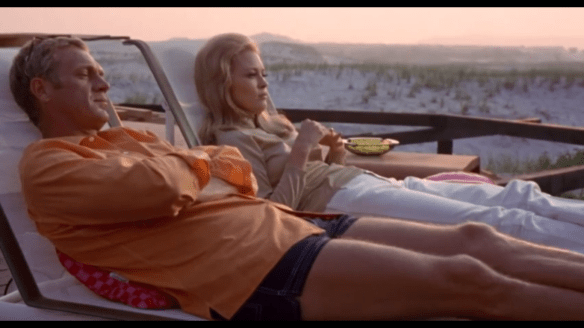
McQueen is the eponymous affluent playboy businessman who’s bored stiff by his day-to-day. It includes diversions like polo, dune buggy rides sliding across the sand and soaring through the skies in his custom-built sailplane. For a man like him, it’s not enough so he devotes himself to the perfect crime and it’s his lucky day when he meets a ravishing woman looking to trap him. It makes life a bit more exhilarating.

thomas crowne affair 1.png

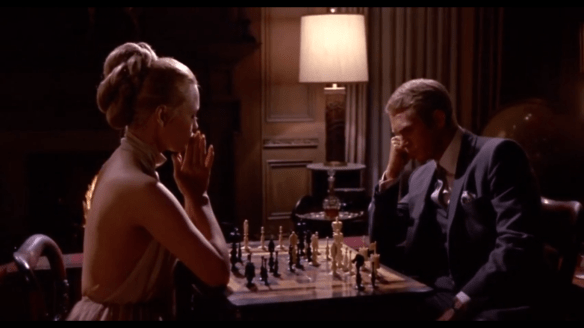
Among other rendezvous, they play a literal chess match in his parlor, which serves the dual purpose. Not only does it reflect the sparring going on between the two of them but it effectively accentuates the romantic chemistry pulsing through them with every headlong glance, every thoughtful thrumming of the fingers, or caress of a chess piece. It’s near-wordless with Michel Legrand’s score impeccably setting the quietly sultry mood in the low light.

On top of the title track, Legrand devised his score by composing against the uncut footage and in a generally unprecedented move, the movie was cut to his work. What we are met with within the same extended sequence are faces eventually framed in lingering close-ups. Eyes, mouths, nervous ticks denoting concentration. What’s more, it all culminates into a spiraling kissing extravaganza kaleidoscope of color.

As Vickie closes in on Thomas, he knows she cares about him and he must force her hand instigating a nearly identical heist to draw out her response. She can either work with the authorities or chase after him as he soars away in his jet decked out in his iconic blue-tinged Persol sunglasses. It’s her choice.

The Thomas Crown Affair is the most backward game of cat and mouse with the coolest rodent you ever did see crossing wits with an equally wily and lovely feline. But the stakes are minor in this sumptuous affair as it’s all style over substance in this second teaming of McQueen with director Norman Jewison. Of course, when you have two stars as scintillating as McQueen and Dunaway one could argue that you don’t need much else. Purportedly McQueen jokingly christened his unestablished costar “Done Fade-Away” as a little picture called Bonnie and Clyde (1967) hadn’t been released yet. Boy, was he wrong. She was here to stay.

3.5/5 Stars

House of Strangers (1949)

house of strangers 1.png

Joseph L. Mankiewicz will always hold the prestige of a writer over a director and yet working off a script by Phillip Yordan, he guides the picture with an assured hand. House of Strangers manages to be intermittently stylish and deeply evocative highlighted by fiery performances. Ironically, it begins like a good many of his most well-known works with an extensive flashback.

It stems from a story that has deeply familiar roots in the American experience full of the old vs. new world dichotomy, immigrant lives, love, and hate. The expansive Italian family rendered so memorably in The Godfather films comes to mind most plainly and there’s little doubt House of Strangers sows some of the same seeds cropping up again over 20 years later in Coppola’s classic.

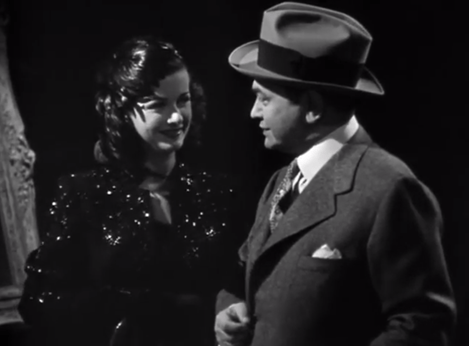
Thematically, it’s about a culture that is extremely family-oriented but also hierarchical. It’s right there in the title. With how he runs his household, Gino Manetti (Edward G. Robinson) has tended a “house of strangers” by picking favorites and alienating his other sons. They are tired of constantly being ridiculed and doing his bidding, while their ambitious brother Max (Richard Conte) gets their father’s full attention, going so far as to herald his upcoming marriage to his sweetheart (Debra Paget). The other Manettis never get such fanfare.

As might be expected within this context, the story relies on powerhouse performances and Robinson is astoundingly effectual as the patriarch. It never really feels as if he’s playing at something (the same cannot be said of Hope Emerson unfortunately) but he takes on the persona of someone who does only what they see fit to do. His mode of thinking and acting is very straightforward. There’s nothing diplomatic about his dealings and that garners him many friends but also plenty of ill feelings.

Joe (Luther Adler), the oldest Minneti brother, is discontent with the way his father takes him for granted, keeping him as a bank teller with little responsibility in the family business. He’s worried about his image with his wife and the neighborhood. Their father’s favoritism only makes it worse.

Then, there’s Pietro (George Valentine) the brawny brother who doesn’t have the greatest brains and so his father keeps him on as a security guard. The boy’s also been moonlighting in the boxing ring but he receives his father’s disdain for having a soft belly. So he’s got his own burning grudge, that and the fact Gino is always making him change the records at family dinners. Tony (Efrem Zimbalist, Jr.) is the pushover and it’s easy for dad to keep him in his place.

In a sequence that could almost be plucked out of It’s a Wonderful Life, the bank is closed down in the throes of The Depression and there are riots in the streets broken up by the police force. But in the aftermath, Gino is put on trial for his loose business practices that more than likely bent numerous federal regulations. He never did care much for them.

If his sons were behind him it would be easy enough to beat the rap but with only Max in his corner, it becomes an increasingly strenuous battle. In the end, the beloved son shields his father but ends up being disbarred and served a prison sentence for jury tampering.

house of strangers 2.png

Waiting for him on the outside is the former client that he’s come to love, Irene Bennett (Susan Hayward), and out of love she confronts the old man and berates him for what he has unwittingly done to his sons, worst of all Max. Hayward’s performance is poised, at first sultry and then full of fight as she battles for what’s hers. She’s one strong woman in what seems a sea of benevolent ones.

The inevitable finally happens and Gino dies but he has left behind residual bitterness that still seethes between the siblings. The other three remain jealous of Max’s hallowed place at their father’s right hand and he sees their takeover of their father’s bank as seditious.

Conte seems often criminally underappreciated and best-remembered as a casualty of Michael Corleone. But do a survey of his career and you realize how crucial he was to the film noir movement serving up a versatility that found him in sympathetic roles as well as villainous turns running the gamut from Call Northside 777 (1947), Thieves Highway (1949), and Whirlpool (1949) to Cry of The City (1948) and The Big Combo (1955).

On a side note, this picture would once again briefly pair Conte with Debra Paget romantically though, oddly, she was only about 16 at the time. The studio’s executives must have seen something…

However, with House of Strangers Conte straddles the line between most of his other roles. Ruthless when he needs to be, capable of a grudge even, and still generally affectionate of the ones he loves. It’s arguably his most far-ranging and nuanced performance of the whole lot and he does a sterling job.

Because to drag The Godfather comparison out further, if Robinson is Vito, in some regards, the most prominent figure in the film, then Conte’s Max is Michael, the son who soon comes into his own and becomes the new center. He owns the picture just as Pacino ultimately became emblematic of The Godfather as a dynasty.

The repercussions of brother pitted against brother are evident. The forces of their father are still working on them almost unconsciously now. It’s been built into how they perceive family. But in a single shining moment, Max wrenches his clan out of this self-destructive horror that their dear old departed dad seemingly cultivated. Instead, he lays the foundation for something more substantive even if the healing comes in incremental baby steps.

Old habits die hard but that doesn’t mean they can’t be eradicated…Maybe. More importantly, he hears the impatient honk of that same horn out on the adjoining street. He’s still got his girl. The film’s happy ending deserves a noirish asterisk. Some amount of loss must come with any gain.

3.5/5 Stars

Review: The Woman in The Window (1944)

woman in the window 1.png

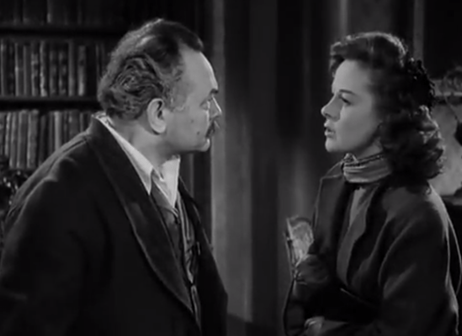
The first time I ever saw The Woman in The Window it always struck me as odd. Here was the fellow who was known as a gangster through and through and yet he was playing a bookish professor buried in his work and obsessed about psychoanalytic theory. His idea for a fine time is conversing with his intellectual friends (Raymond Massey and Edmund Breon) at the Stork Club. He’s the epitome of middle-aged solidity and stodginess as he so aptly puts it.

But in confronting these very things, you realize Robinson might have enjoyed any opportunity to get away from what everybody seemed to peg him as — to exercise a certain amount of elasticity as an actor — to be the antithesis of his image. This is all mere conjecture, mind you, because as the story progresses, you realize the character is a bit mundane.

Regardless, veteran Hollywood screenwriter Nunnally Johnson spins a story of psychological intrigue as his first showcase for his newly founded production firm International Pictures. This Fritz Lang effort along with a handful of others would instigate the stylistic categorization of “film noir” by French critics in the post-war years. There’s little doubt it fits many of the fluid conventions of noir. Though overshadowed by the even more sinister Scarlet Street from the following year, it is a genre classic in its own right.

As alluded to already, it’s also steeped in psychology. In fact, it gets knee deep in it from the opening moments in such a fashion that we know it will remain all but integral for the entire run of the narrative. Professor Wanley is enraptured by an image, a portrait of a woman to be exact, and it elicits the same spell Gene Tierney would have in Preminger’s Laura (1944). But of course, it is the woman being animated for real that brings true life to the movie and it’s no different here.

This brings us to the part that’s actually the most gratifying and probably would have been the most enjoyable to play. That of the eponymous woman staring back through the window. Joan Bennet is positively bewitching and grouped with Scarlet Street (1945), it remains some of the defining work of her career, which is hardly something to be dismissive of.

As best as it can be described, she has a pair of those coaxing, inviting eyes. Bennett, to a degree, seems to play up her Hedy Lamarr appeal with jet black hair but her looks are her own as is the spellbinding performance and it works wonders starting with the man on the screen opposite her.

He foregoes a burlesque show to engage in some “light” after dinner reading of Song of Songs. Though he’s probably looking at it from a purely academic perspective, one can gather that between his psychological theories and the fairly explicit poeticism of his reading, he’s got quite the cocktail brewing in his mind.

He gives the portrait another look as he’s about to head home, as is his normal tendency. In this particular instance, the woman is present in the flesh and they share some complimentary words. That leads to drinks and then a venture to her apartment to wind down the evening perfectly innocently.

However, instantly his life is transformed into a living nightmare as they are interrupted by a scorned boyfriend with a horrid temper going at Richard who has no recourse but to strike his adversary down in a frantic attempt at preserving his own life. It was self-defense but the damage has been done and the results are not-so-conveniently lying on Ms. Reed’s carpet.

Even with these turn of events, the professor takes them in stride, systematically and semi-rationally coming to a decision that while risky just might be the most beneficial plan of action, at least in theory. There is much that needs to be done. He enlists Alice to clean up the crime scene by both getting rid of blood and incriminating fingerprints. Any evidence that would implicate either of them must be done away with methodically.

He puts it upon himself to dispose of the body, which is no small task as the dead man has a massive frame. It takes up a lot of space and causes him some grief. He gets rid of it but not without incurring a cut and a rash of poison ivy while also leaving behind some clues that indubitably will have a bearing on the case.

However, he also has the rare privilege of being so close to the district attorney and the head of the homicide department to see first hand how they’re getting on with the case. If anything it unnerves him more assuming he will soon incriminate himself with a minor slip of the tongue or worse yet be found out in his clandestine activities due to the thorough investigation underway.

Dan Duryea has a small-time role playing what he was best at, a sleazy enforcer looking for blackmail or any other dishonest way to make a buck. Thankfully his part would be expanded upon in Scarlet Street as he came back for a second helping. His career is composed of an interesting trajectory even earning him a few starring spots in his later efforts like Black Angel. He’s an underrated talent who made classic Hollywood and noir in particular that much more engaging. One could wager it’s Bennett and Duryea who really clean up shop as they would do again the following year.

To mollify the production codes, Fritz Lang settled with the ultimate cop-out ending. While it would normally disgruntle me, the sheer lunacy of it all and the fact the picture is so embroiled with themes of the human psyche makes it marginally okay. If anything, the fact there was a superior followup the next year takes the sting out of it. Still, there’s no downplaying that Woman in The Window was crucial in laying the groundwork of what we now consider film noir, complete with murder, femme fatales, fatalistic heroes, and shadowy extremes courtesy of cinematographer Milton Krasner. What’s not to love? It’s certainly worthy of a second dose.

4/5 Stars

Barbary Coast (1936)

barbary coast 1.png

The production itself was fraught with some turbulence thanks to the contentious relationship between Miriam Hopkins and Edward G. Robinson. The latter actor was irritated how his costar was constantly trying to increase her part and keep him off balance with frequent dialogue changes. Regardless, the talent is too wonderful to resist outright.

How Howard Hawks ended up directing Barbary Coast is anyone’s guess, somehow getting involved as a favor to his screenwriting buddies Ben Hecht and Charles MacArthur who spent numerous rewrites crafting something that the production codes might actually condone, overhauling the original novel’s plot points immensely.

Hawks has no major stake in the production and as such it hardly stands up with his most engaging works. Still, it does hold some merit demonstrating from the outset it’s a fast-moving, thick-on-atmosphere, period adventure set out in 49ers era California. That environment is enough to make a generally engaging yarn even if the narrative threads run fairly thin.

But the world is fully animated. Alive with honky-tonk pianos, crooked roulette wheels, and hazy city streets paved in mud. Just about what you envision gold country to be like, at least viewed through the inspired dream factory of old Hollywood. The blending of genre is a fine attribute as the picture is a mixture of historical drama, romance, comedy, adventure, and western themes sharing some relation to San Francisco (1936) and The Sea Wolf (1940), along with the lawless towns in Destry Rides Again (1939) or even The Far Country (1954).

A ship lands in the notorious San Francisco Bay, among its passengers a strangely out of place lady (Miriam Hopkins) and a gentlemanly journalist, Marcus Aurelius Cobb (Frank Craven). They are met with quite the reception committee of local undesirables.

Walter Brennan is a standout as the scrounging, toothless, eyepatch-wearing Old Atrocity preying on unsuspecting outsiders who happen to make their way to the streets of San Fransisco. Mary Rutledge is in town to join her fiancee who messaged her to come out and meet him as he’s struck it rich. She promptly finds out her man is dead, no doubt knocked off by the crooked Louis Chamalis (Edward G. Robinson).

With his restaurant the Bella Donna and adjoining gambling house, the ruthless businessman rakes in the profits by robbing prospectors of their hard-earned caches and getting tough when they object to his dirty practices.

Miriam Hopkins, both radiant and sharp, isn’t about to snivel about her lost prospects and heads straight away to the Bella Donna to see what business she can dig up for herself. There’s little question she causes quite the stir because everyone is taken with this newly arrived white woman — including Louis. As Robinson’s character puts it, she has a pretty way of holding her head, high falutin but smart. That’s her in a nutshell as she earns the moniker “Swan” and becomes the queenly attraction of the roulette wheels.

It’s there, an ornery and sloshed Irishman (Donald Meek in an uncharacteristic blustering role) gets robbed blind and causes a big stink. Louis snaps his figures and his ever-present saloon heavy Knuckles (Brian Donlevy) makes sure things settle down.

He’s sent off to do other jobs as well. In one such case, he shoots someone in the back but with a mere Chinaman as an eyewitness in a kangaroo court presided over by a drunk judge, there is little to no chance for legitimate justice. Then there’s the manhandling of free speech by forcibly intimating Mr. Cobb in his journalistic endeavors and nearly demolishing his printing press for publishing defamatory remarks about the local despot. Swan is able to intercede on his behalf as Cobb resigns himself to print droll rubbish and it seems Louis has won out yet again.

barbary coast 2.png

Joel McCrea has what feels like minuscule screentime and achieves third billing with a role casting him as the romantic alternative, a good guy and yakety prospector from back east who is as much of an outsider as Ms. Rutledge. He’s eloquent and strangely philosophical for such a grungy place. He’s also surprisingly congenial. It catches just about everyone off guard. First, striking up a serendipitous friendship with the woman and gaining some amount of rapport with Chamalis for his way of conversing.

Though the picture stalls in the latter half and loses a clear focus, the performances are nonetheless gratifying as Robinson begins to get undermined. Vigilantes finally get organized using the press to disseminate the word about Louis and simultaneously battle his own monopoly with an assault of their own.

One man must die for the right of freedom of speech to be exercised while another man is strung up like an animal. Our two lovebirds get over the lies they told each other looking to flee the ever-extending reach of a jealous lover. Chamalis is not about to let them see happiness together. The question remains if they can be rescued in time from his tyrannical clutches. The dramatic beats may well be familiar but Barbara Coast still manages to be diverting entertainment for the accommodating viewer.

3.5/5 Stars

No Man of Her Own (1950)

no man of her own 1

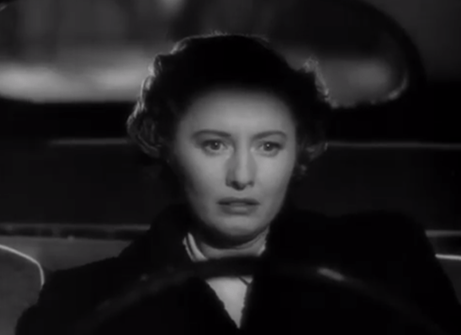
Helen Ferguson (Barbara Stanwyck) is slighted by her slimy boyfriend who ditches her for a blonde and the only thing he offers her in return is a train ticket out of town. What can she do but take it dejectedly with barely any money, 8-months pregnant, without any future at all? She’s in a lowly state. That is until she is befriended by the perky Patrice Harkness (Phyllis Thaxter) and her genial husband (Richard Denning), who quickly lift her spirits through their continual ebullience.

The first sign of melodrama comes with a horrible train crash that leaving both Harknesses dead but Helen survives waking up in a hospital to find that her baby was saved. Except there’s a catch and, mind you, it’s the pivot point on which the weight of the whole story balances. In the commotion-filled aftermath of the crash, Helen is mistaken for Patrice, the young wife her purported in-laws have never met before. Now she is in their home to be taken care of.

Of course, at first, Helen is scared. She has nowhere to turn and so she goes along with it as her baby for the moment has a roof over his head. As time progresses, she comes to grow deeply affectionate of Mr. and Mrs. Harkness. The kindly matriarch (Jane Cowl) is so taken with her new daughter-in-law it all but consoles her in the loss of her son. Meanwhile, her other boy Bill (John Lund) takes a deep liking for his sister-in-law and does everything to make her feel welcome in the foreign environment. You can tell he genuinely cares about her. It’s no act.

However, the film also explores themes that Alfred Hitchcock’s Strangers on The Train (1951) would traverse only a year later with strains of blackmail and the specters out of her past coming to ruin the life Helen has created for herself.

Her no-good ex is interested in what she has landed in and what he can get out of it. First, it’s money to keep her secret, then it’s marriage so that he can get in on her cut of the Harkness fortune if ever it comes her way. He’s a filthy parasite and she knows there’s only one conceivable way to be rid of him. You know if already: murder!

But far from getting tossed out by the Harknesses or being completely undone by Morley, Helen, Patrice, whatever you wish to call her, is able to salvage a life for herself because of compassionate folks who are willing to accept her no matter her background. They even get knee deep into her plight, even die for her. The extent of their kindness leaves her forever grateful and hopeful that some form of human love still remains possible for her. Even the prospects of a murder rap seem surmountable.

The ending has one of those final cherry-on-the-top-of-the-sundae resolutions allowing everything to tie together in a nice bow. Some people might find it silly but I rather liked it. It gives the storyline one ironic twist of fate perfectly suited for this turbulent strain of drama. The police are satisfied. Crime didn’t pay. Our romantic leads get to stay together. All is right with the world. After such bleak beginnings, it’s almost laughable.

Despite being an utterly preposterous conceit, Barbara Stanwyck rides it out with her usual measured commitment to her craft both sympathetic and to the degree possible, believable. In the latter half, she’s an absolutely pasty mess personifying a woman terrified about being found out in her lie and subsequently rejected by the ones she’s worked so hard to love.

Director Mitchell Leisen, though given his penchant for finely wrought romantic comedies and an eye for costumes and interiors, shows he is no less capable in this woman’s picture, keeping it afloat even as it cycles through all sorts of implausibilities. I was generally fond of John Lund in The Mating Season (1951) as well, though it’s true he’s all but overshadowed by his female costars in both movies. However, when the people in question are the caliber of Barbara Stanwyck, Gene Tierney, and Thelma Ritter it’s quite understandable.

3/5 Stars

Golden Boy (1939)

Golden Boy (1939)

“See you in 1960. Maybe you’ll be someone by then. ” ~ Barbara Stanwyck 

At the Academy Awards in 1978, Bill Holden took a momentary aside to thank his co-presenter, Barbara Stanwyck, for her encouragement and support in helping to forge his career in its nascent stages. That picture they starred in together was, of course, Golden Boy.

By the late 30s, she was already a veteran actress in such saucy pre-code pictures as Baby Face (1933) and searing tearjerkers like Stella Dallas (1937). In an instance where fiction overlaps with reality, Holden played the scrawny newcomer. He could have just as easily been “baby face” in this film as a 21-year-old unknown bit player.

His Joe Bonaparte, a green kid and a newly-minted voice, has yet to mature into the smoky standard the moviegoing public would come to know as a handsome first-class flirt and sardonic wit.  Still, Stanwyck fought for him to stay and he did.

The film itself is thinly wrought and certainly has aged poorly with the passage of time. The simplistic dichotomy at its center begins with a young man who has an artistic gift as a violinist and his dear father (Lee J. Cobb) wants him to cultivate the talent. However, the boy has realized he has the tenacity to be a fighter and he gets a promoter (Adolph Menjou) to take him on so he can start making some dough. After all, it’s a practical means to give his family what they have always wanted.

What it teases out is the age-old dilemma between the allure of materialism and what will actually give you a far more contented life, in this case, love and the cultivation of talents which lend beauty to the world. Initially, Joe buys into the hype backed by a gangster (Joseph Calleia) but seeing another man die in the ring straightens out his priorities for good. Many boxing dramas are fatal. Thankfully for contemporary audiences, his is allowed a palatable happy ending.

Although this would happen to him more than once, because he’s rather good at it, Lee J. Cobb is nevertheless cast way out of his age range as an ethnic Italian father-type. It’s true that this one is an overtly stagy adaption from Clifford Odet’s famed play. His presence even inadvertently reflects the overlapping nature of theater and film of the period as he would precede the likes of Tennessee Williams, Arthur Miller, and William Inge who would all see their works made into movies.

Director Rouben Marmoulian himself had an extensive background in the theater and while the initial fight sequences fly by as montage blips throughout, the culmination in the final fight in Madison Square Garden has the atmospherics down like all the foremost boxing movies. He undoubtedly gets that right and this picture effectively precedes the frenzied reaction shots of the audience mesmerized by violence in Robert Wise’s The Set-Up (1949) by almost 10 years.

Stanwyck carries her scenes with that passionate, winning verve of hers and she propels Holden along with her taking the inexperienced, no-name actor and helping him get by. He’s no star at this point, except one day he would be. She had enough guts to fight for him and thanks in part to her, we were given one of the most remembered Hollywood stars, “Golden Holden.”

What most people wouldn’t give to have Barbara Stanwyck in their corner. It could be unsubstantiated hearsay but the story goes Holden was forever grateful, sending his costar a bouquet of flowers every year to commemorate Golden Boy and what it meant to his career. He knew it more than anyone.

But the story did not end there. In 1982 Barbara Stanwyck was bestowed with an honorary Oscar as the Academy had never found time to give her an award for her plethora of quality performances. Shame on them. That’s not the main point, however.

Her dear friend William Holden had just recently passed away months before and so while thanking the many people behind the camera who helped her in her career from directors to stunt personnel and electricians, she also said a final word for her friend. Her Golden Boy had always wanted for her to win an award and fittingly she finally did. She raised it up, teary-eyed, in his honor, before walking off. It’s human stories such as this that transcend Film. We are better for them.

3/5 Stars

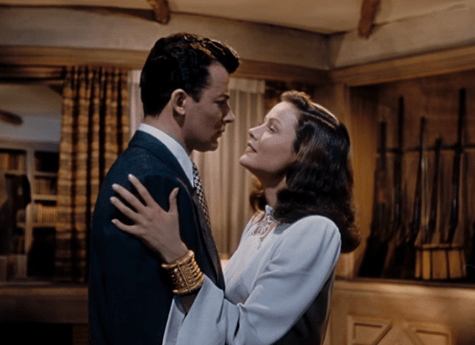
Review: Leave Her to Heaven (1945)

leave her to heaven 1.png

Film Noir is usually synonymous with black and white. Of course, as with everything, especially something as notoriously difficult to categorize as film noir, there are notable exceptions. Obvious outliers are Niagara (1953), Bad Day at Black Rock (1955), House of Bamboo (1955), and this picture from almost a decade earlier, Joseph M. Stahl’s Leave Her to Heaven (1945).

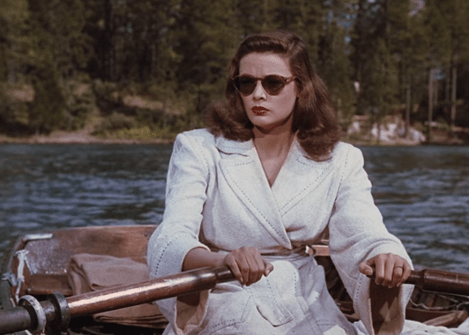
One of the film’s finest assets, in fact, is its highly saturated Technicolor tones which are unequivocally some of the best that Hollywood had to offer during that period. Leon Shamroy, a Hollywood workhorse who seems to have faded in deference to other names, nevertheless makes the picture that much better with his photography.

It’s gorgeous — as pretty as a postcard even — almost too gorgeous. Something cannot be that beautiful without there being a catch or something buried underneath the surface. The same might be said of the film’s female lead, Ellen Harland (Gene Tierney).

The exquisite young lady meets the author (Cornel Wilde) of the book she is reading quite unwittingly. He can’t help but stare at her because she’s very attractive and she can’t help look at him due to the familiarity of his face. More on that later. Anyway, they both end up getting off at the same stop and find out they share some mutual connections. They’ll be seeing a good deal more of each other shortly.

As much as I often disregard Cornel Wilde as an acting talent; he more often than not seems unexpressive and dull, those perceived qualities nevertheless make the beguiling wiles of Gene Tierney all the more prominent as she steals the picture away in one of her greatest performances.

It certainly doesn’t hurt that she is blessed by the gloriously vibrant colors as one of the preeminent beauties of her generation. However, even in a picture as Laura (1944), where she was at the center of the entire plot — this otherworldly beauty — in Leave Her to Heaven she positively commands the screen from the minute she arrives and doesn’t let go until her untimely demise. Even then, she still enacts her will on the narrative but for once her husband is able to have some peace from her stifling displays of affections.

Screenwriter Jo Swerling drops subtle hints of a dubious nature throughout but this is the beauty of it, only in hindsight will you notice them. By that time it’s far too late. One observer notes matter-of-factly, in an early line of dialogue, as she races two children across the lake, “Helen always wins.” Its a metaphor for her entire life thus far.

She simultaneously harbored some twisted father complex, alluded to early on and suggesting Ellen’s rather unhealthy attachment to the man who passed away recently under curious circumstances. That’s why Ellen, her mother, and sister have all convened. To proceed with her father’s wishes of having his body cremated in his favorite place.

It’s no small coincidence that the man who was taken with her on the train and who she takes a liking to reciprocally, shares a striking resemblance to her dear departed dad. It’s almost uncanny. However, even this, while duly noted, only seems like a side note.

Because the spectacular scenery and how deliriously happy they are together, seem to discount any other distractions. This is the key. Everything is so perfect for them you can hardly expect anything might be wrong. They have a whirlwind romance, Ellen ditches her stuffy fiancee (Vincent Price), and practically takes it upon herself to propose marriage to Harland. Her kisses seal the deal.

They are married and she vows to do everything for him. The cooking, the cleaning, everything; she’s the perfect example of doting wifely domesticity. She is the symbol of the ideal 1940s housewife even. Beautiful and caring — making Harland extremely content and do everything in her power to make his crippled but good-natured younger brother (Daryl Hickman) feel cared for. Again, it’s so perfect. Until it’s not…

leave her to heaven 2.png

The signs are there again. Ellen begins to sour, bemoaning the fact that ever since they’ve gotten married she’s never been alone with her husband. There are always other people, whether Danny, or the kindly hand (Chill Wills), or even her own family. She doesn’t want any of them around. She just wants Richard and nothing else. The extent of her jealousy surpasses healthy levels by severe margins. And it becomes all too obvious her outward show of demureness goes only so far. Because, in truth, there have been few femme fatales as homicidally deadly as Ellen Harland. Let this go on record.

While her husband wonders what has come over her, trying to knock out his latest novel, Ellen systematically works to remove everyone from his life currently impeding her road to greater attachment and total control of all his time and affections. It comes in three waves. The films most haunting scene is subsequently one of the most unsettling to come out of Classic Hollywood, solidifying the image of an icy Tierney cloaked in shades as one for the ages. Because you see, she sits there emotionless, with no feeling whatsoever as a boy begins to drown and frantically calls out for help. And still, she sits there and does nothing. Thrown in juxtaposition with the glorious imagery makes the composition all the more jarring.

But that’s only her initial move, next comes a baby that she doesn’t want, and she even pulls a first premeditating on her own death so that she will keep anyone else from ever having her man. So in the end, she readily enters into death just so that she can hold onto Richard one last time. In fact, you could make the case it’s not solely out of malice but a perverted sense of hyper-obsessive love.

Though all but pushed aside in the beginning, it is the acidity of Vincent Price as the once-spurned fiancee who makes the courtroom scenes burn with not uncertain malice. He’s not only the prosecutor but very much a tool for Ellen to utilize even in death. She comes to haunt him from the depths of the grave.

leave her to heaven 3.png

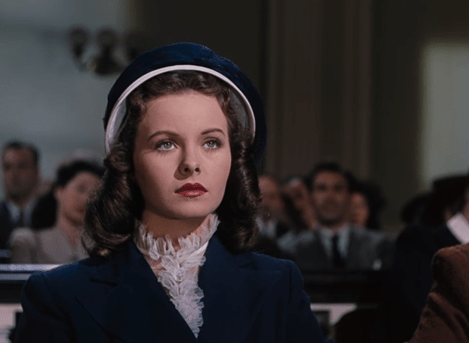
It’s little surprise that there’s almost a conscious effort to make  Jeanne Crain more pure and exquisite by the minute. At first, she’s merely the girl with the hoe, with a green thumb, face smudged with dirt or the model in the playroom. But as she’s more distraught with Ellen and ultimately implicated in her sister’s murder, her saintly qualities, making her the quintessential noir angel, come into sharper relief.

In fact, Leave Her to Heaven is one of the most foremost examples in both the female archetypes. While Tierney chills are bones to their core with that beguiling combination of glamour and obsessive malevolence, Crain gives us nothing but warmth and even in an abrupt ending caps things off in the most satisfying way possible. If anything they both make Cornell Wilde better because this is their picture and not his. As an enduringly contorted psychological drama, the 1940s arguably produced few superior vehicles to Leave Her to Heaven. Gene Tierney burns with bewitching beauty and potent fury.

4/5 Stars

Henry: Cornel Wilde just kissed Gene Tierney.
Hawkeye: On the teeth?
Trapper: Right smack on.
Hawkeye: If he straightens out that overbite, I’ll kill him.
~ M*A*S*H episode House Arrest

Review: Rio Grande (1950)

800px-Rio_Grande_(1950)_-_publicity_still_1.jpg

Rio Grande is the final chapter in John Ford’s Cavalry Trilogy. It is less of a continuous narrative, held together instead through the maintaining of a similar spirit as well as analogous thematic elements and characters. Much of this must be attributed to Ford and Merian C. Cooper who produced the pictures through their Argosy Pictures label. Furthermore, much of the director’s stock company makes a showing as per usual headed by John Wayne as Colonel Kirby Yorke.

While, to some extent, the earlier picture Fort Apache was also about the sometimes prickly marriage between duty and familial obligation, it was all but thrown to the wayside in the end. In other words, the maniacal resolve of Owen Thursday (Henry Fonda), as a military leader, took precedence over his relationship with his daughter (Shirley Temple), which in itself was a statement.

However, one could claim Rio Grande is a simpler picture with far less complicated aspirations in its own attempt to examine alienated families. To get a grasp of the scenario, three figures must be brought to the fore.  Colonel Yorke (Wayne) is stationed on the Texas border tasked with defending folks from raids instigated by belligerent Apaches. But such a lifestyle can be difficult on relationships and Yorke has long been estranged from his wife (Maureen O’Hara) who has never quite forgiven him for numerous past grievances in their rocky courtship.

We find out in passing they had a son together though Yorke hasn’t seen the boy for years and he’s surprised to find out his own son flunked out of West Point for failing arithmetic. The next big shock comes with the new class of recruits, requested by Yorke to aid in keeping up defenses against the onslaught of Indian raids.

One of the recruits just happens to be his son Trooper Jefferson Yorke (Claude Jarman Jr.), who by no decision of his own has managed to wind up at his father’s outpost. From their first reunion, both men make it clear there will be no favoritism or show of kinship. As far as both sides are concerned, it’s duty first and they hardly know each other anyway. There seems little need to start now.

The picture does have some lively idle chatter in the background provided by the ever boisterous and larger-than-life Irish teddy bear Victor McLaglen tasked with getting the new recruits up to snuff. Aside from Trooper Yorke, he is befriended by Sandy (Harry Carey Jr.) and southerner Travis Tyree (Ben Johnson) who both prove their aptitude in taking on jumps in the manner of the Ancient Romans. Music is also integral to the life of a cavalryman in tents or around campfires, in the form of ballads or down-home toe-tappers. Song follows them everywhere.

But the moment of greatest import arrives with Mrs. Yorke as she pays a call on her husband and comes to fetch her boy. She plans to take him back home with her by buying him out and removing him from the life for good. It’s full of contentious and complicated feelings. But what we realize is there still is a fleeting love between the couple. They are on the receiving end of an after dark serenade from the Sons of the Pioneers and Kathleen notes Kirby has grown more thoughtful with age.

Still, there’s no denying his inherent sense of duty that has left a path of destruction, both physical and relational. After an abrupt nighttime raid, Yorke resolves to send the women and children within the encampment away to safety, except they too get ambushed en route. The children are abducted. He has some choices to make. A countermeasure is now in order to extract the children from the enemy.

It’s very much a concrete objective and yet taken in light of what has already transpired, we can easily see this act of necessitated bravery being tied closely to the roots of family identity. What we are willing to do for our sons and our wives or to make our parents proud? All of these issues come under scrutiny and must be resolved in a tangible way.

When everything is said and done, Wayne and O’Hara together are what does it for me. We leave them grinning from ear-to-ear as O’Hara playfully spins her parasol next to her man, newly reunited. There’s something electric surging between them — that intangible whats-it all the great screen couples were imbued with.

Though smaller scale and relatively compact, Rio Grande is no less a western from John Ford. One might concede Ford was going through the motions as he had compromised and made this picture solely so he could realize his next passion project The Quiet Man (1952) (also starring John Wayne, Maureen O’Hara, and Victor McLaglen). As they say, the rest was history.

3.5/5 Stars