
Close Encounters is built on a mystery and Steven Spielberg’s follow-up to Jaws starts off in a jarring fashion challenging us to stay with him. Because he quickly throws us into the action and suggests this is a sci-fi tale on a global scale.
Bob Balaban, a cartographer-turned-French translator, speaks for all of us trying to figure out what’s going on, yelling out against whirring old WWII fighter engines, “I don’t understand!” Two lines of juxtaposed dialogue are all we need. The planes were reported missing in 1945. But they look brand new! It takes a moment to tease out the dramatic situation, but there we are. The question is how did this happen? As this is a Spielberg creation, we must point our gaze heavenward or more precisely to the outer reaches of the galaxy.
Francois Truffaut somehow feels like a special piece of casting. The Nouvelle Vague director and hero of Spielberg is cast as Lacombe, a French scientist leading a surprisingly cooperative international team.
It’s not simply because this is the only film he acted in that he didn’t also direct. It has to do with his temperament and the subject matter. There’s something serene and utterly profound about Truffaut. He’s deeply human and engaged and yet feels implacable even as everyone else — the Americans especially — seem frantic and harried. He’s a calming force in a literal maelstrom.
Because Spielberg immediately sets the picture up as not only a national but a global storyline with implications for the entire world. It’s not just higher-ups and government officials covertly working on the issue. Extraterrestrial life would mean potential hysteria, especially for the common man. In this regard, he introduces a few stand-ins.
One is Roy Neary (Richard Dreyfuss). He loves to tinker, isn’t a particularly devoted father or husband, and he’s a staunch believer his kiddos should grow up with the quality entertainment he had as a kid like Pinocchio, instead of vacuous putt-putt games.
If we are to be honest, Dreyfuss can be a perfectly genial hero in something like American Graffiti or even Jaws, but within this narrative, reflected by his family life, he often comes off whiny and obnoxious, and it hurts his rapport with the audience.
In this particular instance, there’s some difficulty in feeling a true human connection with him even as we are drawn and fascinated by what forces he might have witnessed because that is the million-dollar mystery propelling the picture and keeping humanity agog with visions of UFOs and the great unknown of outer space.
Yes, we are planted in the ’70s so if you want to blame his wife (Terri Garr) for not being a particular understanding or his children for being exasperating you can, but today it just makes him out to be a selfish dolt. This isn’t the same whimsy of some of his cinematic predecessors; it just feels like immaturity.
Sadly, without a substantial protagonist, a Hollywood blockbuster like this can feel intermittently detached and impersonal. It’s not based on lack of effort by the director or the actor. We simply don’t like the man.
It’s much more agreeable to stick with the sci-fi elements because this is where the film really has its deepest successes. Special effects hardly feel like a detriment. They are simple and practical casting just enough of a spell to hold up. But they are not there to do all the heavy lifting.
The first encounter happens when Roy is driving down a country road in his truck only to be ambushed by the most spellbinding sight he’s ever witnessed in his life. It’s greater than any Aurora Borealis and sends his car into a state of zero gravity. The only indication he has after the fact of what he’s just seen is a burning sunburn across the side of his face.
From that point on Roy is doggedly firm in his resolve. It’s almost a primordial urge. He has to see the beautiful lights again, he has to understand them, he needs everyone to appreciate them as much as he does.
One person who does is a single mother, Jillian Guiller, whose little boy Barry has some transcendental encounters in the evening hours, drawn to forces outside of himself — the same forces pulling Roy to something unnameable. In fact, they are the same forces Lacombe is so intent on learning more about. It leads his team traipsing around Mexico, India, Mongolia, etc. all on the trail of this great unexplainable mystery.
For Roy, unadulterated obsession sets in. He can’t get the image out of his head. His wife is frightened. His kids think he’s crazy, and they have every right to. He drags all the family out to stare at the sky. He loses his job. He starts shoveling dirt through the kitchen window with the whole neighborhood watching the spectacle.
With his wife driving off in a tizzy, trying to rescue her family from a maniacal husband who needs mental health, he goes back inside. They fail to see the final destination, the symbol so many people have subconsciously remembered. It’s a clue of where our story must travel.
That leads us to a family road trip — at least one my family took while I was in high school. One of the stops was Devil’s Tower, christened the first National Monument by Teddy Roosevelt in 1906. Like Mt. Rushmore in North By Northwest — which I coincidentally saw on the same vacation — Devil’s Tower is an iconic American symbol. Natural and still somehow mystifying even otherwordly. The perfect seat for our finale.
It’s a mesmerizing experience sitting atop Devil’s Tower taking in the bright lights, the musical patterns of communication putting John Williams’ talents to the best possible use. Though it would be lying to say it didn’t verge on monotony in patches, at its very best, Spielberg has an unabashed appreciation for the wide-eyed spectacle and his stroke of genius is taking a very concrete relic and making it so integral to this encounter.
There’s something totem-like, it is a monolith in its own right, and suggests something as ancient as time itself. His other choice is to make the creatures on the other end the most amiable beings imaginable. Years of watching The Thing from Another World and Body Snatchers taught a different paradigm, but Spielberg is an optimist at heart. It shows through and through as the story is carried away by the exponential magic of the final climactic moments.
In many regards, it is a taste. For those still capable of awe where special effects or time or comprehension don’t get in the way of enjoyment, those final moments can indeed be spellbinding. It’s true their trance-like grip reached out to me. The only regret is some of the momentary distractions leading us on this road. It takes a whole lot of roadblocks and digressions to finally get us to our close encounter.
There’s something else nagging inside me. Dreyfuss fulfilled his unerring obsession like an angelic pioneer sent off to the great unknown. He reached the apex as he conceived it. There is nothing more for him to do. Still, one must wonder how exactly are the wife and kids doing at his sister-in-laws? It seems Spielberg has conveniently left the problematic issues of earth behind for the extraterrestrial. Too bad we are not afforded the same luxury.
4/5 Stars
Note: I viewed the Director’s Cut although there is also the previous theatrical cut and the special edition featuring an extended “mothership” scene.
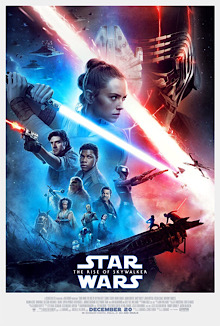 You might say I turned up to Star Wars: The Rise of Skywalker out of respect for the dead. Because we’ve lost many of our beloved figures. Han. Luke. Carrie Fisher. Peter Mayhew. Kenny Baker. You get the idea. And from the rumblings I couldn’t avoid hearing, it felt like Star Wars might be dead on arrival too.
 Since the dawn of man, the vast reaches of the cosmos up above have enamored us to the nth degree. You need only watch something like 2001 to be reminded of that fact. (There’s no doubt James Gray is well-versed in its frames.)
 We’re all part monsters in our subconscious. ~ Leslie Nielsen as Commander Adams

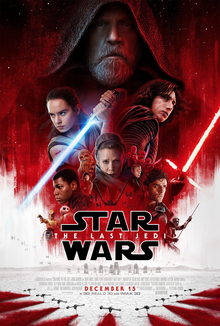 “Let the past die.” – Adam Driver as Kylo Ren
 The finest compliment that can be paid to Blade Runner 2049 is that it is indubitably the most enigmatic film I have seen in ages. Typically, that’s newspeak for a film that probably deserves multiple viewings, because its intentions, much like Ridley Scott’s Blade Runner (1982) are not always clearly laid out. Especially in this day and age when we often expect things to be given to us and our hands to be held as an audience.
 I find that my own life was greatly influenced by my father during my most formative years, in particular in the realm of music. I grew up on the classics of the ‘60s. But there’s that juncture in time perhaps during middle school where you begin to branch out and you latch onto other sounds for some inexplicable reason. And it doesn’t have to be modern artists but even those who your parents never imparted to you. That is to say that “Brandy” by Looking Glass is such a song for me. I loved it the first time I heard it and not on any provocation of my parents. I consider it one of my own personal favorites.
 Body Snatchers works seamlessly and efficiently on multiple fronts, both as science fiction and social commentary. Don Siegel helms this film with his typical dynamic ease putting every minute of running time to good use. The screenwriter, Daniel Manwaring, put together perhaps one of the greatest political allegories ever penned and, on the whole, it’s a taut thriller combining sci-fi and horror to a tee.
 4 Star Films