

Now I can finally say that I have entered the cinematic world of Andrei Tarkovsky and I am better for it. Solaris somehow traces the lines of a paradox rather remarkably. It’s a sprawling epic of nearly 3 hours and yet hardly ever feels overlong. It moves through its rhythms contemplatively but never feels too slow. And though it’s a sci-fi story, it never loses sight of its human components which remain its guiding light to the end.
To Tarkovsky’s credit, he’s able to retain the film’s continual ability to mesmerize again and again and he never lets up. I know for certain viewers this will be dull monotony–even for me at times–but for others, it’s pure magic. Repeatably fascinating for both its enigmatic mysteries and revelations. Because it delivers both up willingly to the engaged viewer.
Like any master painter, Tarkovsky begins the film by laying down his base coats. We’re introduced to enigmatic psychologist Kris Kelvin while simultaneously accustoming ourselves to the director’s naturalistic imagery — glossy and distinct. It’s in these opening moments at the home of his father back on earth where the audience gains more insight and Kris prepares himself to mount a journey to the space station orbiting the planet Solaris. Only three crew members still survive there and the psychologist is being sent to check in on them and continue to expand the reaches of human knowledge. That’s the idea at least.
However, when Kris gets to the space station it’s far from welcoming, austere and dilapidated thanks to poor upkeep. Now only two crew members remain, the curiously odd Dr. Snaut and the cold cynic Dr. Sartorious. Both men will give Kris very little information about the general state of affairs. And he only learns later that his colleague Gibarian committed suicide for some inexplicable reason.
But the film enters its most perplexing stages when Kris receives a visit from a mysterious woman — her name is Hari and for reasons unknown to us, Kris is very close to her. And his emotional state from that time forth is constantly being manipulated by the presence of this special visitor. He’s frightened of her. Then in love and completely devoted to her well-being. And despite the adamant insistence of his colleagues, he will not believe her to be an apparition. He holds onto the fact that this woman in front of him who is constantly self-destructive and in the same instance totally devoted to him, is the woman he knows and loves. But the question is not so much whether or not that is true, but what Kelvin will do with all that has been thrust upon him as a result.
On the whole, Solaris is a visual treat but not due to grandiose visions of space. Instead, Tarkovsky blends color and sepia footage into a patchwork while juxtaposing the environmental beauty of underwater vegetation with the dour interiors of the space station. And the suspension of disbelief is maintained through the use of simple special effects and the underlying fact that this film is not really reliant on pyrotechnics of any kind. It’s about people. An equally remarkable observation is the fact that Tarkovsky seems to be self-assured enough to have his characters play their roles with relative restraint. Numerous times they face away from the camera. In other films, directors would be afraid of such a tactic, but here it only works to heighten the amount of intrigue.
It’s a philosophical and psychological study that happens to take place on a space station. And that’s really like any of the great sci-fi movies of our times. They’re not really about science-fiction or technology or robots or any of that. They’re only another mode to tell the most human of narratives even in the outer reaches of the galaxy or in futuristic worlds.
It’s also highly reductive to call this Tarkovsky’s 2001. In deference to both films really. In fact, the director did not see Kubrick’s film until well afterward and I think I too would side with his conclusion that 2001 is a little bit too “sterile.” While 2001 is a decidedly grand narrative of exploration and technological advancement, you can easily make the case that Solaris is a film most precisely about the incredibly human emotion of love. Although it’s also about the human search for some kind of truth much in the same way as its predecessor, it’s also far more personal. Solaris feels more intimate and true — perhaps even more closely tied to some of Ridley Scott’s themes in Blade Runner. Particularly his examination on what exactly separates man and machine when they share striking similarities.
As far as sound goes, there is a score to Solaris, but Tarkovsky only utilizes it at the precise moments, more often than not foregoing typical music for either electronic distortions or perhaps even more boldly complete silence. He also gives nods to the great Flemish master Pieter Bruegel using his work in the set designs inside the space station.
Truthfully, it’s easy to peg Solaris as a pessimistic movie but it’s as preoccupied with morality as it is with the pursuit of knowledge. It’s as much about the innate human desire for love as it is psychological torment. And its ending strikes a note of poignancy and bitter despair in the same instance. But if you want profound cinema that stays with you and marinates in your mind then look no further. I will certainly be returning to Tarkovsky sooner rather than later.
5/5 Stars

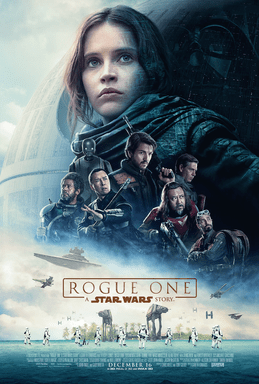 For so many, there is a deep connection to Star Wars that started at an early age. As I have alluded to on numerous occasions, I am no different. And if I feel that way about even the prequels, it’s exponentially greater for the original trilogy, as I can imagine it is for legions of others. Thus, when I watch Rogue One I do not linger on its shortcomings, though they most certainly exist, instead, I’m fixated on that very same suspension of disbelief that overtakes me every time I enter that world, a long time ago in a galaxy far, far away.
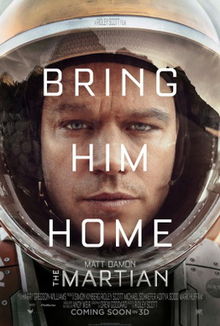 The Martian is not the film you first expect. It’s a space thriller. It has tense moments assuredly, but it also has an astute sense of humor that pulses through the film as its lifeblood. It makes Ridley Scott’s latest endeavor, based on the novel by Andy Weir, all the more palatable because it lends a fresh face to space exploration.

 The film industry needs films like Ex Machina. They’re smaller productions, but that usually means they’re more audacious and oftentimes far more interesting. First time director and veteran screenwriter Alex Garland delivers up a story that takes place in an isolated, ultra-modern getaway that’s a helicopter ride away from civilization. Caleb (Domhnall Gleeson) gets dropped into this little piece of paradise thinking he’s won a huge honor, and in truth, he has hit the jackpot. He makes his way to this isolated locale and comes face to face with Nathan (Oscar Isaac), the mastermind behind his little company. We don’t quite understand why Caleb was called in or what the following hours will look like exactly.
 Galaxy Quest might be a kitsch homage to all things Star Trek and Star Wars, but that’s the secret to its unequivocal success. It stands on the laurels of its campy fun which it wears as a banner like all the Trekkies and Star Wars fanatics it looks to pay tribute to.
 Anyone who is at least a little bit familiar with ring theory knows that the Star Wars saga has often folded back on itself, with near-mirror images, similar plot devices, and obvious parallelism. It gives any fan a new found appreciation for the films, and with that mentality, The Force Awakens can be thoroughly appreciated.
 In truth, I always thought this film had a well-suited title for its material. It was rather unusual and unique. There was not much more to think about otherwise. But when you actually think about it, whether or not you consider Alexander Pope’s poem from which it originates from, there is great truth that can be gleaned from this phrase “eternal sunshine of the spotless mind.” In fact, it’s truth that points to the heart and soul of Charlie Kaufman’s story.
 He swims in and out of consciousness between the past and then the present that is going on outside his head. The voices inside his head, or more aptly, the voices right outside his head come from two engineers (Elijah Wood and Mark Ruffalo) from a company in charge of erasing his memories. They create a map of them so they can remove the memories later.
 Finally, the narrative folds over on itself again as Joel’s mind returns to the present — a present without any recollection of Clementine. They meet again and there’s a strange sensation in the air. It’s a true deja vu moment that has them befuddled and confused. Will they go through with their relationship even when they find out about their rocky history?
 4 Star Films