
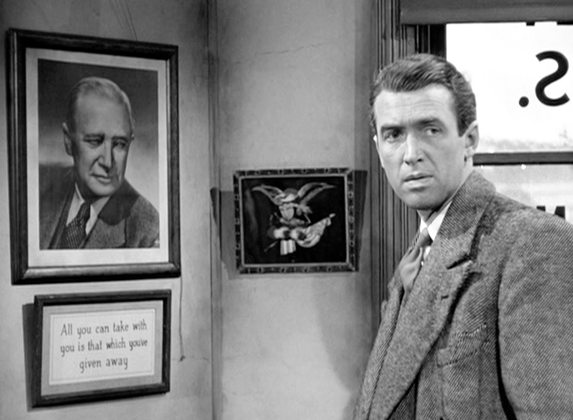
It’s a Wonderful Life is a perennial classic for many people but it was not until I saw it in a theater during high school and rediscovered it with new eyes that I came to truly appreciate this film on a deeper level.
On subsequent viewings, so many scenes resonated with me and gained new profound meanings. However, one of the most prominent is really in the periphery. It came with looking closely at the wall of Mr. Bailey’s building and loan. Clearly visible on the wall of the old building is a short epithet. “All you can take with you is that which you’ve given away.” It’s a strikingly beautiful and pithy statement. I have no way of knowing who thought of having this quotation up on the wall but it perfectly encapsulates many of the central themes of the film.
More than anything, the rise, the fall, and the final redemption of George Bailey reminds me what the true meaning of life is. It is to strive to love others–loving them even as much as you love yourself if that’s your wife or your kids or the people that you cross paths with each and every day. Mary, Zuzu, Uncle Billy, Violet, Burt, Ernie, and yes, even the Mr. Potters. Simple, everyday, common decency is something to be clung to. It might be unassuming and the people who wield it may remain unheralded but that hardly discounts their impact. They know what they’ve done and that’s enough. Trial and tribulation might come again and again, still they never tire of doing good.
“All you can take with you is that which you’ve given away.”
If we look at the life of George Bailey, he is precisely one of these individuals. This whole film is a culmination of his charity and love towards his fellow neighbors. He never wearies of doing good until the moment when his life comes crashing down on him. It’s at this moment where he finally begins to question the trajectory of his life thus far. He feels like a failure.
And this also speaks into our discontentedness as humans. Like George we want to do great things, gain acclaim, explore the world, and shake off the dust of our crummy lives. Often when life doesn’t wind up the way we want, we think that we’re failures. Our lives have seemingly become so mundane and insignificant. At least that’s what we tell ourselves. That’s what George tells himself for a time and he lets bitterness dictate his life.
But it’s precisely in those moments that he is reminded that no man is a failure who has friends–a community around him who is willing to lift him up and rally around him when he’s at his lowest. That’s why the final moments of the film always ring so sweet because to me they reflect the perfect community — surrounded by all these people that George impacted in one way or another. They are a testament to the life he led, all singing “Auld Lang Syne” in a joyful chorus. And the money they bring to bail him out is only a visible outpouring of their affection for him.
“All you can take with you is that which you’ve given away.”
Ultimately, George reaped the reward for all his sacrifices and everything he gave up for others. But it hardly seems like a matter of karma. George did these things because he truly cared about people. As his father did before him. He was never looking to gain anything from them. That was not his character.
And this always leads me to a bit of soul-searching. George with the help of Clarence literally sees the world as if he never existed and we too can play this kind of hypothetical game. If I died tomorrow or disappeared off the face of the earth, would anyone care? It’s a sobering question, but if we look at George Bailey the answer is an emphatic “YES!” His not having existed has seismic consequences on his surrounding community. It’s entire identity literally changes when he’s not there.
George Bailey taught me and continues to teach me time and time again what it means to leave a positive impact on the world at large. In my life, every day, I want to make the most of the time I have with other people. Because each life has the opportunity to touch so many others. To put it another way, I’ve read before that there are no neutral encounters you either breath life into other people or you take it away. I do not want to squander the opportunities afforded me and George Bailey models that so exquisitely.
“All you can take with you is that which you’ve given away.”
 Coming out of a psychology background I was familiar with Stanley Milgram’s famous social experiment back in high school during Intro to Psych. Even back then it was a striking conclusion on conformity and just how far people will go. It was also ruthlessly contrived and even more methodically executed. Inspiration came from Milgram’s own background working with psychologist Solomon Asch, as well as his own Jewish ancestry, nights watching Candid Camera, and a fascination in the Adolf Eichmann trial.
 “Two people shouldn’t know each other too well if they want to fall in love. But, then, maybe they shouldn’t fall in love at all.” – Vittoria
 The initial scene in the stock exchange is gloriously tumultuous and it never lets up. This is the dashing young Piero’s (Alain Delon) domain that he rushes through with lithe business savvy. What this arena becomes is the quintessential Italian marketplace, a hectic theater of business made up of all kinds, involved parties and observers alike. Vittoria (Vitti) is one of those who looks on with mild interest and really throughout the entire film she is a keen observer as much as she is a person of action.
 And the narrative becomes perhaps even more tantalizing than love because it’s the prospect of romance that keeps it going. But it never seems fully realized. It’s frustrating, unfulfilling in a sense, like most of his films. Whether it’s an unsolved mystery or the most perplexing conundrum mankind has ever faced romantic attraction, he always leaves us an open-ended denouement.
 Steven Spielberg is this generation’s
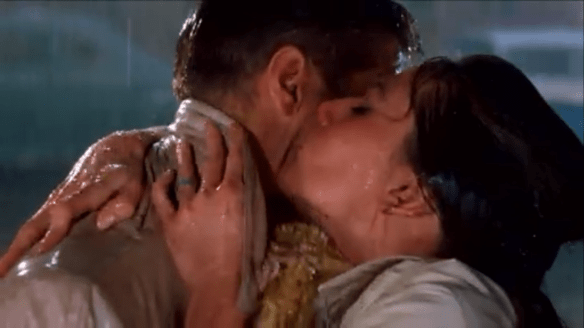
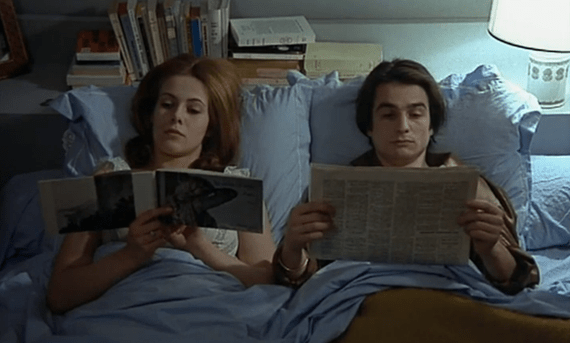 Arguably the greatest French comic was Jacques Tati and like Chaplin or Keaton he seemed to have an impeccable handle on physical comedy, combining the human body with the visual landscape to develop truly wonderful bits of humor. Bed and Board is a hardly a comparable film, but it pays some homage to the likes of Mon Oncle and Playtime. There’s a Hulot doppelganger at the train station, while Antoine also ends up getting hired by an American Hydraulics company led by a loud-mouthed American (Billy Kearns) who closely resembles one of Hulot’s pals from Playtime. Furthermore, there are supporting cast members with a plethora of comic quirks. The man who won’t leave his second story apartment until Petain is dead and buried at Verdun. No one seems to have told him that the old warhorse has been dead nearly 20 years. The couple next door that is constantly running late, the husband pacing in the hallway as his wife rushes to make it to his opera in time. There’s the local strangler who is kept at arm’s length until the locals learn something about him. The rest is a smattering of characters who pop up here and there at no particular moment. Their purpose is anyone’s guess, and yet they certainly do entertain.
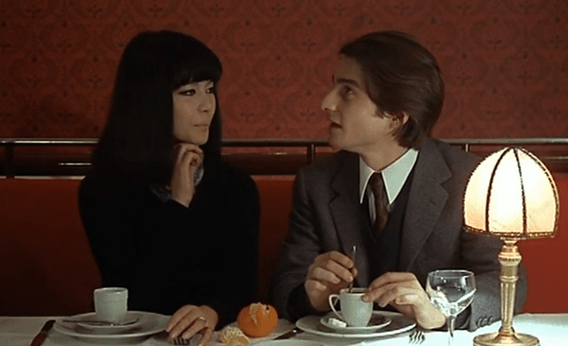 But as Truffaut usually does, he digs into his character’s flaws that suspiciously look like they might be his own. Antoine easily gets swayed by the demure attractiveness of a Japanese beauty (Hiroko Berghauer), and he begins spending more time with her. Thus the marital turbulence sets in thanks in part to Antoine’s needless infidelity –revealed to Christine through a troubling bouquet of flowers. It’s hard to keep up pretenses when the parent’s come over again and Doinel even ends up calling on a prostitute one more. It’s as if he always reverts back to the same self-destructive habits. He never quite learns.
 If you’ve read any of my reviews on the original trilogy, you undoubtedly know that Star Wars had a tremendous impact on my childhood. That’s true for many young boys. It was the film franchise of choice, and it wasn’t just a series of movies. The beauty of Star Wars is that it encompasses an entire galaxy of dreams beyond our own. It’s a world that reflects ours in many ways — the difference is that they have lightsabers. But not just lightsabers. Aliens. Spaceships. Planets. The Force. Characters who for all intent and purposes live like us. Good, that is in constant conflict with the evil in the world. It’s a struggle that is constantly evolving.
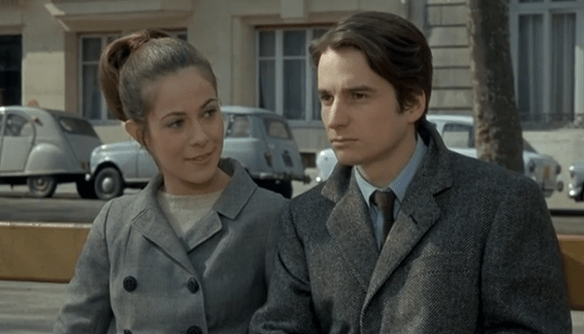 Charles Trenet’s airy melody “I Wish You Love” is our romantic introduction into this comedy-drama. However, amid the constant humorous touches of Truffaut’s film, he makes light of youthful visions of romance, while simultaneously reveling in them. Because there is something about being young that is truly extraordinary. The continued saga of Truffaut’s Antoine Doinel is a perfect place to examine this beautiful conundrum.
 In fact, all in all, if we look at Doinel he doesn’t seem like much. He’s out of the army, obsessed with sex, can’t do anything, and really is a jerk sometimes. Still, he manages to maintain an amicable relationship with the parents of the innocent, wide-eyed beauty Christine (Claude Jade in her spectacular debut). Theirs is an interesting relationship full of turbulence. We don’t know the whole story, but they’ve had a past, and it’s ambiguous whether or not they really are a couple. They’re in the “friend zone” most of the film and really never spend any significant scenes together. Doinel is either busy tailing some arbitrary individual or fleeing pell-mell from the bosses wife who he has a crush on.
 By the time he’s given up the shoe trade and taken up tv repair he’s already visited another hooker, but Christine isn’t done with him yet. She sets up the perfect meet-cute and the two young lovers finally have the type of connection that we have been expecting. When we look at them in this light, sitting at breakfast, or on a bench, or walking in the park they really do seem made for each other. Their height perfectly suited. Her face glowing with joy, his innately serious. Their steps in pleasant cadence with each other. The hesitant gazes of puppy love.
 While
While  Whereas the previous Torn Curtain was generally concerned with life behind the Iron Curtain, Topaz is decidedly more continental moving swiftly between Russia, France, America, Cuba, including a few pitstops at international embassies. However, the film does end up spending a lot of time focused on Cuba which can very easily be juxtaposed with the East German scenes in the former film. Hitchcock once more creates an illusion of reality using the Universal backlot and the adjoining area to craft Cuba, and he makes into a place of sunshine and romantic verandas, but it also runs rampant with totalitarian militia. It’s perhaps more exotic and welcoming than East Germany, but no less repressed. In both cases, they become a perilous locale for our protagonists. Still, rather unlike the previous film, Topaz lacks a truly A-list star like Paul Newman or Julie Andrews.
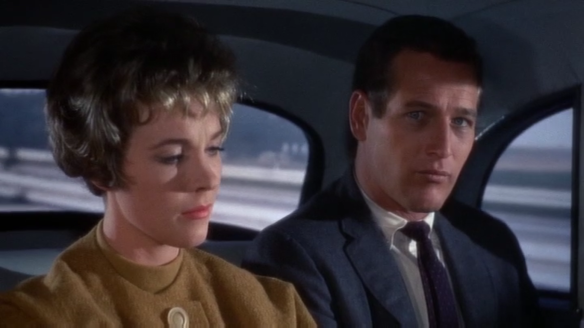 Torn Curtain was
  However, when you watch any Hitchcock film you do wait to be dazzled with some twist or trick because he was always one to bring humor and fascinating aesthetic qualities into his films. Torn Curtain has a few such moments that quickly come to mind. The most prominent has to do with the editing of the sequence in the farmhouse. It is here where Gromek is murdered by Armstrong and the housewife, but it is cut in such a fascinating way. It contrasts with Psycho’s shower sequence quite easily as they try and murder him first by strangling and then anything they can get a hold of whether it’s guns, knives, shovels. There is no score to speak of. Soon it becomes a methodical rhythm of cutting between contorted faces as they slowly but surely move towards the stove. The brutality and length of the ordeal suggest how ugly and laborious it is to kill a man. Hitchcock certainly does not glorify it in any sense.
 4 Star Films