Zombieland (2009)

0e860-zombieland-posterI am not big on Zombie films and so I went into this one not expecting much a great deal. I still do not really like the Zombie genre but there were some decently funny moments here having to do with the rules Columbus (Jesse Eisenberg) has for surviving the apocalypse. The long lasting search for Twinkies, and of course a random cameo by a prominent funny man were a few more highlights. Woody Harrelson is good at playing the gruff type and Little Rock and Arkansas have a lot of personality which does the film a service. Remember rule #1: Cardio. Very important to survive during a zombie apocalypse if it ever comes to that.

3.5/5 Stars


Good Will Hunting (1997)

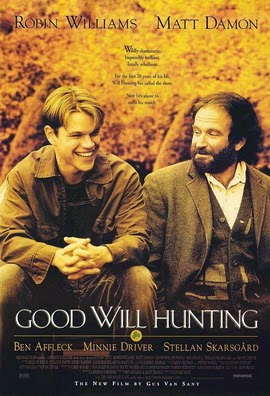
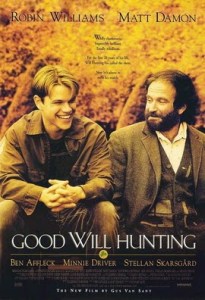
9db12-good_will_hunting_theatrical_posterGood Will Hunting is an extraordinary story on multiple levels because it is about the little guy. The trajectory of a lowly janitor being propelled to MIT genius is moving no matter how often it gets copied or imitated. It just never gets old. Then, there is the story of two young unknowns named Matt Damon and Ben Affleck who shot to fame thanks to some big dreams and a few mentors. Now they are two of the top names in Hollywood over 15 years later and they continue to be (Gone Girl and Interstellar are proof).

However, back then they were a long shot with only a solid idea for a film. It worked wonderfully though because of its core themes. It’s about friendship. It’s about romance. It’s about fear and aspirations. It’s about vulnerability. It’s about long shots making the most of their lives. Admittedly, that could be almost any film so there’s a need to bring the microscope in a little closer.

At face value Will Hunting (Matt Damon) seems like a young thug from South Boston who loves his beer, buddies, broads, and brawls. He and his friends including Chuckie (Ben Affleck) spend their days trying to make ends meet and fill the rest of their time with the aforementioned. We get glimpses of a different Will, however, a brilliant young man holding a plethora of book knowledge and blessed with a photographic memory. He’s able to philosophize rings around conceited Harvard students catching the eyes of a cute British girl named Skylar (Minnie Driver). They are a sweet couple and it seems like it might add up to something good.

Then, comes the necessarily fateful day when Will solves the unsolvable equation on the MIT wall, following that feat with a brawl fight that lands him with a potential jail term hanging over his head. It’s a strange dichotomy and it deeply surprises Professor Gerald Lambeux who quickly realizes the unassuming genius that is Will Hunting. He’s fantastic, but in order to utilize his potential Lambeux agrees to have him meet weekly with a therapist.

What follows is an absurd string of therapy sessions where Will, who wants none of this analysis, makes a mockery of his psychologists. When Lambeux’s former roommate and last resort Sean Maguire (Robin Williams) is called in it looks like more of the same.  But he is different. He sees something more and Sean is not about to give up on the kid. Their sessions begin as a battle of wills until Will’s defenses finally break down. They construct something beautiful, something real,  and in many ways vulnerable.

It is then that Sean teaches Will about true love and living life with no regrets. He had a wife who passed away from cancer, and he is hardly a big name academic, but he wouldn’t trade his life for anything. That’s enough for him. All the while, in between sessions, Will must figure out his life whether he wishes to work in the stuffy world of academia with professor Lambeux, continue living with his chums in Southie, or move forward with Skylar who is off to Stanford soon.

Sean doesn’t force him into one decision or another but he gives him personal advice. As a young man, he met a pretty girl in a bar, the same day in 1975 that Carlton Fisk hit his famed home run. But Sean gave up his seat to spend that evening with a girl and it paid off. She would be his wife for all those happy years before she came down with cancer. In Will’s eyes, and perhaps even the eyes of the audience, he was utterly insane to pass that up, but for Sean, there were no regrets. That’s enough.

On the verge of turning 21, there are so many choices, thoughts, feelings, and fears swirling around. Not to mention Will’s ugly past as a foster kid full of abuse and a heavy rap sheet. It’s the steady and pragmatic consoling of Sean where he finds relief. Sean will not be quelled in reminding him, “It’s not his fault.” That’s simply the hand he was dealt.

In another beautiful scene that is oft cited, Chuckie tells his friend, in the most genuine way that he can, that he doesn’t want Will to stick around. Because, the reality is, Will has been given a ticket out of Boston, and it would be a knock to all of his friends if he stayed around. On the day Chuckie won’t need a note. He’ll have satisfaction enough that his friend will be gone. To this day, it still feels a tad corny, but it works within the film so I will go with it.

Down the line, Sean receives a sincere note in his mailbox and Chuckie walks up the steps to Will’s place and no one answers. No one needs to say anything because they all know Will has gone to follow his dreams. Go west young man after the girl you love and take a chance. No regrets. It is the perfect ending for this film and at the same time the most aggravating.

Robin Williams was an obvious standout in this film, and it saddens me to think that he is no longer with us. I think I appreciate him most in his dramatic roles because he is so genuinely funny it comes out organically. He is a great counter to Matt Damon. Without that dynamic, this would be a far less noteworthy film. Also, the script is full of quips and a great balance of intellectual and laymen terms making for a unique story. It takes time to acknowledge the idiosyncrasies and pain that are a reality of human existence.  That’s why it hits home. Hopefully, Will as well as all of us find what we are hunting for.

4/5 Stars

The Way Way Back (2013)

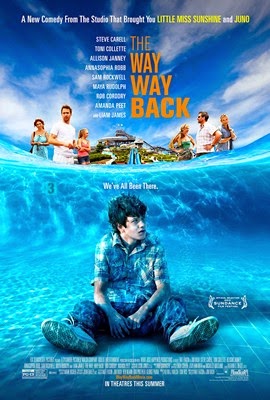
adcf5-the_way_way_back_posterI’m not one to usually laugh out loud during movies but for some reason I felt this sensation during this film. There were a lot of things that seemed to suggest that I should have rated this film lower but I could not help but give it four stars. Maybe it is the nostalgia it created or the typical coming of age story made interesting by some solid characters. Maybe it just reminded me of the times I use to go to water parks. I’m not sure.

Duncan has a life that I would not envy with a Step-father who calls him a 3 out of 10. However, he finds meaning and acceptance where he never expected to. The ending might be bittersweet but it was mostly sweet. There were a lot of supporting characters in this one. A lot of them only popped up on screen for a bit but for the most part they worked well. I think Liam James and Sam Rockwell stole the show though. Their camaraderie really made this film!

4/5 Stars

The Grifters (1990)

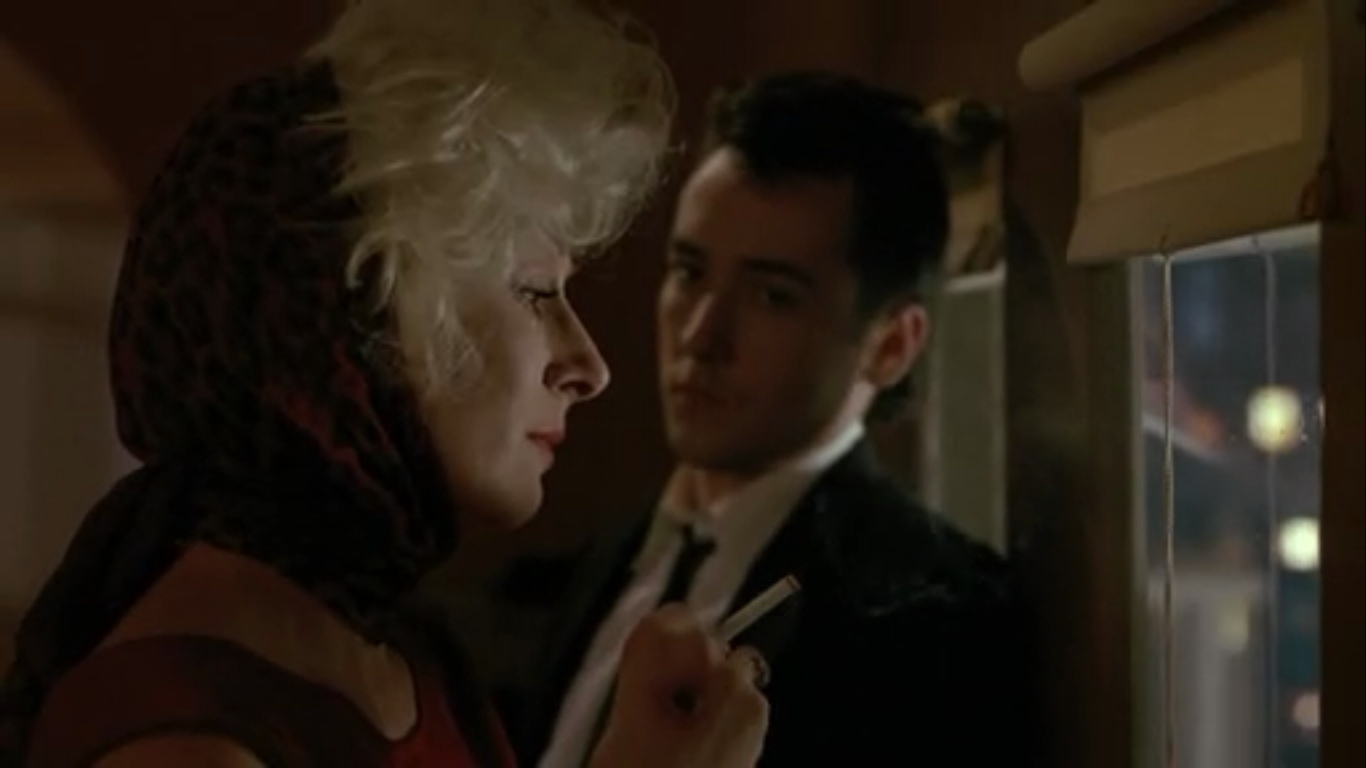
b2415-grifters1When you have Martin Scorsese producing and Stephen Frears directing you are bound to get something intriguing, and The Grifters is just that. It’s a Neo-Noir starring John Cusack (no Lloyd Dobler), Angelica Huston and Annette Benning. It’s got everything you can expect with a title like that from small-time swindling and horse races in La Jolla to deadly Femme Fatales with shady intent.

The film really has three stars in the above, but at the center of it is young grifter Roy (Cusack) who has been doing nicely for himself ever since he went off on his own. But his type of life does not come without a price. Lilly (Huston) is an old vet who has worked all the angles for a long time and now she is in the service of one tyrant of a bookie named Bobo. She hasn’t seen her son for 8 years, and all of sudden she comes back into his life finding him in need of medical attention. Their reunion is far from civil.

Then last but not least is the despicable Myra (Benning) who seduces her way into the hearts and the wallets of many men. Now she’s with Roy but before there was another con man and she is far from exclusive using her sexual wiles to get anything and everything she wants. It’s not surprising Lilly can’t stand her guts. No one could. If he’s honest not even Roy. Soon enough Lilly poisons him towards Myra and the seductress wants revenge and she seemingly gets it.

What follows involves lots of blood, lots of money, and a descent deeper towards a hellish conclusion that feels hollow and cold. Elmer Bernstein’s score accentuates the mood with a tense and altogether creepy string section.  As far as character dynamics, go this has to be the strangest triangles around. Each one of these confidence tricksters is a grifter and each one has a slightly different angle. However, when it’s all said and done only one of them can come out on top even if they didn’t want it to end that way. That’s just the way things go. There is no turning back, only running away for dear life.

The three leads played their roles to a tee and The Grifters proved generally engaging even if all the questions were not answered with loose ends still to be tied up. It also blends the general themes and outlook of noir with a setting that almost feels anachronistic at times. It’s hardly a complaint though and maybe things are better this way anyhow.

3.5/5 Stars

The Imitation Game (2014)

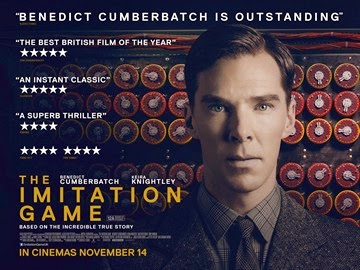
09cf1-the_imitation_game_posterWhen you think of decisive moments in WWII the conversation leads often to D-Day, The Battle of Midway, The Russian Front and The Battle for the Atlantic. If Britain had been cut off from U.S. supplies the case could be made that The Allies would have undoubtedly lost the war. That’s where the Enigma cipher comes into play and along with it Alan Turing.

Alan Turing is one of the unsung heroes of WWII and in many ways the father of modern computers. He’s a big deal and it’s hard to make that point enough. That’s what makes it exciting that he finally got the biopic treatment and with a portrayal by Benedict Cumberbatch no less. It does not get much better than that!

As far as biopics go The Imitation Game is a polished period piece set in War-torn Britain spanning the years of WWII into the early 1950s. Visually beautiful, scored nicely, and generally uplifting, it feels as wonderfully English as a cup of tea and the English countryside. Although the film at times may trod the typical path of other troubled-genius type films,  it often rises above the usual based-on-a-true-story fray. A primary reason for this is Benedict Cumberbatch who plays Turing not with dramatic outbursts, bravado, and bluster, but quite the opposite.
In the year 1939 Turing, a professor at the time, attempted to join the top secret project at Bletchley Park to crack the German’s Enigma code. He seems like an odd candidate for the job since he has only an affinity for puzzles and no knowledge of the German language, but that proves to be unimportant.
He has the right amount of vision paired with the obsession to come at the problem like no one before him. He does not just want to crack one of the tedious strings, he wishes to crack them all using a machine. It was absolutely unheard of and his colleagues discount him, understandably, because he is not much of a team player and far from a social butterfly. However, he discovers a worthy ally in Susan Clarke (Keira Knightley) who proves to be indispensable in his work as well as repairing his rapport with the team.
With the prospect of all his work with the machine being wasted and terminated, his colleagues back him up in front of his superiors. Turing has one last chance to succeed and someway, somehow he does. But success does not come without great responsibility. Once they have the weapon to counter the Germans they must use it cautiously only taking the most necessary steps. It becomes clear that there is a fine line between playing God with human lives and winning a war.
The war is won in the end, however, and the top secret endeavor is disbanded. Alan Turing is far from a war hero because few know what he did. His only label is indecency and he is given the option of imprisonment or hormones in response to his charges of same-sex attraction. A year later he committed suicide at the age of 41.
Cumberbatch is seemingly the perfect Turing with all the quirks you would expect. Except there are also traces of sensitivity and he so adeptly shows subtle emotions on his face. He was an oft-tortured man inside and out, spanning from his boarding school years to his post-war existence. Keira Knightley on her part is enjoyable as a counterpoint, remaining true to Turing no matter the circumstances.
Obviously you can always call into question the accuracy of these types of films and no doubt artistic liberties were taken, but all in all The Imitation Game did a commendable job of painting a picture of a man’s life in a very different age. Alan Turing finally got the credit he was due, and it was done with a great deal of sensitivity, heart, and even humor which mostly overshadowed any saccharine moments.
4/5 Stars

The Diving Bell and the Butterfly (2007)

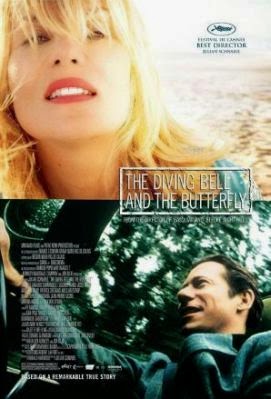
ca161-divingbellbutterflympIt’s beyond me how a film about a man who is all but paralyzed, except for his left eye, could be interesting. The main plot point follows his struggle to write a memoir using a tedious system where he blinks his eye for an assistant to transcribe. Maybe this does not sound all that engaging, but it most definitely is. No question. It has to do with how the film narrative is developed.

Bauby’s struggle is experienced first hand by the audience as we are stuck inside his head for the first portion of the film. It is a disconcerting perspective as we begin the film as helpless and confused as he is. We are there for every painfully difficult piece of progress, every one-sided conversation that Bauby (Mathieu Amalric) is unable to respond to, and every moment when he is powerless to act out. It is absolutely eye-opening. No pun intended. It’s simply the truth.

His progression is absolutely extraordinary. Beginning as a supposed “vegetable” who wished to die, to a man with an imagination that he was able to share with the world. He still had the ability and the passion for sharing his thoughts, memories, and desires with the world. He was physically so powerless and yet mentally so empowered.

Fragments of his story are given to us in pieces, although we still continue to return to the limited perspective he himself experiences. It is not easy to be sure. He must have others bathe him. The television channel is out of his control. There are doctors, therapists, friends, and family coming to see them, and he has no ability to physically interact. He still has feelings for his mistress, but the mother of his children still cares deeply for him. Sundays are hell with no one around.

Despite all that seems to drag him down, Bauby still is able to flutter above it all like a butterfly. With the help of his assistant and a strong will, he completed his memoir. 10 days later he would die, but his mission was accomplished. Maybe it seems like a rather unfortunate ending, but even if the lack of closure is unsatisfying, how it ended is the truth. Bauby was undoubtedly content because, despite the seemingly surmountable obstacles, he never lost his humanity. Being Locked-in could never take his mind from him. Ultimately, he was a winner and so his story ends on a somber yet powerful note.

It has been a while since I have been so affected by a film. I hope I will see another one like it very, very soon.

4.5/5 Stars

The Ghost Breakers (1940)

9c09c-the_ghost_breakersYou have two great leads in Bob Hope and Paulette Goddard for this horror comedy film. It is not the best film of either of them by a long shot and it is not much to write home about but if you like the stars you will probably get some laughs out of this one.

It is a dark and stormy night in Manhattan when Mary (Goddard) learns that she is the new owner of a supposedly haunted island. Larry (Hope) on his part is a radio man who is soon on the run from mobsters after a comment he made on air. After a shooting Larry finds himself face to face with Mary and she helps him out of a pickle. Soon she boards her ship heading for her island and he has no choice but to tag along. There everything comes to fruition and the Ghost Breaksers take on the haunts and the dangers of Castillo Maldito. This is a good example of the horror comedies of the 1930s and 40s. Hope was better with Crosby and Goddard was better with Chaplin, but this film certainly has some hilarity.

3.5/5 Stars

What About Bob? (1991)

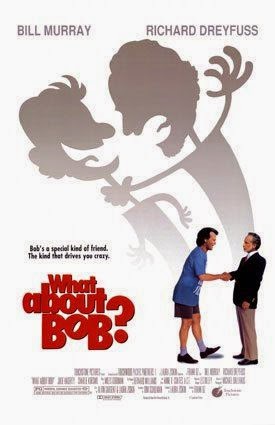
1f90d-what_about_bob_filmI was not sure I would like this film because honestly Bill Murray is not usually one of my favorite actors. However, his portrayal of Bob Wiley, a man with every phobia imaginable, is maybe his most lovable. True, he is annoying and neurotic, but he means well. In many respects he reminds me of Jimmy Stewart as Harvey because both characters were able to captivate most of the people around him. Only with Bob he got under the skin of one man and that man was his psychologist Dr. Leo Marvin (Dreyfuss). Bob tags along on Dr. Leo’s family vacation and that is where the conflict really gets started and the laughs begin. Every moment that the doctor loses his sanity continually builds up  until the stress of Bob is just too much to take! All in all this was a pretty entertaining film and I gained a new found respect for Bill Murray.

3.5/5 Stars

Bananas (1971)

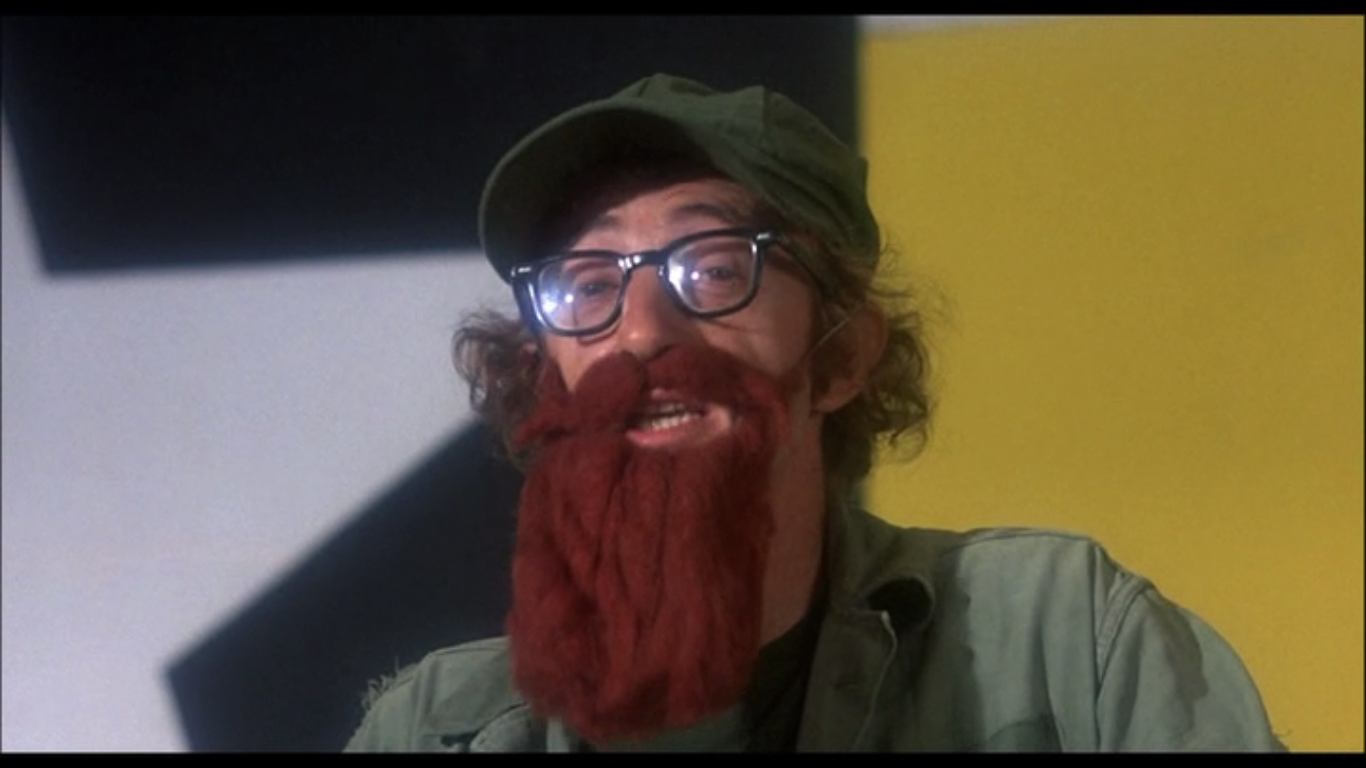
ad341-bananasIn the vast realm of Woody Allen films Bananas feels more like Take the Money and Run (1969) with its zany comedy than his later films which often take on a more somber and philosophical note.

A South American assassination with play-by-play commentary by Howard Cosell is the epitome of this film’s humor. A coup de’tait follows in the banana republic of San Marcos and somehow Fielding Mellish (Allen) fits into this picture. He starts out as an inept machine tester, gets beat up on the subway by thugs and falls for a female activist named Nancy (Louise Lasser). In order to impress her he heads to South America and winds up joining a revolutionary group.

Now somehow made president of the rebels, he heads back to the United States to gain support and funds. However, he ends up on trial and things are not looking too good for him. However, he gets back with Nancy and she agrees to marry him. The films ends with the consummation of their marriage book ended nicely by commentary by Howard Cosell once more. Woody Allen has always been a comedian and Bananas truly fits its title. It is utterly wacky.

3.5/5 Stars

Amadeus (1984)

bcd5e-amadeus1

A common film would content itself with developing a biopic on one of the greatest composers of all time reaching the heights of the musical field in the musical capital of the world in Vienna. A typical film might paint on a canvas paying homage to a legend who revolutionized music with his genius.

This story opens as the long-forgotten composer Antonio Salieri (F. Murray Abraham) attempts to kill himself. He gets laid up in a Psych ward where a man of the cloth visits him wishing to hear his story and so the old man obliges. It’s a story that makes light and lacks reverence thanks to its title character.

Salieri was a court composer of prestige and great admiration, but even he knew Mozart was the true master and the first day they met was forever ingrained in his mind. For being such a genius Wolfgang Amadeus Mozart (Tom Hulce) is a jerk, to put it bluntly. Spoiled, conceited, dirty-minded and armed with a cackling laugh, he is hardly the image of a musical mastermind. How could God bless this man with such talent? How could God taunt Salieri using such a man? He makes a mockery of art and yet he is the best there ever was. Salieri must have some kind of justice.

But all that lies under the surface. Mozart is brought on by his Majesty to develop a German libretto. Salieri’s tolerance for God is lost and he turns his back, beginning his passive attack. He shames Mozart’s wife (Elizabeth Beridge) and sends her off as he is looking to undermine his rival as discreetly as possible.

Mozart himself has little desire to take on pupils he deems a waste of time and instead busies himself with his most ambitious piece yet. His father comes to town and is not amused with his son’s conduct or his antics at a masquerade ball. He has none of the sensibilities of a man like Salieri, but what he does have are the talent and brilliance.

Always one to push the boundaries, Mozart’s latest piece is based on the Marriage of Figaro which was expressly forbidden by His Majesty. But due to his skill, Mozart is able to get by with bending the rules. Salieri acknowledges his genius. He knows brilliance when he sees it, but he becomes even more resolved to bring about the death of his nemesis.

After the death of his father, Mozart slowly spirals down into drunkenness and poverty. Salieri manipulates the situation even further to play on the man’s emotions and the desperate Mozart becomes mad composing a funeral requiem requested by a specter of a man. The mysterious figure is, of course, a moonlighting Salieri who no longer sees his actions as justice against Mozart but against God himself and he wants to win.

In a horrible condition, the bedridden Mozart constructs his last great piece with the help of an incredulous Salieri. But Constanze will have none of it and the manuscript remains unfinished because she distrusts Salieri. Just like that Wolfgang Amadeus Mozart suddenly passes away. He’s dead and Salieri can have no satisfaction, no piece of Mozart’s brilliance. God would not give him the satisfaction, resigning him to be the so-called patron saint of mediocrity. God supposedly got the last laugh.

This is a film that makes me want to revise the noted statement to “only the great die young” as the mediocre slowly fade into oblivion. Salieri faced a cruel demise of his own as Mozart instantly became solidified as a legend. That is the irony of life that is made clear no matter how accurate the facts are. Because in Amadeus, the facts are not the most important. Milos Forman gives us a spectacle that is as grand as Mozart’s greatest masterpieces. But this is perhaps, more importantly, a film about human nature. Salieri is a man so ingrained with internal desires.

He wants to play God. He wants all things to play out as he sees fit. His malevolence is focused on others. It is even focused on God. But, in reality, it reflects the pain of his own heart. Humanity has a desire for excellence to be fully actualized. That is a lofty goal and an impossible target. Because ultimately there will always be a hole left within us. It was so with Salieri

Mozart was one of the greatest and most well-known composers of a generation if not ever. He was not a good man (few are), and he met with death early. Salieri seemed moral and yet he himself was undermined by deep-seated avarice and covetousness. Despite still having life, the world was essentially dead to him. He thought God was laughing at him. Neither man won.

4.5/5 Stars