Review: The Man Who Shot Liberty Valance (1962)

a44af-themanwhoshotNothing’s too good for the Man Who Shot Liberty Valance!!! But who is he exactly? How did it happen? Where is he now?

The Man Who Shot Liberty Valance is perhaps one of the moodiest and most atmospheric westerns of all time. In a sense, it is almost like a Noir Western with its often stark cinematography (especially during the climatic moments), and it is told through a long flashback that encapsulates nearly the entire narrative. Both qualities are typical film-noir.

John Ford had numerous classic westerns, but this one is possibly one of the darkest in tone. The film has a typically great John Ford cast (like My Darling Clementine or The Searchers). Of course, it would not be one of his westerns without John Wayne, then add James Stewart, Vera Miles, and of course Lee Marvin. Then the secondary cast is rounded out by such great character actors as Edmund O’Brien, Andy Devine, Woody Strode, Strother Martin, Lee Van Cleef, John Carradine, and Denver Pyle among others.

This film is also steeped in politics. It becomes more obvious the more you watch that there is this underlining conflict between democracy and a different system of representation. Could this be a critique of Communism also packed into a western? Probably.

One of the moments that really stood out this time around was the flashback within the flashback when Doniphan (Wayne)  reveals his point of view to Ransom Stoddard (Stewart). He was, in fact, the man who shot Liberty Valance. We knew it at heart but finally we have the proof and all of sudden his behavior seems justified and he becomes the tragic hero of the film.

It is an unjust ending and yet it plays out the way it was meant to — maybe not the way it should have. The lawyer got the girl, the fame, and the spot in Congress, because he is a hero for something he did not actually accomplish. Tom instead is the one who fades into the past. It struck me that this is one of the few films I can remember where Wayne actually dies, the other would be the Shootist. Except here he is dead before the story has even began. The legend of John Wayne himself lends nicely to this legendary man in the film who we only know through the recollections of others. As the newsman noted, when the legend becomes fact you print the legend.

4.5/5 Stars

A Woman Under the Influence (1974)

a6338-awomanunderinfluenceWow, this film from John Cassavetes was truly gut-wrenching and powerful. Gena Rowlands and Peter Falk are wonderful as Mabel and Nick. At their core they both seem like essentially good people. They love their kids, their family, and friends. Except Mabel’s problems tear them apart and in turn hurt the ones they love. The drama is not created my major plot twists, but the mundane and the typical. Dinner conversations, picking the kids up from school, gatherings with friends. This is when the film takes place and this is where we see their family unwinding at the seams. It is a personal story and the cinematography and the script for that matter are not polished. They are allowing us to see into this situation and thus the heartache and the pain washes over us and we become engaged with it.

Supposedly Richard Dreyfuss threw up after watching this film. Some may not be able to claim that same reaction, but there is no doubt that your heart goes out to not only Mabel but her children who are caught in the middle of it all. Even Nick, who can be a callous and even violent person is given a heart because he was portrayed by the great Peter Falk. This is definitely powerful stuff that is worth seeing.

This film may actually be more difficult to watch than some gorier films for the simple fact that it will hit the audience close to home. Literally. This is my first film from the director John Cassavetes and hopefully there will be more in my near future. Take a chance with this one because there is a chance that it is different than many of the polished Hollywood films you have seen in the past.

4.5/5 Stars

Review: The Best Years of Our Lives (1946)

15548-best2byears
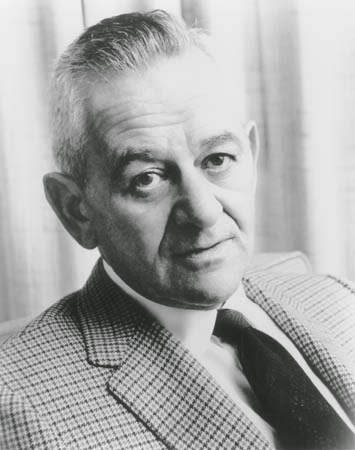
Who in their right mind would make a film like this today? I mean it’s nearly three hours of incessant talking and character development. There are no explosions or special effects. There are not even any war scenes! And yet it is pure gold from William Wyler. He forces us to get to know these characters — all the details about them — and it is a pleasure.

In a year that boasted the likes of It’s a Wonderful Life, it is not simply a testament to the post-war sentiment, but also the power of this film, that led it to garner so much praise including a Best Picture Oscar.

Like Capra’s film, WWII plays a role here without actually focusing on the fighting. The effects of such a cataclysmic event were enough on their own.  The Best Years of Our Lives chooses to focus on the point of view of three returning servicemen. However, it would be selling the film short to suggest that is all the film is about. It revolves around deeper issues such as family, camaraderie, patriotism, and of course romance. Over the course of the film each man must navigate his own path, and much of those pathways have to do with their romantic relationships.

Al (Fredric March) has been married 20 years and yet he returns to a home with a wife and kids who seem more foreign than the battlefronts he fought on. His loving wife Milly (Myrna Loy) patiently allows him to become acclimated and stands beside him as he stands up for his convictions at his bank.

Then there is Homer (Harold Russell), the double amputee, who is bracing for the worst as he returns to his family and the girl next door named Wilma. His way of dealing with the situation is to avoid those he loves because by not letting them get close he thinks that will allow them to move forward with their lives. However, Homer completely misjudges just how much his girl loves him. Wilma is the real deal, and she is prepared to remain faithful to Homer no matter the circumstances.

The final relationship is perhaps the most complicated of the lot. Fred Derry (Dana Andrews) is the complete antithesis of Al. He has little work experience, and he was a young man who only knew his wife for a handful of days before he went off to war. Now it is all coming back to bite him because Marie (Virginia Mayo) is not ready to patiently wait around while the former soda jerk tries to find a job. She wants money, nights on the town, and good times. Sparks fly and Fred finds himself drawn more and more to Al’s daughter Peggy (Teresa Wright) since his marriage is a loveless one. This relationship is perhaps the most agonizing to watch as Fred is torn apart, but he ultimately gets the girl who will accept him for who he is.

“The best years of our lives” may have been during the war for some, but that really does not matter, because with the right attitude humanity is able to move forward to make the best of the future. That is one of the merits of this film, it exudes hopefulness and despite their different lots, each character is able to find a little slice of joy.

No one personality outshines any of the others, but on the contrary, all the players add up to the perfect combination. I will shamelessly acknowledge that Teresa Wright is one of my favorite actresses and over the last few years I have come to really appreciate Dana Andrews. They really do deserve more credit and I hope this film continues to get the praise it deserves. It is a delectable slice of cinema and Americana.

5/5 Stars

The Sons of Katie Elder (1965)

eb358-sons_of_katie_elder_1965Although John Wayne was old enough to play the father, the dynamic between the sons of Katie Elder is a fun one, besides the fact that John Wayne and Dean Martin could never in a million years be brothers.

Otherwise this is a relatively typical western with a menacing bad guy who has control of the small western town facing the brothers who are in the right. However, the town ultimately turns against them thanks to corruption and the stupid bravado of an inexperienced deputy. The balance is finally returned and justice is dealt, but not without some bloodshed of course.

Besides Wayne and Martin, there were some memorable turns by James Gregory, George Kennedy, Paul Fix, and a few others.

3.5/5 Stars

Rio Grande (1950)

f5e4d-riograndeThe last installment of John Ford’s Calvary Trilogy. Not the best of him or Wayne for that matter, but it is still a worthwhile film. First, there is the tension in the paring between Wayne and Maureen O’Harra as they quarrel about what to do about their young son who is a member of Wayne’s unit. There is a supporting cast including the likes of Victor McLaglen, Ben Johnson, Harey Carey Jr., and Calude Jarman Jr.

While watching it I was just thinking how Ford has so many great looking films in both color and black and white. This one uses the latter as well as a Monument Valley backdrop to perfection. It just looks so beautiful in every shot and Maureen O’Hara does not hurt the eyes either for that matter.

Soon after Ford would pair again with a few of his stars to make another little film. Anyone for The Quiet Man?

3.5/5 Stars

The Men (1950)

2c6ea-the_menI was really drawn into this film and I appreciated Zinnemann’s realistic style in capturing Marlon Brando’s powerful screen debut. I would have rated this film higher because the topic was interesting, the performances were good, the supporting cast was respectable, and so on. The only thing is although Brando is a good actor and I really love Teresa Wright, they just seem wrong opposite each other. Wright was made for a Best Years of Our Lives and Brando for Streetcar or On the Waterfront. I will say I was surprised to see a young Richard Erdman, who is known to modern audiences as Leonard in Community.

3.5/5 Stars

Winchester ’73 (1950)

2604e-winchester_73_-_1950-_posterStarring James Stewart and directed by Anthony Mann, this western follows the journey a special rifle takes in the old west. Stewart wins it in a competition but it gets stolen soon after. An Indian trader wins it in a card game only to have an Indian take it. Stewart, his pal, get pinned down with some cavalry by the Indians. They survive and the rifle is given to a young man with a girlfriend after Stewart is gone. A treacherous gunslinger coolly kills for it but then gives it up to the original bandit who claims it as his. In a final mountaintop showdown, Stewart faces off with his estranged brother who killed their father. He wins back his rifle and rides back into town to his friends. This is a good western with an interesting storytelling device. It was a surprise to see Will Geer, Rock Hudson, and Tony Curtis as unknowns.

4.5/5 Stars

Sophie’s Choice (1982)


Starring Meryl Streep in a remarkable performance, the film opens in 1947 with the writing hopeful Stingo. He moves into a room in Brooklyn and quickly befriends the romantic pair of Sophie (Streep) and Nathan (Kevin Kline). However, as their friendship grows Stingo realizes the ghosts in Sohphie’s past since she was a Pole in a concentration camp during WWII. Nathan on the other hand can be both charming and cruel thanks in part to his own set of secrets. Stingo feels himself falling for Sophie but she realizes it can never be recalling her last shrouded memory. She was forced to make a choice that would haunt her and ultimately fill her life with tragedy. All I can say is that this film is made by the brilliant acting of Streep. Several of the scenes were very powerful as well. They brought up difficult issues that can be hard to answer.

4/5 Stars

The Shop Around the Corner (1940)

cc994-the_shop_around_the_corner_-_1940-_posterStarring James Stewart and Margaret Sullavan with direction by Ernst Lubitsch, the film follows the events in a little shop in Budapest Hungary. Alfred Kralik (Stewart) is the most respected employee in the shop and when Ms. Novak (Sullivan) comes in he advises her no jobs are open. However, she does land one and thus begins their rocky relationship. They are constantly at each others throats arguing. Both of them want to end the conflict on a good note as they go their separate ways to marry people that they were corresponding with by letter. When Stewart is to finally meet his unknown lover, he is shocked to look in and see Ms. Novak. Through a series of events she finally figures out he was the writer of all her letters and the two former enemies fall in love. This unorthodox romance has good characters and comedic moments that make it enjoyable to watch.

4.5/5 Stars

Destry Rides Again (1939)

4ff56-destryridesagainposterThis comedy turned dramatic western, starring James Stewart and Marlene Dietrich, begins in a town run by a saloon owner and inhabited by a sleazy song girl. Corruption and cheating reign supreme as the sheriff is killed and the town drunk takes his place. He turns right around and calls the son of an old friend, Tom Destry Jr., to be his deputy. Despite a comical entrance, and an abhorrence for guns this man is very different. Using his smarts and playing dumb, he is able to work for justice even though he seems to be helping the villains. He picks up the trail of the dead sheriff only to have the present sheriff shot as well. In the final unorthodox showdown, good fights bad and the womenfolk join the fray. Destry finally takes up his gun and is nearly killed, but he gets the town boss in the end. It carries another great cost however. Despite this tragic end, the film finishes on a lighter note. You will finish the film understanding that Destry knew a lot of people in his time.

4/5 Stars