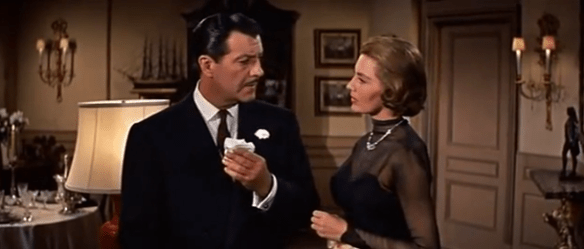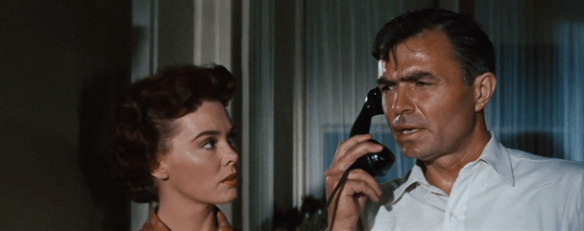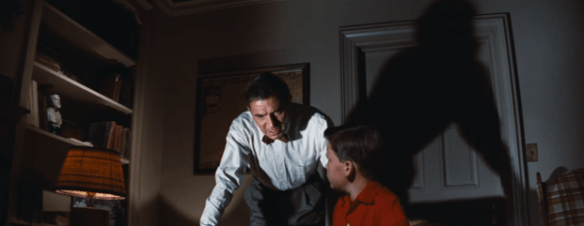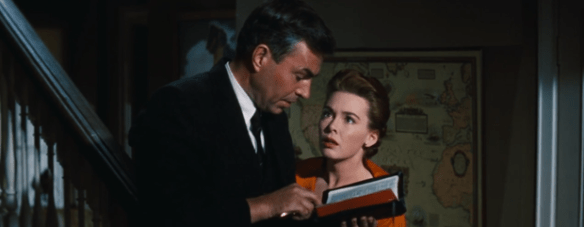
Bigger Than Life (1956): Nicholas Ray and George Mason Fit The Bill

bigger than life 1.png

James Mason gleaned the idea for Bigger Than Life from a contemporary article featured in The New Yorker by a medical writer named Berton Roueché. He detailed the side effects of the drug cortisone featured in real-life horror stories.

The title is certainly far from a misnomer and James Mason gives a performance to fill up the expanses of the screen bursting off it with furious abandon in all sorts of unwonted ways.

If my memory serves me correctly, there’s a shot at the entrance of the school where he’s being dropped off by his wife (Barbara Rush) who demurs that he’s always been 10 feet tall to her. The shot following has to be about the lowest angle conceivable with Mason positively towering over us until he walks forward and things become normalized.

It’s almost playful and still a disconcerting manipulation of the typical visual field. It’s indicative of much of the film. On the top layer, it’s the portrait of 1950s suburbia seen over and over again. There’s even an inadvertent connection to the quintessential nuclear family thanks to a pint-sized cameo from Jerry Mathers. But there’s also something pernicious gnawing away at our protagonist.

The film readily brings back the palette of Rebel Without a Cause we know and love, using the up-and-coming widescreen Cinemascope format, typifying the luscious productions of its era.

Ed Avery (James Mason) is a school teacher, one of those shining beacons of pedagogy and some things certainly have not changed. For such a noble profession, he can’t claim to be affluent. In fact, he’s moonlighting a couple nights a week in a cabbie service to make a bit more money. His wife Lou has a sneaking suspicion he might be cheating but how could he? He’s an utter angel.

His relationship with his best friend is borne in an introductory shot. Wally is played by none other than Walter Matthau. If that’s not enough, we meet him in a school corridor with a catcher’s mask strapped over his head and baseball gear filling up his hands. It’s a fairly slight part but as Matthau had a lengthy pedigree ahead of him, it’s a satisfying morsel to start.

Meanwhile, Barbara Rush gets few laurels as an actress, but she works handily as the loving spouse who Ed returns home to every evening. It feels strangely ironic because I almost unconsciously traced the line between Magnificent Obsession. It lies in their deep abiding roots in medical melodrama.  The first features Rush as a grown daughter and now she has progressed to a maternal figure, but the trauma remains constant.

bigger than life 3.png

Because, as it turns out, Avery is a fairly sick man with the clock ticking away on his life. Thank goodness there’s a miracle drug, “Cortisone,” which while still widely unknown has been used with some success on such cases as his. At first, the unassuming pills seem to be doing the trick.

Riding a generous streak, he takes his wife out to a dress shop to buy her the finest things and then gets his son a shiny new bicycle. James Mason is a riot in the store leaving his family speechless. He’s walking on cloud nine. Positively the picture of good health and yet every bit of heightened euphoria is a hint of something far more ruinous working underneath the surface.

Because the changes are no longer comical or imperceptible for that matter. It comes to tossing the football in the living room chiding his son’s lack of ability and resolve. There are unwarranted mood swings to follow and the broken shards of a mirror blatantly suggest what is to come.

Back to school night is highlighted by an uncharacteristic rant about the woes of childhood and the claptrap of modern education, which has parents in a huff. It’s the most recent sign of coming attractions. Megalomania begins to overtake him with ensuing ravings about new missions and leaving matrimonial shackles behind with increasingly radicalized rhetoric injected with delusions of grandeur.

Now his only resolve is to rear his son in the pursuit of self-efficacy as he begins to enact a dictatorial behavior over all his domain, berating a wayward milkman, turning an uninterested eye on food, sleep, feelings, or anything else that might get in his way. To get psychological, he blatantly disregards Maslow’s hierarchy of needs leaping straight to the pinnacle.

Meanwhile, his wife is scared stiff. Worried for her husband’s well-being as much as she is for her boy. And yet, if it gets around about mental trouble in the family, there will be no reprieve and so she tries to weather the storm. It becomes a suburban horror tiptoeing along an impossibly sickening tightrope. You couldn’t contrive something more calamitous if you tried.

Would you cope living with an utter tyrant if it meant your spouse and father could go on living? If pain was the only issue, then the answer seems ridiculously simple, but sometimes those conundrums are the most devastating to crack. In fact, it makes me sick in the stomach watching the mental breakdown exacerbate.

bigger than life 4.png

Overwhelmed by his psychosis, Ed begins spouting off scripture, one moment contemptuously, the next clearly intent on following Abraham’s lead by sacrificing his son without a second thought, twisting the words into another perverse commitment. He states his sentiments quite bluntly in one sequence as his wife hopelessly pleads in favor of compassion, “God was wrong.”

Turgid melodramas grow tiresome by the minute, and yet that fails to be the case when a film has far more to offer us whether it be artistry, irony, or social commentary. Equally compelling is a stirring dramatic situation at the core of Bigger Than Life.

Like the best films of Douglas Sirk, Nicholas Ray is able to pull off the histrionics of such a derided mode of filmmaking and allow it to remain enduringly interesting — even resonant today — to the extent possible. Far from wearing it thin, the passage of time makes it seem more horrifying by the hour.

However, as comes with the territory of such ludicrous dramaturgy, it easily becomes a hit or miss proposition. It will go too far for some and for others just far enough to make it compelling. I think I fall in the latter category because this is not just a sitcom episode. It surpasses those rhythms for something more substantial.

In its final moments, Bigger Than Life morphs into a frenzied Hitchcock thriller in a weird, insane way as we watch a banister snap like matchwood in the midst of chaos and a deranged man is caught in a frantic confrontation with his best friend.

And as inauspiciously as it began, it comes to an end like the lingering remnants of a bad dream, resolved and forgotten just as quickly. The status quo falls back into place in the culminating shot and wife and son reaffirm faith in their family unit, cradled in the loving arms of the man of the house.

James Mason is generally remembered as a suave villain, but he proves his merits equally so as a family man gone off the rails. His performance seamlessly hits all these beats that are simultaneously heightened, while still ringing with some note of inner truth. He is a tragic hero of the post-war, suburban age.

All of a sudden, evil comes not from within man himself but from outside stimuli. Though one could easily infer that such behavior indicates the perversity lying dormant, just waiting to be unleashed. It simply takes certain chemical triggers to send him hurtling back toward his darkest inclinations. Regardless, it’s a terrifying portrait of instability in technicolor. Often real-world nightmares are the worst of all.

4.5/5 Stars

The Lusty Men (1952): Nicholas Ray Transcends His Material Again

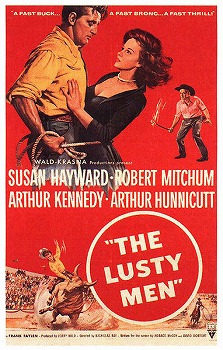
TheLustyMen7.jpgThe connotation of the film’s lurid title feels slightly deceptive. Because The Lusty Men might have basic elements of men who desire after women but it’s fairly restrained in this regard. At least more than I initially conceived. However, it is a film characterized by a zeal or a lust for life. The male protagonists are intent or were formerly driven in the pursuit of high living with all the benefit such a life affords.
We recognize this outright from a parade rolling down main street and then “The Wildest Show on Earth” that features the finest rodeo entertainment the world over. It’s high stakes and highly dangerous but also invariably lucrative. Many men are drawn to it greedily like moths to a flame.

Nicholas Ray sets up a high-octane environment of thrills that proves hardly as straightforward as one might imagine. Because the first man we meet is Jeff McCloud (Robert Mitchum), a lifelong rodeo man who, after his latest throw, has decided to take a break and leave the tantalizing life behind while he’s ahead. It’s a young man’s dream, but only the veterans live to make it a profession.

Coming from restless stock, he returns to his dilapidated childhood home now owned by an old homesteader (Burt Mustin) only to find the old tin can he buried two coins in when he was a kid. They’re still there and they’re also the only true assets he has to his name. Instantly we have a read on him. He has no possessions, a drifter, laconic in speech. You know the type and better yet you know exactly who he is with Robert Mitchum playing him — his true bread and butter.

He meets a pair of newlyweds, the Merritts, and manages to grab a job as a ranch hand. The husband Wes (Arthur Kennedy) is taken with the aura of the older man who has quite the reputation. For the time, Jeff takes it in stride.

It seems every film I see Susan Hayward in has managed to slip past me for a long time. But she fills the screen with an undoubted strength of her own. There’s something about her upper lip that I can’t quite put my finger on, but together with her near imperious gaze, you have a face capable of supreme expressiveness. She and McCloud both latched on to something. For her its a husband striving after what she wants. For him, its a man who can help him. It’s reciprocal.

This dynamic makes Kennedy’s character the most obvious and least interesting though, like Rancho Notorious, he’s meant to be playing a young man and manages to imbue the part with a cocky ebullience. He’s intent on a certain life and even if he seems a straight enough arrow, his way gets clouded by these aspirations.

We received glimpses early on, but The Lusty Men is also the most visceral and intensive rodeo movie I can recall. What follows is an ugly evolution in our characters; Wes most obviously. The distinction being, everything he is happens right before our eyes as he calls on the expertise of McCloud to help him conquer the rodeo circuit.

Everything Jeff exists as finds its origins outside of the frame, based on years and years as a rider with an unspoken history we can never completely comprehend. Mitchum carries the onus of time well, and it makes him continually intriguing.

We can’t quite get a line on him. He seems to go around as nice as you please. Maybe a fresh word or two but that’s just his personality (Hasta Luego. That’s Spanish for, “If the shower don’t work call McCloud”). There’s hardly an advance and yet you half expect him to be working a David & Bathsheba angle, except a battlefield has become a rodeo. He keeps the cards close until the last possible moment.

There’s a pool of weathered supporting players he reunites with including the broken but resolutely chipper Arthur Hunnicut, who maintains a taste for the rodeo even though he’s long since left the corral behind. Then, you have the likes of Al (Frank Faylen) and Rosemary, a match made in heaven, as they have all but resigned themselves to the life. It might as well be in their blood. The beauty is how their characters are almost contours but we want to know them more than we have the chance to.

Whenever you have a group of people who have bought into some sort of madness whether the stage, aviation, rodeo, or anything else, there is a near-insane amount of devotion put into the lifestyle. Look at Stage Door, Only Angels Have Ways, or West Side Story to see have a certain mentality easily pervades the world to create a collective consciousness of sorts.

This lifestyle becomes the status quo, and they have become so used to it and callous to the hardship, any trauma can hardly shake them out of it. Not unsurprisingly, such a dangerous profession comes with deadly repercussions. These hardships are what shake a person out of their reverie to decry the hazards at hand. It seems inconsequential to document them here because you can probably imagine them already.

With every person, it becomes a matter of weighing the pros and cons. There’s the choice of getting out of the cycle and ridding yourself of the dangers or otherwise willingly submitting yourself to the consequences.  Mitchum is such a curious individual because he seems to have made his peace and yet a woman he’s only pursuing half-heartedly leads him to take uncharacteristic risks.

But far from being regretful, in the end, he takes the tragedy thrust upon him with his usual coolness and casual indifference. Bitterness is not in his vocabulary, and he goes out just as he came into the film, aloof and yet somehow still showing a certain vulnerability. Because he allows affection to best him. There’s nothing shameful in that.

Rather than let the same lifestyle savage their souls, the Merritts get away too. Wes is shaken free of his bull-headedness, realizing in an instant there are far more important things than fast cash. What springs to mind are the care of a loving wife and the ability to grow old and gray together without the fear of constant peril.

The resolution is almost expected, but the actors shine as Nicholas Ray guides us through yet another outsider’s tale infused with authentic emotional longing. The film is constantly shifting between what we might easily call tropes or commonalities until it comes away with something different. It helps when you have three leading stars more than capable of playing the scenes with resonance, emoting when its called for and providing their characters with a greater tangibility.  Ray is one of those directors who continually manages to transcend his material.

The Lusty Men predates many similar films that spring to mind from Giant (1956) to The Misfits (1961) and even Hud (1963). Each one details a modern depiction of the West — having totally relinquished its glorious image and succumbed to real-world issues of aging, isolation, and decay. If you can believe it, The Lusty Men just might be the least ostentatious of them all, but it’s equally ripe for rediscovery.

4/5 Stars

Classic Movie Beginner’s Guide: Katharine Hepburn

I’m back at it again with a new Beginner’s Guide where we take a famous person and make their lengthy career manageable by picking 4 films to watch in order to get your feet wet. Here’s a jumping-off point for Katharine Hepburn.

I make a point of not quantifying actors by how many awards they’ve won. Still, she did win 4 Oscars! There’s little else to say. She was a gem.

Little Women (1933)

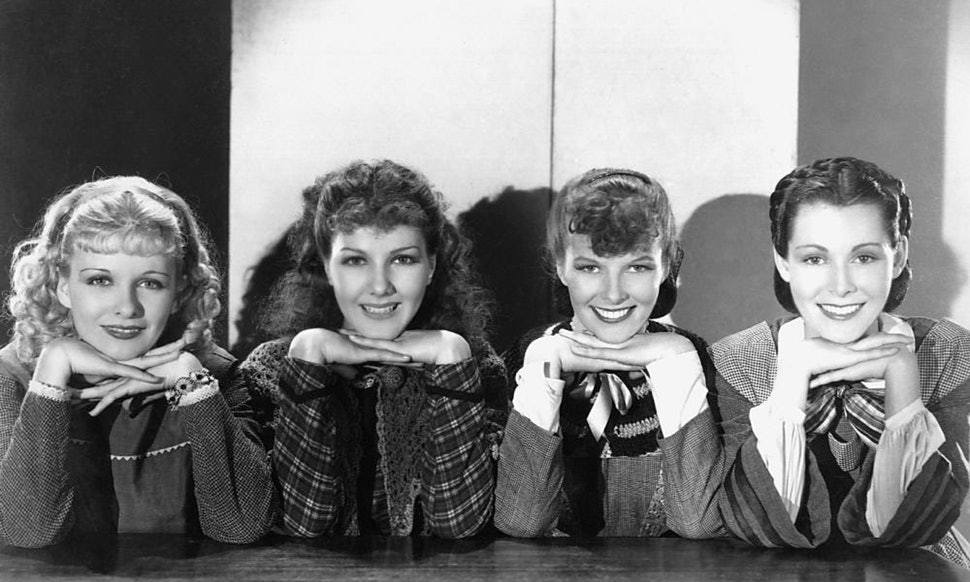
Image result for little women 1933

I’m partial to this film because Hepburn exudes all the attributes of Jo March for me. The cast is a fine array of young talent and if you have any attachment to Louisa May Alcott’s material, it’s hard not to appreciate the antiquated candor of this one.

Philadelphia Story (1940)

Image result for philadelphia story 1940

It’s almost old-hat to mention Katharine Hepburn was considered “Box Office Poison” at this time in her career (after “failures” like Bringing Up Baby and Holiday). So, of course, I mention it. But Philadelphia Story reestablished her and to this day remains one of her finest vehicles. With director George Cukor, James Stewart, Cary Grant, and Ruth Hussey, what could go wrong?

The African Queen (1951)

Bogart and Hepburn. It’s about as indelible a pair as you can get onscreen. They hardly disappoint in this character piece by John Huston setting the two seafarers off on a conflict-filled adventure through the swamps aboard the titular vessel. As a side note, it’s rather reminiscent of Heaven Knows, Mr. Allison featuring two other luminaries.

Guess Who’s Coming to Dinner (1967)

Related image

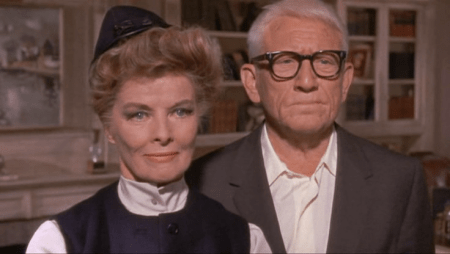
It’s as much an ending as a beginning. Hepburn was well-known for her on and off-screen romances with Spencer Tracy who was deathly ill. This film would be his last and capped off a partnership that included the likes of Woman of The Year and Adam’s Rib (On second thought, go watch this!). There’s so much history there and they work wonders together one final time.

Worth Watching:

Stage Door, Summertime, The Lion in Winter, On Golden Pond, and so many more!

Run Silent, Run Deep (1958): A Streamlined Submarine Drama

run silent run deep 1.png

Run Silent, Run Deep features what amounts to a cold open, set in the Bungo Straits, near the coast of Japan in 1942. The foreboding sonar-infused score by Franz Waxman suggests this will be a no-nonsense war drama and sure enough, within the first 5 minutes, a submarine commanded by one P.J. Richardson (Clark Gable) has been sunk in its mission to destroy an enemy ship, leading to the capsizing of the entire crew.

As Richardson looks back at his receding enemy, we see the film’s objective right before us. He is bent on revenge. Given the situation, this is not a film so much about survival but returning to finish a job no matter the circumstances, dangers, or counter-orders standing in the way.

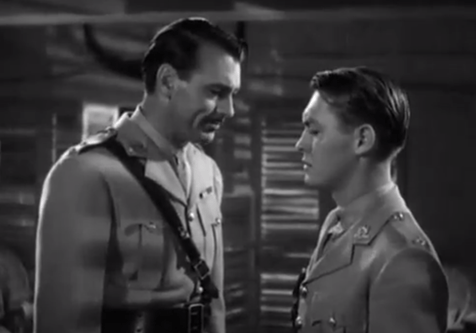
After a short leave of action, Richardson talks his way into another command, this time taking over from Jim Bledsoe (Burt Lancaster) who has already formed a close-knit rapport with his men. They don’t look too kindly on a new man taking over and Bledsoe broaches the subject bluntly with his new superior.

Richardson is hardly going to be dissuaded by a minor thorn in his side and his new crew begrudgingly take to the grueling regiment of drills he has them on. No one is looking to make any friends. This is hardly a film about buddy, buddy or camaraderie. There isn’t time. The one thing the commander does instill in them is discipline and well-oiled efficiency. It’s probably the greatest gift he can give them based on the circumstances.

The stakes are obvious as the death trap, Area 7, has led to the loss of four separate Allied subs, including Richardson’s previous command. What the story devolves into is a fairly straightforward WWII drama which is nevertheless riddled with tension as they knowingly enter perilous waters.

It’s true a submarine serves as an impeccable locale because its very form functions in constraining the action and ratcheting up emotions. There is no release valve and all these crewmen are literally submerged underwater for hours at a time. If that isn’t nerve-wracking I’m not sure what else qualifies.

Combine this environment with men who are already in tight quarters only to become more contentious over a major distaste in their commanding officer. It’s easy to envision him as a modern-day Captain Ahab. His white whale is the infamous Japanese Akikaze, Bungo Charlie, that he’s already has a deadly history with. The seafaring setting and power dynamics also hint at the traditions of The Mutiny on The Bounty though the story foregoes this exact demarcation.

While there are few flourishes or subsequent surprises from director Robert Wise’s film, there’s no question in labeling Run Silent, Run Deep an immersive experience, even for such a streamlined endeavor. In fact, that more than anything plays to its advantage. This allows it to be compact actioner extremely aware of its outcomes and not content until its mission has been accomplished. While it does not leave a great deal of leeway in the area of character development, our cast is a varied and compelling ensemble.

Obviously, the central figureheads are Gable and Lancaster, two hard-bitten battlers who are also consequently, far too old to be playing their parts. But this is Hollywood, after all, so it’s easy enough to make allowances when you’re getting top tier talent.

However,  surround them with the likes of Jack Warden, Brad Dexter, Don Rickles (in his film debut), and Lancaster’s long-time collaborator Nick Cravat, and you have something quite engaging.

The key to the success of both the mission and the film is that it ends as quickly as it begins. It gets in and gets out with striking precision, taking little time to rest too long on its laurels. Between the flurry of malfunctioning torpedoes, the barrage of enemy depth charges, and bombs raining from up above, there is plenty of flack to provide antagonistic interference. By the end, it seems a miracle our men get through at all but of course, it’s not without a toll, both physically and mentally.

Because even when you cannot see the enemy in the flesh, the capability to do harm hardly slackens. In some cases, it proves even worse. What is easier to exterminate, an enemy who lacks any type of form or personage or one that is living and breathing? In this regard, Wise’s picture is sterile and impersonal. It’s not so much a flaw as it is a sobering reality.

3.5/5 Stars

A Beautiful Day in the Neighborhood (2019): Mr. Rogers as The Helper

A_Beautiful_Day_in_the_NeighborhoodAs of late, it feels like the world has entered a bit of a Mr. Rogers Reinnaissance. He’s been gone since 2003 and yet last year we had Morgan Neville’s edifying documentary Won’t You Be My Neighbor? There are podcasts galore including Finding Fred and then Mr. Rogers’s words, whether before the Senate Committee or pertaining to scary moments of international tragedy, seem to still provide comfort and quiet exhortation to those in need.

Now to the array we can add A Beautiful Day in the Neighborhood. Although partially fictional, it borrows inspiration from Fred Rogers and his real-life friendship with journalist Tom Junod. Their interview and subsequent meetings became the basis of a front-page spread in Esquire Magazine. That was back in 1998.

Surely, this cannot be a mere chance at publicity. Too much time has passed in this regard for it to make a shred of commercial sense. And yet here we are in 2019 welcoming in yet another tribute to Fred Rogers. The man who taught many of us once upon a time (including this viewer) what it means to realize you are special, that there are ways to deal with feelings, and what a lovely thing it is to be a good neighbor and reach out an inquisitive hand to learn and ask questions.

What Marielle Heller’s gently radical film does well is capturing the spirit of the man. He was always so caring and engaged with others as a listener and concerned friend. There was real intentionality present and a candor toward both children and adults within him. But he was also humble and deferential. These qualities are much admired and somehow so difficult to replicate in our own lives. But the beauty of this portrait is the reminder that no one’s life is picture-perfect.

Lloyd Vogel (Mathew Rhys) is a man with a lot of pent-up, unresolved anger. He’s married now and has a child. But he still holds onto the grief of a beloved mother who died when he was young and an estranged father (Chris Carter) who was never around and is now trying to make an effort at reconciliation in his old age. Lloyd must come to terms with his own issues. But simultaneously his editor has enlisted him to write something out of his comfort zone. It’s an article on a hero: Fred Rogers. Here is the crux of the story.

So Mr. Rogers isn’t necessarily the focal point inasmuch as the film has his fingerprints all over it. In screenwriting terms, he is the helper and in life or film, there is no better title for the man. Because in Lloyd’s own family issues and private hurts, we see a projection of all of us sitting out in the dark.

In fact, just as the man in the red cardigan spoke to us throughout our lives, he’s speaking to Lloyd; he forms a relationship. This is not a television neighbor. He is a cinematic one, but it’s purely semantics because it doesn’t make much difference when Mr. Rogers is concerned. As you might have guessed, he likes Lloyd just the way he is. We witness the man change from a cynical, distant workaholic to someone who is trying to change and reach out to others in love. It’s imperfect, but it’s a start.

Tom Hanks in many ways is too much Tom Hanks for me to lose him in Mr. Rogers and this works out fine. Again, he captures the spirit of the man. As best as can be gathered, it comes down to two integral pieces. First, there is the genuine candor.

The words coming out of his mouth, the salutations, the affirmations, even the words spoken with a puppet on-hand (like Daniel Striped-Tiger) run the risk of sounding insincere and making a joke out of Mr. Rogers. But that would run contrary to the man himself who gave attention and respect to everyone no matter who they were. Thankfully, Hanks extends his subject the same courtesy. The words leaving his lips don’t sound exactly like our television neighbor, but they feel like him.

Equally important, Hanks gets down the rhythm of Mr. Rogers. So much about him comes down to how to utilize time, slowing down and being okay with stillness and silence. Heller aids with one brazenly unassuming scene where Rogers entreats his friend to take a quiet minute (as he famously did at the Emmys) to think about the people who got him there. The movie obliges including a brief cameo of fan favorites Joanne Rogers and David Newell. Again, in 2019 it all feels a bit quaint and yet — if I speak for myself — it’s also appealing.

Here is the man who built his life on disciplines. He woke up early to pray for his acquaintances and read his morning devotionals. He swam daily at his local pool. Letter correspondence was a rich part of his relationships. But they weren’t disciplines for mere discipline’s sake. All these things beget goodness and kindness toward other people. Because Fred followed the greatest rule: Loving others as you love yourself.

Yet the movie points out he wasn’t a saint. Not that there are hidden caveats to his characters. (For the record, he wasn’t a marine and he didn’t have tattoos.) Rather, he was human like each of us, and it is possible to grow in these same skills no matter the skeletons we have in the closet and the messiness under our rugs.

The movie has a couple bizarre dream sequences, but these are Lloyd’s and not Mr. Rogers. They are part of his emotional journey, tapping into his various attributed issues going back into his own childhood and a bit of his mind’s own neighborhood of make-believe.

Otherwise, Heller’s film does well to bring satisfying touches of the original show. There’s that unmistakable tint to the camera on-set that takes me back. That front entryway. The closet. The zip of the zipper. The toss of a shoe.

The script penned by Noah Harpster and Micah Fitzerman-Blue uses this familiar format of the program as a comforting window into Lloyd’s story. It allows us back into the world even as it puts us in touch with someone existing in our own.

Miniatures were also always an integral part of the show indicating Mr. Rogers’s home and where he was off to in the neighborhood. The movie entends this by utilizing models to chart the majority of Lloyd’s travels between Pittsburgh and New York. One other unique commute has Lloyd and Mr. Rogers receiving an impromptu serenade of “Beautiful Day in the Neighborhood” on the Subway.

Fittingly, music holds such a special place in the film, both the television set sequences and outside its scope. Johnny Costa’s distinct jazz playing always colored and left such memorable accents on the show’s myriad of interludes, whether it was the opening and closing tunes, the skittering of fish, or ready-made trolley sound effects. Mr. Rogers had such a gift for music as well. His compositions and aphorisms were deceptively simple but filled with so many brilliant articulations of content (“Everything mentionable is manageable”).

If they are gauged toward children that’s wonderful. I was struck by “Just Do It” playing over the credits — a less-remembered song I probably hadn’t heard since childhood; it all flooded back in a euphoric moment of recollection. Only as an adult do you begin to realize the impact this man had, how formative a television program could be. We want to write it off and cast off “childish things” and yet give him a second look and you realize how timeless he is. Why else would we be coming back to his well of modest wisdom?

It doesn’t seem like a coincidence, in a landscape that feels more antagonistic, mean-spirited, and divisive than ever, Mr. Rogers feels like a beacon from a happier time. During the film, I thought 400 words were far too short to chronicle the man. Sure enough, Lloyd took 10,000 instead. I would probably be capable of doing much the same. I can only gather many of us have a story about Mr. Rogers and how he impacted us.

For me, it was a photo signed and addressed in his immaculate calligraphy: With kindest regards from Fred Rogers. That was in 2003. He would pass away from stomach cancer in February of that same year. I lost a good friend that day…

When I was frightened after 9/11 he provided reassurance, when I doubted he reenforced my worth, when I didn’t know how to love my neighbor he showed me the way with graciousness. Because the brilliance of Mr. Rogers is how he backed up words and songs with action and feelings of radical affection. I want to be like that. I want us all to be like that. It can still be a beautiful day in the neighborhood. Sometimes we just need a reminder. We are all human. Just like Mr. Rogers. But we’re also special just the way we are.

4/5 Stars

I Want to Live! (1958): The Anomaly of Barbara Graham

220px-I_Want_to_Live!I Want to Live! calls upon the words of two men of repute to make an ethos appeal to the audience. The first quotation is plucked from Albert Camus. I’m not sure what the context actually was but the excerpt reads, “What good are films if they do not make us face the realities of our time.” This is followed up by some very official-looking script signed by Edward S. Montgomery, Pulitzer Prize winner, who confirms this is a factual story based on his own journalism and the personal letters of one Barbara Graham.

So the film asserts its authenticity right off the bat before even showing an image. It’s obviously hewn out of the tradition of the real crime docudramas popular at the time. And yet with any type of project, perhaps especially those that make such a claim, we must still call details into question and take them with a grain of salt.

Director Robert Wise is at it again handily developing an environment that feels lived in, opening with dutch angles to give us a slightly disconcerting introduction to a jazzy hole-in-the-wall joint. The crime maestro is at his best when he is working with locales he can play around with and in this case, the world gives way to character.

Meeting Susan Hayward in this picture is reminiscent of meeting Burt Lancaster’s Swede in The Killers. They’re in an upper room, a bedroom, cloaked in shadow and we know they have a tragic end in sight. Where we find them is almost as important as the characters themselves because it acts as an extension of who they are.

Graham is a different type of flawed figure who we find not in a lover’s room but some random bimbo. Though the word is never said outright, she’s undoubtedly a prostitute with police looking to nab her. This is our initial image of her, and it is telling.

However, the rest of her story is sutured together with whirling whip pans and mementos from photos to newspaper clippings to TV coverage, providing snapshots of a life through intermittent scenes. What we are given is admittedly jarring and not altogether cohesive, though one could easily concede no life is ever straightforward to piece together. So it is with this one.

Before seeing either film, I always mentally confused Caged and I Want to Live! because of the superficial similarity of women criminals behind bars. However, there is a substantial difference in Eleanor Parker who is able to lead her character through a visible transformation. With Hayward its more about reconciling and portraying the varying entities of this befuddling human being: Barbara Graham.

Soon she is styled as “Bloody Babs” by the media, initially lambasting her as a brazen killer with a past full of criminal activity and impropriety. But at least one man, Ed Montgomery (Simon Oakland), begins to change his tune and crusades tirelessly for her innocence. His help, along with the support of a benevolent psychologist (Theodore Bikel), just might turn the tide. Maybe…

Again, the most enjoyable aspect seems to be the mimetic world that has been evoked because to recall the Camus quote, “Here is the reality of our time, and we have no right to be ignorant of it. The day will come when such documents will seem to us to refer to prehistoric times.”

The people (including a young Gavin MacLeod), their clothing, the interiors of rooms, the press, and the mechanisms of the criminal justice system, are all touchstones of some kind. There’s always something we can learn from each even as we must be suspect of how authentic they really are.

Thus, the real star is the direction, featuring some of the most visual flourishes I recall in a Wise picture, further complemented by the jazzy scoring of Johnny Mandel. But its all elemental in creating a backdrop for the story.  Black & White serves Wise particularly well.

The final act initially stalls because the story is played from a waiting game angle, trying to ratchet the tension, although the ending is an already foregone conclusion. Everyone is waiting around. I would have thought the ending would go to Susan Hayward. Because until those foreboding final moments, her character hardly feels established even after all we have witnessed. But sometimes one scene can be galvanizing and emblematic of an entire picture.

However, this is not a boisterous exclamation point but an oddly entrancing death scene and this seemingly purposeful decision proves consistent with most of the picture. It foregoes dramatic and visual hyperbole for leaner more understated beats that bear markers of truthfulness. In the end, life doesn’t go out with an explosion but a drop off into somber nothingness.

With such a conclusion we certainly feel sorry for Barbara Graham. However, I’m not sure if we can completely empathize with her. Nevertheless, like any such high stakes story, I Want to Live! calls into question the American justice system, the death penalty, and our understanding of guilt in this country. So was Graham guilty or innocent? I would have to do more outside research to corroborate the facts though the film implies its own position quite overtly.

Regardless, maybe the picture is about larger themes altogether. Issues that go deeper still into the very fabric of how we enact justice, how we perceive it in the media, and even socially, how certain people seem to get raked over the coals.

Why Barbara Graham? Why not someone else? Why like this? It’s an issue that goes beyond superficial terms like good or bad. As a people, I think we are fascinated by individuals who are layered anomalies not to be understood with a cursory glance. Barbara Graham seems like such a person. We cannot write her off with a convenient stereotype.

3.5/5 Stars

Somebody Up Their Likes Me (1956): Starring Paul Newman and Pier Angeli

somebody up there likes me 3

Here is the first of two purported instances where Paul Newman wound up taking on roles earmarked for the recently deceased James Dean. Dean even had a fairly visible relationship with Pier Angeli who would have been his co-star. At one point, there was even talk of marriage swirling around though Angeli’s mother disapproved of Dean. Because it’s true he was “the rebel,” and she the angelic ingenue. It served them both well on screen, and the saintly image works well opposite Newman here.

While Dean had the angst and a sturdy enough frame to have at Rock Hudson in Giant, there’s no doubt his slight build doesn’t seem like the physique of a boxer. In this physical regard alone Newman might have proved to be a fine choice and in consideration of the performance itself, he showcases a glint of many of the traits that would turn him into a beloved box office attraction.

Watching his big break in the context of his illustrious career is gratifying for just those reasons. Because we know the successes waiting for him. Somebody Up There Likes Me finally gave him a shot to put himself out there so people could take note.

Due to the aura of The Sound of Music and to a lesser extent West Side Story, they are two films that effectively misrepresent the career of director Robert Wise. At the very least, they can be deceptive.

True, West Side Story gives us a glimpse into gangland New York, albeit touched up in vibrant color. But we only need look to Wise’s early noir works, a pedigree including the boxing classic The Set-Up; or even Odds Against Tomorrow, to see what he was capable of in terms of grungy atmospherics. This one occupies a seedy dive world akin to something like On The Waterfront (1954) or even Love with a Proper Stranger (1963).

Coincidentally, Steve McQueen has an early part in this one and Sal Mineo, a Dean compatriot leftover from Rebel Without a Cause, gives a crucial supporting role. Because Rocky incurs a childhood of abuse only to grow up as a hoodlum on the streets terrorizing the neighborhood with his band of cronies. Romolo (Sal Mineo) is the most important because they have the same life experience but wind up in completely different stratospheres.

It does take Rocky a long time though. He lands himself in a reformatory and gets thrown around the social reform structures implemented by society, all to no avail. He gets upgraded to a Penitentiary and still, his brutish intensity is never cowed.

Picking a fight with everyone big or small. It doesn’t matter if they’ve got stripes on their shoulders, suits, college educations, or police badges in their pockets. He’s ready and willing to wail on anyone. To say he has a blatant disregard for rules and authority is a gross understatement.  It’s part of what makes Newman’s turn entertaining in the earliest segments.

We wonder when he’s ever going to hit an upswing as he’s on the lamb, then dishonorably discharged, and awarded a stint at Leavenworth. Could that be a bit of Luke Jackson that we see?

somebody up there likes me 1

Even as he reluctantly agrees to jump in the ring for a promoter (Everett Sloane) to earn some desperately needed cash, he never has a taste for fighting. It seems like for once in his life the newly minted Rocky Graziano (like the wine) is looking to get away from fighting. And yet over time, he is convinced to train and to channel his hate into his right hand, like a charge of dynamite, so it can benefit him in the confines of the ring.

Also, about this time, he is introduced to his sister’s friend Norma, a sweet, reticent girl who is taken with romantic movies, butterfly kisses, and nice words spoken out of a place of kindness. Rocky’s entire upbringing has left him with the impression “love is for the birds.” They shouldn’t be together and yet, for some unexplainable reason, they are.

Soon, with the help of Irving (Sloane), Rocky has made a name for himself as the most popular Italian in the world, aside from Frank Sinatra and Michelangelo. Still, Norma can’t stand his fighting believing it is all, “meanness and blood and ignorance.”

On the surface, it seems true. However, Graziano is a curious force. So brutal and antagonistic and yet in his own gruff way, he’s so capable of love. He loves his mother (Eileen Heckert) dearly even as he tears her apart. He loves his wife, never laying a hand on her. He only has tenderness in his heart for them.

Still, in the ring he is ruthless and outside it, he’s plagued by fixers (Robert Loggia in a slimy debut) and a horde of journalists looking to smear his past all over the tabloids.

The climactic bout versus incumbent champion Tony Zale personifies how chaotically communal boxing is. An assortment of POV shots with punches aimed right at the camera, a flurry of edits, and a boisterous brand of intimacy makes us feel like we’re living right inside the ring. The beauty of it has to be the fact Rocky seems like he’s losing the entire time. Sometimes that doesn’t matter. Grit alone sustains. It’s a delightful finishing point, but the film is not won in the ring.

somebody up there likes me 2

I’m trying to come up with concrete justifications for why I enjoyed this experience so much. A few have been offered up but on the whole, I’m at a loss for words. Certainly Wise is no stranger to this street corner aesthetic, which he develops with such assured conviction, but the beats of the story are nothing new. They come to be expected; what takes you by pleasant surprise in such a context is a performance or a bit of dialogue from Ernest Lehman.

Because the boxing ring is only ever an arena for the life outside the ropes to play out and thankfully a rapport is built with the characters that comes to more than a few fights to prove oneself. In fact, until the final showdown in the ring, most of what we know about Rocky occurs outside of the ring with the gloves off.

Newman invests himself in the part readily showing a young punk evolve into a broken man with hatred in his blood, delinquency, and rage at the core of his being. Yet by some miracle, he’s able to gain a life and a beautiful girl to bless him with an existence worth living. Yes, he wins a big fight in the end, but we get the sense we leave him on a firm foundation. When the inevitable comes and he’s taken down, there’s still something and someone to return home to. Until that day he can relish what he was bred to do. But it’s not his all.

Then, of course, there’s Pier Angeli who is a minor revelation not because of any amount of flamboyance but the exact opposite. She is gifted with a grace and a poise that is positively enthralling. Her voice, quiet even hushed, flows with a peacefulness — an unassuming dignity even — so very unlike the ravishing vivacity of our Italian movie star archetypes. She is a discovery to be sure though her life was unfortunately cut tragically short. This role might be the finest testament to her presence as a performer.

It’s admittedly almost hokey witnessing Rocky riding down a cheering street, staring into the heavens noting exuberantly, “Somebody up there likes me.” Certainly, that’s true, but his wife reminds him, “Someone down here does too.” That’s how he knows The Big Man Upstairs was looking after him, putting such a calming force into the turbulence of his own life.  The scene is so easy to forgive because we’ve witnessed how very true it is.

This boxing biopic would be something of lesser note without Paul Newman’s star-making turn and what is an anti-hero without a companion to salvage their brokenness and turn them into the best person that they can be? Accordingly, comparable praise must be heaped on Angeli too.

4/5 Stars

Tension (1949): Between The Good and The Bad Girl

220px-TensionPoster.jpgBarry Sullivan has an absolute field day as a homicide cop, Lt. Collier Bonnabel, with very calculated methods of getting to the root of every crime. Whether it comes by pushing, cajoling, romancing, tricking, or flattering — he’ll do whatever is necessary. What matters to him is to keep stretching them because everyone has a breaking point. You just have to know how to work them so they slip up.

It’s fitting because he remains our narrator throughout this entire story. Between his fedora and voiceover narration, Tension easily earns the moniker of film noir. He picks up the story at Coast-to-Coast all-night drugstore in Culver City where the bookish Warren Quimby (Richard Basehart) maintains an unsatisfying but well-paying gig as manager.

His only reason for holding onto the job is not only security but it’s the only way to try and keep his girl (Audrey Totter). Because she’s a real horror — dissatisfied with the middling life he can give her — and constantly batting her eyes at anyone who gives her the time of day.

Quimby is such a passive and nervous husband; he’s always deathly afraid to walk into his room above the drugstore at night for fear the bed will be empty and she won’t be there waiting for him. You see, his entire worth and aspiration for a middle-class lifestyle are maintained through her. And yet when she scoffs at his attempts to buy them a house in the suburbs; it’s a rude awakening.

It turns out it doesn’t matter. She finds someone else and packs her bags. What follows is a sudden departure to shack up with the substantially wealthier Barney Deager. You see the same conundrum from The Best Years of Our Lives. They were youthful and on the high of WWII patriotism, but now settling into the status quo, he’s not as cute or funny as he used to be in San Diego. Everyday tedium is no fun for a girl like Claire.

Audrey Totter is easily a standout, and she even gets some saucy music to introduce her, and the coda proceeds to follow her into just about every room. She’s almost in the mold of Gloria Grahame — another iconic femme fatale — except her eyes are more bitter, even severe. They burn through just about everyone.

Warren makes his way to the beach and has a confrontation with her brawny boyfriend, but what is an unassertive guy like him (now with broken glasses) supposed to do in the face of such an affront? His options seem hopelessly few. It leads to a needed trip to the eye doctor for new spectacles, and he reluctantly leaves with the year’s newest invention — hard contact lenses.

His soda-jerk buddy behind the counter plants the other seed. It drives him to murder. Quimby then gains a whole new perspective, the doctor even touts that he with be an entirely different person, in the most literal sense; he takes on a new name as Paul Sothern. His entire temperament and level of confidence changes. It’s humanly unbelievable and all because of an optometrist. I should have gotten contacts sooner.

The newfound man sets up a residence in Westwood to put his plans in motion. He now has a cool, calculated doppelganger for the perfect crime, available to him at a moment’s notice.

Here we have the most roundabout and, dare we say, ludicrous way to premeditate and perfect a murder. Back in the days when taking on a new identity was a breeze. Erasing and vanishing was a matter of covering up a few loose ends and not leaving a forwarding address.

Basehart could easily be the father of Ryan O’Neal in What’s Up Doc? While not necessarily a taxing role, he is called on to play two characters as he plays opposite two very different women. Cyd Charisse is the sweet and shapely photographer who falls for Paul Sothern, despite knowing so little about him. She is oblivious to his double life, but it doesn’t seem to matter.

Still, as is the case in many film noir, the very overt foils are created and Tension extends them even further. The protagonist has a choice between two women and with them two distinct lives. One is represented by the decadent yet fractured China doll, the blonde spider woman who will not release him from her web.

Then there’s the simpler, sweeter pipe cleaner doll, the brunette good girl who is almost angelic in nature and totally available to help the hero realize their happy ending, which remains in constant jeopardy the entirety of the film.

The wrinkle that really spoils it is when Claire slinks back into his life once more, and he is implicated in a murder. All of a sudden the alternate reality he started carving out for himself is altogether finished. Sothern is quashed and Quimby is suffocating in a life he assumed would be gone forever.

The cops must come into the equation now, asking questions, poking around, and pressing on all the sore spots in hopes someone will break. All character logic aside, the picture does ascribe to a certain amount of tautness suggested in its name, but so could any number of movies — even John Berry’s next film He Ran All The Way.

But I found myself enjoying its contrivances more and more with time. Because each twist of the corkscrew made for another pleasure. Barry Sullivan takes great relish leaning on everyone. William Conrad, for once, is on the right side of the law and still gets to play a gruff character.

However, it is his partner who sets up some very convenient and slightly awkward interactions on a hunch. Quimby is forced to interact with his girl from another life as if it was just a piece of pure happenstance. Then, Claire and the purported “other woman” are somehow pulled together accidentally to churn up a little jealousy.

Bonnabel is like Columbo at his most nefarious, except slightly more conniving and less scruffily endearing. He nabs the dame because, being conveniently trapped in a lie, she confesses. Unlike most Columbo villains, she struts out as defiantly as ever. There’s no recompense or sense of somber civility. With the way she was going before, why bother? Thankfully Totter’s performance is not compromised; she remains icy to the end.

3.5/5 Stars

The Reckless Moment (1949): Max Ophul’s Balboa Island Noir

the reckless moment 1

The scene is set. It’s a week before Christmas. We find ourselves in the charming community called Balboa, 50 miles from Los Angeles, and Joan Bennett drives off into the city for very urgent business. She meets an undesirable in a bar, but this is by no means a tryst. She is facing a sleazy opportunist named Ted Darby to forbid him from seeing her impressionable daughter.

In her opening actions, we already know so much about her. She is assertive and willing to go to great lengths to ensure the safety and protection of her family. Like Shadow of a Doubt before it, we start out in the symbolic sordidness of the city only to return back to the oasis by the sea. The Reckless Moment becomes another home noir where worlds clash.

Ironically Bennett has shed her femme fatale exterior and has come to watch over a household fending off the wiles of the world to keep them from entangling her children. She lives with her elderly father and a young son constantly badgering her while the family’s servant Sybil (Frances E. Williams) proves her most faithful ally. An affluent, hardworking husband is said to exist, nevertheless, he is never seen as he’s away on business in Germany.

For all intent and purposes, it’s Lucia Harper’s ship to run while her husband’s away, and she weathers quite the ordeal. Max Ophuls reacclimates his leading lady with her home, laying out his typical red carpet complete with a spiraling shot up the stairs.

Her daughter Bee (Geraldine Brooks) starts out as a little terror though not quite capable of Ann Blyth’s treachery, because she sees the error in her ways. It comes to pass after her older suitor Darby pays a house call in the dead of night to rendezvous with the young girl. However, it is in the cloak of darkness the youth recognizes his true lecherous character, fighting to get away from him and fleeing the scene as he tumbles, ultimately, to his death.

He effectively disrupts their tranquility by diffusing from the urban center and breaching the sphere of domesticity ruled over by Lucia. The mother hen goes to great lengths to protect her daughter, even further implicating herself.

Because the next morning she finds the body, puts two and two together, and realizes she must do something. With nerves wrought of steel, she somehow manages to dispose of the body in order to protect her daughter. Of course, as we already know there was no need to, but it does make for an intriguing moral drama, and we have yet to even get a glimpse of James Mason.

He does finally arrive and once more, like Darby before him, he is yet another threat to Lucia, invading her drawing room unannounced. His price is $5,000 for some incriminating letters they have of the girls, which might easily implicate her with the police. For the woman of the house, you wonder if this nightmare will ever end because this is what noir always manages.

It takes this perfect post-war reverie and middle-class suburbia then injects it with something terrifying, even calamitous. But thankfully, with performers of the caliber of Bennett and Mason, we get a far more nuanced development.

These central roles are key because everything else revolves around them. They are two poles of the noir world who drag each other toward a murky center where she dips her toes into to the ugly underbelly and he, in turn, gains a coat of chivalry to redeem his moral character.

Because not only does this handsome crook begin to harbor sympathy for this woman — he even extends clemency to her — and as a result of their numerous interactions, he starts to fall in love.

It becomes an increasingly curious relationship because at first, it’s purely that of a helpless mark and the greedy profiteer. But as time passes, it gets ceaselessly complicated. With the husband out of the picture, and James Mason such a prominent star in his own right — it does feel like a secret tryst — a bit of a hidden love affair.

Except it never amounts to anything, because he covers for her, falling back into the dark depths of his old world, and she is able to sink back into hers. Our final image is of her, back turned to the camera, tears in her eyes, reassuring her husband everything is fine on the home front. The credits roll but I’m almost just as intrigued to know the aftermath of such a cataclysmic shift in her life.

Will her clandestine relationship with this man come to light and be seen through the sacrificial lens it probably deserves? Will she ever be able to share her dark secrets with her family and husband? Will the tranquil island getaway of Balboa ever be the same?

Yes, there are time restrictions to this story but the beauty is how much we still are invested in everything falling outside the frame. Here is a testament to an immersive film full of volatility and perplexing emotion that carries a certain weightiness.

It helps to have an intimate connect with this location. I even spent one summer during my youth working on Balboa Island and it is a sandy, relaxed, tourist trap. There’s no doubt about it. I can only imagine how much it would change if your memories of it were imprinted with something so ghastly.

Locals know the annual boat parade at Christmas. Of course, it takes on a different meaning with brawls in boathouses and dead bodies dredged up in the bay. At least it’s only a movie. Knock on wood…

4/5 Stars

Lady on a Train (1945): A Pleasing Blend of Screwball and Noir

lady on a train 1.png

The ever effervescent Deanna Durbin is sprawled out on the seat of a train car feverishly reading the pages of her thrilling mystery novel aloud. She happens to glance out the window only to stop and see a man bludgeoned to death with a crowbar! It was through the window shade, and we don’t see any blood, conveniently, but we do have a story.

Although it’s a corny hook, Lady on a Train goes with it full throttle. She’s left her loving daddy behind in San Francisco for the streets of New York City. H.G. has entrusted her to one of his most accomplished underlings, Haskell of the New York office. That’s all well and good, but the best part is the typically befuddled, huffing, stuttering shtick of the every reliable Edward Everett Horton.

Durbin brings her chipper energy into all sorts of scenarios beginning with her leaving her oblivious minder in the dust as she looks to get the word on the murder she witnessed. The police station is manned by an officer (William Frawley) who finds her story pretty thin and how could you blame him? It’s utterly ludicrous.

But always the fix-it girl, Nicki Collins goes sleuthing on her own, with a little qualified help that is. She resolves to track down the mystery writer of her new favorite page-turner, Wayne Morgan (David Bruce), accosting him at work and following him and his put-upon fiancee (Patricia Morrison) to the theater, bugging him even more.

All these elements feel like well-trod screwball paces, which they are. Surely, this is the man who will fall for her persistent charms — eventually. Thankfully Lady on The Train is a mash-up, leveraging all of its assets. Because we never forget this is a mystery and yet set during the Christmas holiday as it is, we have dashes of yuletide cheer sprinkled in.  Of course, Durbin has quite the pair of pipes so we have to have a few token tunes thrown in. It always keeps us entertained.

However, it’s at the very same newsreel she crashes, Nicki realizes the man she saw murdered — Josiah Warring — shipping magnate and newsreel star. What else is there to do but go traipsing around the frozen grounds of the deceased in her heels — of course. She somehow wanders in on the reading of the will and finds herself conveniently dawning an alias as Margo Martin who just so happened to be the fiancee and rich new heir to the dearly departed.

His two dear nephews are present (Dan Duryea and Ralph Bellamy) as well as the scandalized Aunt Charlotte. She cannot stand such a harlot in her presence. Of course, other menacing characters are working behind the scenes. A thick-jawed chauffeur (Allan Jenkins) and a dubious man with glasses (George Colouris) always stroking his cat sinisterly, run things in the creaky old manor. Somehow Nicki gets out of quite the jam and even makes quite a convincing chair as well. Lucille Ball would be proud.

The music mentioned in passing arrives. It brings the story to a standstill with a version of “Silent Night” relayed over the phone to her father, melodious but completely out of left field. When you have Deanna Durbin it’s a must to have her sing. She does it later as well giving a knockout floorshow to keep her cover, conveniently locking her alter ego in a closet and getting everyone else to keep mum.

lady on a train 2.png

The movie is continually piled high with bits of mischief comical and otherwise. Her mystery-writing partner-in-crime gets in a wine cellar fistfight as she looks to evade the men in pursuit of her. She conveniently holds the plot’s MacGuffin in her possession — a pair of bloody slippers — while also turning his girlfriend off for good. The final act keeps up the shenanigans as the murder plot is revealed in a pleasing fashion.

It’s true The Lady on a Train finds itself an agreeable niche between screwball and mystery drama. As such, it just might be about the perfect vehicle for Deanna Durbin’s talents, although she, regrettably, would leave Hollywood for good soon thereafter. The story is not afraid to get a little crazy — leaning into its wonkiness outright — and yet there are interludes of definite intrigue.

It comes down to the actors. Horton and Bellamy come off as screwball mainstays. The likes of Duryea and Coulouris couldn’t be more noir if they tried, with archetypes literally inbred into their character DNA. It’s Deanna Durbin’s charm that allows the picture to carve out its rambunctious path. She spearheads the wild ride with all sorts of plates spinning and bits of thread getting tangled, representing all the people and things she finds herself caught up in.

To its credit, what could have been a jumbled mess endears itself as a mixed-bag of all sorts of fun. It’s one of Durbin’s finest outings. Pleasant surprises, however small, are sometimes the most enjoyable.

3.5/5 Stars