Great Day in The Morning (1956) and Owen Pentecost

great day in the monring.png

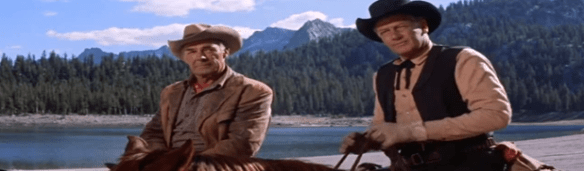
The backdrop is important to understand where we’re at in America’s history. It’s the 1860s. We’re in the Colorado Territory but it’s the eve of the most egregious war that ever was fought on American soil. Already blood is boiling between diehard Northerners and the Secessionists who want nothing better than to bury each other under a foot of dirt.

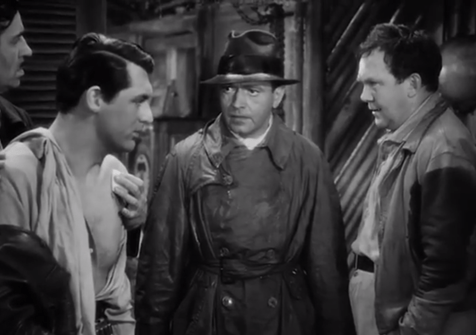
We get a taste of it in a man name Zeb who helps save another man’s life from marauding Indians only to turn right around and wish he’d left him for dead upon hearing he’s from North Carolina. However, he’s not the one giving orders. He and a more reserved companion, with a covert mission of his own, are working under hardy Virginia Mayo who is intent on setting up a dress shop out west. She obliges the stranger, the wonderfully named Owen Pentecost (Robert Stack) and he gladly joins their peculiar company.

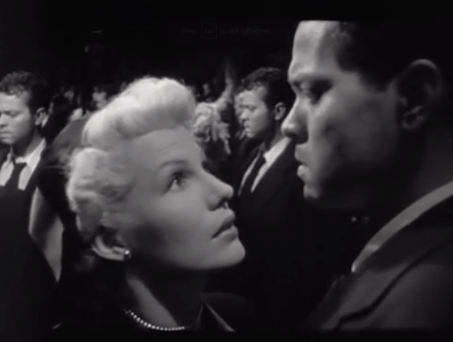
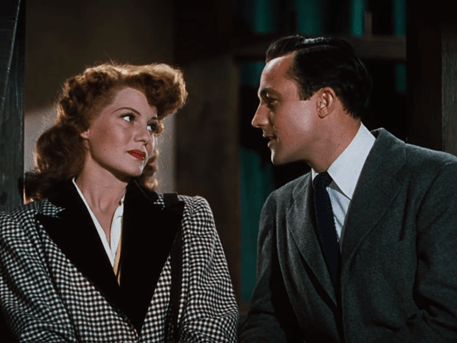
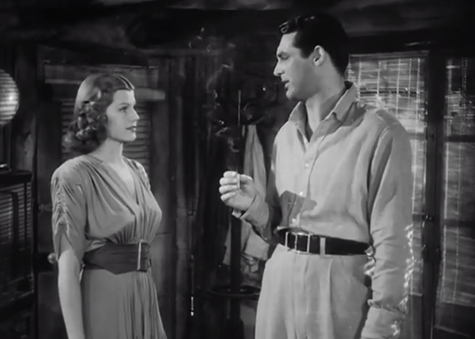
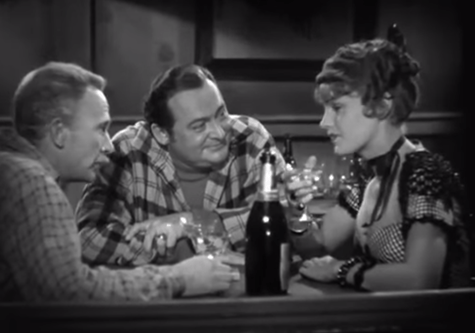
When they get to town, Pentecost challenges a local saloonkeeper (Raymond Burr) in a high stakes poker game and in the last hand winds up owning the place. As a result, he’s made few friends on either side of the brooding town except for the flirtatious chorus girl Boston (Ruth Roman) who frequents the joint and stacks the deck in his favor.

great day in the morning 2.png

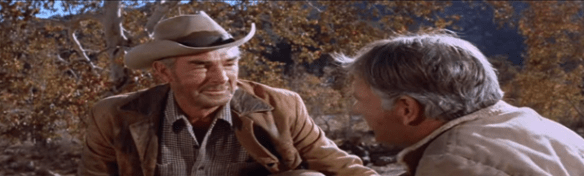
He takes up with his brethren below the Mason-Dixon line because he’s heard rumblings that they have a payload of gold and no way to get it back home. Their goal is to use it to bankroll the early stages of the inevitable war. Pentecost is no rebel and no patriot. He’s purely in business for himself and that makes for a thoroughly enjoyable character given the present climate. Because he ends up being an outsider to both contingents.

Instead, he looks to start a revival, preaching a gospel of gold as he’s got a lot of stakes in his ownership, which have yet to be excavated. Though most people around hate his guts, some are in desperate need of money. He lets everyone know he won’t tolerate any double crossing and yet it ends in the inevitable. One man is left for dead and it means very little to Pentecost until the orphaned son comes west, oblivious of the fate of his father or by whose hand. Pentecost takes him under his wing, foregoing to tell the boy about the precise events behind his father’s untimely demise.

He has no sentimental lumps in his throat about going off to war. His only goal is staying alive and he has quite the test ahead with Fort Sumter surrendering and the territory overrun with bloodthirsty Union men as it is. The northern loyalists come to his saloon with one thing on their minds. Making “The Rebels” pay by filling them full of lead. Hanging is too good for them.

But violence only sows more violence and hate still more hate. The collateral damage is far-reaching. The minister (Regis Toomey) watches the world continually shot to hell around him and he puts his hands up and runs into the fray to be some voice of peace even as he too is affected.

A daring escape is finally undertaken with the Union soldiers camped out nearby looking to gun them down decisively if they won’t surrender their goods. It ends up not mattering. The wagons loaded with gold take off in the cover of the night as the loyal Northerners look to chase them down led by the Union officers who have been tasked with the assignment.

It’s at this point that Pentecost finally seems to get a noble streak. In one sense, we see a certain amount of gallantry even on the verge of such a traumatic war but there are also tones that are unquestionably, even morbidly dark. It’s as if to suggest that war might bring out heroism in people but it can also bring out our very worst tendencies too. It’s just our innate nature as human beings.

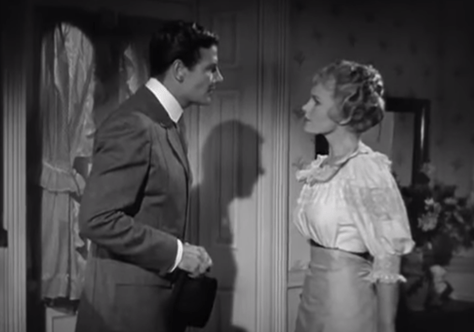
It seems such a long distance that we have traversed since those opening shots on the brightly lit plains, one newcomer, a lady giving the orders, and two men who will turn out to be deeply invested in this newly forged war. The Civil War changes the entire complexion of the film by its end, even the mores of our main character.

great day in the morning 3.png

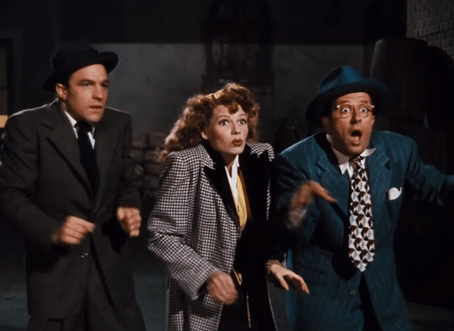
Cinematographer William E. Snyder boasts chiaroscuro color photography that’s so easy to take for granted because it bathes most of the picture, particularly the later scenes where it seems like more and more drama unfolds during the evening hours.

Part of the reason there’s little to no fanfare around a picture such as this is it’s wholly counterintuitive for B-grade entertainment to be formalistically stylish but that’s what Tourneur always seemed capable of since the days of Cat People (1942). It’s little different here and in one of his final westerns, he continues shooting beautiful sequences with storylines that don’t have any right to be.

There are interludes where Great Day in The Morning has rather peculiar beats and one could say the ending comes early or it’s anticlimactic or it didn’t matter, to begin with. Any one of those conclusions could, in fact, be correct but regardless, some might be taken just as I was with this unassuming oater.

It’s buried movies like this keeping hungry cinephiles always searching for a new delight. It doesn’t have to be a glowing success but if it even momentarily sparkles with shards of inspiration while bringing together a fine cast, we have a winner. Maybe I’m just an ardent Tourneur fan or have a soft spot for Ruth Roman and Virginia Mayo, not to mention the western genre as a whole. Either way, I have few qualms in liking this outing for precisely these isolated reasons.

3.5/5 Stars

Stranger on Horseback (1955) with Judge Joel McCrea

Stranger_on_Horseback_film_poster.jpgI didn’t know my Grandpa too well because he passed away when I was fairly young but I always remembered hearing that he really enjoyed reading Louis L’Amour. It’s not much but a telling statement nonetheless. I’ve read and seen Hondo (1953), which stars John Wayne and Geraldine Fitzgerald, and yet I’d readily proclaim Stranger on Horseback the finest movie adaptation of an L’Amour novel.

Exhibit A is Joel McCrea as a circuit judge, highly principled but firm in his dealings. He’s not simply an idealist either also having the guts to back up his philosophy, packing a gun and walloping thugs when it’s called for. He comes off as an irreproachable, unstoppable enactor of justice — a truly fascinating hero to stand front and center in a western.

Exhibit B has to be one of the most underrated directors of this period in Jacques Tourneur who not only showed an early penchant for low budget black and white horror but in a handful of color westerns, he showcased an equal affinity for visual filmmaking. Shot in Anscolor, Stranger on Horseback is quite the looker, encapsulating the 1950s western landscapes of old. No budget is too minuscule and no runtime too short for Tourneur to make an interesting picture.

The man rides past the unmistakable images of a pine box and a makeshift funeral. The dead man and the reasons for his death are still to be told. However, it becomes apparent very quickly that he was gunned down.

John Carradine leads the welcoming committee as the local attorney and stooge who is very conveniently on the Bannerman payroll and therefore in the family’s pocket. Because in a small place like this hidden away from the long arm of the national government, the Bannerman family and their associates remain king and they have their hand in everything.

The crotchety Josiah Bannerman (John McIntire) is looking to buy out the judge and invite him over to dinner to straighten him out about the killing that took place. He actually meets Judge Thorne and realizes full-well that’s not going to happen with such a principled man. For once there’s someone who isn’t afraid of him, even if he should be.

There’s his niece Amy Lee (Miroslava) who’s handy with a pistol and though she’s on the verge of marrying a feckless local boy, there’s a sense that he cannot give her anything. She is too strong like Bannerman. She needs a man who can match her self-assured toughness.

But it is Tom (Kevin McCarthy) the cocky, smart-aleck son who the judge forcibly takes to the local jailhouse to hold him for the murder of another man. Thorn’s put a target on his back and he knows that the retribution of Bannerman will come swiftly if he cannot be bought out.

He gets the support of the local sheriff (Emile Meyer) who’s eager to shed the apathy that the town breeds and back a man with real guts who will stand by his gun. That’s attractive to him and so if no one else stands up, the Judge has one friend. Meanwhile, he rustles up a few clandestine witnesses to testify against the Bannerman boy because they saw what happened and though initially reluctant they agree to testify since it is the right thing.

With the nearest speck of civilization and with it the nearest courtroom being in the town of Cottonwood 47 miles away, it’s inevitable that Bannerman will send his cronies after the small caravan to stop them in their tracks. It looks to be a daunting proposition at best but again, the Judge never balks.

The finale is all but cut short on an abrupt even awkward note much as we suspected. Our hero has been met and his bluff has been called. But we soon realize since he has been a brazen and thoroughly scrupulous man thus far, he’s not about to change anytime soon. So the final outcomes might surprise just as much as they captivate in a mere matter of minutes.

The question remains, why does the judge go through all this trouble? Is it some vendetta that has him out for vengeance? Is he doing it to prove his stature or receive the admiration of a woman? Is he simply a fellow who’s a stickler for rules and regulations? We never know for sure. Of course, there are obvious markers.

Our best hint comes out of another man’s mouth as he reminds his daughter, “There’s right and there’s wrong and when you see the difference you’ve just got to speak up.” In Judge Thorn, McCrea has brought to life a man who holds to precisely those moral tenets.

He puts his safety in jeopardy, he makes himself unpopular and foregoes major payoffs that could help him live comfortably. All because his view of justice and of right and wrong are so lucid he sees no other way of going about his duties. Let there be more men in our world like the Judge. Not sticklers but men of immense integrity.

Stranger on Horseback is a testament to small-scale westerns that have the guts and the certain level of ingenuity to stand out and weather the ultimate test of time.  Dig it out of obscurity, dust off the mothballs, and you might just find yourself in for a pleasant outing.

3.5/5 Stars

The Flame and The Arrow (1950): Italy’s Acrobatic Robin Hood

Flame_and_the_arrowposter.jpg

In the region of Italy called Lombardy, Dardo Bartoli (Burt Lancaster) is a bit of an Italian Robin Hood. However, his acclaim as an outlaw is brought on by personal conviction and a blatant disregard for authority. Others are captivated by his lionhearted bravado and fearlessness that, even as a peasant, leads him to brazenly defy the local despot Count Ulrich (Frank Allenby), known as “The Hawk.”

The two rivals have a muddy history embroiled in wonderfully complicated family dynamics as we soon come to understand. No, they are not related, as Dardo has no noble blood, but his former wife (Lynn Baggett) has willfully taken up as one of “The Hawk’s” courtiers. For that, the proud man has never forgiven her and entreats his young son to remember his mother so he can know the truth about what she did. The boy is played by the terribly precocious Gordon Gebert who many might remember from his memorable turn opposite Janet Leigh in Holiday Affair (1949). He’s much more astute than his age might lead us to believe.

In an act of skill and overt cheekiness, Dardo shoots down one of the king’s prized hunting birds and must flee across the rooftops, scaling walls and scrambling away to live another day. But his son is not so lucky and he gives himself up to the guards so his wounded father can get away. He will be taken to be with his mother and trained up in the way of a nobleman. Learning how to carry himself and dance like a little gentleman. But that doesn’t mean he has to like it. He is the heart and soul over which the entire film will be fought over.

Though he received a great deal of help from quality stunt performers like industry veteran Don Turner, there’s no doubt Lancaster’s own training as an acrobat was put to good use in this swashbuckler, which even saw him partnered with one of his old company Nick Cravat.

There’s an instant camaraderie between Dardo and the mute Piccolo. It’s palpable because the two performers have, in fact, spent many years together on the road doing acrobatic feats together so the trust is by no means a fabrication. They put the real-world rapport to good use through every trial they must face together. They know amid all the treachery on hand, their friendship will hold fast.

Among other bits of mischief, they create a man-made avalanche to come raining down on “The Hawk’s” guards in a mountain pass to frighten them away. Then, the merry brigands are joined by Allesandro (Robert Douglas) who was recently scorned by the Count. He is accompanied by his bard, a very well-versed fellow with a wry wit (Norman Lloyd).

Soon Dardo is on his way to disrupting the king’s courts to collect his son and comes swinging down right into their dinner, fending off the soldier’s lances with a flaming torch. Whether or not it would be practically effective is up for debate but it sure looks cool.

Although they are thwarted in their initial objective, in the hubbub, they manage to steal the princess, the Count’s glamorous niece (Virginia Mayo), away from the castle as leverage. She’s taken back to their lair, situated on some ruins in the wilderness, far from the prying eyes of the Count, to wait it out in captivity. The next move is to bait an irresistible trap for the outlaws by taking Dardo’s feeble uncle to be hung on the gallows within the city gates. The showdown is set. And yet when that is handily dealt with a whole row of new hangings come in its place.

The Count is beyond playing nice. He wants to see Dardo squirm and he’s going to do everything in his power to end him once and for all. In fact, it looks like he’s outmatched his pesky arch-rival. Yet with the help of the townsfolk, the outlaw pulls off one of the great death-defying stunts of all time.

At its best, The Flame and The Arrow really becomes a game — a medieval fencing match with deliberate lunges to go on the offensive then feints and parries, ripostes and other countermeasures all culminating in one final victor. But it comes down to the wire.

The king’s guardsmen prove no match for hordes of villagers and carnival showman led by Dardo, in one last daring siege, rescuing prisoners and overrunning the premises in a most uproarious fashion. But the beauty of how the allegiances have been set up means in order to get to the king, who is looking to run off with Dardo’s boy to live another day, he must go through Allesandro who is compelled to hold him off.

All in all, The Flame and The Arrow lives up to its name with lively acrobatic combat sequences and an impressively agile Burt Lancaster. I must admit I had never seen him in this light as a kind of cavalier action hero cast out in the mold of Douglas Fairbanks or Errol Flynn. I know now he was more than capable of the rigorous challenges.

Virginia Mayo is as feisty as she is radiant, caught between her royal blood and a man who excites her more than anyone she has ever met. Meanwhile, Jacques Tourneur demonstrates once again that he is one of the finest directors of genre pictures Classic Hollywood ever had moving so freely between horror, westerns, adventure, etc. He can do it all.

4/5 Stars

Colorado Territory (1949): High Sierra on Horseback

colorado territory.png

For me, it’s fascinating to consider directors who did not simply direct remakes but they actually reworked their earlier films. Prominent examples are, of course, Alfred Hitchcock, Yasujiro Ozu, Cecil B. DeMille, and Frank Capra, just to name a few.

The reasons could range from any number of things. Maybe they could command higher production values or harbored a desire to reexamine or improve on themes they had tackled previously. In the case of Howard Hawks, he even amazingly returned to the same basic narrative three times over as Rio Bravo, El Dorado, and Rio Lobo respectively. That’s quite the feat even if it initially appears a tad repetitive. However, watch the films and it does feel like you are seeing an altogether different entity each time, albeit with varying degrees of success.

Raoul Walsh’s Colorado Territory fits somewhere in there as a western that very much has two feet to stand on and the fact it was based off the director’s earlier work High Sierra, starring Bogart and Ida Lupino, feels nearly inconsequential. It’s not so much that there is no space to begin comparing the two. It’s more so the latter film, given its new cast and a new location, genuinely feels like an entirely different animal. Yes, we still have Walsh at the helm but the canvas and the language being utilized is essentially different. So from thenceforward, I will treat it as such.

Walsh is no slouch when it comes to western scenery capturing the raw majesty of the rock faces as men on horseback make their way across the planes of God’s country. This certainly is no gangster movie. The distinctions are made straightaway.

We meet Jeff McQueen (Joel McCrea) for the first time in a jail cell where he’s been stowed for his notorious exploits as a bank robber. However, an old friend keeps a promise and gets him out of the clink so he can pull one last job.

It feels like an uncharacteristic role for McCrea, in one sense, but he still fills the boots of his character with his typical principled outlook. McQueen, at this point, has had time to think and favors settling down and carving out a new life for himself with a stretch of farmland, a pretty wife, and a life of honest sweat and toil.

On an outgoing stage, he makes the acquaintance of a hopeful fellow from back east (Henry Hull) who’s also looking to make a new life for his daughter (Dorothy Malone) and himself out west. His philosophy is epitomized by the statement, “The sun travels west and so does opportunity.” He’s intent on finding the Promised Land and even as his daughter remains slightly skeptical, their life appeals to McQueen deeply.

What follows is an epic introduction of our antihero’s attributes, single-handedly righting a runaway stagecoach while fending off incoming bandits with an assured fearlessness. Even in these moments, McQueen cannot completely disown what he is or shed the years of experience he has accrued. He’s a hardened and whip-smart man whether it’s on horseback or handling a revolver. He’s a real man’s man.

So when he finally arrives in the rubble of a ghost town, serving as a hideout, he’s quick to cut the two young bucks waiting for him down to size. One’s your prototypical hothead (John Archer) looking to have it out at the drop of a pin and the other (James Mitchell) is strangely eloquent, though no less treacherous.

In his vast history of bank jobs, McQueen’s met many like them and it speaks to something that he’s probably the only one who made it out alive. Everyone else is either dead or rotting in prison. He’s not a man to take chances or make mistakes because if he had, he would have been dead long ago.

colorado territory 3.png

It’s part of the reason, despite his compatriots’ objections, he tells their gal pal Colorado (Virginia Mayo), a fiery former saloon singer, to leave their company. He’s not afraid of her getting in the way. On the contrary, he’s worried the other two outlaws will find reason to quarrel over her. That’s the last complication he needs now.

And yet Colorado impresses him and ultimately convinces McQueen to let her stay. She’s pumped full of a dogged tenacity making her persistently tough. He likes that and, of course, she’s beautiful because Mayo is sweltering even in her earthy, lacquered state.

If the dichotomy is not obvious already, the weathered outlaw has two girls and two lives calling out to him. He must dispense with one for good before he can take up the other for all posterity. At this point, the story is barreling towards the long-awaited bank job. We know what it means.

As the events unfold, he’s always one step ahead of everyone moment after moment. It’s thrilling to watch really because McQueen’s such a savvy, completely pragmatic man. This constant awareness makes him likable. He feels as much of a hero as he’s a villain and that’s as much as a testament to McCrea gritty candor as anything else — a straight arrow as he always is.

No matter, he outwits his two accomplices and flees the posse looking to string them up with the price tag on his head growing steadily bigger. There is a sense that time is running out on his dreams. He also comes to find things were not as good for his stagecoach acquaintances as they expected. For once in his life, he begins to gamble.

colorado territory 2.png

First, on the prospect they will take him in even as a fugitive on the run and then in his own struggles to protect Colorado. What we get is literally Virginia Mayo versus Dorothy Malone as they have it out in a stellar log cabin struggle, the picture beginning to spiral toward imminent doom.

A harrowing finale takes us back inevitably to the Valley of Death with McQueen climbing over cavernous rock faces in a last-ditch effort to flee his pursuers. It’s easy to see the foregone conclusion. We don’t want it to be but it’s hopeless and Colorado Territory gives us that odd sensation only certain stories can effectively manage.

It made us empathize with a purported scourge on society, wishing that he might find love and escape to a life of anonymity as he had always dreamed. But we knew before it ever arrived such a dream was never to be. Does the ending surprise us? Not necessarily. That doesn’t make it any less bitter as two tragic hands clasp each other one final time in a desperate attempt to stay together.

4/5 Stars

Canyon Passage (1946): Ole Buttermilk Skies

canyon passage 1.png

Portland, Oregon 1856 could lead us to many places but in these circumstances, it guides us to an enterprising mercantile store owner named Logan Stuart (Dana Andrews). Though he’s the main driving force behind the story, there’s little doubt this is a tale of pioneering far grander than a single individual.

As such, Canyon Passage is the epitome of a hidden gem, lined with talents who generally does not garner enough credit today for their many fine attributes. First of all, is Jacques Tourneur the French director who made a name for himself in a career laced with genre pictures and this one is no different, boasting a spectacular visual vibrancy.

The opening is exemplary, showcasing his skills as a master world-shaper, taking a western town that we only spend minutes in and through torrential rain pouring down, streets of mud, and various interiors, he’s already created a space that feels tangible to our eyes.

He continues this yeoman work throughout the story, which is a credit to its hardy terrain. We have sumptuous outdoor panoramas with rolling plains and expansive skies above. Then, there’s the verdant underbrush of the forests captured, the lush greenery, and even the interiors of cabins and shops have a rustic beauty about them that feels real.

Our trifecta of leads all proved substantial stars at one point or another beginning with Dana Andrews, then Susan Hayward, and Brian Donlevy, yet for whatever reason, it seems their names (much like their director) get lost behind a host of far more visible faces.

Nevertheless, they earn their due and in all other regards, Walter Wanger’s production is knee deep with equally memorable supporting players like many of the greatest westerns of the age. Hoagy Carmichael meanders about doing this and that with his mandolin and donkey, singing an occasional song, such as the instantly unforgettable “Ole Buttermilk Sky,” which captures a bit of the folksy milieu wafting over the picture.

Canyon Passage is also ripe with love triangles beginning with Logan and the future wife of his best friend, Lucy Overmire (Hayward) who he has been tasked with bringing home. They share a mutual affection but Logan respects his buddy George Camrose (Donlevy) too much to steal his girl; they’ve been through far too much together for that.

Instead, he sets his eyes on the pretty young woman (Patricia Roc) who was taken in by a genial frontier family headed by Andy Devine and his wife. They would gladly welcome anyone into their fold and it’s no different with Logan as he looks to make strides with Ms. Caroline.

canyon passage 3.png

However, if this was all Canyon Passage was about, it would lack a sizable conflict. But Logan must simultaneously deal with the local instigator of trouble Honey Bragg (Ward Bond as a burly villain) who has previously had more than a few run-ins with Logan and he’s not looking to make nice.

In fact, the whole town congregates in The Golden Nugget saloon after Bragg challenges his adversary to a showdown to have it out once and for all. The full brutality of such a society sets in with the men crowding around ravenously for a good show of pugilism to get their blood stirred up. A hint of lawlessness has been injected into the air.

But George also has demons of his own, namely, a gambling habit, which he can’t break, owing money all across Oregon to the point his friend bales him out only if he promises to quit. Still, the urge for wealth and constant comparisons with Logan’s continual success, make him continually discontent. He goes straight back to the cisterns that prove to be his undoing.

Like some of the best westerns by the likes of Ford or Hawks, this one feels, at times, like it’s about nothing much in particular and yet the paradox is it’s about so much that’s meaningful, speaking to the humanity at large. There is a local house-raising for a young couple just starting out and they marvel at all the folks who come to help them out. Because, for all the charitable neighbors, this is an investment in their own livelihood.

We see crystal clearly. What is going on, in front of our eyes, is the fleshing out and the building up of an entire community. Then, we receive a showcase for men of principle going against a world that seems so violent, brutal, and utterly untamed. Instead of cowering in fear or remaining apathetic, they look to confront it in some way.

However, beyond this, we have another broad conflict that’s age-old. The chafing between those who began with the land — The Native American tribes — and then the white man expanding westward with a belief they deserve a chance at a new life. In the eyes of those who started there, these newcomers are desecrating their home. In the eyes, of the pioneers, they are making it into more of a home.

When human beings wind up in close proximity, with varying viewpoints, beliefs, and practices, there’s bound to be repercussions and there are. Watching Canyon Passage you realize these very things were affecting real people, men and woman, families and the children within them. It feels like a truly eye-opening scenario.

Bloodshed ensues and against such beautiful exteriors, it only makes the scarring of the land and the bodies all the more inescapable. There’s something inside of us saying this is not the way it was meant to be.

canyon passage 2.png

What makes Canyon Passage quite powerful, frankly, is there’s no single point of contention or an individual goal in mind. It’s this all-encompassing drama with grand themes — grandiose in both scope and scenery — that concern a whole host of people trying to make lives in the western territories. You can begin to understand most everyone’s point of view. Amid the destruction and unrest, it’s easy to recognize the problems at hand. Surely, the West was meant to be more than this. Fights and warring, razing and killing.

But the frontier has always been an arena for hardship. Death by any number of ways. It’s the resiliency people lived with that meant something. In Canyon Passage, there are the same kind of folks who don’t go skulking around in their troubles but instead rise up to make the best of the next day to come. One might wager a bet it’s one of the bygone markers of the American spirit. Hopefully, we haven’t lost it all yet. We could probably still use some of that just as we could still use ambition and love, friendship, and fellowship with an underlying empathy for our fellow man.

Only when “The End” flashed upon the screen did I realize, in my former days of channel surfing in vacation hotel rooms, I once caught the tail-end of Canyon Passage. There again was an indelible image I distinctly remember, Hoagy Carmichael ambling along on his donkey, through the forest, knocking back a tune. It made me distinctly mirthful like an old friend just recently discovered again. If this film isn’t considered a classic by now then it should definitely be in the running.

4/5 Stars

Gambit (1966): Please Don’t Tell the Beginning!

gambit 1.png

Gambit is a film that looks as if it could be so very cut-and-dried, a simple run reworking of what we’ve seen time and time again in the age of James Bond, heist films, and romantic thrillers. I’m not saying these can’t be fun but at a certain point, the ideas have run their course. Thankfully this story, helmed by British producer/cinematographer-turned-director Ronald Neame, has a few tricks up its sleeves, and it starts right at the beginning.

I’m not usually keen on SPOILER ALERTS but with Gambit I’ll make an exception as it is a unique case. As the tagline reads, “Go ahead and tell the end. But please don’t tell the beginning!” It’s all very tantalizingly cryptic and as I aim to spoil the beginning and leave the ending open as usual please veer off course and stop reading right this minute if that’s something that you will later come to regret. Anyway, you’ve been fairly warned. For everyone else let’s go back to the opening.

Perhaps the billing does provide a hint of some kind with Shirley MacLaine positioned as our lead and Michael Caine billed second right behind her. Still, it’s the old expectations versus reality hijinks that the film readily unfurls. Michael Caine brings his working-class cockney rogue to the party this time as a two-bit burglar named Harry Dean. Despite being his first Hollywood showing, he takes it in stride and nearly steals the picture. But he’s got to at least contend with his costar. Shirley MacLaine is not much of a French-Eurasian but eventually, her ditsy charm shines through when she’s finally able to lay it on. But that’s just it. It takes a while for her to show up as we’ve always know n her and for good reason.

Gambit gives us a facsimile of the perfect crime as envisioned by a criminal. Everything is planned out like clockwork. He’s made allowances for every wrinkle and his understanding of human psychology is unprecedented. Above all, his female companion, his entry point to the richest man in the world (Herbert Lom), is a mute exotic dancer who does exactly what she’s told and nothing more. What could be better than that? The objective of getting in to snitch a priceless artifact comes off seamlessly.

Except we’ve seen that movie before. Thus, Gambit does us a favor by leaving that on the drawing floor as merely Harry’s conception of how things will go as he explains them to his buddy Emile. Only later the movie begins playing the events out for real and subsequently starts subverting the generally accepted principles of a perfect heist with something marginally more interesting.

There’s no limo to meet them at the airport so they must cram into a taxi. Emile isn’t able to get to a payphone to make contact thanks to a gabby local. The wealthy collector, Shahbandar, is a far more modern and shrewd man than his projected eccentric image would have it. In fact, he already suspects them before he makes their acquaintance and his compound is equipped with foolproof security measures.

Harry hasn’t got a prayer to get away with the goods. And yet thankfully Nicole plays a far more substantial role than she was supposed to (much as we were expecting). Because though she’s hardly predictable and initially disapproves of Harry’s activities, she reluctantly goes along and proves to be a major asset thanks to her knowledge of Eastern culture paired with an intuitive wit.

To spoil the punchline would be an egregious offense so I will do my best at showing restraint. All I can say is that no one goes to jail, two people go off in love, and one artist is in high demand as a result. The look on MacLaine’s face when she exclaims, “You’re not even honest enough to be crooks” captures it all. She’s right. There’s nothing worse than the dreaded PR Stunts of attention seekers. They’re merciless. But love wins out in the end.

In a similar vein to How to Steal a Million (1965), Gambit proves itself to be a repeatedly diverting comic caper with moments of intrigue that would be amiss if not for its light-hearted winks of humor. Its greatest trick is a continual undermining of convention, creating a story with a few more wrinkles than we’re used to. In other words, its mode of narrative is just unconventional enough to make for a fine showing. I do quite like a good gambit and this one doesn’t disappoint.

3.5/5 Stars

The Court Jester (1955): The Brew That Is True

the court jester 3.png

Maybe I’m simply partial to Medieval forms of entertainment but it’s hard to imagine a finer vehicle for Danny Kaye than The Court Jester. It needs to be lithe enough to accommodate his goofy even acrobatic brand of song-and-dance buffoonery. What better arena for Kaye than the king’s courts, that laughable domain of a man in a dunce cap and tights?

However, equally important is some form of plot for the actor to hang his routine on. The production is complemented exquisitely by a lavish setting replete with fine costuming, bejeweled individuals, and everything from knights and sword fights to magic incantations, backroom treachery, and romantic entanglements.

The humorous tongue-in-cheek opening diddy “Life Could Not Better Be” sets the tone nicely. We are inserted into a storyline that is a decidedly genial Robin Hood knockoff. In his place is our righteous outlaw The Black Fox who is looking to install the rightful king to the throne, the infant with the royal birthmark — the purple pimpernel.

The malevolent, power-hungry King Roderick has usurped the domain and set himself up as the supreme leader of the land, surrounding himself with an array of equally loutish characters, namely Lord Ravenhurst (Basil Rathbone). The King is hopeful an alliance with a knight named Griswold will help him to vanquish his mortal foe, the Fox, promising to betroth his reluctant daughter (Angela Lansbury) as a sign of goodwill.

Ravenhurst, fearful that his place of prominence might be undercut, calls on the services of a Court Jester named Giacomo (John Carradine) to do away with the king’s other consorts. However, on the surface, it seems the perfect disguise for the minstrel Hubert Hawkins (Kaye) to aid the Black Fox in his raid on the castle.

the court jester 1.png

If Kaye is for all intent in purposes our Allan a Dale thrust into our Robin Hoodish role, then Glynnis John is his fair companion Maid Jean (aka Maid Marian) who also happens to be a trusted captain of the Foxes men (aka his capable Little John).

After they overtake the real Giacomo, the carnival showman dons the robes of a jester for the masquerade. He thinks there is only one agenda. To meet a contact within the castle on behalf of The Black Fox. Little does he know, he’s also got to look after the well-being of a precious baby in a basket while unwittingly making a connection with Ravenhurst who assumes him to be an assassin (“Get it?” “Got it.” “Good!”).

Meanwhile, the princess receives an oracle from her personal maid — a witch named Griselda (Mildred Natwick) — that a gallant man will soon arrive at the castle to have her hand. Little does the new Giacomo know he’s now caught up in a third complication as Griselda casts a spell on him turning him into a strapping and virtuous lover with the snap of her fingers — another one of the film’s recurring gags.

After his new entertainment arrives from Italy, the king also sends out an edict that all the fair wenches of the land be brought into his courts and, of course, the lovely countenance of Maid Jean gains the favor of the king, earning her a prestigious place in his company.

As he does his best not to bungle (by purposefully bungling) his floor show to earn the approbation of his master, Kaye must try and resolve the three plans of action put forward, though he’s conveniently forgotten them all.

the court jester 5.png

Soon our hero is ousted as an imposter and a cunning plan is enacted to red light him for knighthood so he will be eligible to face off against Griswold at the following day’s tournament for the hand of the princess. It’s all but inevitable. He’s a dead man without a chance at survival unless the Black Fox can come in time to take his place! Alas, it is not to be.

Their last-ditch effort is to try and poison Kaye’s formidable foe before they enter into combat. What it sets up is the film’s most beloved gag and one of the most heavily quoted routines there ever was: The Vessel with the Pestle and The Chalice from the Palace. In typical Kaye fashion, he struggles to remember which one holds the brew that is true or as he says it “the true that is brew.” Add the Flagon with the Dragon to the verbal shell game and he’s done for.

The extended hijinks is pure tongue-twisting, mind-boggling perfection, given an added exclamation point by his suit of armor becoming conveniently magnetized. This causes him to continually clunk into his adversary as they present themselves before the king. It couldn’t be funnier. And as a good belly laugh is often hard to come by these days, I was greatly delighted. The scene plays just as well as the first time I’d seen it.

But the antics in part give way to some genuine thrills as the jester leads a daring uprising against their would-be captors capped off by a counter-offensive by their friends. A merry band of little people sneaks in only to terrorize the courts and form a conveyor belt to fling their adversary away from the castle premises with a catapult. What follows is a storming of the castle by the rest of the rebels and a finale of the best comical homage to Technicolor Robin Hood there ever was.

A final duel with Ravenhurst showcases Kaye’s bipolar “dual” personalities. First, the frantic slap fighting of a craven coward, then the cocksure swordsmanship of a man with endless confidence, though it takes some support from his true love to send Ravehurst to his fitting demise.

There, in a nutshell, you have the impeccable concoction of the film reflected in Kaye. He’s a buffoon as much as he is a hero who nevertheless comes out on top thanks to another’s love. With a fairy tale ending such as this, life could not better be. Of course, The Court Jester is spruced up by the very fact it supplies a wagon-load of laughs to supplement a thoroughly agreeable adventure.

4.5/5 Stars

The Secret Life of Walter Mitty (1947): Danny Kaye Does Thurber

SecretLifeofwalter.jpg

In many ways, it seems short stories are the best sources for feature-length films because they allow the narrative to take the spark of an idea and extrapolate and mold it into something new and hopefully ingenious in its own right.

Author James Thurber didn’t seem to think that was the case with this adaptation of his short story plucked from the pages of The New Yorker in 1939 and turned into a vessel of lavish Hollywood entertainment by Samuel Goldwyn. Reading his story, in itself, gives a fascinating insight into the film version. For one thing, the “pocketa-pocketa-pocketa” onomatopoeia is translated from page to screen.

However, it’s also very apparent watching The Secret Life of Walter Mitty that Goldwyn, for obvious reasons, tailored the material to his star Danny Kaye. There’s certainly no point of contention there and the story probably is better for it.

In this version, Walter Mitty is a Pulp magazine editor and being unmarried, it’s his mother, not his wife, who is constantly nagging him to stop dawdling and do his best to not be so absent-minded. If you actually think about it, the fact this homely mama’s boy is brainstorming racy detective novels, exotic love stories, and horror romances is a bit ironic. Though given his flights of fancy, it’s not all too unbelievable.

Kaye’s spry verbal acrobatics are as limber as ever finding his voice contorting, shrieking, and hiccuping in all manner of ways through all manner of dialogue, monologues, and songs. He also progressively plays up his nervous shtick as he goes clunking around offices, with pigeons flying about, continually fearing for his life while also receiving the ire of his conceited boss.

These developments come with the acquisition of a little black book that very much resembles the one he uses to maintain his daily regimen. Except this one is very important to a beautiful woman named Rosalind van Hoorn (Virginia Mayo) as she attempts to acquire some priceless Dutch jewels.

The best elements of the narrative, plucked from the fanciful comic short story, have Mitty swimming in and out of daydreams. And of course, alluring Mayo plays the grateful damsel in every scenario, cast as his dream girl and later found in the flesh when they cross paths for the first time.

His imagination has him taking on all sorts of occupations from a captain on the high seas to a world-class surgeon in the operating room of a hospital. Then, it’s a daring Air Cadet in the RAF with impressive impersonation abilities. The persona of the Riverboat Gambler made me realize Snoopy has a bit of Walter Mitty’s whimsy in him. It’s not too far a stretch to surmise Charles M. Schultz was all too familiar with the picture. But onwards and upwards as Walter daydreams himself into being a women’s hat designer and finally a western hero. Each scenario conveniently brought to life in front of us. This is the film at its most inventive.

But the comedy of the original story, you soon realize, is that Walter Mitty really is a mundane individual. There’s nothing particularly special about him and yet he takes the banalities of daily life and turns them into something thrilling to ignite his hyperactive imagination. Maybe implicitly it’s about being stuck in the monotony but more overtly it’s simply a tale of a normal, average, everyday person who, when you pull back the curtain, has a deeply imaginative fantasy life. Perhaps there’s something neurotic about it but more so it’s simply goofy.

Although watching Danny Kaye run around with Virginia Mayo in what feels like an inept amalgamation of The Big Sleep and North by Northwest has its intrigue, you begin getting away from its true inspiration. Because the lovable peculiarity of Mitty is that he’s so very unextraordinary and his life is so menial. However, by inserting this cloak-and-dagger stuff, although the film gets more exciting, it loses something of its main conceit.

The best single scene by far finally comes at the tail-end where Mitty’s lives collide and he finally gains a backbone. Calling out all the small-minded, tiresome, annoying quibblers in his life. It’s Walter’s way of firmly sticking it to the insufferable doldrums he’s been subjected to.

But it is interesting how films or modes of media, in general, are very much indicative of their times. Take Joseph Conrad’s “Heart of Darkness” being turned into Apocalypse Now (1979) in the post-Vietnam years and most certainly the remake of The Secret Life of Walter Mitty (2013).  It reflected the escape from mid-life crises that many Americans no doubt crave at a certain age. Again, it’s part of the overarching narrative but not necessarily the true essence of Thurber’s original idea. Funny how that happens.

3/5 Stars

The Boatniks (1970): A Balboa Island Sit-Com

boatniks.png

I won’t make any pretense that The Boatniks is a great movie by any means but surely it speaks to some favorable quality when you enjoy something for its sheer goofiness, a certain sense of nostalgia, and the overall familiarity that pervades the material.

Yes, it’s a long sitcom episode but in this case, I have no qualms with such light and fluffy fare because so many good friends from my childhood came aboard for the ride. Norman Tokar, a prolific figure behind Leave it to Beaver directs with a script worked on by among other people Arthur Julian of Hogan’s Heroes, one of my dearest childhood favorites.

The cast has all sorts of sitcom mainstays of the 60s including Phil Silvers (Sgt. Bilko), Bob Hastings (McHale’s Navy), Joey Foreman (Get Smart guest star), Al Lewis (Car 54 Where Are You?, The Munster), Joe E. Ross (Car 54 Where are You?), Shaaron Claridge (Adam-12), and last but certainly not least Vitto Scotti, arguably the most prolific sitcom actor of all time. If you don’t know who he is, it’s all too obvious you haven’t seen enough of the classics.

The Boatniks (a not so clever play on Beatniks) wears its goofball wonkiness on its sleeve. We have a hapless hero who must come out from under the shadow of his prestigious father to take over command of the local Coast Guard in Balboa Bay.

Ensign Garland (Robert Morse) doesn’t start off too successfully as he lands a plethora of citations and winds up instigating a traffic accident all on his way to the docks. Then, at the docks, he clumsily splatters a sun-soaked Boat Rental and Sailing Instructor (Stefanie Powers) with yellow paint much to her chagrin. Everything is going just dandy only to get better.

He subsequently bumbles his way through his duty, first getting beached on a rock and having to be towed by the smug instructor, followed by any number of issues from a husband locked in a cabin to a pretty girl whose skirt got caught in her boat’s controls. A Mayday goes out on both accounts. Despite handling some of these problems about as successfully as possible given the circumstances, Garland’s commanding officer (Don Ameche) is far from impressed by the compromising situations he always seems to be in but at least the girl starts to like him.

Simultaneously, three thieves led by, of all people, Phil Silvers, have absconded with a payload of priceless jewels. Their car is the one that gets rear-ended by the same awkward Ensign and with roadblocks dotting the coast, all the way from Orange County to San Diego, their only chance is to head for the sea which they do despite having no nautical knowledge whatsoever. For those who didn’t gather already, it does not bode well.

They lose their priceless picnic basket into the great wild blue yonder and in an attempt to recover their spoils the trio trawls for everything in the bay except what they’re looking for. First, they snag a gigantic sea bass that sends their boat reeling. Then, they go deep-sea diving. It’s all to no avail and flustered by a shark attack, the commodore picks up the phone and makes a long-distance call to his buddy in Tokyo for leads on pearl divers. A young Japanese woman arrives and the failure to communicate is used to great and awkward comic effect even as Phil Silvers tries to use Spanish to speak with a pretty diver (Midori). Of course, when it counts she knows how to speak the language.

The Bay is also inhabited by an assortment of other weirdos including Wally Cox and his floating harem La Dolce Vita; it’s a constant party at his place that never leaves the docks. One oddball sailor does his best to practice lashing himself to the mast in preparation for his trip around the world, conveniently leaving his wife and children behind. Another bungling seaman nervously huffs before he performs his daily ritual of bouncing his boat off the dock. It has no bearing on the plot but each is good for a few stray laughs of sheer corniness.

The scenery remains another point of interest for me because the fact is the film was all but shot in my backyard or at least quite close to where I grew up (albeit a few years before I lived there). We grew up hearing stories of John Wayne, Shirley Temple, Buddy Ebsen, and Joey Bishop only a few of the prominent figures who resided in the area at one time or another.

We have brief views of Balboa Island and seafront homes visible in the background as the buffoonery takes center stage. Boatniks would precede the Columbo episode “Dead Weight” starring Eddie Albert and Suzanne Pleshette with Peter Falk’s title character, making use of the same scenery. Except Boatniks is a great deal lighter.

In the modern age of Disney as a mega-conglomerate, these are the kind of family-friendly movies that I dearly miss. It feels like part It’s a Mad, Mad, Mad, Mad World (1963) and some of McHale’s Navy sprinkled in with dashes of so many other things. I enjoyed it far more than I probably had any right to but why shouldn’t I? It’s unabashed, quality fun for the whole family.

3/5 Stars

He Ran All The Way (1951): John Garfield’s Final Film

he ran all the way 1.png

We meet the belligerent two-bit criminal named Nick Robey (John Garfield) sleeping one off in the grungy apartment he shares with his acerbic mother (Gladys George). It’s not exactly the lap of luxury but it gives us some immediate insight into who he is. He’s an oafish, pitiful excuse for a human being and he’ll never amount to anything. One very visible reason comes from his open disdain for other people; he and his mother share no amount of affection whatsoever. It’s not a very promising portent.

Norman Lloyd, once again, plays some sidewalk sleaze, like he did in Scene of The Crime (1949), this time coaxing his pal Nick into helping him pull a job. It looks as easy as pie. And it is. The man parks, starts walking away with his briefcase full of dough, and they overtake him easily — without a hitch of any kind. But it’s inevitable; in order for there to be any movie at all, something must go wrong. A nosy policeman starts poking around and they scramble to get away before he nabs them.

The cop fatally wounds Lloyd but Garfield gets away, not before gunning down his pursuer. Just like that he winds up a cop killer. Except no one knows his identity definitively. So he’s got to go on the lamb keeping himself masked with the weekend crowds.

It’s a fascinating documentation of weekend diversions, in particular, community swimming pools. With his payload of money in toe, Nick nervously tiptoes around the pool eyeing the oblivious policemen milling about. There he also meets a girl. She’s not only a cover but a bit of a welcomed distraction from his continual paranoia.

he ran all the way 2.png

He Ran All The Way takes on a motif reused in Suddenly (1954) and other such pictures as Nick essentially becomes a live-in guest to Peg Dobbs (Shelley Winters), her parents (Wallace Ford and Selena Royle), and her kid brother (Bobby Hyatt). He lets them go about life partially unimpeded, keeping one of the family at home at all times as constant leverage. That way there’s no funny business.

While the picture is hardly Garfield’s best, it is imbued with tightly coiled tension that’s instigated in the opening minutes. The ticking clocks never end aided by confined spaces, oddly intimate relationships between captors and hostages, as well as a volatile showing by Garfield. He’s all turned upside down trying to deliberate on his future plans.

Then they have a clash of principles over the dining room table. The family with their stew and him with the turkey and the lavish meal he’s gotten together. They want no part of it but he’s going to get them to eat even if he has to provoke them at gunpoint. In another scene, he inquires gruffly, “What does that church stuff do for you?” Without skipping a beat, still working away on his model vessel, Mr. Dobbs succinctly replies, “it makes you understand the virtue of love.”

Thus, this dialogue aptly frames the story as a tale pitting family versus romance in such a way that only one can come out intact. Peg is the one forced to make a choice. James Wong Howe’s camera works in numerous close-ups and that continues even until the end of the film to underscore moments of isolated impact. Garfield’s face, in particular, is singled out. We see the fear, the anger, and the confusion breaking out across his features time and time again.

A stairwell finale perfectly epitomizes the dynamic between the two leads, see-sawing back and forth perilously. Until they make it to the ground level and things must come to their harrowing conclusion once and for all.

he ran all the way 3.png

For all the hell Garfield put his captors through, the look on his face is striking, when it all comes to an end. It’s betrayal and fright and forlornness all rolled into one. Even as he’s a hard-bitten, tormented man, there’s still a sliver of something inside of him that we cannot help feeling sorry for. That’s a testament to the earnestness of his talent.

The context of the picture becomes arguably just as important as the film’s condensed narrative. Like any movie, it was hardly conceived in a vacuum and the early 1950s were, of course, characterized by the paranoid finger-pointing culture of McCarthyism.

The emblematic figurehead that always gets brought up is The Hollywood Ten — who subsequently were some of John Garfield’s closest collaborators. Dalton Trumbo even worked under a pseudonym on this script while director John Berry, for all intent and purposes, might have been christened the 11th member of this targeted group. Following the production, he would enter a self-exile in Europe.

But this would also be John Garfield’s last film and it would primarily be his last film — most people agree — because his heart attack, brought on at the age of 39, was caused by undue stress from the allegations he was embroiled in.

Even though he went before the House Committee on UnAmerican Activities, his appearance did not completely absolve him and on top of that, a separation with his wife looked to be ending in divorce. He would die on May 21st, 1952, his funeral attended by masses of mourning friends and fans.

He was the apparent forerunner to such other tragic figures like James Dean and Montgomery Clift and the not-so-tragic decline of Marlon Brando. Without Garfield, those fellows would have come out of nowhere but from him, you trace the line of progression from hardboiled stars like Cagney and Bogart. Watch these films and you recognize that same pent-up alienation and angst. Most importantly there’s a newfound sense of vulnerability being awakened.

3.5/5 Stars