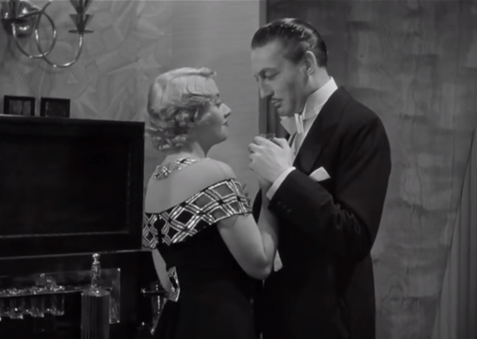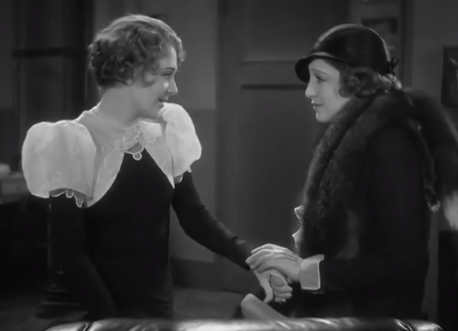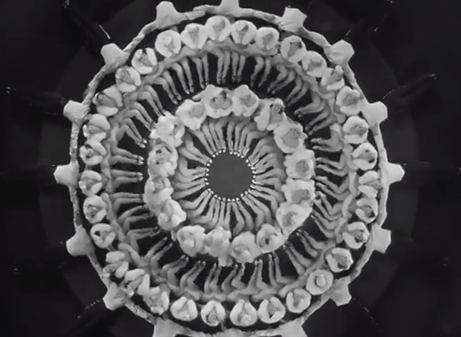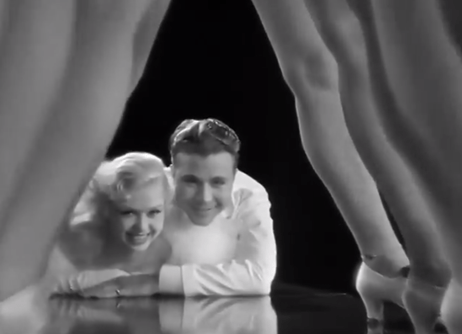
Blood and Sand (1941)

blood and sand 1.png

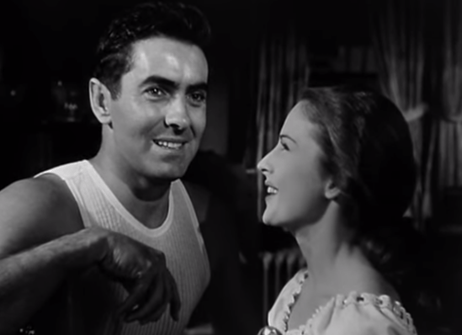
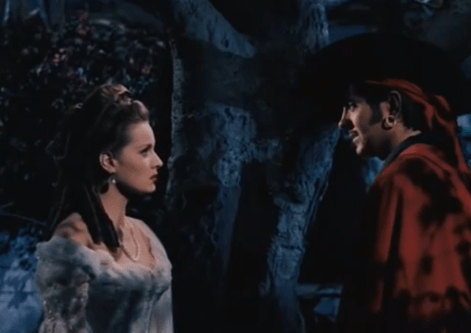
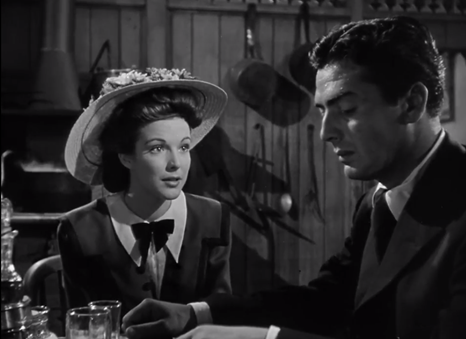
There’s little doubt Blood and Sand was a follow up to The Mark of Zorro (1940) meant to capitalize on the lucrative romantic pairing of devilishly handsome heartthrob Tyrone Power and winsome ingenue Linda Darnell. But what it sets out to do, it achieves through an ability to capture us in a joyously Hollywood confection. It pulls out all the stops to establish Spain for the moviegoing audience. Flamenca, guitar, castanets, swirling skirts, and sashaying ladies are all present bursting forth from the screen with multicolored gaiety and merriment.

The picture in straightforward fashion charters the rise of a young boy into a renowned matador with aims at commanding the grandest stage in all of Seville. Juan Gallardo (Power), buoyed by a tight-knit band of friends and propelled by lifelong ambition, is ultimately able to realize his dreams and to garner all the laurels lavished on the man of the hour.

Most important of all, he’s finally able to marry the girl whom he’s loved since childhood, the virginal beauty Carmen Espinosa (Darnell). She has dutifully waited for his triumphant return when he serenades her with a full band and presents her a wedding dress to pronounce his everlasting love. They’re young and deliriously happy.

While initially maligned as a fifth-rate talent, now the famed purveyor of public opinion, Natalio Curro, christens Gallardo the finest matador in all the land. Laird Cregar is more than capable as the pompous bullfighting critic who relishes the spotlight as well as his reputation as a tastemaker.

Likewise, everyone wants Juan to be the godfather of their child. He is in high demand and he catches everyone’s eye. Namely, the recently returned socialite Doña Sol des Muire (Rita Hayworth) coming from irrefutably high-class stock. She has her pick of the litter and she immediately becomes diverted by this dashing matador tossing him down a red rose in return for a couple tokens of his goodwill.

Meanwhile, Carmen remains faithful by his side praying every day he enters into the ring to do his work. She dotes on him with breakfast, reading the headlines about his finest hour, and remains his constant companion.  However, the allure of the “other woman” ensnares him and his fate is all but sealed. Just as he baits the bull, she soon has him reeling much the same. But the only real person to blame is himself.

His wife is betrayed in one heart-breaking confrontation, his finances are in disarray, his temper has alienated many of his closest allies, and his success in the ring has begun to falter. None of these plot developments are unforeseen. On the contrary, we expect them. As his mother reminds him, taking cues from the Biblical parables, “One can’t build on sand.” Because everything you worked so hard to erect will just as easily come tumbling down when the downpour hits.

It’s as much his own fault is it is the fickle masses who are so unforgiving. Pretty girls like Doña just as easily move on to a new toy, this time Juan’s lifelong rival Manolo (Anthony Quinn). And of course, Curro has been quick to pronounce the new man as the latest shining comet of the new season. He fails to add that comets burn brightly only to fizzle out in a nose dive. The tragic metaphor is a little too obvious.

But again, the picture is all spectacle and it’s ultimately bolstered by lavish costumes and the early shades of Technicolor offering a seminal example of 3-strip Hollywood opulence. Rouben Mamoulian’s artistry in mise en scene from his days with the stage are on display, played out to the nth degree. The screen and the stars are easy on the eyes. The director purportedly kept cans of spray paint on hand to touch up any necessary blasé patches with enhanced color. However he achieved it, Blood and Sand generally works.

True, bullfighting always seems like a barbarous pastime even as Hollywood can’t show that much. It does feel like a modernized incarnation of gladiatorial battles.  Just as the public is petty, it’s even a little difficult to feel sorry for our protagonist, though Linda Darnell, continually surrounded by Roman Catholic imagery, remains as the last vestige of saintly virtue.  She’s never been so pure.

The same cannot be said for Rita Hayworth in her secondary role, which in itself is a rather strange circumstance since she had yet to reach the heights of her later career and pictures like Gilda (1946). Tyrone Power could coast on his looks and charisma alone and he pretty much does.

3.5/5 Stars

Review: My Darling Clementine (1946)

my darling clementine 1.png

The first time I ever saw My Darling Clementine I couldn’t get over how unimpressive it seemed. If nothing else it certainly didn’t give off any self-aware sense of its own importance. There was nothing that struck me as outright epic and monumental. And yet this western has been a heralded favorite since its initial release in 1946. People love this movie. I think this time around I understand it better.

Maybe it’s all those reruns of the M*A*S*H classic “Movie Tonight.” Colonel Potter (Harry Morgan) eases the camp’s aggravations with a showing of his favorite horse opera which, of course, is My Darling Clementine.

But while the reels are spliced and diced for poor Klinger (Jamie Farr), the audience still gets something impactful out of the experience spilling out into their shenanigans together which makes for a quality evening. Because for once My Darling Clementine is a western with many moments that feel unextraordinary in the most human of terms.

Surely there was no greater and more prominent mythmaker of the Old West than John Ford. The key is in the realization Ford need not push anything, allowing everything to unwind in a way that’s the cinematic equivalent of organic action. The director goes with his proclivities of narrative scope, pairing down dialogue, focusing the story instead around activity — and those moments don’t necessarily have to be the perfectly suited sequences for instigating incendiary drama.

Ford’s actual meeting with the real Wyatt Earp on a film set back in the 1920s was a seminal moment for him. One could say he was imparted the blueprint and the inspiration for this picture and that is enough. Because the western never thrived on facts but the embodiment of romanticized figures and ideals. Wyatt Earp was such a figure.

Here Earp (Henry Fonda) is herding some cattle with his brothers when they pass by the town of Tombstone and leave the baby of the family to hold down the fort. In the most simplistic terms, their cattle get rustled and there’s little need to guess who the perpetrators are. The grizzled Old Man Clanton (Walter Brennan) is right there with his boys, a most obvious culprit. He needn’t even bother denying it. He never does nor does Earp ever accuse him outright.

Instead, Earp decides to stick around for a while and takes up the tin star for marshaling in Tombstone, that illustrious hell hole, emblematic of western lawlessness. Straightaway he shows a bullish tenacity in running drunks and troublemakers out of town but there’s still something more to him.

Ward Bond and Tim Holt act as his brothers and his constant companions. They don’t have a whole lot to do but stand behind their brother at the bar or eat their vittles at dinner tables. But then again, you could make the case most everyone has a fairly unostentatious part.

There is no standout performance and that seems very purposeful. Surely Fonda is the glue holding it all together but it’s not due to flare so much as an ever-steady portrayal that never feels like it’s vying for attention. He leads by example and yet this does not mean the film doesn’t have moments that leave an impression.

my darling clementine 2.png

Linda Darnell gives him a slap and he proceeds to dunk her handily in the watering trough for her part in a crooked poker game. She’s the devious, saucy, and unfortunately named Latina Chihuahua. There’s the introduction of her man Doc Holliday (Victor Mature) that clears the bar and would have ended in a gunfight in most any other picture. Wyatt Earp smooths things over allowing life to sink back into the status quo.

A local theater production evokes a particularly rowdy atmosphere where Fonda gets a hat thrown his way which he promptly tosses right back while Darnell looks to whop someone over the head. The locals are aiming to make their displeasure known to the actor who has run out on them on multiple occasions. Earp and Doc go to fetch the man who is being harried by the Clanton boys. In one of the most articulate and entrancing sequences in a western to date, we are treated to Hamlet on the range. You know the words but never have they come out of a man such as Doc Holliday — suggesting that there is a side of him even an amount of breeding that we fail to comprehend.

Finally, Clementine comes to town (Kathy Downs) and we begin to understand. She was Doc’s girl back east when he was still practicing and known in circles as Dr. John Holliday. He’s different now, plagued by illness and alcohol-fueled demons while emphatically wanting her to go back from whence she came. It’s Wyatt who stands by with all sincerity. Getting up, tipping hats, and opening doors for her. The peaceful countenance she wears coaxes him in the direction of the church bells and a dance social.

my darling clementine 3.png

We know what must come in the end. It’s all but inevitable: The Gunfight at the O.K. Corral. In all truth, My Darling Clementine’s shootout is not the most climactic and I could readily name numerous others I prefer. But in capturing it the way he has, Ford has remained true to the essence of the narrative thus far. What strikes me is it is by no means a sensationalized picture. It never even feels like drama or caters to the theatrical. But John Ford has made it cinematic and though it might sound like some form of paradox, I do not think it is.

We are acutely attuned to the moments with no music intuitively because there is little auditory manipulation or further distraction. Everything of import is derived from figures placed up against Monument Valley or staged in crisp interiors. Likewise, few words need to be put to any of it. Because we are fully aware, almost subconsciously. We have just seen a microcosm of the West being tamed and made livable for common folk. The old world is being undone and churches and schools now find a place in the new social order provided by men like Wyatt Earp — embodied by the likes of Clementine as the new schoolmarm. All of this is evoked not by dramatic shifts but a near meandering rhythm of scenes stacked one on top of another.

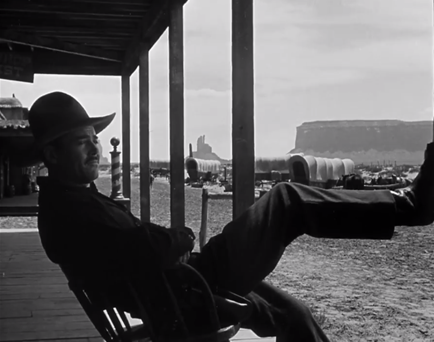
Again, we go back to the indelible image that everyone instantly conjures up of Henry Fonda with his feet propped up against the post leaning back and just resting his feet a spell. And of course, he’s our hero and the same man who will enact this change. But Ford makes him a laconic figure and one he seems content as anything just to relax.

He’d rather get a shave at the Bon Ton Tonsorial Parlor or carry the bags of a pretty gal than get into a gunfight any day. True, he can be ornery when he wants. Still, only as a last resort. Fonda’s the perfect man for the part because there’s nothing burnished about him but he comes off honestly with a straightforward sense of integrity. This allows My Darling Clementine to induce a generally optimistic portrait of the West from a picture that could have otherwise dwelled in the depths of near noirish cynicism.

However, even with its strains of the mundane — far from feeling prosaic — the film is blessed by Ford’s mastery of the image. Because what is Film if not a visual medium? The West was by far the most American canvass and Ford one of the finest masters of the art form. There need not be a better reason to relish My Darling Clementine. Aside from my expatiating, I would be amiss not to acknowledge this film as good old-fashioned communal entertainment. M*A*S*H 4077 is the case and point.

4.5/5 Stars

Note: I watched the Pre-Release cut which was restored by UCLA with slight differences from the theatrical release (arguably closer to what Ford originally intended).

Hangover Square (1945)

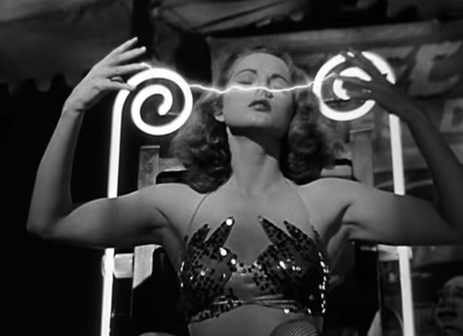
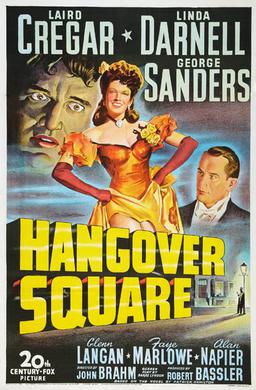
Hangover_Square.jpgWithout question, Hangover Square is in many respects analogous to The Lodger with the reteaming of director John Brahm with Laird Cregar and George Sanders. However, the biggest difference is that we have Cregar putting on on a new persona and losing over 100 pounds!

Among other things, it forced director John Brahm to shoot the production in sequence as to not completely decimate the continuity, based on the movies main protagonist. In fact, the actor initially turned down the part because of his aspirations to remake his image. Though he reconsidered when he saw the part could be played to his advantage and he turned Hangover Square into a superior vehicle.

If we want to break the movie down to its most incremental themes, it’s essentially about a man in Edwardian London torn apart by conflicting musical projects representing the two women in his life, who are effectively pulling him in opposite directions. He’s a mad genius whose personality disorder is completely torn asunder by the chafing in his life. It will only prove to be his undoing.

Like any good noir, there’s the femme fatale: Linda Darnell, hair puffed up in a bouffant, legs kicking gayly as she puts on her best English accent. She handily makes a coy nuisance of herself, cajoling him with her flittering eyelashes and then evolving into an icy heartbreaker on the turn of a dime when he no longer does her bidding.

Cregar gets walked all over as Veda sucks his talent dry for her own aspirations and the pursuit of a more dashing suitor who she vows to marry — even after making fragile promises to be his. She knows how to play him, if nothing else.

Barbara (Faye Marlowe) is the “Guardian Angel” who has everything including his best interest in mind. Her father (Alan Napier) has long been advising on Georges latest masterpiece — a Concierto that he has been laboring over for some time. She has been his astute pupil on the piano while also seeing right through not only Veda’s mediocrity as a performer but also her manipulative guise. There’s nothing sincere about her.

What we continuously see are reverberations of a Dr. Jekyll and Mr. Hyde tale. Here is a man of such musical receptivity able to craft pieces with such depth of feeling and yet there is another side of him — a side that strangles cats in his spare time and other things… Quite frankly his unaccounted behavior scares him and he goes to a Dr. Middleton (George Sanders) at Scotland Yard seeking some kind of aid.

It’s true that Hangover Square is a movie plagued by claustrophobic hysteria supplied not only by Cregar’s performance but the mise en scene as well. What we have is the artifice of gothic exterior-interiors with layers of ready-made atmospherics and foreboding scoring interjected with an instantaneous cacophony of chaos composed by the virtuoso artist Bernard Hermann.

One enduring moment is that of the burning effigy lit to high heaven on Guy Fawkes Day. It’s the quintessential image to capture the essence of our main character and the conflicted conflagration burning inside of him. Nero purportedly played his violin while Rome burned. George pounds away at the piano slavishly. But his story is a tragic tale of destructive genius that overtakes him. The final lingering images can’t help but leave an impression.

If Bogart sculpted psychopathic gangsters into hardbitten anti-heroes, later on, there’s a similar sense that Laird Cregar might have fashioned his menacing villains into conflicted but still heroic alternatives too. It’s mere conjecture and alas we will never know what could have been.

Two months before the picture was even released the actor would die from a heart attack, the ultimate tragedy brought on by his rapid weight loss. A fairly heavy man in most of his earlier roles, Cregar was committed to changing his physique in an effort to be leading man material. But, again, it was not in the stars.

While not a bona fide classic per se, Hangover Square remains as a chilly noir that’s not only a testament to Linda Darnell’s aptitude as a spellbinding black widow but to Cregar’s ability to make madness all but palpable. It’s a shame we lost him so suddenly because there’s no telling what heights his career might have reached. How true it is we very rarely appreciate someone’s talents until they are no longer available.

4/5 Stars


The Lodger (1944)

the lodger 2.png

“Love is very close to hate. Did you know that?” – Laird Cregar as Mr. Slade

Some perceptive viewers might well know that The Lodger is based off a novel by Marie Belloc Lowndes and it garnered a fairly high profile silent adaptation by Alfred Hitchcock followed by a sound version in 1932. Both pictures starred heartthrob Ivor Novello.

What the Hitchcock version boasts is his trademark eye for the visually cinematic even at this early juncture of his career. Still, the young director was a bit unsatisfied with a resolution that lacked the true punch of the original narrative. Honestly, he probably delivered the best thriller he could given the circumstances.

But with John Brahm’s rendition, this is as close to an uncompromised narrative as it can be while still meeting the requirements of the Hays Codes. What we have on our hands is a Jack The Ripper murderer who slits the throats of ladies all across England. And it’s not merely a bout of mistaken identity with Laird Cregar’s foreboding presence hanging over the picture moment by moment.

Merle Oberon, renowned for her immense beauty, did suffer some lacerations and scarring from a car accident in 1937. Her career continued unimpeded and in Lucien Ballard, she found a cinematographer she literally fell in love with. The reason being, he developed a lighting style — still called “The Obie” to this day — that completely hid her minor blemishes. As was the case with Minnelli and Garland, perhaps she fell in love more with the way he made her look than with the actual person. They would get divorced a few years later in 1949.

As far as her performance there’s little to criticize. She’s bright and beautiful as the dancehall singer, Kitty Langley, who lives with her aunt and uncle in the Whitechapel district. Admittedly she does seem a little well-to-do for her specific career path but no matter she’s quite the success.

Meanwhile, the ominous and rather taciturn gentleman Mr. Slade (Cregar) takes up residence in the Bontings’ home forewarning them about his nocturnal habits due to his research as well as his desire to be left alone as much as possible. Meanwhile, the rash of murders across the city continues and Scotland Yard has yet to apprehend the criminal.

An Inspector Warwick (Georges Sanders) comes to call on Ms. Langley as she was the last person to see Jack The Ripper’s latest victim alive — one washed up actress named Annie Rawley. In this way, our stars have been brought together but far more intriguing is the fact that such a foreboding character is staying right in their stead.

And it’s more than just a hunch that Mr. Slade might be the culprit. On top of his often erratic and suspect behavior, he’s obsessed with his genius-of-a-brother now deceased. He claims that beauty led to his sibling’s destruction and there’s little denying that he has some deep-rooted abhorrence for stage actresses.

So the inevitable must come. Everyone turns out for Kitty’s latest performance even the normally reclusive Slade and as he watches the show with its lavish costumes, provocative Cancan lines, and song and dance, we watch something begin to erupt.

What follows is the rest of a thrilling pandemonium-filled stage show that becomes a frenzy when it’s let out that the wanted lady killer is purportedly right in the very building. Cregar crazed and paranoid scrambles past sets and up into the rafters for a chance at escape. Ultimately he brandishes his knife for a desperate face off with the police force. In the end, he takes the path of least residence that nevertheless leaves an indelible impression.

Sanders and Oberon are fine talents, genial and all, but next to their supporting star they feel unremarkable. Of course, that comparison is already so unfairly weighted. Because Cregar is just that chilling. There’s little doubt that he captivates the screen and subsequently steals the picture in the final minutes. He’s the only reason you need to watch this one. If it means anything, the movie was a stirring success and it garnered a follow up in Hangover Square (1945) which might be even better. Cregars a showstopper in that one as well if you needed any indication.

3.5/5 Stars

It Happened Tomorrow (1944)

it happened tomorrow.png

Rene Clair makes no justifications for his flights of fancy and it’s true that the stuff is unabashedly whimsical to the zenith. He made a reputation for himself in his native France for his playful cinema and for the decade or so he was in Hollywood (1935-1945) he continued much in the same vein. Most people would say it came with lesser dividends though some of his more memorable offerings included I Married a Witch (1942) and this film, It Happened Tomorrow.

Again, it involves highly unconventional orchestration like he was all but accustomed to in his comedies. It’s nary for everyone. In fact, it probably relies too heavily on its nifty bit of novel storytelling involving a journalist who begins to receive the following day’s news in advance. He can predict the future and it proves advantageous for grabbing the scoop and betting on the horses among other trifles.

Subsequently, the film begins rolling out a red carpet full of tropes upon tropes. But no one can shame Clair for sticking to his own whimsical abstractions and if you do allow it to invade your space you might just find yourself taken with its jungle gym-like acrobatics through time.

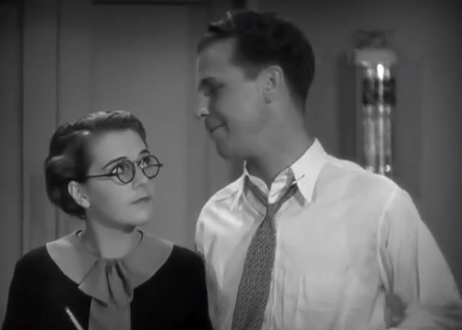
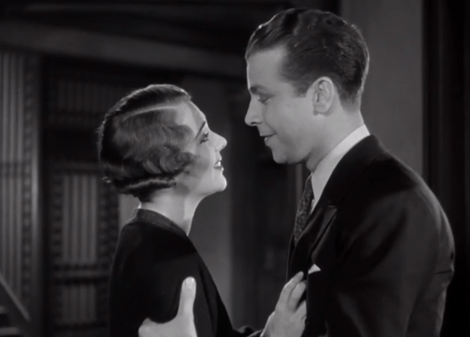
It starts 50 years ahead of our story with the golden anniversary of a couple talking about a small matter that happened years before. Then we fall back to the 1890s where Lawrence Stevens (Dick Powell) has the monotonous distinction of penning obituaries for the local paper before finally being promoted to reporter by his grouchy editor Mr. Gordon.

But then something far more miraculous happens. Lawrence doesn’t realize the implications at first when Pop, a veteran newspaperman with a near-saintly demeanor, becomes Lawrence’s guardian angel. To speak in known references, he might very well be this movie’s Clarence. His true gift is offering his young colleague the following day’s headlines.

They involve, of all things, updated classified adds, irregular snowfall and then an Opera House Robbery — offering the first moment of realization that Lawrence might have something extra special in his grasp. Simultaneously he becomes, enamored with the clairvoyant half of a niece (Linda Darnell) and uncle fortune telling duo.

Not until reading a little further into Linda Darnell’s history did I realize just how young when she made it big in Hollywood. Like her finest efforts, she dazzles with that bright-eyed concern next to Dick Powell. Though he would begin the redefinition of his career shortly with his introduction as Philip Marlowe and upcoming hardboiled fare, there’s still time for something light. He carries it with his usual assured comic energy as the headlines continually drive him into action.

One night he’s saving a girl from jumping off a bridge — his own girl in fact — to make a prophecy come true and then the next morning he’s tipping off the suspicious police chief on where to capture some wanted bank robbers.

Lawrence is now the talk of the town and the go-to writer for the paper with his uncanny nose for news. Soon he’s asking for Sylvia’s hand in marriage though a momentous misunderstanding leads her uncle to insist on a shotgun arrangement. If that’s the case he gladly takes the poison. But to bankroll their happy future together he bets on sure thing after sure thing at the racetrack. After all, he can’t lose. Or can he?

If you could know when you were going to die would you know or is ignorance really bliss? The movie begins its downward spiral after Lawrence’s winnings are swiped and it is foretold that he will die the same day in a hotel at 6:25pm on the dot.

Flimsy physical comedy takes over as we plummet toward the inevitable despite Lawrence’s vehement attempts to derail fate. He still winds up in the lobby of the St. George Hotel, within the very confines where he is destined to be gunned down. Like clockwork, everything unspools toward that exact end. The most exasperating thing is he saw it all coming and could do nothing to stop it.

But with a knowing wink, Clair flips the conceit on its head and that’s the story’s flash of momentary brilliance because we see as the narrative gets back around how things can work out in such a convoluted but somehow logical fashion. The paper reads: Lawrence Stevens is Dead. Of course, we know he’s alive. But the movie manages to make the headline ring true. You can have your cake and eat it too.

3/5 Stars

God’s Little Acre (1958)

God's little acre 1.png

If there was an atypical even offbeat Anthony Mann picture, then God’s Little Acre would probably fit the bill. Based on the wildly popular and vehemently decried Depression-era work of the same name by Erskine Caldwell, it essentially serves as a second outing for much of the cast and crew involved with a picture from the year prior, Men in War (1957).

We have Mann reteamed with his favorite, Robert Ryan, and young Aldo Ray. Then, most prominently, we have cinematographer Ernest Haller and composer Elmer Bernstein returning. Even Phillip Yordan once more fronts for blacklisted Ben Maddow. And yet the actual results are oil and water.

The opening notes of a folksy title ballad sound off, seemingly more at home in a live-action Disney classic than a mainstream drama such as this. In truth, it’s an outmoded brand of melodrama. We just cannot hope to look at the pedigree the same way with its southern gothic and a hint of hillbilly.

That’s right. It’s part Jed Clampett, the other section Tennessee Williams, edgy and sweaty as any 50s film at its height. But what leaves an impression is not only the raciness for the day but the unadulterated playfulness. This is real Georgia down-home entertainment and it benefits from these qualities.

Ty Ty Walden (Ryan) is a slightly scatterbrained matriarch, who resolutely believes that his daddy left behind gold on their property. He’s hellbent on getting him a piece of the wealth and he’s pursued his aspirations by leaving his family acreage dotted with holes.

God's little acre 3.png

He’s dragged his two sons into it too (Jack Lord and Vic Morrow), who are both a bit neurotic in their own right. The jealous Buck is constantly at the throat of his ravishing bride Griselda (Tina Louise in a sweltering debut) believing she still has the hots for their brother-in-law Will Thompson (Aldo Ray), a man married to the eldest Walden gal (Helen Westcott). He’s not altogether wrong but he’s not helping the situation any either. Then there’s Shaw. He just repeats everything his older brother says. They’re not the sharpest tools in the shed. They take after their father.

Meanwhile, their youngest sister, the bodacious southern belle Darlin’ Jill, is quite the looker herself. Buddy Hackett is just about the same as we remember him in all his pictures. That voice. That blubbering. That rotund lovable girth. His character, the aptly named Pluto, comes looking to court Darlin’ Jill who strings him alone as is expected.

Otherwise, the cast also features a criminally underused Rex Ingram as a farmhand and Michael Landon in a thoroughly unique role as an albino. Though only a minor player, he proves a crucial component of the plot since Ty Ty is convinced that albinos have an impeccable radar for gold and he pressgangs the boy to use his remarkable abilities. The beauty is that no one seems to outrightly question such a notion. They just move along like normal. In the meantime, Darlin’ Jill has fun tantalizing her rotund suitor and making eyes at the intriguingly pale Dave Dawson.

The latter half of the story follows lusty looks and passionate clenches as forbidden love is rekindled between Will and Griselda. It seems like just about everyone is being pawed over by everybody else. Tremors are going through the household with Ty Ty putting it upon himself to bring his family together and keep them on amicable terms. It’s not such an easy task with so much dysfunction at hand.

Will’s wife is beside herself as her man gets drunk and has some vague notion of turning the power at the old plant on so work can commence again for all the impoverished locals. But Ty Ty’s also in a scrape for cash and relationships have only deteriorated into fiery hell between Buck and Will — a woman still caught between them.

What are the main takeaways from the picture? It’s a rather incredulous piece that’s provocative and dull and maladjusted all at the same time. Ryan once more shows his capability at ably anchoring an entire film. However, all I could think of was the fact that if God’s Little Acre had been a bit more conventional and garnered a few more accolades for hard-hitting drama, we might be remembering Tina Louise as a cinematic sex symbol instead of a “Movie Star” from Gilligan’s Island. Maybe some movies get buried serendipitously.

3/5 Stars


Men in War (1957)

men in war 1.png

“Tell me the story of the foot soldier and I’ll tell you the story of all wars.”

The date might seem arbitrary but we are told that this story takes place over the course of one day: Sept 6, 1950. Robert Ryan might as well be the stand-in for a Bill Mauldin G.I. as he leads a battalion cut off and deep in enemy territory. He’s got the 5 o’clock shadow and most other prerequisites. There’s a sense that he’s just trying to live through the day and keep his men alive for as long as possible — hopefully to see their way back home or at least to their brethren on the other side of the next hill.

But in order to get there, they must survive a line of snipers, a hailstorm of enemy artillery, and terrain laced with mines. If I had never seen The Steel Helmet (1951), Men in War would easily become one of the most crucial war movies for me. Because it dares to tell a narrative of war that rings fiercely resonant not simply because of cynicism or even pure authenticity. It has to do with a story stripped down to its bare essentials. Men in War is just that. It comes down to the semantics of what you think that actually means. But for the average soldier, it’s a moment by moment struggle to survive. It’s not about heroics at all. Instead, it entails methodical and level-headed action in the face of constant stressors verging on the absurd.

Though Hollywood might have suggested otherwise on various occasions, war was never about the glut of combat. It’s always lean and mean — proving to be disillusioning even to the victors and far more so to those who must stand defeated or draw a truce.

The best way I can find to describe this particular experience is through the influence of negative space. Because Mann’s film, in showing us less manages to evoke the exact inverse, suggesting what is not shown to be as vitally important as what is left in the frame. Far from lowering the tension, it only succeeds in making it all the more unnerving. There’s an ongoing sense of isolation and the enemy is left all but unseen.

Then, in a single moment, we realize they’re as afraid of us as we are of them. Actually, the adversary is only shown on a couple of brief occasions, most visibly with a surrendering Korean Soldier (played by Bonanza support Victor Sen Yung).

Aldo Ray is a soldier at his most cynical and insubordinate. The only thing more exasperating about him for Ryan is the fact that in most cases he’s right and more important still, he’s too ornery to be knocked off. But it’s almost odd how fiercely loyal he is the catatonic colonel (Robert Keith) who made it away from the lines with him.

James Edwards offers another obvious link to Fuller’s Korean War picture while serving up his usual foray in minor though intelligent portrayals of African-American soldiers. Men in War is devastating in how unsentimental and unsensational it is. The scenes with machine guns, flamethrowers, bazooka, and grenades feel palpably real. These are not infallible killing machines. Just men who are doing their best to stay alive and fight another day. Again, it’s about mere survival.

Here we have Mann’s earlier explorations in noir more fully externalized with a sense of psychological torment made visible in an environment of continuous unease. The action is taken outdoors while maintaining what we might call even an intimate interaction with its characters if it weren’t so harrowing. It’s likewise an extension of the director’s Western landscapes, though the palette is muted, it consequently plays a crucial role in shaping the drama as Mann usually takes particular care with his atmosphere.

Phillip Yordan’s involvement, whether the true author or only a frontman, might be slightly up for debate but what’s not is the fact that the script keeps the action clean and unfettered by strains of patriotism or similar endeavors. Elmer Bernstein, best remembered for his western scores of resplendent glory, nevertheless, delivers a piece with the right amount of understatement to compliment such a picture as this.

Again, Men in War is unassuming, even unspectacular, but that’s what makes it all the more deserving of discovery. By going against the grain with a few similarly formidable titles, it gave us a far more mystifying portrait of The Korean War. Because reconciling with that conflict is far from a straightforward task — as it is with most any war.

3.5/5 Stars

Man of the West (1958)

220px-Motw1958The proverbial stranger rides into town looking for a place to wash up and grab a bite to eat. We get the sense he might be sticking around. Except, soon enough, he turns right back around and buys a ticket on the first train out of town. Because he has business to attend to.

The train gets ambushed but subverts expectations again by evading the bandits in time; one of the outlaws gets winged as the rest ride off to live another day. The only people left are three travelers thrown together by circumstance. We have reformed gunman Link Jones (Gary Cooper), the incessant chatterbox Sam Beasley (Arthur OConnell), and saloon songstress Billie Ellis (Julie London).

They must make it by foot and find some way to subsist off the land. But it’s precisely this predicament that causes our protagonist to fully revisit his past in the most direct way possible.

We get some hint of it the way a man at the train station looks him over and asks if they’ve ever met before. We receive our confirmation when he walks into an old cabin only to be confronted with the same outlaws who held up the train. Their leader, a veteran rogue named Dock Tobin (Lee J. Cobb), walks in and so begins the family reunion.

This used to be the place Jones called home working under his uncle and training to be a killer and a thief. He gave up that life long ago. But now he’s back out of necessity pretending he sought out his uncle purposefully. Meanwhile, the old man bemoans the fact nothing has been the same since Link left.

Lee J. Cobb, God bless him, is poorly cast. He is probably too young in spite of the makeup job. Just as Coop is slightly too old, in the final stages of his illustrious career, to be playing such a character. And yet with those minor qualms aside, their performances in most other aspects could not be better. Because they both remain fine talents who elevate the picture.

The cronies are played by a scruffy gun-crazed Jack Lord with Royal Dano as a mute sidekick, and prolific television actor John Dehner as Link’s cousin who warns him he should have never come back. London is our lone female character and her position is perfectly encapsulated by a single line, “Every man thinks he has the right to put their hands on me. All those lonely people looking for some special thrill.”

The prominence of the mise en scene becomes strikingly evident first in the interiors of the cabin in one particular sequence when a knife is held to Link’s throat as his girl is forced to undress. Then, the outdoor scenes are interspersed with close-ups bursting with color set against the backdrop of the prairie at large with deep blue skies. No more boldly then when Cooper and Lord go at each other’s throats and he returns the favor to the sniveling thug by stripping off his clothes as they both flail around bruised and bloodied.

Dock’s ultimate job to rob the bank in Lassoo is our obvious objective and Link agrees to be the one to ride in first to case the area. But imagine our surprise when the town and its bank turns out to be nothing more than an abandoned outpost with next to nothing to suggest civilization. In our heart of hearts, we knew this was never about a bank robbery or the heist. It’s no mistake the opening attempt is botched and the final outing is a far cry from what was expected. Lassoo is a bank robber’s Mecca that never existed. Maybe in the old days but alas not anymore.

Both these outcomes allow the action to be funneled right back to our characters. Because it is the events in question rousing our hero to act, even if it is against his wishes. To put people in danger and resort to violence become necessary choices. It leads to a resoundingly well-executed shootout on par with the best of the genre, both stylish and jolted with trademark tension from Mann. An obvious precursor to some of Leone’s finest rendered gunfights.

But once more, like The Far Country (1954), the western has been rewritten yet again to dwell in the dirt and the dust of the noonday sun. Violence is only an outcropping of some psychological turmoil that must be dealt with and met with some form of resolution.

What becomes crystal clear with Man of the West is how isolating the frontier is as an entity. Though we start in a big city, aboard trains, and look to end in what’s purported to be a bustling bank town, we are slowly diverted away from those spaces.

The film plays out with a small band of figures caught in interplay fraught with an undercurrent of volatility. The fact there are fewer people only seems to magnify this conflict. Because it is man-to-man they must face each other. There’s little white noise or distraction and Mann has staged everything so it’s clear and boldly laid out before us.

Certainly, if it’s about a handful of characters then at its core is a protagonist who must grapple with something crucial to this entire narrative of regression and decay. Where a man must resort to his old ways — dive back into the hell fury of his past — only to come out on the other side of the maelstrom to prove to himself he is no longer that man. In one sense, it’s playing with fire but it’s also a story that calls for a secondary redemption.

Cooper proves himself in the Town of Good Hope, a town we will never see and a town that acts more like an idea than a tangible place. Lassoo is very much the same — this ghost town that manifests itself as an open-air graveyard — an arena for our climactic showdown. They are points of departure imbued with thematic meaning just as the rundown homestead Jones used to frequent represents a part of his old life. He must throw them off once and for all.

Thus, the final wagon ride off into the wild blue yonder is not just a pretty picture. Yes, Anthony Mann has demonstrated a mastery for capturing the scope of the West here yet again but moreover, his hero is riding back toward the straight and narrow leading to redemption. He has seen the other side and comes back out a man of integrity again.

Whereas High Noon (1952) is a picture easy to admire and enjoy thoroughly straight away, Man of The West is arguably no less brilliant, especially rewarding for those who linger over it. Though strained relations meant James Stewart lost out on working with Anthony Mann again, there’s little doubt Gary Cooper was one of the great western heroes and it’s providential he was furnished this opportunity to ride tall in the saddle once more.

4/5 Stars

The Tin Star (1957)

the tin star 1.png

You can master a gun if you have the knack. Harder to learn men.” ~ Henry Fonda as Morgan Hickman

A veteran bounty hunter rides into town with a corpse slung over the rear of his horse and gets the whole town gawking. They don’t quite fancy this entrance because they’re about law and order in these parts. Paid guns have no place in the western utopia that they have envisioned.

Obviously, no one in town wants to house such a reprobate and he has no place to bed down his horse at the livery stable either. Finally, he finds room and board with the only folks who have enough congeniality to welcome in a man like him. Because in one sense they are ostracized too, living on the outskirts of town as local pariahs. The single mother Nona (Betsy Palmer) gets by doing needlework in the evenings and trying to keep her son out of mischief. He’s half-Indian. Hence the reason no one wants anything to do with them.

But in this man who seems little more than a hardened killer, they find someone genuine and compassionate when you get to know him. Though initially surprised by the boy’s paternity his kindness doesn’t slacken admitting only that many others grow up hating Indians. They are preached as much by their parents and take it to heart so they can’t hardly change their ways. It’s unfortunate.

I’m not sure if I dare use the term “revisionist western” lest viewers get the wrong idea but seeing of all people gun shy Anthony Perkins as sheriff over a town you realize that something is gravely different with the film’s character types — at least this crucial one. His skittish nature is perfectly-suited along with his boyish looks because, as he soon learns, being a sheriff is not only about what you do but how you look doing it. Being smart, working your mind, and projecting a certain image.

At first, Ben Owens (Perkins) is like everyone else. He sees Hickman only at face value. But soon he gathers there is much to glean from this veteran who is handy with a gun and holds a wealth of knowledge. Most impressively he’s lived long enough to talk about it and that means he must be a pretty smart fellow. He’s become well-versed in human nature.

He looks at Owens, a young gun beholden to the duty thrust upon him, and he sees a dead man walking. He’s not going to last long. Hickman knows it. Ben’s girl (Mary Webster) knows it. Perhaps deep down Ben knows it too.

Finally, he asks the bounty hunter to be his mentor and reluctantly Morg agrees to it because his pupil still has his training wheels on as it were. He’s not ready to stand down the town or confront a hulking heavy like the local bad boy named Bogardus (Neville Brand).

One of the film’s finest creations is the local Doctor Joseph McCord (John McIntyre) who not only pulled strings to get Mrs. Mayfield work but he is keen to play matchmaker with two of the fast-growing babies he brought into the world. Indeed he is well-liked by all on every side.

Mann pulls another stunt, not unlike the one in The Far Country (1954) with the Doc making a grand entry with his horse into town to much fanfare on his birthday. It’s one of the film’s most indelible sequences.

A pair of half-breed brothers are also on the lamb and wanted for a couple of crimes. Bogardus gathers a mob of his own to go after them. But begrudgingly following the advice of Morg who has remained hands-off, the Sheriff decides to track them alone.

Morg lingers behind and ultimately ends up being the one who smokes them out without any bloodshed. He delivers the McGaffey Brothers (including Lee Van Cleef) over to the Sheriff so that justice can be implemented first in the jailhouse then in the courtroom.

But that is just the beginning. The final act takes on an uncanny turn toward a High Noon-like allegory. One man faced with a major opposition and yet resisting to back down. But whether or not that motif is McCarthyism incarnate or not, Mann’s handling of the sequence is arresting.

He sets up the action in such a way that we are standing behind Perkins peeking past his solitary frame. He’s unimposing and spindly standing there on the jail steps with his shotgun but he is a better man than me. The question he must grapple with is where the line between a good man and a dead one exists. Sheriffing is a nervewracking business and most men die young in such an occupation. Mann makes us comprehend exactly why that is.

And yet, in the end, it’s all for naught as the picture collapses too easily lacking that typical hard-edged savagery of Mann’s other pictures with James Stewart. While Dudley Nichol’s high-minded script might be quality stuff for a minor picture, it’s not necessarily the script best-suited for Mann.

He was never one for moralizing. In fact, his best films about isolation or outsiders never seemed to make a point of a racial divide or any other societal issues. It felt like they were very much implicit in the story at hand. They never were didactic instead choosing to viscerally speak to us delivering any themes through mere osmosis.

By no means does that downplay the fine chemistry between Henry Fonda or Anthony Perkins both seemingly impeccably cast. However, The Tin Star is a picture that could have been even more resonant.

3.5/5 Stars

Help! (1965)

Helponesheet.jpgWhat can I say? I am one of the proud and the many who loved The Beatles before they loved any other type of music. So when I watch Help! I look for all the best in it because that’s all that I can do.

However, if you are familiar with this follow-up to the frenzy and the success surrounding A Hard Day’s Night (1964), then that picture will feel like a serendipitous accident where everything came together for 90 minutes of magic. Help! is more of what one might actually expect from distributors trying to capitalize on The Beatles fandom before “the fad” ran its course. It’s less inspired and hammered out with what seems like little forethought at all. Because that’s what it was. Except previously a better job was done to fake it.

Though a quality filmmaker, Richard Lester was hampered by time constraints even going so far as to edit his daily footage while he was making the film. The ending results showcase a purposely disjointed narrative with a ludicrous script following a Far Eastern cult’s attempts to swipe Ringo’s prize ring for their human sacrifice. There’s not much more to it than that. It would prove ample fodder for many an episode of The Monkees which made no qualms about being a Beatles knockoff.

The rumor mill even provides accounts that the Fab Four were to have made a western picture with the lads all fighting for the affection of a rancher’s eligible young daughter. Maybe it’s the novelty of an idea never realized but I would have liked to see that picture in lieu of this one. However, we must content ourselves which what we have.

Stacked up against some of its more forgettable contemporary spoofs and scatterbrain comedies, Help! could have done a worse job blending the exoticism of Bond with its attempts at comedy. There are numerous Eastern influences and if anything the film facilitated Harrison’s introduction to the sitar. We even hear a version of “Hard Day’s Night” on the Indian instrument.

Otherwise, the boy’s flat is decked with Tati-like contraptions and coloring that evoke the Frenchmen’s work in Mon Oncle (1958). The lines of disparate gags owe a debt to Peter Sellers (especially The Goon Show) and act as a less inspired precursor to Monty Python’s Flying Circus.

These are the only reference points I can manage and yet this suggests that Help! might have been so much more. Instead, fueled by their new infatuation for marijuana, the boys are in a bit of a garbled haze and it reflects the mess of the film full of flubbed lines and absurd non-sequiturs.

Nevertheless one could argue that much of it feels akin to the world The Beatles were finding themselves adrift in. Their fame had blown up to outrageous proportions that were almost laughable. It would make someone go batty. Perhaps they needed a trip to the Alps and the Bahamas, play acting with tigers and then tanks on the Salsbury Plains. For a few stray moments, they were not a commodity. They could muck about and be themselves.

That gets down to one of the primary takeaways. We still have The Beatles. True, John Lennon later commented that it felt like the boys were sideshow attractions in their own movie. I get the sentiment but I would disagree it in the sense that I’m hardly drawn to any of the other characters. There’s little interest in their antics because I’ve seen countless more inspired takes on the same material.

But we have Richard Lester directing The Beatles’ music so we have something iconic to grab ahold of. It’s not a total loss. What you gain an appreciation for, especially in this effort, is how Lester has almost single-handedly invented the language of the music video whether he meant to or not. At its best that’s what this manic comedy is — an early exhibition in the music video — using spliced together standalone sequences showcasing the boys in various situations most memorably attempting to ski or playing curling.

“Ticket to Ride” in the snow, “I Need You” out in the brisk British air, and “Another Girl” shot in the Bahamas are able to bottle just a little bit of The Beatles because it’s their music that stands the test of time meshed with those playful personas.

While it’s momentarily amusing for flashes of humor and memorable for the unparalleled tunes, in many ways, it pales in comparison to its predecessors.  It lacks the perfect docudrama zaniness of A Hard Day’s Night (1964) and the pure animated invention of Yellow Submarine (1968). Instead, Help! slates itself as an often shallow even dopey picture.  But, I’ll say it again. We still have The Beatles. Surely that is enough for most of us.

3/5 Stars