

“IT is that quality possessed by some which draws all others with its magnetic force. With ‘It’ you win all men if you are a woman and all women if you are a man. ‘It’ can be a quality of the mind as well as a physical attraction.” ~ Elinor Glyn
I was always under the impression that the “It Girl“ was a concept that came out of this movie but little did I realize it was literally built into the very construct of the storyline. But that deserves a bit of elaboration.
There are really three figures of note in It (1927). We meet the bumbling playboy Monty first as he ushers in his buddy’s first day of managing a department store with some good luck flowers. He bums around for a moment before happening upon an article by columnist Elinor Glyn and immediately he is taken with this idea of “IT.” He tells his friend that they need to find girls with that very same quality.
It’s a rather staid and antiquated concept when you actually consider its implications. Men ogling women trying to pinpoint this elusive quality or trait that seems far more based on physical features and outward appearance than anything else. And all the pretty maids all lined up in a row welcome the attention from the two well-to-do bachelors. Though it’s important to note “It” can apply to men as well.
Still, perhaps regrettably the term has remained prevalent to label women and still maybe it’s morphed for the better into the calling card of anyone who has ever burst onto the center stage and become the next big thing. However, you could argue that said person becomes a bit of a commodity or a fad for the media.
Still, Clara Bow in her own right was indubitably an icon and it went beyond a gimmick or a plot device. In many peoples’ eyes, especially in hindsight, she represents the free-spirit and joy of The Roaring Twenties as one of the foremost sex symbols of that generation.
You get that sense of the eponymous “It” that goes beyond her so-called sex appeal. It’s that genuine winning charm when she peeks in on her friend’s baby and begins cracking him up with a barrage of funny faces. “It” is when she’s snipping away at her dress to get ready for a night of fine dining at the Ritz because that one dress is all she has to work with. It’s frowning when she’s trying to order off an elegant international dinner menu. Yes, it’s even playfully sliding up onto the bosses desk or posing on a yacht to try and win her man back.
But we also cheer for her because she cares about those who are down and out and maintains a certain level of moral restraint. In other words, she has boundaries and standards set up. She’s not about to let a man just have his way on the first date. She’s a take-charge kind of gal but also a proponent of traditional values. Women in the home and taking care of children. Though she shares some of the striking features of Louise Brooks, the makeup of their characters are very different — not to mention their hairstyles.
This silent romantic comedy like so many others in the storied tradition is made of moments of miscommunication. But Betty (Bow) is not about to let miscommunication get in her way. A pair of colliding boats leaves a soaking wet Clara Bow just waiting to be rescued right after she saves her fellow castaway. Not even the long-held blonde versus brunette conundrum can get in the way. In the end, there’s nothing quite so romantic as clinging to an anchor soaking wet with the love of your life.
Though not the same type of comedy, It (1927) is a rom-com that has some similar set pieces to Harold Lloyd’s pictures. Namely the fact that its protagonist is a sales clerk like Safety Last! and there’s an excursion to Coney Island rather like Speedy. By today’s standards, IT might seem like a mere trifle but there’s no denying the unquestionable impact of Clara Bow and the influence she still holds on our cultural lexicon even today.
3.5/5 Stars
 It looks like we’re staring into a black hole. Disorienting. Dark. Swirling around us. Our eyes adjust as our narrator begins his voiceover that will cover the majority of the film’s canvas. In this moment he talks about that initial spark, that moment of birth when humans leave the womb behind and see the light of day for the first time. In that same instance, we burst into the open air and realize that what we were looking at all along was the long dark tunnel from a moving train.
 “My father thanks you, My Mother Thanks you, My Sister Thanks you, and I Thank you.” – James Cagney as George M. Cohan
 I wrote an
 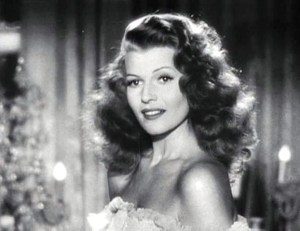 If you’re worried about Johnny Farrell, don’t be. I hate him~Gilda
 The rain is pouring down. A group of men sits in silence in truck cabs their heads full of all sorts of thoughts. Two more sit in the rear hoping the explosives sitting in their stead don’t decide to go Kablooie over the next bump. Nary a word is spoken, the entire sequence playing out in silence except for the inner monologues of each man.
 In the 1970s political paranoia involved issues in the realm of Watergate. Government conspiracy and that type of thing perfectly embodied by some of Alan Pakula’s best films. But it’s important to realize in order to better understand this particular thriller, the 1980s were a decade fraught with fears of Soviet infiltration compromising our national security. The Cold War was still a part of the public consciousness even after being a part of life for such a long time already. So No Way Out has a bit of Pakula’s apprehension in government and maybe even a bit of the showmanship of Psycho with some truly jarring twists.
 Are you always drawn to the loveless and unfriended? ~ Edward Rochester
 In an animation market saturated by the likes of Disney, Pixar, and Dreamworks, those that have become some of the foremost names of the latest wave of animation, we sometimes forget that there are other voices as well. Song of the Sea is one of those alternative stories that is ripe for discovery.


