 Previously, whenever I thought of Elvis and films, my first inclination was to think musical and then secondly because, by some form of osmosis the culture had taught me this, Elvis went with Ann-Margret. In truth, they were astoundingly only ever in this one picture together but what a picture for them to be in. It left an indelible impact on both stars as much as it did their audience.
Sure, it’s at times utterly laughable, light, and saccharine with gaudy color schemes that make Las Vegas the flashiest spectacle known to man (which it might actually conceivably be), but there’s something still so winsome about it.
The story is one of those contrived Hollywood love stories that we know the rhythms of before they have begun. Boy meets girl. Boy becomes infatuated with girl. Girl keeps him at arm’s length. Girl begins to fall for him. Girl gets turned off because of some trivial misunderstanding. In the end, girl gets boy or vice versa. Whichever you prefer because either way it still proves a formulaic picture.
But gosh darn it, Viva Las Vegas has a vibrant energy that probably makes every man, woman, and child wish they could go back to that era, especially all those rock ‘n rollers and beboppers who grew up with Elvis for breakfast, lunch, and dinner.
There’s no doubt that he had a magnetic charisma that went beyond a voice or a look but the very way he shimmies, snaps, and shakes his way into the heart of every gal. However, the real vivacity of the picture comes from the same kinetic friskiness that seems to charge through Ann-Margret as well. Because in most any given equation Elvis Presley is bar none going to be your dominating force commanding the screen as the indisputable Elvis the Pelvis, the King of Rock and Roll. But put him up against Ann-Margret and they tease and prod each other this way and that — the perfect romantic counterpoints.
It’s as if they both have a sense of the game that they are playing — the back and forth — the one-upmanship and playful toying that gives the story a hint of sensuality while still maintaining that squeaky clean sensibility allowing a picture like this to remain more charming than most films we are introduced to today.
And when it’s all said and done, aside from the title track which will undoubtedly be most familiar and exhilarating for audience members in its numerous refrains, there are quite a few truly dynamic sequences that go beyond tedious asides in a musical love story.
They reflect how Hollywood seemed to understand the collective power that musicals could have. Director George Sidney is not necessarily a noted name of great repute but if you look down the list of his directing catalog you see many a diverting musical (ie. Annie Get Your Gun, Kiss Me Kate, Bye Bye Birdie, and a whole slew of others).
With Viva Las Vegas it’s easy to acknowledge that he has a knack for the spectacle that remains light and amusing to the end including the notable Ray Charles tune “What’d I Say” played out on a giant roulette wheel, our leads making eyes at each other, surrounded by a crowd of fellow shimmy and shakers. But also the hip swinging, finger-snapping crowd pleaser “C’mon Everybody” that puts our stars on full display. They even end up making the smaller trifles like “The Lady Loves Me” and “If You Think I Don’t Need You” more than a complete drag.
To top it all off, far from being corny, the final Grand Prix sequence is actually quite marvelous as the cars speed through the desert past Hoover Dam and we see Lucky win out against his good-natured rival. The film truly does benefit from the on location shooting only topped by the breezy chemistry of its leads. More than The Rat Pack or Bond, this film gives me at least an iota of desire to visit Las Vegas. Although that might simply be the fact that Elvis and Ann-Margret, in particular, imbue the lifestyle with so much verve. Anyways there are no qualms in proclaiming, Viva Las Vegas!
3.5/5 Stars
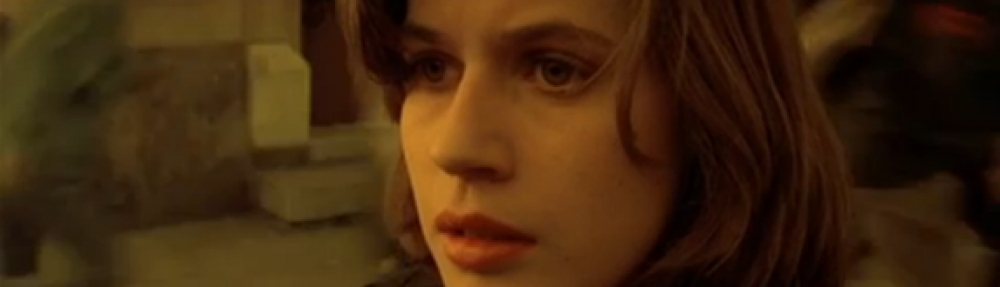
 It’s my prerogative to respect films that dare to leave me questioning their ambitions and their outcomes. Clouds of Sils Maria is such a film. At times it gets so caught up in its own meta-narrative perhaps too much so.
 It’s happened in some well-documented cases that the same actor has played two characters that feel nominally similar and based on this cursory level of comparison the general public has been forever befuddled. You could cite some notable examples being Bogart playing Sam Spade and Phillip Marlowe the archetypal pulp private eye heroes of Dashiell Hammett and Raymond Chandler.
 Anyone who takes the time to search out this movie whether the reason is a young Jack Nicholson who wrote, helped finance, and starred in this western or because it’s directed by cult favorite Monte Hellman, they probably already know it was shot consecutively with The Shooting. Whereas the first western has an unnerving existential tilt as the plot takes us through an endless journey across the oppressive desert plains, you could make the claim that Ride in the Whirlwind is a more conventional western.
 Crime films, westerns, and horror. It’s easy to see why these genres make arguably the best B-pictures, all things considered. It lies in their ability to deliver thrills with minimal capital and a bit of inspiration. Film Noir is by far my favorite but a film such as The Shooting makes me love shoestring westerns too. Except that’s just an initial gut reaction. What happens over the course of this film truly plays with our preconceptions. Its ambitions being rather curious.
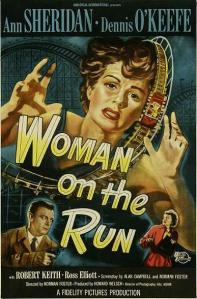 B-films have little time to waste and this one jumps right into the action. In a matter of moments, a man is shot, another man has killed him and a third witness gets away into the night. Although Frank Johnson (Ross Elliot) is rounded up by the police to be a witness he gives them the slip for an undisclosed reason and they must spend every waking hour trying to track him down.

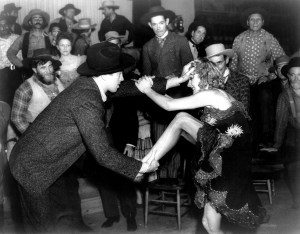 Destry Rides Again is integral to the tradition of comedy westerns–a storied lineage that includes the likes of Way Out West, Blazing Saddles, and Support Your Local Sheriff. It takes a bit of the long maintained western lore and gives it a screwy comic twist courtesy of classic Hollywood.
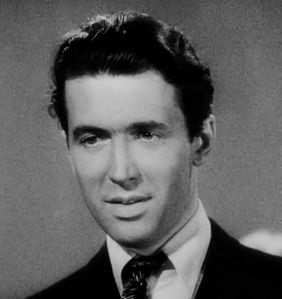 The opening credits roll and recognition comes with each name that pops on the screen. Jean Arthur, James Stewart, Claude Rains, Edward Arnold, Guy Kibbee, Thomas Mitchell, Eugene Palette, Beulah Bondi, H.B. Warner, Harry Carey, Porter Hall, Charles Lane, William Demarest, Jack Carson, and of course, Frank Capra himself.
