1930s Screwball: Love is News, Double Wedding, Young in Heart

I normally try to focus on a theme to better curate my viewing. This post will encapsulate 3 films whose primary players don’t have much in common. However, if you wanted a loose point of connection, all three are comedies from 1937-38.

It all happened when I was on the lookout for some underrated screwball comedies and though some of them are more innately screwball, I was pleasantly surprised by what they had to offer. If you haven’t seen them already, consider this a hearty recommendation to check out some underrated films:

Love is News

Love is News (1937):

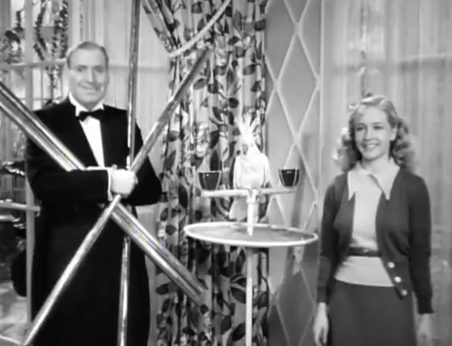
Although it traverses the same worlds of pictures like The Front Page, Platinum Blonde, and Libeled Lady, there’s something rather lustrous about getting Tyrone Power in his first headlining role with his leading lady being such a fine rival as Loretta Young.

In the 1930s the prevalence of newspaper movies makes them a workplace subgenre all their own. Love is News is made by this sense of good-natured ribbing and antagonism found end-to-end. In the office, Tyrone Power and Don Ameche feud incessantly, always buzzing the intercom to pull one another off the payroll. And this comic fodder continues when Steve Leyton (Power) finagles a scoop from the “Tin Can Heiress” (Young), sidestepping all the red tape and effectively gaining her confidence.

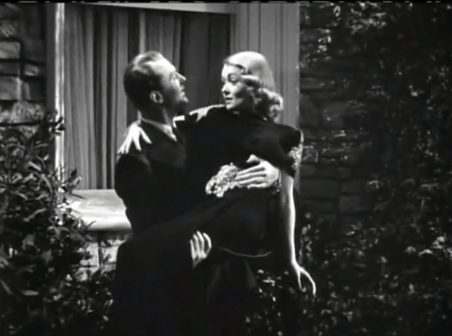
The piece de resistance is (no, not George Sanders playing a jilted French lover), but the fact the heiress hatches her own scheme as an act of revenge. She calls in a story to say she and Leyton are to be married!! She’s used to the publicity hounds, but he is pummeled by his newfound notoriety without a moment’s peace.

What makes the movie is the kind of rambunctious reunion you would expect given such a scenario. A podunk Judge (Slim Summerville), with a jailhouse falling apart at the hinges, locks them both up: She receives a speeding violation, and he’s apprehended in the middle of grabbing, err “stealing” her vanity case.

By now the last place he wants to be is stuck right next to her — anything else would do — but she orchestrates everything just so. There’s an exuberance because now the game is afoot as Young playacts her way to her desirable conclusion.

Even if the enemy-to-lover romantic arc is something we see so often, it’s the leads who make it spark, and there’s enough chaos to make it more than palatable. I couldn’t help thinking about how bright-eyed Power and Young both feel at this point in their careers, and it gives a kinetic vitality to their chemistry.

3.5/5 Stars

Double Wedding (1937)

Double Wedding feels like it banks on all the best characteristics of William Powell. He’s witty, at times churlish and juvenile, but boy does it make for goofy, ever-contentious comedy. This was one of his prevailing gifts as a film actor. We have a fine time messing about with him, and he never quite relinquishes his charm.

I’ve previously mentioned how I’m partial to The Thin Man movies because it plays off the amenable chemistry of Powell and Myrna Loy; not on their antagonism. It’s more about their repartee as comedic and matrimonial equals than it is watching them quarrel and make up.

But enemy-to-love arcs must cast Loy in some other way. In movies like Double Marriage or I Love You Again (1940), she must seem unreasonable from the outset or at least chafe against the wisecracking good humor of Powell.

In this story, she’s the fastidious businesswoman and older sister, who effectively runs her younger sister Irene’s life. It makes her an easy target for Charles Lodge, a man who’s probably a bit slap-happy and far too bohemian for the ’30s, living out of a trailer and putting on his own stage productions.

He scorns this kind of buttoned-up oppression and though Irene and her wet-noodle of a fiancee are charmed by his influence, they’re also not brave enough to stand up to Margrit. It’s so easy to sink back into tedium as she begins to set about planning their future wedding.

Powell feels like the lynchpin of the movie as he rebuffs Irene’s newfound advances, tries to help the dreary Hugo reclaim his manhood, even as he tries to woo Margrit under the most unconventional circumstances. It hardly seems material that the title gives something away. It feels like more of a signpost for us to aim for.

The escalated chaos of the finale exceeded my expectations as folks crowd in and around Powell’s mobile home for the wedding proceedings overseen by the ever-handy Donald Meek. It just keeps on going and going, but then again, I should expect nothing less from a Powell/Loy comedy. John Beal and Edgar Kennedy are other personal standouts to keep an eye out for.

3.5/5 Stars

Young in Heart (1938)

Without any preconceived knowledge of Young in Heart, it actually positions itself with an intriguing premise. It’s built out of a family ensemble of con artists who are always looking for ways to get ahead with varying degrees of success.

Their esteemed patriarch and matriarch are played by Roland Young and Billie Burke respectively. Father is constantly ingratiating himself as a distinguished Colonel who fought with the Bengal Lancers. The grown kids (Janet Gaynor and Douglas Fairbanks Jr.) are out on the prowl for eligible suitors, who also happen to be loaded. The French Rivera has more than a few prospects though the authorities are especially vigilant.

The whole movie comes into its own after they’re unceremoniously kicked out of the country and then stuck aboard a train trying to figure out their next angle. George-Anne (Gaynor) meets a kindly old lady, “Miss Fortune,” who has her own compartment. She gladly shares it to stave off her loneliness and the family is quick to oblige. She’s just another mark they can perform for.

She welcomes them into her home, glad to have the company, and they realize if they’re nice to her, she could very easily credit them in her will. For modern audiences, it has the ring of Bong Joon-ho’s Parasite albeit without the social commentary. Instead, this family secretly unearths their soft hearts finding that as they model goodness, they find it suffusing throughout their lives.

The Colonel becomes a revered car salesman of “Flying Wombats” to the wealthy.  Richard stumbles into an engineering firm because of the pretty girl behind the desk (Paulette Goddard) and soon learns the edifying nature of an honest day’s work. They also fall in love.

If we see the progression from a mile away, it’s still a pleasure to watch this family evolve in front of us, and it feels like each member gets their individual moments to shine. Gaynor feels like the undisputed focal point, and though I don’t necessarily buy her in a skeevy role, we like her already, which is half the battle.

Young and Burke might be known for a single role each (in Topper and The Wizard of Oz), but they always can be counted on with a highly specific brand of comic eccentricity. There’s something wonderful about watching their charms bubble over. Although we could have easily had a Fairbanks-Goddard rom-com on its own, it might have been a bit bland. The ensemble brings the best out in everyone.

3.5/5 Stars

Bette Davis: In This Our Life, Now, Voyager, Mr. Skeffington

In an effort to gain a greater appreciation for the breadth of both Bette Davis and Joan Crawford’s careers, we wanted to watch some of their films including a majority we hadn’t seen before.

Here are some of our thoughts on a trio of Davis movies from 1940s Warner Bros:

In This Your Life (1942)

It sounds like an impeccable title for a soap opera, and this presumption is not totally baseless. Here John Huston early on in his career takes on another Warner Bros. project. This one has no bearing on The Maltese Falcon or much of his later work. Instead, it became an outcropping of his contemporary fling with Olivia de Havilland.

As such, the movie is set up early around a local family. The father (Frank Craven) is a man with a benevolent twinkle in his eye. His wife (Billie Burke) is a bit of a drama queen playing favorites between her grown-up daughters. De Havilland is the sensible one, Roy, who is betrothed to be married soon. Stanley (Bettie Davis) is the feisty one with plenty of temerity. We never learn how their parents arrived at their naming conventions.

However, we do meet their uncle: ever-domineering, agitated uncle Fitzroy (Charles Coburn) with a touch of Rockefeller and an affinity for tough-minded folks such as himself. Namely, Stanley. And right about this time, given the tone, content, and world, we realize we have been handed a small-town melodrama easily playing rival to the likes of Kings Row.  Max Steiner’s score rages quite liberally to accentuate the narrative unrest in case we had any lingering doubts.

In other words, the story feels worthy of Bette Davis. Her particularly protuberant eyes somehow undercut her actions. She doesn’t look all that bad, but as Kim Carnes famously sang in “Bette Davis Eyes,” “She’ll tease you. She’ll unease you. Just to please you.” She also has no scruples.

Dennis Morgan is featured in one of his more “daring” roles. He only remains a soft-spoken heartthrob for the majority of the movie. There are actual interludes where he’s petty and unstable. Of course, he can’t hold a candle to Davis or De Havilland.

Because it does become a drama of fluctuating love interests. George Brent starts the film with Davis (his perennial costar) but spends most of the movie being uplifted by De Havilland. It is a film mediated by the weak and the strong, the soft-hearted and the hard-hearted.

Olivia de Havilland comes off like most of her early, generally thankless ingenues, but there’s some sense she is inching toward something more substantial. We see it later as she evolves in front of us — hurt by her own sister — and vowing to never let something this egregious injure her again. She resolves to switch camps once and for all.

But I have yet to mention the film’s most intriguing character and arguably its lynchpin. Parry (Ernest Anderson) is the young black man who works for the family. However, he has ambitions that include becoming a lawyer. He is well-spoken and indirectly combats all the stereotypes piled up from years of dismissive cinema. It’s so refreshing to have a part that looks and feels so strikingly different than many of its contemporaries.

And he becomes far more crucial as the story progresses, thanks in part to the histrionic privilege of Stanley. She tries to use Parry in her own lies knowing intuitively the state of the world: A black man’s word will never hold up against hers (“It ain’t no use in this world”). In the end, Hollywood morality must prevail even if reality feels like a much murkier affair.

3.5/5 Stars

Now, Voyager (1942)

If films like All About Eve and What Ever Happened to Baby Jane? were in dialogue with Davis’s persona on and off-screen, then Now, Voyager seems totally representative of what her Hollywood image actually was. She’s the homely girl who in the same breath can transform into an immaculate beauty. This is her success story and grand fairy tale.

Mrs. Vale (Gladys Cooper) is a stern woman of authoritative means when it comes to ordering the life of her youngest child and ugly duckling Charlotte. I have difficulty looking at Bette Davis early on not because she’s “ugly,” but because they’ve tried so hard to make her frumpy, and it just looks a bit unnatural. In general, I find the deglamorization process a bit mystifying for these types of pictures.

Claude Rains provides his brand of benevolent authority that’s never threatening and lends a level of enlightened wisdom to the proceedings. Ilka Chase and Bonita Granville add levity, and I’d be remiss not to mention the incomparable Mary Wickes.

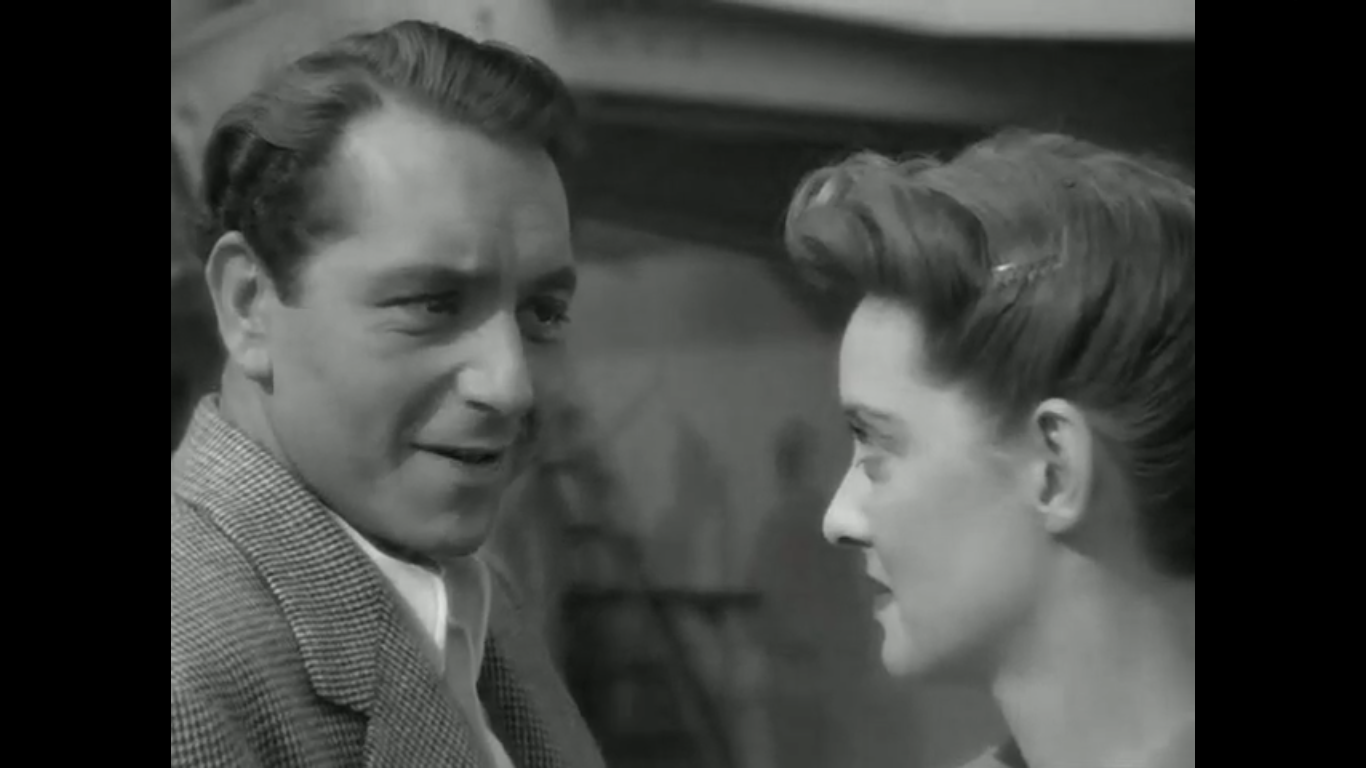
20 minutes in we see Davis emerge totally reincarnated as a regal creature capped in the most iconic of hats. Paul Henreid is rightfully pleased to make her acquaintance, and we have our movie.

The shorthand of glasses and ugly duckling syndrome being cast off feels rather simplistic, but I tried to stretch my imagination to make this into a Hans Christian Andersen world.

Paul Henreid lays the groundwork for Casablanca by playing the quintessential symbol of self-sacrifice, which in itself is such a powerful bulwark for romantic drama. In Now, Voyager his lot in life is made plain. Not that he goes grousing about it, but it’s evident he has a wife back home who plays the martyr. He’s tied down to her.

The moments between Davis and Henreid are like a dream and the rest of the movie feels like unnecessary baggage at times. That’s not to say we should cast off all the cares and responsibilities of life, but in the movies, these are the details that somehow get in the way. They distract from the reverie between two people.

Of course, it’s perfectly articulated in its most intimate and imitated act of affection, if not out and out chivalry — a man lighting up two cigarettes in his mouth and giving one to a lady. It plants Now, Voyager in a different era and perhaps this is part of the rose-colored allure.

I do appreciate what the lapse in the middle means for them both. He must go off, and she returns home to her mother’s house, prepared to do battle there. Because she is different, no longer a child anymore. Then, when she makes a big reveal in front of the family, she commands the room with the aplomb of a seasoned socialite.

Finally, the moment arrives and the two lovers are reunited when their private tete-a-tete crosses back into the real world at a dinner party. Alas, it cannot be so Charlotte must find ways to show her affection vicariously. She takes on a pet project — it’s a mission of mercy — to bless her man.

Although I will always subjectively like Greer Garson in Random Harvest or Gene Tierney in Ghost and Mrs. Muir better, I must admit Bette Davis is one for the ages. Try as I might, I could never take that away from her or begrudge the legacy she rightfully garnered for herself. Now, Voyager reminds us — no matter the pitfalls of the studio system on display — people like Davis really could turn it into a dream factory. In bandying about words like auteur, she certainly lays some claim to the label because the whole movie feels molded to her vision. She commands not just the screen but the entire production.

3.5/5 Stars

Mr. Skeffington (1944)

The opening plays like an Epstein Brothers riff off an Ernst Lubitsch drawing-room comedy. There’s an immediate comic lightness to the scenario. A row of eligible young men show up fashionably early to pay a visit to Fanny. It just so happens they all had the same idea.

They also adopt that slightly risible movie convention of constantly calling one another by first names, but of course, that’s part of the point. They’re partially hoodwinked when another man pops in and saunters up directly to Fanny’s quarters. No, he’s not another love interest but her solicitous older cousin George (Walter Able).

Davis is as airy-voiced and bright-eyed as ever doted up in the most flamboyant regalia. It covers up the salient fact that she and her brother are broke, and they have wealth in name only. They’ve all but used up everything their dear departed father ever bequeathed them.

Fanny’s a superficial girl, chatty and taken by the many whims of the wind. She’s turned off when the proclamation of war spoils her perfectly good dinner engagement with a quiet gentleman named Mr. Skeffington (Claude Rains).

There’s something about Davis and Rains together that’s easy to favor. I think they noticed it too, with Davis supposedly saying years later that he was her favorite costar. She went to bat for him, and he wound up in one of his most prominent roles. He’s never going to upstage Davis, and yet his wit is deceptively charming. It settles the movie and gives it an anchor.

Over time it feels like a gargantuan narrative, albeit not without its curiosities. One of those is the undercurrent of the whole picture. It starts with Skeffington himself. He is a man like so many remade after a childhood kicked off at Ellis Island. There’s a sense about him and his origins, even an inference here and there, but never anything outright.

And then, he sits at dinner with his daughter as a final goodbye. He has paid a settlement to his wife, they are getting a divorce, and his daughter will go live with her mother. She doesn’t want to leave him, and he explains part of what makes them different. He is Jewish. She is not.

In the year 1944 and the contemporary moment, it suddenly becomes a far more serious issue worth our time and consideration. Though within the movie it feels mostly like a loose end as Rains all but disappears from the picture. At least for the time being.

However, the movie evolves into something else almost like a vanitas portrait of the Charles Foster Kane variety. Vanity of vanities, thy name is Fanny Skeffington. It becomes evident that beauty is fleeting as her suitors stay young, and she continually staves off the advances of age.

She has a bit of a nervous breakdown; all her old boyfriends are long since gone, balding and gray-haired, and she looks in the mirror and her illusions are shattered by the lonely fragility staring back at her. Because time can be cruel. Her daughter (Marjorie Riordan) returns as a grown young woman and Fanny recognizes how the years have passed her by. She missed out on knowing her.

But it’s inevitable. Our primary players must have a reunion. The final scene has a real emotional import as we wait for Rains. It’s building to a crescendo and then falls into place as a weirdly contrived propaganda piece. The development is a bit disappointing because it means Skeffington isn’t able to explore all of its themes. Given its length, this is profoundly unfortunate.

3.5/5 Stars

The Young Philadelphians (1959): Paul Newman Takes on Family Skeletons

young phil

What’s most intriguing about The Young Philadelphians is how it manages to be a composite of several standalone genres. It’s a rags-to-riches tale. There’s romance. Stunning courtroom drama. But the sinew holding it together are sudsy soap opera tendencies.

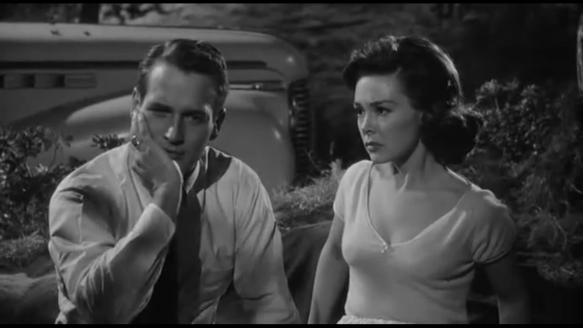
Like most any life, our story begins before our main character, Tony Lawrence (Paul Newman), was ever born. Back in the old days, his mother (Diane Brewster) was to have a church wedding with William Lawrence III, a man who was desirable solely due to his family name. Being attentive to such things, Kate is happy to marry him — leaving behind a lifelong friend Mike Flannagan (Robert Keith) to drown his sorrows.

What unravels in a matter of seconds is the kind of juicy drama offering up Adam “Batman” West himself in a blink-or-you’ll-miss-it debut, though he does have a crucial role in the ensuing tale. There are implied sordid details that need not be parsed through now. Regardless, Kate is left as a widow and looks to raise up her infant son to bear the reputable name of Lawrence. He doesn’t know his protective mother is sitting on a stick of dynamite for the sake of her son.

Tony grows up to be a fine, strapping young man of substance. The instant magnetism of Paul Newman is on full display. Not animal magnetism but the kind of charisma that would keep him a beloved figure long after many of his peers from the Actors Studio had mostly dissolved and given way to younger talent. The intensity comes later.

For now, he’s a Princeton boy working in construction because it pays the bills, though his ambitions are to pursue law — all in due time. What follows at the worksite is a contrived meet-cute but no less delightful do to the instant charm of Paul Newman and Barbara Rush. Not only are they beautiful people, but they have a playful rapport to back it up.

Later, he attends a high society party — his mother hopes he can make some invaluable social contacts — but he consorts with Chester Gwyn (Robert Vaughan), a prodigal rich boy with greased back hair and a penchant for getting plastered. His relatives, who run his trust fund, heartily disapprove of his carrying on even as Tony impresses them.

The other person of interest is the same debutant, Joan Dickinson (Rush), who tells them all her classmates are married to very nice young fellows, cautious prudent young men with button-down families. All and all, they are representative of the idle and affluent segment of society looking to find a nice life for themselves complete with a fine salary, a gorgeous wife, and an equally gorgeous home to boot. For those who haven’t had to work like Tony, it sounds like utter drudgery. It’s a lifestyle that has eaten many people like Chet and Joan alive as it molds them into their assigned conventions.

In their own way, Tony and Joan look to pursue their own happiness which — although it fits within the confines of society — still has a hint of the reckless, impetuousness of youth. They still have enough fervor and passion in their chests to see the world as an idealistic space meant to be conquered. However, their parents have other plans for them…

In mere moments, the entire story careens in another direction with twists and turns worthy of a soap opera. Suddenly, the romance burning between them is snuffed out and sullied by insinuations. Tony learns the rules of the game the hard way. Society, as they know it, is built on the bedrock of backroom deals, saving face, and family reputations.

He resorts to making the connections, climbing the social ladder, and running into some old acquaintances. It’s in these crucial interludes where Newman channels his youthful intensity by ripping off the band-aid of a broken relationship and charging forward with a newfound tenacity. Under the circumstances, he foregoes the law firm of the reputable Mr. Dickinson (John Williams) and makes a name for himself in the service of someone else. He lands a big fish by swiping one of his largest clients (played by the perennially bubbly Billie Burke), who literally wanders into his office.

Even as he’s driven by his own private ambitions, Lawrence never completely sheds his conscience. He rebuffs the advances of his boss’s sex-crazed wife (Alexis Smith), stomping out an affair before it can begin.

With the passage of time, we are led to ponder how these lives could have ended differently if given the chance? Tony is still unmarried. Joan found a rich money bags, who unfortunately died fighting in Korea. The war also took Chet’s arm leaving him a crippled and degenerate drunk.

In fact, Vaughan gives the final act all he has, and he is one of the film’s unsung heroes; he provides some outward manifestation of the myriad of issues conveniently swept under the rug by the city’s foremost families. When he hits the papers with a murder rap pinned on him, it rattles all the skeletons buried in the closets. His patriarch, the esteemed Dr. Shippen Stearns even says, “individuals are less important than the whole.” What matters is coming out of the mess without a scandal.

I do adore Billie Burke particularly because we never saw enough of her in this later period of her career, and she still brings the same genial energy she always had in her golden years. She’s another outlier in the film’s stuffy landscape.

However, it’s also a test of Tony’s true character as he juggles his own reservations and allegiances to people like his mother and Chet. Joan reopens wounds, now a decade old, going to the core of who they are as human beings — their ambitions and the ways that they have been changed due to the hotbed of the surrounding society.

It’s the kind of scene I wanted to playback because it feels like it comes at us out of nowhere. She wants to hire another lawyer to take him out of the grinder — fearing he may have sold out again — and he proceeds to bristle knowing he never meant to sell out. At least not really. Their fight, if we can call it that, is what spurs him on in the courtroom. However, there is something else.

We remember where this story began. His mother is forced to tell him something about his untold life and what happened before he was born. Suddenly, this isn’t just a matter of someone else’s life — that would be enough — but this holds implications for his reputation and that of his mother’s. Everything hangs in the balance.

So when he gets to the courtroom the stakes are heady. But he comes at the case with a level of acumen and genuine discernment (although the judge does seem to be giving him far more favor than the prosecutor receives). This observation is mostly immaterial. He puts the key witness, George Archibald (Richard Deacon), up on the stand and does everything he’s been training his whole life to do.

Somehow he’s never spoken a truer word when he says, “I’m not as good as I hoped I could be, but I’m not as bad as I thought I was.” Let them sink in for a moment. As we look on, we see a man who has found his happy medium as he’s slowly learned to be contented with the life put before him without any regrets. He can walk out of that courtroom, his best girl in hand, confident that his reputation is intact, but most importantly his moral conscience is as well. And we are right there with him.

3.5/5 Stars

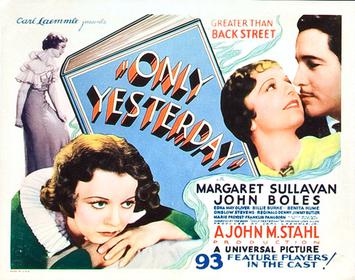
Only Yesterday (1933): Margaret Sullavan Shines

Only-Yesterday-1933-Lobbycard.jpg

In the opening designs of Only Yesterday, the New York Stock Exchange is encapsulated by its usual hubbub only to hit the skids of pandemonium when the market crashes. We’re talking about the Big Crash of 1929. It plays as the backdrop to our story, very much functioning as current events.

The backstory makes the film fall even closer to home. Because like just about everyone else, Universal Studios was saddled with their own financial troubles so it seems fitting Only Yesterday was the project made to get them out of the doghouse and salvage their holdings.

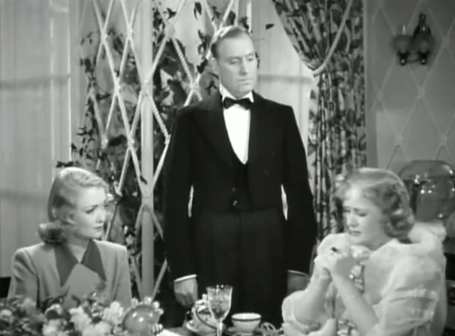
If we are to believe this film, part of what Black Tuesday did was totally humble both the rich and the poor (and the movie studios) in their separate estates. Before the sheer magnitude of the devastation has spread, we get a front-row seat at the party hosted in the home of Mr. and Mrs. James Emerson.

What becomes immediately apparent is the buzz of the atmosphere with tumultuous music and a smattering of glib zingers. There’s a cascading frivolity on all sides to go with the idle chatter supplied by such gossipping fiends as Franklin Pangborn.

However, Mr. Emerson (John Boles) comes home positively shellshocked because he’s been cleaned out. He’s in no state to make merry opting to disappear into his study. It’s in the backrooms and corridors where the crushing reality sets in, to the point of private devastation.

From the outset, Boles comes off as a sympathetic figure and a calming presence even as he comes to terms with the weight of the Crash and its innumerable implications. It’s true the man of the house looks to be teetering on the brink of suicide, if not for a mysterious letter on his desk.

He opens it up and thereby begins the heart and soul of our story. It is partially his story and someone else’s as well; it began before anyone knew of a Depression, in 1917. If you remember, without leafing through your history books, “The War to End All Wars” was reaching its conclusion.

Back then James was a dashing soldier, unmarried, and still looking to finish up business overseas. It was on one such evening back in 17 where he met a buoyant young woman (Margaret Sullavan in her stellar debut) on a dance floor.

She is the picture of youth and her voice has yet to reach depths of only a few years later Regardless, precocious Mary Lane comes out of the woodwork to confess her love for him from afar after well nigh 2 years!

He takes it good-naturedly enough, altogether flattered anyone might look at him in this manner, and it leads to something — a dance and then whatever might come next. If the cynical would term it a one-night-stand, then it’s a little bit of paradise and Mary holds onto the evening.

In her mind, it’s the first of many, if not for the fateful news that the 309th is engaged to be shipped overseas. This is the event her whole life seems to hinge on up to this point; one evening was an entire lifetime. It just goes to show how the same event can take on differing degrees of resonance for two people.

It happens so quickly as to totally catch the audience off guard. James is off to fight a patriotic war and Mary is going up to New York as to not besmirch her family with her ignominy; she is with child.

Shopworn Angel would capture much the same jingoistic “Over There” milieu a few years down the road and yet that time around, not only would Margaret Sullavan be the veteran opposite a still callow Jimmy Stewart, the Production Codes would exert themselves more rigorously.

In terms of solely content, there’s little doubt Only Yesterday is armed with the uncompromising brazenness of the Pre-Code era. This includes a broad-minded perception of a woman’s place in an evolving society. It makes for a fascinating bit of observation, especially considering how Classical Hollywood would eventually settle into a status quo — a cult of domesticity tailored to the mid-20th century.

However, in Only Yesterday, we get Aunt Julia (Billie Burke), a progressive woman who has a life involving such independent-minded things as bob hairstyles and full-time employment. Aside from The Good Witch, Burke often played ditzy oddballs in numerous comedies where she wears on the viewer. Here there’s something resolute and distinctly likable about her because she does beat to a different drum.

The words leaving her lips are both an encouragement to her rejected niece even as they color how she sees the world in the 1930s. She has effectively worked to “kick the bottom out of the bucket called the old double standard” and she fervently believes “Today a woman can face life as honestly as a man can.”

Aunt Julia also helps to temper the situation swirling around Mary helping ease her mind. As a word of comfort, she says, “It’s no longer a tragedy, it isn’t even good melodrama, it’s just something that happened.” Meanwhile, Burke’s jovial suitor (Reginald Denny) seems like a playful generally affectionate chap. This portion is one of the film’s most carefree as a result.

Armistice eventually comes and with it parades of victory. We know what must happen now: a reunion. There don’t seem to be many close-ups throughout the film, but Sullavan gets a few of the most crucial ones when she’s reunited with her man only to realize he doesn’t remember her, having found someone else to love (Benita Hume). It’s a devastating bit of exposition and her face says it all.

If Gold Diggers of 1933 details a forgotten man, she’s a forgotten woman, although she’s not about to wait around to be noticed — she has a son to look after. It shows the depth of her character.

Mary shares a bit of the sacrificial devotion of Stella Dallas or the tragic unrequited point of view a la Letter from an Unknown Woman, maintaining a thin line of communication with her former love through a string of telegrams.

What’s astounding is even in her youthfulness — at only 24 years of age — Sullavan’s more than able to carry the weight of the performance, not only a vivacious ingenue but a mother who’s forced to weather the weight of the world alone. Like Stanwyck a few years later, they prove themselves wise far beyond their years. What a way to enter Hollywood.

Finally, it happens and The New Year brings her face to face with the man she once knew. Boles feels more and more of a cad over time, whether he was meaning to be or not. He has a steady demeanor, a serenity in his favor, but after being so ignorant of one woman, he manages to rebuttal his wife as well, all in a very civilized manner, mind you.

Even as Billie Burke represents something else, there’s still a prevailing sense that women can be cast aside for the sake of a story. Sullavan, on her part, exudes a quiet regality even unto death. What Mary has, however, is a legacy in the life of her child, and in him, like with any life, there is still some hope for the future.

From a historical perspective, there’s a lot to be learned. Even back then a young lad would rather go to the pictures to see Chaplin than read a book, and all the women want to look like Greta Garbo — one of the most sought-after glamour girls of the 30s. Some things never change.

It’s rather sobering to read Margaret Sullavan’s son Jimmy Jr. was played in real life by Jimmy Butler, who was affected by WWII like many were affected by the previous war — killed in action in France at the age of 23. It grounds Only Yesterday in real tragedy.

3.5/5 Stars

Sergeant Rutledge (1960): Starring Woody Strode

“It’s alright for Mr. Lincoln to say we’re free, but that ain’t so. Maybe someday, but not yet.” – Sergeant Rutledge

Sergeant Rutledge rarely gets talked about with the greatest westerns or even the greatest westerns of John Ford. Without getting overly effusive with my praise, it should be heralded as an underrated gem worthy of far more scrutiny. History is more than on its side. The movie preceded To Kill a Mockingbird by at least a year while examining similar themes of a black man on trial for rape, albeit through the specific settings (ie. Monument Valley) and lens of its director.

As purely a courtroom drama, it’s probably more engrossing because the other film is just as impactful for its relationship outside the court’s walls. The familial relationship is the core of the story. In Sergeant Rutledge, Ford gladly builds up the atmosphere of the courtroom while allowing it to bleed out and color the rest of his narrative, set against the backdrop of apache raids.

Willis Bouchey stands out as the demonstrative head of the court marshall tribunal, Lt. Col. Otis Fosgate. The turn might be one of his most substantial and enjoyable roles on the big screen. Not only did he have an extraordinary career on the small screen, but he was an often called upon member of John Ford’s stable of actors. His foray in this picture makes it plain enough. Every time he asks for “water” or scolds his wife, it provides instant texture.

Because his wife, Billie Burke, is one of the goody-two-shoes in the peanut gallery, prepared to watch the court case in their finest clothes with their mouths agape and their eyes agog. Meanwhile, the rowdiest fellows stand impatiently in the back smoking their pipes and raising a brouhaha. The judge has enough gumption to clear them all out.

There’s no doubt Ford is in control of the courtroom scenes, from its initial clearing to the subsequent stage lighting to highlight witnesses on the stand. It’s quite extraordinary rather like when Hithcock worked through The Paradine Case breaking the stagnant sequences up with purposeful moments. These are bulked up through substantial flashbacks where we are allowed to invest in the drama firsthand, becoming involved more and more in something that feels like a traditional murder mystery.

The first to take the stand is Mary Beecher (Constance Towers), a quivering young woman who caught Sergeant Rutledge in a compromising and nevertheless now comes to intercede on his behalf, not to accuse him. She recounts how, left in a deserted town, it was the honorable soldier who willfully saved her life.

Next, Fosgate’s own wife (Burke) takes the stand with her usual tittering mannerisms, relaying the last time she saw spunky young Lucy Davenport alive, before she was brutally raped. She came to the general store and shared a conversation with Rutledge. This was no surprise as he was the man who taught her how to ride a horse and practically raised her. To the eyes of all those on the outside looking in, it leads them to burn with indignation.

The dialogue throughout is often curt if not altogether mundane, even overly twee in the lightweight moments, but the scenario itself and Ford’s interaction with it, make it worthwhile viewing. It’s what he’s able to build up around them, devolving into a fairly unheard of exploration of racial tensions on the range. When it gets talky and the message is made obvious, it loses its impact — looking all the more of its time.

What builds a lasting impression are the images — watching the 9th Cavalry of Buffalo Soldiers — appreciating their discipline and fortitude. Surely seeing these representations say enough about how American society treats non-whites, both in life and on celluloid. They are deserving of the same amount of human dignity and not having the burden of proof thrust upon them merely based on the color of their skin.

Because this is what it comes down to. Sergeant Rutledge (Woody Strode) is on trial to be hung, accused of rape and murder. This is not a pleasant affair whatever the outcome might be. As Jefferey Hunter headlines another Ford Western (following The Searchers), he holds a crucial stake in the case as both one of Rutledge’s superiors but also his defense counsel, and, ultimately, his friend.

Woody Strode might be buried in the credits, but there’s no doubting his prominence at the heart of the drama. It’s his stalwart characterization that allows it to stands out from the crowd of westerns from the era — and in Ford’s own lineage — because it gives him a place of cinematic significance. One scene, in particular, is easy to call upon.

In the dead of night, there’s a refrain of “Captain Buffalo” as Sergeant Rutledge stands on the ridge, the moon in the foreground behind him, looking down at his men; it’s only a brief aside, but something in me stopped still because these are the kinds of moments, if you’re lucky, you’ll see in a Ford picture. How do we quantify them? They’re a feeling, a sense, speaking to so much of who we are and what our country means. It’s history, both rich and also riddled with honor and disgrace. I look at Rutledge and I’m proud and a moment later ashamed for how a man such as this is treated.

Woody Strode was used quite well by John Ford on several occasions; he gained some repute for his role in Spartacus; but to my knowledge, he never had a role more extraordinary than that of Sergeant Rutledge. It’s indicative of the industry that Strode — once a football star alongside the likes of Jackie Robinson — was never a bigger movie star.

Here is a picture that allows him the opportunity to show his talents, and he does so with unsurpassed strength and dignity. Captain Buffalo, as eulogized, is a mythical figure surpassing John Henry in his larger-than-life gravitas, and Woody Strode is as close as we could have gotten to seeing him in the flesh.

Part of this is the man himself, quiet yet formidable, and of course, Pappy Ford does him the greatest service. He allows him to be great and sets him up in such a sympathetic yet empowering light.

I’m glad we have this movie, and I’m delighted Ford had the guts enough to make it. Woody Strode deserved many more pictures like this one. For that matter, so did the eminent Juano Hernadez and all these men. It has to do with what this film represents.

We rarely get to see eulogies to the Buffalo Soldiers and this one is as good as anything I’ve ever had the pleasure of experiencing. It’s captured as only John Ford can do it — enamored with the American myth — while still beholden to our own hardened reality. To come to terms with both is one of Ford’s great gifts.

4/5 Stars

Merrily We Live! (1938): My Man Godfrey Redux

merrily we live

What a harebrained movie this is in all the best ways. The origins of Merrily We Live themselves are a tad murky or, at the very least, convoluted. It’s purportedly based on the novel The Dark Chapter, which subsequently received a Broadway adaptation, They All Want Something. There was a film in 1930, What a Man, with a similar vignette about a chauffeur falling in love with a woman. But for the classic film aficionado, basic similarities to My Man Godfrey are obvious enough to warrant some amount of comparison.

It is a shame ensuing generations have mostly forgotten Constance Bennett. (I must admit to paying more attention to her sister Joan.) Our leading man and amiable Englishman Brian Adherne is obliging if generally uninteresting. Certainly, we don’t have the pinpoint comic delivery of William Powell or the sheer frenzied force of comedic fury that is Carole Lombard so in this regard, Merrily We Live is a lesser effort, but that does not mean it can’t offer up its own mercurial delights.

We trade out a supporting cast of Alice Brady, Eugene Pallette, and Gail Patrick with one arguably just as good calling on the talents of Billie Burke, Clarence Kolb, and Bonita Granville. Alan Mowbray is one of the lone holdouts from the earlier picture. Thus, there is barely a drop in quality, which leads one to marvel at the sheer prolific nature of these character actors. It really was the heyday of the bit roles with actors building up such robust catalogues of appearances and seamlessly sliding into role after role.

The help, headed by Grosvenor (Mowbray), is constantly in disarray as the vexed valet threatens to walk out on his duties time and time again for all the egregious infractions he has to put up with. The latest affront was an unseen tramp named Ambrose (these character names are gold) who ran off with the family silver.

The breakfast table is an arena and a convenient microcosm for the wacky family dynamics to play out in farcical fashion. This particular morning, since there is a sudden lack of silverware in the house, the family must make do with any amount of ladles, chisels, and hammers. It’s highly irregular, but they are no normal menage.

merrily we live 3

We are blessed with another ridiculously rich and dysfunctional family of bickering oddballs. Constance Bennett, as the eldest daughter Geraldine “Jerry,” has a grand old time being mildly amused by the utter chaos that makes up their day-to-day in the lap of luxury and excess. She’s not quite as high-strung as Lombard before her, but bouncing off her family members is entertainment enough.

Baby sister Marion (Bonita Granville) is ready to whine and prank her way into getting funds for her latest scheme. She’s part whiny brat and certainly a budding comedienne. One need only remember her chilling turn in These Three to realize how starkly different she is. Then, their brother’s always bickering and complaining about the siblings he’s been saddled with.

Billie Burke is at her most ditsy-headed cycling through absent-minded hilarity and bubble-brained insufferableness. What’s not to like? She even holds a dinner party a la Dinner at Eight. Consequently, she’s also the source of some of this constant disarray with her most recent hobby of collecting “forgotten men” and bringing them on as servants. Ambrose was her latest pet project and also the most recent disaster.

Clarence Kolb is at his most physically brilliant given more than a mere scene or two to flex his comic talents. He doesn’t disappoint alongside his wacky costars. I’ve never been so delighted with his characterization while attempting to eat his breakfast or taking a cab home after becoming completely wasted.

The family is rounded out by their two absurdly named pooches “Get Off The Rug” and “You Too,” not to mention Mrs. Kilbourne’s pride and joys “Fishy Wishy.” It’s not so much pure spastic energy but the off-the-cuff remarks and sudden jolts of absurdity and slapstick carrying the film to its conclusion. These elements are what drag the story along its merry path of craziness with or without major plot points.

Of course, we would be remiss not to mention Rawlins (Adherne), the most important new piece in the screwball equation, acting as a bit of a willing catalyst for all the mayhem inside the mansion’s walls. There has to be one normal lout, and so he conveniently fits the bill as the resident straight man.

It begins when his car goes hurtling over the side of the road. He’s an author with no means of communication. His only recourse is to find a telephone. His attire and Mrs. Kilbourne’s dull-headed insistence pull him into the house quite by accident.

All he wants is to make his phone call, but he good-naturedly acquiesces when Mrs. brings him on to work as their new chauffeur. It’s a bit of good fun. This is the key. He gladly enables their quirkiness playing along with their daily madcap rituals.

merrily we live 2

One moment he’s assisting a fawning Jerry into the first-floor window after her flirtatious solicitation. Then, he’s covering for Mr. Kilbourne when he comes home from a bender with his buddies, as a cabbie tries to take advantage of him. The list of duties could go on and on, and very few of them have to do with his recently acquired occupation.

One of my personal high points from the movie includes Grosvenor repeatedly clunking into the chimes in the dining room, matched by the breakfast chatter. It’s not highbrow, but somehow I find this tromping around and people falling to the ground faint uproariously funny, in the right circumstances.

Merrily We Live is just the film, though one must admit it ends far too abruptly to do itself any favors. It’s a movie that’s never about the story anyway; it’s the brief instances of near serendipitous comic verve seemingly bottled more by accident than any amount of scripting. These are the interludes to truly relish and they just might be worth another viewing — once my blood pressure has settled down again.

3.5/5 Stars

Topper (1937): Cary Grant’s a Ghost

topper 1.png

We know what kind of movie we’re in for upon meeting Cary Grant, whistling a merry tune, as he drives his fancy wheels with his feet. His wife — a quizzical platinum blonde played to perfection by Constance Bennett — stares up at him in amusement. They are a picture of fun-loving decadence out of The Nick and Nora Charles mode.

Understandably, they are the main draw in Norman Z. McLeod’s corkscrew fantasy comedy but like its distant relative, The Thin Man, someone else’s name actually garners the title. In this particular instance, it is Mr. Topper (Roland Young), a highly successful businessman who is, nevertheless, enslaved by his rigid regimen, and it’s not of his own accord. His stifling spouse has cultivated his humdrum life like clockwork to her own liking. We don’t envy the man, hustled and harried as he is every day, with his breakfasts and innumerable sensibly scheduled appointments.

You quite forget Billie Burke can be insufferable in a different manner as the quietly exacting wife, giving the impression of a woman constantly on the verge of indignance, her voice teetering on the edge of fragility. I hardly believe myself saying this, but I like her at her more titteringly giddy spectrum. At least she’s allowed to be sympathetic; bubble-headed but sympathetic. If the point hasn’t been made apparent already, this enforced tedium is the baseline of the cinematic world needing to be spiced up by the Kerbies and their happy-go-lucky prodigality.

If we can hone in on a turning point, Topper really hits its stride in death — the death of Mr. and Mrs. Kirby, that is. Because as is the habit in the fantasy mills of Old Hollywood, our couple dies only to come back as ghostly versions of themselves, appearing and reappearing as easily as a snap of the figure.

They pull themselves away from the wreckage of their automobile and have their first out of body experience. Played straight, it would seem ghastly, but they are as gay and chipper as ever, nonchalantly debating how they’ll get through the pearly gates. Everything they did (or didn’t) learn in Sunday school says they need to do some good deeds. Regrettably, they’ve been living on the high horse for too long; they haven’t actually gotten around to the greatest commandment: loving their neighbors.

topper 3

Their pet project is “Toppy,” and he’s in need of vivification. His one act of rebellion against his wife is purchasing George Kirby’s old automobile. This is the foot in the door after he gets into a near-death fender bender of his own. It leads to his first out of body reunion with his old friends.

The movie effectively utilizes old-fashioned special effects dating back to the days of George Melies, making it effortless for Toppy’s two guardian socialites to drop in and out of his visual field. As an invisible Mr. Kirby makes himself useful changing the tire, Toppy is teased by the lady Kirby as she blows on a blade of grass like a giddy schoolgirl. It’s our first chance to play with the logic, the fact only the audience and Toppy are availed of seeing the deceased.

Because what’s really a treat are the ghosts and the ghosted. The ones who are oblivious to the somewhat explainable supernatural acts around them. We get similar moments in Here Comes Mr. Jordan and even It’s a Wonderful Life when the concrete and ethereal collide in a most comical fashion.

Roland Young does an admirable job in the part, and he’s on par with any number of the comparable characters of the day and age whether a Charlie Ruggles or Leo G. Carroll, though slightly less well-remembered for whatever reason. He finally has some pizzazz injected into his every day as the Kirby’s indulge his budding interests in wine, dancing, and song. He’s hardly a party animal, still, he gives it a go.

topper 2

It leads to a brawl in front of a restaurant that they must bail him out of and then a handful encounters with a hoodwinked doorman. At best, Mr. Topper is the hapless figure caught in the spectral screwball chaos with the Kirbys pulling all the strings for him. Unfortunately, the storyline becomes too stagnant without the constant presence of Grant and Bennett, visually or otherwise.

Toppy finds a new standard of living and comes to reconcile with his wife. These are wonderful things, mind you, but it feels like the movie itself has compromised and gone away from what really makes it zing — that is the screwball antics of its true leading couple. Without them, it feels insipid and frankly trite, arriving at its unequivocally saccharine ending.

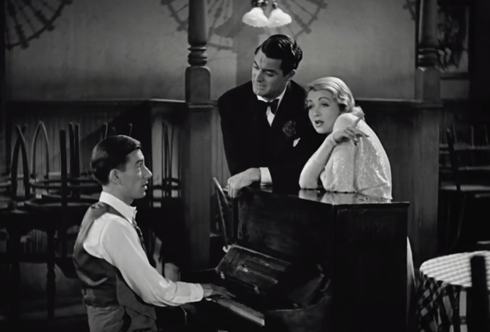
He is the one playing it straight, in a boring perfunctory manner because this is what is requested of him. But there are a handful of quality character moments of note. Certainly, a befuddled house detective played by Eugene Palette is always good for a lark. Alan Mowbray is his typical snooty Jeeves-like valet and even Hoagy Carmichael shows up (in his screen debut) to knock back a tune on the honky-tonk with Cary and Constance.

I couldn’t help thinking, I wish our two dazzling leads had partnered in another rom-com. After all, Powell and Loy got together for over 12 offerings. Alas, it was not meant to be. It makes Topper even more crucial in charting the rise of the Cary Grant we would come to know and also an oft-forgotten starlet in Constance Bennett.

3/5 Stars