Punch-Drunk Love (2002)

punchdrunk1When Paul Thomas Anderson said he was making a comedy with Adam Sandler, people undoubtedly scoffed at him. I know I would have if I had known about this film back then. However, he proved that you should never question him as a director. Much like a Kubrick or a few other auteurs, I’m not necessarily the biggest fan of Anderson, but you have to admit his films are interesting and very much their own entity.

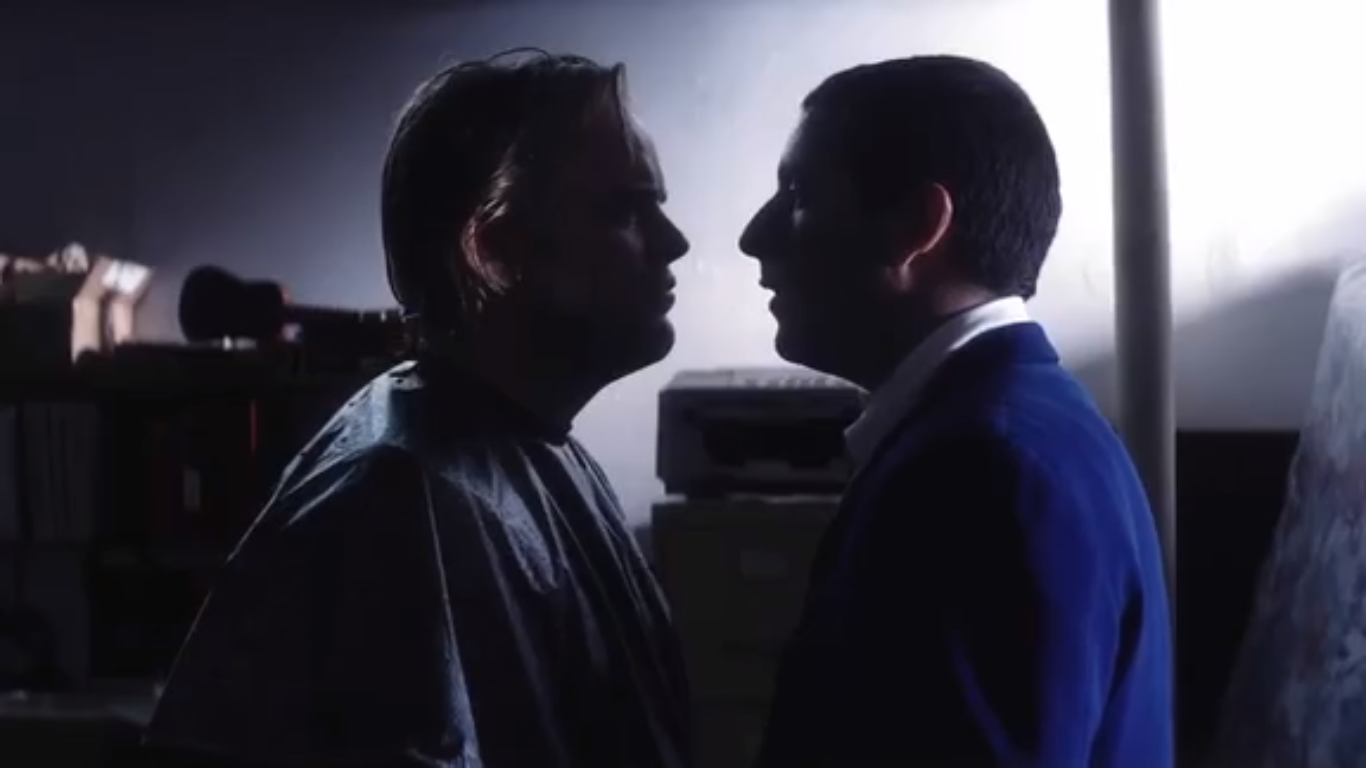
Punch-Drunk Love is a comedy certainly, but not in your typical sense. It’s a romance, but it’s not quite like any romance I’ve ever seen. Thanks to the bolstering performance of Adam Sandler, it’s whimsical and odd. He plays Barry, a rather passive and antisocial type, who seems constantly quelled by the dominating personalities of his many sisters.

He’s obsessed with buying up pudding for a chance at frequent flyer miles, he picks up a harmonium tossed on the road-side, and most of all he’s lonely, but he’s not comfortable going on dates. His sister tries to set him up with a nice friend of hers who happens to be British (Emily Watson). Barry rejects an offer to go out to breakfast with them and out of loneliness calls a phone sex line. Out of stupidity, he hands over his credit card info, and the rest becomes a big scam that he can’t escape.

Thus, his work phone at the office is ringing off the hook from a girl trying to steal his money. His sister is continually trying to set him up, and Barry seems to live in his own little weird world at times, overflowing with his own personal odd ticks and quirks. He also has an anger problem, meaning he’s bad news if you give him a hammer.

punchdrunk2At times the film is thoroughly unsettling and nervously, uncomfortably funny, thanks in part to Sandler, but also the pervasively weird sound design that utilizes the harmonium. At his core, Barry is a lonely and confused man, aren’t we all, and it reveals a depth to Sandler that many probably have not seen before. It helps that the sweet Emma Watson makes us believe he is likable and in truth, he is somewhat endearing in how he can get lost in an apartment building or always wears the same blue suit. He even follows her to Hawaii for the sake of love. But don’t get any wrong ideas. This is nowhere near the realm of 50 First Dates.

3.5/5 Stars
Fargo (1996)

fargo1The Coen Brothers have always been an interesting case for me. I admit that there are still a lot of their films that I wish and need to see. Films like True Grit and Fargo I find thoroughly enjoyable or at least passable, but they do not completely resonate with me. However, I certainly respect them as writers, directors, and auteurs, because they know the lineage of film as a medium and they have their own unique way of approaching movies. It’s often clever, unique, and carries a wickedly funny tone no matter their subject matter.

Fargo is arguably their greatest work, following a kidnapping and murder investigation that involves Fargo, North Dakota and Minneapolis. William H. Macy is your standard Midwestern dupe Jerry Lundegaard, who makes an honest living selling cars. However, there’s another area of his life that’s not so honest. He’s in desperate need of money; we don’t know the reason, but he has resolved to hire two men to kidnap his wife. It doesn’t make much sense to the audience or the easily agitated crony Carl (Steve Buscemi). However, Jerry has a rich father in law with the necessary funds to bail out his daughter. And so it goes.

Except after the deed is done Carl and his taciturn accomplice Gaear get stopped by a highway patrolman and things are downhill from there. Murder, and blood, and more murder, all on a snowy Minneapolis evening.

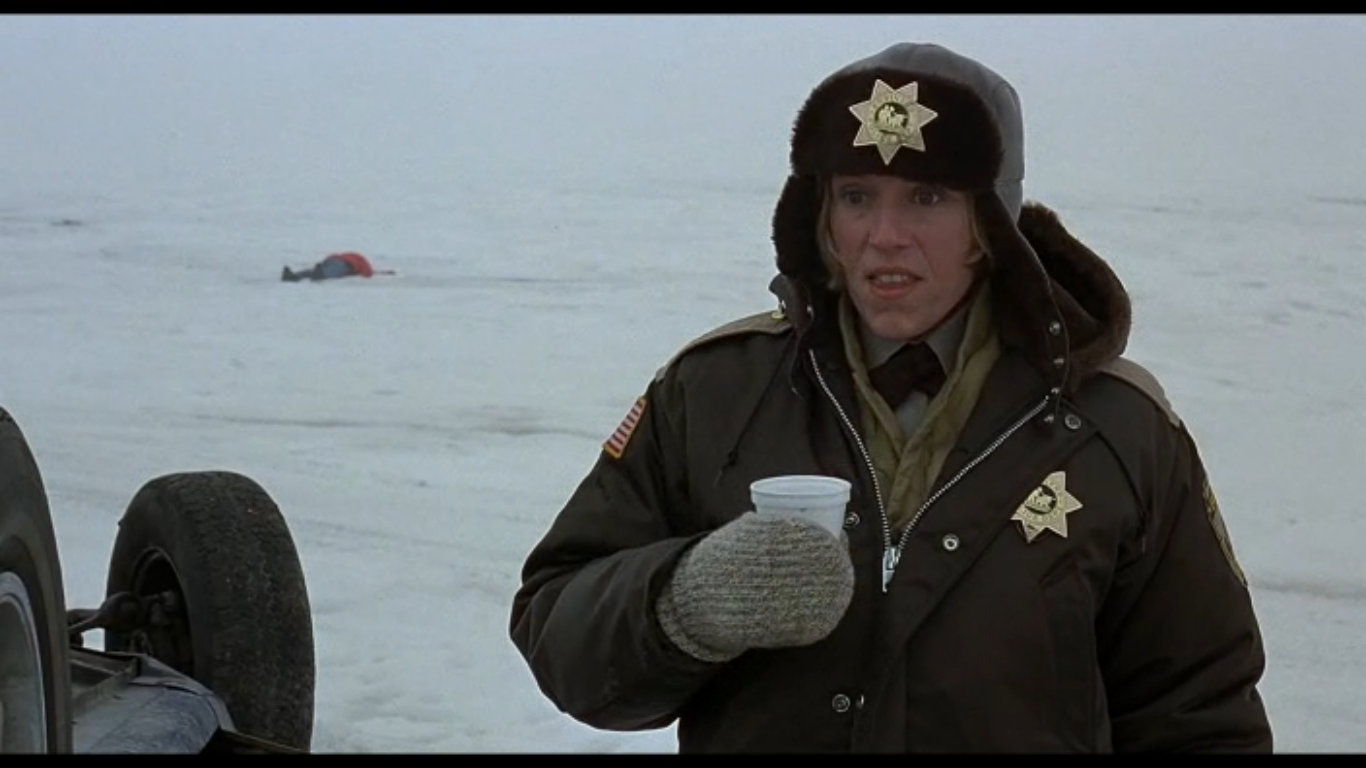
The next morning pregnant cop Marge Gunderson (Frances McDormand) leaves her hubby and heads to the scene of the crime where she quickly pieces together the turn of the events. The search is on for the vehicle, and she questions a couple of prostitutes who aren’t much help except pointing out one of the men was “funny looking.”

Meanwhile, everything is falling apart on Jerry’s end with his father in law and he even gets paid a visit by Gunderson. When the drop finally does take place, Carl is livid when he is met by Wade instead of Jerry. He’s not messing around and neither is Jerry. Crime scene number 2 is set up. Carl finds a snowy locale to bury the payoff and heads back to the cabin, but he’s about had it with Gaear and the feelings are mutual.

Meanwhile, after a disturbing meeting with an old high school classmate Mike Yanagita (a rather troubling performance by Steve Park), Marge decides to question Jerry once again, and this time she gets somewhere. The reunion with Mike sets something off in her head.  Another tip eventually leads her to Gaear and his friendly neighborhood wood chipper. Being the pro-cop that she is, Marge subdues the culprit and gets an ABP out on Jerry which leads to his arrest. After a successful day at the office, it’s back to fast food and tv in bed with her loving husband Norm.

Fargo, to its credit, exudes a Midwestern charm thanks to all its colloquial “You betchas, darn tootin’s, heyas”, and so on. Perhaps most effectively it mixes the mundane and the violently shockingly in one pot of inspiration. The two-pronged story following two very different worlds somehow meets in the middle amidst all the improbability. The Coens start the film off labeling it as “based on a true story” and that opening statement had many people tricked. I myself was taken in the first time I saw it because however outrageous the following events are we trust the words of the filmmakers guiding us. And in the characters of Marge, Jerry, and most everyone else there is a charm or normalcy that feels so familiar. Thus, the Coens could get away with such outrageous plotting, because it so often felt grounded in truth.

4/5 Stars

A New Leaf (1971)

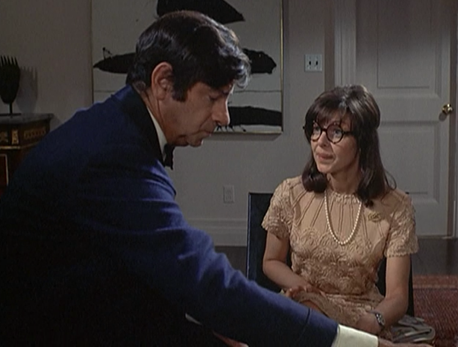
0a2a4-anewleaf1Elaine May garnered fame in the early 1960s as the female half of the comedy duo alongside Mike Nichols, who later directed such classics as Who’s Afraid of Virginia Woolf? and The Graduate. This was May’s film debut, and she did everything; directing, writing, and of course acting as Henrietta Lowell. Interestingly enough, the film we see is not necessarily the film she wanted, but it is what it is I suppose.

Obviously, Elaine May did a lot for this film, but the story starts with Walter Matthau who gives another memorable turn playing a variation on his prototypical grumpy grouch of a character. This time he’s stuffy Henry Graham who lives beyond his means riding horses, driving a Ferrari, and keeping servants. But he is very bad at what he does…which is nothing. His Ferrari suffers from carbon on the valves, his latest check has bounced, and Mr. Graham is not a happy camper much to the chagrin of his long-suffering lawyer Beckett (William Redfield). His only hope is to get his uncle to bail him out one last time, but it does not come without a price. $50,000 with interest unless Henry can find a wife lickety-split. The prospects seem grim and both men know it. On the urging of his faithful manservant Harold it becomes a mad race against the clock to find a lady with money to spare.

At a social gathering, he finds the perfect object for his mock affection. Clumsy, bespectacled, messy, and filthy rich botany professor Henrietta Lowell (Elaine May). The courtship is quick and as clumsy as ever because Henrietta is present. Henry only has one objective: get the girl and get the money with her. A little glass in the knee and wine on the rug means little. The wedding happens and what ensues is strangely comedic. Henry has outwitted his uncle and Henrietta’s shady lawyer with his own intentions ahead of him. Soon he is running his wife’s home, firing her servants, putting her life in order and generally being condescending. He even dabbles in toxicology over their honeymoon, because a nice simple murder would be nice.

But in a sentimental moment, Henrietta names her new species after her hubby who actually is touched by the honor. On a camping and canoe trip in the Adirondacks, Graham is as miffed as ever as he prepares to get rid of his wifey. Their canoe capsizes and it’s the opportune moment since she cannot swim. In a moment of weakness, he goes to her rescue and resigns himself to be a professor as she has always dreamed. He’s a married man now. He’ll need to leave the pesticides alone at least for awhile.

This is far from your typical comedy and yet Walter Matthau is quite enjoyable as he navigates the upper echelon with an air of snootiness and bother. In some strange sense, I suppose it’s even a love story because in a weird way Henry Graham needs Henrietta. She for one fell in love with him. But as Harold notes, she has caused Henry to be far more competent than he has ever been in his life. By the end, we’re not really sure what to think. In some indirect way, they are a perfect match because they seem oh so wrong.

3.5/5 Stars