The Philadelphia Story (1940)

Headlined by Katharine Hepburn, Cary Grant, and Jimmy Stewart, The Philadelphia Story  tells a comical tale of a divorced socialite who is about to be remarried. Tracy Lord is an arrogant socialite who divorced her equally fiery husband C.K. Dexter Haven. Now it is the day before her wedding to another man. However, Haven returns and brings a long two magazine reporters to get a scoop they were forced into. After a lavish party and many drinks the reporter (Stewart) and Tracy Lord find themselves spending an inebriated night talking and swimming. Haven manipulates the situation and the future husband Kittridge, who catches the tail end, believes something bad is happening. The next morning the wedding is in jeopardy and Hepburn and Stewart are oblivious. Although nothing happened, Lord agrees to terminate the wedding and Mike (Stewart) tries to save her embarrassment by proposing marriage. However, she realizes it is not meant to be and goes to Haven while Mike returns to the camera woman who loves him. It all ends well but the joke is still on them in the end. This romantic comedy has a lot of star power and it is actually pretty good.

4.5/5 Stars
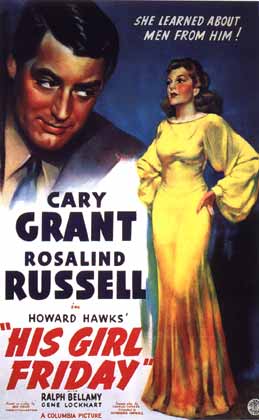
His Girl Friday (1940)

30c9f-his_girl_friday_posterStarring Cary Grant and Rosalind Russell with direction by Howard Hawks, this film’s rapid and overlapping dialogue helps make it a witty comedy romance. Walter Burns (Grant) is a newspaper editor who was formally married to Hildy Johnson (Russell). However, now they are no longer together and she is on the verge of marrying another man (Ralph Bellamy). Grant still loves her and tries all the tricks he knows in order to get her back. Soon the two of them are deeply involved in a story having to do with a man who is soon to be hung. As they work to get the scoop, the two of them slowly begin to realize they still love each other despite their differences. Finally, Russell rejects a normal life with her new fiancee and she and Grant unite once again. A directing legend, Hawks has another success with the screwball comedy. Grant and Russell play well off each other and they have a good supporting cast behind them.

This film is a sensory overload with words whizzing by so fast that you hardly have time to catch them. But what you do pick up is great and the overlapping, rapid fire dialogue is delivered so effectively by the entire cast, including Grant and Russell. Russell takes on the persona of the independent career woman prevalent in the late 30s and early 40s. As such she knows how to trade blows with the boys in the newsroom and she delivers a spirited performance to counter Grant’s constant conniving and tricks in his sly attempt to win her back. Aside from the main stars, the film has a brilliant set of stock characters and the dialogue is such that it seems like it would be a joy to read the script. There is the self-referential humor to Ralph Bellamy, then to a Mock Turtle as well as Archie Leach. The first is Grant’s role in Alice in Wonderland and the second is his real name. The film even has time to deal a few jabs to Hitler, Communists, and most especially the newspaper industry. All in all His Girl Friday is a comedic whirlwind but it is a pretty good piece of mayhem.

4.5/5 Stars

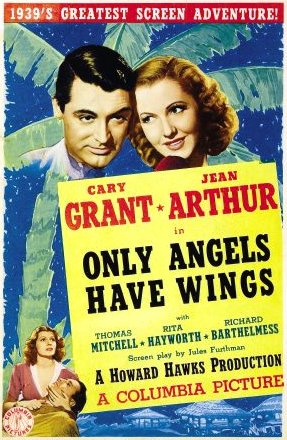
Only Angels Have Wings (1939)

a4eff-only_angels_have_wings_posterStarring Cary Grant and Jean Arthur with a cast including Thomas Mitchell, Rita Hayworth, and Noah Beery Jr., with director Howard Hawks, the film follows pilots who fly mail throughout South America. Grant is the head of the dangerous operation and it becomes apparent to Arthur that he is callous, after a great tragedy strikes. However, she still stays out of interest in him. Things get complicated when the new pilot arrives and he carries a past that puts him at odds with everyone. It doesn’t help that his wife (Hayworth) was the former girl of Grant. In order to keep the operation going, Grant is forced to send out this Macpherson as well as his best friend “The Kid” (Mitchell) into a large storm. Needless to say that are not able to make it. Arthur is about to leave after this second disaster, but beforehand she says goodbye to the saddened Grant. He soon peps up when the weather clears and then prepares to fly again. Arthur at first feels rejected but with a flip of a coin she realizes his love for her. This is certainly a tragic picture, but good nonetheless.

4/5 Stars

Bringing Up Baby (1938)

In this mile-a-minute screwball comedy directed by Howard Hawks, Cary Grant is forced to deal with Katharine Hepburn’s ditsy socialite character. A Paleontologist (Grant) has been trying to assemble a dinosaur but he is missing a bone. On top of that Huxley is about to enter into an unhappy marriage and he also must impress a museum donor. The next day he meets a socialite (Hepburn) by accident and through a mix up he finds himself being taken to her home in order to help take care of a tame leopard named Baby. In the following chaos a dog buries the bone needed for the dinosaur, visitors come, Baby runs away, a wild leopard is on the loose, and the free-spirited girl finds herself falling for “Mr. Bone.” To complicate matters, the pair wind up in jail trying to explain their story to a quirky constable. In the end everything works out and despite the craziness, Huxley realizes he cannot live without this girl. This may not be  my favorite screwball comedy, but I would say it definitely is the zaniest and that stands for something.

4/5 Stars

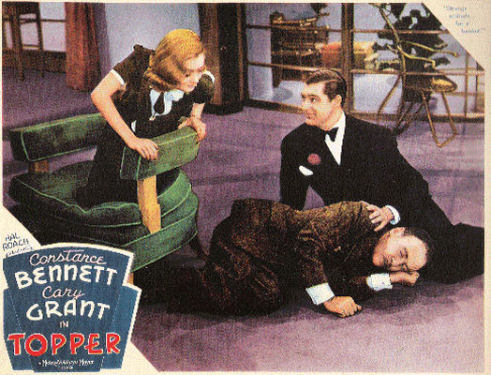
Topper (1937)

e1812-topper_lobby_cardThis fantasy comedy starring Cary Grant and Constance Bennett opens with a married couple flying down the road in their automobile. The unusual thing is that George Kerby is driving with his feet and that pretty much sums of this pair straight from the beginning. They live a wild, fun-filled life full of wealth and parties. However, all this craziness gets them killed when George takes on a curve in the road too fast. They decide as a good deed they must brighten up someone else’s life. Their subject of choice is Mr. Topper, an older fellow from the bank where George had acquired a great deal of stock. He is rather like a grumpy but lovable old dog who just does not want any excitement. The ghosts’ of the Kerbys change that however causing “Toppie” to get his name in the gossip columns after a stay at a chaotic vacation spot. His stuffy wife is dismayed, and his butler is peeved, but finally Topper is starting to enjoy life thanks to the prodding and trouble making of the Kerbys. This film has some good moments, but I would say that Grant’s comedy roles would just keep getting better after this one. 
 
3.5/5 Stars

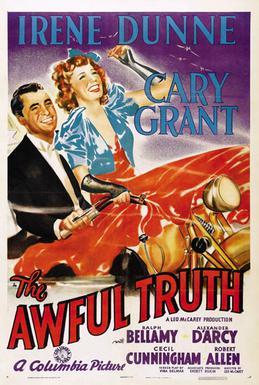
The Awful Truth (1937)

99f81-theawfultruth1937Starring Irene Dunne and Cary Grant, the film revolves around a couple after they split up over unfounded assumptions of unfaithfulness. The divorce is granted and after the wife gains custody of the beloved dog Mr. Smith, the 90 day waiting period begins. First she tries to get over him by spending time with a kind but dimwitted man from Oklahoma. Then Grant gets involved, and at first he gets enjoyment seeing his wife uncomfortable, but he soon becomes a bit jealous and sad. He then takes up his own relationship with an heiress and on the eve of their divorce they seem to be parting ways. However, Dunne’s character will not let it end that easily and she poses as his sister, eventually getting him away from his fiancee. Needless to say that in the end they get back together. This screwball comedy has very funny dialogue and Grand does some wonderful slapstick. It probably is one of my favorites from the genre.

4.5/5 Stars

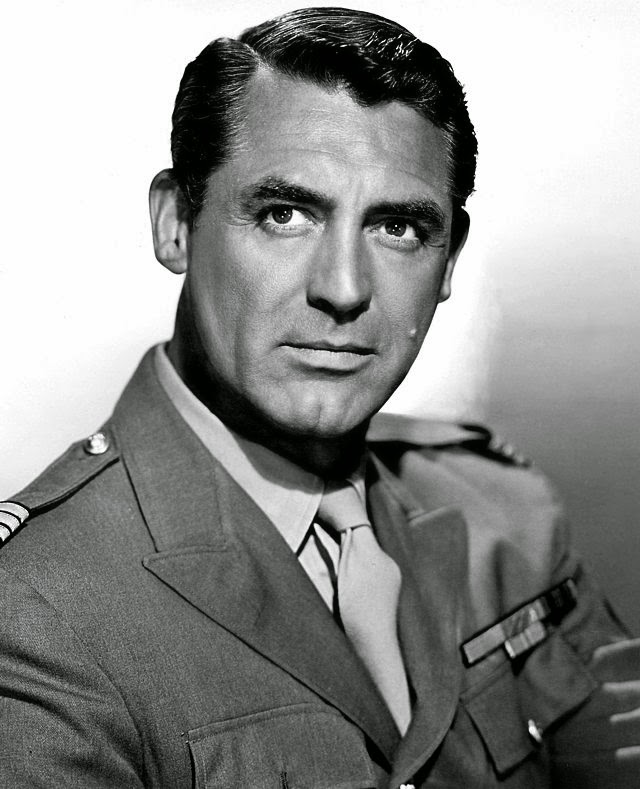
Star of the Month: Cary Grant

Born in England with the name Archibald Leach, a young member of a traveling comedy troupe took the name Cary Grant when he broke into the movies. Early in his career Grant was a leading man for Mae West and he was the Mock Turtle in Alice in Wonderland (1933). Then in the late 30s he came to more prominence in romantic and screwball comedies such as Topper, The Awful Truth, Holiday, and Bringing up Baby. In 1939 he was in two more dramatic classics Gunga Din and Only Angels Have Wings. He continued to perform comedic roles in the 1940s in His Girl Friday and The Philadelphia Story. However, 1941 marked his first collaboration with Alfred Hitchcock in Suspicion, and they would go onto work together in Notorious (1946), To Catch a Thief (1955), and of course North by Northwest (1959). Later in his career Grant had a well established debonair persona and he would continue to use it, well into the 1960s. Grant was a wonderful physical comedian and I really enjoyed him in The Awful Truth. I think his two greatest films however are Notorious because he plays against type and then North by Northwest because it is simply an epic thriller.