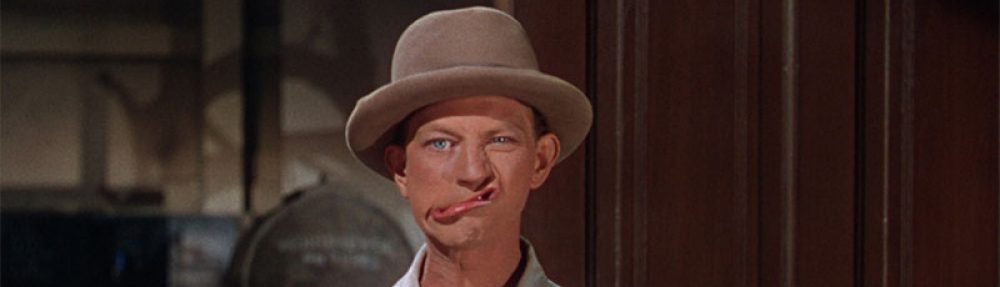
Reviews: The Mummy, Island of Lost Souls, The Black Cat

The Mummy (1932)

There’s something deeply prescient about The Mummy beginning with an archeological expedition for The British Museum. If it’s not evident from the outset, the film is firmly planted in the reality of 1922 when Howard Carter famously discovered the tomb of Tutankhamun. This is only one historical example, but even I remember hearing about the exploits of this modern discovery.

Now we live in a world in dialogue with the history of colonialism from the cultural tension over the Elgin Marbles to the very idea of ancient antiquities being housed in museums themselves. Even if it’s mostly to capitalize on something the contemporary audience might be aware of, The Mummy makes it plain, this kind of potential cultural desecration is not a totally new idea from our “enlightened” age. It has deeply entrenched traditions.

The British expeditioners come from two different camps, and they must mediate the pull between doing their methodical work of cataloging and then following the finds that will gain the most press. Those who are fully committed know they are working for the cause of science and not for loot.

It begins with a young man who will not heed the terrible curse on a casket, and he awakens a creature from eons before. It is Imhotep (Boris Karloff), who enters back into the world fully prepared to take back what is rightfully his and reunite himself with his long-lost love by any means at his disposal.

The Mummy starts out promising, but it never quite nails down the extent of its mythology and everything feels far too convenient with the re-animated mummy capable of doing anything he pleases to serve his purposes (and the plot). He’s well-versed in mind control, he has what looks like a shortwave television, and he’s all but indestructible to human hands.

The flashback sequences of Egypt hearken back to the expressionistic imagery of silent cinema and here is where our director, Karl Freund, seems to show his origins as the fantastic cinematographer for revered works like Fritz Lang’s Metropolis.

The film’s other compelling theme involves a woman of Egyptian blood (Zita Johann), who almost functions as a doppelganger through time. One man falls in love with her in the present (David Manners) and another man loved her in the past. She’s effectively trapped between two worlds — one distantly remembered — and yet now dwelling in the body of a young woman, breathing and alive.

She is not prepared to make the kind of sacrifice asked of her and only the supernatural can save her. Karloff is expectedly chilling, but the pieces around him aren’t quite as enjoyable as his greatest monster movies.

3.5/5 Stars
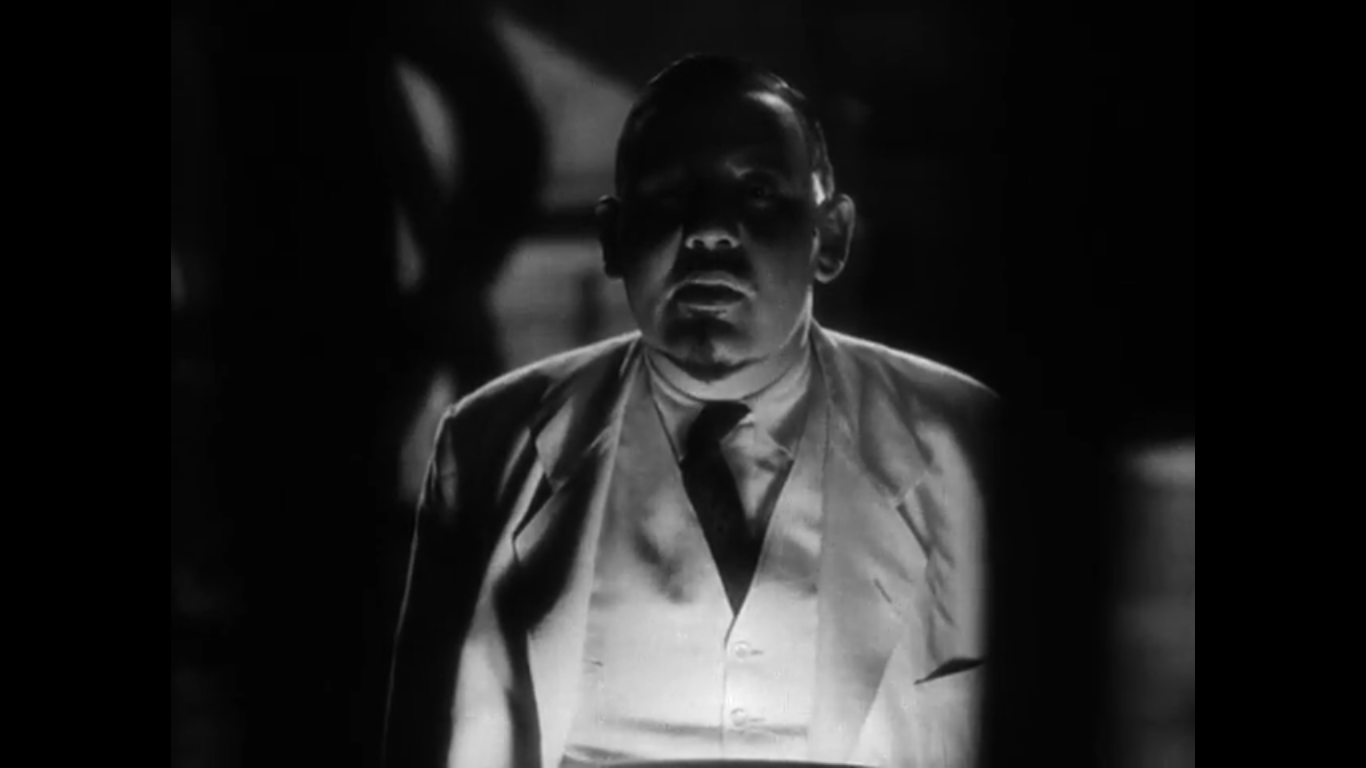
Island of Lost Souls (1932)

“Mr. Parker, do you know what it means to feel like god?” – Dr. Moreau

Island of Lost Souls is the kind of movie that all but disappeared with the more stringent implementation of the production codes in 1934. It begins with an uneasy mood as a castaway is rescued by a not-too-genial sea captain, who’s anxious about dumping him at the first sign of land.

This is how our protagonist Richard Parker (Edward Arlen) catches a ride to shore on the Island of Dr. Moreau. There’s something rather uneasy about the whole setup and the movie frequents a landscape and a world not so foreign from The Most Dangerous Game. It’s as if an island conveniently eschews all traditional rules of law and order.

While the earlier film is harrowing, subjecting Joel McCrea and Fay Wray to a grueling game of high-stakes cat and mouse, this one is more thematically rich. This might be entirely thanks to H.G. Wells. He is the man who originally conceived of Dr. Moreau. However, something else must be attributed to Charles Laughton.

There’s a level of devilish forethought to Laughton’s performance. Although he’s not an entirely imposing figure, there’s something mischievous about him. Sometimes he comes off gleefully boyish even as he takes on these calculated and totally premeditated social experiments on his self-made ecosystem.

Parker knows nothing about the world he’s wandered into, but he is our stand-in representing everything inherently decent about humanity. And there is something deeper to this since he is white in the age of colonialism. While he might not necessarily bear the “white man’s burden,” certainly he’s aware of his place in the social hierarchy. He’s a benevolent figure. Dr. Moreau is this privileged mentality gone astray.

Judeo-Christian society would look back to Genesis, and the parallel imagery is made plain fairly quickly. There’s a specific order to the world, a created dichotomy between humans and beasts. Because Moreau has installed himself as god on his own private world. However, he has somehow perverted what is good in strange and troubling ways.

These themes get murkier when you start considering ideas of eugenics and even how the aforementioned production codes forbade the outright depiction of miscegenation or the mixing of races in romance. These are not synonymous terms when it comes to humans and beasts living on the island, but it’s hard not to see how predominantly white audiences at the time might conflate the two.

Because Moreau’s rudimentary imitation of creation has elements to mirror what we already know intuitively. His creatures live by basic laws shouted out by their de facto leader (Bela Lugosi), and they realize through roundabout means certain tenets. He has taught them what pain is, and he’s molded some like his prized creation Lota (Kathleen Burke) into his own human image.

If the Christian origin story hinges on a Fall from grace where Adam and Eve were deceived by the serpent and ate from the forbidden tree of knowledge of good and evil, then Island of Lost Souls has its own paradigm. Suddenly, these indigenous monstrosities of his realize their creator is mortal or at the very least they can rebel against him. The law is no more and it’s been disproven. There is no longer anyone willing to uphold or live by it. Namely, because they realize it’s fallacious.

Parker is mostly uninteresting as we watch his repugnance grow, and he looks to be reunited with his innocent love (Gloria Stuart). Meanwhile, the doctor toys with him and tries to set him up with Lota. Lota fits crucially into this deeply human narrative because there’s a suggestion of her “evolution” within the arc of the film even if it’s not in purely Darwinian terms. Because she has come to understand what sacrificial love is: laying one’s life down for one’s friends.

If nothing else, surely this shows her not to be a creature without reason or logic but predetermined with something deeper and more primal inside of her. I find it impressive how something that feels deeply exploitive could still come down on some deeply philosophical ideas without ever forfeiting its obligation to a paying audience. It’s the kind of genre film capable of triggering all sorts of ancillary conversations, and I’m all the more curious to return to Wells’s source work.

4/5 Stars
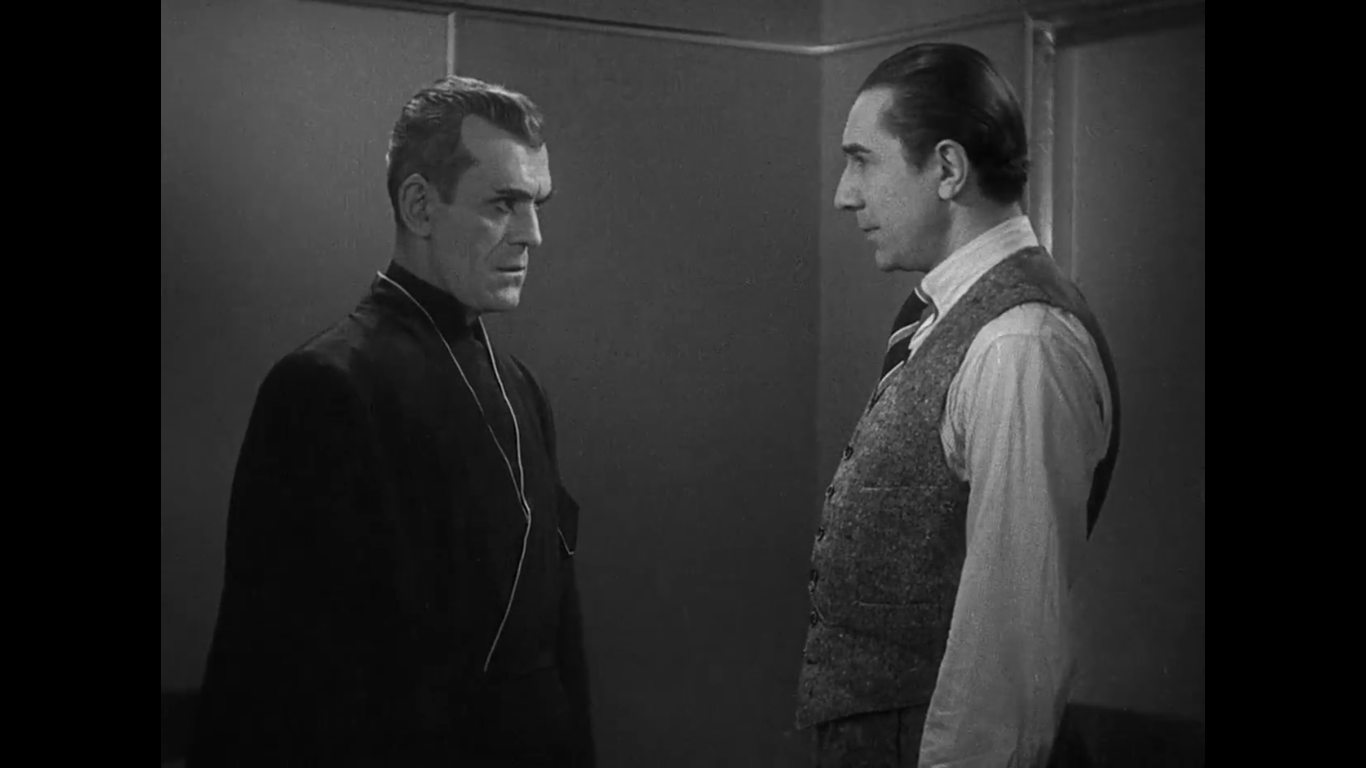
The Black Cat (1934)

Each lineage of horror movies must have its own in-house aesthetic and stable of performers matched with specific technicians who come to exemplify a studio and their body of work. The Black Cat brings together much of what made Universal Pictures horror so lucrative from the studio, and it gathers together two of their most iconic stars: Bela Lugosi and Boris Karloff.

Although we’re not in Transylvania, the story picks up aboard a train traveling through Hungary, a typically foreign locale for a hometown audience. We meet a newlywed couple (David Manners and Julie Bishop) on their honeymoon only to have their compartment’s marital bliss disrupted by Lugosi’s Dr. Vitus Werdegast. He looks nice enough, but there’s always something menacing behind his eyes (even when he’s playing pleasant).

Inclement weather leads to a devasting crash and the couple and their newest acquaintance show up on the doorstep of one of his old friends, although I use the word friend loosely. Hjalmar Poe is a famed Austrian architect, and his abode lives up to his reputation. We must expect nothing less as we are welcomed into the home of the always foreboding Karloff.

For the rest of the picture, The Black Cat feels like an oblique tour throughout the art deco space with a subtle game of death going on between Karloff and Lugosi. Because instead of bringing two unsuspecting victims into their lair, this is much more a grudge match with two unsuspecting parties caught in the middle.

It becomes a world modulating between the polls of the supernatural and baloney. With a rogue gallery of Lugosi and Karloff, we know better, and as the good doctor demures, “There are many things under the sun.” His evocation of Ecliasstes has very ominous underpinnings.

But that’s not the only source of disquiet. The way the two actors lurk around the corridors, the very way they interact around the woman is unnerving. Karloff always seems to be leering and ogling even if that’s how his face is predisposed. Then, moments later, he’s caressing a chess piece in a disturbing manner. Or is it only our imaginations playing tricks on us?

There were lulls that I wouldn’t mistake for tension, and yet there is so much to be said about the architecture of that house even when the architecture of the film seems to fail. Because this aspect of the mise en scene embodies something that fits so perfectly with the personas of Karloff and Lugosi. Somehow always incongruous and ill at ease.

And the film never feels pulse-pounding; it’s outrageous, yes, but it also builds to these harrowing moments. They’re sinister and escalate into a final descent into the pit of Hades further accentuated by the lines of the architecture.

The ending nearly balks on the entire movie. It’s a wink and a joke that dares us to tell others about what we just saw. They’d never believe it because this is the apex of outlandish storytelling. The Black Cat‘s not great, nor is it mediocre; instead, it feels deeply alive with something probably more indebted to Edgar G. Ulmer than Allan Poe.

3.5/5 Stars

The Naked Dawn (1955): An Edgar G. Ulmer Western

220px-The_Naked_Dawn_film_poster.jpgThe western is founded on certain unifying archetypes, from drifters to revenge stories, showdowns and the westward progress of civilization butting up against the lawless wilderness. It always proved a fitting genre for morality plays and deeply thematic ideas. The tradition of the bank robbery goes back to Edwin S. Porter and The Great Train Robbery, and it plays an important role in The Naked Dawn.
The action opens with Mexican banditos robbing a train and looking to flee the scene. Though they manage to get away, it’s not without consequences. One hombre named Santiago watches as his campanero Vincente dies in his arms. He comforts him with visions of heavenly cattle grounds even though the man’s life was full of indiscretions, to put it nicely.

The story does occupy itself with religious rhetoric, which feels very much a part of the cultural landscape, as do the Spanish language and such ubiquitous elements as taco stands, cantinas, and a mariachi soundtrack. The film rightly steeps itself in this perceived world below the border. Whether it is authentic or not feels slightly immaterial, because something fairly immersive is erected. In one sense, this is the most impressive success of The Naked Dawn.

There is “brownface” needing acknowledgment and a certain stereotypical gaze, but director Edgar G. Ulmer develops a surprising amount of atmosphere for such a meager western. Secondly, Arthur Kennedy somehow manages to give a thoroughly flamboyant performance showing his competency in anchoring a leading role — even in an admittedly small scale oater like this.

Because in typical drifter fashion, he goes from leaving his dead buddy behind to finding a day’s shelter at a farmhouse along the trail. There he is met by an energetic young farmer and his dutiful wife. The presence of such a figure as Santiago unearths all their flaws even as he overwhelms them with his vagabond existence, full of a certain high-living and nostalgia for the old days.

Although initially hesitant to get involved, the husband finds himself brought along for a raid on a crooked shipment manager who they overpower and string up while raiding the contents of his safe. In the midst of all the money, Manuel (Eugene Iglesias) suddenly becomes brave and also greed springs to life in his heart.

For thence onward, Manuel holds this stranger in high regard, in awe of this man who has seen so much and takes him for the time of his life in the local watering hole, partaking of all the worldly pleasures afforded from strong drink, saucy women, lively music, and a bar brawl to wind out the entertainment.

But if this is the grand exciting world away from the ranch, then back with his doting wife (Betta St. John), we find a certain amount of unrest. She does not love her husband but his prospects were so much better than what she had before. Still, this new man makes her heart glad; she is ready to elope with him without fear of consequences.

The utter irony is the very fact that while Santiago is the outlaw, at least he is obvious and upfront about his waywardness. In his new company, Manuel fancies himself an honest man and his wife comes across as an angel. However, whether it’s unwitting or not, they both have more conflicted characters than they let on. Santiago is the one who allows them to salvage their lives.

It should be noted Francois Truffaut purportedly gleaned inspiration from this film’s love triangle for Jules et Jim. At first, any sort of comparison seems superficial at best. However, I finally settled on the fact both films contrive this three-way relationship that plays peculiarly for the very fact it lacks a great deal of interpersonal drama.

There is a passivity to how it unwinds and this feels counterintuitive to how these stories are supposed to function. Although we have tragedy on both accounts, the fact it is so detached leaves a different taste, rather than a blistering, jealousy-fueled gunshot finale. For that, we have to look at alternatives like Laura (1944) or Truffaut’s own Soft Skin (1964).

There is not a lot of time and space but the resources are used in all number of facets to at least touch on issues of religion, law and order, romance, greed, and unquestionably, so much more. Fittingly, as the picture zips to its rapid conclusion, we have come full circle with our larger-than-life Bandido dreaming of the pearly gates much like his campanero before him.

Ulmer blesses the audience with another extraordinarily lucid 10-day effort. Let that sink in for a second. The Naked Dawn is yet another marvel in economic ingenuity. Better yet, any drop off in quality or production values only seems to add to the film’s inherent flavor.

3.5/5 Stars

Detour (1945)

detour1Hollywood is really missing out, because with the direction that the industry has gone there really is no space for a film like Detour to be made by conventional methods anymore. It was shot in less than two weeks. It cost a minuscule amount compared to the contemporary A-Pictures, and yet it used its low production values as an advantage, not a curse.  Director Edgar G. Ulmer was the king of so-called B-films of Poverty Row and Detour was his shining gem. It feels a lot like the later film-noir D.O.A. because both have a main conceit that might be hard to swallow at first, but if you do that initially, you quickly find the film thoroughly rewarding on its own merit.

The sets are simple. A diner, a car, a hotel room, and that’s honestly about it. The actors are pretty obscure by today’s standards. Tom Neal was made for this role of the fateful victim Al Roberts, with his constantly pouting face and a pair of despondent eyes. As he sits glowering in a roadside diner it’s hard to imagine he’s ever smiled in his life. He’s a real sourpuss.

There was a time, back in the day, when he made a modest living as a piano player in a New York club. He had a girl named Sue, and he was relatively content playing the bouncy tune “I Can’t Believe You Fell in Love With Me” while making a few bucks. Now the song haunts him wherever he goes. Sue left to try her luck in Hollywood and soon after Al began his long hitchhike to California to rendezvous with her. On one unassuming evening, all his luck changed. Just like that.

An obliging fellow offered him a ride and they get on well enough. He’s a bookie, but not a bad fellow, so Charles Haskell and Al get on fine. Then they switch up driving duties and a little light rain starts coming down into the convertible. Al goes to put up the top because he assumes Haskell’s only asleep. But when he opens the side door, Haskell falls to the ground. DEAD! Al does what any normal human being would do and he freaks out. Should he dump the body? What should he do with the car? Did anyone see him? Will the people back at the rest stop be able to I.D. him? What will the cops say if they hear his story?

And so he ends up getting rid of Haskell (in a sense playing the role of guilt) and takes on the man’s identity. But wouldn’t you know it, the first person he picks up is the fiery Vera (Ann Savage), who looks apt to claw your eyes out. Of course, she too got a ride from the real Haskell and isn’t buying Al’s story. She’s got him on the rack and she’s not about to let him get off easy. She wants a cut, she wants to sell the car, and Vera’s the only one who is going to call the shots. Al is a stuck, trapped, and paranoid, as Vera waves blackmail in front of his face and won’t let him breathe. She’s got him around her finger and there’s absolutely nothing he can do. After all, who would believe his story?

But whether it’s fate or whatever you want to call it, he gets out of it much in the same way he got into it. The resolution makes me grin because it’s so wonderfully contrived. There’s a tacked on ending to mollify the Production Codes (because Al couldn’t get away with his crime), but although it is an easy fix, it hardly takes away the potency of Detour. I long for the days they made films like this. Ann Savage somehow is nastier and crueler in a few minutes than most any character is in an entire film. It’s a brilliant role and honestly, she’s not my favorite femme fatale, but she has to be one of the most notorious. She seriously sends shivers up the spine.

“Isn’t that a laugh? Haskell got me into this mess, and Haskell was getting me out of it. The police were searching for a dead man. I keep trying to forget what happened, and wonder what my life might’ve been if that car of Haskell’s hadn’t stopped. But one thing I don’t have to wonder about; I know. Someday a car will stop to pick me up that I never thumbed. Yes, fate or some mysterious force can put the finger on you or me for no good reason at all.” – Al Roberts

4/5 Stars

People on Sunday (1930)

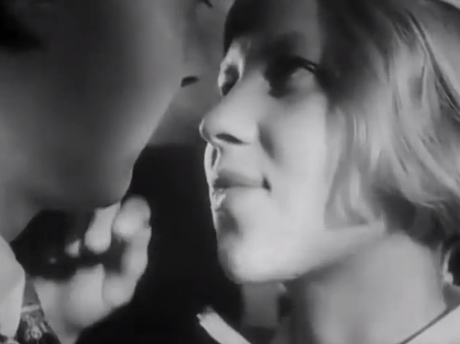
peopleonsunday1One of the last German silent films was People on Sunday, a modest project from a group of young men. Our stars are young professionals in real life and only amateur actors who did not quit their day jobs. They only could film on the weekends and that’s how we end up with People on Sunday! It takes on a faux-documentary style, and it follows the lives of four individuals as they meet one another and then spend a pleasant Sunday afternoon together.

There is certainly a breezy playfulness to the film as the two men and two women spend time frolicking at the beach and reclining in the sun. They share laughs while eating and listening to records. It quality fun and there seems to be a general innocence to their behavior that while sometimes rude is all in good fun.

This is, in fact, a film of the late Weimar Republic, without the cloud of Hitler’s Nazi regime hanging over the country (not until 1933). It stands in sharp contrast to later works or documentaries because People on Sunday is seemingly free and wholly unrestrained by ideology or prejudice.

We should undoubtedly be grateful for this historical piece of New Objectivity cinema and the reasons are twofold. First, since the film essentially works as a documentary, it gives us a wonderfully clear picture of what life was like in the world of Berlin. There are continuous shots of the city streets, passing vehicles, and people making their daily rounds.

One especially memorable moment occurs when the story takes a short aside to afford time for a montage of faces. The camera slowly captures face after face providing a sample of all the individuals who walk these streets. They transcend time and space because of their humanity, their mundane quality, and they have the same lightness of our main characters.

When we look at the names behind People on Sunday, it is almost staggering to acknowledge these men who were formerly unknowns.

As directors, you have Robert and Curt Siodmak. Your main writer is the great Billy Wilder. As cinematographer, you have another great in Fred Zinnemann, and finally, production was helped by the B-picture master Edgar Ulmer. Due to the rise of the Nazis, all of these figures would end up emigrating to Hollywood and the rest was history.

In many ways, we are indebted to them, because they helped form some of the great American classics and you can already see them honing their craft. The images are visually arresting and there is even a sense of humor that we could seemingly attribute to Wilder. It would only get better from then on.

If I’m not mistaken there are several scores that have been used to accompany the film, but I did really enjoy the Czech film orchestra because it added a lot to this otherwise silent picture. Hope you enjoy this unassuming jaunt as much as I did.

4/5 Stars