Never Give a Sucker an Even Break (1941): W.C. Fields and Gloria Jean

Screenshot 2020-07-07 at 9.13.35 PM

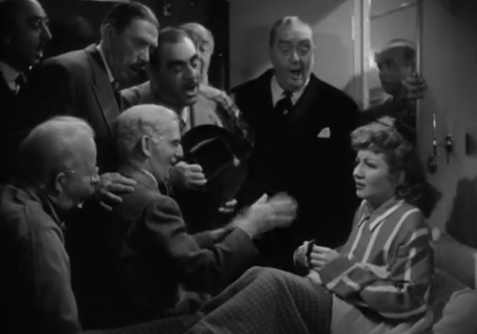
“Do you think he drinks?”

“He didn’t get that nose from playing ping pong.”

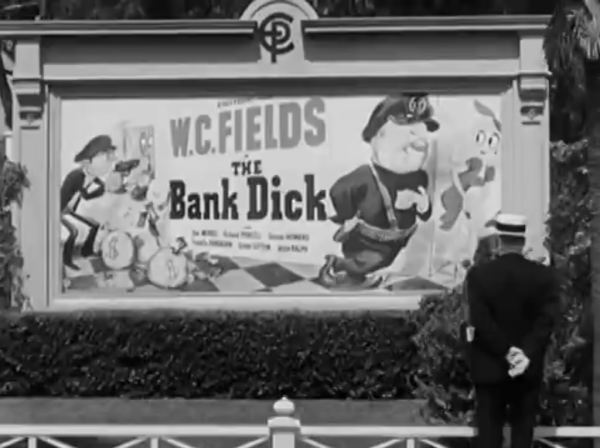
Self-reflexive metanarratives have the capacity of dissecting celebrity and playing with personas. Such a context is ripe with possibility and so when we find ourselves on a studio lot with W.C. Fields eyeing the a big billboard for The Bank Dick, we know we just might be in for something. It came out the year prior, a critical darling and a commercial flop. He’s looking to pitch the follow-up to his producer.

He is under employment at Esoteric Pictures. His niece in the picture, real-life songstress Gloria Jean, plays a young ingenue out of the cut of Garland or Durbin. They are the film’s affable nucleus.

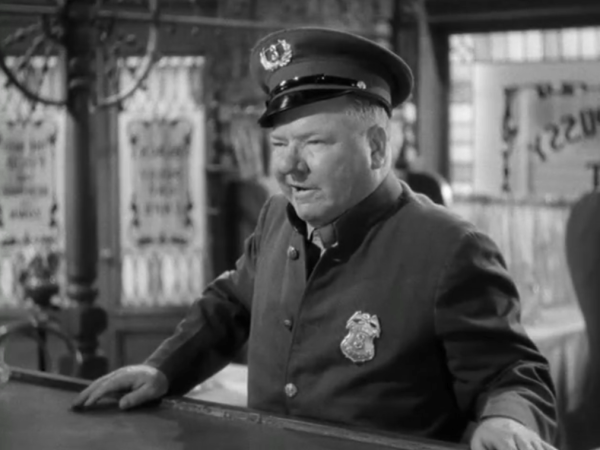
W.C. Fields is a picture of his usual self with his protruding proboscis and that straw hat of his as battered as ever. There’s the way he casually mumbles away at dialogue. It falls offhand and unrehearsed. You can almost lose it. Some of the garbled gook he gets out only makes it to your ears after he’s said it, and your mind has time enough to catch up.

Meanwhile, a typically huffy Franklin Pangborn with his stringy hair tries to command the unremittent chaos of the studio sets to get Gloria Jean to perfect her latest song, one of those high-pitched operatic numbers out of yesteryear. He’s already in a unstable mood when Fields pays him a call.

The script Fields is pitching becomes the premise for the movie itself as he darts in and out of scenes that might as well have no relation to one another aside from featuring Fields and Gloria Jean.

They start on an airplane together to some unknown destination. They might as well be waiting for Godot. He goes free-falling through space in pursuit of a bottle of spirits only to end up trampolining into the stratosphere of a pretty maiden from an oblivious world. Margaret Dumont is her imperious mother Mrs. Hemoglobin leading a great dane by the leash like some bleak Amazonian woman.

Fields, who penned the script under one of his many aliases, pushes the boundaries farther than he’s ever gone before, and it’s spectacular and surreal if this is what creative control looks like. It’s not as out and out funny as some other Fields movies, but it’s giving itself over in its totality to this absurd rhythm which is quite extraordinary to watch. He throws himself over a cliff in a basket only for Pangborn to loudly protest. The story lacks continuity! It’s an insult to human intelligence!

Is it too obvious to read it as a commentary on a career of movies and studios and such? I think not. Because W.C. Fields films were never the most tensely plotted, tightly constructed gems. He built his career out of ad-libs and performance, not so much the written word. Not that he didn’t come alive with verbal wit of his own accord and this was his gift.

never give a sucker an even break bank dick billboard

But he was never made for the strictures of the industry, and so it’s fascinating to watch him when the restraints come flying off, and he’s got his run of the candy store so to speak. In fact, he rebels against conventional plot to the point of totally pulling it apart in front of us and tossing it away as collateral damage.

There is absolutely no pretense here. It’s even less about fast and free gags and bits being assembled together. It’s given itself over fully to surrealist feats of cinematic fancy. It might leave some befuddled now as it did then, but one can gather some sense of the performer. It suggest so much about him implicitly that still needs to be parsed through.

With the real-life context, it shows the decline of W.C. Fields who was quietly ditched for other more agreeable talent, especially because Never Give a Sucker… was hardly going to woo the audiences. Not in 1941. It was of that rarefied breed we often far too easily label “Ahead of its Time.” Here it seems pertinent.

The final set piece is an eye-popping death defying car chase to the maternity hospital. It feels like a flashback to the heyday of Keaton or Lloyd. It’s the most purely comedic slapdash moment in the picture, and does it fit with the rest of the movie? Not by a long shot, but somehow it remains a capstone for something that is totally of its own form and function. It’s almost obligatory. Here the career of W.C. Fields quietly came to an end. This was his final opus to hang his reputation on for future generations.

Doing a bit of perfunctory research, Fields was game to make another such picture with Gloria Jean and some of his favorite stock players. The studio wasn’t about to have it, and his own health was at the detriment of his drinking habit, lampooned as it might have been. W.C. Fields is one of the more irascible classic comedians to be able to pin down. But his comedy at its core does seem to get at a central human longing. It was always him against the world. He took it as well as dishing it out.

gloria jean

Maybe it’s only a small reward and too little too late, but I think even Fields understood the significance of Gloria Jean being in his corner unreservedly. Yes, it’s mawkish in the kind of Hollywood tripe sort of way, but secretly it also feels like a healing balm to the Fields character.

At last he can have some kind of peace. At last there is someone who will accept him unconditionally for who he is. My hope is that Fields experienced some of that in life as he did in his final major screen role. That’s not for me to know. All I know is that we all crave love; we all crave relief.

Fields wanted the film to be titled “The Great Man.” We can read it as jest or a bit of self-congratulatory pomp. But I think this is inside all of us veiled by insecurities. For people to see past our flaws. We want kids to look up to us and see us as what we aspire to be and not as the damaged goods we actually are. Gloria Jean extends her uncle such an honor as she smiles into the camera one last time. He is known and loved. To her he is a great man.

3.5/5 Stars

The Bank Dick (1940): Egbert Sousé and Lompoc, California

Screenshot 2020-07-08 at 4.50.58 PM

When W.C. Fields goes and names his protagonist Egbert Sousé it doesn’t take a brain surgeon to get the joke, although he does spend much of the movie explaining the correct pronunciation. The other half he spends drinking at his favorite bar: The Black Pussy Cat Cafe.

His hometown is none other than Lompoc, California. Aside from being a memorable name in its own right, the town had the illustrious title of being a dry zone with a long history of temperance. What better way for W.C. Fields to thumb his nose at them, than by setting up shop right in their fair city, albeit in his own made-up cinematic universe?

If it’s not becoming obvious already, I think the reason The Bank Dick is often touted as the finest example of his style is because it totally digs into his stereotypical persona whole hog. He’s an irreparable drunkard, a lier, and a braggart prone to any number of human vices. There’s no attempt to varnish them either. He’s a bona fide reprobate.

Nor is he particularly fond of his wife, daughter, mother-in-law, or the little kid who shows up in the bank. His daughter is bent on throwing rocks at him, and he about strangles a little boy who’s armed with a toy pistol. Does it even need to be said? He’s never a likable figure.

However, beyond mere character flaws, it is Field’s delivery that sets him apart from the crowd — the way he mumbles or draws out a line of dialogue. Again, it’s like an afterthought. He’s saying all the unfiltered comments he would say if he thought no one else is listening. Either he’s too dumb to know he’s being overheard or he plainly doesn’t care. At least that’s part of the shtick.

If he has anything close to a friend, it would probably be his bartender (Shemp Howard). He would follow the man to the end of the earth and back again, mostly because the man spells booze. It’s not all bad though since he makes another acquaintance over drinks.

After reminiscing about the good ol’ days giving a passing mention to Mack Sennett, Chaplin, Keaton, and Fatty Arbuckle — all the lads — he finds himself being pulled onto a 36-hour movie set in desperate need of a stabilizing force.

Souse’s tall tales nab him the job, and he certainly acts the part: Dishing out stage directions and convening with the script girl, between trips of being carried around like ancient royalty on a litter. His family’s far from impressed by his hamming.

What’s more, we drop this scenario almost as soon as it begins. It’s like Fields was bored with the narrative strands and decided to table it until his next go around. He has other priorities. His film, after all, is called The Bank Dick and so there has to be some scenario for this to come into being.

So, a bank robbery happens. He’s going to the saloon (where else would he go?). Alas, it’s closed, but sitting on a bench, with his nose in his paper, he ends up in the right place at the right time and gladly takes the mantle of a hero as a criminal is apprehended — no thanks to him.

As recompense, he’s bestowed a low-grade job as a bank dick that’s somehow tied to his home, which they might foreclose on if he doesn’t keep the position. It’s a dubious scenario, but also the kind of underhanded deal Fields probably more than deserves if we can say it. Tit for tat as they say. After all, it’s only a movie and this obliviousness underscores his very identity.

Next, he’s talking his future son-in-law into buying some useless mining stock, and pretty soon they’re embezzling from the bank for a dead-end deal. So of course the bank examiner, a snooty Franklin Pangborn, has to show up right on cue to throw a perilous wrench into their plans.

All Fields’ attempts at cordiality and voluntary sabotage fail, but the entertainment comes with each and every one of his ploys. I won’t try and spoil them here, but Pangborn was born to be his hapless target and Fields obliges with all sorts of shenanigans. Again, to no avail.

the bank dick

Of course, none of this matters. Not the embezzlement. Not the bank robbery. Not any of it. Because their mine is actually a bountiful lode, and they strike it rich as only W.C. Fields can. It’s an instantaneous, convenient reversal of fortune, but then again, Fields’ pictures always defy conventional logic. It’s in their very nature to shirk the normal rhythm for whatever behooves them at any given moment.

In this way, The Bank Dick synthesizes many of his prevailing themes — some of those mentioned already — capped off by an outrageously decadent happy ending. It also joins the ranks of Never Give a Sucker… in his line of raucous car chases, and it’s not a coincidence he’s working with Cline who partnered with Keaton on Sherlock Jr. Similar stunts abound here. It’s a bit of comic nostalgia even in 1940.

W.C. Fields isn’t for everyone. The Bank Dick is not always entertaining. But you come to appreciate his personal penchant for comedy as each performer of the era cultivated a very particular image. He’s little different and seeing as he wrote this number as well as starred in it, he’s giving himself over to the comedy and doing it the way he sees fit. If nothing else, it probably most closely aligns with his proclivities as an entertainer.

His films were never meant to be cohesive. They were never even really meant to be films at all. As with many comedians, it feels like the best dashes of serendipity occur in those suspended spaces in between. Where there’s a throwaway gag, an off-handed zinger, or just something resolutely out of left field.

Every person is different as are their audiences. They don’t always carry our interest every waking second. Sometimes all they have to do is bless us with little bits and pieces of time. It’s often enough for us to remember them so that they remain in the cultural consciousness. This is how I feel about Fields. He is an indelible figure for the persona he built, straw hat, big nose, flaws and all.

3.5/5 Stars

Bluebeard’s Eighth Wife (1938): Coop and Colbert

Screenshot 2020-03-21 at 31856 PM

The whole glorious entangled mess of the story feels like an obvious antecedent to Billy Wilder’s Love in the Afternoon (1957), which is one of his lesser films (even with the redeeming presence of both Hepburn and Chevalier). It seems like a fairly obvious observation to make because Wilder deeply admired  Ernst Lubitsch. Love in The Afternoon was an ode to his hero. Although it didn’t quite come off.

I have similar feelings about the screwball comedy Bluebeard’s Eighth Wife (1938). It doesn’t quite gel. But first let’s turn our attention to the illustrious opening gambit which, like many of the great Lubitsch beginnings, is too exquisite to pass up as the dramatic situation is brought to the fore.

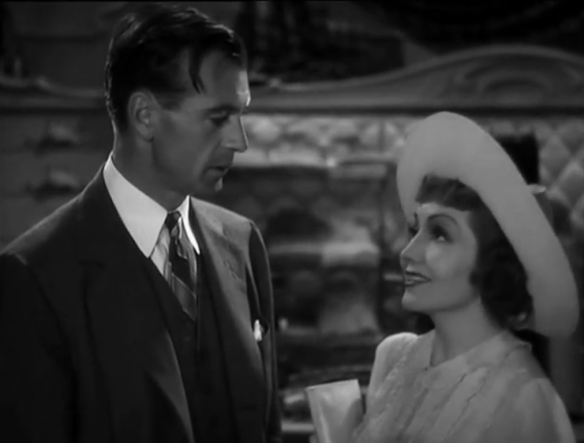
Gary Cooper staves off the sales floor spiel of the pertinacious shopkeeper with a touch of Parisian charm. All he wants are pajama tops. No bottoms. But in France, this simply is not done. It’s unheard of. The chain reaction is set off from clerk to head clerk — rushing up the stairs to the manager, regional manager…all the way up the president! In a moment of incredulity, the disgruntled fellow rushes out of bed at the words. He yells, “Communism!” only to reveal he has no bottoms. And we’re hoodwinked from the outset as only Lubitsch could do.

It all amounts to a national calamity. You can just imagine the papers printing up a nice spread on the scandal. But none of this happens thanks to a most propitious solution in the form of a woman; she only requires bottoms for her man. If it’s not apparent already, Billy Wilder and Charles Brackett’s script might as well have written the book on the rom-com meet-cute.

They’ve piqued our interest and pricked up our ears. If nothing else, thanks to some talk of “Czechoslovakia” in the dark. Far from being risque, it’s supposed to be a handy antidote to insomnia.  The man is obliged to the woman, and they go their separate ways.

The story too moves on from a department store to a hotel hallway where Gary Cooper is still being hustled and harried, this time by none other than the perennial Classic Hollywood hotel clerk Franklin Pangborn.

Better still is Edward Everett Horton, the Marquis de Loiselle, a man squatting in the hotel with rent backdated for months. He’s trying to pawn off anything he can to anyone who will bite including Mr. Brandon (Cooper). He’s also connected with the same pair of PJs in another winking Lubitsch touch before the conversation suddenly switches to bathtubs.

If you want to get technical, the pajamas spell it out for him. It’s the reason why he’ll buy the man’s bathtub, already preemptively planning a honeymoon in Czechoslovakia. It’s Lubitsch shorthand for wedding bells. You see, Coop is intent with getting together with Claudette if at all possible, and it is. She’s the marquis’s daughter.

These elements are wonderfully conceived and textbook Lubitsch execution making the most of the script. However, I failed to feel the same way about the entire movie. If you’ll permit me a digression, I recently saw Paris When it Sizzles and there’s no doubt Lubitsch’s film is head and shoulders above the later picture — more lithe and clever at any rate — but there is the same problem at its core.

It ‘s almost counterintuitive to acknowledge this. The premise in each case feels almost too inventive for the story’s own good. However, it’s rather like we are following the mechanisms of a clever bit of story structure instead of really getting to enjoy the out-and-out thrills of romance, be they comedic or overly dramatic.

We never get past the stage of logline, hook, or gimmick into truly uncharted territory where the two characters are allowed space to breathe and do things that feel, well, natural.

The remaining elements are intriguing enough. She finds out he’s been married so often. Thus, Nicole’s ready to call the whole thing off. Instead, she decides to make him suffer. No divorce, just prolonged separation. It galls him to be so close to his wife and yet so far. He mounts an offensive inspired by Shakespeare.

What follows is a barrage of slaps, spankings, and iodine for bite marks. Colbert is able to out duel him with her onion breath — his fatal flaw is that he positively abhors the miserable vegetable. It’s all potentially brilliant stuff and a lot of it truly diverting with David Niven and a private investigator thrown into the mix. However, the pieces somehow don’t fit together in a manner constituting a decisive story, beyond some hilarious premises and snappy dialogue. Rest assured the film has both.

If we’re able to consider where it goes wrong, we can look to Gary Cooper and Claudette Colbert sharing the screen together. There’s no clear antagonism between them per se. Instead of antipathy, they have a kind of anti-chemistry. That is, they’re meant to be opposites. But there must be a sneaking suspicion on the part of the audience that they do really have feelings for one another. At least, this is what all the great screwball comedies of remarriage banked on.

Coop and Colbert never manage the same kind of underlying inertia. I never feel like I’m sitting back and having a grand ol’ time gallivanting through escapades with them. In other words, it’s not quite screwball. That was never the Lubitsch calling card. That’s not what his Touch is about.

Admittedly, I had a similar issue with Design for Living (1933) a film that was quite good on paper (and even in technical conception. The acting talents are to die for. The director one of the greats of visually intuitive comedy. Here we even have a script from Billy Wilder and Charles Brackett.  It all comes to naught if the parts don’t completely mesh.

One idea I would like to court has to do with the point of view of the story. Obviously, Gary Cooper’s our lead, and he’s far from a virtuoso comedic wit. He is a movie star. Still, what is the essence of the story?

Is it about a woman winning her man over under the most absurd circumstances? The Lady Eve did that quite well: Barbara Stanwyck taking in Henry Fonda. But that will never do with Coop (Then, again there is Ball of Fire). He began as our focal point, and he’s the main focus until the end. Even with a straitjacket gag, he gets the final kiss.

Really this should be Colbert’s movie to win over, where we get to cheer her on and relish her amorous conniving. Heaven forbid our leading man be upstaged (Then, again there is Midnight). Instead, Claudette felt like the enemy, a bit annoying, and because Gary’s strung out a laundry list of wives and meets everyone with a scowl and a brusque dismissal, there’s not much to like about him either.

Maybe the film’s take is too modern or my sensibilities not modern enough, but I couldn’t help feeling letdown. I’m not sure if doing a more thorough anatomy of the screenplay will change this, and I’m okay with that. It’s only a shame I don’t like this movie more. I wanted to. At least I know Gary and Claudette won’t hold it against me.

3/5 Stars

Only Yesterday (1933): Margaret Sullavan Shines

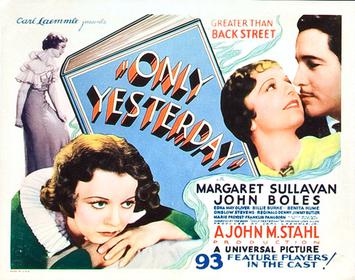
Only-Yesterday-1933-Lobbycard.jpg

In the opening designs of Only Yesterday, the New York Stock Exchange is encapsulated by its usual hubbub only to hit the skids of pandemonium when the market crashes. We’re talking about the Big Crash of 1929. It plays as the backdrop to our story, very much functioning as current events.

The backstory makes the film fall even closer to home. Because like just about everyone else, Universal Studios was saddled with their own financial troubles so it seems fitting Only Yesterday was the project made to get them out of the doghouse and salvage their holdings.

If we are to believe this film, part of what Black Tuesday did was totally humble both the rich and the poor (and the movie studios) in their separate estates. Before the sheer magnitude of the devastation has spread, we get a front-row seat at the party hosted in the home of Mr. and Mrs. James Emerson.

What becomes immediately apparent is the buzz of the atmosphere with tumultuous music and a smattering of glib zingers. There’s a cascading frivolity on all sides to go with the idle chatter supplied by such gossipping fiends as Franklin Pangborn.

However, Mr. Emerson (John Boles) comes home positively shellshocked because he’s been cleaned out. He’s in no state to make merry opting to disappear into his study. It’s in the backrooms and corridors where the crushing reality sets in, to the point of private devastation.

From the outset, Boles comes off as a sympathetic figure and a calming presence even as he comes to terms with the weight of the Crash and its innumerable implications. It’s true the man of the house looks to be teetering on the brink of suicide, if not for a mysterious letter on his desk.

He opens it up and thereby begins the heart and soul of our story. It is partially his story and someone else’s as well; it began before anyone knew of a Depression, in 1917. If you remember, without leafing through your history books, “The War to End All Wars” was reaching its conclusion.

Back then James was a dashing soldier, unmarried, and still looking to finish up business overseas. It was on one such evening back in 17 where he met a buoyant young woman (Margaret Sullavan in her stellar debut) on a dance floor.

She is the picture of youth and her voice has yet to reach depths of only a few years later Regardless, precocious Mary Lane comes out of the woodwork to confess her love for him from afar after well nigh 2 years!

He takes it good-naturedly enough, altogether flattered anyone might look at him in this manner, and it leads to something — a dance and then whatever might come next. If the cynical would term it a one-night-stand, then it’s a little bit of paradise and Mary holds onto the evening.

In her mind, it’s the first of many, if not for the fateful news that the 309th is engaged to be shipped overseas. This is the event her whole life seems to hinge on up to this point; one evening was an entire lifetime. It just goes to show how the same event can take on differing degrees of resonance for two people.

It happens so quickly as to totally catch the audience off guard. James is off to fight a patriotic war and Mary is going up to New York as to not besmirch her family with her ignominy; she is with child.

Shopworn Angel would capture much the same jingoistic “Over There” milieu a few years down the road and yet that time around, not only would Margaret Sullavan be the veteran opposite a still callow Jimmy Stewart, the Production Codes would exert themselves more rigorously.

In terms of solely content, there’s little doubt Only Yesterday is armed with the uncompromising brazenness of the Pre-Code era. This includes a broad-minded perception of a woman’s place in an evolving society. It makes for a fascinating bit of observation, especially considering how Classical Hollywood would eventually settle into a status quo — a cult of domesticity tailored to the mid-20th century.

However, in Only Yesterday, we get Aunt Julia (Billie Burke), a progressive woman who has a life involving such independent-minded things as bob hairstyles and full-time employment. Aside from The Good Witch, Burke often played ditzy oddballs in numerous comedies where she wears on the viewer. Here there’s something resolute and distinctly likable about her because she does beat to a different drum.

The words leaving her lips are both an encouragement to her rejected niece even as they color how she sees the world in the 1930s. She has effectively worked to “kick the bottom out of the bucket called the old double standard” and she fervently believes “Today a woman can face life as honestly as a man can.”

Aunt Julia also helps to temper the situation swirling around Mary helping ease her mind. As a word of comfort, she says, “It’s no longer a tragedy, it isn’t even good melodrama, it’s just something that happened.” Meanwhile, Burke’s jovial suitor (Reginald Denny) seems like a playful generally affectionate chap. This portion is one of the film’s most carefree as a result.

Armistice eventually comes and with it parades of victory. We know what must happen now: a reunion. There don’t seem to be many close-ups throughout the film, but Sullavan gets a few of the most crucial ones when she’s reunited with her man only to realize he doesn’t remember her, having found someone else to love (Benita Hume). It’s a devastating bit of exposition and her face says it all.

If Gold Diggers of 1933 details a forgotten man, she’s a forgotten woman, although she’s not about to wait around to be noticed — she has a son to look after. It shows the depth of her character.

Mary shares a bit of the sacrificial devotion of Stella Dallas or the tragic unrequited point of view a la Letter from an Unknown Woman, maintaining a thin line of communication with her former love through a string of telegrams.

What’s astounding is even in her youthfulness — at only 24 years of age — Sullavan’s more than able to carry the weight of the performance, not only a vivacious ingenue but a mother who’s forced to weather the weight of the world alone. Like Stanwyck a few years later, they prove themselves wise far beyond their years. What a way to enter Hollywood.

Finally, it happens and The New Year brings her face to face with the man she once knew. Boles feels more and more of a cad over time, whether he was meaning to be or not. He has a steady demeanor, a serenity in his favor, but after being so ignorant of one woman, he manages to rebuttal his wife as well, all in a very civilized manner, mind you.

Even as Billie Burke represents something else, there’s still a prevailing sense that women can be cast aside for the sake of a story. Sullavan, on her part, exudes a quiet regality even unto death. What Mary has, however, is a legacy in the life of her child, and in him, like with any life, there is still some hope for the future.

From a historical perspective, there’s a lot to be learned. Even back then a young lad would rather go to the pictures to see Chaplin than read a book, and all the women want to look like Greta Garbo — one of the most sought-after glamour girls of the 30s. Some things never change.

It’s rather sobering to read Margaret Sullavan’s son Jimmy Jr. was played in real life by Jimmy Butler, who was affected by WWII like many were affected by the previous war — killed in action in France at the age of 23. It grounds Only Yesterday in real tragedy.

3.5/5 Stars

The Palm Beach Story (1942): Another Screwy Sturges Freight Train

the palm beach story 5

“After you’re married… That’s a funny thing to hear your wife say!” – Joel McCrea as Tom Jeffers

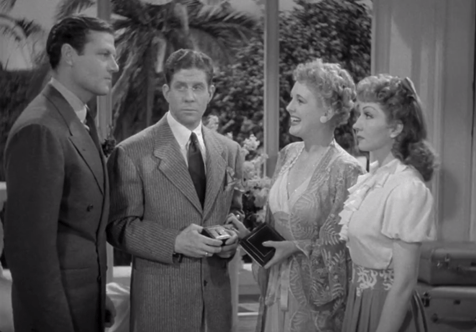
All the timeless Preston Sturges pictures have the pace of a freight train barreling down the tracks in loop de loops and figure eights. The Prologue of The Palm Beach Story sets up a raucous race to make it to a wedding ceremony involving a bride and a groom…and a woman tied up… It’s gone in a blink. Hold that thought.

Cut to present. There’s Franklin Pangborn, always hustled and harried. This time as an apartment manager trying to show off the new apartments he has for lease to the grouchy, incessantly deaf Wienie King and his bubbly wife.  These two initial scenes are textbook examples of how to juxtapose people and places for comic effect. In fact, sometimes Sturges will gladly lean into the joke before giving us any indication of what his story really pertains to.

When we finally find a premise, he’s already taken us for a spin. Because the previously revealed bride and groom, Tom and Gerry Jeffers (Joel McCrea and Claudette Colbert), sunk all their money trying to get a bite — namely the $99,000 he needs to get his suspended airport project off the ground. As of right now, there are no takers, and their marriage has tanked. Strangely enough, they still love each other madly. At the very least, their constant quarreling seems to hint at their continued devotion. That’s the wrinkle.

She wants to get a divorce (sacrificially, of course) so she might hook a rich husband to pay for his pet project. He selfishly wants to stay married to her. He tries to hold onto her, racing out of their apartment, in only the bed linens, as she resolves to go to Palm Beach — to find herself a millionaire — for him.

Sturges relishes the comic situation, which verges on the risque, especially for the day and age. The script was even repeatedly balked at by the Production Codes for the very same reasons and still they manage to mention the word “sex” quite frankly (Gasp)!

What becomes most evident is this increasingly flippant disregard for the institution of marriage. The ensuing world and the situations arising make sense originating from a man who himself came out of affluent circles with a row of marriages left in his wake. He’s in a sense writing what he knows intimately while still utilizing his own idiosyncratic perspective.

It’s a glorious trip to Palm Beach as he loads the cars end to end with his stock company, comprising a traveling circus of dopey millionaires making up the Ale and Quail Club. Gerrie gratefully becomes their mascot as they pay her way to the far off land of the Florida coast.

the palm beach story 4

In typical Sturges fashion, he overwhelms the screen with the sheer force of bodies and figures from the likes of William Demarest, Al Bridge, and just about anyone else you’ve ever seen in a Sturges film before. They divert themselves with any number of dalliances including hiccups, trap shooting crackers, and nighttime serenades of “Sweet Adaline.”

What’s even more hilarious is how we never actually see these characters again. They serve their purpose and service the writer-director’s scatterbrained devices. The extended sequence functions as its own standalone vessel of amusement.

He really is the king of writing robust character parts that, while never throwaway, need not be overly important. Today it feels like every bit role must be functional. For Sturges, a character functions, first and foremost, if they add to the comic maelstrom he’s whipping up. When they serve their purpose he can zip onward toward further zaniness.

Likewise, aside from being entertaining, The Wienie King is Sturges’s great enabler within the entire picture, gladly shoveling out money as if it were nothing, for rent and plane tickets — whatever the story requires — and despite his apparent obliviousness, he has these near-surreal bouts of hyper-lucidity. In considering his character, one cannot help surmising a stopped clock is right twice a day – even a tone-deaf one.

There must be a story, but the script gladly supplies a vehicle full of hilarity to deliver the goods for the benefit of the audience. As we progress with the ever-whirling thingamajig of wackiness, there’s the introduction of Rudy Vallee. The former matinee idol shows a certain penchant for comedy in his own right, added to the Sturges hall of fame of crazy aristocrats.

His dry idiosyncrasies serve him well, from the methodical removal and placing of his specs to the ongoing accounting he does in his little black book. Even a couple rueful in-jokes to his earlier crooning days, including “Isn’t It Romantic?,” send a few knowing winks toward the perceptive viewer.

the palm beach story 3

Although she purportedly struggled with her director’s style of mile-a-minute dialogue, Mary Astor, nevertheless, does the corkscrew language a major service as the ably speedy-mouthed Princess Centimillia, who bowls one over with her mixture of glitzy upper crust exuberance and ready-made amorousness. The perfect foil for her dry brother dear “Snoodles.”

To round out the quartet (quintet if you include the single misfire Toto), Tom Jeffers arrives to reclaim his wife but finds himself being turned into a brother named Captain McGlue before he can get in a word edgewise. The quarreling goes on behind closed doors as estranged husband and wife both find themselves romantic objects — currently pursued by other people.

One can’t help to compare it to Midnight, the Billy Wilder penned film with all sorts of little white lies and shenanigans being pulled to keep the charade going for as long as possible. It’s true often the best screwball farces — including some of Sturges’s successes — involve people donning aliases with highly comic ends, of course. Even in this frenetic company, The Palm Beach Story might be more outlandish than most, on par with the rambunctious insanity of Some Like it Hot.

What a glorious wisenheimer Sturges is holding off on the one loose end we’ve been wondering about since the outset of the movie only for it to be the final payoff, setting in motion another story that we’ll never hope to see. Everything is bookended by this ultimate gag that plays as pure Sturges. He’s shoehorned the whole story just so he can swoop in from left field with the most propitious footnote.

At its best, The Palm Beach Story exudes all the zany charms of Sturges’s screwiest works between a finely wrought cast with plenty of whiz-bang patter that time and time again gladly succumbs to silliness. Preston Sturges does his secondary characters a major service, and they more than return the favor. It’s a picture totally stolen away by the supporting cast and rightfully so.

4/5 Stars


Review: Sullivan’s Travels (1941)

Veronica_Lake_and_Joel_McCrea_in_Sullivan's_TravelsIf Preston Sturges was a comic wordsmith then Sullivan’s Travels was his magnum opus. It has so many pieces worth talking about, despite it only running a meager 90 minutes. It is the kind of comedy that director John L. Sullivan (Joel McCrea) would want to make, and it’s a message movie against message movies. It’s a film about filmmaking (including mentions of Capra and Lubitsch). There’s even a scene where an ecstatic actress goes racing around the studio lot, completely disregarding the period piece she is acting in. The script has the undeniable frenetic poetry of Sturges and even takes time to wax philosophical at times. Sullivan opens the film with some very grandiose vision of what film can mean for the everyday filmgoer (I want this picture to be a commentary on modern conditions. Stark realism. The problems that confront the average man!).

Sturges’ film is scatterbrained and insane in its pacing at times. Take the opening speeding sequence as a newly bedraggled Sullivan tries to shake his caravan so he can really get a feel for the common man’s plight. It almost gives you a heart attack as they blitz down the road, people and everything imaginable flying every which way. It’s faster than most modern action sequences could achieve.

However, although Sturges is undoubtedly known for the strength of his scripts, it’s important to note that Sullivan’s Travels has some wonderful visual sequences. Many of them lack his typical lightning dialogue and instead rely on music and images to develop scenes. Sometimes it’s the plight of the homeless on the road as Sullivan and his companion make their way across country. I would have never thought of this comparison before, but sometimes his heroes elicit the same type of empathy that would be given to Charlie Chaplin or the Gamine (Paulette Goddard) in Modern Times. In that same way, this film so beautifully fluctuates between comedy and heartfelt drama.

Another beautiful thing about Sullivan’s Travels is the cast. Our star is Joel McCrea, who is sometimes known as the poor man’s Gary Cooper, but that is rather unfair because he’s a compelling actor in his own right. Just look at this film to prove his case. Also, he and Veronica Lake (Ms. Peekaboo Haircut herself) have a fun relationship going from the beginning when they first meet in a diner. You might say the shoe’s on the other foot since she thinks she’s doing a good deed for this down on his luck nobody. She has no idea that her “big boy” is actually a big shot movie director. However, it makes no difference, because in some ways she feels responsible for him, and so she takes part in his noble experiment even afterward. That’s where we build respect for them, and she, in turn, falls for him. It’s what we want as an audience. And we finally get it when Sullivan beats his death and a chain gain to return to civilization. His nagging wife has married some other boob, so Sullivan gets his girl.

Sometimes I feel like a broken record, but it definitely seems like they don’t make character actors like they used to. It helps that Sturges has a stock company of sorts and the studio system probably helped in propagating certain actors. However, there’s no doubt that players like William Demarest and Porter Hall are so memorable. Their voices. Their look. There’s no escaping them and there are numerous other faces that you get deja vu with. We’ve seen them before somewhere and just cannot place it.

Within this whole story of comedy, romance, and a heroes journey, there is, of course, a moral. However, I don’t mind Sturges and his simple didacticism. Because he ditches high rhetoric or sickening idealism for a simple conclusion (There’s a lot to be said for making people laugh). A Pluto cartoon short that brings a few giggles can be just as impactful in this world of ours compared to the next big Oscar drama. That’s what Sullivan’s Travels led to. A change in perspective through a hilarious itinerary.

5/5 Stars

Stage Door (1937)

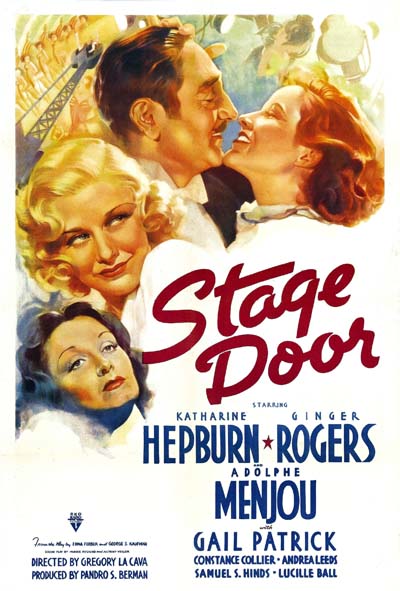
Stage_Door_(1937)Watching Stage Door illustrates one of the pleasures of film because it’s an unassuming classic that very easily could be overshadowed by other films. Its main stars are Ginger Rogers and Katharine Hepburn, who both have numerous films more well known than this one.

However, this story about a boarding house for aspiring stage actresses is a light piece of sassy fun while still finding moments for poignancy. Rogers is a cynical dancer named Jean, and she is not too pleased to be getting a new roommate. The last one moved elsewhere after constant fighting. But the new girl, Terry Randall (Hepburn), is different. She is from a well to do family, but she is pursuing a career in acting so that she might stretch herself.

The other girls look on with an air of contempt thanks to her fine clothes and pristine manners. She doesn’t fit the mold of many of the other struggling actresses looking for their big break. Many spend their evenings trying to grab hold of a sugar daddy such as famed theatrical producer Anthony Powell (Adolph Menjou). Several of the girls have their eyes on him as they try and land a role in his next big production.

Kay Hamilton is the most well-liked girl in the house and arguably one of the most gifted performers. She opened the year before in a production that won her rave reviews, however, a year later she has yet to get another break, and she is running out of funds. Powell’s show is her last big chance. Thus, when Powell cancels her audition last minute for a trivial reason, Kay faints and an irate Terry bursts into his office to confront him. He is initially turned off, but then he chooses her for the lead role of the upcoming Enchanted April.

Although the girls were beginning to warm to Terry, Jean has trouble forgiving her as tragedy strikes. In fact, Terry almost refuses to go on stage altogether, and yet she goes out and gives an emotional performance that is hailed by critics. In the end, Terry and Jean are reconciled which is far more important than any type of fanfare.

In many ways, Gregory La Cava’s Stage Door feels similar to The Women (1939). Both films have casts with women in the primary roles and the stories are at times volatile, with so much drama and many zinging comebacks. Some of this was courtesy of the supporting cast which included such legendary comediennes as Lucille Ball and Eve Arden. Ann Miller is even present, but at its core Stage Door is Ginger and Katharine’s film. Pardon my curiosity, but did Fred and Spencer ever do a film like this?

4/5 Stars