Safety Last! (1923)

The great thing about The Big Three — Chaplin, Keaton, Lloyd — and all the great silent clowns, is how they engender a kind of audience identification with profoundly comic results. Because each had their own unique persona that remained constant throughout all the trials and tribulations they went through.

The enduring charm of the Harold Lloyd character is his nebbish yet indefatigable spirit. He’s bespectacled, always smiling, and there’s a bit of a hapless daredevil in him. He doesn’t always do so purposefully, but he’s accustomed to ticking clocks — racing against time against the odds — and of course Safety Last famously put him in contact with another literal ticking clock. More on that later.

At only 73 minutes, it’s easy to place a silent comedy like Safety Last with other rudimentary forms of movies from the nascent film industry. The two reelers and other silent fare which might seem like a dime a dozen and disposable. We might mistakenly think we have nothing to learn from them because they are over a century old and we’ve already grown beyond what they have to offer.

And yet the very first shot belies any erroneous impressions. There’s the shadow of what looks to be a hangman’s noose. Our hero, Harold, looks to be behind bars saying a last adieu to the love of his life. Then, the perspective shifts and we realize not a man shuffling off to jail but one waiting at the train station to head to the city to make good. Eventually, his girl Mildred can come out to him and they can get married!

There’s not a specific utility to the gag and if you’re not thrown off by it tonally, it shows a sense of visual invention that easily transfers from early shorts and reel comedies. It shows these early movies were not made by a bunch of hacks but technicians with a great deal of ingenuity and knowhow. The proof is in what they left us.

The first half of the picture is most defined by its bits. There’s a gag to avoid the rent collector where Harold and his roomie hide under their hanging coats with their legs pulled up.

In another vignette Lloyd is stuck in the back of a laundry truck baking like a sauna with a driver who is deaf; it leads into his extended attempt to get back to his work in time by any means necessary so he can clock in. It’s to no avail so he sneaks in under the guise of a mannequin, as one does. No one can say he’s not plucky.

We can all commiserate with him as he deals with time wasters on the department store floor and then the hordes of blue-blooded ladies who come for a sale prepared to pull the clothes off his back; some things haven’t changed. There’s another scene where he combs his hair in the shine of a bald man’s pate. Again, it’s yet another whimsical example of ways to stretch the form for the sake of a visual gag.

Then, Harold tries to put on airs for his girl masquerading as the general manager, though he’s only a mere grunt who’s easily discarded. Like us all he wants to be important and appreciated; he doesn’t want to let his loved ones down or be seen as a failure.

The final act of climbing all 12 floors of the department store feels like the birth of the high-wire thriller genre before our eyes. After all, he’s as much of a free climber as you or me. Still, he has that smiling girl in the back of his mind and the prize money if he reaches the top.

There’s some visual trickery but the cutaways and overhead shots give us a sense of scale all in service of the movie. The fact we can’t make out all the fault lines and there is still this harrowing sense of unassailable danger is a credit to the picture a century on. Both as a physical feat and a technical marvel of early Hollywood.

Harold’s conspiring with his acrobatic friend to get up the building devolves into a charade with cops and a drunk, a bit like a Keystone Kop reel with chases and “Kick Me” signs. It might be the lowest common denominator of comedy, but that’s hardly a bad word.

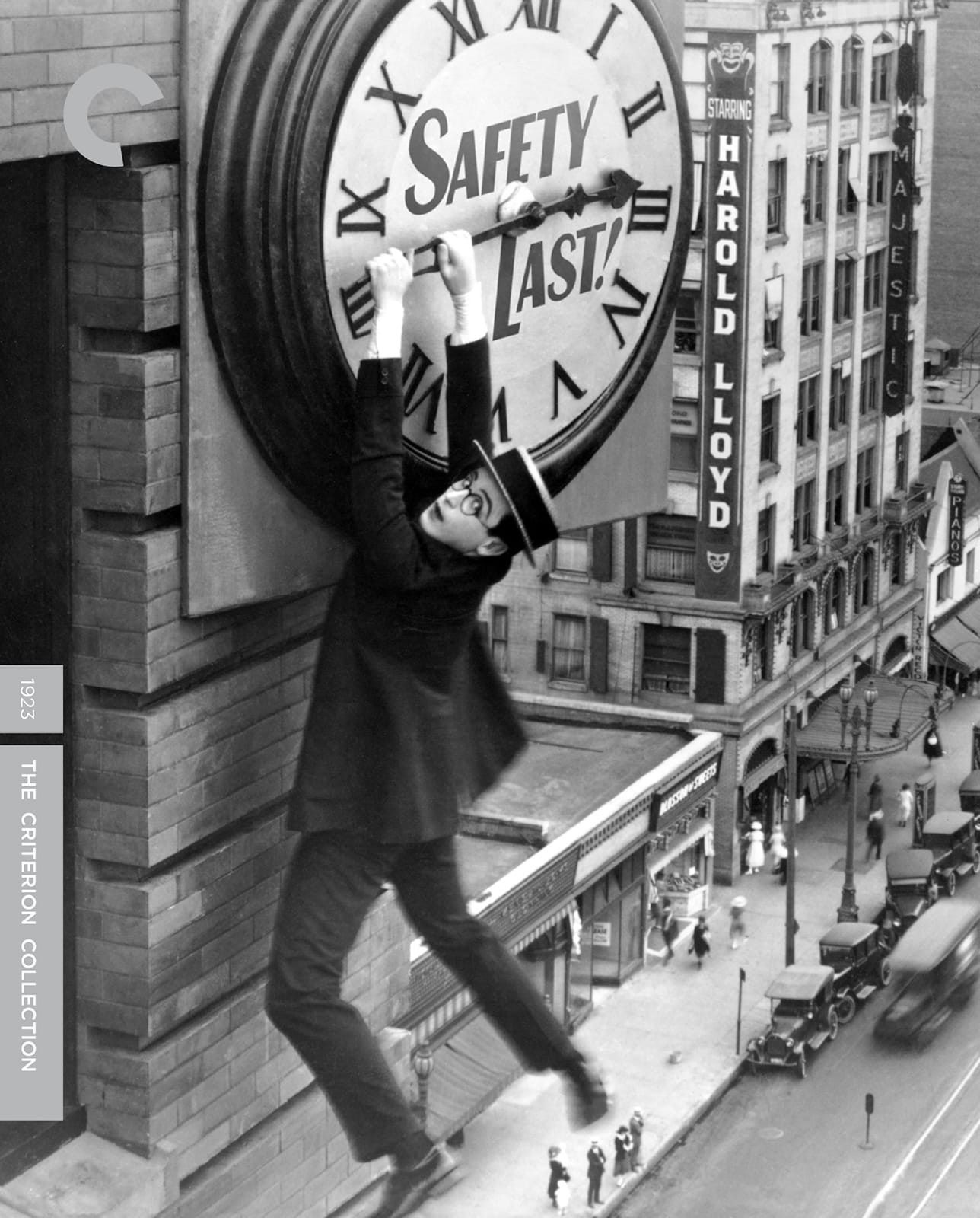
Lloyd has a myriad of gags at his disposal as he begins his ascent. They are play things that complicate what already feels like a daunting task: pigeons, scurrying mice, rope, a spring, and of course that famed clock face.

Lloyd clinging for his life has become one of the most iconic images in cinema history, and that’s across the board regardless if people have ever seen the movie or not. His exploits live on in the ubiquity of the public consciousness.

My final observation is noting how the movie ends with a gag just as it came in. His shoes get stuck in the tar on the rooftop as he walks off with his girl, the always and forever irrepressible hero Harold Lloyd.

There’s an added layer to the silent movie romance when you realize Lloyd would actually marry his leading lady Mildred and they would be together for the rest of their lives. It’s a stretch but it’s hard not to see how this big smash of a movie was to the actor Harold as climbing the department store was to his alter ego. They came out on the other side larger than life and beloved by the public. Most importantly, they got the girl. It’s the stuff of Hollywood.

4.5/5 Stars
The Gold Rush (1925) at 100

It feels necessary to begin with a prelude to The Gold Rush. I came to a realization I’ve only ever seen Charlie Chaplin’s updated version from 1942 with a new sound introduction and soundtrack. In some ways, watching the original feels like seeing a new film.

It was the first Chaplin feature I watched, and I’m pretty sure I liked every subsequent one more. I’m recognizing now, perhaps it was the Tramp character who grew on me. Because so much of his appeal is not only the audience identification, but also this sense of continuity over all his shorts and features. The more and more you watch, the more you love him.

Chaplin understood how powerful this could be, and it’s made his alter ego the most visible figure the cinema has ever known. Out of Chaplin’s films of the ’20s and ’30s, I think I still like his other ones more, but why does this matter? It’s all a collective body of work centered on the Little Tramp who could.

The movie itself opens during The Great Gold Rush of Alaska. The opening shot showcases a line of miners snaking their way through the desolate mountain landscape, and there’s a scope to it that has a definitive cinematic eye. Chaplin, as both actor and director, is on full display as he sets the stage for his protagonist.

The first act feels like a traditional Chaplin two-reeler. It’s scenario-based. The characters are larger than life, with a wanted fugitive (Tom Murray) and Big Jim McLain (Mack Swain), who strikes it rich only to be stricken with memory loss.

It’s also a comedy of errors involving snow flurries, gales of wind that would make Keaton proud, and surreal gags with an overgrown Chaplin chicken. They also go through the bizarre ordeal of systematically eating one of the Tramp’s shoes. Hunger will do that to you.

At the end of it all, the killer’s gone and the gold’s still hidden away; it’s sitting there for the rest of the movie just waiting to be dug up. We know intuitively we will return to the spot.

The Gold Rush truly hits its stride when introducing a romantic element, and it’s because of what it means to our lead character. There’s something transcendent in it that I can’t help but express. He’s so pure and honest in love. It’s comprehensible to anyone who’s admired, even loved, someone from afar.

Maybe a crush in high school, a Juliet who runs in different social circles than you, or a long shot who has someone else already that you could never compare to. It’s a tale as old as time, though so is The Gold Rush. The Tramp makes it universal.

The girl in question, Georgia (Georgia Hale), is a vivacious woman who frequents the local dance hall. She seems to wave to him, except there’s another man just behind him. In a subsequent moment, he thinks they might strike up a conversation as she comes near, only to look right through him. It discourages him, but he’s not daunted.

Later, he finds a discarded picture of her and picks it up, looking sheepishly at the old man standing nearby. He’s seen what the Tramp has done, and our bedraggled hero tries to play it off like he’ll throw it away. But of course he doesn’t.

We eventually find out that he keeps it under his pillow with his most prized possessions. The reason we find out is that Georgia pays him a visit with some of her friends; they think it will be a lark to see him. It’s nothing to them, and it’s everything to him just to speak with her and be in her presence.

At the hall, he finally gets the opportunity to dance with her, and it has nothing to do with him. It’s part of her scorning of another man, but in his little universe, it means something — it means the world to him — and our hearts beam and simultaneously break. She’s not going to want him, and yet in the same breath, we want the fairy tale for him, or at the very least, someone who would love him for who he is.

Chaplin’s character reaps the benefit of her coquettish game only to have his pants come loose, and he ties them back on with the leash of a nearby dog. It’s The Tramp’s inadvertent comedy on full display — comedy that just kind of happens to him out of his own wealth of eccentricity.

He rides the wave of the evening, however, with the elation at the prospects of guests for New Year’s. It’s so earnest watching him positively trashing his cabin with feathers out of pure jubilation, only to be left heartbroken.

The communal singing of “Auld Lang Syne” cross-cut with the Tramp all alone is an implicit reminder: every year, there are the lonely people who must make a go at life by themselves, forgotten again. The despondency spawns fitful dreams, including Chaplin’s iconic gag with dancing bread feet. If it sounds mystifying, then watch it for yourself.

For the final act, the Tramp is reunited with the prospector, who promises him a piece of his stake if they can track down the cabin. Instantly, the Little Man’s outlook changes, and he scales the balcony of the dance hall just to profess his love to Georgia and let her know he will come back a millionaire…

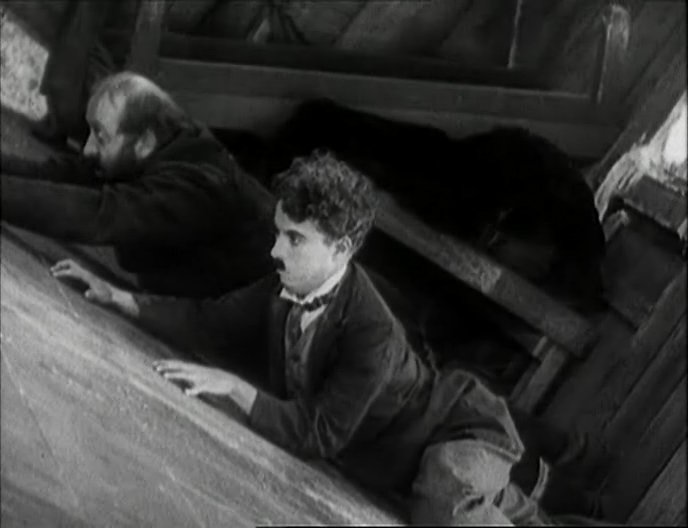
The best bit follows the two men as they hunker down for the night, only for the blizzard to displace their cabin to the cliffside so they’re jutting out on a perilous cantilever. “Flight of the Bumble Bee” perfectly captures the frantic nature of the moment without totally counteracting the comedy of it all as they slide this way and that, trying to escape to safety.

The two hapless prospectors succeed in their quest to get rich. The Tramp gets a lavish makeover so he looks like a Saks Fifth Avenue multimillionaire, catching an ocean liner home. Some photographers want some shots in his mining clothes, and somehow, all is right in the movie again when he’s back to looking like The Tramp. What would we call him otherwise? By this point, it feels like his proper uniform.

And yet there’s also a poetic reason for this development. It’s easy to read what will happen and what the film is building to. He must see Georgia again. Circumstances have changed, but for all intents and purposes, he looks like the same down-and-out Tramp, at least to her. It’s the exquisite irony underpinning their glorious reunion. Dreams really do come true.

In a cinematic sense, Chaplin effectively took a character who could easily be a bit part or a stereotype in any type of picture and proceeded to give him the level of depth and feeling that enraptured the world over.

I never said this out loud because I’m only formulating it now. Percolating under the surface, there is some dissonance within the Tramp persona because here you have this impoverished, chaste character played by a man who at least had the reputation of a womanizer and was wealthy the world over. This is only a perception. And yet I settled on this: The Tramp is a romantic and personal ideal for Chaplin and for all of us.

He bears all the difficulties of the world with heart, unassuming grace, and a healthy dose of laughter. As long as there is hardship, poverty, and romance in the world, The Tramp will be relevant because he makes us laugh, but most importantly, he makes us love him.

Because he is one of us, or maybe we are him as we traverse our own journeys. That’s what we’d like to believe anyway, and Chaplin allows us to. He also gives us a hopeful ending. It’s what makes him, even to this day, the fitting archetype of Classical Hollywood storytelling. He is the standard by which all others are judged.

4.5/5 Stars

Jaws (1975) at 50

I remember my dad telling a story about the first time he saw Jaws back in 1975, now 50 years ago. He was on a road trip visiting a childhood friend in the Midwest, and though he had spent all his life in California, he was grateful to be in a place that was landlocked when the movie came out. 

If my dad was representative of the general populous, this reaction was not unusual, and for any number of reasons, Jaws was a true cultural phenomenon. It changed the playbook of what a movie could be as a summer blockbuster, even as Steven Spielberg willfully built off the formula of Alfred Hitchcock while bringing his own youth and flair for storytelling to the fore.

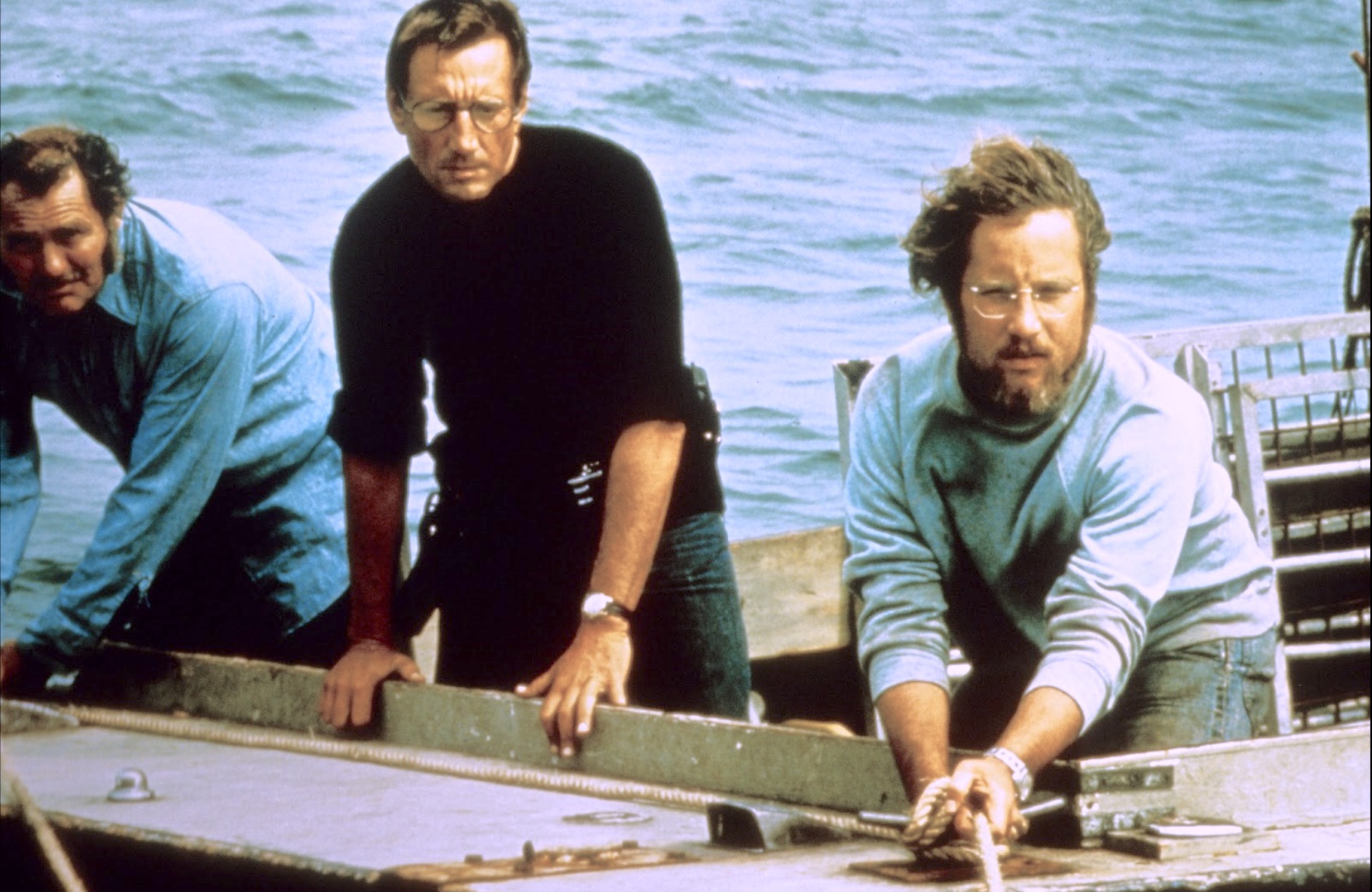
It struck me watching the film this time how it is really split into two sections. There are the scenes in the island getaway town of Amity where Police Chief Martin Brody (Roy Scheider) is introduced as a New York City transplant (Coincidentally, it’s convenient to read The French Connection as a bit of backstory). We soon get a sense of his family life, his happy marriage with his better half (Lorraine Gary), and the small-time responsibilities that come with the incoming tourist trade. He also hates the water…

These are the throes of summer, on the verge of the July 4th weekend, and a town like this thrives and even relies on out-of-town business. The first inkling of a shark attack comes when the mangled body of a young woman is found washed up on the shore.

Then, there’s the moment for all time when Brody tries to relax in the arms of his wife on the seashore, only to see an ominous creature emerge from the water and confirm all his worst fears.

A friend pointed out how Spielberg pays homage to Hitchcock with the “Vertigo Effect” or dolly zoom, which gives us as an audience such a perturbing sensation as we are physically reeled into the moment. From then on, it’s not just a threat, but a battle that Brody must wage, dealing with the local repercussions, backroom politics, and general hysteria that gets dredged up in the face of such a news story. As the police chief, it feels like the weight of the whole fiasco falls on him, and what’s worse is that he has so little support.

It all comes to a head when a grieving mother (Lee Fierro) confronts him with a public slap to the face: She found out he knew about the shark threat, and he still kept the beaches open. We know what actually happened, but still, as a beacon of safety, it falls on him, and he internalizes the outrage. Because he has a conscience and a family, too. 

Then there are the later scenes where three men go out on a mission to hunt down the Great White terrorizing the town. It is an elemental story of man vs. nature. The cast thins out with the three primary stars and a big shark playing out a game of cat and mouse on a boat against a vast ocean. It’s an isolating, harrowing undertaking.

Put in these terms, and it feels like an entirely different movie, and yet there’s not a moment when they don’t feel anything but intimately related. A lesser film would have simply shot the second part — extended it — added some more sharks, guts, and explosions, and made it the movie (I haven’t seen the Jaws sequels, so I’m not sure if this formula applies). Although I’m sure this is what drew Spielberg to Peter Benchley’s source material. 

However, this movie is made better by how it builds out an entire world, and we see how it develops the context and creates the stakes and emotional resonance for the entire story.

Scheider is also the only one who can kill that shark in the end. He moved away from the urban jungle to have a quieter life. But the movie calls for him to face this threat head-on, and he does it in an extraordinary way, aided by Richard Dreyfuss and Robert Shaw’s characters.

They both provide two sides of an ethos appeal that lend credence to the evolutionary brutality of this underwater leviathan. Because one represents youthful intellect and scientific know-how of an oceanographer, while the other is a veteran of the sea, grizzled and tenacious. But we know intuitively that the trajectory of the story revolves around Scheider coming face to face with his own fears. It’s inevitable. No one else can save him. 

These words don’t always go together, but Jaws has some delightfully effective expositional scenes. I think of the opening hook where a bunch of young people are on the beach mingling together. The eyes of a young man and woman meet. Then, the camera pulls away as they have their meet-cute. We understand everything without hearing, and the next thing we know, they’re racing off toward the water to skinnydip… 

There’s also the scene where oceanographer Matt Hooper (Dreyfuss) pays a house call. It’s been a tumultuous day, and the police chief has grown introspective, jaded by the day’s events. Hooper awkwardly has two bottles of wine, and he’s wearing a tie. It becomes a scene with the wife talking to the young man, and we learn about both of our leads with this lovely sense of organic humor. 

Then there’s Quint’s moment on the boat one evening, recounting his harrowing experience on the U.S.S. Indianapolis in 1945 on a mission related to the atomic bomb. Ultimately, they were sunk, and many of the survivors were picked off by swarms of sharks in the ensuing hours. An event like that forms a man for life. 

Moments like these are chilling and give the moments of levity even more import. It’s like an escape valve for the tension. Spielberg does an admirable job of choreographing the hubbub of the town with frantic conversations and characters speaking over one another in a manner mirroring real life.

In another scene, Brody is deep in his thoughts, obviously distressed, then, right next to him at the dinner table, his little boy mimics his every move. It’s such an endearing moment of childlike warmth and affection. Or later, a drunken Shaw and Dreyfuss partake in some one-upmanship as they trade tattoo stories gaily after being at one another’s throats for most of the journey. 

Spielberg, at such a young age, already feels adept at creating a total immersive experience in film (You only have to look at his work on Columbo and Duel to see the work he put in before Jaws).

The underwater POV shots from below as human bodies tread above the waterline draw us in, and the notes of John Williams’ score never cease to cause my feet to tense up in my shoes. There are even jump scares I had forgotten about. The cumulative effect is still overwhelming. 

There’s an extraordinary blending of visual compositions that tell us the story succinctly, sprinkled with the kind of humor, exposition, and personal conflict that give the broader drama of Jaws a genuine meaning. Because we are not animals; we are not evolutionary machines. We are embodied creatures. We have hearts, limbs, eyes, voices, and feelings that make us who we are. It’s difficult to extricate ourselves from these realities, and what kind of unfeeling Social Darwinism would that leave us with? 

The Mayor (Murray Hamilton) is a character who is easy to dislike. He does come off as a kind of irrefutable sleaze, and yet when he visits the hospital to give his condolences and reluctantly sign off on Quint’s hunt, he finally makes an admission. His kids were on the beach too, where the attacks happened. For a moment, he is as human as anyone else. 

Because he’s emblematic of a story about locals trying to protect a way of life, and outsiders trying to maintain their own lives somewhere new. It’s a pleasure to watch Jaws and see it not simply as a historical lodestar in the blockbuster age, but 50 years on, it still remains a captivating saltwater thriller showing a young up-and-coming filmmaker on the ascendancy. 

I’ve rarely seen my dad set foot in the ocean during my lifetime. It’s probably coincidental, although Steven Spielberg (and John Williams) might have something to do with this, too. 

5/5 Stars

The Little Fugitive (1953)

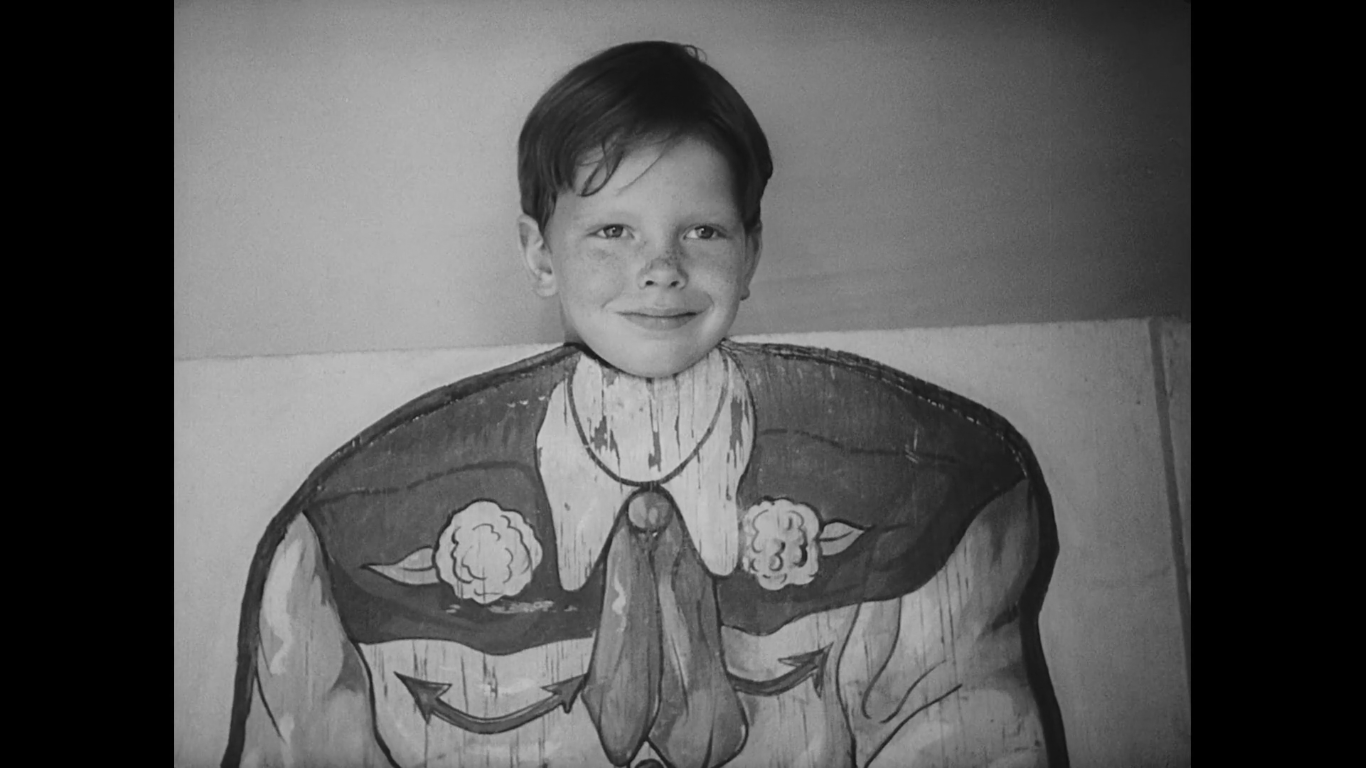
The aesthetic of The Little Fugitive is made plain thanks to chalk drawing credits playing over “Home on The Range.” We are about to enter a little boy’s world with all the joys and menial problems an adolescent life engenders. The key is giving these problems credence. Because in a young life, they feel ginormous.

Joey Norton always has his trusty pistol and holster and his big brother Lennie can always be found with his harmonica. They have your typical sibling dynamic. The little brother nagging, the big brother both put-upon and protective.

There’s an initial impression from the clunky dialogue causing the illusion of the film to falter. However, everything else around it feels real and sincere in a way we are unaccustomed to seeing in 1950s American films. Then you realize the whole picture had its dialogues done after the fact and it falls into place.

Coincidentally, it does give it a European sensibility with the dubbed dialogue. I can see how a film like this might have come to Cahiers du Cinema, Francois Truffaut in particular, and lit a fire under them. This is what movies could be, and not only something they could be, but also something attainable to others as long as they had a personal story to tell.

The 400 Blows but also Breathless and Le Beau Serge, developed narratives out of spaces the directors knew intimately. It wasn’t outside the purview of their experience, and it made a stunning entry point into their respective cinematic visions as they continually evolved over time. Still, one cannot discount their origins.

In the era of The Little Fugitive, a boy’s world was occupied by very specific things: baseball, guns, cowboys and Indians, television serials, comic books. The premise itself feels like an episode of Leave It to Beaver albeit outside of the watchful eye of middle-class suburbia.

Mother has to go away to pay a visit to a sick grandparent. Lennie has to watch over his little brother, and it’s going to derail his birthday outing to Coney Island with his friends. We have a simple dramatic situation and although he’s not a bad guy, he needs to use his boyish ingenuity to find a way out of his responsibilities. A dagger made out of ice is too impractical so they get the idea of using ketchup to fake a grisly death like they do in the movies.

The trick works wonders on getting rid of a pesky brother, and the film really comes into its own as they take it to the streets, and he’s out on the lam. It seems prudent to mention Ray Ashley, Morris Engel, and Ruth Orkin, the trifecta behind the film’s conception.

Their greatest asset was a cutting-edge 35 mm camera both portable and unobtrusive making The Little Fugitive landmark for another reason. It really feels like one of the obvious birthplaces of independent cinema because we have this idea of film emerging from the studio lots out onto the streets. And these aren’t just exotic foreign locales but the humble spaces you and I frequent in our daily lives. Even these spaces can have their share of fascination for a willing audience.

It’s a cornucopia of leisure, a boy’s delight having a day on Coney Island. We get a steady stream of vignettes: photo cutouts, batting cages, hot dogs, watermelon, the beach, ball toss, and whirling carousel rides providing full immersion of a different era.

Not since Harold Lloyd can I recall such a great showcase for Coney Island. We’re even reminded recycling was a problem at the beach back in the 1950s too. Joey quickly learns he can make some loose change culling the seashore for glass bottles and simultaneously proving himself to be inquisitive and quite entrepreneurial.

I’m not sure how our little fugitive had so much money to begin with; the film doesn’t find need to explain itself, but then he figures out how he can get more and uses them on a very sound investment: pony rides. He’s positively infatuated with ponies, and it shows him returning time and time again just to get another chance to live out his dreams on the range.

Although the film is mostly kid-centric, it’s a pleasure to observe several of the adults who seem to be genuinely nurturing souls. Whether it’s the photographer (Will Lee) or Jay the ponyman (Jay Williams), they seem to encourage kids in their interests and imagination. It would be so easy for a film like this to feel severe and somehow oppressive, yet what comes off is the lightness and the joy of each of these very specific moments as experienced by a little boy.

If I’m honest, I’ve recognized a growing bias in my own film appreciation. I’m partial to films that use modest means, modest runtimes even, and still manage to transport us with stories and worlds we can relate to. I can think of no finer compliment for The Little Fugitive because it captures a moment plucked out of my parent’s generation, honed in on a very particular Brooklyn milieu, and through its images we are able to imbibe all these tactile sensations pulling us into the moment.

Although the boys at Cahiers can feel a bit arrogant and combative, even in how they dismissed much of the past and canonized the auteur-director as king, I do like the idea that they placed no undue importance on bigger, larger productions tossed out as awards bait. There’s something almost more satisfying happening in a movie like this because not so many folks will be joining the bandwagon — the fad of the cultural moment. That is the road lined with glitz, accolades, and transience.

Only with a bit of diligence and an open mind, do we get the opportunity to unearth it, and what a glorious joy it is. Unassuming gems like this make the moviegoing experience such a spectacular journey of human revelation. Because this little boy’s day speaks to so much and since I was a boy once, it resonates deeply. I won’t forget it until the next time I return to this story caught in time, where it will be waiting for me again even as I continue to change. This is the magic of the movies.

4.5/5 Stars

Beijing Watermelon (1989)

Nobuhiko Obayashi is known to a pocket of western moviegoers for his crazy, unhinged haunted house flick Hausu (1977), but as I’ve gotten more familiar with at least some of his filmography, I’ve come to appreciate his more grounded works.

Using this phrase has the danger of giving the wrong impression about him. This doesn’t imply boring or anything of the sort. Still, some of his later works are told with such humanity through relationships, humor, and often a wistful nostalgia that comes on the tails of youthful optimism.

Beijing Watermelon hardly makes a blip on the radar. I consider myself fairly well-versed in film (albeit with many noticeable blind spots), but I had never heard of it.

Still, this film spoke to me through its simple rhythms. It’s easy enough to introduce the premise and still fail to totally articulate what makes this movie such a meaningful experience for the right person. Because it a mundane slice of life tale following a grocery store owner who comes to form a bond with a contingent of Chinese students studying and living in Japan.

It begins inauspiciously enough when a poor Chinese student tries to barter with him. He’s a bit offended by it — his prices are already reasonable — but events cause him to take an interest in the young man’s life and his well-being. He meets Li and a host of local students who are many miles away from home. It feels inexplicable at first, but as time progresses, they form an unalienable connection. I’m not sure if other’s find this cross-cultural relationship to be unbelievable or at the very least somewhat whimsical.

As someone who has lived abroad in Japan of all places and relied on other people’s good graces, there was something so resonant about this scenario. It spoke to me on a profound level, and it was not in spite of the mundane nature but rather because of it.

The comedian “Bengal” who stars as the greengrocer Haruzo Horikoshi, somehow reminds me of the Tora-san character. It’s almost like he’s an extension of the Japanese comic prototype. He’s at times a buffoon and outlandish, and yet he’s imbued with so much heart and by extension pathos. If we stretch the Tora-San metaphor, he feels a bit like the Japanese everyman who brings back nostalgic reminisces of a different era. There’s something hilarious and tragic and warm about him all at the same time.

I must admit that there’s a point where it feels like the Chinese students are taking advantage of Mr. Haruzo. Perhaps it’s just a cultural difference and a way of showing good-humor and affection, but as an outside observer and someone who has a modest appreciation for Japanese courtesy I felt bad for the man.

At the same time, he continues to grow more and more accustomed to providing them discount goods, maintaining letter correspondence with Li when he returns home, and then picking up a new arrival at the airport named Zhang.

As a side note, there are two airport sequences that feel so authentic. The callow student looks downs and realizes his bags are missing! Of course, they are nearby where a thoughtful lady has set them aside out of the way. Also, a local Japanese man brags about his English prowess. Except the moment an English-speaking tourist asks for directions, he has no help to offer and sheepishly walks away.

By this point, we must ask the question: why does Mr. Haruzo feel compelled to do all this? There’s something in his constitution that makes him different, causing him to go against the tide of Japanese convention. Because what he does transcends polite niceties and keeping up appearances. Dare I say, it’s true sacrifice.

Could it be he’s slowly falling in love with the earnest Pingping? A lesser film would have played this up for the sake of drama. But while the affection is evident, it never goes further than that.

Meanwhile, his local neighbors joke that he’s caught the “Chinese disease.” If that’s so I’d probably wish I had it too. Of course, eventually it seems to derail his life. His business isn’t profitable anymore, he’s less present with his family. His long-suffering wife (Masako Motai) is trying to pick up the slack because he feels mostly absent. His kids feel ashamed by how he’s acting. Even his shaggy-haired employee vows to go to a rival supermarket where he won’t be a laughingstock.

It feels like Mr. Haruzo’s ruined — entirely thrown away his life — and soon the tax board comes to impound his belongings while he’s also detained for a hilarious public disturbance while requesting a loan. The heightened blood pressure leads to an extended stay at the hospital. Surely this cannot be the fruit of his troubles? He’s in such a dejected space with his family unsure what to make of him.

It’s a bit on the nose, but I think of that immortal line that “no man is a failure who has friends” and of course, the friends Mr. Haruzo has in his life come to his aid when he needs it most. It’s a beautiful sentiment and something I’m sure many of us recognize if we’ve ever been enmeshed in a close-knit community.

The watermelon becomes one of the substantive cultural metaphors of the film, and as someone who lived in Japan as a westerner and has spent many years working in international spaces, this film speaks to me on a deep level.

Surely you don’t need this in order to appreciate the film, but as I watch this Japanese man build cultural bridges and become a kind of local institution with a spread in the paper and then getting treated like a king by all his grateful beneficiaries, I was fundamentally moved.

I think of the people in my life overseas who watched over me at my most vulnerable or lifelong friends my parents and siblings have made when they were abroad. If we let it, film can be one of the great universal unifiers, a language unto itself that connects us and transcends cultural origins or international borders. That’s what it’s often been for me and Beijing Watermelon is such a winsome portrait of what I aspire to in my life.

I’m not sure if anyone else has made this comparison, but Haruzo Horiko feels a bit like a Japanese Mr. Chips because with his name comes a lasting legacy and impact. It turns out to be an extraordinary life.

There is one last aspect of Beijing Watermelon that deserves some comment. I acknowledged already that this is one of Obayashi’s more formally traditional films, and yet he still breaks out of narrative convention — not for want of ostentatious showmanship — but because it serves the story he wishes to tell.

I could not track down any definitive details, but Beijing Watermelon is supposed to be based off real events that happened. However, Obayashi takes this biography and gives it a Brechtian ending, somehow working with the negative space of the film and what it does not show.

Bengal speaks to us and tells us we are back on a Japanese set in a studio. He and his movie wife journey to China and yet it’s made explicit that they are in the cabin of a plane set and not an actual plane for a reunion with all their Chinese friends.

If you’re like me, you question why have this break with the cinematic reality? The movie was humming along beautifully without the distraction. But then it slowly becomes more apparent the longer you sit with it, especially considering the cultural moment and what was happening in China — the Tiananmen Square massacre of June 4, 1989 being a particular inflection point…

Because even if you are not aware of any of this, there’s something imperceptible and still intuitive about the melancholy that comes over the viewer. It’s all there in the movie both the warm feelings welling up inside of us, but also this inherent sense of sadness carried with those Chinese students as they play and sing their bittersweet song on the beach with the credits rolling against them. The postscript of the movie is what does it for me as a final rallying cry and call for greater cultural understanding:

“We dedicate this film to all our young Chinese friends.”

What an extraordinary film. I hope more people can search it out and enjoy it as much as I did.

4.5/5 Stars

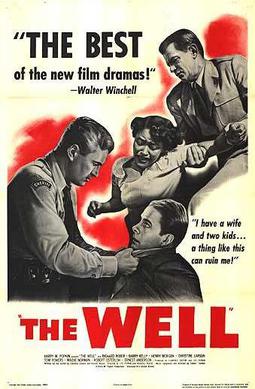
The Well (1951): A Noir about Racial Tension and Resolute Hope

The film opens when a little black girl named Carolyn tumbles into a well buried beneath some weeds. There’s a melodramatic handling of the material, but already we see something rather uncommon with the period noir. Normally black characters live on the periphery of film noir if they exist at all.

Here Martha (Maidie Norman) and Ralph Crawford (Ernest Anderson) reach out to the local Sheriff Ben Kellogg (Richard Rober) when they learn their 5-year-old daughter has gone missing. They become the emotional center of this local drama with greater implications. As an aside, it’s a pleasure to see Ernest Anderson once again.

Those who recall him in This is Our Life (1942) will remember him to be a performer of tremendous intelligence and dignity. It’s only a shame the impediments of prejudice meant he never had a more sterling career. This film acts as a small recompense.

Upon closer inspection, The Well has shades of some other movies like Captive City or Phenix City Story where there is an adherence to faux realism as we kick around the beat meeting people, and getting to know the world they call home.

It’s fascinating to witness how this inciting incident — the disappearance of little Carolyn — sets the story in motion with Russell Rouse and Leo C. Popkin slowly turning the screw. Because it’s true there’s something rather insidious about this movie causing it to wheedle its way into our psyches.

It feels more relevant and more compelling than many of the old procedurals because of the subject of the case. It’s not just about a crime, but it’s complicated and made more tenuous with this added layer of racial tension, a very real issue even today.

Being a lifelong MASH aficionado, there’s something pleasing about Harry Morgan playing a central role as mining engineer Claude Packard. It’s quickly corroborated that he may have been the last person to see the girl; he’s a stranger from out of town, and curiously enough, he bought her a flower before sending her on her way.

It doesn’t take a genius to put all the pieces together and the racial element along with circumstantial evidence quickly brings the out-of-towner under the observation of the police.

The rumors quickly make the rounds throughout the neighborhood. In one brief vignette, a group of black students sits at a library conversing about race prejudice and a white man accused of a crime against a black child. It’s easy to forgive the blatant quality of this scene because it feels entirely unique for the era. I’ve never seen a moment like this before. But it’s not just a matter of the film feeling ahead of its time. After all, a lot can happen in 70 years, and values can change, though many things like racism feel deeply entrenched.

Still, there’s a complexity to the film that feels quite groundbreaking with something to speak to our current moment. Rather like Sam Fuller’s The Crimson Kimono, it’s a film about race, but it takes a somewhat nuanced approach.

The dramatic situation is obvious. Here there’s a white man being held for a crime against a black girl. The added wrinkle is that he didn’t actually commit a crime, but that doesn’t impact how the execution of justice is perceived by all bystanders on both sides of the racial line. It’s so easy to buy the message, “You can get away with murder if you’re the right color” because we’ve seen it play out so many countless times.

It’s also true Claude’s uncle is the highly influential businessman, Sam Packard (Barry Kelley) who runs a local construction company. He’s prepared to pay bail for his relation regardless of guilt or innocence. He doesn’t seem to care what the man did even as Claude vehemently pleads his innocence. If you’ve ever seen Kelly in another picture, he slides so easily into this role accentuated by his corpulent build and a pair of beady eyes.

From the outside looking in it’s so easy to view this as a miscarriage of justice where the authorities are steamrolled and wealth and privilege are able to get a white man out of anything. We’ve seen this before too.

At this point, retribution is all but expected, and it escalates with each successive confrontation between the divisive factions of blacks and whites. Once a tipping point is reached it’s like a never-ending feedback loop descending into chaos and quickly stoking the fires of unrest.

It strikes me how the mob is always going after the individuals in an almost faceless fashion. And both sides do it. There’s never a familiarity. It’s always swift and unfamiliar. But this kind of violence and hatred only breeds in anonymity where others are dehumanized and not dealt with as other human beings. It makes it easier to disassociate and perpetrate acts of malice.

It’s easy to gather the rest of the film is paved with this kind of violence. A full-blown riot is set to blow up the town and overwhelm any semblance of law and order. A movie like this also shows how the borders around language were so contrived. So many words were banned from motion pictures and yet the N-word flies so easily. It always catches me off guard, especially if we’re used to the normally manicured veneer of Classic Hollywood.

There are so many moments I can’t forget, but most of them are small observations. Take for instance, once when a white officer has a black kid up against the wall; he’s battered and bleeding, and he’s one of the perpetrators.

It turns out he was brawling with five white kids who the officer didn’t find a need to bring in. He gets a look from his superior and proceeds to get reassigned to phone duty so another officer can take this battered boy to the hospital. It’s a moment like this encapsulating something damning about law enforcement and the wheels of justice.

Part of me was expecting the film to detonate. With everything we witness, it’s all but inevitable. I’m hesitant to admit it, but I almost wanted it to. Instead, we get something else that’s closer to what we need. It feels like a near-timeless denouement because I need it as much today as audiences did back in 1951.

It shows people trying to help each other and trying to patch things up and figure things out. This is the hard work of reconciliation that’s not glamorous or easily cobbled together in a few solitary moments. And The Well’s also not a cloying feel-good balm to make all the bleeding hearts feel their work is done. It can’t patch over all the lingering wounds and racial tension. Not even time has done that.

Still, even as I mentioned Kelley is so easily identified and cast as a villain, the film uses this to say something more. He’s no saint, but he’s also a human being.

Billy Wilder was apparently interested in bringing the story to the screen in some form. I can see the parallels between Wilder’s Ace in The Hole/Big Carnival and this movie. However, whereas Wilder’s penchant is always toward portraying opportunistic cynicism, here we see something vying for the communal good.

Because of course, someone finally stumbles across Carolyn and that well. The movie switches directions as quickly as it starts. The whole town including mean old Mr. Packard and the accused Claude rally together their resources to rescue that little girl because there’s a chance she’s still alive and that’s all they require to act on.

That little girl becomes so crucial to this story representing so much more than her individual little frame. Forgive me, but I couldn’t help thinking about how George Floyd came to represent something else entirely in June of 2020.

I won’t try to come up with comparisons. All I know is that this movie deeply affected me, and I hope and pray that we might live in a world reflected in the rescue of that little girl. Because it says so much. If that little girl is alive now, over 70 years later (either in the film’s world or ours), I would hope she might stand as a beacon of what can be done.

What would it say about our towns if we were willing to go the extra mile to save the lost, the least of these, and the people who look different than us? It would suggest each of us has innumerable worth regardless of our skin color. It’s part of what makes us unique and individual.

These are not faceless beings lost in the masses but people known and loved. And what if it was not lip service or political PR, but actually lived out in our every day because it was the right thing to do. This feels like the movie I needed right now.

4.5/5 Stars

Note: I originally wrote this review in November 2021

Hiroshima, Mon Amour (1959), Nevers, and Casablanca

“Like you I know what it is to forget.”

Recently I’ve been meditating a lot on the impact of the atomic bombs in part because of the resurgence of the life and work of Robert Oppenheimer; he will be inextricably tied to Hiroshima and Nagasaki for posterity’s sake. Thanks to Alain Resnais’s film, Hiroshima and Nevers will always have a connection in the minds of cinephiles everywhere. 

Although I have walked the streets of Nagasaki and been to the memorial museum there, most of what I know of Hiroshima is gleaned from John Hersey’s journalistic account. The documentary footage from this film never ceases to scald my senses. I have to avert my gaze when the images grow harsher than any horror film imaginable. 

Hiroshima, Mon Amour gets much of its thematic resonance out of filming in Hiroshima itself because it comes with an abundance of inbred meaning; it will be ground zero of devastation and a beacon of peace for perpetuity now, ever since that day on August 6, 1945. 

This lays the groundwork for the film’s first half as we consider Hiroshima – the images primarily being juxtaposed with two bear bodies of a couple intertwined. 

It slaloms so effortlessly through time and space like few films before or after. Although as it progresses, the way the film and its characters are set adrift by the editing is increasingly unnerving. This in itself feels honest to where our characters find themselves. 

There’s something rhythmic, repetitive, and still poetic about their questions and responses conjured up by the voiceover penned by Marguerite Duras. It builds this contrast between the French actress filming an international movie in Hiroshima and the Japanese Architect that she’s having an affair with on-location. They only have one day together before time and space will pull them apart, potentially forever. 

In truth, once you know a little bit more about Resnais, it gets harder and harder to separate his film from this kind of relativism of the age where truth seems to be subjective and everything we seemed to take for granted before, from absolute truths to morals, seem to have totally eroded around us. 

Even with this perplexing development denoted by Resnais’s fairly oblique style, brought to even greater fruition in Last Year at Marienbad, it’s hard to discount the swaths of beauty in his film. And if it is mostly an agnostic film, one cannot totally dismiss this point of view in a world coming to terms with carnage and the brutality of the atomic bomb. Because this disillusionment does have an amount of warrant, arguably more than any other time in modern history. 

The movie becomes this roving portrait involving a want of intimacy and closeness in a world ravaged by so much pain and suffering. Is it any wonder that in the post-war years plagued with the atomic threat, the world hit its baby boom. Couples coming together to start their nuclear families as a balm to the hysteria in the world at home and abroad. 

They both say they are a happily married man and a happily married woman, but even this I read almost ironically seeing the connection they form. If they are culturally worlds apart, somehow they share in the same traumas of a post-war, post-atomic generation coming to terms with all that entails. 

He has the specter of Hiroshima to contend with and she was castigated for loving the enemy during wartime: imprisoned, her head shaved, while also seeing her lover die in her arms. They’re different experiences and still share something endemic to both their realities. Thus, they gladly share a real-world romance on the edge of the apocalypse as time is slipping away from them. For now, they have tangible passion and meaning that they can caress in their arms. 

There is a passage in the movie that felt reminiscent of the jaded pessimism of the ancient wisdom literature of Ecclesiastes: 

He: Maybe it’s possible for you to stay.
She: You know it’s not. Still more impossible than to leave.
He: A week
She: No.
He: Three days.
She: Time enough for what? To live from it? To die from it?
He: Time enough to know which.
She: That doesn’t exist. Neither time enough to live from it. Nor time enough to die from it. So I don’t give a damn.

There’s a fluidity to the night and their relationship as the clock ticks and they know they will be pulled apart. Eventually, they make their way to a late-night cafe called Casablanca. The name carries with it all these connotations: Rick & Illsa, “As Times Goes By,” “La Marseillaise,” and even bits of your favorite dialogue.

Of course, one of the finest remembrances is “We’ll always have Paris.” Nothing can strip these memories away from the Casablanca couple regardless of sacrifice. Somehow there’s something honest about Hiroshima, Mon Amour in that it recognizes all these things are transient – these memories of love will pass away. They are already dissipating, and not as eternal as we would like to believe. 

More and more I see the shared vision of Agnes Varda’s La Pointe Courte and Hiroshima, Mon Amour – finding their form as part documentary, part romantic treatise. It’s the blending of the two giving them body and making them sublime. 

Here the performers also work wonders. Emmanuelle Riva has the most vibrant eyes in the cinema. They are a delight to look at in the light of the camera both glassy and at times equally melancholy. It’s her film debut and you would never know it. She’s youthful and lithe, yes, but there is so much depth to her. Call it self-confidence with the prerequisite vulnerability. 

Eiji Okada seems ruggedly handsome, but not without the capacity for gentleness. It feels as if he’s experienced an entire lifetime during the war years which in part was true. The only reason he foregoes the horrors of Hiroshima is that he was off fighting in the war with the Imperial Army. 

I read that all his French dialogue was memorized phonetically and if that is the case, although I don’t always have an ear, it came together splendidly, never pulling me out of the story. It felt real and believable to have these two people relate in such a way. 

What’s more, as someone who grew up in a culturally mixed environment, Hiroshima, Mon Amour stands as a groundbreaking depiction of a couple who plow through the societal conventions of the times.

When I watch this film it’s about so much more than the bomb. On the surface, it’s about an illicit affair that cannot be, it’s about two people coping with the fallout of war, and one woman’s struggle to hold onto her memories and cling to the love that’s still there in her life before it evaporates before her. How she cannot forget this man in Hiroshima or that man in Nevers because they are tied to emotions and specific moments in time – times when she felt something.  

Somehow it parallels what the film itself represents. Because it is a document as much as a piece of art. It came out about 14 years after the bombs were dropped. Somehow still fresh and a minor lifetime away from the fallout. These people have living memories to contend with. 

Someone like me does not and so the film is as much about these character’s memories as it is the visual representation of the film itself so we might never forget what those places represent in the cry for universal peace. 

Watching it in a theater I could sense a level of perplexity in the air. It’s not an easy film. Not everything makes sense, and there’s some troubling conclusions that you can come to. Also, one earth-shattering slap in a cafe is hard to deal with. Still, in the wake of all of this, it’s hard to reject the moments of beauty present here. I don’t think this is a mere justification. 

Rather I watch a movie like Hiroshima, Mon Amour where not everything is summed up or painted in full. We must leave with the impressions, the maddening anti-literalism of the piece that has no point-for-point attributions we can easily plug in. Nothing comes out in a nice bow nor do we get a true emotional resolution. It just kind of hangs in the air for us to consider in full.

But sometimes this hard work when something is perplexing feels all the more worthwhile because it provides something worth going back to so we might cull for something new. I’m never going to understand every grain of this film, and that’s okay. 

The distinction is having something to fall back on. When memories fade and we forget and the world seems to be fragmenting around us, it helps to have some standard or reference point outside ourselves to mediate the chaos. 

Otherwise, what’s the point if there’s no time to live and no time to die? What hope is left in such a debilitating landscape? On top of that, there’s a bomb that might just easily blow us all to smithereens. We require something more. 

4.5/5 Stars

James Whale: The Old Dark House (1932) and The Invisible Man (1933)

The Old Dark House (1932)

The Old Dark House has a disarming levity that broadsided me at first. James Whale, the man who famously gave us Frankenstein, has all of his notable features with the tinges of horror on hand for another ghastly delight, and then he goes and pokes fun at the whole setup. Raymond Massey is instantly pegged as a slightly stuffy husband. His wife, dazzling Gloria Stuart, a young ingenue has signed up for more than she bargained for with the outrageous downpour dousing them in the dead of night.

Then, there’s old reliable Melvyn Douglas playing his quintessential character type, always good for a wisecrack, with his feet kicked up, and his pipe tucked in his mouth as they proceed to get hopelessly lost. And of course, he can’t help but whistle a few fractured bars of “Singing in the Rain” when their waterlogged buggy has no recourse but become semi-amphibious.

Oftentimes bathos is used as a kind of criticism — this idea of anticlimax or a break of the mood — because it’s too jokey and therefore undermines all the groundwork put down before it. However, Whale seems to be doing something different.

At any rate, it’s not an out-and-out drama and so while somehow deconstructing his tropes and suggesting to his audience he knows precisely what he’s doing, we reap the benefit of the humor and the chills in ample measure. This is the underlying success of the film in a nutshell. It carries off both and becomes invariably more intriguing in the process.

Because The Old Dark House fits seamlessly into the tradition of Cat and the Canary, Hold That Ghost, House on Haunted Hill et al. A dark and stormy night is a genre given, but the abode itself must bring with it the unnerving idiosyncrasies to make the audience ill at ease. Rest assured. It does.

The proprietors include a white-haired gentleman trembling with timidity and his eternally deaf and priggish sister who condemns all blasphemers en masse. Their valet (Boris Karloff) might as well be a grunting prototype for the wolf man. All of this doesn’t quite suggest a warm and amicable atmosphere. It screams something else. But that’s just the beginning of the festivities…

If I’m to be terribly honest, it seems like an utter waste of Karloff’s talents, especially because I was barely aware he was playing the part. He gets partially overshadowed by the more verbal characters. Charles Laughton, for one, comes tottering through the front door soaked through as gregarious Sir William accompanied by his playful and rather giddy companion (Lilian Bond). Her lithe spirit mirrors Douglas, and they gel nicely. The night quickly turns them into an item. In fact, all the guests hang together.

One could wager it comes out of necessity. It’s a ghoulish space filled with funhouse angles and other parlor tricks. Locked upstairs is a decrepit patriarch and behind another closed door is crazy Saul, who makes a cameo appearance spouting the story of King Saul and David. You know the one, where malevolence came over Saul and he proceeded to spear the other man to death.

He finds a knife and brandishes it with a kind of giddy insanity we don’t know how to respond to. He could do anything. Douglas, the picture of casual confidence and charm for most of the picture, finds his own veneer unseated filling in for David. It’s these kinds of digressions that we never expected, and somehow they make the picture by leaving the audience totally nonplussed.

By the time The Old Dark House is wrapped up, it feels like the gold standard of this brand of haunted house movie because it’s just as much about being a mood piece — finding humor in these outlandish scenarios — and Whale does all of the above with assured aplomb.

4/5 Stars

The Invisible Man (1933)

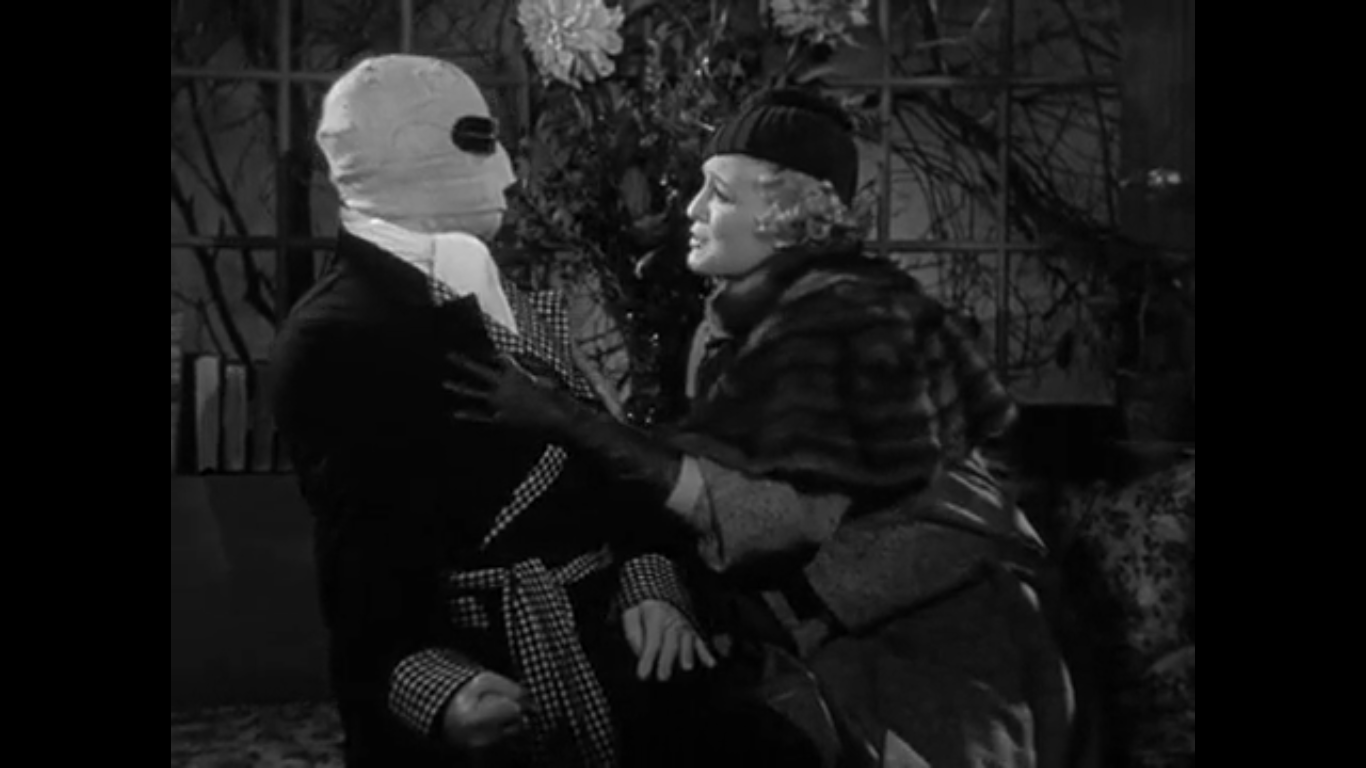
I always thought about The Invisible Man as a scientific marvel, but now I understand how he’s firmly planted in the realm of horror with added superhuman abilities. There’s something that feels somehow modern about Claude Rains’ portrayal of the eponymous character. It’s almost as if he’s the precursor to some enigmatic alien creature from Star Wars.

He’s unique and out of step with this more traditional setting of a bar and lowly establishment as local folks chew the fat and the incomparable Una O’Connor runs the place. One feels quintessentially British, albeit through the prism of the Hollywood dream factory. Rains is totally a movie machination born of smoke, mirrors, and special effects.

But it’s also as if this camouflage provided Rains the means to give one of his most ballistic and volatile performances. It’s not that he couldn’t play, wry, sly, or even bad-tempered, but his typical onscreen disposition was one of regality. He commands the room but in a very different way.

He’s seething one moment and then hysterical the next. The local constable rightly asserts, “He’s invisible. He gets those clothes off and we’ll never catch him for a thousand years!” It makes the stakes obvious. Soon thereafter the maniacal doctor commences a reign of terror making good on his threats by committing murders and diverting trains off their rails. He makes it clear he has the power to make the world grovel at his feet.

If it’s not obvious already, he’s taken on the mantle of a violent “Superman” cut out of the cloth of Dostoevsky’s Raskolnikov. What’s worse, there seems to be no one capable of stopping him.

What’s most fascinating is how the film builds the legitimacy of the Invisible Man. It’s not merely a sitcom-like trope where the invisible are given the freedom to pull practical jokes or take on a Groundhog Day-type disregard of worldly conventions. This is part of it, yes, until it becomes something more.

It turns into a story of fear and broader social implications broadcasted over the news and through every small town by word of mouth. He’s continually left unchecked and the drug he’s taking pumps him full of delusions of grandeur. It’s a drug and addiction of a different sort. Not even the affection of his former girlfriend (Gloria Stuart) can change his mind. He’s too far gone.

The special effects and the choreography get better and better as a crowd of bobbies forms a human dragnet to converge on him in the dead of night. He skips away with a policeman’s trousers sowing chaos and discord wherever he goes. But before anyone gets the idea The Invisible Man is a mere lark, we’re quickly shocked back to reality.

It has a jagged edge of vindictiveness which the production codes would make sure soon enough would never see the light of day (at least for a good many years). For now, it feels like a chilling, compact drama chock full of ideas, invention, and not a wasted minute of running time. It’s also without a doubt Rains’ finest entrance in a movie: It happens in the final frame.

4.5/5 Stars

A Woman’s Face (1941)

The movie’s faux Scandinavian backdrop can be traced back to its origins in an early vehicle for Ingrid Bergman back in her native Sweden that was released in 1938. Since I haven’t seen the original, I cannot attest to Bergman, but she doesn’t immediately spring to mind in a role that calls for some amount of moral ambiguity — at least on screen.

Still, A Woman’s Face was a stepping stone part for Joan Crawford, from her effervescent flapper days and pertinacious working gals to something vulnerable and bold for a fresh decade. She sheds all glamour, something used so often as a mask in Hollywood, and willfully puts on a different facade of scars and perceived ugliness. It’s a move her rival Bette Davis readily made as well.

Here Crawford is a creature tormented and self-conscious about her own appearance. She’s crawling with shame. Mildred Pierce always gets the plaudits, and rightfully so, but surely there’s room in the conversation for this picture. Still, let’s not get ahead of ourselves.

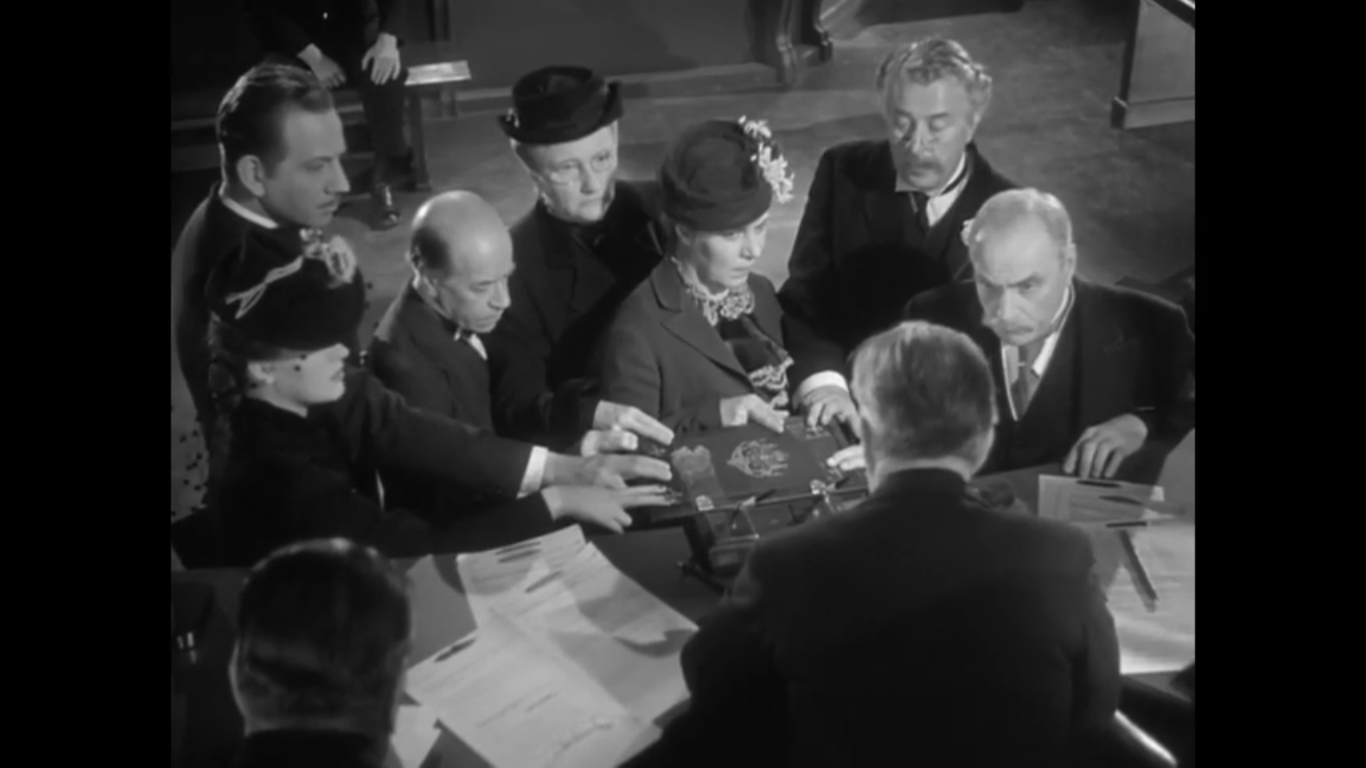
We stand by as a prisoner is marched through the hallways of a court. A menagerie of witnesses has been called to testify in the wake of a murder trial. The very same woman, her face hidden by her hat brim, stands accused, and the film effectively uses each of these disparate individuals to elucidate her story for the sake of the jury (and the audience).

It’s not an unheard-of device, but it’s rather clever, starting on the outer ring with a peculiar sort of character before getting closer and closer to who she is as a person with each subsequent flashback. As such, a sprightly waiter (Donald Meek) and a more guarded manager (Reginald Owen) recount their days serving at a local tavern.

One of the guests, Torstein Barring (Conrad Veidt), is a curious fellow. He’s the life of the party and expects certain privileges. One of those is running up an overflowing tab at the establishment after a merry night of wining and dining. He exhibits a piercing kind of magnetism, sleek and somehow unnerving.

When the lady of the tavern steps out of the shadows and excuses his bill, he’s immediately taken by her. She’s scarred over her face, and yet all he sees are those striking Joan Crawford eyes. There’s something immediate between them, and it comes out in the courtroom that the whole tavern was essentially a set-up for petty blackmail. When people get giddy their tongues loosen, and they are availed of all their faculties.

There’s a level of dubiousness and doublespeak with her underlings providing another layer to the film involving both humor and intrigue. Because they ran a fine and highly lucrative con game complete with all manner of deception. Now they’re looking to save their necks.

The ready victims are the adultress Vera (Osa Massen) — wife of reputed surgeon Gustaf (Melvyn Douglas) — and then her latest beau. The joy of A Woman’s Face is how there are building blocks for melodrama. In literary form, it might come off as convoluted and unclear, but the cinema screen makes it sing.

In one moment Anna (Crawford) is trying to peddle some stolen letters for a weighty sum with a level of vindictiveness. She scoffs at others. In another, she meets Gustaf, who returns home unexpectedly both catching this woman in the act and becoming genuinely interested in her. His wife doesn’t want any of her dirty business getting out so she reluctantly plays along.

Almost everyone has an enigmatic side, some sort of angle or self-serving motive we’re trying to detect. Melvyn Douglas is the one character who is straightforward and easy to read. He offers to transform her face. Not with an ulterior motive, but out of a sense of decency.

There’s a fine level of suspense waiting to see Anna’s face reconstructed. We know what it will be and yet are forced to wait for moments with the camera working to evade a direct shot of her; it adds something, a level of expectation.

It’s yet another soap opera contrivance that works wonders. Because Joan Crawford takes this blemish and turns it into something powerful and ultimately beautiful. With it comes new confidence and new life. Anna and Torstein grow closer and closer and he’s even more drawn to the vision of her rebirthed self. Also, her disposition shifts.

Still, he has almost a Nietzschean charisma, and he coaxes Anna into playing nursemaid to a young relative who’s set to inherit a large fortune. She’s become a governess of the Phyllis Dietrichson persuasion.

Watching Crawford come down the stairs with the precocious little kiddy, I couldn’t help but think of those old glossies of Marion Davies parties except this is a party at a Scandinavian version of Hearst Castle. Images of piano and dancing superimposed over Crawford’s face say everything.

Actually, I misspoke earlier because aside from the young tyke and the kindly Gustaf, the Consul Barring (Albert Bassman) is a jolly old man, who welcomes Anna cordially even as his housekeeper (Marjorie Main) remains distrustful of their latest guest. In truth, they’re both right. They see the two different sides of Anna on display.

There’s an old Hollywood axiom about getting an actor’s good side, and I couldn’t help noticing how A Woman’s Face plays with this practically. Crawford’s right side is kept hidden for much of the first half of the movie and traditional 180-degree filming means it’s all but masked from us.

I noticed the change at the party when she meets the good doctor again. Finally, she’s on the left side of the frame fully unmasked and open to us. It’s true we see her in a different light just as he does too. Perhaps she’s changing — softening even — and he has something to do with this.

Arguably the best scene of the entire movie comes when Crawford’s with her charge in the trolley over the waterfall. It’s the moment akin to Gene Tierney letting the crippled boy drown in the lake in Leave Her to Heaven. There’s the intent. We know what’s happening, and we watch the mechanisms on the face of Crawford. It’s totally wordless and, thus, so effective because the whole sequence is borne on her features. She has a choice to make — caught in a moral conundrum — and it’s a showcase for the total evolution of her character.

In some strange sense, it feels like the dissolution of a femme fatale starting out one way and then slowly changing and eroding until she has a heart of flesh and blood again. She chooses her inclinations to protect over those to destroy. It comes with consequences. Watching a crazed villain disappear into the snowy rapids below is mesmerizing in black and white. Somehow something so deadly looks equally gorgeous.

The ending itself is pat as Anna is exculpated in the courtroom, and yet it somehow works contrary to a whole generation of noirs made in its wake. In other words, I don’t mind the happy resolution because it leaves just enough to the imagination.

4.5/5 Stars

Vagabond (1985): Agnes Varda’s Empathetic Kane

Vagabond (or Sans toit ni loi, in French) plays as the sum of a fairly dismal life but not an unworthy one. For those familiar with Agnes Varda’s filmography, whether the penchant for seascapes or her concerted empathy for the discarded, it’s easy to see how this picture fits in with the others. In many ways, it blends her sensibilities for narrative fiction and her later documentary work like The Gleaners and I.

However, from a storytelling perspective, Vagabond also plays as her Citizen Kane, except she sets her sight on someone on the complete opposite end of the human spectrum. It’s curious how the paragon of money and power could somehow share fundamental things in common with a proud, young drifter. They feel so isolated and in some sense unknowable because they rarely allow others in.

Citizen Kane is a veritable jungle gym of technical invention and play. There’s never been anything quite like it, but the qualm I always maintained on early viewings is how there’s no connection. Because this is the point. It feels a bit hollow. We never get to truly know Charles Foster Kane because he never really let anyone know him.

The curious thing is how Varda derives so much concern for her subject. If we don’t end up knowing a great deal about her personal biography, it does feel like we at least appreciate her as a ceaselessly proud and increasingly worn-down human being.

I have so little history with Sandrine Bonaire and know only that she made an auspicious appearance in Maurice Pialat’s A Nos Amour (1983). However, watching her is a pleasure; she looks like a more stoic predecessor to Brie Larson.

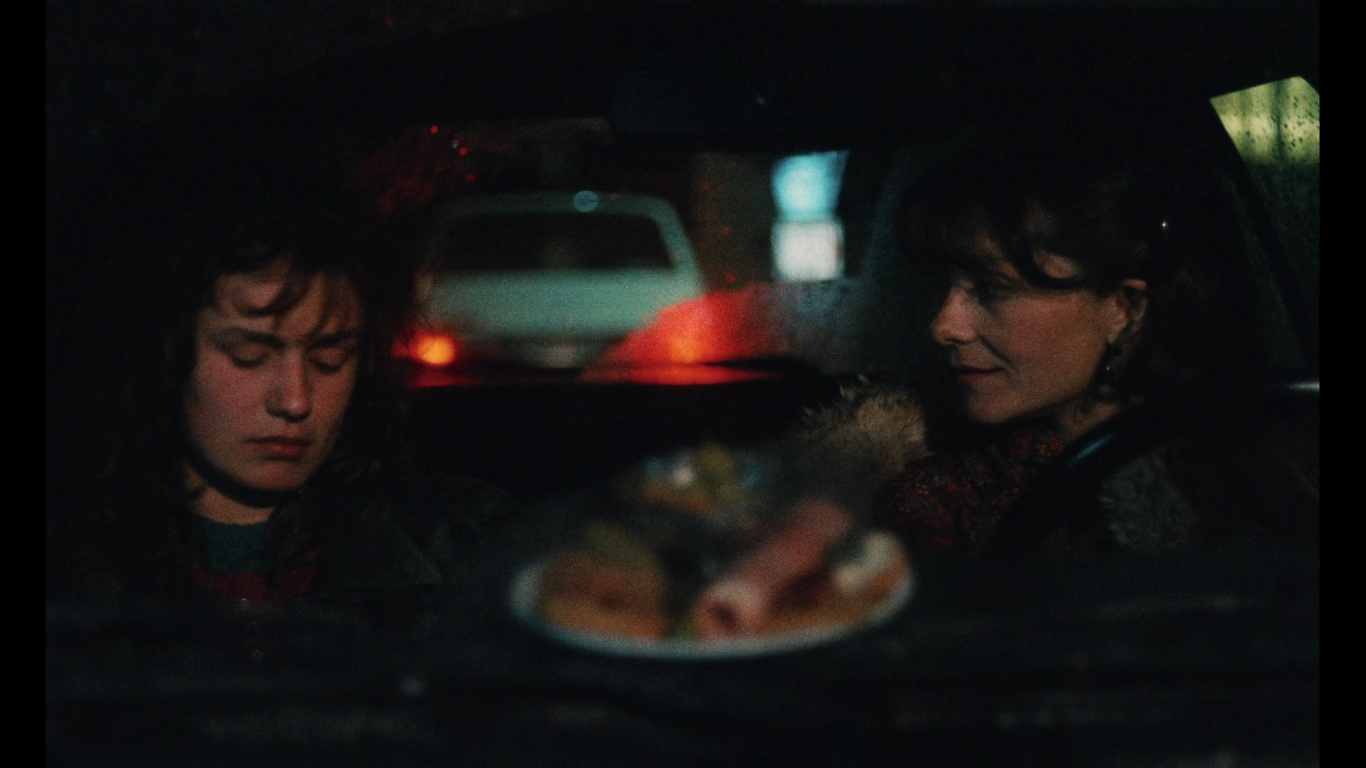
In many ways, Bonaire’s character informs the structure of the film and so it functions well. She is an itinerant young woman, free and apparently happy with her lifestyle. It’s easy to label her as a vagrant and a loafer. She never holds down a consistent job and maintains a brusque belligerence in the face of others. It makes her fiercely independent, and skeptical about the prevailing philosophies of life.

Through it all, we don’t know where she will go; she fosters these short, finite relationships that have a definite beginning and end, and then she moves on to her next destination. There’s no goal or visible endpoint. All we have is the frame of the story to give us some reference to make sense of her life.

It’s composed of scenes featuring these kinds of visual ellipsis as people she interacted with recount their meetings. Each person views her in a different light, and we must come to understand her in this piecemeal fashion only through the perspective of others.

There’s a bohemian family of shepherds who used to be a part of the establishment but now live a rural, much simpler life taking care of livestock. The closest thing she has to a friend and a saint is a beautiful academic (Macha Méril), who has spent her life researching a fungus brought over during WWII that is slowly killing the local trees. She has a conscience and a warm spirit. Far from deterring her, the girl’s standoffish nature of cigarettes and glowering glances only seems to bring out greater adulation. There’s a hint her benefactor feels it too.

A Tunisian farmhand with a welcoming spirit is another person of generosity in her life. They seem to have nothing in common, and yet they bond because they have shared a similar experience of the world as perennial outsiders. He’s the only person she actually shares her birth name with: It’s Mona.

But our protagonist opens herself up only to get hurt. He offers to let her stay in their quarters and help take care of the local vineyards. It’s another brief promise of something beyond a drifter’s life, however small. Still, upon his coworkers’ return, they’re not agreeable to having a woman in their midst. She’s forced to push on again. It’s the life she’s used to, and yet the circumstances make the moment a far more painful point of departure.

There are signs that this is not sustainable no matter how romantic it might seem. Mona befriends an old white-haired lady slowly dying in her grand estate after posing as her maid. Would Mona have been a friend of Charles Foster Kane? This is the closest thing we have to answer, although it too becomes a closed door as the woman’s only kin, a young nephew is anxious to get what’s coming to him.

In a bit of serendipity worthy of Varda’s husband Jacques Demy, there is a kind of interwoven fate to these relationships as some of them begin to fold over on one another and interconnect with Mona in the middle. But this must not be mistaken for Providence.

Her lot becomes increasingly bleak, and there’s obvious intent here. There’s no other place to go. Whether Varda failed to show them before or not, I started to notice the makeshift carpet shoes Mona wears on her feet. She feels all the more pitiful falling in with dubious company and beginning to drink more.

She’s also accosted by some local practical jokers who run about town throwing paint bombs in a mad show of anarchy and artistic expression. There’s no rhyme or reason to it per se, although it leaves her more disillusioned and covered in brown paint that makes her look even more feeble than before. Then, a fire takes her belongings, and she must flee in the wake of an angry confrontation. She’s offered no respite.

At once such a proud and independent individual, she looks so dejected when we finally leave her shivering in her blanket trying to stay warm as a dog barks at her from right outside. It does feel as if the window has closed for her. She had glimpses of other lives and yet they all amounted to nothing. And she is left with nothing.

Freedom is such an exhilarating thing, not being totally beholden to the strictures of the world around us. But it’s equally terrifying being cast out into a life where we have no one to care for us, no one there to love or be loved by. Here again, Vagabond and Kane are so closely related. Whether we die in a luxurious bedroom or a ditch by the roadside, it doesn’t much matter. The outcomes are the same. There’s something ultimately deceptive and debilitating about their respective freedoms. It’s not freedom at all.

4.5/5 Stars