 Perhaps Astaire and Rogers most famous film together, Top Hat has them in top form once more, seemingly defying gravity at the full peak of their powers. The beauty of their partnership is that they’re able to tell the progression of a love story through dance, but they do it with such ease and grace it looks like so much fun. For a brief moment, you almost forget what the plot line of the movie is even about. It doesn’t seem to matter. All that matters is these two harmonious beings in perfect unison with each other.
But for those who take some interest in the plot, it is once more a simple screwball story of mistaken identity and romantic entanglements. Jerry Travers is supposed to perform in the show of one Horace Hardwicke, played impeccably by the stuttering Edward Everett Horton. However, Jerry gets smitten with the girl downstairs, but she gets the wrong idea. After all, he is staying in Horace’s suite. They rendezvous in Italy at a lavish gondola getaway where they meet up with Horace’s wife Madge, the always entertaining Helen Broderick. She’s playing matchmaker for Jerry because he has a girl named Dale Tremont (Rogers), who she wants him to meet. Of course, they already know each other, but again she mistakenly believes he’s Horace.
It’s all very awkward, however, all Travers knows is that he’s infatuated with this girl so he goes headlong after her. She’s aloof with him and eventually tries to marry the overly-honorable Alberto Beddini as a defense. Horace over the entire course of the film is bickering with his butler Bates (Eric Blore) and it seems like he’s constantly getting thrown under the bus. But this time Bates does something that makes everyone happy. All that matter is that Astaire and Rogers are back together because in their universe anything else would be unthinkable.
Astaire’s opening number “Fancy Free” is especially lively setting the tone of the story, while “Isn’t a Lovely Day” taking place under the gazebo in the rain is an important starting point for the love story. “Top Hat, White Tie, and Tails” honestly is not one of my favorite numbers, but it is worth it alone to see Astaire twirl around with his stick using it to develop rhythm and act as almost a third leg.
An American classic from Irving Berlin, “Cheek to Cheek” is undoubtedly the apex of this film, because by now our stars are in love and in this dance they have entered almost a suspended state of bliss personified by their floating forms. All the other players fade away and the dynamic dancing duo gracefully glides into heaven together.
The final number “The Piccolino” is rather decadently extravagant to match the flamboyant set, but again when all else fades away and we are left with only Astaire and Rogers, that’s when the scene truly feels magical. It’s as if within all the noise there is once again a moment of beautiful intimacy. But intimate in the sense of two wonderful performers being seemingly so connected in their art form. They hold the sinews of the screwball romance together if only through their exquisite dances.
Most opinion on film is essentially subjective, and in my opinion Swing Time (1936) from the following year is a stronger picture. It has a few more memorable numbers and it is perhaps a little more well balanced all around. Although you do lose Edward Everett Horton for Victor Moore, a lot of the other players remain the same. Also, Top Hat‘s script feels a little weaker, not that it’s of great importance. Because after all, most people don’t go into a film like this ready to analyze the script. We want to be dazzled by two of the great icons of Hollywood, as much now as during the Depression years, and they certainly do that to perfection.
4.5/5 Stars

 A quaint, unassuming film, especially up against other more lavish Ernst Lubitsch works like Trouble in Paradise and Heaven can Wait, Shop Around the Corner still manages to be in the upper crust of romantic comedies — even to this day.

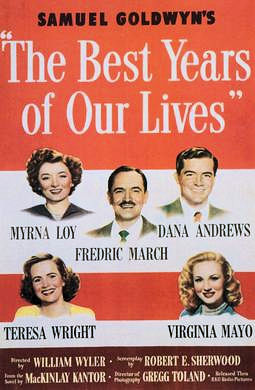 Inherent in a film with this title, much like It’s a Wonderful Life, is the assumption that it is a generally joyous tale full of family, life, liberty, and the general pursuit of happiness. With both films you would be partially correct with such an unsolicited presumption, except for all those things to be true, there must be a counterpoint to that.


 “You have the darndest way of bouncing a fellow down and bumping him up again” ~ Henry Fonda as Charles Pike
 In fact, we have a brilliant introduction to her as she narrates the scene unfolding in front of her with the aid of her compact mirror. She trips up the bumbling bachelor and their introduction is the first exclamation point in a bumpy relationship. She’s ready to play him and marry rich and famous, because he’s a pretty naive fellow, and stiff around the ladies. Fonda’s nervous charm proves the perfect recipe for success as he is constantly being overwhelmed by Stanwyck’s frenetic barrage. His defenses are down and he hasn’t the foggiest what has hit him. Either he was really that uncomfortable or otherwise, he does a superb job of faking it since there’s never another moment where he’s not being fondled or manipulated.
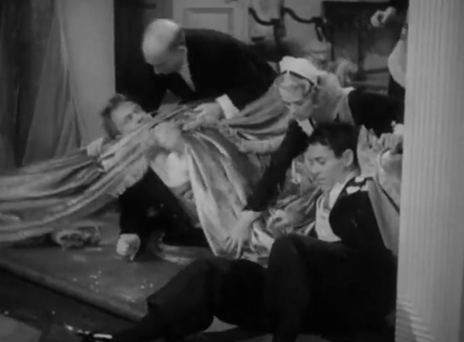 The story could end there, but Sturges has set his story up perfectly for a killer second act. Jean plans a perfectly sneaky revenge plan to get back at “Hopsy” by posing as the British niece of another con man (Eric Blore). He uses his own wily charm and influence to get them an invitation to the Pike household for dinner. There we see several other great character actors in action including Horace Pike (Eugene Pallette), and the perennial sourpuss Muggsy (William Demarest). Jean shows up now as the Lady Eve and successfully convinces her “Hopsy” that she is a completely different individual. The film works wonderfully on this axle of ludicrousness because young Pike is completely befuddled and awestruck again. He goes thudding, clanking, and crashing all evening long, a true victim of love. Pike thought he lost one girl for good and here’s another even better prospect. A whirlwind romance follows and everything is falling into place beautifully. There’s a frantic montage in preparation for the big day and then it happens. They get hitched. Afterwards, it’s all done and the two lovebirds are on a train barreling down the tracks interspersed with the long laundry list of all Eve’s beaus from Angus, to Herman, and Cecil and so on. It’s Charles’ worst nightmare, and he hopes to get out of it as quickly as possible.
 What makes Sturges’ film so wonderful is all the parts making up the whole. His script is perfectly contrived mayhem. He sprinkles it with his typical slapstick, his loudmouthed stock company lends an added layer, and his typically lightning-quick repartee is brought to life by his leads. Stanwyck was the quintessential leading lady of the 1940s and in 1941 she was in fine form (Balls of Fire and Meet John Doe). She can dance so effortlessly between dynamic comedy to heartfelt drama that is positively palpable. She overshadows Fonda in a sense, but they still work together, because he is her perfect foil, the precise innocent fool to fall into her web of feminine wiles. She can muss up his hair, manhandle him, and completely manipulate his feelings. Yet we still like both of them in spite of it. They are a hilarious match, and there’s space for some passionate canoodling as well. It’s probably one of the most perfectly wonderful, utterly dysfunctional relationships we could ever hope to see put on screen. By continually whipping out punch line after punch line to the very last quip, Sturges makes this comedy look positively effortless.
 4 Star Films