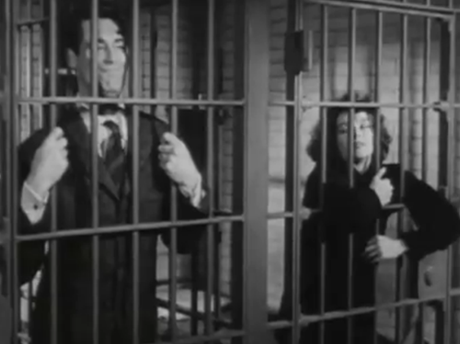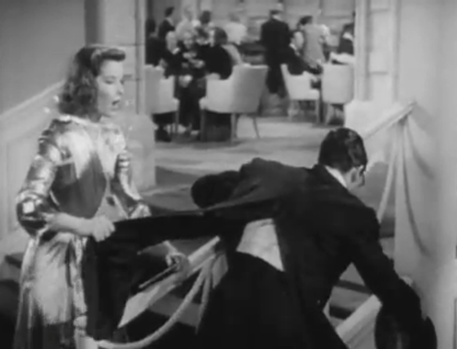
 If there ever was a benchmark for the sophisticated, high-society brand of comedy, The Philadelphia Story is most certainly it. It’s less screwball because instead of Howard Hawks, George Cukor takes the helm and injects the film with his more refined sensibilities. It’s still very much hilarious and impeccably witty, but it’s not quite as scatterbrained as it could have been. Once more you have the iconic pairing of Cary Grant with Katharine Hepburn. Previously they had been in two other Cukor pictures (Sylvia Scarlett and Holiday) and of course Hawks’ romp Bringing up Baby. However, this time they’re joined by another cinematic titan in James Stewart and it proves to be a wonderful battle for command of the screen. The story ends up being a wonderful clash of classes and culture that also manages to illuminate a few bits and pieces of truth.
C.K. Dexter Haven (Cary Grant) had it out rather acrimoniously with his wife Tracy Lord (Katharine Hepburn) and now two years down the line, she is set to marry someone else. She couldn’t be happier to be rid of him and all his faults. Her new husband is a real “man of the people,” the wooden George Kittredge (John Howard), and he got his money doing an honest day’s work. In other words, he’s everything Haven isn’t when it comes to class and manners, but he’s also quite different than Tracy. But she doesn’t seem to mind. She’s on cloud nine to be rid of Haven.
Although Cary Grant does take a back seat at times, it’s only so he can manipulate and connive in the background, because he most certainly has an agenda. It’s great fun to watch. First, he brings in the folks from Spy magazine to do a full spread on the big wedding. There’s belligerent journalist Macaulay Connor (James Stewart) scoffing at all the opulence around him and then photographer Ms. Eilzabeth Imbre (Ruth Hussey), who has something complicated going on with her colleague.
They’re all here because the editor of Spy has a nice juicy expose piece on Tracy’s father and so C.K. advises her to go along with it. She suspects her old spouse has something to do with it, and it’s true, he didn’t put up much a protest when it came to taking part. However, Tracy’s not ready to let him ruin what she’s got going. She and her younger sister the crack-up Dinah (Virginia Weidler), put on a good show of upper-class snobbery to utterly bewilder their guests.
The funny thing is that while Tracy detests C.K. with the vehemence of the plague, her mother and sister quickly welcome the old gentleman back into their home with open arms. After all, what kind of trouble could he cause a couple days before the wedding, and Dinah is always game for a little chaos. She and C.K. have a mutual affection for each other. They’re both serial troublemakers.
After the surprise of Dexter wears off, the next person Tracy clashes horns with is the brusque newsman Connor, who is as turned off by her as she is annoyed by him. As she sees it, he’s invading her house as part of the paper’s plan to make her life miserable and steal away all her privacy. For him, she’s a stuck-up brat, who has had everything served to her on a silver platter in the west drawing-room. He thumbs his nose at the whole set-up. But a chance encounter at the library no less opens up a different side to these characters. Mike Connor is actually an accomplished poet far more skilled than his lousy journalistic pursuits would suggest. He learns just how perfectly imperfect she is.
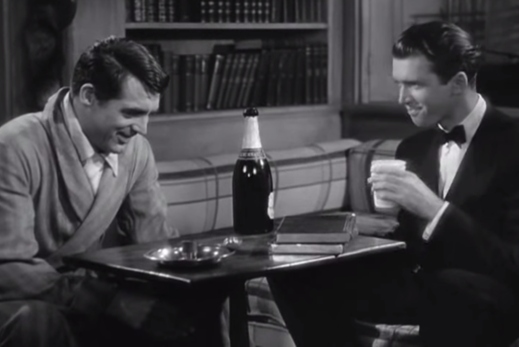 It’s at a party the night before the big day that things get particularly interesting. A lot happens when you fill people up with a little bubbly, some wine, and some early morning gaiety. Tracy is absolutely swimming in exuberance partially thanks to alcohol, partially because of the dancing, and maybe in expectancy of tomorrow’s high. But when things come a little loose around the edges, things happen that you regret. As it turns out Tracy doesn’t remember quite what happened that night, but Dinah saw all the good parts from her balcony. It involved a drunken Mike taking a jaunt to Dexter’s home at a godforsaken hour followed by Ms. Imbrie with an inebriated Tracy in tow. What this sets up is a wonderful little sequence where a hiccuping Stewart helps Grant orchestrate a plot to get back at Spy magazine editor Sidney Kidd. Then, Connor gets to spend the wee hours of the morning rambling on and on. It’s innocent enough, but quite the evening no less. It makes Kittridge quite distraught finding his bride to be in the arms of a man who is singing “Somewhere Over the Rainbow.” And of course, with such an unfortunate moment so close to the wedding it looks like things will be called off. But Kittridge is willing to make amends. It’s Tracy who realizes she has to break things off because ironically this man is too good for her.
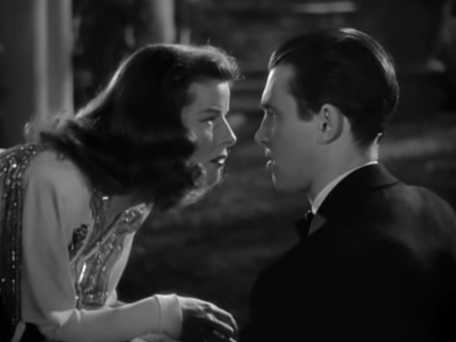 It looks like Haven has won, but in a split second Connor is proposing marriage and ready to tie the knot with Tracy to save the wedding. Once again Tracy makes a sagacious decision (which is surprising given her earlier condition). Hangovers on your wedding day are not usually a good thing. In this moment everything falls back into place as it should and as we want it to. These are characters that we grow to care about, despite their misgivings and class differences.
When reading up on this film I was astounded to hear that the film supposedly had no outtakes. Everything we see was as it was when it was first shot and that has to be a testament to the strength of these actors and maybe a little luck. It’s true that the film sometimes enters territory that feels unscripted and loose. That’s when it really gets fun. Stewart and Hepburn. Grant throwing a quick retort here and there. Imagine, this could have been a vehicle for Hepburn paired with Clark Gable and Spencer Tracy. I’m sure that would have been great, but the whole dynamic would be very different.
So who is the winner in this film? Grant as C.K. Dexter Haven? Hepburn as “Red?” Stewart as the “Professor?” The Philadelphia Story is a real winner for the audience. What more could you want in terms of high-brow comedy bursting with legendary star power?
5/5 Stars

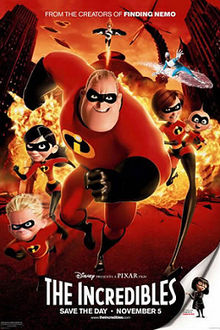 Certain superhero storylines are beginning to overstay their welcome. Spiderman, The Fantastic Four, and even The Avengers spring to mind. The remarkable thing is the fact that this wildly popular genre headlined by numerous wildly popular franchises does not appear to be leaving us anytime soon. And when the prospects of monotonous superhero film after monotonous superhero film get a little too much, it’s rather comforting to return to The Incredibles. Yet again Pixar proved they knew how to craft animated films with great storytelling, but also a depth of character.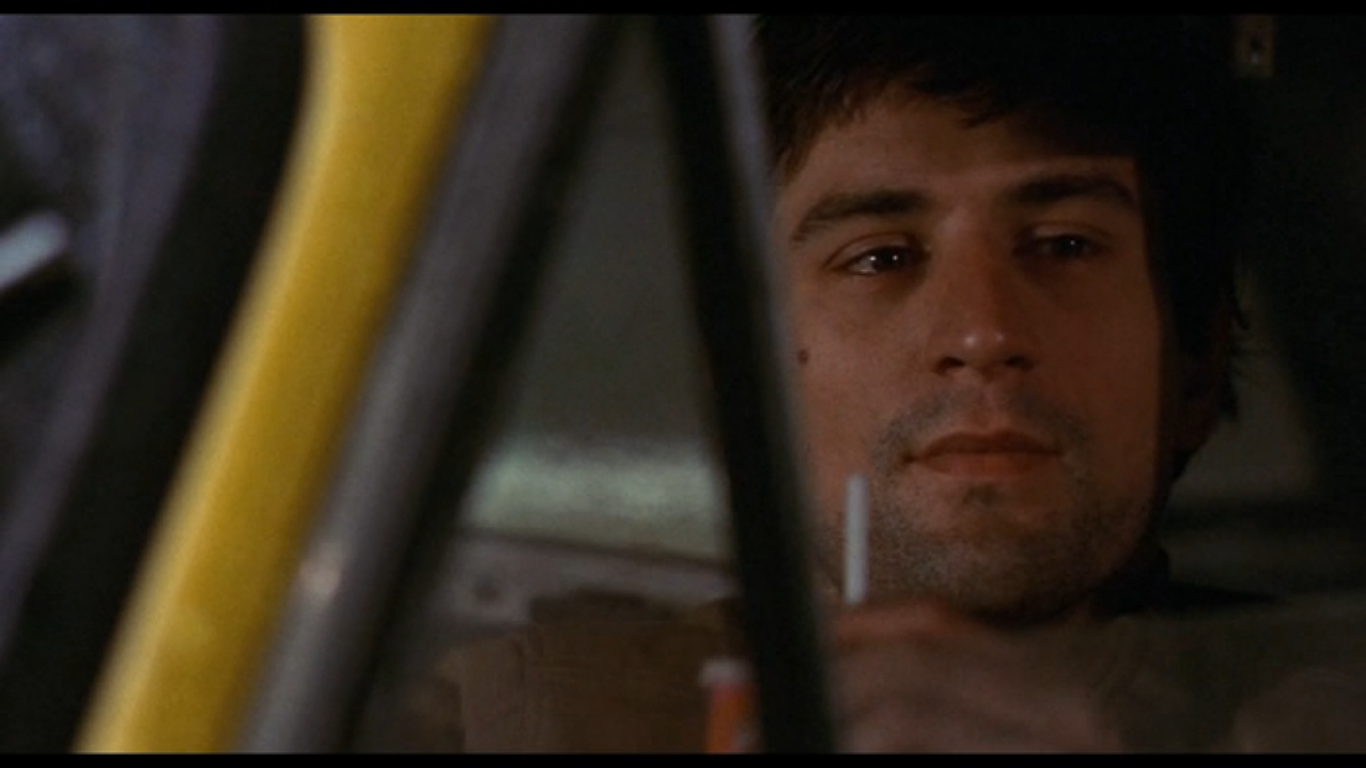
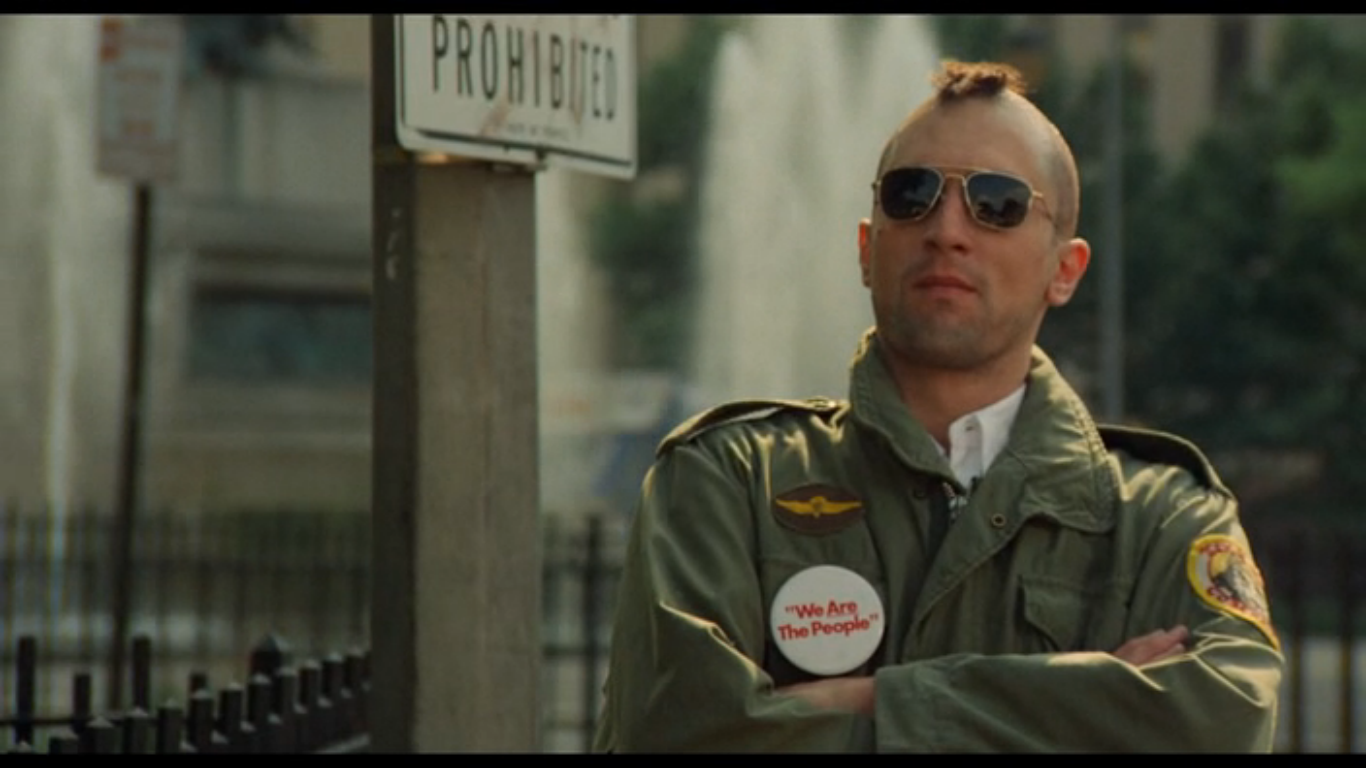

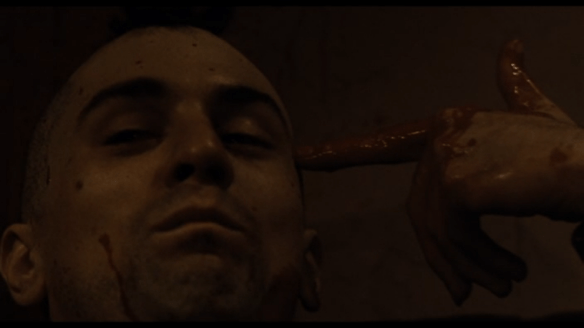 Martin Scorsese’s film has also received pointed criticism for its violence which is hard to downplay. However, Taxi Driver remains interesting because it is not bloated with killing (in fact only one scene is actually bloody). Most of the film has to do with relationships or lack thereof because a lot of what Travis does is watch and listen. It might be Martin Scorsese in a cameo as a jealous husband or a presidential candidate asking Bickle’s opinion from the back seat. Furthermore, like any warm-blooded boy, he knows that Cybil Sheppard is a dream girl. And he has enough compassion to want Iris to have a normal childhood. It’s just that his conscientiousness is misdirected and subverted.


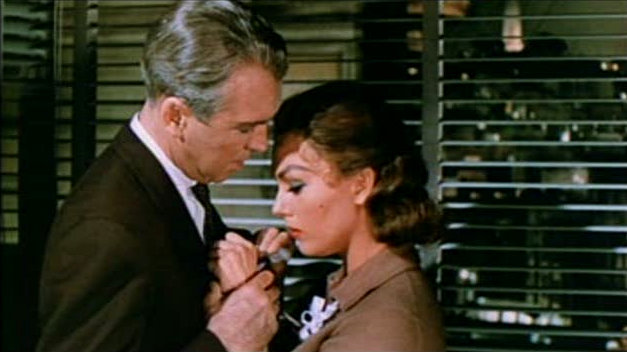

 “Now there are just two of us – young Aubrey Montague and myself – who can close our eyes and remember those few young men with hope in our hearts and wings on our heels.” ~ Lord Lindsay
 Back in the 1920s, a brash young Abrahams (Ben Cross) is about to enter university at Cambridge intent on becoming the greatest runner in the world, and taking on all the naysayers and discrimination head-on. He’s a Jew and faces the antisemitism thrown his way with defiance and a bit of arrogance. He’s a proud young man who loves to run, but more than that he loves to win. His best friend becomes Aubrey, a good-natured chap, who willingly lends a listening ear to all of Harold’s discontent. Soon enough Abraham’s makes a name for himself by breaking a longstanding record of 700 years, at the same time gaining a friend in the sprightly Lord Lindsay. Together the trio hopes to realize their dreams of running for their country in the Paris games of 1924. They are the generation after the Great War and with them rise the hopes and dreams of all those who came before them.
 Simultaneously we are introduced to Eric Liddell (Ian Charleston) a man from a very different walk of life. He’s a Scot through and through, although he grew up in China, the son of devout Christian missionaries. Everything in his life is for the glory of God, and he is a gifted runner, but in his eyes, it’s simply a gift from God (I believe God made me for a purpose, but he also made me fast. And when I run I feel His pleasure). His sister is worried about his preoccupation with this seemingly frivolous pastime, but Eric sees a chance at the Olympics as a bigger platform – a platform to use his God-given talent to glorify his maker while living out his faith. Abrahams is a disciplined competitor and he goes so far as to bring on respected coach Sam Mussabini (Ian Holm) to help his chances. Liddell is a pure thoroughbred with life pulsing through his veins, and of course, they must face off. It’s inevitable.