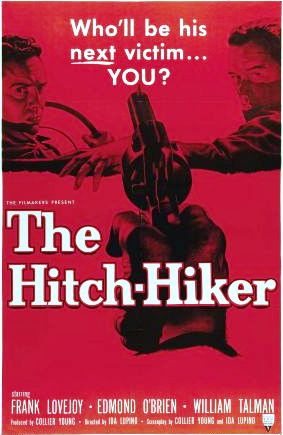
The Hitch-Hiker (1953)

hitch-hiker_posterPart of the harrowing allure of the Hitch-Hiker is that it’s actually based on a true incident that occurred only a year before the events shown. It’s not as if someone took artistic license with some murderers and made it into a horror spectacle. Hitchcock’s Psycho especially comes to mind.

Instead, director Ida Lupino takes a much more universal approach with an opening title card suggesting that the events that follow about a man and a gun and a car could really happen to any of us. Perhaps it’s a cheap plotting device but it does throw the audience into the passenger seat quickly as they are introduced to a rash of murders and the hardened killer behind the spree Emmett Myers (William Talman) who soon has the entire mobilized police force looking for him.

The meat and potatoes of the film involve the brutal murderer taking two vacationing fishermen hostage and grinding away at them as he utilizes them to flee the authorities and bends them to his will. After all, he’s the one with the gun, and he’s proved numerous times he’s not squeamish about using it.

It also plays into the narrative’s hands that both Edmond O’Brien and Frank Lovejoy are not necessarily classically handsome. But they work as everymen. If Joel McCrea was the poor man’s Gary Cooper sometimes I think of Edmond O’Brien as the poor man’s Humphrey Bogart but that’s neither here nor there. Because in little films like this O’Brien left an indelible mark on film-noir. D.O.A. and The Bigamist are two other such examples. Lovejoy on his part is extremely understated, not even being able to quite place his face but we cannot help but admire his quiet stalwartness. O’Brien’s character seems the flightiest of the three and within their ranks, we’ve found a triangle that creates the contentious dynamic that’s the foundation of the film’s entire conflict.

A film of this length and from this era doesn’t have any right to be as intense as it is, yet the Hitch-Hiker proves to be just that. It’s chock full of not only frank depictions of wickedness but enough psychological torture to send tremors up the spines of an audience. It’s a real sweaty thriller. William Talman is absolutely diabolical in a performance that is as vindictive as any other role that comes to mind. It’s that evil.

Meanwhile, the deeply underrated cinematographer Nicholas Musuraca (Out of the Past) flaunts his skills in low budget filmmaking while former husband-wife duo Collier Young and Ida Lupino team up in another surprisingly compelling project, despite its meager production values. I laugh derisively at any contemporary who might have suggested Lupino could only do so-called issue-driven “Woman’s Pictures” because The Hitch-Hiker is really all about three men where the tension mounts to great proportions. Forget any other category. This is a stone cold crime film that goes beyond a simple gimmick.

3.5/5 Stars
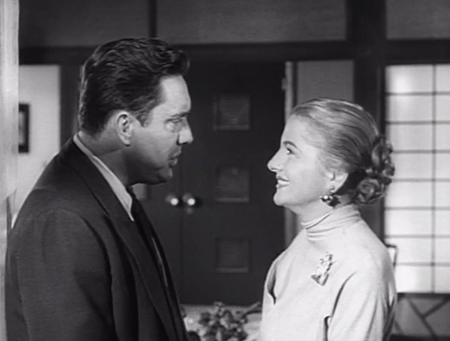
The Bigamist (1953)

the-bigamist-1I despise you and I pity you. ~ Edmund Gwenn as Mr. Jordan

The Bigamist is at first a delightful noir — in one aspect unassuming and yet groundbreaking when put in a broader context. Ida Lupino is not simply a good female director. She is a good director, period.   She left a body of work both behind and in front of the camera that speaks for itself. Even the small ones like The Hitchhiker and The Bigamist have a certain strength about them.

In this case, the film’s title flashes with the superficial tinges of a sordid drama but when you actually get into the thick of it all, there’s a great deal of tenderness and certain heartbreak there.

In some ways, Edmund Gwenn becomes our main character’s father confessor as the protagonist explains how it all began through flashback: The plotting is simple. Harry Graham (Edmond O’Brien) found himself living a double life. But it’s not just that. He loves his wife Eve (Joan Fontaine). They genuinely care for each other deeply and now they share together in business but he spends a great deal of his time on the road. They’re even planning to adopt a child together since Eve cannot have a child of her own. Obviously, during his frequent bouts on the road, Harry gets lonely and we’ve undoubtedly heard that excuse countless times and it’s been the calling card for a great deal of infidelity.

the-bigamist-2Except at first what Harry does, does not seem like infidelity. In one integral scene Harry takes one of those bus tours to see the stars because, after all, Beverly Hills is that land of movie stars and their extravagant lifestyles. Jimmy Stewart, Jack Benny, Oscar Levant, Barbara Stanwyck, and Jane Wyman are all given a nod. There are even a few playful in-jokes to the always genial Edmund Gwenn who turns up as the adoption agent. All of this is essentially fluff but it’s on that same ride where he meets someone — a woman named Phyllis Martin (Ida Lupino).
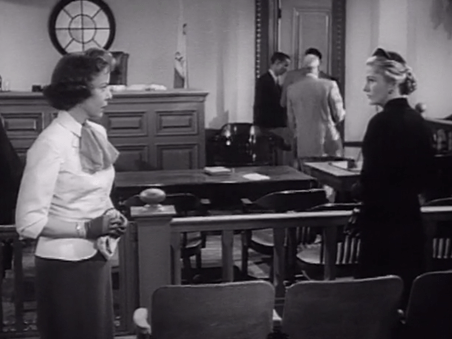
It’s true that they’re both looking for a friend and they gravitate towards each other. It’s nothing more than that and Phyllis invites her newfound friend to a restaurant made in the popular mode of Early American Chinese. It’s where she works. But he hardly cares. He sees her more and the most astounding thing is that he tells his wife about it almost in jest saying he met a brunette in California. The reason he cites: she wasn’t beautiful but she was nice.

And right in that moment, you can see what’s particularly striking about The Bigamist. It’s a frank, open, and honest film in an often prim and proper era of certain sensibilities. The Bigamist looks to be a film to trod all over those social mores and yet extraordinarily enough it doesn’t. Yes, in certain ways it dissects them but it does it with great care and a tenderness for all parties involved.

It’s not so much a dark brooding noir but a film of interpersonal tragedy rather like earlier such examples as Pitfall or They Live by Night where bits of darkness pervades the home and relationships which are admittedly fragile because of the humans involved. Topics of divorce, infidelity, and pregnancy further complicate matters.  But not in some lurid exploitive way to sell tickets.

It’s oddly ironic on multiple levels. Of course, we know as an audience that he is seeing another woman but that’s only the beginning. In a major fit of situational irony, it works exactly contrary to what we might expect. Edmund O’Brien’s lead is a good and decent man. His wife is not a holy terror but played by one of the sympathetic heroines of the 40s and 50s, Joan Fontaine. Furthermore, Ida Lupino is not some sleazy femme fatale. In fact, she’s the one who initially rejects his advances and shows reluctance to marry him.

the-bigamist-3It strikes me how it’s often the small, tiny, unassuming pictures that impact me the most and this film did wrench my heart over the course of only a very few minutes. The final court sequence sums up the reasons quite well because it ends the film on a moral note setting up a rather convicting paradigm.
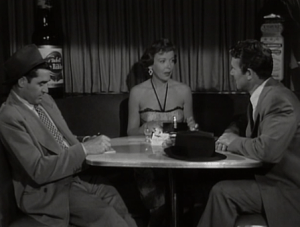
We see both women there. We see the accused sitting in front of the judge and jury willingly admitting his guilt. His is a society that winks an eye at a married fellow with a mistress and yet he, a man who genuinely loved two women, is found at fault under the law. The defense attorney on his behalf calls for punishment tempered by mercy.

When those two women walk out of the courtroom as the proceedings end, it does not mean that any of it can ever go back to normal. Will either of them even take him back? We can make an educated assumption but that’s not really for us to know. However, on a universal level, the words of the attorney reverberate in my ears. Each one of us has aspects of our character that are undoubtedly despicable but also elicit pity. It only makes sense that each of us deserves a certain amount of punishment but also a measure of mercy. It’s up to us to extend that to others. Because the reality is that we might not be that much better than the eponymous bigamist. Judging by his character we might actually be far worse.

3.5/5 Stars

Private Hell 36 (1954)

privatehell1There’s not a whole lot to it. Aside from a wonderfully pulpy title, Private Hell 36 feels like a pretty straightforward endeavor from director Don Siegel. The low budget procedural nevertheless boasts a surprisingly good cast. The tale is framed by a nice bit of narration from the sitting police chief played by the always enjoyable Dean Jagger, in a particularly compassionate role.

Our story opens on a perfectly normal night where one copper seems to quell a drugstore burgle while he’s off duty, and another cop gets it in the crossfire between rival gangs. It causes the police to go on high alert.

When some street vermin rolls into the station to get booked, he’s found with some nifty paper. Detective Cal Bruner (Steve Cochran) and Jack Farham (Howard Duff) are assigned to follow the trail of a counterfeit $50 bill that’s pinned on a killer. So it’s more than hot money now. There just might be a murder rap at the end of it. Their canvassing leads them right to the lap of self-assured night club singer Lilli Marlowe (Ida Lupino).

Farham is a relatively honest chap with a doting wife (Dorothy Malone) and a kid already. Bruner has a propensity for recklessness, and he also takes a liking to Ms. Marlowe, especially after they spend so much time together.

privatehell2The temperature begins to rise when the two colleagues get caught up in a car chase with their counterfeiting adversary. All the days casing the local race track with Ms. Marlowe finally leads to some action. In the aftermath, one car goes careening off the road, and the boys have a decision to make. They frantically begin snatching up dollar bills and they decide to go dirty and make a run with the money.
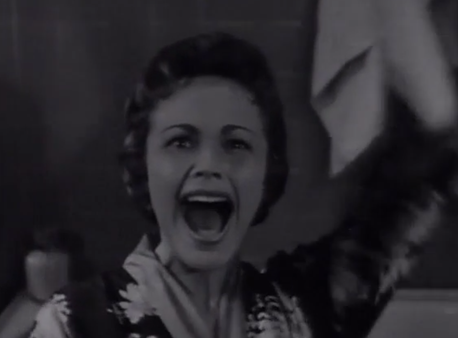
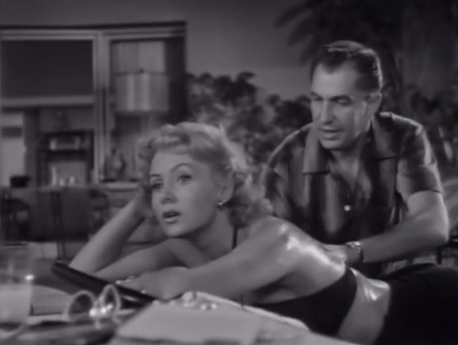
Such a plot takes the usual turns that we would expect as girlfriends, greed, familial responsibility, and guilty consciences cloud the path to the straight and narrow. The film, which was jointly written by Ida Lupino and her former husband Collier Young, is no great work of art. But there is enough character conflict and crisis to make Private Hell 36 a gratifying piece of lower tier noir.

3/5 Stars

“You know I’ve seen this all on Dragnet” ~ Lilli Marlowe

 “Save the jokes for the customers” ~ Detective Bruner


While the City Sleeps (1956)

whilethecity1While the City Sleeps has a brilliant cold open followed by a pounding title sequence, courtesy of Fritz Lang, that brings to mind a bit of Diabolique and Psycho. The rest of the film turns into a case to find the wanted lipstick murderer (based on a real killer), but that only holds part of our attention.

When newspaper magnate Mr. Kyne dies suddenly, his begrudging son Walter (Vincent Price) takes over intent on shaking up the status quo and putting his mark on the company. He soon turns three men against each other as they desperately fight for the new position of executive director. The first is veteran newspaper editor John Day Griffith (played by the always memorable character actor Thomas Mitchell). The second candidate is chief of the wire service Mark Loving (George Sanders) who is Griffith’s main competitor. Finally, in the third spot is Harry Kritzer who happens to have a secret ace in the hole. Each of them is tasked with finding out the real scoop about the serial killer, and it turns into a real tooth and claw ordeal. Within the glass cubicles, everything can be seen, but not everything is heard and that’s where the secrets get disclosed.

On the outside looking in, so to speak, is star TV reporter Edward Mobley (Dana Andrew), who agrees to help his friend Griffith by doing a little digging around about the murderer. He gets some tips from a cop friend Lt. Kaufmann (Howard Duff), and Mobley tries to smoke the killer out on air. However, it leads to the potential endangerment of his fiancée Nancy, who also happens to be Loving’s secretary. Loving has his love directed towards a female reporter named Mildred Donner (Ida Lupino), who attempts to needle Mobley for info. At the same time, the killer is on the move once more, with Nancy being an obvious target. Mr. Kritzer’s own romantic entanglements get him in trouble because he is seeing Kyne’s beautiful but detached wife Dorothy (Rhonda Fleming). Mildred finds out about them and they have some talking to do. Mobley also has some making up to do with Nancy after she finds out Mildred came to see him. It’s a big mess.

whilethecity3Mobley juggles everything from his love life to the big scoop and they apprehend the killer, but things at Kyne’s don’t wind up exactly the way they expected. Mobley looks to move on from the paper with Nancy, but even he cannot get away that easily.

While the City Sleeps is an underrated tale from Lang that is positively stacked with big names. Its pacing can be deliberate at times, but it is just as much an indictment of journalism as it is a thriller. The office is a web of deception with so many interconnections between these work factions. Those you would normally expect to be scrupulous seem to give up their honor in the face of this new promotion. In a sense, Mobley seems to be outside of this fray and yet he cannot help but get involved in it. It doesn’t help that nothing turns out the way it’s supposed to. Everybody seems to gain something, but nobody really wins the game.

I must say it was great to see Dana Andrews in one of these leading roles again and although their roles were smaller, Ida Lupino and George Sanders still were a deliciously stuffy and corrupt pair. I was never really a fan of Vincent Price due to the roles he normally plays, but I was inclined to like Howard Duff (Lupino’s real-life husband) in his turn as the policemen. It goes without saying that Rhonda Fleming is positively beautiful, but she also cannot be trusted. I guess that applies to about every character in this film. It’s certainly a cynical world out there that Lang paints, where the killer might be caught, but corruption is never fully quelled.

4/5 Stars

They Drive By Night (1940)

They_Drive_by_NightThis is a surprisingly nice little film-noir that follows two brothers (George Raft and Humphrey Bogart) who make their meager living transporting loads of produce by night on a big rig. Despite the seemingly mundane topic, They Drive by Night has some juicy bits of drama as the brothers struggle to survive and make their way in life. Along the way there is disaster and treachery. Ida Lupino is absolutely psychotic in her role opposite George Raft and Alan Hale. Then Ann Sheridan plays the nice girl role. I wouldn’t say that this is a great Noir but it certainly is far from boring.

Raoul Walsh proves just how adept he was at making entertaining melodramas and Humphrey Bogart is yet one step closer to his breakthrough with The Maltese Falcon (1941).  The truck drivers can always be found at the local diner getting their burger, talking up the waitress and maybe playing some pinball. When there time is up, it’s a long night ahead hauling fruit crates. The film is a slice of Americana reflecting a bygone era, at least for most of us.

3.5/5 Stars