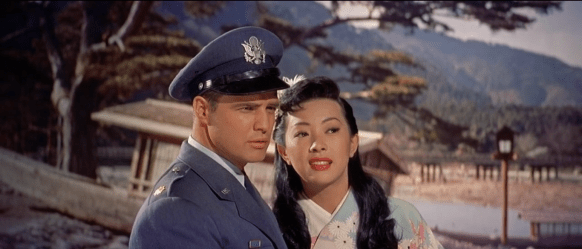
Major Lloyd “Ace” Gruver (Marlon Brando) lands on the airbase in Korea and almost immediately gets assigned leave in Kobe. However, this leave has ulterior motives, signed by General Webster (Kent Smith), a friend of his father’s and the father of the pilot’s sometime girlfriend. It’s meant to be a contrived reunion no doubt so they can consider their wedding plans.
One of Gruver’s men, Joe Kelly (Red Buttons) is set to get married himself. Soon they’re showing off cheesecake photos of their girls until it evolves into something far more complicated with more uncomfortable implications. Because Joe is intent on marrying a Japanese gal named Katsumi (Miyoshi Umeki). If nothing else, you admire the man because he’s totally committed; there’s a complete integrity and personal conviction behind his intentions.
As the film points out later, he wasn’t alone. Lots of servicemen looked to marry Japanese girls after the war, and yet there certainly is something countercultural about him. What becomes immediately evident is this sense of casual (or not so casual) racism. Though hardly a spiteful person, Gruver has some preconceived notions about “slant-eyed runts.”
He has his misgivings about the wedding and yet, as a favor to his subordinate, he agrees to serve as his best man. The pervasive strains of discrimination continue as Gruver makes it to Japan and rendezvous with the Websters and Eileen (Patricia Owen). They attend a club for American personnel only to witness a soldier getting turned away with his Asian girlfriend. The coded language of “fraternization” is really just de facto segregation. For the time being, Gruver has no stake in the matter and so leaves it be.
His first true immersion into Japanese culture, at the behest of his girlfriend, comes from a Japanese kabuki performance put on by a revered actor. Although it’s a bit unfortunate having Ricardo Montalban playing Nakamura, he gives it his best showing, which actually comes off rather sensitive as far as yellowface goes.
While I’m not sure Joshua Logan exactly comprehends Japanese culture aside from its exquisite exoticism, he does take his stage pedigree and proceeds to translate the Japanese arts into flat two-dimensional showings mirroring their inherent performance elements. At the very least he understands their use of space and augments them within the framework of the broader film.
Owen is intriguing because she has all the attributes of a beautiful American girl: well-groomed and fit to be a 1950s housewife, but she has enough wherewithal to think for herself and not to be a “type” for her man to return home to. It forces Brando to make some kind of commitment. Currently, he’s not in a place where he feels that he can. If the movie were to continue down this commonplace path it would be dull going.
Instead, the camaraderie between Brando and a marine, Mike Baile (James Garner), is born. The other actor doesn’t have much to do except act as a cultural guide; still, Garner takes to his role genially and with his unadulterated charms no one could ever fault him. He’s another agreeable face, and he also knows a good deal more about Japanese culture…
Miiko Taka literally stops Brando cold (and the movie with it). The film turns on a new axis as Gruver becomes infatuated with the preeminent dancer, Hana-ogi-san, who can be found crossing the bridge to the theater every day before and after her daily performances. The outmatched pilot finally plucks up enough acumen to find himself a pocket Japanese dictionary only to toss it away.
It’s like a new pastime as he waits to catch a glimpse of her and get a chance to interact. He finally gets his chance — a meeting with her in person — though this is normally totally forbidden for someone in her position. The added grievance is the death of her father who perished at the hands of an American bomb.

Even though the preamble has some rumblings of discord, there’s something about Brando’s introduction to the Japanese household that’s warm and affecting because in it some cultural understanding is made — appreciation of customs and how our differences somehow lead us to a place of mutual respect.
Amid gags of him continually bumping his on on doorways, there are far more tender moments that never feel like they’re reaching toward didacticism. Joe has him remove his shoes before entering the home, and he learns about sake (fermented rice wine) and how to pour for others.
If this scene tickles the heart, it doesn’t last long. The accompanying moment with Brando and Taka’s first time reclining at table alone together is imbued with a sinking feeling of discomfort. He’s so lax and culturally unfamiliar, making a go of it the best way he knows how. There’s a sense he is sunk even before he’s begun. What words will come out of her mouth in response?
Far from being dismissive, she’s gracious and tender speaking of her life and her desires for love and some far-off dream amounting to something more than her extravagant life of a dancer on the stage. She craves something deep-seated, a longing inside of her.
Although they come from two distinctly different worlds, their lives are similarly planned. Either by the strict confines of her theatrical tradition or the regimens of the military. And yet against this backdrop, they find happiness together watching fireworks, being in each other’s company, and generally filling up their days with romantic contentment. What’s refreshing is how none of this feels self-serving or staged. We willingly believe there is something tangible between them.
The seeds of bigotry have already been planted early and so they eventually germinate. The military cracks down calling for all military personnel to stop seeing Japanese women and those who are married, like, Joe are given especially harsh treatment. They’re effectively forced into subordination on the threat of court-martial and deportation.
Sayonara has successfully put its flag in the ground when you know what’s happening and yet the events unfold and you cannot look away. Because the mantle of the story has been passed onto the characters whom we now care for. What follows has legitimate consequences for us.

Thus, their friend’s fate is swiftly decided and yet Ace and Hana-ogi’s roads look to be diverging. There is no other way through unless one of them intercedes and gives up everything they have already built. It’s a point of no return.
To Brando’s credit, he sells the transformation from blundering ignorance to genuine care for this woman who has so enchanted him. Mikko Taki, who is still with us, far from simply being gorgeous, brings a quiet understanding and gentility that stays the course of the movie. In no way does it feel like she’s totally overwhelmed or upstaged by Brando. They make the romance a union between two people bridging two cultures in the face of adversity.
The final delight comes with Brando sticking it to all the naysayers and wishing a “Sayonara” to everyone who would stand in their way. It leads to warm feelings not least of all because the picture is finally done.
All said, the Technicolor scenery and scenario are noteworthy, even cutting edge for the time period, but with the loose threads and lumbering running time, the movie could spare to lose a few scenes. Although admittedly obligatory, it’s the scenes of mechanized conflict and dialogue between Brando and the military that feel rote and uninteresting.
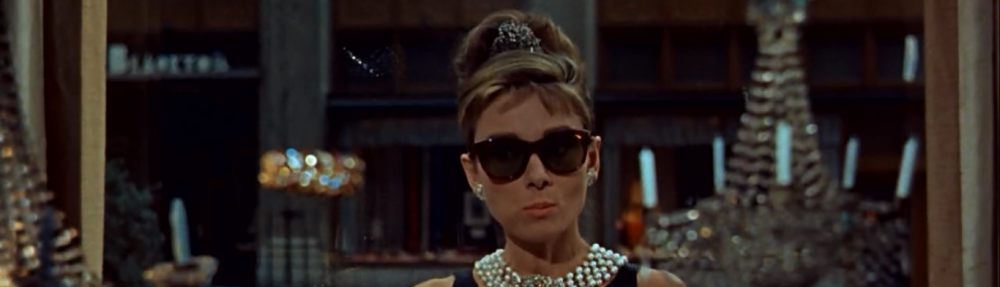
The main players are the ones making waiting through the dross worth it thanks to their candor and agreeable charisma. What a lovely screen couple Red Buttons and Miyoshi Umeki make. Above all, it gladdens me, in all her humility, Audrey Hepburn turned down the role foisted on her at the behest of Joshua Logan. She graciously declined and instead, we were blessed by a performance by Miiko Taka.
Although she, like Shirley Yamaguchi in House of Bamboo or even Umeki Miyoshi, is cast as the delicate Japanese beauty, this only becomes a stereotype if it is never replaced with other roles. For what it is, the part balances several traits, including a degree of independence and familial duty. Thus, any lasting criticisms for Sayonara in this area feel more indicative of the industry now 60 years on than a single performance decades ago.
If Sayonara is rife with stereotypes in its honest attempts, then not enough has been done to build on its legacy to bring us even further in the present. Because, amid the flaws, there were some exquisite touches, from the gorgeous imagery to little accents like the neighborhood cherry shop on the corner or the Japanese conversations shared between a husband and wife. They elicit something genuine and emotionally sincere.
3.5/5 Stars
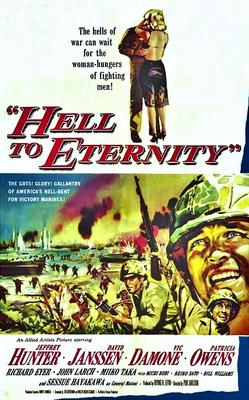 As someone of Japanese-American heritage, it’s become a personal preoccupation of mine to search out films that in some way represent the lives of my grandparents and their generation. This means the rich Issei and Nisei communities of Los Angeles, the subsequent internment camps, and even the famed 442nd Infantry Battalion.
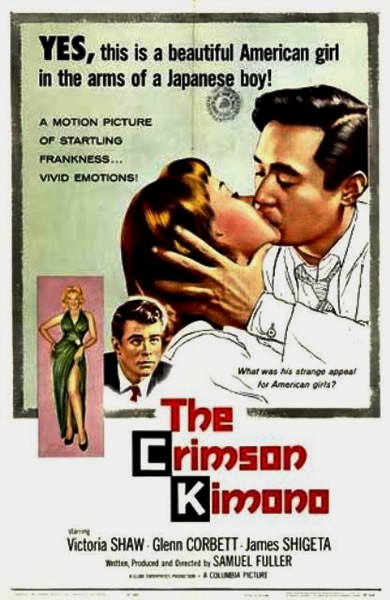
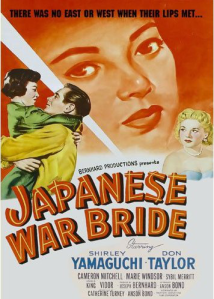 Much like Sam Fuller’s Crimson Kimono (1959), Japanese War Bride’s title carries certain negative stereotypes, however, its central romance similarly feels groundbreaking, allowing it to exceed expectations.
 Jim looks to build up a happy life with her as he looks to take some of his father’s land to keep a home of his own and raise crops. Tae begins to acclimate to her new life and gains the respect of the Taylor family while making a few friends including the kindly Hasagawa siblings (Lane Nakano and May Takasugi) who work at a factory nearby. The icing on the cake is when Tae announces she’s pregnant and Jim could not be more ecstatic.
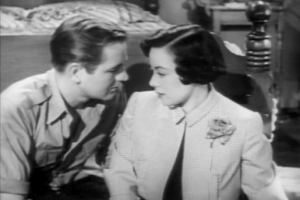 Japanese War Bride is continuously fascinating for the presence of Japanese within its frames. First, we have a rather groundbreaking and relatively unheard of interracial romance between the always personable average everyman Don Taylor and stunning newcomer Shirley Yamaguchi. Their scenes are tender and hold a great deal of emotional impact. It’s the kind of drama that has the power to make us mentally distraught but also imbue us with joy.
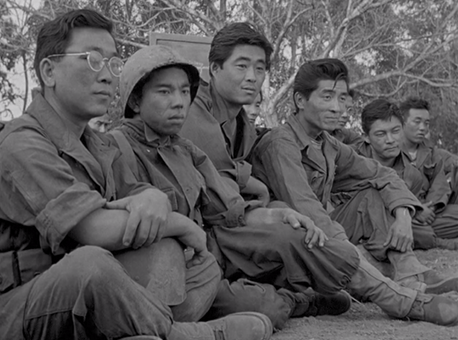 WWII is always a fascinating touchstone of history because it has some many intricate facets extending from the Pacific to the European Theater to the American Home Front and so on, each bringing with it unique stories of everyday individuals doing extraordinary things. One of the best-kept secrets is the 442nd Infantry Division later joined with the 100th and effectively making the first all Japanese-American fighting unit which served over in Italy and France.
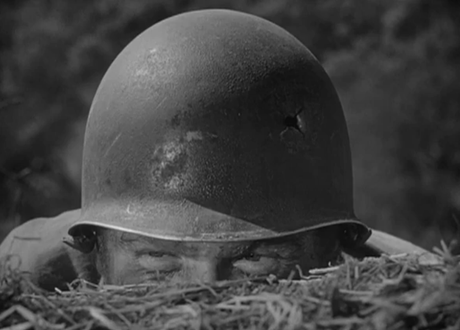 “What a fouled-up outfit I got myself into” – Sgt. Zack
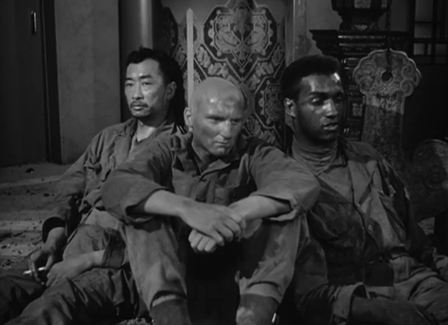 But the old WWII vet simply acknowledges the facts and retorts with his own piece of trivia. In the all Japanese-American regiment the 442nd 3,000 Nisei “idiots” got the purple heart for bravery. All he knows is that he’s an American no matter how he’s treated. That doesn’t change. Once more Fuller delivers some of the most engaging portrayals of Asian characters ever and the discussions of race relations were way ahead of their time. Both Richard Loo and James Edwards are honorable characters who hardly fall into any common stereotype.
 Bridge to the Sun is one of those films that was ahead of its time. Its main actors are hardly remembered by modern audiences. The top-billed leading lady, Carroll Baker, was probably more notorious for her controversial persona in films like Tennessee’s Williams’ Baby Doll than she was famous. James Shigeta was a pioneering Japanese-American actor, who was once told, “If you were white, you’d be a hell of a big star” (The Slanted Screen). He aged gracefully but was slowly relegated from leading roles to bit parts. Belgium director Etienne Perier was only a slight blip on the Hollywood radar. When it came out in 1961, its narrative based on the memoir of Gwen Terasaki ended up being an abysmal flop. Honestly, it’s not all that surprising, because the public was not ready for such a film, and its candid depiction of interracial marriage. Now, with a fresh pair of eyes in the 21st century, Bridge to the Sun looks quite extraordinary. Certainly, this is a love story, but under very different circumstances, in a very different world. Although it was made in the classical Hollywood mode, it still manages to groundbreaking, not necessarily due to its form, but thanks to its content. Because Bridge to the Sun places an Asian man and a Caucasian woman together, as they navigate two starkly different cultures both tottering on the brink of war.
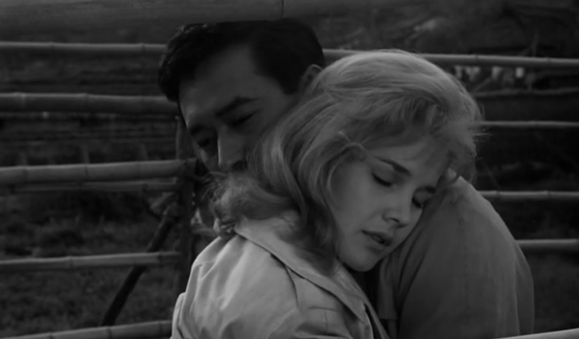
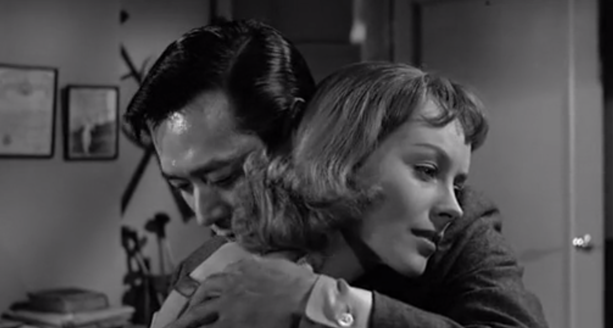
 In truth, this film does not shy away from showing their affection, even though it undoubtedly made some viewers squeamish at the time. More than once Gwen and Terry embrace in intimate moments that signify the deep-rooted love that holds them together. Sometimes it’s far from easy. For instance, when they first travel to Japan, Gwen finds it difficult living in a culture where women are meant to be wholly subservient to their husbands. She’s fine with the bowing and the taking off of shoes even, but not being allowed to speak her mind is about the limit.
 Gwen and Terry cannot stay mad forever, especially with the birth of their little girl Mako. In fact, it is actually in a moment when their family is in danger of being pulled apart that Gwen shows her true resilience and loyalty as a wife. Pearl Harbor has just blown up and that means there is a freeze on all Japanese aliens. Terry is stuck at the embassy about to be deported, and an FBI agent advises Gwen that she would be much better off staying in the states. But as she converses with him you can see the determination in her eyes. She knows what it means to go to Japan. Her daughter as a child of mix race will be scorned, and Gwen herself will be looked down upon if not endangered by her status as an American citizen.
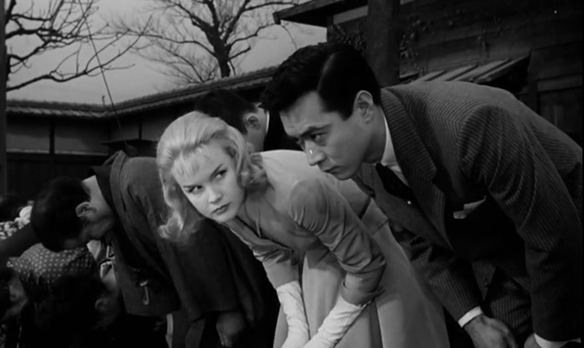 lously these individuals salvaged their marriage and preserved their family. Meanwhile, the world around them would not make the necessary concessions. It allowed cultural differences to define relationships, and ultimately increase the void between nations. The rubble of WWII was eventually cleared and new hope was built upon that foundation. In reality, the chronicles of the Terasakis was an emblem of that hope. Inherent in their story is the possibility that two people and two nations really, can be reconciled and even thrive together. Perhaps the United States was not ready for such a message to come out of Hollywood, even as late as the 1960s, but nevertheless, it seems like a message we can certainly take to heart today.
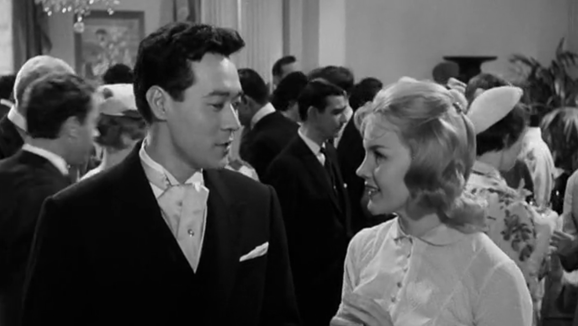 Bridge to the Sun is one of those films that was ahead of its time. Its main players are hardly remembered by modern audiences. Belgium director Etienne Perier was only a little blip on the Hollywood radar. The leading lady Carroll Baker was probably more notorious for her controversial role in Tennessee’s William’s Baby Doll than she was famous. James Shigeta was a pioneering actor, who was famously told, “If you were white, you’d be a hell of a big star.” He aged gracefully, but was slowly relegated from leading roles to bit parts in Hawaii Five-O and Die Hard. In truth, the film, based on the memoirs of one Gwen Terasaki, does suffer from a clunky script at times, and the box office returns were not too favorable. In fact, it was an outrageous flop back in 1961.
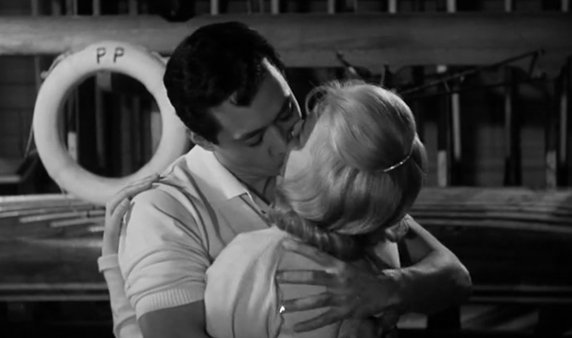 In fact, this film does not shy away from showing that affection, even though it undoubtedly made some viewers squeamish at the time. More than once Gwen and Terry embrace in intimate moments that signify the deep-seated love that holds them together. Because it’s far from easy. Gwen finds it difficult living in a Japanese culture where the woman is meant to be wholly subservient to her husband. She’s fine with the bowing and the taking off of shoes even, but not being allowed to talk is about the limit. With his family, her strong, lovable husband now seems cold and distant. However, they cannot stay mad forever and soon enough their little girl Mako is born, making them a happy little family. But of course, imperial Japan and isolationist America are on the brink of conflict and Terry and his family are tottering on the brink of calamity. He’s seemingly one man trying to hold together the relations of two nations that he has such close ties to. One because of his wife, the other due to his birth. Then, on a fateful day in December 1941 Japan struck the first blow and life would never be the same. Terry is now being detained and Gwen is fearful she might be forever separated from her husband. Disregarding what everyone else says, she takes her young daughter and follows her husband once again to his homeland – knowing full well what might be in store for her and her daughter.
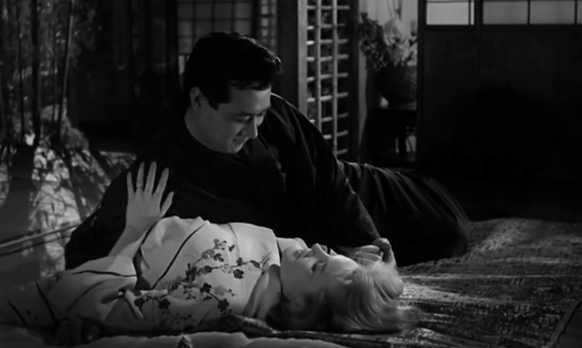 And when they arrive abroad there is the discrimination and the myriad of strange looks. Even as she makes the long journey across the sea all the white folk scoff at her, but Gwen takes it calmly and fearlessly. Once overseas the climate has changed greatly and now Terry is being questioned for his loyalty. The ethnicity of his wife doesn’t help and the firebombs raining down from above don’t exactly calm their nerves. But again and again, Terry and Gwen prove to be a resilient couple. The anomaly that should never have happened—seemingly could never have happened, and yet they did and they remained unequivocally together.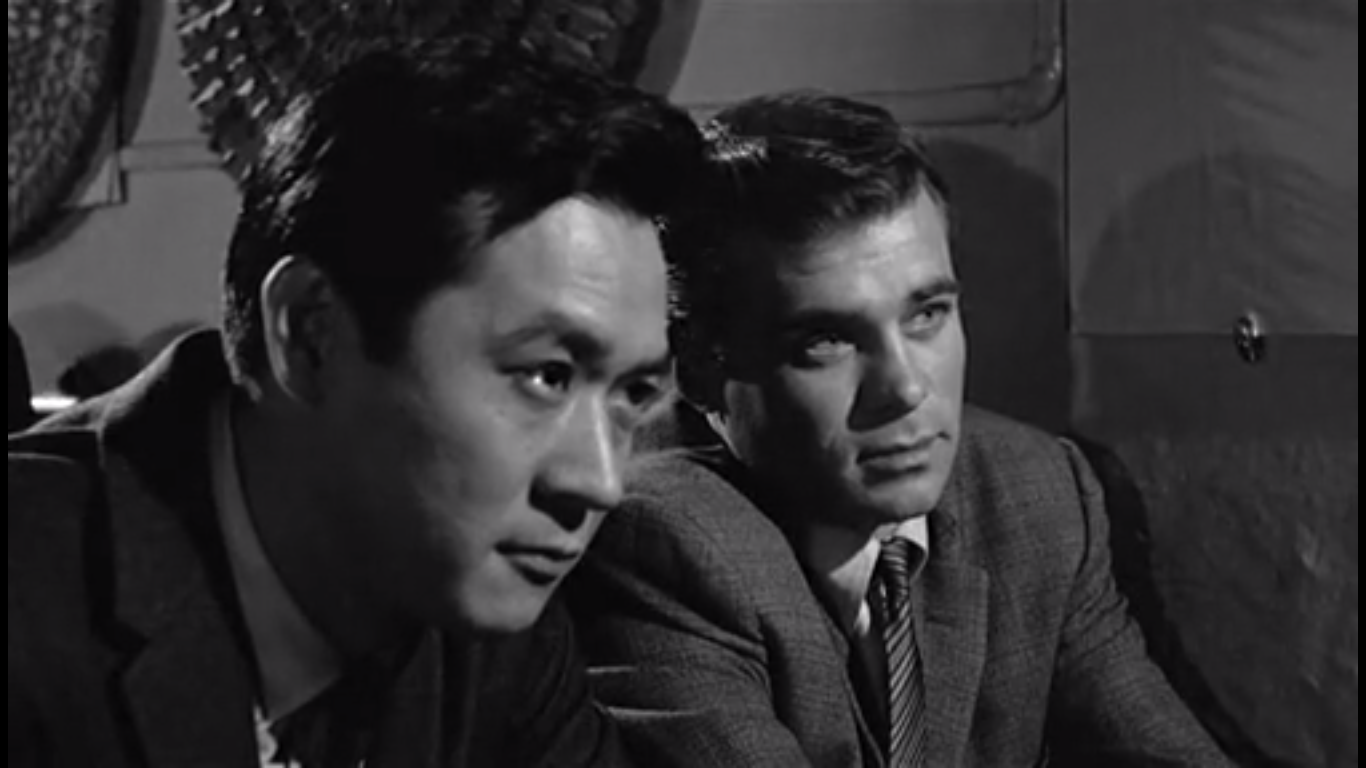

 4 Star Films