Review: Shane (1953)

shane1Jackson Hole, Wyoming and the looming Tetons lend the same iconic majesty to this western that Monument Valley does for many of Ford’s best pictures. But then again, George Stevens was another master and he too was changed by the war, coming back with a different tone and an “American Trilogy” that included some of his best work. Shot in Technicolor, this picture boasts more than wide open spaces and raw Midwestern imagery. Stevens has some wonderfully constructed sequences and there are a number of great characters to inhabit them.

Shane is the eponymous gunman who is content to linger in the background while others become the focal point. Namely, Joe Starrett (Van Heflin), a man who came to the untamed land due to the Homestead Act and won’t let the rancher Stryker muscle them off the land that he believes is rightfully theirs. Despite this being her final film — and a favor to her previous collaborator Stevens — Jean Arthur is as wonderful as ever. The character Marian is brimming with goodness and a sensitivity that is hard to discount. It’s a part very different than her earlier work and yet she plays it so wonderfully. As for newcomer Brandon De Wilde, he’s an astute little actor and we really see this world through his eyes, so he does wonders to hold the story together.

Grafton’s general store and saloon become a wonderful arena of conflict within the film because it is rather like Ryker’s stomping ground since he and his men can always be found lounging around there when they aren’t terrorizing some poor sodbuster. After he agrees to work for Starrett, Shane goes into town for new duds, leaving his gun behind, and he quickly learns what he’s in for. It’s in such a scene that we learn who this man really is. He’s not a hot-head and he initially takes the abuse of Stryker’s guns, who call him out for purchasing soda pop. It’s for the boy Joey, but he doesn’t have to say that, because he needs not prove himself, at least not yet. Also, the relationship between Shane and Marian might be troubling to some — will they fall for each other — but when Ryker makes insinuations about Starrett’s wife, Shane is quick to shut him up. He’s not that kind of man. When Shane does return to the store, he’s prepared this time for retaliation and although it might not have been the smartest thing, it sure is gratifying for him and for the audience. He and Starrett make a killer team, after all, beaten and bruised as they end up.
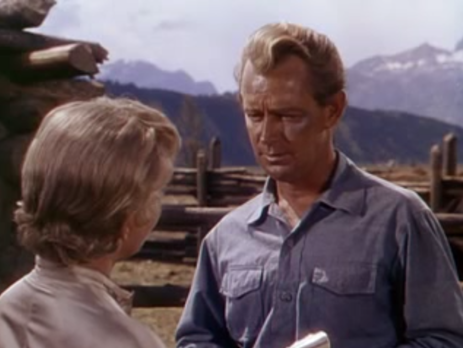
shane2What follows is retribution from Stryker as he tries to buy out, threaten, and continually lean on the sodbusters, but Starrett remains resolute in keeping his friends together. In fact, there’s still time to share a wonderful Fourth of July dance with all the neighbors and it shows signs of a brighter, happier time that could be possible. With neighbors joining together in simple community and sharing life together. Shane feels somewhat out of place in this type of environment, and maybe deep down he knows it too, but he seems oddly content.

This happy time is juxtaposed with the funeral of ornery “Stonewall” (Elisha Cook Jr.), who was gunned down near the saloon by hired gun Jack Wilson (Jack Palance). His death is making some of the others jumpy, but once again Starrett keeps his group together, by first giving their former friend a proper burial and banding together once more. But by this point, they’re barely hanging on. Stryker’s got them on the run and Joe knows he needs to have it out with his arch-nemesis once and for all if things are ever going to return to the status quo. His dreams of ending this whole thing are ludicrous because there is no way he can get out alive. His wife knows it. He knows it, but it doesn’t stop him and his American Dream.

shane3It’s interesting how Shane at first does not try to stop him, but then he gets tipped off to what awaits Joe, and he decides to go in his place. This is his arena after all. The gun we all fawn over is finally getting put to use as Shane rides into town for the final showdown to have it out with the men in the saloon. However, although the shootout is intense it ends very quickly. Thus, what is really interesting are the moments beforehand where friend is literally fighting friend. Both doing what they think is right. However, since Joey only thinks in absolutes, when he sees Shane hit his father over the back of the head, he initially reacts with hatred towards his fallen hero. He doesn’t understand why all this is necessary. But as time goes on and he sees events unfold, he gets it.

As Shane rides off into the night, Joey yells after him to come back, he cannot bear for this idolized man to ride off. It makes me wonder if young Joey grew up with the image of Shane, the hero of his childhood. The doer of good and the ultimate champion of the oppressed.

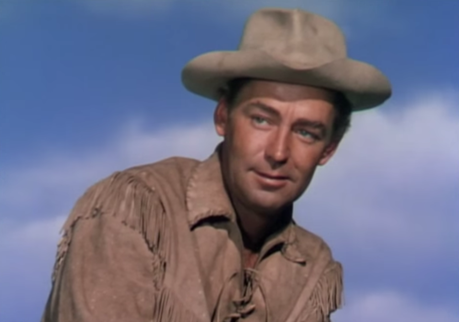
The cast was rounded out nicely by some solid supporting players like Palance, Ben Johnson, Edgar Buchanan, Elisha Cook Jr., and down to Ellen Corby and even Nancy Kulp. It’s astounding to think that this film could have starred Monty Clift and William Holden potentially with Katharine Hepburn as well. Because, after all, the casting of Shane feels just right. Clift would have brought depth and emotional chops to the role, as a wonderfully impassioned actor. Just look at George Stevens’ A Place in the Sun (1951) for proof of that. However, what Alan Ladd has is a serenity and simple goodness that still somehow suggests something under the surface. It begs the question, how can someone so upright make a living packing a six-shooter? No doubt I like Holden better as an actor, but Heflin has the scruffy outdoors-man look, while still reflecting high ideals. Hepburn just does not seem to fit a western. This is one of the instances when all the pieces seemed to fit into place and we were blessed by a western classic that never seems to lose its luster. In a sense, we become boys again like Joey, completely in awe of Shane. Let us revel in that feeling, that moment of innocence once more.

5/5 Stars
Easy Living (1937)

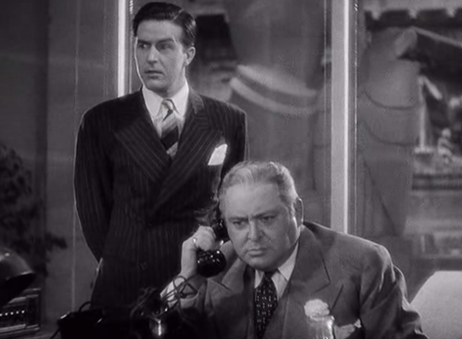
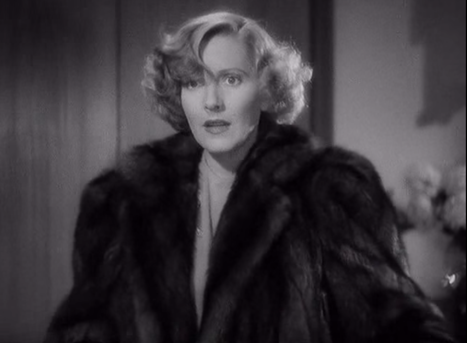
easyliving1Easy Living is a sizzling screwball comedy propelled by a Preston Sturges script and the direction of Mitchel Leisen (a former costume designer). It finds humor in the stratified 1930s society and the so-called easy livings of the affluent. But it also has it’s fair share of rip-roaring slapstick. Really the whole plot revolves around a rogue fur coat.

J.B. Ball (Edward Arnold) is the third most prominent banker in New York. His wife has a penchant for fur coats and his son John Jr. (Ray Milland) is fed up with his father’s constant criticism. He’s ready to leave the luxury and make a go of it on his own. Fed up with his wife and not all that pleased with his son, Mr. Ball tosses one of his wife’s sables off their balcony. Mary Smith (Jean Arthur) is the unsuspecting recipient of the coat as she rides by on a passing bus. By chance, she and Mr. Ball strike up a conversation and they hit it off after he resolves to buy her a new hat, in lieu of the one that was ruined. Of course, the clerk gets the wrong idea about their little friendship and it has major repercussions.

Many folks want to get on her good side since they’ve heard through the grapevine that she’s connected to Mr. Ball. This includes the befuddled hotel owner Louis Louis, who offers Mary one of his finest suites and she has no idea what she ever did to deserve it. Of course, Mary crosses paths with John Jr. who is smitten with her right off the bat. But she has no idea who his father is.

A joke from him, relayed by Mary, ends up having overwhelming consequences on the stock market and it ends up spelling major trouble for Mr. Ball. But of course, father and son and Mary all wind up in J.B.’s office together as the comedy of errors finally synchronizes. Son finally proves his acumen to father and gets the job he desperately needs.  Mary has her guy now and Mr. Ball’s marriage is all intact.

easyliving3Edward Arnold is an absolute riot and at his pushy best as the affluent banker. Jean Arthur has always been one of my favorite comediennes. She has such a great voice for delivering quips; there’s a certain lilt to it that is always invariably funny. She’s also the perfect independent working woman like a Barbara Stanwyck or Rosalind Russell. She’s no pushover. I knew Ray Milland for later films like The Lost Weekend or Dial M for Murder, but I saw here firsthand that he has some comedic chops. I also learned what an automat was and at the same time got treated with some top-notch slapstick. Thank you, Preston Sturges.

4/5 Stars

Talk of the Town (1942)

0db8e-the_talk_of_the_townThis comedy-drama begins with a rather stark montage chronicling how the unfortunately named Leopold Gilg (Cary Grant) was accused of arson, murder, and finally imprisoned by one owner of a mill named Holmes. After escaping from prison and an imminent conviction, in a torrential downpour, the hampered Gilg seeks asylum in a nearby house. It just happens to belong to Miss Nora Shelley a local teacher in Lochester and an acquaintance of Gilg. She reluctantly allows the injured fugitive to hold up in her attic, but then her new tenant arrives a day early, the distinguished professor Lightcap (Ronald Colman).

After Gilg finally reveals himself to Lightcap as the gardener Joseph, what forms is an interesting triangle with the two men on the sides and Ms. Shelley in the middle. Both men take a liking to each other despite their difference in opinion on justice. Lightcap is much the academic and he goes by the book. “Joseph” on the other hand has a more practical approach.

It does not matter much until the professor finally learns Joseph’s true identity and now he feels it is his duty to report Gilg no matter his affinity for him. But after Gilg gets away once again, the professor is finally coaxed to look into the case that he has been so reluctant to involve himself in. Both men make concessions out of respect for the other. The professor involves himself, buys some borscht, and cuts his beard, while Gilg turns himself in. It almost drives Ms. Shelley up the wall with grief. You see she loves both of them.

In his final search, Lightcap finds something very interesting indeed. The town mob bursts into the courtroom as Gilg stands trial again, but the professor shows up with a surprise of his own. He ends up as the next Court Justice, a very happy man and Ms. Shelley and Gilg are very happy for him. They don’t have much to complain about either.

George Steven’s film has a bit of a contrived plot much like The More the Merrier. Things certainly feel set up, but that’s okay because the cast is so wonderful it makes the set-piece work. Jean Arthur is in top form when she is exasperated and sneaking about making little white lies as people file in and out of her home. Gilg seemed like a rather odd role for Grant, but he pulled it off with his usual charm and charisma. Someone else might have made Lightcap unbearably stuffy, but Colman’s portrayal is always tolerable and very often charming. This had a lot more drama than I was expecting, but it was not short on the comedy either. My only complaint is that it ran a tad long, but it just meant more screen time for the leads. That’s not so bad. They were The Talk of the Town after all.

4/5 Stars

The Best Films of Jean Arthur

1. Mr. Smith Goes to Washington
2. Shane
3. Mr. Deeds Goes to Town
4. Only Angels Have Wings
5. The More The Merrier
6. You Can’t Take it With You
7. Easy Living
8. The Talk of the Town
9 The Devil and Miss Jones
10. History is Made at Night
11. A Foreign Affair
12. The Whole Town’s Talking

You Can’t Take it With You (1938)

Starring a cast boasting Lionel Barrymore, Jean Arthur, James Stewart, and Ed Arnold, this is another comical Capra film. Arnold is a wealthy banker bent on acquiring a block of land for business purposes. Stewart is his son who has fallen over heels for his secretary. Things are complicated by her peculiar family household partly because her grandfather will not give up his land to the banker. Fireworks go off literally and figuratively when the two families meet. It leads to prison, and a chaotic court appearance which causes a further rift. Because his grand daughter is sad, Grandpa decides to sell the family home. Arnold seems to have won, but his son leaves him for his love and so Arnold changes his way. Thanks to a harmonica duet and some dancing a friendship is made and everyone is happy in the end. Every Capra films comes with a message and this one preaches the importance of friends and family compared to money because after all “You Can’t Take it With You.”

4/5 Stars

Shane (1953)

10788-shaneposterThere is often something special about westerns, and Shane is no different. Directed by George Stevens and starring Alan Ladd, Van Heflin, Jean Arthur, and other great character actors, Shane is simple yet charming. It has many of the qualities of a great movie, because of what it shows of mankind. Furthermore, it simply makes you feel good.

In the film Shane (Ladd) is a wandering ex-gunslinger, who decides to live with a frontier family as a hired hand. His presence makes everyone happy because he is quiet, humble, and fundamentally so good. However, there is trouble from a man named Riker and his gang. Heflin’s character is adamant he must face the foe and defend his home. Shane will not allow it knowing this is a job for him. The two friends fight it out with Shane winning and riding into town. In the end, he wins the shootout but more importantly he is reconciled with the family’s boy Joey. The time has come for him to move on and Shane rides off into the distance, a humble hero.

The first thing that always strikes me about this film is the brilliant scenery around Jackson Hole, Wyoming with the Tetons looming majestically behind a solitary cabin. In some sense, this is not just a western, but the archetypal story of a family taming the land.

The very next thing of importance is the eponymous and unassuming drifter Shane. He always seems so kind and good, but early on there are glimpses of another, perhaps darker past. And yet from the point of view of Joey, he is an idolized, almost mythological figure. What is so striking about Shane is that he is obviously handy with a gun and an excellent fighter, but he never flaunts it. Perhaps it is because he wishes to rely on it as his last possible resort, or maybe it is because he is just a humble man.

As an audience, much like Joey, we want him to fight back, and we are happy when he finally does. During the course of the film, Grafton’s mercantile and saloon is often the place of conflict, and here multiple times Shane ultimately uses violence. It is his fallback, but he uses it effectively even against his own friends if he sees fit. Then Shane drifts on and the cycle undoubtedly continues again.

Yes, he certainly could be called a hero, with no last name to speak of, but he is a man, who will always be on the move. This may not be because he wants to, but because he really has no other option. Shane foresaw what we did not want to see, and now he cannot come back even if he wants to, so he rides on. This is the middle of George Steven’s so-called “American Trilogy” and probably the hallmark of his illustrious career.

5/5 Stars

The More The Merrier (1943)

e0052-the_more_the_merrier_-_posterDirected by George Stevens and starring Jean Arthur, Joel McCrea, and Charles Coburn, this comedy makes light of the housing shortage in Washington D.C. during WWII. Retired millionaire Benjamin Dingle comes to D.C. as an adviser for the housing crisis. Unfortunately he cannot find a place to stay right away. By chance he happens upon an ad for a room the only thing is that the other tenant is a young woman. Mr. Dingle will not take no for an answer and despite her misgivings she agrees to let him stay. It soon proves to be a hilarious situation and it gets even more complicated when Dingle rents half of his half to a Sergeant Joe Carter who is about to ship out. Of course he doesn’t tell Connie. There is initial conflict however Dingle tries to play matchmaker. The only problem is that Connie is already engaged to a bureaucrat. Then Dingle oversteps his boundaries reading Ms. Milligan’s diary to Joe. Dingle accepts the responsibility and leaves but Connie allows Joe to stay since he will be gone soon. Through a series of events the newspaper gets a hold of the situation so Mr. Dingle advises them to get married to stop a scandal. As Joe gets ready to leave they realize they really do care for each other and Dingle was right Connie finally gave into her true feelings. All the main players were good and I think Charles Coburn was really the standout because he was the character who kept the whole story together. As is his motto, “Damn the torpedoes, full speed ahead.”
 
4.5/5 Stars

Only Angels Have Wings (1939)

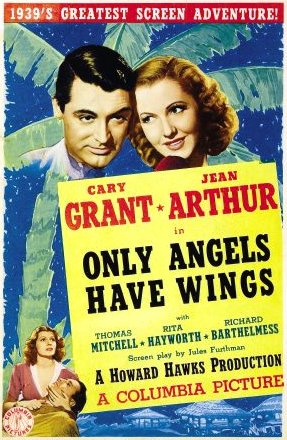
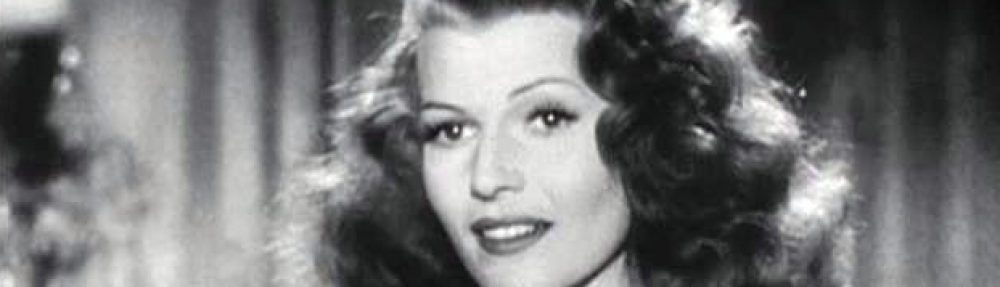
a4eff-only_angels_have_wings_posterStarring Cary Grant and Jean Arthur with a cast including Thomas Mitchell, Rita Hayworth, and Noah Beery Jr., with director Howard Hawks, the film follows pilots who fly mail throughout South America. Grant is the head of the dangerous operation and it becomes apparent to Arthur that he is callous, after a great tragedy strikes. However, she still stays out of interest in him. Things get complicated when the new pilot arrives and he carries a past that puts him at odds with everyone. It doesn’t help that his wife (Hayworth) was the former girl of Grant. In order to keep the operation going, Grant is forced to send out this Macpherson as well as his best friend “The Kid” (Mitchell) into a large storm. Needless to say that are not able to make it. Arthur is about to leave after this second disaster, but beforehand she says goodbye to the saddened Grant. He soon peps up when the weather clears and then prepares to fly again. Arthur at first feels rejected but with a flip of a coin she realizes his love for her. This is certainly a tragic picture, but good nonetheless.

4/5 Stars

Mr. Smith Goes to Washington (1939)

84a24-mrsmithgoestowashingtonposterAs both a political drama and feel good movie, this film cemented James Stewart as an acting powerhouse. Furthermore, despite its age, it acts as a timeless reminder of the evils of political machines. It makes us root for the underdog, and it is distinctively American. Here is a cast and a story that seemingly could never be equaled, but what this film really had going for it was an idealistic outlook. I can, myself, often be a cynical person, and still Mr. Smith never fails to make me acknowledge the numerous attributes that make our country great, whether it is through montage, monuments, music, and of course Jefferson Smith himself. 

In one of his best performances, Jimmy Stewart is an idealistic, naive boy’s troop leader named Jefferson Smith. The starry-eyed Smith trusts that our nation is founded on some very noble principles that should be fought for tirelessly in government and in society. Above all, he is a likable fellow, who earnestly believes in the merits of this country, and he is beloved by boys all across the state. Now, this all sounds fine and dandy, but it would never have come across on the screen if it had not been for Stewart. He emanates this awkward and innocent energy that puts life into the idealistic creation of Jefferson Smith. 

When the film opens, everything is in turmoil when a senator suddenly dies and a replacement is needed fast. Believing Smith will be a pawn, a powerful man named Taylor (Ed Arnold) gets Smith a seat in the nation’s Senate. There he joins the respected Senator and old family acquaintance, Joe Paine (Claude Rains), who is also a cog in Taylor’s machine. However, although he is out of place in Washington, the patriotic Smith does his best to be worthy of his position. He realizes that the press will not give him a break, and the other Senators do not take him seriously.

So, on the urging of Paine, he decides to come up with a bill for a boys camp back in his home state. He requires the help of the world-weary secretary Saunders (Jean Arthur) to get his bill done. Initially, she is disgusted by his naivete, but as she grows to know him, she realizes he is only going to get himself hurt. His action to propose a bill soon find him face to face with the political machine that elected him. Taylor also has stakes on the piece of land where the boy’s camp would be, and he wants it for a dam. 

Smith finds himself being accused of using his position for his personal gain, and pretty soon he is before a committee with false evidence piling up against him. With all odds and seemingly everyone else against him as well, Smith makes one last monumental effort. Thanks to the help and guidance of Saunders, Smith fights to plead his case through a filibuster.

Fatigued by many hours of giving impassioned speeches and reciting the Constitution, Smith finally collapses, but not before effectively succeeding at his task. I doubt this would ever happen in real life, but in the film, it is fantastic watching the Senate break out into complete and utter mayhem. Ultimately, a young man with “a little bit of plain, ordinary, everyday kindness and a little looking out for the other fella,” was able to win. True, it may be overly sentimental, but it is a wonderful piece of sentiment all the same.

Frank Capra was wonderful at these type of cheering tales and his stars were in top form. There is an absolutely wonderful supporting cast here including Claude Rains, Edward Arnold, Eugene Pallette Thomas Mitchell, Charles Lane, Harry Carey, William Demarest, Beulah Bondi, and numerous other familiar faces I don’t even know the names of. That’s the beauty of the studio system I guess. It may have the same director, same leading man, and some of the same general themes, but Mr. Smith Goes to Washington covers completely different territory from Capra’s later classic It’s a Wonderful Life. Mr. Smith should be seen as a unique, and very much American film.


5/5 Stars

Mr. Deeds Goes to Town (1936)

Starring Gary Cooper and Jean Arthur with director Frank Capra, this film follows a man from a small town who is left $2 million by a dead relative. Longfellow Deeds is thrust into a life in New York where everyone wants his attention in order to get money and support. However, this man they took for a stooge has common sense and grows fed up with them all. The only person he talks to is Arthur’s character who is actually a reporter. While she writes damaging articles, they slowly begin to fall for each other. He finds out what she did and eventually decides to give his money away. Fortune hunters try to claim he is crazy and they bring their case to court. Initially Deeds does not defend himself, but when his love speaks on his behalf he changes his mind and fights for his cause. Capra was wonderful at making the feel good films about the common man. Here he does it once again in a precursor to Mr. Smith Goes to Washington and Meet John Doe.

4.5/5 Stars