

Undercurrent (1946)
Undercurrent hardly holds a substantial place in any noir conversations partially because Vincente Minnelli’s reputation in part seems antithetical to the dark style born out of chiaroscuro and German Expressionism. His background was squarely in luscious art design and stage productions.
Likewise, the combo of Katharine Hepburn and the two Roberts: Taylor and Mitchum, is not one that quickly springs to mind. However, there are some merits to it simply for the sake of it being different; not dramatically, these types of psychological women’s pictures were very much en vogue during the ’40s.
It’s the pieces assembled that feel unique if somewhat ill-suited. Still, the curious hybrid of tones and talents certainly is a historical curio more than intriguing to the invested party.
I almost have trouble buying Hepburn as a reticent, uncomfortable outsider among the D.C. elite her new husband Alan (Taylor) knows, a woman holding drinks in hand just waiting for someone to talk to. But if I don’t completely believe it, she does earn my empathy.
Mitchum, the legendary mule of RKO was simultaneously earmarked for 3 or 4 pictures at the time, and so he doesn’t show up in Undercurrent until much later. Still, he has the benefit of casting a Rebecca-like influence over the picture.
After an hour of building him up, we finally get sight of Mitchum, and we know where this story is going. Because he’s a real human being and fairly innocuous to the eye. As the presence of Mitchum begins to exert itself on the picture, the marital bliss of newlyweds grows more and more harrowing by the minute. We have a picture in the same vein as Suspicion and House on Telegraph Hill.
Despite choosing the part, the constraints of the role don’t feel totally in line with Hepburn’s talents. She isn’t a shrinking violet or the kind of timorous beauty befitting Joan Fontaine or even Ingrid Bergman. Robert Taylor is mostly adequate in the vengeful husband part. He flip-flops efficiently between these stints of gracious charm — a perfect husband and lover — then, becomes clouded by these perverse streaks of jealousy and rage.
3/5 Stars
The Pirate (1948)
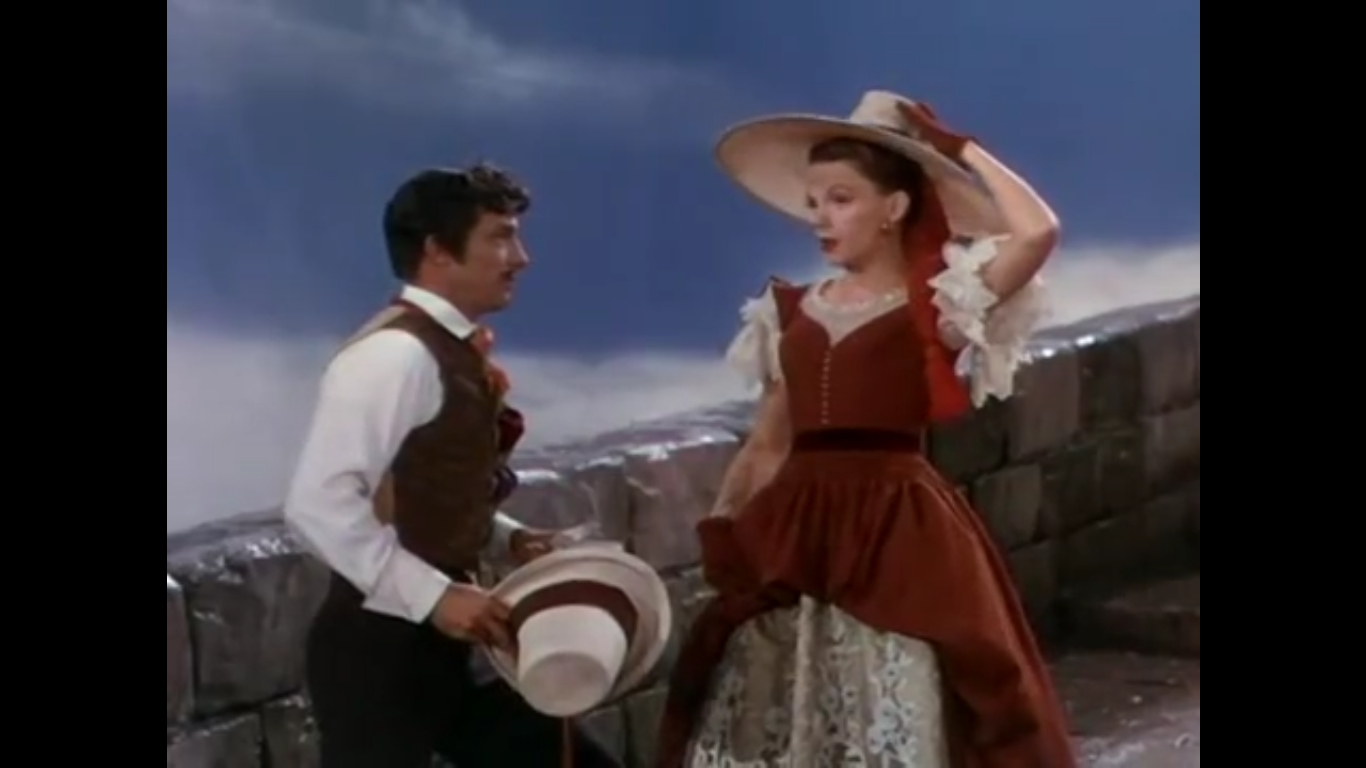
It’s plain that The Pirate is born out of the traditions of the 1940s Hollywood lineage like Blood and Sand or Black Swan, even Gene Kelly’s own Three Musketeers. However, between the bright evocative staging of Vicente Minnelli and the instant performance-driven rapport of Garland and Kelly, it works quite splendidly with what it has to offer.
Today it doesn’t hold much of a reputation, and I would stop short of saying it’s a minor masterpiece. What we do have is a picture banking on the charisma of its leads and a certain pictorial opulence supplied by its primary mastermind.
Kelly, taking all the niñas of the town by storm, is full of allure and his usual magnetism as he twirls, leaps, and bounds between all the pretty girls. It’s all about the patter between the stars as he plays the foxy street performer, and Garland is the put-upon maiden who is betrothed to another man. His vocation gives the director license to use these elements of theatricality and faux drama to tell the story.
What do I mean? It could be a story of tragic, unrequited love. It might just as well be a tale of marauding pirates, and yet somehow, between the song and dance, it becomes a kind of tongue-in-cheek comedy of two lovers perfectly suited for one another being thrown together.
There are moments where Garland and Kelly seem to be playing in a separate movie, or at least they are in on the joke with the rest of us, even as they mess with each other. Trashing his apartment feels like the highest form of romantic tension only for the drama to become slightly heady again: Kelly is set to be hung as the dreaded pirate Macoco. Is it a first to have a musical number performed under a hangman’s noose? I’m not sure.
Thankfully, he gets some stellar support. While I’ll be the first to admit “Be a Clown” feels like a less funny prototype for “Make em Laugh,” if you’ve never seen the Nicholas Brothers, it’s a small recompense to see them join Gene Kelly and get some commendation in the spotlight as his momentary equals. It feels like a flawed but heartfelt apex to a picture that could be described in much the same terms.
3/5 Stars
Madame Bovary (1949)
Madame Bovary is the kind of trenchant literary work the Production Codes would go to all costs to declaw. In one manner, it’s somewhat remedied by James Mason’s framing by providing a mostly blase narrative device to enter the story.
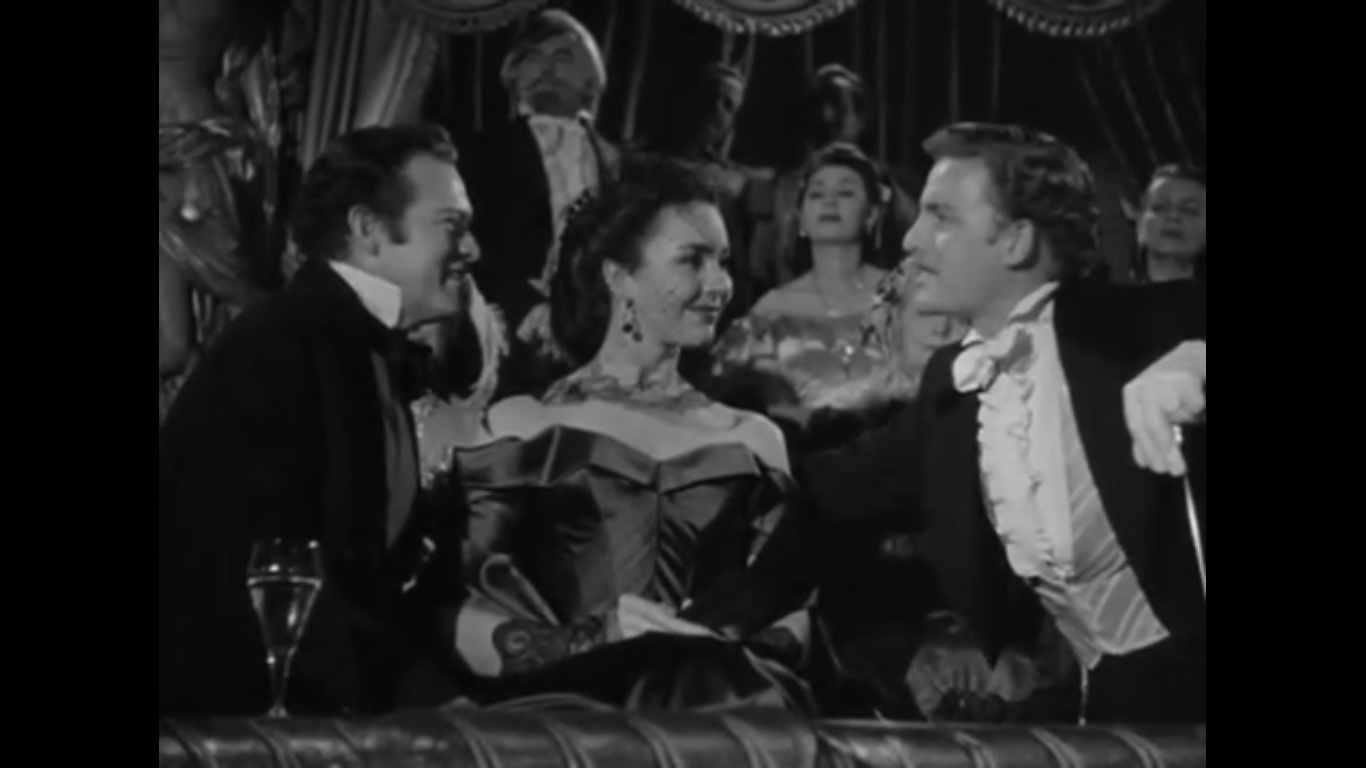
Even as something leaner in budgeted black & white (one could hardly confuse The Pirate with Madame Bovary), it’s still the same Minnelli. The ball sequence spelling the ascension of Emma (Jennifer Jones) as a society darling, while somewhat compact, exudes an impressive opulence.
The director makes sure to follow Jones’s incandescent form as she prances and waltzes her way across the dance floor with great distinction. Her gown alone is enough to make the upper classes stand up and take note. The dashing Louis Jourdan is certainly more than aware of her. It’s totally taken up by the kind of swirling euphoria also holding a place in the oeuvre of Marcel Ophuls — Letter from an Unknown Woman and Earrings of Madame De…spring instantly to mind.
It becomes more and more of a gothic drama as things progress, overtaken by gales of wind, thunder, lightning, and an incessant downpour of rains to go with the equally tumultuous score of Miklos Roza.
However, more importantly, Emma becomes possessed by all of her own ambitions and preoccupations. She is emotionally distant from her husband (Van Heflin), absent from her child, and totally involved with other men. She entreats them to take her away from such a dreary life, constantly prone to these histrionic gestures of love and loss at the hands of her suitors and husband. They hardly know how to respond to her.
If the terminology was present at the time, she is cut out of the cloth of some kind of femme fatale, albeit born out of the annals of classic literature. Moreover, she is a woman who never seems to know what she truly wants. She sends out an array of mixed signals — living a life made up of so many contours and emotions — and never settling on anything honest.
It’s as if she’s fashioned a kind of fantasy life for herself woven out of her own personal whims though she remains self-destructive to the very last iota of her being. There’s something unnerving about her and Jones plays her as such; it’s easy to understand how society was scandalized by her because she does not live by societal norms. Mason’s concessions for her character aren’t enough to totally wipe out the harrowing impact of the performance.
3.5/5 Stars

The Cobweb (1955)
“What happens if you go into town to the movies? You start screaming or something? They’d think you’re a critic, that’s all.” – John Kerr as Steven
If it’s true you can make a screwball comedy like Easy Living (1937) about a fur coat falling from the sky, then it’s equally possible to make a portrait of psychological horror about drapes. The Cobweb busies itself with the vast array of interpersonal relationships taking place on the grounds of a psych ward. Richard Widmark does his best to aid his patients in their recoveries as he juggles familial and boardroom responsibilities. It’s no easy balancing act.
For a film that is mostly disregarded, it’s easy to clump it together with something like Executive Suite (also produced by John Houseman) with one of the most phenomenal assortments of players one could hope to cobble together during the golden era of Hollywood.
Lilian Gish is at her most ornery but lest we forget, she truly is the queen of the movies. Charles Boyer and Lauren Bacall are equally crucial touchstones of film history, playing two respective love interests as Widmark struggles to connect with his wife, Gloria Grahame. Even ’30s scream queen, Fay Wray, has a brief appearance in a picture that boasts Oscar Levant and then the up-and-coming talents of John Kerr and Susan Strasberg.
In one scene with all the various folks blocked throughout the room, it’s almost difficult to distinguish who’s a patient and who’s not, but if we are to appreciate this drama, it doesn’t half matter. Widmark falls for another woman. Grahame flaunts her charms and goes looking for love from Boyer, who is now mentally compromised. Gish is incensed about having her opinions disregarded. Some of them are petty and others are stricken with loneliness and actual psychoses.
The palette becomes such an evocative way to color the emotional undercurrent and elements of suburban life, not unlike some of Nicholas Ray‘s work or something like Strangers When We Meet. The visual world is beautiful; still, it lets loose an environment full of pain and inner turmoil. Although Minnelli handles his characters deftly, there’s no place for the film to go but toward a hysterical fever pitch.
3.5/5 Stars
 The strands of our lives are woven together and neither time nor the world can break them.
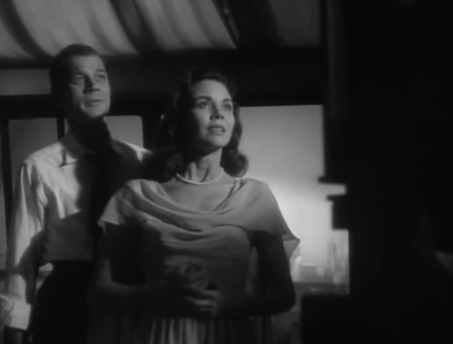 But it’s a chance encounter with a young girl named Jennie (Jennifer Jones) that gives Eben the type of inspiration that every artist dreams of because it’s precisely this spontaneous spark of joyous energy he needs to add something vibrant to his own life. In her constantly evolving role, Jennifer Jones exudes an effervescence, a certain radiance in body and spirit that lights up the screen in embodying this apparition of a girl.
 I find that despite his pedigree Joseph Cotten still comes off as an underrated actor and with each film I see him, I enjoy him immensely. Maybe for those very qualities. He’s not altogether handsome but he has a pleasant face. His voice isn’t the most formidable or debonair but it does have character. The supporting players lend some Irish flair to the cast and it’s striking that everyone from Ethel Barrymore to Lilian Gish glows with a certain hope. There is no obvious antagonistic force in this film. Eben Adams found his inspiration — the muse of a lifetime — and that passion is enough to lay the foundations of a film.
 4 Star Films