Review: Taxi Driver (1976)

taxidriver1Well. Whatever it is, you should clean up this city here, because this city here is like an open sewer you know. It’s full of filth and scum. And sometimes I can hardly take it. ~ Robert De Niro as Travis Bickle

Taxi Driver‘s Travis Bickle is an American icon representing anyone and everyone who has ever felt like an outcast, outsider, or misfit. He’s the perfect embodiment of any of the angst or disgust that might surge through our veins at any given time. Except before I ever saw Martin Scorsese’s film, I always assumed him to be a thuggish villain. But his character is more complex than that. He’s far more relatable than I would have initially given him credit for.

The film actually opens feeling like the pilot of the Sitcom Taxi or something. There’s Bernard Hermann’s beautifully cool jazz-infused score and then the illuminating lights of an average New York evening. It feels strangely peaceful in spite of all that is going to go down.

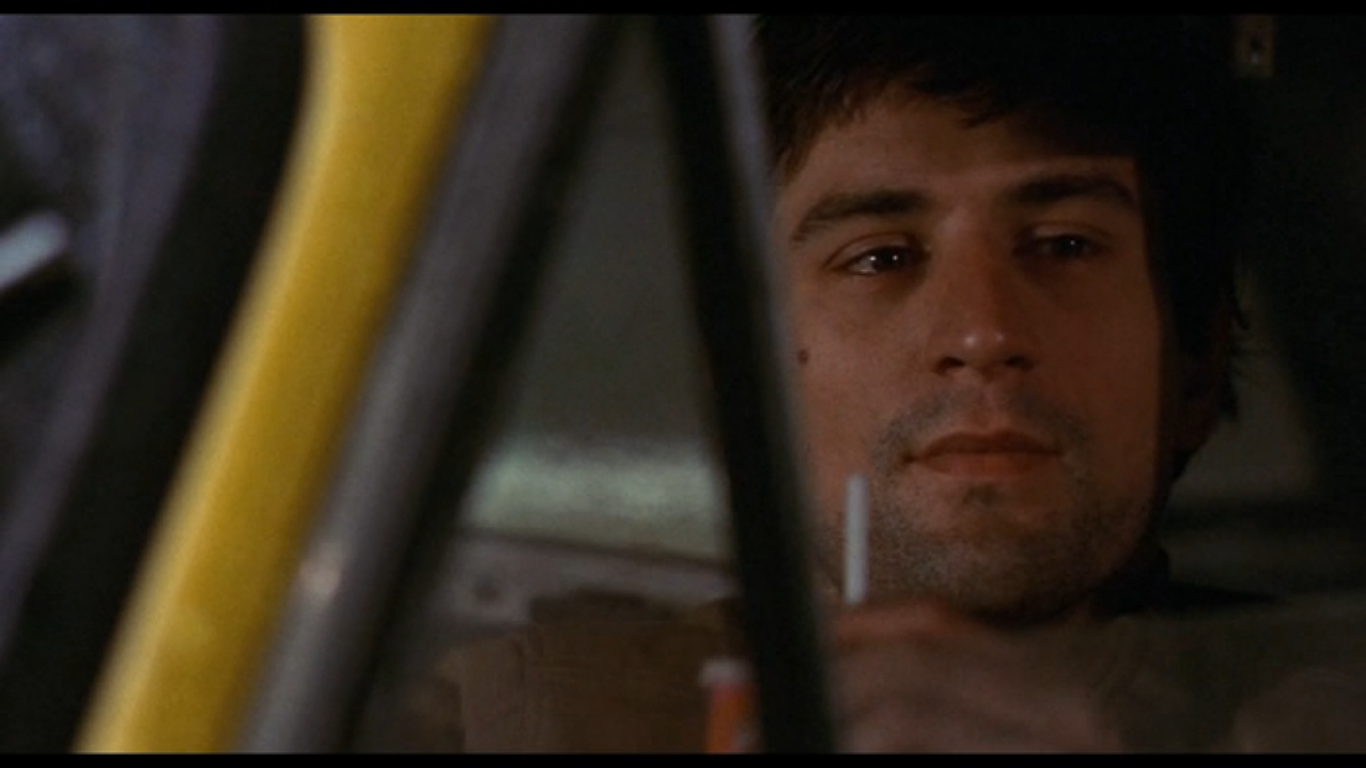
Travis is an ex-Vietnam vet who takes a taxi driving job for the strangest of reasons. He just wants something that will have him working long hours and he isn’t too particular about what part of town he ends up in. From the get-go, he strikes the audience as a quiet almost silent observer of all that takes place around him on the streets every night. He’ll sit around with a couple cabbies as they chew the fat, but he’s essentially isolated — a repressed young man who doesn’t really express himself. His existence feels tragic and lonely, certainly not deadly.
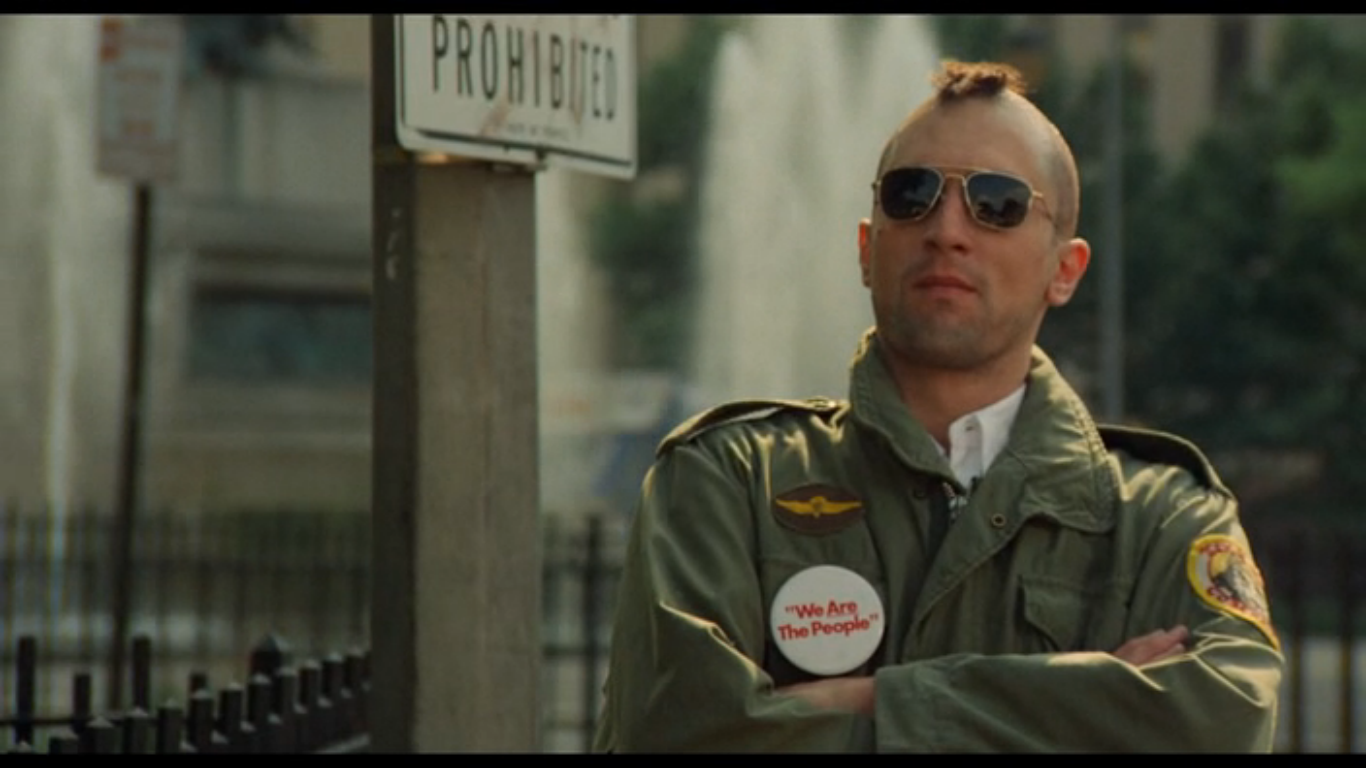
taxidriver2There is a small beacon of hope when a pretty campaign volunteer named Betsy (Cybil Sheppard) catches his eye, and he has an extremely awkward interaction with her but it lands him a date. But Travis just doesn’t quite know how to act, he hasn’t learned what it means to be in a relationship and he has an error in judgment while they are out. However, he doesn’t see it that way. He feels his attempts at kindness were completely rejected.

Then, he also begins to notice a young hooker out on the streets and his next mission is to get her away from there back home. He thinks it’s the right thing to do and he means well but young streetwise Iris (Jodie Foster) doesn’t seem to want his charity. So once again Travis seems unwanted and not needed when he is trying to do something nice.

Travis even acknowledges to his colleague Wizard that he’s getting all twisted up inside and confused. He’s distraught and he has no way to deal with it so his outlet includes a heavy strength regimen and loading up on a ton of guns. Never a good sign, but it his mind’s eye it’s all to clean up the streets of the scum of the earth.

However, first he attends a rally for a presidential candidate that Betsy will be at and he has intent to cause harm, but he backs out at the last minute and goes to Plan B confronting Iris’s pimp Sport (Harvey Keitel) and shooting him. The inner demons of Travis are unleashed as he goes off, but his delusions of grandeur reassure him that this is all for Iris. This is for her good. All this bloodshed.
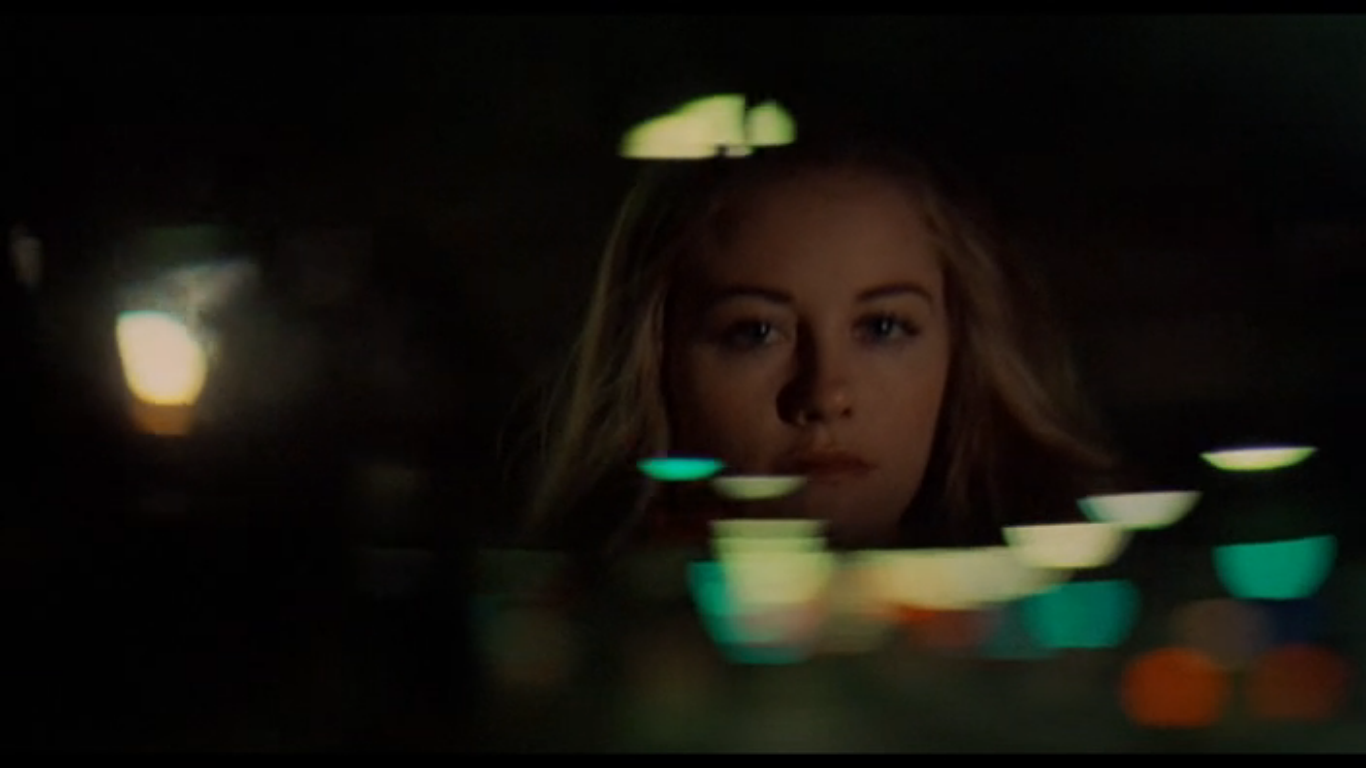
taxidriver4The final moments after his rampage have Travis receiving a letter from Irises parents who are grateful for his actions to save their daughter from corruption. Then, a fully recuperated Travis finds Cybil sitting in the back seat of his taxi cab in all her glory. It’s beyond his wildest dreams, which begs the question is this reality, or is this just a clever construction of his own brain? Another delusion of grandeur. It’s a wonderful open-ended finale.

Paul Schrader’s script is a wonderful character study giving introspection into one troubled man’s psyche. However, there is controversy on two fronts. It’s rumored that John Hinckley Jr. who tried to assassinate Ronald Reagan was influenced by this film and also the finale seems to reflect many people who commit mass shootings. Oftentimes they are people who are deeply troubled and are looking for some type of attention. But with that desire comes often deadly consequences.
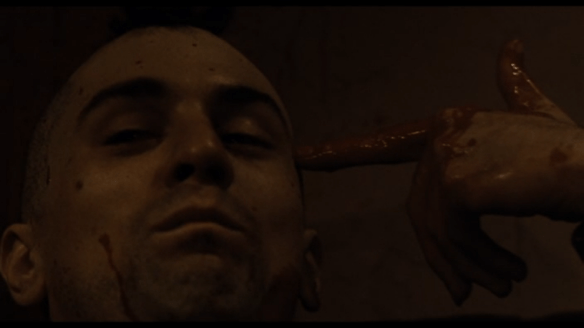
taxidriver3Martin Scorsese’s film has also received pointed criticism for its violence which is hard to downplay. However, Taxi Driver remains interesting because it is not bloated with killing (in fact only one scene is actually bloody). Most of the film has to do with relationships or lack thereof because a lot of what Travis does is watch and listen. It might be Martin Scorsese in a cameo as a jealous husband or a presidential candidate asking Bickle’s opinion from the back seat. Furthermore, like any warm-blooded boy, he knows that Cybil Sheppard is a dream girl. And he has enough compassion to want Iris to have a normal childhood. It’s just that his conscientiousness is misdirected and subverted.

The film resigns itself to following this one man in the wasteland that is New York. It’s starkly beautiful and thought-provoking placing a troubled anti-hero in front a canvas of urban realism. I could never condone his behavior, but then again I could never be completely against him either.

4.5/5 Stars

Me & Earl and the Dying Girl: Depth and Dying (2015)

meandearlandthedyinggirl1What struck me about Me & Earl this time around was not just the cinematic homage or the quirky indieness, but the fluid movement of the camera matched with the ever-evolving score of Brian Eno. It made me appreciate this film yet again because some people might say it’s weighed down by over-trod tropes, but it leaves those in the dust. Others might criticize it for playing up to all the cinephiles out there in order to garner respect. Which might be true.

But in essence, this film resonates on such a greater level. All the side characters are fun and interesting and I’m sure all the various parodies will open the floodgates for some enthusiastic young moviegoers to discover film’s roots. Those are all wonderful perks of this story. And yet again, Greg Gaines feels so relatable it’s almost scary at times. He’s so insecure on so many levels, drifting in and out of the school corridors, awkward around dying girls, and awkward around girls in general. Most of this I pointed to already in my initial review.

However, it’s the work of director Alfonso Gomez-Rejon along with cinematographer Chung-hoon Chung that contribute an added layer of depth to this film. The gracefully spiraling camera is at times reminiscent of Ophuls ascending a staircase. There are perfectly symmetrical shots popping with colors that Wes Anderson would most certainly approve of. But like the great minimalists out there, the camera is still when necessary. In poignant moments when Greg and Rachael have real, heartfelt, even hurtful conversations, there’s no need for flashiness. It’s in these moments where those behind the camera prove their skill because we can see them having fun with their artistic vision, but we also notice the great deal of care they have for these characters.

meandearl2It never feels flashy or superficial in these crucial moments. Any slick plot device or cinematic allusion falls away to get at the heart and soul of this film. It’s about coping with death and finding closure in that terrible event in life. Specifically for this one young man, but it is universally applicable to most every one of us. Especially when you’re young because as young, naive individuals, death can feel like such a foreign adversary. It’s so far removed from our sensibilities, and that’s what makes it so painfully unnatural when it strikes. In many ways, Greg is our surrogate. For all those who struggled to find themselves in high school, or college, or even life in general. And for all of those, who took risks on friendship in a world full of death and dying. Once more Me & Earl and the Dying Girl proved its worth, not by being a perfect film, but by being a heartfelt one.
4.5/5 Stars

Me & Earl & the Dying Girl (2015)

Me_&_Earl_&_the_Dying_Girl_(film)_POSTERI can say unflinchingly, without a single waver in my voice, that this is the best new release I’ve seen this year. Truth be told, I have not seen a whole lot of new films this year, but even if I had, Me and Earl and the Dying Girl would be the best by far.

The title in itself exudes a quirkiness that continues in a steady stream throughout the film. The same quirks can be found in our main protagonist, the self-proclaimed awkward, pale, rodent-faced high school senior Greg (Thomas Mann). He’s gone through high school with the mission of ingratiating himself to all and befriending no one. At this point in his high school career, the closest thing he has to a friend is Earl, who he simply considers his “co-worker,” since they develop homage short films together (ie. A Box of ‘Lips Wow). That’s another thing. Greg is obsessed with film: He eats up anything from Werner Herzog or The Archers thanks to the influence of his father (Nick Offerman). His other “friend” is the chill history teacher Mr. McCarty with an office that is the lunchtime oasis for Greg. But that’s about it.

That is until his doting mother (Connie Britton) forces him to go visit a girl who has been diagnosed with Leukemia. It’s a very forced scenario and both Greg and Rachel know it right from the get go. They haven’t even hardly talked since kindergarten. But, despite that, the two of them hit it off and Greg begins this doomed relationship with this dying girl.

The next 209 odd days or so Greg navigates this friendship and all that goes with it, while also developing a film for Rachel on the urging of the classmate that he is infatuated with. But do not get me wrong, this film does not fall into some contrived love triangle or sordid high school drama. It has a far broader more mature scope than that.

Yes, this is a high school teen film. Yes, it is a coming-of-age story, but it boasts so much more. It’s a film about films, a film about friendship, a film about regret, and most importantly a film about what it means to be alive. And yet, all the while, it tries to sidestep the normal tropes we expect.

Greg and Rachel have two very different perspectives. Two very different lots in life, but somewhere in between all of that, amidst the fear, laughter, and even anger, they find some special connections.

There is so much to appreciate about the film and for me, it starts with the character of Greg, because in some ways he was analogous to me in high school. I too was a nomad who traveled from group to group never being fully known. I found a passion for film and slowly began to learn about Kurosawa and Bergman among others. It was not until senior year where I finally began to feel comfortable in my own shoes and that was the perfect time for a new adventure in college. Thus, I resonate with Greg, because although he is certainly not me, he’s the most relevant high school character I have seen in a long while.

As for Connie Britton and Nick Offerman, both of them have some nice scenes that add a lot to this story. One as the over-involved mom who generally cares and the other as a free spirit of a dad who likes exotic food, bohemian garb, and art-house, not to mention the family feline Cat Stevens.

With great films, it is always difficult to pin them down, and the same can be said for this one. It has an awareness of film history that is unequivocally refreshing and unheard of for a genre potentially aimed at teenagers during the summer months. It has its own heartfelt crescendo that in some respects reminded me of Cinema Paradiso. In all other facets, it works beautifully as a teen dramedy and it does a better job in that niche than most. Miraculously, it couples humor and quirks with touching notes that are relevant to the here and now, while somehow still being universal. Also, do not get me started on the music, which is absolutely fantastic.

I look forward to seeing it again sometime soon!

4.5/5 Stars

The Departed (2006)

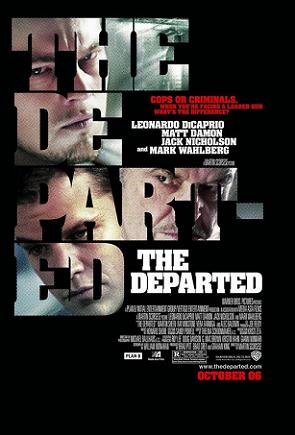
Directed by Martin Scorsese and starring an all-star cast including Matt Damon, Leonardo DiCapprio, Jack Nicholson, and many others, this is a crime thriller with an interesting concept. The plot has to do with two young men who were in the Massachusetts Police Academy. One is tailored by the Irish mobster Frank Costello to become a mole within the police. The other is called upon to infiltrate the mob before he graduates. Thus begins their dangerous assignments as each tires to find the rat in the other organization while also working to stay out of reproach. Costigan is able to get close to the vile Costello while Sullivan is part of the Special Investigation Unit and also begins a relationship with a psychologist. They must secretly keep contact with the other side but it becomes increasingly treacherous with one encounter leading to a chase and another in the death of a police captain. The heat is on as both men try and reveal the other mole. During a cocaine pick up Costello is traced to the spot and a chaotic shootout ensues. Everything seems calm again and yet Constello’s mole is still around and bent on erasing Costigan from record. They agree to meet on a roof top and from that point on the film moves so rapidly it is almost impossible to take in what happens. Everything seems confused and corrupted but ultimately it does not pay to be a rat. This film has a lot of coarse language and violence but in Scorsese’s hands it is still an intriguing film to watch.

4.5/5 Stars

Taxi Driver (1976)

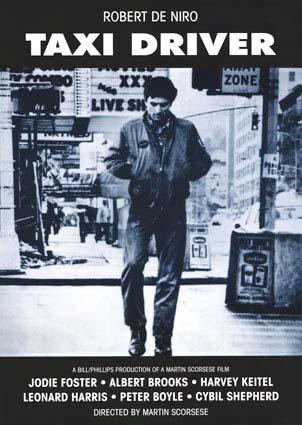
d184d-taxi_driver_posterDirected by Martin Scorsese, the film stars Robert De Niro with Jodie Foster and Cybil Sheppard. The story opens with a Vietnam vet, Travis Bickle (De Niro) who takes a job as a taxi driver. Travis is a quiet and lonely man who is turned off by the scum and filth he sees on the streets of New York. He becomes enthralled with a beautiful campaign worker who eventually turns him off. Then he also comes in contact with a young girl who makes her living working the streets. His frustration deepens and he begins to work out and collect weapons. It becomes obvious he is about to explode and after an initial failed attempt he does  just that. However, ironically the aftermath leaves him as a hero. Travis is an interesting character because you feel sorry for him and yet he does things that are truly wrong. I found Bernard Hermann’s score, the voice-over narration, and the cryptic ending all to be interesting parts of this film.

4.5/5 Stars

The Aviator (2004)

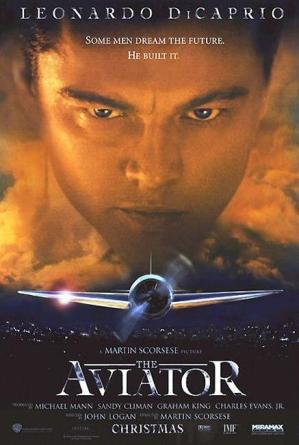
ccda6-the_aviator_posterDirected by Martin Scorsese and starring Leonardo DiCaprio with a good ensemble cast, this biopic chronicle the life of Howard Hughes. The story begins when the ambitious young man begins to direct an epic movie that is nearly a disaster. After his success, we witness the life of this director, playboy, and above all aviator. He makes Scarface and then later The Outlaw. He has relationships with Katharine Hepburn (Cate Blanchet), a young teenage girl, and Ava Garner (Kate Beckinsdale). Then during the war he designs new planes and afterwards Hughes faces his greatest challenge. He is on the brink of disaster in his competition with Pan-Am and he is the subject of a near-damaging senate hearing. All the while his obsessive compulsive disorder gets worse. I found this film fascinating because I knew very little about Hughes. As a director himself, Scorsese also seemed to have sympathy for the man and also admiration for the olden days.

4.5/5 Stars

Goodfellas (1990)

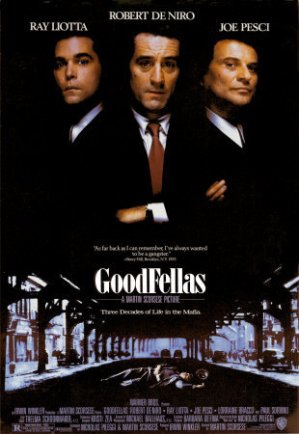
Starring Ray Liotta, Robert De Niro, and Joe Pesci with direction by Martin Scorcese, the film follows the true story of Henry Hill and his life as a mobster. Early on in the 50s Hentry began doing work for the influential mobster Paulie (Paul Sorvino). He began skipping school and slowly begins making a lucrative living with the mob.  Soon he meets Jimmy Conway (De Niro) who loves to hijack trucks as well as the foul-mouthed, quick-tempered robber Tommy DeVito (Pesci). Over time Henry becomes successful after an Air France robbery and eventually he gets married to a woman named Karen (Lorraine Bracco). However, Henry gets caught up in a murder and he also starts seeing another woman. He still has problems but he begins a lucrative drug trade and the Lufthansa heist is pulled. The heat is on and Henry is eventually caught and decides to rat on his friends. He is then forced to live life as a nobody. I appreciated the period music, voice over, tracking shots, and freeze frames. The language of DeVito and others is tiresome but it shows how inherently corrupt they are.

5/5 Stars

Raging Bull (1980)

This autobiographical boxing film directed by Martin Scorsese, stars Robert De Niro, Kathy Moriarty, and Joe Pesci. The film begins with a flashback to 1941 when Jake LaMotta (De Niro) lost a close fight. However, after that loss he begins his run for the middle weight title. Despite a difficult marriage, Jake’s brother and manager introduces him to the young and beautiful Vickie. He continues to fight and in 1947 he is married once again. LaMotta has his share of troubles in the ring but he eventually becomes champion. At the same time his personal life is in a shambles thanks to his constant jealousy and paranoia towards his wife and brother. First, he is estranged from Joey and his career declines. Then after his retirement, Vickie files for a divorce. His days are spent entertaining in nightclubs as a washed up boxer. I enjoyed the reference to On the Waterfront at the end and despite the coarse language, the film had good characters, cinematography, and directing. LaMotta’s life is one that I hope no one would have to experience because there is so much pain and anger in it.

5/5 Stars