Oppenheimer (2023)

Being a history aficionado I pored over American Prometheus by Kai Bird and Martin Sherwin, which provided the inspiration for Christopher Nolan’s latest film on J. Robert Oppenheimer.

So many ideas were swirling around my brain when I entered the theater, but the first is obvious and it’s where Nolan begins: In Greek mythology, Prometheus took fire from Zeus, gifted it to humanity, and then was castigated for it.

Obviously, it’s easy to cast Oppenheimer as one of the most important figures of the 20th century since he was the “Father of the Atomic Bomb,” but he was also one of its greatest tragedies. There’s a scale and scope to this narrative woven right into the very fabric of history.

My other thought is a far more intimate detail but equally telling. Although he spent much of his time teaching at Berkeley and Cal Tech, Robert had a deep abiding love for the wide-open New Mexico territory where he kept a ranch and often went horseback riding. It was the first time I realized that Los Alamos and the outpost for the Manhattan Project was not some arbitrary place chosen by the government. It held such deep ties to who he was as a human being and what he held dear.

American Prometheus is a vivid and fascinating historical tome, but one can imagine the difficulties in adapting such a massive work. Nolan comes at it ferociously turning the historical details laid out before him, into something unequivocally cinematic.

A whole movie could be borne on Cillian Murphy’s face and it is. Between his vivid eyes, gaunt contour, the porkpie hat, and pipe, there’s something instantly iconic about him. He’s haunted and profound even before he says or does much of anything.

It’s dizzying watching Nolan develop the rich world around Oppenheimer packed with substance — a real world of real people and events we get to experience firsthand. This immediacy is key and although I’ve read the book, I don’t think you’re required to keep it in your back pocket.

The movie creates a complex constellation of relationships. These include important people in his life personally like Jean Tatlock (Florence Pugh) and his future wife Kitty (Emily Blunt) or his intellectual heroes such as Niels Bohr (Kenneth Branagh) living before us. I appreciated how we are thrown into his existence without true introductions or pretense.

He also punctuates the drama with mid to minor cameo parts taken on by notable actors like Josh Hartnett, Casey Affleck, Gary Oldman, and Rami Malek. This punch of celebrity does yeoman’s work in creating recognition in his audience regardless of historical knowledge.

Oppenheimer’s early life comes whizzing by us with so many stimuli and swirling jumps in location and setting that it feels like the cross between a globetrotting action movie and the roaming panoramas of late-period Terrence Malick. Nolan trusts the audience and expects them to pick up the pieces.

What differentiates Nolan’s work from his source material partially comes down to the visual flourishes at his disposal but also the ingrained structure he uses to mold it to his own vision. He effectively creates a narrative tension between fusion and fission as denoted by the alternating scenes of color and black & white framed by the two contrasting hearings.

The director has noted Amadeus (1984) among his reference points for his latest project because it is a character study functioning in a kind of duality. Mozart’s exasperating genius is framed by the point of view of his rival Salieri. Albeit our “Mozart” feels far more sympathetic, and our “Salieri,” well, you must make up your own mind.

Nolan does something narratively brilliant by providing us Strauss’s perspective juxtaposed with our protagonist. Lewis Strauss was a member of the U.S. Atomic Energy Commission and played a crucial role in Oppenheimer’s government clearance being stripped in 1954.

I read the book and despised Strauss as well as the prosecutor Robb (Jason Clarke) because of what they had done to Oppenheimer. But Nolan for a time strings me along even with this pre-existing knowledge so I begin to empathize and even get inside the interior life of this man. The doubts set in. Perhaps I misconstrued the facts as I remember them. He’s not all bad.

And yet when the vindictive pettiness that was there the whole time comes out again, it was somehow a shock and also an affirmation of everything I thought this man to be. Still, Nolan was able to encapsulate and still obfuscate this strange dynamic between these two men.

Robert Downey Jr. also must be given credit in a role that relies on his acting chops more than his wry charisma. I’m not always a fan of actors aging into roles like this, but I’m sure he’s going to surprise more than a few folks in the audience.

As the movie hurtles toward the apex of the Trinity test with the race against the Nazis at full tilt and Oppenheimer shouldering this massive project alongside General Leslie Groves (Matt Damon), we all know innately where we are going. These moments speak for themselves. I wouldn’t dream of trying to distill this suspended moment in time with a few inadequate lines. You must contend with it yourself.

However, with all that happens in Oppenheimer, I’m still trying to figure out if the structure works exactly because we spike with the Trinity test and still must witness the hearings and Oppenheimer’s gradual martyrdom.

It certainly maintains a breakneck pace that kind of overwhelms you in a way that’s never boring. The lengths of scenes, the cross-cutting, and the non-linear jumps through time and space are probably the writer-directors greatest attributes.

Ultimately the meeting between Einstein and Oppenheimer that Strauss only caught the tail-end of becomes a kind of lynchpin moment plucked out of time. In some ways, it does feel like a continuation of Dunkirk and Nolan’s deep commitment to the manipulation of time. Chronologically this is relatively early in the story and yet he somehow builds it to be the beginning of the end exploding into our current modernity.

There they stand on Princeton’s campus together meeting again. Oppenheimer reminds his elder of his biggest fear: That the construction of the bomb would conceivably set off a chain reaction destroying the world.

“What of it?” Einstein asks.

Oppenheimer responds, “I believe we did.”

It’s a sobering ending as nuclear imagery engulfs the screen once more. Because as an audience in the 21st century, we must reckon with a changed future imparted to us by Oppenheimer and his colleagues. Although the atomic bomb didn’t actually blow up the world as some feared, it birthed a reality in the wake of The Cold War and McCarthyism hysteria we are still coming to terms with today.

The film feels more grotesque and shocking than I’m accustomed to in Nolan’s oeuvre or perhaps I just blocked out the grimmer corners of his work. He’s certainly not squeamish about the darkness.

When “Oppie” is beset by a gymnasium full of cheering people and the horrors building up around him or he faces interrogation and his intimate trysts with Jean Tatlock merge and all but play out for everyone to see, I was perplexed, even disturbed. I didn’t want this and I go so far as to say I didn’t need the explicit nature, though Nolan probably has his reasons.

I’m not sure if it can be hailed as his magnum opus, but in some ways, Nolan has done the unthinkable by making a potentially stodgy historical piece into a gripping blockbuster. In the age of superhero movies, studios have mostly assumed historical genres are dead. Likewise, by shaking up a prosaic biopic form, the director alights on something that’s narratively audacious even when it falters.

That’s why he’s remained one of our most beloved filmmakers over the last decades. He makes big movies for thinking people, and if nothing else, I hope Oppenheimer acts as a clarion call for more thoughtful tentpoles in the industry. The audience seems to be more than rewarding his efforts.

4/5 Stars
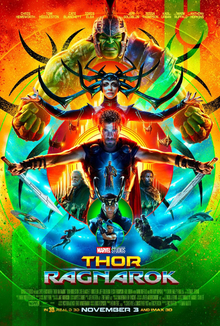
Thor Ragnarok (2017)

Thor_Ragnarok_posterMy heart lept in my chest when I heard that Taika Watiti (What We Do in The Shadows) was going to be helming the latest Thor movie. Because it’s hardly a well-kept secret that Thor has essentially been the weakest of all the Marvel threads (Hulk’s individual film excluded).
So once more Marvel has done an impeccable job of keeping lukewarm bandwagoners such as myself mildly interested. Benedict Cumberbatch as Doctor Strange. Brie Larson in the upcoming Captain Marvel movie — another personal favorite. Then, we have Ryan Coogler directing Black Panther with one of the most glorious casts in recent memory. They make their product so alluring despite my general lack of interest in the perennial juggernaut.

But back to Thor Ragnarok which goes far beyond the quip-filled, light-hearted humor that Marvel has often boasted, to great success, I might add. Even with its darker moments and strains of drama, there’s little doubting that Watiti’s brand of near insouciant humor is alive and well. Exhibit A is the very fact that we are reintroduced to Thor (Chris Hemsworth) as he swings precariously from a rocky prison encased in chains about to be executed by a fiery conflagration of a villain.

In case you haven’t realized it already what we are about to be served up is a comedy about an apocalypse. Oxymoronic as it may sound, the film all but pulls it off. Still, more explanation is in order.

Thor returns to Asgard only to begin quibbling with his black sheep of a brother Loki (Tom Hiddleston) just like old times. They call on their father (Anthony Hopkins) whose imminent death is less an ending and more a god-like dispersal. There are other asides involving Dr. Strange (Cumberbatch) and yes, we even found out a little bit more about the Hulk and what Bruce Banner (Mark Ruffalo) has been doing the last couple years.

Being the weasel that he is, Loki’s always betraying his brother and Thor winds up getting captured by a former Valkyrie (Tessa Thompson) who has taken on the life of a slave trader, bringing in fighters for the Contest of Champions. Thor is destined to be the newest attraction on center stage.

Watiti most obviously makes his general tone felt in the film through his own character Korg, a giant rock monster who is more like the Michelin Man than The Thing. Watiti’s understated voice coming through so clearly as he matter-of-factly talks about the not uncertain death that awaits nearly everyone. But he’s also handy for a few rock, paper, scissor jokes as well.

Jeff Goldblum is probably the film’s other finest creation for his own brand of oddly perturbing flippancy with gladiatorial violence and hedonistic relish of death matches. But in the same breath, The Grandmaster also happens to be probably the funniest addition to the cast for those very same reasons.

In fact, it’s these themes touched on briefly that are most crucial to drawing conclusions about Ragnarok. It’s deeply entrenched in issues of death and mortality, violence and warfare. By no small coincidence, the main villain brought to the fore is Hela (Cate Blanchett) who helped Odin build his kingdom and has come back to rule it as her own. It’s not a particularly inspired creation but what did we expect? It is what it is.

Meanwhile, Led Zeppelin’s “Immigrant Song” is the film’s favorite hard-hitting tune to conjure up for perfect trailer sound bytes to crosscut with the action at hand. Whether it serves any other purpose aside from just being a bit of retro-cool is probably beside the point.

There’s a line that seems apt for such a film that I couldn’t help recalling. It goes like something like this, “We laugh at death because we know that death will have the last laugh at us.” It’s one thing to make light of death as a coping mechanism and as an outlet to grapple with something we don’t completely understand, quite another to completely dismiss it. Because the far easier road is to try and evade dealing with it altogether.

The usual CGI extravaganzas and spectacle aside, there is something still to relish in this movie. What I’m trying to say is that Thor Ragnarok is a deathly funny superhero film. In spite of the usual tiresome amount of pyrotechnics, random cameos, and overzealous action sequences, there is an ephemeral and still a delightful enjoyment to be found in this picture. It no doubt bears the imprint of Watiti while still wearing some of the tiresome Marvel tropes.

The one theme it does suggest most overtly is that “Asgard” was built on past indiscretions, bloodshed, and violence. But moreover, the mythical nation is not simply a place. It’s the people that make it up. And in the wake of an apocalypse, it’s some amount of solace. That and Jeff Goldblum giving the commoners a pat on the back. It’s always good to undercut solemnity with another punchline following the credits.

3.5/5 Stars

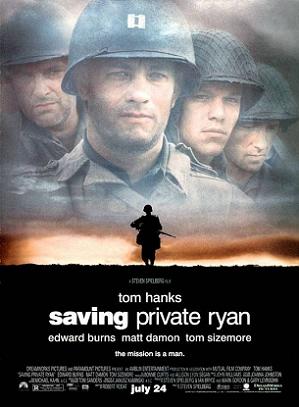
Saving Private Ryan (1998)

saving-private-ryan-1There’s something remarkably moving about the beginning of Saving Private Ryan. I’ve only felt it a few times in my own lifetime whether it was family members recognizing names on the Vietnam Memorial tears in their eyes or walking over the sunken remains of the U.S.S. Arizona at Pearl Harbor.  It’s these types of memories that don’t leave us — even as outsiders — people who cannot understand these historical moments firsthand.
And that’s why Saving Private Ryan is a truly breathtaking, at times horrifying, and wholly visceral experience. Words cannot actually describe the visuals on the beaches of  Normandy at Omaha. The utter chaos, death, and tumult engulfing the scene — above and below the surface of the water.

The cast includes a number of memorable players including Tom Hanks, Barry Pepper, Giovanni Ribisi, Vin Diesel, Paul Giamatti, Matt Damon, and even Nathan Fillion. And yet it’s not about any one man or even a singular act of valor. Even Private Ryan is only a starting point of a far more universal tale.

It’s also easy to say that this is a film cheapens life in the number of bodies that are blown to bits and slaughtered seemingly needlessly on screen. However, it’s even more difficult to acknowledge that in one sense life is cheap — transient to the extent that our bodies are not indestructible. We are fallible beings and breath so easily leaves our lungs and no time is this more evident than in the wake of war.

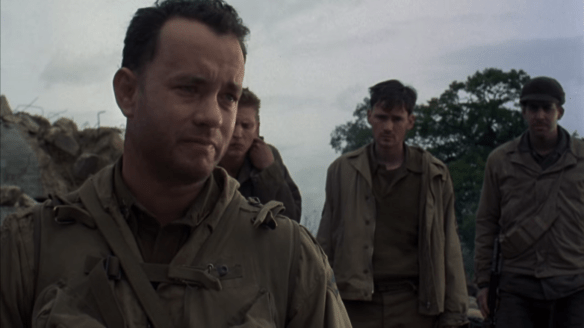
One sequence that springs to mind involves two surrendering men who, on first inspection, look German and sound German. The men under Captain Miller’s (Tom Hanks) command gun them down and they do it with smiles on their faces. This, after all, is the enemy, pure and simple. Except they were not “Nazis.” They weren’t even Germans, but Czechs (based on what they say). Men who historically had been captured by the Nazis and press-ganged into military service. And in the end, they get shot by Americans. Even the undertones of this scene point to the fact that their lives were so easily snuffed out, without even a second thought.

So, yes, life seems cheap in this film in the physical sense, even from just one example. But it is granted a great deal of depth and richness in many other ways. Families and brothers. Comrades and compatriots. Personal convictions and disillusionment in war revealed through the many characters we come to know. All of that bleeds out of this film along with the blood from the bodies.

In that sense, it’s all difficult to watch and Spielberg never intended this to be easy going.  I cannot speak for others but within the intense moments of bloodshed, the lulls in the action, and unrest within the ranks, there’s a solemnity developed.

War is at times the everyday. It’s indescribable and inscrutable. But Saving Private Ryan’s suggests that there are certain things that we hold onto. High and lofty things such as liberty and freedom that are often so easy to discount. They seem easily besmirched, dragged through the mud by all of our human inadequacies and evil. But perhaps that makes them even more important to hang on to, because just like life, these ideals are worth the fight, though they might so easily be lost. It doesn’t make the wrong right or cover up all the pain, even found within this film, but it latches on a tiny bit of good within a whole lot of messiness.

It goes back to the basic implications of the film’s main conceit — the task of saving one man — Private James Francis Ryan (Matt Damon). It’s  representative of not only the entire war but each and every one of us as we traverse roads of tribulation. Every story, whether wartime or our own, deserves an ending with some type of salvation. Because Saving Private Ryan is imbued with so much more meaning. Our human experience is wrapped up in it. There is no greater love than a man giving his life for his friends. But imagine if you are dying for the freedom of others or even the preservation of someone who you hardly know? That’s what happens in this story.

That’s why when elderly James Ryan comes back to Normandy so many years later, there’s a gravity to the situation. This is by no means a corny piece of Hollywood drama. It’s the ultimate act of love that he has received and he can hardly comprehend it, just as we as an audience must grapple with it too. In that way, Saving Private Ryan is indubitably affecting not simply as a war drama but an epic human narrative. It pertains to all of us.

The profound and terrifying thing about this gift that he has received through the sacrifice of so many others is that he cannot “earn it.” Because, in this sense, life proves to be far from cheap. There is no way to earn that back. There is no way for us to live a wholly “good” life or be completely “good” people. The whole entirety of the film tells us otherwise. Still, we can live our life with a sense of freedom knowing that cannot be expected of us. A life of purpose is all that can be asked of us. It’s that kind of purpose that makes Saving Private Ryan continuously compelling.

5/5 Stars

The Martian (2015)

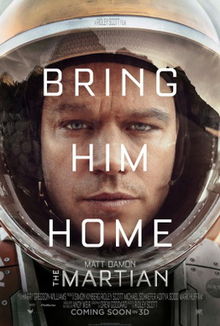
The_Martian_film_posterThe Martian is not the film you first expect. It’s a space thriller. It has tense moments assuredly, but it also has an astute sense of humor that pulses through the film as its lifeblood. It makes Ridley Scott’s latest endeavor, based on the novel by Andy Weir, all the more palatable because it lends a fresh face to space exploration.
I’m not sure if I quite buy Matt Damon as a scientifically savvy astronaut and world-class botanist, but he makes it go down easy with a mix of resourcefulness and charm. Despite the casting of Matt Damon and Jessica Chastain, it soon becomes obvious that this is no Interstellar and that’s a good thing. Both films fly high on their own merit and both work due to their unique human component.

Our narrative opens on the metallic surface of mars where the crew of Ares III is going through their normal daily regimen as part of their expedition for NASA. As with any film of this nature, there must be a malfunction and a subsequent wrench in the plans. Initially, everything is secure enough, but a wind storm hits with a vengeance. In an instant team member Mark Watney (Damon) is pummeled by debris that sends him flying. His mission commander Lewis (Chastain) makes a last-ditch effort to search for him, but she must reluctantly call for an evacuation of her crew. They somberly begin their journey back to earth as NASA head Teddy Sanders (Jeff Daniels) prepares to feed the news to the press.

Little do they know what is going on back on the red planet. Watney is alive and resolves to stay that way by taking stock of his resources, maintaining a video log, and beginning the arduous process of growing potatoes on Mars. It’s all part of a bigger picture, though, because he knows Ares will be returning on another mission. His time increments are denoted as Sols and he knows he has to stretch out his resources for well over 500 Sols if he’s ever to get back home. It’s going to be close.

Once they get over the initial shock, NASA’s mission control, led by Sanders and mission director Vincent Kapoor (Chiwetel Ejiofor), look to do all they can to get to Watney in time. There are tough decisions ahead of them as they figure out when to notify Watney’s colleagues about his status, while also building up communication with the isolated astronaut so they can devise the best plan to reach him. All cylinders are powered up with the best and the brightest in NASA attempting to devise the most efficient solution, but everything comes down to some crucial tactical moves.

Watney on his part, maintains his good humor, grows sick of the ship’s vast catalog of disco tunes, and continues to cultivate his food stock, while also doing some creative problem-solving in order to prepare to rendezvous with the next mission. But time in this scenario is an evil bedfellow, and following the destruction of Watney’s cash crop and the annihilation of a NASA rocket carrying provisions, it looks like dire straits ahead. That’s when it comes down to a brainiac of an astrodynamicist (Donald Glover) and the crew of the Aries led by Commander Lewis to salvage the rescue operation.

By now it seems almost second nature for Ridley Scott to direct films in space and once again he looks perfectly at home in the vast expanses of the Milky Way. The trick, like any respected director, he brings the story down to earth. Back to the people who make up the story. And truthfully, the casting is ceaselessly interesting and Matt Damon might just be the most unsurprising pick of all. But going down the line we have the likes of Jeff Daniels, Kristen Wiig, and Donald Glover. They each hold varying degrees of importance at different junctures in the narrative, but each one of them comes from a comic background. Thus, it becomes an interesting change in environment, because we get to see them function in a different type of capacity altogether. Otherwise, the film has a fun disco-filled, David Bowie-accented, ABBA-infused soundtrack that feels perfectly at odds with outer space.

The Martian goes out with a wonderfully fitting denouement giving a nod to all its cast members, continuing the ongoing exploration of space, and leaving us with some quintessential O’Jays. Who would have thought a film such as this would have ended with “Love Train” and “I Will Survive” back to back? It’s pretty fantastic. Mars is cool too.

4/5 Stars

Good Will Hunting (1997)

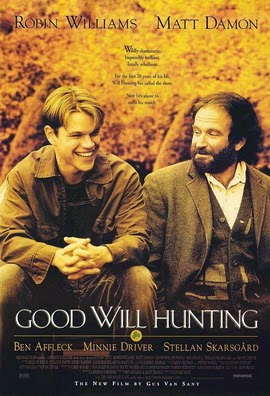
9db12-good_will_hunting_theatrical_posterGood Will Hunting is an extraordinary story on multiple levels because it is about the little guy. The trajectory of a lowly janitor being propelled to MIT genius is moving no matter how often it gets copied or imitated. It just never gets old. Then, there is the story of two young unknowns named Matt Damon and Ben Affleck who shot to fame thanks to some big dreams and a few mentors. Now they are two of the top names in Hollywood over 15 years later and they continue to be (Gone Girl and Interstellar are proof).

However, back then they were a long shot with only a solid idea for a film. It worked wonderfully though because of its core themes. It’s about friendship. It’s about romance. It’s about fear and aspirations. It’s about vulnerability. It’s about long shots making the most of their lives. Admittedly, that could be almost any film so there’s a need to bring the microscope in a little closer.

At face value Will Hunting (Matt Damon) seems like a young thug from South Boston who loves his beer, buddies, broads, and brawls. He and his friends including Chuckie (Ben Affleck) spend their days trying to make ends meet and fill the rest of their time with the aforementioned. We get glimpses of a different Will, however, a brilliant young man holding a plethora of book knowledge and blessed with a photographic memory. He’s able to philosophize rings around conceited Harvard students catching the eyes of a cute British girl named Skylar (Minnie Driver). They are a sweet couple and it seems like it might add up to something good.

Then, comes the necessarily fateful day when Will solves the unsolvable equation on the MIT wall, following that feat with a brawl fight that lands him with a potential jail term hanging over his head. It’s a strange dichotomy and it deeply surprises Professor Gerald Lambeux who quickly realizes the unassuming genius that is Will Hunting. He’s fantastic, but in order to utilize his potential Lambeux agrees to have him meet weekly with a therapist.

What follows is an absurd string of therapy sessions where Will, who wants none of this analysis, makes a mockery of his psychologists. When Lambeux’s former roommate and last resort Sean Maguire (Robin Williams) is called in it looks like more of the same.  But he is different. He sees something more and Sean is not about to give up on the kid. Their sessions begin as a battle of wills until Will’s defenses finally break down. They construct something beautiful, something real,  and in many ways vulnerable.

It is then that Sean teaches Will about true love and living life with no regrets. He had a wife who passed away from cancer, and he is hardly a big name academic, but he wouldn’t trade his life for anything. That’s enough for him. All the while, in between sessions, Will must figure out his life whether he wishes to work in the stuffy world of academia with professor Lambeux, continue living with his chums in Southie, or move forward with Skylar who is off to Stanford soon.

Sean doesn’t force him into one decision or another but he gives him personal advice. As a young man, he met a pretty girl in a bar, the same day in 1975 that Carlton Fisk hit his famed home run. But Sean gave up his seat to spend that evening with a girl and it paid off. She would be his wife for all those happy years before she came down with cancer. In Will’s eyes, and perhaps even the eyes of the audience, he was utterly insane to pass that up, but for Sean, there were no regrets. That’s enough.

On the verge of turning 21, there are so many choices, thoughts, feelings, and fears swirling around. Not to mention Will’s ugly past as a foster kid full of abuse and a heavy rap sheet. It’s the steady and pragmatic consoling of Sean where he finds relief. Sean will not be quelled in reminding him, “It’s not his fault.” That’s simply the hand he was dealt.

In another beautiful scene that is oft cited, Chuckie tells his friend, in the most genuine way that he can, that he doesn’t want Will to stick around. Because, the reality is, Will has been given a ticket out of Boston, and it would be a knock to all of his friends if he stayed around. On the day Chuckie won’t need a note. He’ll have satisfaction enough that his friend will be gone. To this day, it still feels a tad corny, but it works within the film so I will go with it.

Down the line, Sean receives a sincere note in his mailbox and Chuckie walks up the steps to Will’s place and no one answers. No one needs to say anything because they all know Will has gone to follow his dreams. Go west young man after the girl you love and take a chance. No regrets. It is the perfect ending for this film and at the same time the most aggravating.

Robin Williams was an obvious standout in this film, and it saddens me to think that he is no longer with us. I think I appreciate him most in his dramatic roles because he is so genuinely funny it comes out organically. He is a great counter to Matt Damon. Without that dynamic, this would be a far less noteworthy film. Also, the script is full of quips and a great balance of intellectual and laymen terms making for a unique story. It takes time to acknowledge the idiosyncrasies and pain that are a reality of human existence.  That’s why it hits home. Hopefully, Will as well as all of us find what we are hunting for.

4/5 Stars

Interstellar (2014)

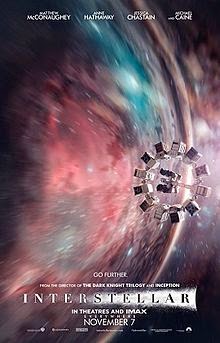
77062-interstellar_film_posterAs has always been his calling card, Christopher Nolan has an eye for grand, expansive, thought-provoking experiences wrapped up in cinema. Perhaps his aims are too ambitious at times, but you can never accuse him of making an everyday film. He always shoots for the moon (or better yet a wormhole) and so his projects are ultimately better than most, even if they miss the target a bit. The reason being, Interstellar is still full of enough questions and concepts to leave us thinking for a good long time after we leave the theater.

Although approximately 2 hours and 49 minutes, hardly anyone could call Interstellar too long, because it is more often than not engaging, as we try and decipher where Nolan is going to take us next. His story starts on a world that is certainly earth but strangely dystopian compared to the planet that we know and love. Reminiscent of When Harry Met Sally or something, old folks speak of the way the world was when the dust first hit and the corn crops had to be burned. Not much explanation is given but it is what it is.

This is the climate that the engineer-turned-farmer Coop (Matthew McConaughey) has to raise his two kids after his wife passed away. They are good kids for the most part. Murph blames a so-called “ghost” for accidents that happen around the house and her brother teases her some. But they hardly complain about this life they have they; just push forward.

However, their father has always been an explorer at heart, a pilot who never got to truly test the vast seas of space or spread out his wings fully. That changes when he and his daughter come across an old relic from the past. No, it’s not a monolith but something far more human. He somewhat reluctantly teams up with his old professor Brandt (Sir Michael Caine) and the professor’s daughter Amelia(Anne Hathaway) in a major undertaking.

They want Coop to pilot a mission to a wormhole which is just out of humanity’s reach. It was seemingly miraculously gifted to the human race by some unknown third person. This is their chance to A: find a new planet for a mass exodus or B: restart a colony on a far away destination. The first option is far less grim. Coop takes the mission in the hopes of saving his kids, but he knows the ramifications. Since time is all relative he does not know when he is coming back. He does not even know what he will find or if he will be successful. He heads off as an angry Murph tearfully watches him fall out of her life.

In a match cut of his own, Nolan transports Coop from his truck to the outer reaches of the galaxy. The real adventure has begun. The mission is clear. Save humanity from most certain extinction. It does not make it easier however that messages are constantly being relayed from earth. Coop and his three colleagues set up a plan of action. Their first target is a water covered environment that looks promising. Not so. Next, Coop overrules Brandt and they head to a desolate world that a previous explorer had labeled as inhabitable. To put it bluntly, he lied and he was not the only one.

Now Murph is older (Jessica Chastain) and she still has a hard time reconciling the departure of her dad. In an especially impactful scene, a still ageless Coop watches tearfully as his older son’s life literally passes before his eyes through the video communications that have been relayed up.

Coop has no way to reply. He can only watch and push forward to try and find a solution. But the answers are few and far between as time continues to move rapidly faster on earth than with the crew of the Endurance. In one final act of selfless valor Coop heads into a black hole and thus begins his own mind-blowing leg of his space odyssey. Some connections are made and when all the pieces are put together all that really matters is his inextinguishable love and family. In the end, Coop spends a nice moment with his daughter under very different circumstances. Together they saved the human race. Together they survived.

For a film that was made for Physic nerds with talk of black holes, worm holes, relativity, quantum mechanics, Newton’s Third Law, gravity and the like, Nolan’s conclusion has a universal ring. As Amelia Brand claims, “Love is the one thing that transcends time and space.” There are still scientific questions left to be debated for years to come, but we know that love is one thing that is forever true.

There are obviously numerous comparisons that can be made between Interstellar and 2001. I would rather focus on the differences very briefly. In Nolan’s film, A.I. is actually useful and more reliable and kind than humanity itself. It is Man who lies, cheats and reverts to animalistic behavior all in the name of survival. Interstellar has a lot of scientific theory behind it (which I will acknowledge I do not know the ins and outs of), however, it also has a very human component. It is grounded on earth with Coop’s kids.

The visuals in Interstellar are often breathtaking but we would probably expect that for such an ambitious space saga. What I really took out of this film was the score and juxtaposition of sound. Hans Zimmer’s compositions were full of pounding organs that somehow fit the mood with their majestic and still austere sound. Furthermore, this film had a lot of dialogue and tense moments of noise, however, when we are outside the spacecraft it is almost completely silent reminding us of the reality of space. It is more often than not a vast, silent unknown.

I am reminded of when Coop explains to his daughter why she was named after Murphy’s Law which seems to be bad. He replies that “Murphy’s law doesn’t mean that something bad will happen. It means that whatever can happen, will happen.” And that was good enough for Coop and his late wife. In some ways I think these words can be used to describe Interstellar. With Nolan, there is the potential that whatever can happen, will. There is excitement and magic in that, even if it sometimes overshoots its bounds. It’s not necessarily a bad thing and that’s good enough for me.

4/5 Stars

Do not go gentle into that good night,
Old age should burn and rave at close of day;
Rage, rage against the dying of the light.
~ Dylan Thomas

Saving Private Ryan (1998)

c1b38-saving_private_ryan_poster

Telling an amazing story of bravery, Saving Private Ryan is both inspiring and moving. Beginning with the invasion of Normandy on D-Day June 6, 1944, the film follows a group of American soldiers as they look for a Francis Ryan. Since all three of his brothers are dead their mission is to find him and send the private home . Despite the dangers and the subsequent deaths of many comrades, they finally complete their mission after one last heroic fight. The movie flashes forward to the present day Ryan as he kneels at the graves of those brave men who saved him. Unsure he asks his wife if he lived a good life because those soldiers payed the ultimate price for him. With director Steven Speilberg, Tom Hanks, Matt Damon, and other good character actors, this is a powerful war film with great battle sequences as well as amazing heroism.

5/5 Stars

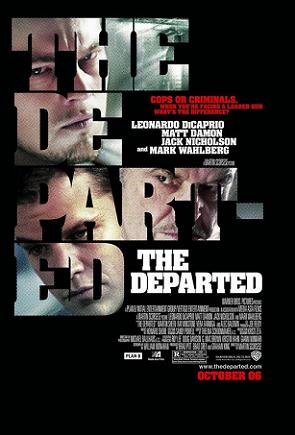
The Departed (2006)

Directed by Martin Scorsese and starring an all-star cast including Matt Damon, Leonardo DiCapprio, Jack Nicholson, and many others, this is a crime thriller with an interesting concept. The plot has to do with two young men who were in the Massachusetts Police Academy. One is tailored by the Irish mobster Frank Costello to become a mole within the police. The other is called upon to infiltrate the mob before he graduates. Thus begins their dangerous assignments as each tires to find the rat in the other organization while also working to stay out of reproach. Costigan is able to get close to the vile Costello while Sullivan is part of the Special Investigation Unit and also begins a relationship with a psychologist. They must secretly keep contact with the other side but it becomes increasingly treacherous with one encounter leading to a chase and another in the death of a police captain. The heat is on as both men try and reveal the other mole. During a cocaine pick up Costello is traced to the spot and a chaotic shootout ensues. Everything seems calm again and yet Constello’s mole is still around and bent on erasing Costigan from record. They agree to meet on a roof top and from that point on the film moves so rapidly it is almost impossible to take in what happens. Everything seems confused and corrupted but ultimately it does not pay to be a rat. This film has a lot of coarse language and violence but in Scorsese’s hands it is still an intriguing film to watch.

4.5/5 Stars