Linda, Linda, Linda (2005)

“Like a rat, I want to be beautiful. Because you have a beauty that can’t be reflected in pictures” -sung by Linda, Linda, Linda

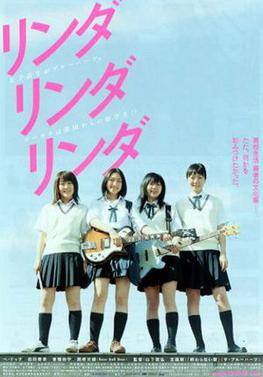
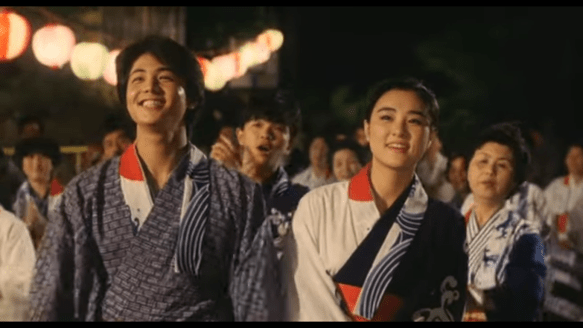
During the grainy opening scene of Linda, Linda, Linda there’s some time spent figuring out how these characters relate to our story as two AV nerds look to video a high school girl who is introducing a school’s forthcoming cultural festival.

It’s not so important to get to know who they are as to realize they will become the bookend for the movie and the parameters of its world. Because when you are a Japanese student, “Bunkasai” really is your chance to shine in front of your peers.

Linda, Linda, Linda captures this environment better than any other film I’ve seen thus far, and it’s because there’s really an ecosystem built out. Each class has their own task, game, or food vendor that they’re preparing for. Sports teams will have exhibitions. Clubs will have booths. Bands put on performances on the big stage for everyone.

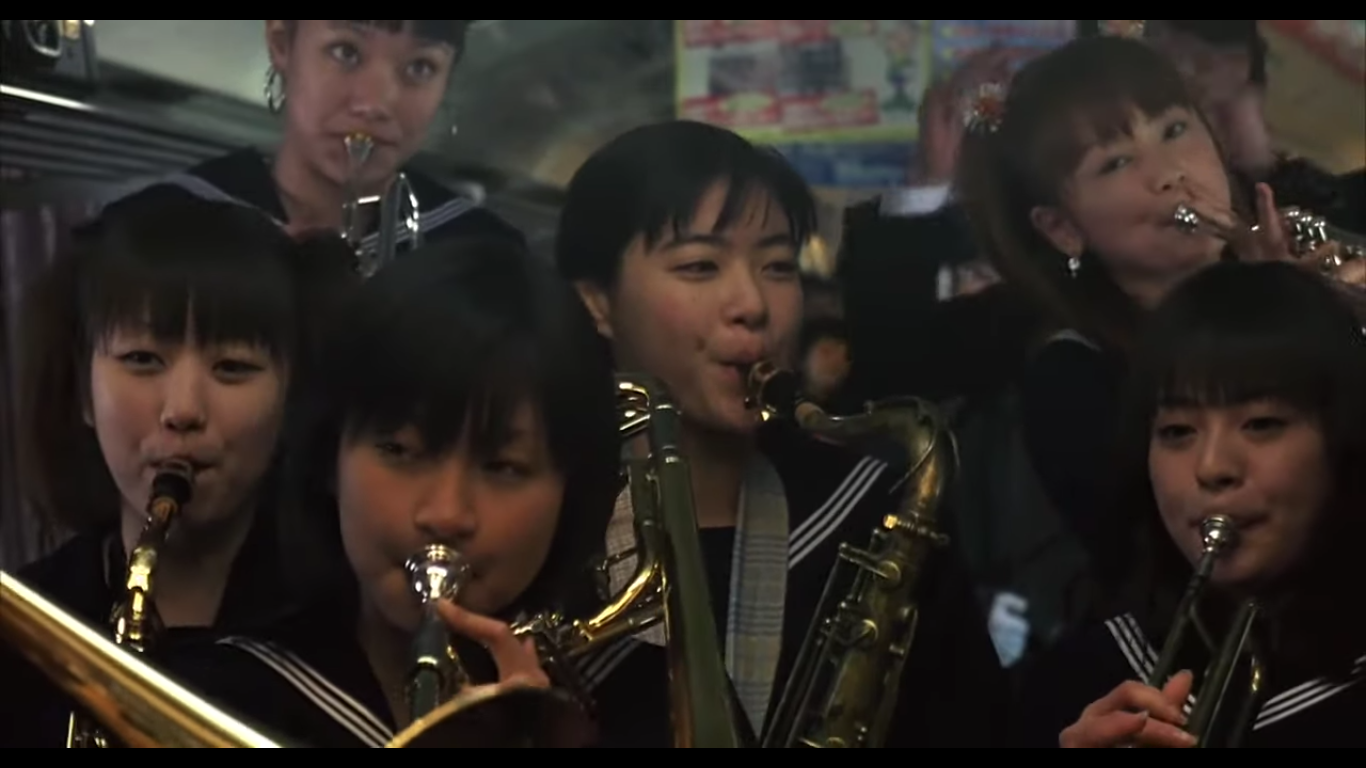
However, this canvas wouldn’t work without the human drama we come to expect with high school. One girl hurts her hand and petty disagreements lead to the dissolution of an all-girl rock band. Three of its members, Kei, Kyoko, and Nozomi, decide to form a new quartet without their lead singer. Son (Bae Doona), the unblinking Korean exchange student is quickly found as her replacement.

Some western audiences might not recognize what an odd choice Son is to be their lead singer. Japanese is not her first language. They often have trouble communicating with her (A stunted bus stop interaction brought back all sorts of personal memories from my time overseas). She has to learn all the lyrics to their setlist and she’s a bit kooky. Still, it fosters a beautiful kind of relationship.

There’s something leisurely and unhurried about the pacing of the movie. Characters are put in front of us, and yet we don’t feel like there’s some objective to be obtained. It’s about getting to know them and observing their situations.

My primary avenue to consider this film is through the filter of my own experience. I went to a cultural festival like this. There was giant Jenga and classrooms turned into rollercoasters and carnival games. We had boba, sweet potatoes, and frankfurters (while supplies last). But the best part was the music. I saw many of my students come into their own, witnessing sides of them you never see in the classroom. Raging fuzz-filled guitar solos, singers coming out of their shells, and girl guitar gods rocking out.

In fact, I was up on that stage too. Rather like Son I was an outsider. I got asked to sing a song in English and so without any musical training or a voice to speak of I agreed spending several weeks learning a One Direction tune. It’s not quite The Blue Hearts, but I’m not much of a singer. Son spends her time training at a karaoke drink bar.

If that experience was hardly a highlight of my life, I fall back on the experiences I got to witness. Linda Linda Linda has that same raucous joie de vivre we rarely attribute to Japanese culture. That’s what made it so joyous watching my students rock out to One OK Rock and Green Day.

It’s the same energy making Linda, Linda, Linda buzz with a pervasive joy. The audience imbibes the energy, cheers it on, and the musicians feed off of it. Nerves die away. They give themselves over to the music and enjoy themselves. If it’s like my school, these kids will probably never be professional musicians, but that’s hardly the point. Music has joys going beyond fame and monetary gain.

I was once taken by the idea of James Carse with his infinite games. Finite games have winners and losers. In infinite games, the players seem to be cooperative feeding into something bigger than themselves and utilizing a different, intrinsic rubric for success.

Although Linda…deviates mostly from the similar-sounding Swing Girls, what they share beyond a frantic slap-dash finale, is this performative exhilaration found most often in music. Soon enough, the festival is over and that’s the end of it.

But for a couple shining moments in the middle of the setlist, they were at the center of something spectacular. It’s easy to be a sucker for these kinds of stories when they feel so closely tied to my own fond memories. Long live Linda, Linda, Linda.

4/5 Stars

Swing Girls (2004)

“There are two kind of people in the world. Those who swing and those who don’t.”

I’ve already talked about this phenomenon ad nauseam, but having lived abroad in Japan, worked at a school, and interacted with many Japanese people, it fascinates me to learn about their cultural proclivities.

I hesitate to call much of what the Japanese do musically cultural appropriation because they seem to totally recontextualize the artifacts we know. One prime example is “Take Me Home Country Roads” by John Denver being featured so whimsically in Ghibli’s Whisper of The Heart. They somehow take cultural touchstones we know and pluck them out of a moment in a kind of reverent homage (One peculiar counterexample might be the animatronic JFK featured in Sans Soleil).

Writer-Director Shinobu Yaguchi’s Swing Girls is a film positively swimming in teen culture. Like a School of Rock, it feels like a movie looking for a wide audience, and it will easily repay those desiring a crowd-pleaser.

It introduces its world by gladly playing into high school tropes and stereotypes. Tomoko is our primary conduit in a clique of girls who seem generally bored with school and crazy about cute boys, fashion, and the like. They’ll do anything to get out of a summer make-up class and reclaim their adolescent freedom.

When the school’s band regrettably forgets their order of bentos for their gig miles away, the girls volunteer to hand-deliver them by train. It begins the madcap craziness as they miss stops, take to walking on foot, and unintentionally bake the food into oblivion. When all the band comes down with deadly food poisoning, their failed charade is up.

It’s a bit ridiculous. Where can a movie like this go? There’s only one answer and Yaguchi does his best work leaning into the big-hearted absurdity of it all. Having single-handedly wiped out the band, Tomoko and her compatriots consider joining the one male member not sidelined. It’s yet another convenient way to get out of summer school.

As an audience, we are able to laugh at the incongruity as all these girls who have never handled a musical instrument in their lives try their hand at forming a Big Band. They’re of the assumption that Jazz is for fuddy-duddies and intellectual types swirling brandy snifters. I can’t fault them because I was of a similar persuasion until I saw the light.

Takuo (Yuta Hiraoka) sets them up with a training regimen conditioning like athletes and introducing them to the likes of “Take The A Train” by Duke Ellington and Billy Strayhorn, a song that was integral to my own jazz appreciation. It feels like this mixture of oil and water, but then that’s the entire novelty of the premise. Whether or not it’s realistic, they do get better and more ambitious.

The girls take up part-time jobs to try and cobble together some second-hand instruments. They take part in all manner of good-natured fun and games like fleeing a wild boar and engaging in a euphoric snowball fight. Still, they still have a goal to realize, preparing their audition tape for the big high school competition.

Swing Girls is a film that keeps on building on itself until the height and width of its sizable heart overwhelms us with warmth and laughter. It grows to a crescendo as they frantically try to make it to their big day, first serenading their tour bus, and then performing the real thing.

They pad their performance with renditions of Glenn Miller and then Benny Goodman’s “Sing, Sing, Sing.” This second song is noteworthy to me because the band at the high school I worked at performed this same song. I have no inclination if this choice was inspired by the film or the fact Goodman was one of the swing era’s heavyweights. The particulars don’t really matter.

Swing Girls is best in its goofiness, giving us a story easily transferable into the Hollywood arena with feel-good moments and cheering acts of redemption. There’s actually not too much romance which is actually a nice surprise. However, in it, a closeted jazz enthusiast can come out of the woodwork to fulfill his dreams, and a classroom full of dead-end girls can come together to create something quite spectacular.

It provides a new context for Japan’s long-lasting love affair with jazz music, and I was pleasantly taken with it. Wonders never cease. All I can say is I want to be one of those people that swings. I can see it bringing the utmost joy into my life.

4/5 Stars

His Motorbike, Her Island (1986) and The Rocking Horsemen (1992)

His Motorbike, Her Island (1986)

There’s an immediate aesthetic artifice to His Motorbike, Her Island. Our hero is cool and simultaneously cruel representing a husky-voiced, brusque masculinity that feels no doubt appealing and equally toxic. He recounts his life’s observations through voiceover — the monochrome dreams making up his memories — and as such the movie slaloms easily between black & white and color.

It feels perfectly at home in its moment as part ’80s biker movie full of style. Some of this no doubt comes from director Nobuhiko Obayashi who always seems to have a propensity for commercial pop culture imagery. I would hesitate to call him a technician, and yet since he both edited and directed many of his films, maybe I don’t want to use the label because it sounds too austere.

His films are suffused with a vibrant energy and although the comparison misses the mark, the only reference I could think of was Richard Lester. I’d be interested in hearing who others bring up.

The movie’s premise is quite simple. Koh Hashimoto (Riki Takeuchi) runs errands on his motorcycle part time. His idle hours are taken up with a docile beauty name Fuyumi. He even gets in a duel with the girl’s older brother, who’s worried for her honor. Whether the outcome impacts his view of her or not, Koh, breaks it off. By his estimation, she’s boring (all she knows is crying and cooking).

Koh is looking for the Japanese version of the aloof dream girl, and he finds it in Miiyo. She captivates him with her confident vivacity, taking pictures of him, chatting in the onsen, and ultimately taking up his first love of motorcycles.

Their relationship blossoms when he visits her hometown out in the country during Obon, and we witness how the summer holiday is rooted in both a veneration and a celebration of dead loved ones. Koh’s captivated watching Miiyo dance during the festival proceedings. It’s something about her spirit he finds so attractive.

It also signals the film’s dangerous edges. Because if I wanted to distill His Motorbike, Her Island, down to its essence, we would need to talk about the intoxicating and reckless abandon of youth. It’s mesmerizing when it’s projected up on the screen in all its glory existing without worldly consequence of any kind.

Miiyo follows Koh and becomes infatuated by his singular passion: a 750cc Kawasaki. But it’s not just a supercharged motorcycle, and it’s not so much about an object made of chrome and an engine. It’s the adrenaline hit and emotional high of riding a motorcycle and riding it fast. It’s almost a dare for life to come at you head-on. For them, living life on on the edge like this is an obvious antidote to the malaise.

It’s both what attracts them to one another and threatens their ultimate undoing. Live fast, die young, has a poetic inevitably to it. I feel like I will need to watch the movie again down the road sometime, but there’s a pervasive sense that this motorbike, this island, this young man and this young woman take on a kind of mythic proportion.

Just like I never caught onto a perceptible rhythm of the monochrome and color, what we witness is not always an objective, tangible world. It exists in the hinterlands of memory, love, passion, and emotions just out of reach. The irony is obvious.

Sometimes, to feel alive, people need to get as close to death as possible. I’m not sure if this star-crossed, high-octane hedonism is still en vogue, but it’s easy to understand how it could seem attractive albeit misguided. There’s a hubris to it.

3.5/5 Stars
The Rocking Horseman (1992)

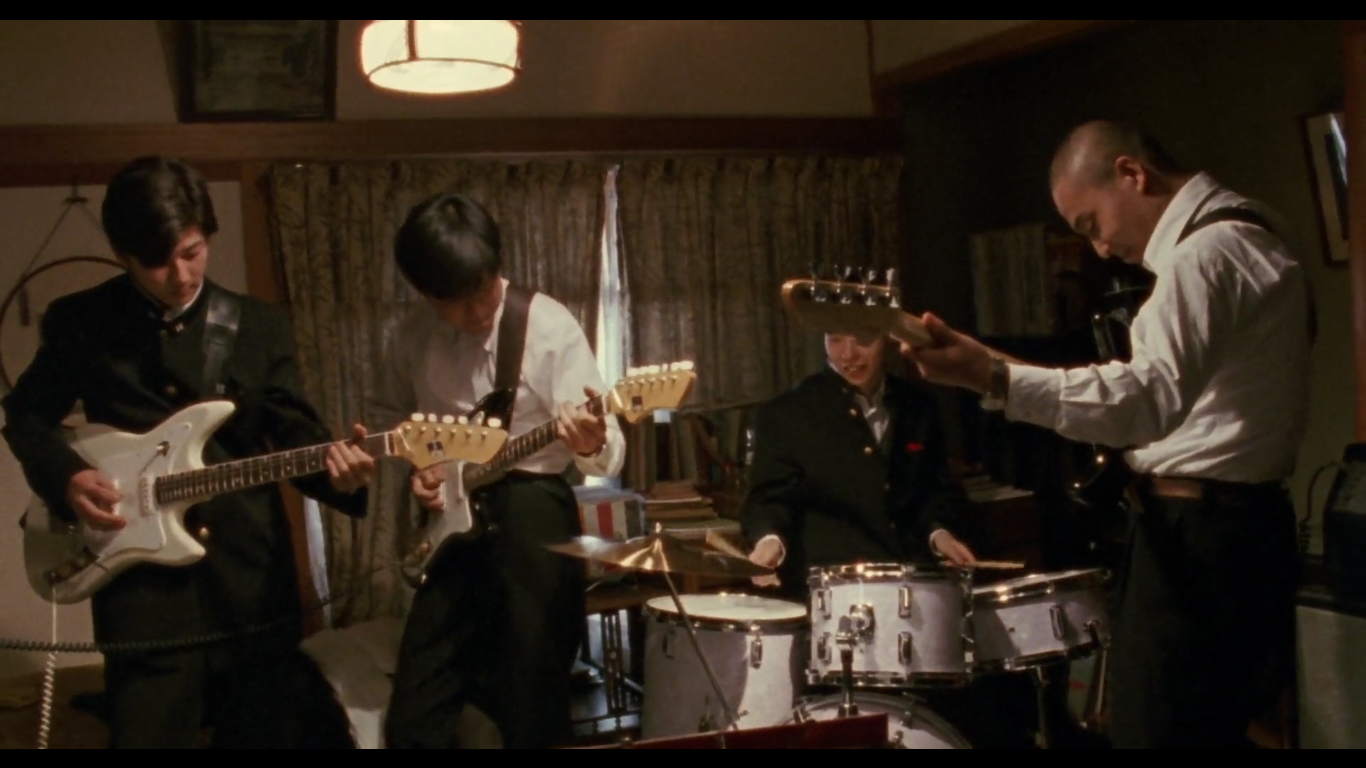
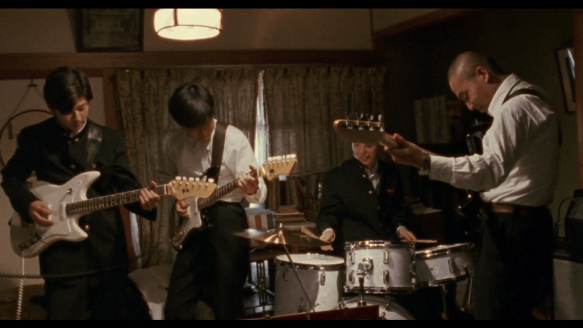
When I lived in Japan, I was flabbergasted to learn that there was a group that was bigger in Japan during the ’60s than the Beatles. It was The Ventures! This instrumental act kicked off the “Eleki Boom” as their iconic onomatopoeic glissandos (deke-deke-deke) captivated a generation of youth. These teenagers subsequently rushed out to buy their electric guitars and start their own bands during the “Group Sounds” explosion.

Although I didn’t think about it at the time, I’m a sucker for a good musical coming-of-age movie, and this landscape was ripe for such a story. Recently, when I came upon The Rocking Horsemen, I realized a void in the cinematic landscape had been filled thanks to Nobuhiko Obayashi

Fujiwara (Yasufumi Hayashi) feels like the most innocent and congenial of Obayashi’s boy heroes, a Ferris Bueller-type who instantly takes us into his confidence by not only providing voiceover but speaking directly to us.

OB’s films are easily placed in this provincial milieu outside the hustle and bustle of the big city. This gives them a kind of comfortable intimacy, and it’s only a small jump to place them in the past. In this case, Japan during the 1960s. I already mentioned that the movie covers a subgenre I have a private preoccupation with: form-a-band origin stories. That includes That Thing You Do! and Sing Street to The Commitments, Nowhere Boy, and School of Rock. What sets this one apart is the unique context and cultural moment.

Now I’ve been inculcated from an early age that the Beatles had the greatest music, but Fujiwara is coming of age with an ear raised to the admonitions of his elders. Pop music is puerile entertainment, cultural dregs compared to the sophistication of classical music. The Beatles included.

Then, his radio played “Pipeline” and he is changed forever. Any kind of snobbery quickly dissipates. The new sound assaults him as he reclines in his bedroom. There’s no escaping its force, and he converted for good, caught up in the same boom I read about. It was electric liberation.

Since a rock musician can’t look like a Buddhist acolyte, the first course of action was to grow out his hair. It occurs to me that one of the reasons I find these movies compelling is it involves some kind of youthful industry. When you’re young you don’t need to be told the odds. If you want to start a band, and that’s you’re impetus, you can go ahead and do it. No permission is necessary (parents notwithstanding).

In this way, Fujiwara meets his future bandmates. The first shares his interest in rock and turns his back on the more traditional setlist the school club follows. The rest of the members include a priest’s son, who’s the band’s source of worldly wisdom, and then a gawky dork who gets coerced into playing the drums for them.

If initially they fall together organically enough, they also premeditate how to best go about their business. In the end, they resolve to get summer jobs at a local manufacturing plant to save up to buy their instruments. These scenes are mostly transitory — only an end to the means — but as “Woolly Bully” plays over their assembly line, there’s a sense of optimism. They’re getting closer to their goal.

Ittoku Kishibe shows up again after Lonely Heart as a good-natured teacher who supplies American lyrics and ultimately offers to become their club advisor. It’s a small addition, but his tacit affirmation of their endeavors speaks volumes.

I’m fascinated by how pop culture can infiltrate and suffuse through the cracks of a society, especially in an international context. I met Japanese folks with very specified knowledge about Korn or Olivia Newton-John, Sam Cooke, Jazz or Punk music. Or think of the two teens in Mystery Train who go on a pilgrimage to Memphis in search of The King. Where does this come from?

While I wouldn’t call the general Japanese populous particularly aware of world culture, you do find these hyperspecialized niches of expertise. These boys glean their inspirations thanks to radio and import records, even older siblings who pass down a love of Nat King Cole.

A perfect example is Jan and Dean’s “Little Old Lady from Pasadena” played as our hero rides his bike through his neighborhood. It’s a totally different context from the California surf culture I was born and bred in. But it still reaches them on the other side of the world. The same might be said of The Animals, “Don’t Let Me Be Misunderstood.”

It doesn’t feel like a mistake that the first time the new band convenes and brandishes their new name — The Rocking Horsemen — they start playing, and it’s a flawless rendition of “Pipeline” (exactly like the Ventures recording). They make their debut at a show during Christmas with mixed results, but they disregard the critics and play their hearts out. What’s more, they gel and become galvanized as a group. How can you not under the circumstances?

But as school comes to a close, their journey together winds down too. Their first and last big show comes at the annual school cultural festival and with a set list including “I Feel Fine” and “Johnny B. Goode,” they can’t miss. We’ve seen this moment before in many a movie so it’s a kind of expected wish-fulfillment watching them go out.

When you’re an adolescent these are the kind of memories that stay with you. And in a final act of solidarity, Fujiwara now listless and despondent over the future, has his newfound brotherhood to come around him. They christen him their “Bandleader for Life.” So even as their journey as a band might have met its logical conclusion more than an impasse (not many make it like The Beatles), The Rocking Horsemen do have some amount of closure. The music and those relationships will never leave them.

4/5 Stars

La Bamba (1987)

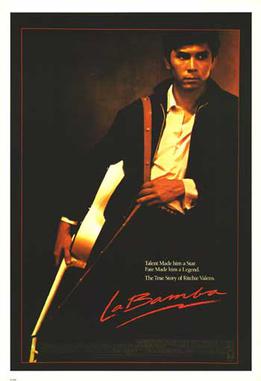
I must have learned about Ritchie Valens through Don McLean’s “American Pie.” Because there was a time when I was fascinated by all the musical references that seemed so oblique to my young mind. Eventually, the songwriter’s ode leads you to “The Day The Music Died” and if you know about Buddy Holly, you soon learn about The Big Bopper and Ritchie Valens.

The song “La Bamba” feels like a definitive track of a certain rock n roll era, and only now does it become easier to realize what an important cultural milestone it represents. The Mexican language went mainstream blending the rock craze with folk traditions of a people who felt well nigh invisible if no less important in the ’50s.

I do not know much about Luis Valdez, but as an emblematic figure in the Chicano movement of the ’60s and ’70s, he also gave us two of the most noteworthy Chicano movies of the 1980s. He turned his own play into Zoot Suit with Edward James Olmos, a film I was never able to fully connect with, but La Bamba feels like a more straight down-the-line biopic. He effectively brings to life one of the great Chicano heroes of the second half of the 20th century.

Lou Diamond Phillip’s vibrant performance glows with undeniable warmth and vitality. There’s not a disingenuous bone in his body, and he’s able to evoke the joy behind the microphone and the quiet fortitude that comes with his humble migrant background.

This is one of the most moving things about Valdez’s film because even almost 40 years on, these slices of life are still not always prevalent on the big screen. To see them in a period piece seems even more fitting because it’s a way of capturing the cultural moment for us lest we forget.

We see the plight and humble living conditions of migrant workers, there’s instability and broken families, but also the unbreakable bonds of extended families and communities looking out for one another.

La Bamba also has many of the beats of the biopic and since I don’t know the life of Valens intimately, I can only give conjecture on what’s fact and fiction. Part of the story involves his older half-brother (Esai Morales), who exists as the black sheep of the family opposite Ritchie. There’s the blooming of young love with the new girl in class, Donna (Danielle von Zerneck). His family and high school lives run in tandem with his meteoric rise after a record producer, Bob Keane (Joe Pantoliano), agrees to record some of his tracks.

Valens fear of flying, after a midair collision over his school, which killed his childhood friend and left him with recurring nightmares, has the ring of truth stranger than fiction. In keeping with this, the opening interlude of Santo and Johnny’s “Sleepwalk” feels apropos to represent the general mood of the era. What follows is a bit of a dream even as other moments sting with harsh realism.

There are so many narratives that could happen. There’s a bit of a Romeo and Juliet romance as Donna’s father tries to rebuff Ritchie’s sincere advances. Still, Donna remains devoted throughout the picture, and what a lovely thing is to see their euphoric joy together. The images suggest you don’t have to look like one another to fall in love. The fact the movie draws up this star-crossed romance between a 17-year-old and his 15-year-old beau feels of small consideration. It is a movie.

His brother knows how to make an entrance rolling up on his motorcycle, sunglasses on, cigarette between his lips. Or maybe this is only how we imagine him. Still, Bob’s demons could have been their own movie making him into a perturbing, abusive, drunken figure at the movie’s volatile center.

He’s effectively cast as Cain, never good enough or able to find favor in comparison to his thriving little brother. He spends the whole movie self-destructing and coming to terms with his brother’s burgeoning success. Later in life, it seems his real counterpart was able to resurrect his life and became a beloved member of his community.

Likewise, Bob Keane shows up in Ritchie’s life. We don’t really know how he got there or what all his motives are; still, there’s nothing too sinister in it. He helps Ritchie get big by recording and promoting him, and Valens is on top of the world.

It’s easy to see how all of these dynamics might have been either simplified or drawn up in such a way as to streamline the story or punctuate the dramatics. And yet I never begrudge the movie its choices, because it does feel like such a bountiful cultural artifact. The fact Los Lobos provided much of the soundtrack and even show up in a musical cameo is another notable distinction.

And the gutting, sinking feeling in the pit of our stomachs signals the dream cannot last. This talent taking the world by storm and rocking out with Eddie Cochran and Jackie Wilson will be snuffed out far too soon. So if everything else gets resolved in a Hollywood manner, our star is still going to be taken from us in the final reel. There’s no way to get around it.

McLean’s song mourned over it as “The Day The Music Died.” Thankfully, he was wrong. Yes, we no doubt lost out on years of musical output from Holly and Valens. Their young talents were undeniable, and yet their contributions to rock ‘n roll are far from dead. For their relatively short time in the public eye, they’ve cast very large shadows indeed. “La Bamba,” “Come on, Let’s Go,” and “Donna” feel like genre standards by now.

In his own way Valdez has guaranteed Valens won’t be totally disregarded (it was added to the National Film Registry in 2017), and Lou Diamond Phillips, bless his heart, made Valens far more than a hagiography of a deceased icon. He’s a young man with a warm, beating heart, a love for his family’s culture, and a love for rock ‘n roll. I can’t think of a better testament to Ritchie Valens than that.

4/5 Stars

The Thing Called Love (1993): River Phoenix and Samantha Mathis

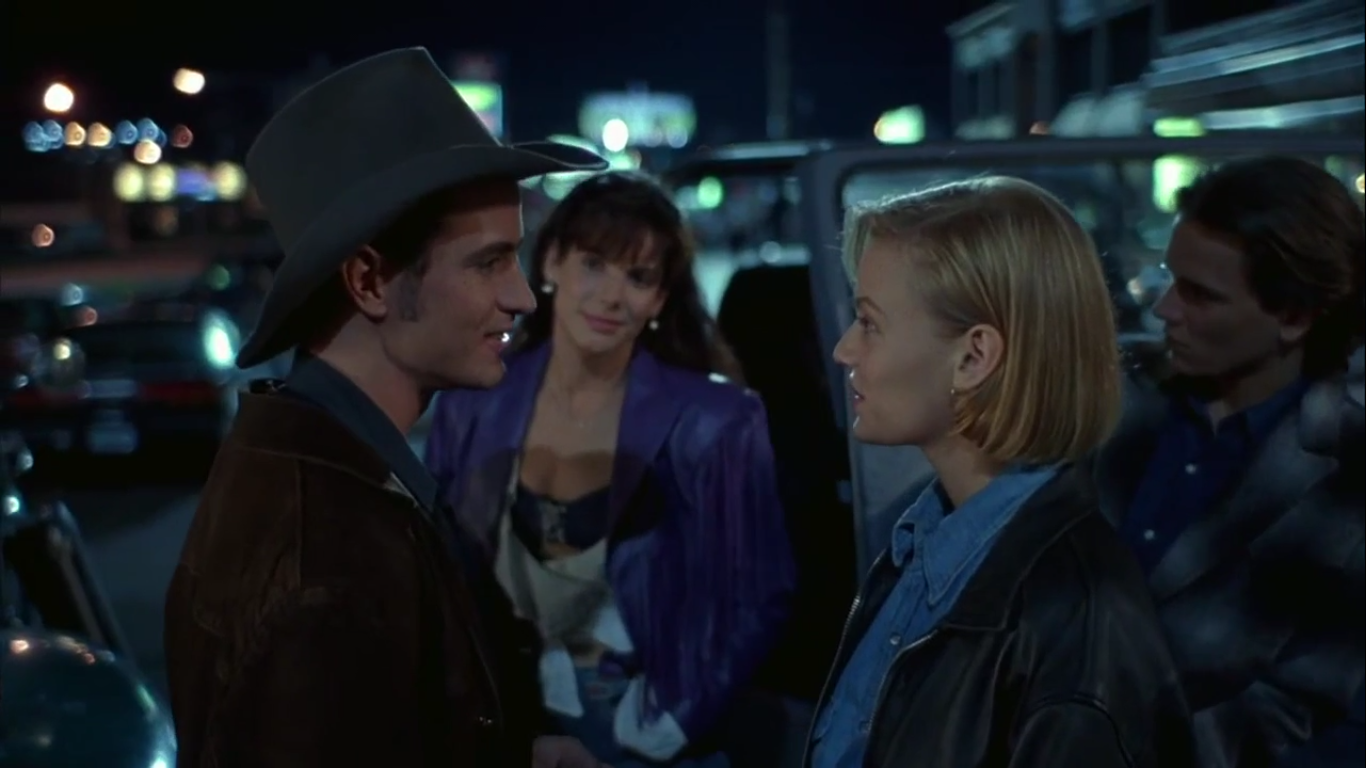
Seeing the Twin Towers on celluloid always brings a bit of a wistful reaction because there presence represents so much. It feels like a line in the sand and there are those who know that far better than me. The last time I recall having this sense was watching Peter Bogdanovich’s They All Laughed, and it’s little surprise The Thing Called Love begins with a very similar visual shorthand.

It says so much in a matter of moments as we watch Miranda Presley (Samantha Mathis) wearing her Yankees baseball cap, ride the greyhound bus with her guitar case by her side. Bogdanovich returns to another salient element of They All Laughed because The Thing Called Love is also a film enmeshed in the country music scene. New York might feel like an unusual mecca, but Nashville is not. That’s where Presley (no relation to Elvis) is heading. She’s got grand aspirations like so many wide-eyed dreamers.

Our hearts drop a little bit when the bus pulls into the parking lot of the Bluebird Cafe. It’s given the start to many fledgling talents and yet the line of eager musicians ready to audition quashes any optimistic expectations. Miranda’s no doubt destined for an arduous journey ahead.

Mathis and her real-life boyfriend at the time, River Phoenix have a meet-cute born out of circumstance. He jumps out of his truck late for the weekly auditions and pulls her into his lie so they can squeeze into the lineup. She doesn’t take kindly to his tactics and let’s him know.

It would be so easy to dismiss or even roll your eyes at these obligatory moments in the script. They feel to clean and conventional, but somehow the metanarrative and the candor of the young performers make it feel worthwhile.

Miranda gets her first rejection only to fall in with a community of her peers. She meets her momentary acquaintance James Wright (Phoenix) when he does a rendition of his tune “Lone Star State of Mind.” The track was actually written by Phoenix himself, an enthusiastic musician in his own right.

Their relationship is one mostly born of looks and mysterious glances that suggest so much in a way that is tantalizing and hardly anchored. Meanwhile, the Stetson-wearing Kyle (Dermot Mulraney) takes an immediate shine for Miranda, and it reveals itself through candid conversation and encouragement. Perhaps she knows as much as anyone else that he likes her. When you’re feelings are so genuine it’s hard to keep them concealed.

The movie feels need to make it into a love triangle as Miranda resigns to dance with Kyle and settle in a sense. But James is the mercurial artist with a caddish, manipulating charisma. He’s good with the lines to feed her even as he’s good with lyrics to sing in front of an audience and record deals he’s trying to finagle his way into.

There’s no continuity to him, and yet it’s hard to judge his intentions because even with mixed signals, he does seem to be drawn to Miranda. In one scene in the studio, he mostly ignores her and then in the heat of his performance, he pulls her onstage for an impromptu duet in front of the audience. He even takes her to a drive-in screening of The Man Who Shot Liberty Valance, and they write a song together. I suppose the rivalry between John Wayne and James Stewart for the affections of Vera Miles is a Hollywoodized version of our story.

Their trajectory is exemplified by wanderlust and spontaneity. James pulls Miranda away from her new gig waiting tables at the Bluebird so they can make the pilgrimage to pay tribute to the King. They must hold the title for one of the most unconventional wedding ceremonies as they get hitched in a Memphis supermarket, dancing the night away as the rain comes pouring down outside. It’s life without consequence.

However, cohabitation as a married couple is fraught with conflict. They weren’t meant to live this way with their personal dreams pulling them apart, and their marital expectations far from unified. James’s capricious tendencies reassert themselves, and Miranda feels defeated.

In the wake of an argument, she seems all but prepared to leave her dreams behind. She quits her job and hops on a bus back home only to turn right back around with one last mission to accomplish. She holds up in a cafe to pen her latest song, and as anyone who’s tried to conjure the creative muse knows, some ethereal inspiration just comes to her. Out of nothing something is born fully formed.

She plays her song, singing lucid and tender, all colored by her newfound heartache and experience. It’s not for anyone else, only an audience of one, and yet it’s through this creative paradox her songs finally discover an audience.

One of the movie’s most agreeable assets is Sandra Bullock who was still on the way up with Speed and While You Were Sleeping in her near future. She’s not immediately identifiable as a loquacious southern belle — it’s not what we immediately attribute to her persona — but it’s easy enough to like her candor.

And if Linda Lue Linden is a foil for Miranda, then Dermot Mulroney’s portrayal of Kyle fits opposite River Phoenix coming to represent not only a physical juxtaposition but a philosophical one as well. What holds them together is a love of country music even as their friendship is now complicated with the suggested ambiguity of a ménage a trois. Not everything is resolved.

Nashville will always be the ultimate film about the country music industry for how wide-ranging, pointed, and tender a portrait it is in the hands of Robert Altman. I won’t even feign a comparison with The Thing Called Love because it is a movie for a new generation reaching out to realize their dreams. And while it paints in this tangible atmosphere of southern twang and steel guitar, it’s best as a story of close-knit relationship.

I’m not sure if anyone would call me a staunch champion of Peter Bogdanovich’s films. I do like them a lot, and it does feel like a handful of them got a bad rap through faulty marketing and unfortunate circumstances.  If They All Laughed was marred by the Dorothy Stratten tragedy, then, The Thing Called Love carries the specters of River Phoenix’s untimely death.

He was in the company of his siblings, his girlfriend Samantha Mathis, at the club partially owned by Johnny Depp, as they performed some of his songs together. It seems like such an ill-fated conclusion. This isn’t the way life is supposed to end. For fans of River Phoenix, The Thing Called Love stands as a final testament to his talents, and it’s an unmitigated pleasure to see his passions for music and acting blended together. If the movie’s not his best, then it’s still a fine way to remember him.

3.5/5 Stars

Too Late Blues (1962): Art and Commerce

It’s hard not to instantly think of Too Late Blues as a historical curio. Here’s a studio film from John Cassavetes that seems fully aware of the context of Shadows. Shadows, of course, was his independently-made directorial debut that took improvisation and a jazz-like mentality to the streets of New York and the beat generation.

The images here are sleek, but they feature much of the same world carried over from the previous film with a young black audience watching as a group of white musicians play their set. We come to know the boys through their daily rituals: they hang out, shoot pool, drink beer, and play music in parks and beer hauls for pennies. It’s not much of a life, but they seem generally content with what they’re doing.

Cassavetes originally wanted Montgomery Clift and his wife Gena Rowlands in the leads. I would definitely have paid to see that film, but there’s still more than enough that’s intriguing about what he ended up with. Bobby Darin doesn’t sing a lick and it’s a daring career decision because it rests on the bearing of performance.

His Ghost Wakefield is at his best as one of the boys because they function together as a mirthful and inspiring unit. As was thinking when they show up at a local gather how I dig a John Cassavetes party. It’s lively and a packed room, but there’s a cool, relaxed ambiance to it as the boys get greeted by their host and Bobby Darin makes his way up the spiral staircase to mingle.

Cassavetes feels like he’s giving us so many great perches to watch and observe the social experiment going on around us. There are optimal spaces from which to focus on the actors, whether through close-ups or a camera that constantly seems to be following them from the hilt with grave interest.

It’s a bit cleaner, it has the bangles, the bells, and the whistles that give off Hollywood, and yet there are still elements of his directorial debut and future works that bleed into this picture. If you’ll pardon the term, it’s “tainted,” but it still fits fluidly into Cassavetes’s body of work even as it functions at its best as a group effort. It wouldn’t work without the many voices and faces who are more than ready to oblige.

Rupert Crosse as Baby is one such figure as is Seymor Cassel, beginning his own auspicious collaboration with the writer-director. If you’re like me, you also get a private satisfaction in seeing Ivan Dixon even for the briefest of moments.

However, we have yet to mention our heroine: Stella Stevens. We meet her stationed by a piano accompanied by a lively crowd. She’s a flustered young singer and as parties such as these are not for the faint of heart, it’s an excruciating moment to watch her try to perform.

In the aftermath, her eyes flutter like a beautiful deer caught in the headlights. Ghost watches her and compliments her. It seems genuinely sincere. Instead of sticking around, they set up in a booth at a local bar. If it doesn’t sound like Too Late Blues is about anything consequential, at least in theatrical terms, then we’ve come to an understanding of why the movie was never a box office smash.

The sinews of the story are all an examination of characters as only Cassavetes might be fascinated in documenting, and the narrative gladly moseys along at its own predetermined pace. The wheeling-dealing agent Benny with his crewcut wears a crooked smile, though he generally means well. He does his best to scrounge up work for Ghost and the boys as well as Jess with varying degrees of success. The bottom line is that Benny tries and he really is tender at heart.

With all this groundwork, what’s really appealing about Too Late Blues are individual scenes or ideas that have been assembled together to create something else. Take, for instance, the interludes where Jess goes from self-loathing to loving Ghost, even lusting after him. They head to her apartment and on the way take a detour onto the diving board.

She lets him in. Coaxes him to keep the lights low and to wait on the bed. She’s prepared to make his evening as it were, but that’s not what he’s looking for. He wants her common, everyday unadulterated love. It flips the script even slightly as she becomes the aggressor.

However, if Ghost’s masculinity is ever in jeopardy, it’s during a bar room brawl. Vince Edwards gets the most prominent cameo as a rowdy pool player who stirs up trouble after a line of drinks. He gives everyone the business, but as he’s got the pianist in a helpless headlock, his girl looking on, it’s like his dignity has been snapped like matchwood. If she is a fragile human being, his ego is more fragile still, and he lashes out. They are actions he cannot take back.

The one false step might be the arc of Ghost. He’s not altogether the most interesting part of this picture. It’s an endeavor functioning in the crowd and the ensemble — him paired with Princess or the barman or his agent together — living out their lives in these standalone moments strung together. The luster is gone when we start seeing a version of A Star is Born or Limelight. We hardly need another. Time flashes forward and we see he’s just another phony. There is no revelation here.

Thrown back together with Jess, they have a renewed moment of rage. For once the camera shakes, and it feels telling. We are aware of the movie again, and in one glorious bathroom drain shot, there is a cinematic directness of Hitchcockian proportions. The camera cuts to the core of the moment, this final act of drama and duress. Graciously we are allowed an exhale afterward.

It occurs to me this movie is a lovely bit of metanarrative. During their recording session, when Ghost charges into the sound booth vowing to play the music his way, it’s like a switch has been flipped. He intimates that he thought the financier wouldn’t tell him how to play his music — that the Man would just listen. He’s rebuffed. This is not the way the world works; it’s not what people want. Commercialism is what makes the world go round.

Whether there’s more than an ounce of truth in the analogy, it’s easy enough to cast Cassavetes as the jazzman fighting against the constraints around him to make his art as he sees fit. Like Ghost, he’s trying to navigate an industry trading in commerce and art.

To his credit, it seems Cassavetes never became totally beholden to one or the other straddling the line between both quite spectacularly and even holding together some semblance of a personal life. By that I mean he had a wife and family and of course, it helped that his wife Gena Rowlands was an actress, and they remained on the same wavelength for most of his career. In the end, he didn’t fulfill the destiny of Ghost. He found a way to live his own life.

3.5/5 Stars

Classic Movie Beginner’s Guide: Fred Astaire

In our ongoing series of Classic Movie Beginner’s Guides, we focus on a single person from Classic Hollywood for those who want an overview.

This week let’s look at one of the preeminent film dancers of all-time: Fred Astaire! After starting out on the stage with his sister Adele, during the 1930s Astaire tapped his way toward cinematic immortality thanks to his coruscating partnership with Ginger Rogers.

They were paired in a number of screwball-infused musicals that still rank among the best pictures the Hollywood dream factory put out during the 1940s. What set Astaire apart was his tireless choreography, the graceful elegance of his figure, and his often underrated singing voice introducing the world to a bevy of classics.

Top Hat (1935)

The Movie Projector: Top Hat (1935)

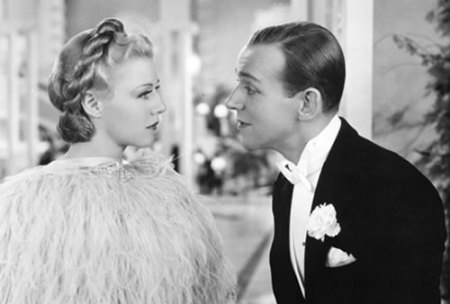
The romantic rebuttals are only a pretense for this glorious extravaganza replete with Art Deco stylings and a stupendous screwball cast loaded with the likes of Edward Everett Horton and Eric Blore. Astaire introduced a pair of Irving Berlin classics in “Cheek-to-Cheek” and “Top Hat, White Tie, and Tails” as he and Ginger dance away off toward perfection.

Swing Time (1936)

Swing Time (1936) directed by George Stevens • Reviews, film + ...

A worthy successor to Top Hat, Swing Time assembled the talents of George Stevens and Jerome Kerns offering Astaire yet another immortal classic, “The Way You Look Tonight.” However, the splendor of Fred & Ginger together is magic with number after number feeling like an absolute knockout including the likes of “Pick Yourself Up” and “Waltz in Swing Time.” They balance charm with elegance divinely.

Easter Parade (1948)

Easter Parade (1948) directed by Charles Walters • Reviews, film + ...

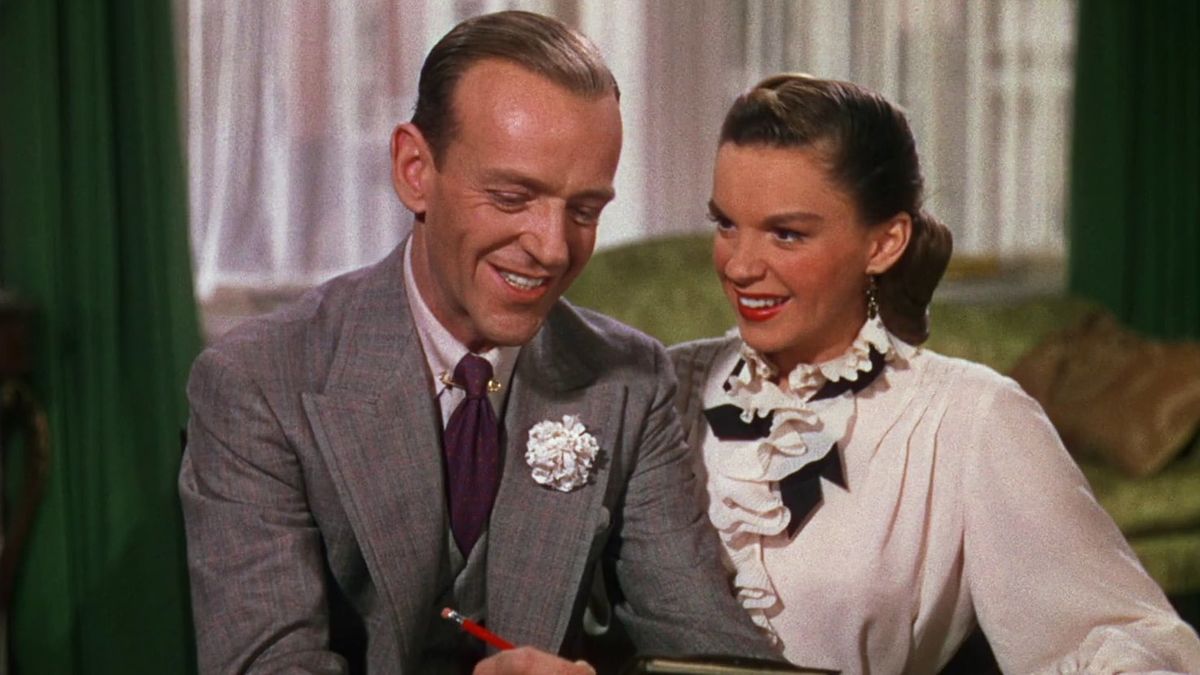
Fred Astaire finally got paired with Judy Garland in this Holiday-themed looker blooming with glorious Springtime Technicolor and luscious costuming. “Happy Easter” and “Drum Crazy” start him off on a particularly jovial note, and he never looks back. The compositions of Irving Berlin are swell as is the easy-going rapport of Astaire and Garland carrying the picture away into loveliness.

The Band Wagon (1953)

Howard Hampton on Vincente Minnelli's The Band Wagon (1953 ...

As his finest late-period work and an impeccable companion to Singin’ in The Rain, Fred is partnered with the always elegant Cyd Charisse as they dance their way through the sartorial splendor of Vincent Minnelli’s picture. Astaire gets one of his peppiest numbers with “A Shine on Your Shoes.” The real showstoppers are “That’s Entertainment as well as an epic film noir finale.

Worth Watching

Flying Down to Rio, The Gay Divorcee, Roberta, Follow The Fleet, Shall We Dance, Broadway Melody of 1940, You’ll Never Get Rich, You Were Never Lovelier, Three Little Words,  Royal Wedding, Funny Face, Silk Stockings, On The Beach, Santa Claus is Coming to Town, etc.

AFI Corner 100 Songs: #4 Moon River

In this column, I go back to my roots with The American Film Institute’s Top 100 Lists, a good place to start for those interested in Classic Hollywood films. It’s in concurrence with #AFIMovieClub and the 10th anniversary of becoming a classic movie fan myself.  Thanks for reading.

Let me be clear about this. “Moon River” was love at first sight. The genesis is a bit unclear. Certainly, I saw Breakfast at Tiffany’s first. That must be it. Although my Grandparents had Andy Williams on record. That could have been it. I’m not sure.

The bottom line is the mellifluous tune, with its wafting nostalgic melancholy and quietly evocative tune is beautiful in all its many forms. Mancini’s composition, tailored to Audrey’s own voice, is perfectly understated for her. The lyrics of Johnny Mercer are beyond compare. Simple yet perfectly measured.

I often jest that it’s the kind of song I would want to play at my wedding, but there’s some truth to that as it touches on something that I think is wonderful. For me, it’s the embodiment of love and longing indicative of both the past and future. Huckleberry friends we’ve left behind and those at the rainbow’s end we’ve still yet to meet.

What’s more, it a melody plucked out of time. Yes, it’s the track in the opening scenes of the movie. Yes, Audrey Hepburn sings it so tenderly. But it has a life of its own.

This is part of what makes it one of the most memorable tracks on The American Film Institute’s Top 100 songs. There might be better songs, but nothing can fill the same void in me like “Moon River.” It warms the cockles of my heart.


Yellow Submarine (1968): The Beatles Vs. The Blue Meanies

yellow submarine 1.png

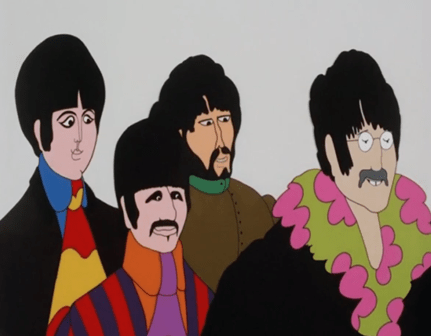
Like all the great fantasy stories, this one begins with “Once upon a time…” The world is Pepperland, 80,000 leagues under the sea, where people live in harmony frolicking across the hills with music wafting through the air.

But there must be villains and there are no cartoonish baddies more nefarious and reviled than the Blue Meanies. They come from the outskirts of Pepperland with an arsenal of dastardly weapons at their disposal, among them Projectile Gloves, Three-Headed Hounds, and Anti-Music Fishbowls.

Soon the melodious world is overrun by their chaotic cacophony of blueness. One can only guess what they would have thought of the likes of B.B. King, Muddy Waters, and Howling Wolf. But as this is a Beatles adventure, the intrepid Young Fred (with graying hair) escapes on the Yellow Submarine as the refrains of Ringo’s iconic tune overtake the screen. It’s our first sense that this is a picture about the Fab Four. Beatlemania, as a zeitgeist of screeching girls, might have cooled but their music and personas still made them rock royalty of the late 60s.

To return now, functions as an all-expense paid nostalgia trip because Yellow Submarine as an animated movie is something I knew from a VHS that my dad brought home one day from work. I had no idea what LSD or an acid trip was, much less acid. Consequently, my 6th-grade school report on the Beatles was entirely lacking this information too. More so, I distinctly remember presenting about their music and how these lads from Liverpool were able to captivate the world. Because their music had always resonated with me from an early age.

Up to this point, the movie was the most whimsically inventive exploration in animation I had ever seen. Without fully comprehending the psychedelic overtones, I was taken with the utter fanciful nature of it all. The dividing line is thin between a drug trip and a childlike imagination simply accepting all things as fact. There need not be any deliberate explanation.

Collages of song and image become second nature. Eleanor Rigby playing over snippets of footage with little rhyme or reason — the submarine motors along — it’s penny-plain as the Brits might say (Not to be confused with Penny Lane). Meanwhile, the cartoonish anatomy of the figures is outrageous in not only their mechanics but general proportions. The world they reside in is even screwier.

Eventually, the yellow submarine follows Ringo home and Fred leaps from its hull ranting incessantly, barely cognizant, about explosions and BLUE MEANIES. So we go from Pepperland to an equally trippy mansion the Beatles reside in followed by a labyrinthian sea filled with the most curious creatures imaginable. It never stops with the wonkiest bits of invention. As a child it is brilliant. As an adult, it’s a bit bewildering.

But George, always the calming force, reassures with his ever available mantra, “It’s All in The Mind.” As they get a move on, the boys strengthen their camaraderie underwater with “All Together Now” one of the best new additions to the soundtrack. There’s a liberal amount of grace provided, as the plotline seems to evolve out of the songs. For instance, the ensuing “Sea of Time” makes an obligatory rendition of “When I’m 64” all but imperative.

Then, the “Sea of Science” births the organ-propelled new-age rhapsody of “Only a Northern Song.” Even an early Rubber Soul track like “Nowhere Man fits in a pinch to obliquely describe the rhyming, rolly polly alien furball Jeremy, going by any number of names (Jeremy, Hillary, Who?). The Sea of Holes (a nod to “A Day in the Life”) gets us closer to Pepperland and finds Ringo picking up a souvenir from their adventure (I’ve got a hole in me pocket). Really you could choose any of these tie-dyed realities as emblematic of the entire experience but for my money, “Lucy in the Sky with Diamonds” is the film at its height of kaleidoscope psychedelia.

When we finally do return to the monotone Pepperland from The Sea of Green, the juxtaposition is stark. We see to what extent the Blue Meanies repression of song has drained the landscape. Without any musical expression, all color has gone out of life quite literally, and it’s the lad’s job to put it back where it belongs.

They don disguises, casting them as the spitting image of the members of the Lonely Hearts Club Band, currently encased in a giant fishbowl. Not for long. It is this final assault that somehow captures the magic of all the great adventure stories childhood’s have thrived on. The boys go into the heart of the enemy territory only to come prepared for a showdown and take back what is theirs. The only difference is their weaponry is a killer soundtrack to bring the Meanies to their knees.

It really is a tour de force in the final stretch stacking tracks like “Sergeant Pepper’s Lonely Hearts Club Band,” “With a Little Help from Friends,” “All You Need is Love,” and “Hey Bulldog” one after another. It’s an agreeable onslaught of tunes exploding over the screen and revitalizing the world, flushing Pepperland with a cornucopia of colors as one might expect.

We reached the apex of the concept album, paying heavy dividends in this animated film with a world loaded up on background whimsy and filled out by content from the Beatles’ hit records. Much to the Meanies chagrin, the hills are alive (with the sound of music) and in battle, two pairs of Beatles are better than one. Three pairs really.

Because we hardly realize till the very end but the Beatles — John, Paul, George, and Ringo in human flesh — barely appear. It comes with a minute-long cameo tacked on for good measure. In other words, they didn’t actually voice their cartoon selves. As a kid, I didn’t care and now it doesn’t make much difference to me either. Because we still have the music exerting its presence over the story. As is, their moment of screen time is a final capstone on a doozy of a film.

Lifelong Beatles enthusiasts, lapsing hippies, and kids with fledgling imaginations can all wholeheartedly join in on the communal Yellow Submarine experience. Yes, the title song is the most overplayed of all the Beatles canon but who cares? This movie is ceaselessly entertaining with bad puns to boot. If quotability is any indication, this might be one of the most seminal movies of my childhood.

4/5 Stars

Hearts Beat Loud (2018)

hearts beat loud 1.png

“When life hands you conundrums you turn it into art” – Nick Offerman as Frank Fisher

The opening introduction of our character is nothing short of fantastic. He lights up a cigarette absent-mindedly, headphones plugged in to Tweedy only for his reverie to be broken by a patron telling him he can’t smoke inside. He responds bluntly, “I’ll put it out if you buy something.”

We know him instantly to be a man who doesn’t play popularity contests even when it would benefit him and his record shop. This is what the following piece of superfluous dialogue is implying as this offended customer says he just bought an album on Amazon instead.

Without hardly knowing anything about him, somehow we like this man behind the counter and simultaneously feel sorry for him. Surely, he can see the writing on the wall. The record shop, the trendy bastion of a bygone era, even in a neighborhood like Red Hook in Brooklyn, is probably on the way out. It is an endangered species and we as the populous have killed it.

This is not High Fidelity (2000). The record shop is no longer a place for buddy comedy with your ragtag band of musical connoisseurs quibbling over personal tastes and nonexistent romance. The niche begins to feel smaller and smaller. It has become even more so a thing of the past. I recently watched the documentary on the rapid decline of Tower Records, fittingly entitled All Things Must Pass. There is a certain wistfulness in acknowledging this irrefutable reality.

Like most indies of this day and age, Heart Beats Loud uses the same formula with quirky supporting characters who have their charms. The mother is a ditsy kleptomaniac who once had a career as a songstress. It feels like a blink and you miss it turn for Blythe Danner.

There’s Toni Collette, the local landlord who rents Frank his space. They have a relationship that’s hard to pinpoint. Their kids are grown. They’re friends and they can talk to one another. Still, there’s something unspoken between them; it supplies some unnecessary romantic tension.

Surprise, suprise, there’s Ted Danson who (wink, wink) runs the local bar and plays the ever-present available listening ear for our hero to commiserate with. We all need that friend.  Frank’s daughter Sam has such a confidante too even as she tries to figure out her life and love in the context of adolescence. Fortuitously, while I like these folks, they hold nothing compared to the people at the center. Seeing as we spend the most time with the two Fishers it’s probably for the best.

The age-old inversion is also present. The adult seems to be acting out like a child even as his kid makes up the difference by acting mature beyond her years. In one particularly indicative scene, Frank bugs his daughter in her attempts to study so they can have a father-daughter jam sesh together. Because this is the summer before she will head across the country to UCLA. They are on the cusp of a new period of life. He hasn’t accepted it yet.

The story beats are nothing strange or sensational just as the music is catchy but not altogether supernal pop. However, the familiarity is actually quite nice and because we like these people and the places feel warm and welcoming, we want to spend time there. There need not be more.

Together their jam sessions bleed into the synthesis of songs from the heart. It’s how they bond and find a way to communicate when there is no other available wavelength open.  Movies like these allow those of us who adore music and cannot play or sing a lick, live vicariously through some else’s experience. It’s the best way I can describe it. The last film to carry me away on the sound waves with this much relish was Sing Street (2016).

It won’t win any awards and it will be dismissed by so many more and yet there will be a niche market for it — just like vinyl itself. I am thankful we still have actors like Nick Offerman, willing to make unassuming, passionate projects like this one.

In the end, a seemingly inconsequential decision winds up stirring up some notice as the song they cut together actually has some mild success under their moniker We Are Not a Band. There’s the giddy delight registering on Frank’s face upon hearing the song he made in his living room with his daughter playing in a local coffee shop. He’s as proud and as flabbergasted as can be even though no one else seems to understand his elation.

This is purely That Thing You Do! or The Commitments grade musicianship. It’s good but not virtuoso or magnified enough to get a large following. Nevertheless, it’s tantalizing. What could have been? Because even as the shop is having its final day and Sam gets ready to head out west, they get another opportunity.

hearts beat loud 2.png

Someone is interested to monetize their band and tour it into something with legs. There is a moment where Frank genuinely wants this until he realizes it’s indicative of another issue. He needs a catharsis — a healthy, meaningful way to say goodbye to not only his shop but his daughter — and he gets it.

What more fitting way than a Last Waltz in the record store, except they’ve never even performed before. Still, they do it for the first and last time (maybe) and give it all they have for an audience of record hunters. The accolades and circulation were never important anyway.

They are in the pantheon surrounded by a hall of heroes. Some forgotten. Some not. I see Peter Frampton. Marvin Gaye. Lana Del Ray. The Beach Boys. Aretha. Bob Marley. Tom Waits. They’re all smiling down on these two people who love music. The personified joy is what it’s all about.

The message is succinct and we’ve heard it so many times before. Hearing it in the context of these people’s lives somehow gives it renewed resonance. Because it’s the message they need to hear and who knows, maybe some of us do as well.

Contentment is key. All change is not bad just as things of the past should not necessarily be ditched entirely for the new. Somewhere in between them all, between the record albums and the Spotify playlists, we should be able to find a happy medium. At the end of the day, the point of the music doesn’t change. It’s meant to bring us together.

3.5/5 Stars