 As a young boy, no hero was greater in my mind’s eye than Robin Hood and only Star Wars held a more honored spot in my childhood imagination. Because, to this day, Robin of Locksley remains the quintessential hero of mythical lore. Part historical truth mostly canonized myth and that’s the beauty of him. We can believe in him — see how he was in so many ways real but in the same instance larger than life.
To his credit, Erroll Flynn does a surprisingly phenomenal job in portraying the legendary outlaw in Lincoln green with a bit of British (Australian…) cheekiness, as well as bravado and charm. In fact, the film is full of so many wonderful elements from its engaging action sequences full of timeless spectacle and a plethora of characters who come right off the pages of the greatest Robin Hood narratives. Will Scarlett, Much the Miller, Friar Tuck and of course Little John still hold a great deal of esteem in my heart. While there are no men more villainous and corrupted than the likes of Prince John (Claude Rains), The Sheriff of Nottingham (Melville Cooper) and Guy of Gisbourne (Basil Rathbone).
Meanwhile, Michael Curtiz took the reigns of the film and makes it a lively swashbuckler that revels in a sense of good fun and that starts with Flynn’s performance radiating out from there. While this early use of three-strip Technicolor only serves to add yet another layer of elegance and vibrancy to the film’s look. It truly was made for color and every shade of Lincoln green and every bit of medieval opulence proves to be a feather in the film’s cap. It looks absolutely stunning and the same goes for young Olivia De Havilland as Maid Marian.
 From what I know from Robin Hood folklore, specifically Howard Pyle’s seminal edition, the film is surprisingly true to many of the origin stories and tales that have long since proliferated. As an audience, we become privy to the first meetings of Robin and the formidable Little John (Alan Hale) who lays him out in the local stream after a bout with quarterstaffs. Then, in another instance, Robin provokes the portly Friar Tuck (Eugene Palette) who happens to be a master swordsman and a lover of good food and drink. Still, other vignettes include Robin’s successful masquerade as a lowly archer who wins the grand prize at the Sheriff of Nottingham’s Archery Tournament.
Of course, the most thrilling set pieces occur in Nottingham Castle, initially when Robin brazenly drops in on Prince John and his cronies bearing a deer over his shoulders. Admittedly I have Star Wars on the mind, but this sequence is rather reminiscent of Luke wandering into Jabba’s Palace.
Then, the climax comes later with the return of King Richard and Robin’s assault on the castle full of stellar swordplay and general chaos. The duel between Flynn and Basil Rathbone is especially thrilling and it holds up well even today because there is something so satisfying in watching them thrust and feint back and forth.
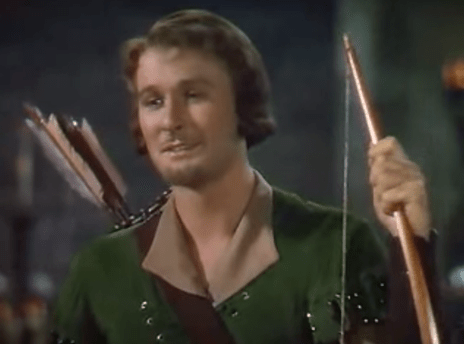 For me, the reason very few heroes surpass Robin Hood is based on his innumerable qualities. He’s a superior fighter with bow, sword or staff. He’s blessed with a wonderful wit and impressive leadership capabilities. He wins over the girl with his charm. He gets to live out in the forest with his best friends, eating great food. But most of all, he’s a rebel with a heart of gold, robbing the rich to feed the poor.
He’s an embodiment of all things that a little boy dreams of as a kid and in many ways, he’s a fairy tale, but the kind of fairy tale that a boy readily conjures up in his own imagination. The villains are formidable and the action is unmistakable, but it’s all in good fun. That’s why the Adventures of Robin Hood remains an enduring folk tale of the cinema. Its hero transcends a single medium. Because he lives in the heart of many a young lad long after the title credits have rolled.
5/5 Stars
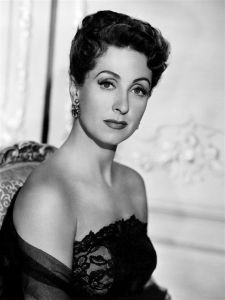 I said a while back that I wanted to acknowledge a few living legends who are still with us in a series of short posts and I’ve finally gotten around to it. Enjoy!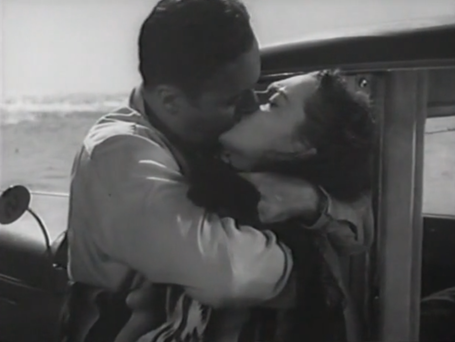
 es has what he had initially set out to get, but the story cannot be over. When he hears of a deadly car accident, he rushes across the border without heed of the law so that he can be with the love of his life. It’s a gushy conclusion that looks like it might end badly. After all, Iscoveu broke some major laws, but Hammock gives him some grace showing he’s a softy at heart. Even Anita gets what she’s always wanted.

 4 Star Films