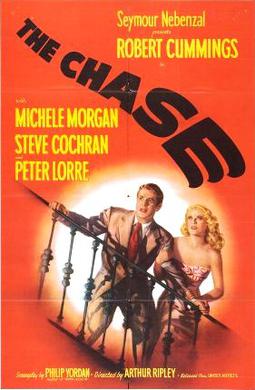
The Chase (1946)

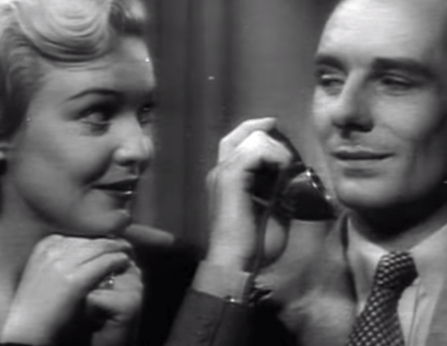
The Chase opens as a wonderful contrivance of noir done up in a couple of successive visuals. A bedraggled man (Robert Cummings) stares through a shop window at a griddle laden with fresh bacon and hot cakes. He leans in so his hat brim mashes up against the glass, and proceeds to cinch up his belt. He doesn’t have any dough.

Then, he looks down right at that precise moment and notices a wallet at his feet stacked with cash. Any person in the real world would have seen it immediately, but it’s set up perfectly for the camera. He proceeds to treat himself to breakfast and a cigar, and after he has a full belly, he decides to pay a visit to the address inside the wallet.

You get a sense of the milieu with a mention of a standoffish Peter Lorre staring through a peephole and questioning what the stranger wants. Our hero is unwittingly cryptic, saying he wants to see one Eddie Roman — he has something to give him…

It could be a belly full of lead or something more innocuous, and, of course, it’s the latter. They give him the once over and reluctantly let him in. The room’s stacked high with statues and ornate antiquities; somehow, they make the interiors feel not just capacious but hollow.

Who lies down the corridors is anyone’s guess because this isn’t where ordinary folks dwell, only cinematic creations. Sure enough, the ex-Navy man Chuck Scott has just happened to fall in with a psychotic lunatic (Steve Cochran). We’re introduced to his temperament when he gives his manicurist a slap for screwing up and sends her simpering out the front door.

Still, he’s impressed by Chuck: An honest guy shows up on his doorstep, and he even tells him he treated himself to breakfast for a dollar and a half (those were the days!). For being such a standout guy, he repays him with a gig as his chauffeur. When you’re destitute, you don’t bite the hand that feeds you.

There’s an uneasy tension in everything Cochran and Lorre, his right-hand man, have their hands in. The controlling Eddie is married to a young lady (Michèle Morgan) named Lorna; he’s hardly allowed her out of the house in 3 years. It says so much about their relationship.

The sadistic slant of the movie becomes increasingly apparent as they stick a different dinner guest in the wine seller to be ripped apart by Eddie’s prized pooch. He has something they want for their business dealings, and any semblance of hospitality burns off as his bubbly conversationalism quickly turns into despair.

For a time, The Chase becomes a kind of contained chamber piece drama. It’s not obvious if it will break out and be something more as Chuck forms an uneasy existence between the backseat driving of his new boss and the despondency of Lorna, who stares out at the crashing waves of the ocean, all but bent on presaging Kim Novak in Vertigo by jumping in and ending it all.

Lorna and her newfound advocate book two tickets to Havana and are prepared to skip out together. Even these scenes evoke a foreboding mood more than anything more concrete because there’s only a vague sense of plot or purpose. From here, it builds into this debilitating sense of obscured conspiracy in the bowels of Havana.

There are obdurate carriage drivers, slinking foreigners, and cloak-and-dagger antics that find his woman harmed and Chuck fleeing from the authorities. The surreal tones of the story just continue to proliferate with novel characters and new environs materializing rather than moving systematically from one scene to the next.

This inherent sense of surreal atmosphere might place the picture ahead of its time, with a select few films of the era. However, it comes off as rather stultifying after auspicious beginnings because it doesn’t accomplish what many of the great Classical Hollywood films managed by telling compelling three-act stories with a sense of economy.

The underlying perplexing tension set against a dreamscape, siphoned from Cornell Woolrich’s source material, is not enough for The Chase to fully pay off on the goods. It feels more like an intriguing experiment than a successful crime drama.

3/5 Stars
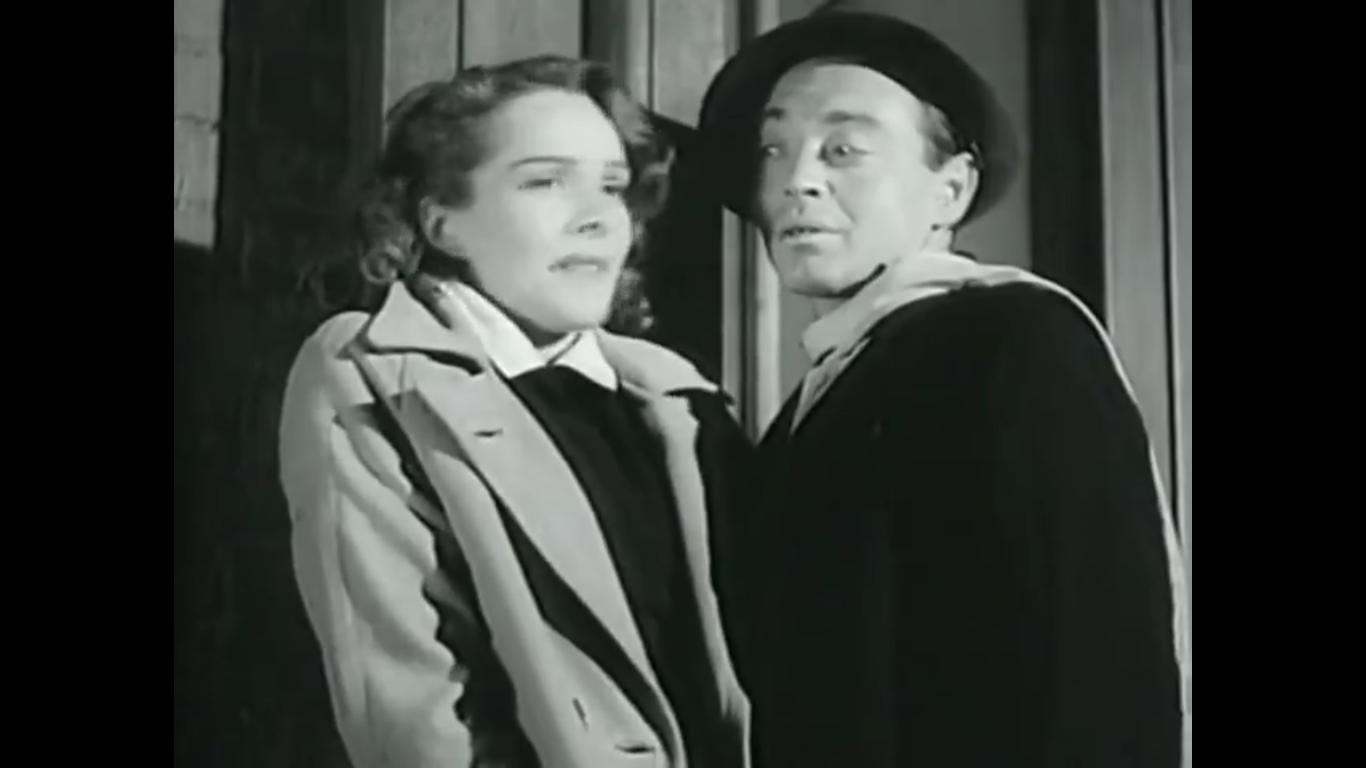
Peter Lorre: Stranger on The Third Floor, Mask of Dimitrios, The Verdict

Stranger on The Third Floor (1940)

Although it’s not a highly touted picture, Stranger on The Third Floor feels like an important enough footnote to aficionados of film noir because it embodies a few of the earliest definable features of the movement. It’s not an entirely new concept per se, but it feels like it’s reaching a new market taking the influences of European Émigré cinema to the American public.

The influence of German Expressionism on ensuing generations cannot be underappreciated, and there’s this very practical suffusing of these techniques into Hollywood because many of these writers and technicians were physically transplanted to the west coast thanks to the scourge of Hitler. He unwittingly injected American cinema with some of its foremost talents.

Although he was an immigrant from Italy, Nicholas Musuraca would soon prove himself to be one of the foremost figures in noir cinematography thanks to his run at RKO Studios, which hardly had the budget and personnel to pull off the lavish A-list productions of MGM and other bigger studios. This necessitated a different niche and an ongoing visual ingenuity.

It becomes evident early on in the film thanks to severe shadows and a patchwork of light and dark. The story itself is incredibly contrived but the movie is saturated in voiceover and fatalistic dread thanks to a man (John McGuire) being sent up for murder.

The tenets of what would become noir are plainly evident. Still, there’s something organic about it. This is not premeditated; it simply happened with the confluence of talents and a bit of happenstance.

It’s fitting that while The Maltese Falcon feels like the most high profile distillation of noir as an American breed, Stranger on The Third Floor uses two of its primary culprits. By this I’m referring first to Peter Lorre.  He’s called upon to do an import of his psychotic killer in M complete with his gaunt hand crawling up an apartment door frame. He’s hardly as slimy and therefore as conflicted and interesting as Joel Cairo; it’s his slinking foreignness that conjures up menace in the eye of the viewer.

However, there’s also Elisha Cook Jr. who plays one of his more reticent types a bit different than his blustering henchman Wilmer. However, they would both become integral figures to the movement even if it were only for their association with that individual film.

Although the movie’s a quickie, it still finds time for mini flashbacks as the inevitable noose of noir gets tied ever tighter around our hapless hero’s neck. The finest moments are when he’s overtaken by the nightmare of his conscience with men in bowlers chomping cigars start to cross examine him, and he falls apart inside his own head. As such, it’s probably more intriguing for its place in film history than as an undisputed piece of art.

3/5 Stars

The Mask of Dimitrios (1944)

The Mask of Dimitrios feels like an old world adventure story centered around a phantom figure who becomes the picture’s version of a MacGuffin. Zachary Scott turns up mostly in people’s recollections as a precursor to Harry Lime, the man everyone wants to find.

Although the movies could hardly be made today, there’s something about Warner Bros. and it’s aesthetic and stable of actors that was made for transporting western audiences all over map. The movie literally globetrots around the world.

It’s a pleasure to have Peter Lorre offered a bigger piece of the film’s pie at this point in his Hollywood career.  He’s allowed to be a far more genial and charismatic figure, a writer of detective fiction and a seeker of this great mystery because he has time for such whims and frivolities if only they pique his interest.

Then, Sidney Greenstreet turns up ominously both a friend and a foe. They form a tenuous alliance after the fat man all but ransacks the other man’s room. Greenstreet and Lorre feel like unlikely cinematic bedfellows as it were, and yet they feel inextricably linked for all posterity. They feel a bit like the Laurel & Hardy duo of Warner Bros. crime pictures based on physical characteristics and also their palpable rapport.

Here there’s no Bogart in the limelight and Scott, while a headliner, is mostly the enigmatic engine behind the picture so they are allowed to anchor the story. Thus, what makes the movie are the same cloak and dagger elements that make a romp out of The Maltese Falcon where characters have motives and unseemly sides, but it feels more like unadulterated fun rather than totally depressing drama. This is a testament mostly to our two worthy protagonists.

The Verdict (1946)

The Verdict feels totally indicative of the evolution of Don Siegel’s career, a road paved with many well-remembered films, and it all began right here. We’re met with a foggy London frequented by Sidney Greenstreet with every constable and upstanding gentlemen bidding him good evening. It’s a long way from Dirty Harry although the picture is equally indebted to the criminal justice system.

This comes in part because Greenstreet made a lapse in judgment by sending an innocent man to the gallows. Instead of feeling altogether remorseful, he’s seems more intent in proving the incompetence of his supercilious successor.

It feels like a chatty picture once Peter Lorre and the rest get involved, drinking and quibbling about politics and social reform. There’s a rather vindictive pretense as the two men despise one another.

Lorre, now with a bigger billing, is allowed a broader portrayal of gravitas and jocularity. He’s the picture’s most welcomed source of inspiration. He’s found casually wondering in on murder scenes and eavesdropping in closets as it seems he has nothing better to do. What’s more, he makes it look like a grand old time as everyone else is hustled and harried going through the paces of the drama.

Because there is a murder, a murder queued off by the raging score before we’re even aware that anything has happened. The newly enlisted police chief at Scotland Yard is called to solve the mystery right quick. He proceeds to question his suspects, distrusting everyone, and keeping them all under surveillance, including a nosy housekeeper and a spirited night hall singer.

The whip pans over the faces when the verdict is made feels like a dose of Don Siegel, and the kind of visual octane he would give his movies for generations to come. Although there’s a danger with all the Victorian exteriors, the picture might easily feel stuffy. However, there’s enough noir and a surprising amount of wit sprinkled throughout to give the film a shelf life.

It somehow manages to play on both Greenstreet and Lorre’s reputation as shifty villains by first casting them as our protagonists and then making us second guess their motives again and again. It’s a perplexing picture with a dose of mystery and some twists. The fact that it’s ludicrous seems beside the point because it’s the wild ride of the experience offering the most impact.

3.5/5 Stars

Silk Stockings (1957)

silk stockings 1.png

In full disclosure, though I admire Ernst Lubitsch’s directorial eye and Billy Wilder’s trenchant wit, the Ninotchka (1939) premise alone never intrigued me. But as with all the great pictures, it’s not necessarily the main conceit but the execution of the story with its own unique digressions which matters most.

That’s why having screen goddess Greta Garbo paired with the two men mentioned above is of note. They ultimately created something delightful together. And as we draw the line all the way to Silk Stockings almost two decades later, the names attached are equally important.

We can probably start with Fred Astaire who was in a period in his career that constantly seemed to fluctuate between retirement and flurries of inspired activity. In this particular case, he would follow Silk Stockings out into the theaters with a second success in Funny Face (1957) pairing him with Audrey Hepburn for the first and only time.

Though he had his initial misgivings about the material and his director, Rouben Marmoulian proved to have quite the success with Silk Stockings, which would subsequently be his last effort in a generally underrated career. He took the successful stage play and transferred it to the screen, this collaboration even featured several more tunes from Cole Porter’s repertoire while writers such as Leonard Gershe (who had already penned Funny Face) and industry veteran Harry Kurnitz worked on the script.

Then, Cyd Charisse had the seemingly insurmountable task of inheriting the role owned by a larger-than-life star if there ever was one — Garbo herself. And yet maybe it’s a reflection of my own predilections in performers but I rather like Charisse in the part not because of the acting per se but for the moments where she’s able to shed the role and become the sentient ever dynamic being she is as a dancer.

The ball starts rolling when an American film producer, Steve Canfield (Astaire) tries to coax a brilliant Russian composer named Boroff (Wim Sonneveld) to compose the score for his next film. Simultaneously three of his countrymen have been enlisted as emissaries on Parisian soil to bring him back home before he gets polluted by capitalist dogma any further. The oafish louts are eclectic talents as diverse as Peter Lorre, Jules Munshin, and Joseph Buloff.

Of course, if you know anything of Ninochtka (1939) or retrospectively, Wilder’s similar One, Two, Three (1961) you’ll know that they too get seduced by the decadence of capitalism to humorous ends. It seems there is only one person who will not fail in her mission, that is Ninotchka (Cyd Charisse), an austere devotee of the party whose only interest is observing French trivialities on a purely academic basis while making sure her comrades remain diligent in their duties. She’s a tough case to crack. It’s bound to take time and yet at some point, Canfield gets to her with a little help from “The City of Lights.”

Janis Paige enters and wows the reporters and everyone else with a tornado of flirtatious vivacity captured in the number “Glorious Technicolor Stereophonic Sound.” Like It’s Always Fair Weather (1954) before it, the musical number manages a few jabs at the direction the industry was heading with the advent and subsequent cultural boom of television. And yet in his shrewdness, Astaire lobbied for the picture to be shot a very specific way and sure enough, it got made in Cinemascope and Eastmancolor with Stereophonic Sound.

silk stockings 2.png

After shedding her dour exterior, Cyd Charisse gets arguably her finest starring spot in any film, playing opposite Astaire again following The Band Wagon (1953) and despite the constraints of her character, she fairly rapidly transforms into the free-flowing, immaculately graceful spirit we know her to be.

Fittingly, Charisse earns the film’s most emblematic scene where she exquisitely dons her first pair of silk stockings along with an entire wardrobe as she goes through her ideological transformation which subsequently transforms her very movements with carefree ease. She brings it to life moment by moment so effortlessly. In “Fated to Be Mates,”  Astaire and Charisse are featured together at their most lively as the leading man leads his partner in twirling carries and their dance devolves into a show verging on parkour and gymnastics.

Along with the amorous “All of You” to instigate his relationship with his repeatedly aloof leading lady, Astaire gets another contemporary showcase that simultaneously alludes to his rich legacy in the industry. “Ritz Roll and Rock” perfectly encapsulates this performer-extraordinaire who came out of a certain era and yet never seems outmoded even in the latest music craze.

He went out on top and continued to perform at that same level to the very end. Not every leading man can say that. Of course, the exclamation point at the end is the smashing of his top hat for all posterity. As we’ve all probably noted over the years, it’s a bit of a moniker for him and fittingly when he’s gone, it’s retired too. No one else deserves to wear the crown of the king.

3.5/5 Stars

NOTE: My entry in The FRED & GINGER BLOGATHON !


Hollywood Canteen (1944)

hollywood canteen 1.png

This propaganda extravaganza showcases Hollywood in all its glory from the Brown Derby to the Hollywoodland sign and of course the pride and joy of wartime morale-boosting, the Hollywood Canteen.  It’s a bit of a faux reality, Hollywood’s rendition of what real life might actually be like since the Hollywood Canteen did in fact exist.

Historically, it began as an effort by John Garfield and Bette Davis of all people to support the troops and give them quality entertainment from the entertainment capital of the world. Though newsreel footage might serve as a better historical marker (albeit still biased), there’s no questioning the patriotic waves flooding through this picture.

True, even in this film there are anecdotes that point to a slightly different reality. Namely the fact that this was meant to be a Hollywood wide endeavor but all other studios balked and so the lineup is filled out by Warner Bros. catalog of stars and them alone.

Furthermore, it’s easy to surmise that far from being overcome by patriotic fervor, Joan Crawford probably took her role because the alphabetical billing conveniently put her above a couple perennial rivals in Bette Davis and Barbara Stanwyck.

Even with its authenticity in question, there’s no doubt that the film boasts talent. There’s an inexhaustible array of song & dance from the likes of the Andrew Sisters, Roy Rogers (with Trigger) and Jimmy Dorsey.  The stars also come out in full force with cameos from everyone conceivably under contract to Warner Bros from Kitty Carlisle, Jack Carson, Joe E. Brown, Ida Lupino, Jack Benny, and of course Peter Lorre and Sidney Greenstreet staying in character. Each one provides enough star power to fill in the idle moments around our main love story.

Still, there’s no doubt that Joan Leslie was one of America’s sweethearts and it’s no coincidence that our protagonist falls head over heels for her all the way in the South Pacific. The pair of lovebirds represents all that is seemingly good and upright about American ideals even if she is a movie star and he is only a common soldier.

That makes the prospect of actually meeting her beyond his wildest dreams, but Hollywood purportedly is in the dream making business and so Slim gets his wishes granted. A date with his dream girl is soon arranged by those tactful matchmakers Davis and Garfield.

Robert Hutton is almost uncannily reminiscent of Jimmy Stewart who was at the time leading bombing raids over Germany. It seems little coincidence that he would then land the crucial role as the universal soldier Slim — a man who saw his share of action and is home for a short spell — before heading out on his next tour of duty.

He represents all the boys fighting for not just the Red, White, and Blue but every color and creed. In his very starry-eyed and candid way, he mentions each one as the camera picks each out of the crowd. Curious the only group not mentioned were members of the Japanese-American infantry. Yet another incongruity with the world at large. But the red carpet that is rolled out for him at the Hollywood Canteen is meant to be only a small recompense for all his service to his country.

Delmer Daves’s picture much like Stage Door Canteen (1943) fits the realm of saccharine propaganda, even blatantly so, but if you allow yourself to be carried away by the historical moment it has its certain charms.

True, the Home Front or the Allied cause isn’t quite as unified and squeaky clean as it claims to be just as humanity on the whole and the stars behind Hollywood rarely could hold up to scrutiny. However, there’s still something here that can make you smile. Publicity stunt or not. Maybe it’s the romantic in me that likes to believe there’s at least a kernel of truth in here and if nothing else there’s honest to goodness sincerity.

3.5/5 Stars

Secret Agent (1936)

secret agent 1.png

It’s so easy to quickly brush off early works of Hitchcock with admittedly bland titles like Blackmail (1929), Murder (1930), Secret Agent (1936), Sabotage (1936), etc. But if you actually dare to dust one of these films off for a viewing, you do see Hitchcock spinning his wizardry even if the edges are a bit worn, the stories barely developed, and the production values humble.

Among the ranks of Hitch’s thriller sextet, Secret Agent written by frequent collaborator Charles Bennett is a surprisingly lucid effort with a cast that is stacked quite nicely. John Gielgud is a bit bristly as our leading man and the chief secret agent in our loosely set WWI storyline while Madeleine Carroll (featured earlier in The 39 Steps) is decidedly more fun as the adventure-seeking gal by his side, augmented by a certain amount of ravishing vitality.  They have quite the connubial relationship posing as a married couple. Still, there’s enough chemistry within the film’s running time for some breezy comedic moments that predate later romantic thrillers like To Catch a Thief (1955) and North by Northwest (1959).

In fact, part of the reason Gielgud’s Shakespearian sensibilities come off rather stuffy at times is not so much his fault but a testament to Carroll and Gielgud’s other male counterparts. The future all-knowing television father Robert Young makes his mark as a quipping American wiseguy constantly making passes at his latest acquaintance Mrs. Ashenden.

We meet him for the first time lounging in the lady’s hotel room in an amorous mood and he never ceases flirting, for the majority of the film anyway. Equally memorable is the spastic performance of Peter Lorre though he can’t quite pull off the stereotypical portrayal of General, the Hispanic sidekick supposedly spouting off Spanish in rapid fire and still speaking in a cannibalized English dialect with a German influence. There’s no denying he is colorful given Lorre’s usual aptitude for playing wonderful supporting spots.

Like many of Hitchcock’s films sandwiched together during the 1930s, this one exhibits the same precision plotting that sets out the parameters of the narrative early on including our hero, his background, and his goals, in this case to rendezvous with a double agent so they might weed out an enemy counterspy.

The objectives seem simple enough as our man Broden alias Ashenden must masquerade with his “Wife” and the eccentric “General” in the deceptively glamorous world of spies, secrets, and international intrigue. Hitchcock does make it a riveting world at that. A foreboding church with pounding organs and clanging bells is the scene of a murder. There’s a lively setup at a casino beckoning the future delights of films like Casablanca (1942) and Gilda (1946).

But there’s always bedlam waiting somewhere and in this case, it’s staged in a German chocolate factory as our English spies try to evade capture ratted out by a faceless snitch. The final act rumbles along on a hurtling train still behind enemy lines with the British air force raining down a hail of bullets. It’s the prototypical spectacle for a Hitchcockian showdown with unconventional results.

One of the most impressive aspects of Secret Agent is how many people Hitchcock is able to crowd in the frame balancing medium shots with close-ups and maneuvering his camera this way and that around his character’s many interactions. It evokes that not so famous adage that film is both what is in the frame and what is left out. Here we have a film that makes us very aware of what we are looking at and that is a hallmark of this man. He very rarely allows his camera to be a passive observer unless he chooses for it to be.

4/5 Stars

Note: It’s only a small aside but I only realized moments after the movie ended that even a young Lilli Palmer made an appearance as General’s beau.


The Man Who Knew Too Much (1934)

The_man_who_knew_too_much_1934_poster.jpgAlthough Hitchcock did many riffs off the same themes, he very rarely tried to do the same film twice over. The Man Who Knew Too Much might be the one exception and even then if you place these two thrillers from 1934 and 1956 up next to each other, they’re similarities are fairly nominal.
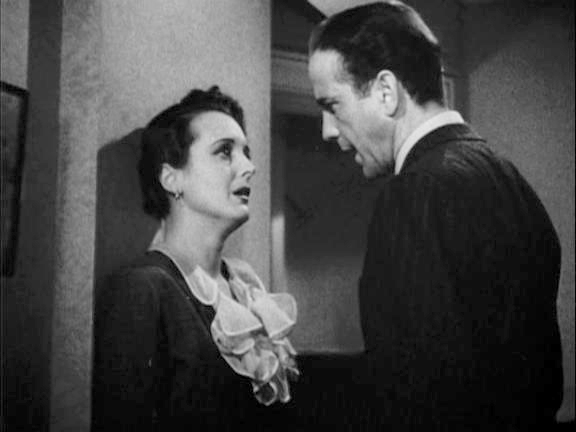
The bare-bones plot involving international espionage, a pair of unassuming parents, and the kidnapping of their child remains the same. But most everything else is drastically different.

Thus, it becomes an interesting exercise in juxtaposition. It really depends on what the viewer deems definitive in a quality film mixed with personal preference. Without question, this initial offering from a younger director is grittier and less made up but it’s subsequently a less technical sound achievement with also little score to speak of. We trade out James Stewart and Doris Day’s singing for the less remembered pair of Leslie Banks and Edna Best. But nevertheless, this version of The Man Who Knew Too Much is an enjoyable international adventure crossing the globe from the Swiss Alps to England.

The Lawrences are on a lively vacation complete with skiing and skeet shooting with their precocious daughter (Nova Pilbeam) but after an acquaintance winds up murdered, the family finds themselves embroiled in a treacherous world of espionage. The dead Frenchmen left them a message to pass on to his contact but that knowledge finds them deeply distressed when their daughter is kidnapped. From that point, the intentions of the story are fairly straightforward. It’s simply a matter of watching Hitchcock at work.

Peter Lorre fresh off his emigration from Nazi Germany in the wake of Hitler, ironically plays the quintessential international menace, cigarette curled between his lips. It was so recent in fact that the man who made a name for himself as slimy undesirables learned all his lines phonetically because he still had yet to gain full command of the English language. But thank goodness we had him for this film and many to come. He perennially made movies more interesting by his mere presence. That marvelous face of his is one in a million.

There are some wonderful sequences and typical touches of Hitchcockian style and subversion, namely a sun-worshipping cult hiding out in a cathedral but, overall, it’s not always a cohesive exhibition in suspense. His greatest achievements always seem to fit together seamlessly to the perfect crescendo like a thrilling piece of clockwork. Whereas sometimes it feels as if a few of these scenes are strung together.

But that does not take away from some of the better set pieces namely Hitchcock’s original Royal Albert Hall sequence and a different finale altogether with a final shootout that is still harrowing in its own right. And of course, the foreboding clangs of Peter Lorre’s pocket watch leave their mark on this film just as his eerie whistling became his foretoken in Lang’s M (1931). Hitch would only continue to fine tune his formula but there’s no question that The Man Who Knew Too Much is a diverting thriller and the first in a lineup of six consecutive successes from the director during the 1930s.

3.5/5 Stars

Review: The Maltese Falcon (1941)

maltesefalcon1Dashiell Hammet’s “blonde satan” Sam Spade is an icon of not only 20th-century literature but also 20th-century cinema, thanks in part to Humphrey  Bogart and John Huston. He’s the cynical, hard-nosed, unsentimental P.I. whose general unpredictability sometimes leads to angry outbursts and other times gleeful amusement. He’s a straight talker and not about to be pushed around. If this sounds familiar at all, it’s because it lays the prototypical foundation for any film noir gumshoe ever. Except Bogart’s Spade receives the credit as the archetype. All other portrayals whether homage or parody stem from his performance. And it is quite the performance, but he has some worthy adversaries attempting to upstage him.
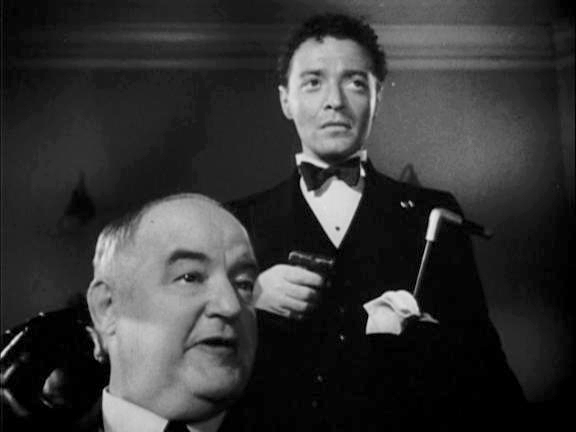
Brigid O’Shaughnessy  (Mary Astor) is the conniving, beguiling, lying little stagy siren who comes into his office in need. She sets a precedent with a string of lies and that never ceases. However, there are half-truths and bits of genuineness backed by her quivering voice and pleading eyes. It took another round to realize what a femme fatale she actually is because she is in fact so good at it. You almost don’t realize how deadly she could be. And in the pantheon of femme fatales, I admittedly forget her in deference to the likes of Phyllis Dietrichson, Gilda, or Kitty Collins. Perhaps Spade’s a little stronger than most protagonists, a little more resilient, not allowing himself to be completely duped. But from the get-go, Brigid has him reeling and guessing. The difference is that he knows it. It’s not until the very end however, that’s he’s finally able to get an actual line on her.

maltesefalcon2Then there’s Joel Cairo played so cunningly by the always wily and beady-eyed Peter Lorre and Kaspar Gutman portrayed so assertively and pointedly by the perennially memorable Sidney Greenstreet. These two men would come back in Casablanca and numerous other Warner Bros. Pictures, but they are the epitome of iconic characters actors who make any narrative that much more interesting. They have mugs and physiques really made for the dark recesses of the noir world, and when you put these four together it does spell trouble. Add a quietly seething Elisha Cook Jr. as Wilmer, the always personable Ward Bond as a Police Detective, and Lee Patrick as Spade’s doll of a secretary and you have a true winner.

With the eponymous blackbird to drive the plot all you really need are these characters and their inherent greed to pull them along. The beauty is that we do not know the details, but following Spade we slowly have piece after piece revealed, character after character make their entrance until everyone’s together and things get interesting

The story has loads of substance built-in and Huston was absolutely meticulous with his preparation for the film script and otherwise, which paid heavy dividends in the end. Hardly anything seems throw away and all the dialogue and scenes flow in a wonderfully seamless way that continues to carry us along in anticipation. It’s so engaging in fact that it becomes quite easy to disregard the film’s astute cinematography utilizing low-key lighting, which would become a norm for noir and then low angles that are reminiscent of another film that came out that same year, Citizen Kane.

Modern viewers might well accuse this film of being overly talkie, but amidst its iconic characterizations and bewildering plot, there are immeasurable pleasures to be mined. Few people would contest that the Maltese Falcon really is a major benchmark in film, as not only the early beginnings of German-influenced American melodramas (aka film-noir) but also a major career boost for the up and coming Huston, not to mention the veteran character actor Bogart. For film-noir lovers or cinephiles in general, this truly is the stuff that dreams are made of. John Huston and Bogart would both come back with success, after success, after success, but there’s something to be said for where it all began. The Maltese Falcon is a treasure indeed.

5/5 Stars

M (1931)

mfilm1Peter Lorre has a face that will forever live in cinematic infamy, and it started with M. In truth, Fritz Lang’s drama involving a serial killer feels fresh and engaging even after all these years, maybe because humanity hasn’t changed all that much. We still murder, we still kill, we still seek justice, we still give into our base desires, and there’s not a perfect person among of us. Each one of us has our faults — our own personal downfalls.
The film begins with a rash of disappearances across the city and the boulevards are plastered with Wanted posters for the mysterious culprit. The day that Elsie Beckmann disappears sets the community off, especially when the perpetrator sends a handwritten letter to the local newspaper. The media frenzy begins as every man, woman, and child begins to suspect their neighbor of being a child murderer. The mob mentality looks to overrun the scales of justice. Meanwhile, the police force looks to use empirical methods as well as frequent raids to drudge up answers. They’re far from popular in the underworld and the force is being run ragged in an effort to get to the bottom of the case. Everyone expects a resolution quickly, but real solutions are hard to come by.

Things have gotten so dire for the local mob bosses that they call a meeting, resolving to do the dirty work on their own. They begin their own search for the man who is single-handedly ruining their rackets because he’s no good. Now the chase is really on for Hans Beckert, because everyone is on high alert, in all spheres of society. The question becomes not if he will be caught, but when, because it is only a matter of time.

It’s in these latter moments that the longstanding mystery behind the film’s title finally is revealed and it is a fitting twist. Everything begins to fall into place, but the strangest thing is that Lang actually begins to make us empathize with his killer. True, we want him to receive justice, but the men on the other side of the law seem little better than he — in fact, many of them are criminals themselves.

M has a fascinating juxtaposition of silence and sound, acting as a bridge between both. Beckert’s whistling of “In the Hall of the Mountain King” is certainly integral to the plot. It’s those exact notes that trigger the memories of a blind beggar selling balloons. However, it is these hollow sounds of the whistling that feel strange ominous and distant in vast areas of open space  There’s as much tension in the lulls of silence as there is in the most tumultuous notes.

Although Lorre doesn’t say much, we get enough clues just dwelling for long spells on his face. Those big eyes full of crazed fear and psychological torment. His mind plagued by paranoia and torn apart by schizophrenic bouts of conscience. It suggests the perverse nature of man given that this story was taken from real life accounts of a German child murderer. But also the tragic nature of mankind that we are often drawn to do evil in a sense. Our flesh is too weak and we give into our animalistic urges. Of course, Lang reveals the flip side of the indiscriminate as well, that seems just as questionable including mob rule and a sort of vigilante justice that functions outside of the accepted modes of law enforcement.

It brings up questions on the cycle of crime and the rehabilitation of the criminal. Questions that still get hotly debated and thrown about even to this day. M became the measuring stick for all of the subsequent crime thrillers Lang would churn out so efficiently following his move to the United States. You could argue that although he came close numerous times, he never quite topped this crowning jewel of a crime drama.

5/5 Star

The Maltese Falcon (1941) – Film-Noir

4ef67-falconmThis archetypal film-noir directed by John Huston, stars Humphrey Bogart as the detective Sam Spade. After an initial conversation with a mysterious woman, that same night two men end up dead. As Spade tries to understand what is going on, it puts him in contact with a paranoid little man and another man who is trailing him. All of them have something to do with a black bird and the situation gets more complicated when Spade meets the fat man. Rather surprisingly Spade ends up with the falcon but of course there has to be a twist. Soon enough the truth comes out of Brigid O’Shaughnessy and Spade coldly does his work. This film has great characters played by Mary Astor, Peter Lorre, Sidney Greenstreet, Ward Bond, and Elisha Cook Jr. The directing is good as well as the cinematography. This is the film that finally made Bogart a star and he would never look back.

5/5 Stars

Arsenic and Old Lace (1944)

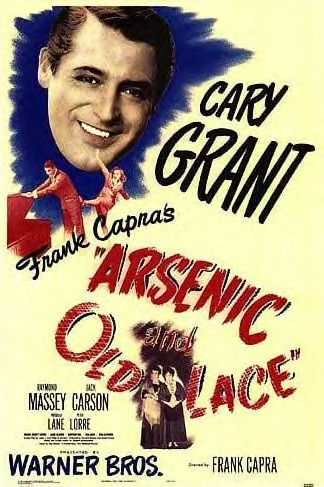
Directed by Frank Capra and starring Cary Grant with a zany and strange supporting cast, this film adapted from a play is a farcical  black comedy. Grant is a drama critic who is just recently married and he is about to go on his honeymoon. However, he is horrified to learn that his two unassuming aunts have killed hopeless, old men with arsenic-laced tea. He must also deal with one brother who believes he is Teddy Roosevelt and a recently returned brother who is wanted for murder. Add these crazy characters, a peculiar German doctor, some policemen, and you are in for a wild ride of wacky antics and mock terror. All the while Grant tries to balance his many problems which nearly go awry. Everything gets figured out in the end and Grant carries his bride away. To say the least this film is very odd and perhaps not Capra’s best. It does culminate nicely in the end however, closing the story on a high note. The cast includes Priscilla Lane, Raymond Massey, Josephine Hull, Peter Lorre, Jean Adair, Jack Carson, and John Alexander

3.5/5 Stars