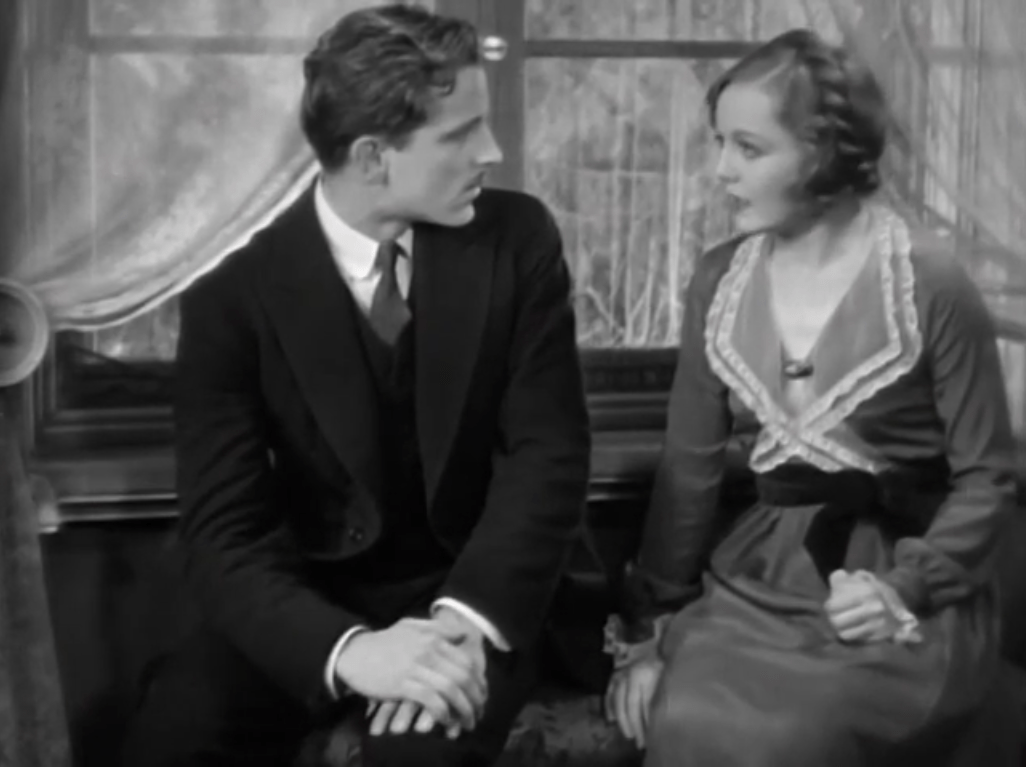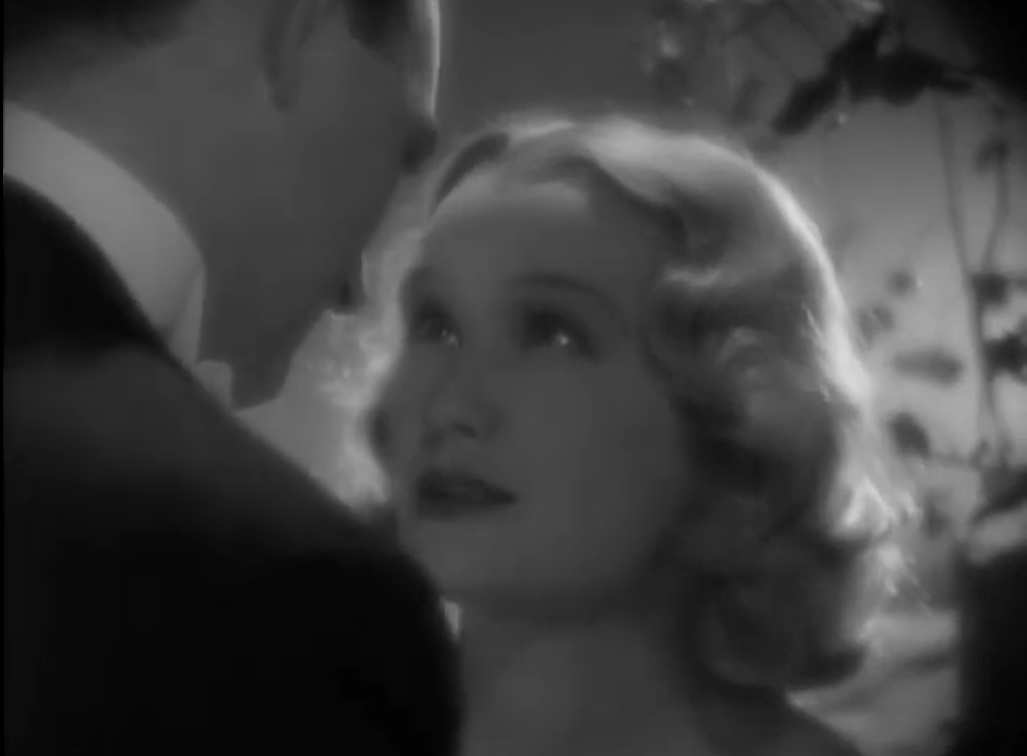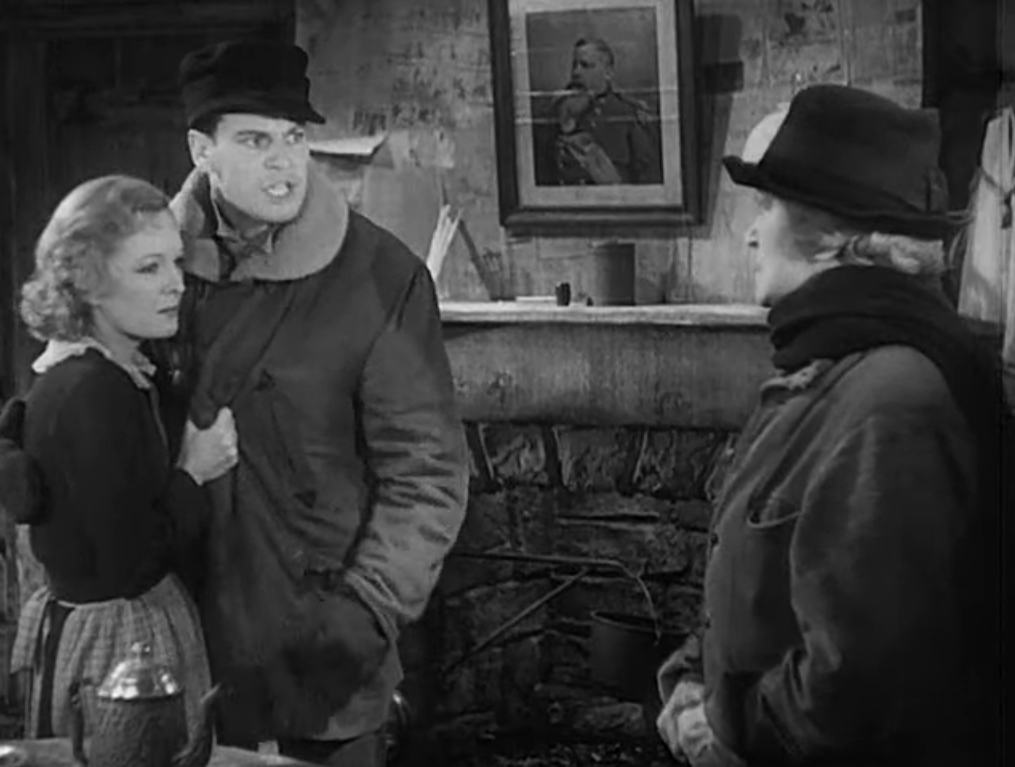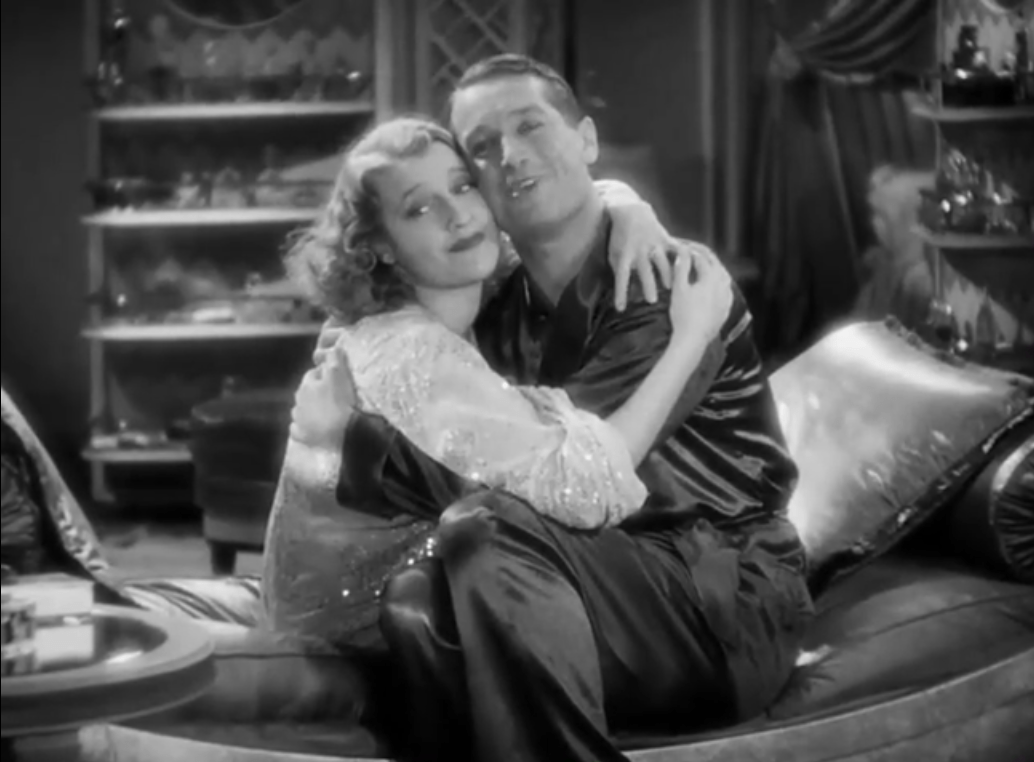
One Hour With You (1931): Jeanette MacDonald and Maurice Chevalier

one hour with you

Ah, Spring in Paris! The local gendarmerie is intent on cleaning up the parks of couples canoodling. Among them are Andre Bertier (Maurice Chevalier) and his gal pal Colette (Jeanette MacDonald). But it’s perfectly decent. As they sing, later in bed together, “what a little thing like a wedding ring can do.”

Samson Raphaelson avails himself, having a fine time turning a phrase in all sorts of situations — in a police station or romantic tete-a-tete — it really doesn’t matter, and it serves Lubitsch’s standard suavity wrapped up in the sing-song operetta quite well.

Chevalier offers up his winking monologue to the camera and all the folks sitting out in the audience, providing a theatrical aside borrowed most obviously from the stage. His prevailing charms do not cater to everyone nor does his style of balladeering, but there’s no denying he carved out a niche for himself in the 20s and 30s as one of the most romantic swoons of his generation. Whether that had more to do with his coveted Europeanness or something else…

This story is built out of a taxi ride. Andre happens to hop into the cab with a person of the opposite sex named Mitzi (Genevieve Tobin). The possibilities are endless. It’s the fact that they totally dissect the situation, insinuate and flutter their eyes at one another, taking a banal scenario, and instantly giving it romantic tension. In fact, just about every scene informs a world full of sensual suggestions and connotations.

He abruptly ditches the taxi on the verge of a kiss and infidelity, though the damage is already done. No one will ever believe them to be perfectly innocent, and they’ve conveniently created a comic drama for themselves out of nothing. It almost blows up between them, and they are as good as guilty.

This would all mean nothing, if not for the subsequent scene. Colette is reunited with her best friend: Mitzi! They share all the usual chatter, fawning over wardrobes and shared memories. Imagine the devoted husband’s shock when the woman in the taxi and his wife’s best pal are one and the same! We have a real story on our hands and Lubitsch knows precisely how to work it.

Take another scene where Mitzi feigns illness to get the doctor alone with her. Mitzi’s own husband (Roland Young) walks in on a doctor’s visit. It’s all perfectly innocent (as it always is). They trade pleasantries. One’s a doctor, the other a professor — ancient history. It’s an emphatic punchline hanging in the air.

There’s also a glamorous party put on by the Bertiers. All their friends will be there sitting at a table together in a very public environment. A round of name card roulette takes place between husband and wife with diabolical consequences — romantic speaking of course. Colette is trying to protect her man from the wrong woman even as she rebuffs the blundering advances of a madly infatuated socialite (Charlie Ruggles).

Genevieve Tobin remains out on the prowl for Chevalier. It doesn’t much matter what she’s does; it’s how she does it. This is the secret of most of the characters in this movie. It’s the power of inference.

When she musses up his bowtie, he doesn’t know how to remedy the situation (because he can’t tie a bowtie). Going back inside is tantamount to social suicide — people will talk — but if he follows the beguiling harpy into the garden, who knows what fate will befall him. He’s a prisoner on his own veranda! This is the movie’s persistent predicament in a nutshell.

However, there must be a caveat in any discussion of One Our With You. His name is George Cukor, and he was actually the original director of the picture, although he eventually relinquished his duties to Lubitsch.

With complicated productions such as this one, considering where one director begins and the other ends is always an intriguing conundrum. Take, for example, something like Come and Get It from a few years later, directed by Howard Hawks and William Wyler at different points. One doesn’t often confuse their filmographies but shot to shot it’s not exactly easy to ascertain the difference aside from some intuitive observations.

There are moments of cloying cattiness, particularly between the female characters and at the grand party that we might find down the road in a picture like The Women, but we never quite broach that territory completely. Because ultimately, it’s the overarching sensibilities and the shepherding of the comedy by Lubitsch leaving their mark. It certainly makes for another fine exemplar of his work during the period.

My main qualm is the squandering of its supporting cast. Between the likes of Tobin, Ruggles, and Roland, there are some real personalities, and opposite our stars, they do yeoman’s work in a handful of scenes. However, it does feel like they drop off and disappear rather conveniently. Their arcs never coil up in a sufficient manner — in a way we can appreciate — and they probably deserve a few more minutes of satisfying resolution.

However, Lubitsch is not concerned with a more raucous screwball crescendo. Thus, the ending just about wins it for me, partially because for once MacDonald is in on the gag, and it doesn’t feel like the Chevalier show. They’re in this kissing comedy together, beginning to end, singing to their little hearts’ content. If you like it, you like it…anywhere.

3.5/5 Stars

Broken Lullaby (1931) and The 5th Commandment

broken lullaby

It intrigues me that this fascinating outlier in Ernst Lubitsch oeuvre, once upon a time was released as The Fifth Commandment. For those keeping count, it’s the one in the Catholic faith that says thou shall not kill or rather thou shall not murder. But already you might see the semantic ambiguities at play in the translation. In modern English, murder and killing can maintain different definitions. Often you only need to look at a human conscience to deduct the difference. This is integral to the movie’s core dramatic question.

However, we must first unveil the scene, introduced as only Lubitsch could envision it. It’s now the first anniversary of armistice: November 11, 1919. It becomes a montage of perceptive comic juxtapositions — with small-town jingoism in full-force — parades, bells ringing, and cannon shots booming right outside a hospital. No one seems to heed the sign calling for silence while the shell-shocked vets remain terrified by the living nightmare.

Then, inside a grand cathedral, the minister extolls peace in the wake of such carnage. Thinking better of it, Lubitsch focuses on the sabers of all the military men as they sit listening in the pews, weighed down by their many war medals — no doubt won in battles. The camera focuses on the crucifix hanging on the wall as “bombs burst in air.” These are all incongruous pictures if we want to make any sense of war.

With the stirring homily done, the pews clear out in a flurry and only one man is left prostrate in the pew. He comes up to the religious man seeking absolution. In a former life, he was a first violinist, now he wishes to confess to a “murder.” It registers a response of repugnance until the minster finds out it was out on the battlefield. He is freed from any crime having done nothing but his duty.

For this man, Paul Renard (Phillips Holmes), it’s some small recompense for the tribulation of his soul moaning out on his behalf — on behalf of the man he killed — because surely this is not the way men were supposed to live with one another.

In all earnestness he yells out, “I came to find peace and you haven’t given it to me.” He gets chastised, has his absolution read, and feels little better for it. Again, his heart still aches with guilt. His head goes aloft to the portrait of the Pietta — she lost her son — and she forgave the murderers…

It’s the germination of an idea: a mission of mercy and a personal pilgrimage. Paul must go to the homeland of the man he murdered and see his parents — to call upon their mercies — and assuage his wounded conscience. Holmes is a bit of an exaggerated talent but his zombie-like despondency allows him to function rather well in the shell-shocked part.

It’s apparent from the opening interludes a kind of pre-world war II chivalry and romanticism still exists between the Teutonic and Gallic traditions because they have yet to experience the full thrust of the radicalized regime of Hitler.

This doesn’t mean war is logical and totally naïve. Far from it. There’s a prescience in the following line from Raphaelson’s script: “9 million people got slaughtered and they’re already talking about another war and the next there will be 19 million and the world calls that sane.”

broken lullaby

Broken Lullaby simultaneously becomes an impeccable exercise in how Lubitsch is able to take the material from Samson Raphaelson — their first of many collaborations together — and in some integral way, shape it to his will. Continually the dramatic irony can be cut with a knife, and so in specific scenes, you don’t need much more aside from the knowledge. Lubitsch does the rest and uses that to benefit his audience.

Because Renard makes his journey — dutifully visits the grave of the man he killed. War mothers often come to visit and on this day the dead man’s fiancée: Elsa (Nancy Carroll). He flees the scene like a frightened deer, but his mission is clear. He visits Dr. H. Holderlin (Lionel Barrymore); he is the father who lost his boy in the war. We know what must come next.

Lubitsch doesn’t make it easy — it detonates in our faces — wrenches the knife into our emotional hearts and forces us to continue on the dramatic arc. Even as Paul is eventually brought into the Holderlin family, he grasps at illusions to make them happy — in an attempt to not totally trample the fond memories of their son from when he was alive. Because he only knew the man in the pitiful trenches of war on the edge of death. It’s not a nice type of place to keep people within your memories.

Likewise, the town is a textbook Lubitschian environ of Europe through the lens of Hollywoodland. It’s the old world spritzed with the touches of the movies. It’s a magical land where the discrepancy of language and culture fall to the wayside in deference to emotional truth and visual elegance. Where Zasu Pitts showing up as a housemaid hardly feels anachronistic or out of the ordinary.

It also plays like a precursor to To Be or Not to Bes lucid commentary overlapping with the quaint familiarity of The Shop Around the Corner. There are many such establishments in a place like this. Perfect for blissful love to come into bloom. Because it’s true Paul and Elsa take a shine to one another — they share a naïve benevolence as they try and pick up the pieces in the shadow of war.

They also turn all the heads and ring all the bells in the town as they walk by together arm-in-arm. In this regard, any sense of realism or authenticity is made superfluous. This is a film made out of its emotional impressions more than anything else.

Meanwhile, Elsa’s scorned suitor drums up conspiracy about the foreigner with his brood of beer drinkers at the local Hofbrau. A newfound absurdity is born as they secretly contest the content of his locked violin case. Surely, it holds something far more nefarious than a musical instrument.

Finally, the good doctor is shocked out of any former strains of narrow-mindedness. He sees it spewed back at him, and it repulses his sensibilities. Barrymore stares down the gauntlet at all the men affronted by his house guest, and he lets them know promptly his wife likes him, Elsa likes him, and he loves him. It’s such a courageous pronouncement in such company.

He says, “No one can tell me the meaning of death or the meaning of hatred. I’ve drunk deep of both of them.” In some form, he’s beginning to understand the world anew much like Paul before him. Fathers drinks to the death of sons (on the other side). Some drink beer and others wine. It’s no different, and they all propagate the system of patriotic butchering. It’s insanity.

Broken Lullaby does what a majority of movies try to accomplish with any amount of dialogue and plot points. Lubitsch doesn’t need them. Instead, we get an impression. Paul is able to take up his original calling once more — that of a violinist — and he is joined on piano by Elsa. The parents look on in a contented reverie. Before us is the reconciliation of residual hurt leftover from an entire war allayed by two melodies joined together in perfect harmony.

We must stand corrected. The Broken Lullaby is the right title for the picture. It might be difficult to categorize for movie pundits, but this is of negligible importance here. What remains are the reactions. In turns, it’s moving and it’s excruciating. I was made totally distraught, and yet the salve is finer still.

Life, even today, is won in no man’s land where no one wants to go. Still, I am reminded of even a monumental moment of harmony like the famed Christmas day ceasefire in 1914. I’d like to believe restoration is possible. Lubitsch seems to suggest as much and he does so quite elegantly. I’d expect nothing less.

4/5 Stars

Our Daily Bread (1934) in The Age of FDR

Screenshot 2020-08-15 at 8.11.51 AM

The title, of course, comes from the Lord’s Prayer evoking images of contrite men and women thankful for the bounties they’re provided on God’s green earth. Director King Vidor took an immediate interest in the project because it was a timely piece in the age of FDR’s public work programs about individual humans looking for ways to eke out an honest living.

Our Daily Bread is based on one such project with a host of men utilizing some vacant, barren land for sustenance. There is a sense the topic was too down to earth for a big studio — at least in the midst of the depression — so Vidor took on the expenses himself because he felt strongly enough about the material.

It’s a  story of hope burgeoning out of the pits of the depression. This is the key. We are used to stories of degradation and hardship in the throes of the 1930s because this was human reality. But King Vidor promotes a story that while acknowledging the headlines, hones in on a nugget of encouragement — a reminder of the indefatigable flame of the human spirit.

John and Mary Sims (Tom Keene and Karen Morley) are like so many other folks, they’re falling behind on rent, work is scarce, and they barely survive by hocking their possessions.

It might be easy to forget that the names of our two protagonists in this picture are plucked out of The Crowd — King Vidor’s magnum opus about the American way of life. The fact that two new actors don the roles feels mostly inconsequential because they are only symbols of the human experience — stand-ins for us all — and thus anyone who is genuine and honest is fit to play them. Surely we can relate.

It’s true Tom Keene and Karen Morley are not altogether well-remembered today. They aren’t electric talents, but she is wholesome (consider this interview), and he is exuberant bursting with new ideas. They set up camp in the dilapidated home on the fallow ground armed with their eagerness. By itself, it seems foolhardy.

However, John is soon joined by a passerby — a Swedish farmer (John Qualen) who knows how to raise crops and more men soon follow from all sorts of trades and backgrounds. They too want a second chance and an opportunity to prove their usefulness.

Although a stirring speech about John Smith and the Mayflower doesn’t play as compelling now, nevertheless, their de facto leader urges them to help themselves by helping others, and they need no further encouragement.

In the ensuing days, the able-bodied men hitch plows up to every conceivable contraption imaginable as they get to work. They become a bustling colony of industry made up of idyllic shanty houses. Best of all, they’re in it together.

As they gain traction, the movie is pregnant with these heart-rendering vignettes leaping to mind one after another. Upon the first sign of a harvest, they celebrate with hands raised aloft and knees bowed as the preacher among them thanks the good Lord for this bounty.

Then, the most formidable and brusque member of the commune — a wanted criminal, nevertheless is beholden to a higher form of justice, sticking out for his fellow man. He goes so far as to turn himself in so the reward money can be used to stock up on much-needed provisions until the first crop can be harvested. He’s yet another noble man who has the good of the whole in mind.

If it’s not apparent already, Our Daily Bread blends its religious sentiment with deeply socialist themes. It was, after all, the age of FDR’s New Deal sentiment effectively retrofitting how American society operated and was perceived. Still, Vidor utilizes an ongoing visual methodology Eisenstein might have appreciated. By 1950, a film as blatant as Our Daily Bread would have probably been excised from the cultural conversation.

However, although the socialist proclivities are quite apparent, for me, it’s never a political film, nor does it bludgeon us over the head with the ideology completely. It’s very much an exercise in promoting this same dogma of the group over a single individual.

Because the story starts out with a couple — we can relate with them and appreciate them — but even as they pool together into this cooperative community, they only become two elements in a broader social amoeba. This hardly seems like an accident, especially as the narrative progresses.

If there are seasons of rejoicing and dance, then there must also be tribulation. Such is life. Tom’s indomitable vision is ultimately soured by drought and the temptation of another woman.

When Barbara Peppers shows up in the rain — we’re wary of her — what purpose could she possibly serve? With her batting eyes and saucy come-on attitude, she becomes a new love interest. And the cinema archetypes suggest Mary in all her devotedness doesn’t stand a chance. Surely, Vidor and his audience have seen Sunrise. I for one took a deepening relish in Peppers part due to her later credit as Doris Ziffel in Green Acres. She’s well nigh unrecognizable as a slender teenager, but if nothing else, it feels like an unknowing if uncanny parallel.

Vidor’s greatest triumph comes in the finale. The men band together to create irrigation to salvage their perishing corn crop before it’s too late. We have this heave-ho as rows of men pickaxe their way in unison, lumbering along to remove all the boulders from their path. They’re like a machine of manpower.

If the Grapes of Wrath is about the unstoppable tractors rolling over the land and taking it over, then these moments feel like a counterargument of frenetic human industry and solidarity. It’s not that there’s a lack of reliance on tools and the like. It only works when the humans who are behind them — living and breathing — are working together and building up a head of steam.

As they forge onward with their work night and day — everyone doing their part and investing wholeheartedly in this group utility — you see the message once more in stark relief. They are cheered onto the finish line by the women and children — their crops in sight and the goal on hand.

What an earnest climax it is! Swelling with angel song, everyone jumping with joy, doing black flips in the muddied ground. And as we watch them wading around in the mud, we know it is a signifier of life and a renewed future.

Here Our Daily Bread ceases to be a mere articulation or mimesis of the struggle to cow the depression. It’s a full-fledged metaphor for the enduring fortitude of the American spirit. Whether or not it’s a myth, King Vidor makes us want to believe in it all the more fervently. Likewise, the swelling angel songs might be too much for some — if you don’t believe in Providence. For these folks, Providence goes hand in hand with hard work.  And that flow of living water, notwithstanding the spiritual undertones, represents their daily bread.

4/5 Stars

The Story of Temple Drake (1933) with Miriam Hopkins

The Story of Temple Drake was adapted from a contemporary William Faulkner novel called Sanctuary. It’s putting it lightly to say it was the subject of controversy — even in the Pre-Code film era — but part of what the film version gives us is this instant sense of Southern Gothic environs.

It’s as much about atmosphere and the salacious nature of the material — leaning into what we might easily term Pre-Code sensibilities. But with such a film like Temple Drake where its reputation precedes it, it behooves audiences to consider what it is actually putting across.

Some studios might have been keen on peddling titillating smut or at least just enough sensuality to get a rise out of the paying public — to make it worth their while so to speak. But even a story like this, which might seem to have such a cut-and-dry trajectory, actually offers up something a bit more involving when we consider the evolution of our heroine and what she must come to terms with.

Temple Drake (Miriam Hopkins) is a girl about town, and she really does get around. She’s the sought-after debutante at the ball with her pick of all the eligible young bachelors. She can dance with them, toy with them, and there’s no consequence to it. It’s merely a game and seeing as her grandfather is a prominent Judge (Guy Standing), he does his utmost to make sure she is sheltered and well-taken care of. She’s never had to worry about anything in her life.

Aside from her come-hither reputation, playful romance is often denoted visually through the hands. If you’ll pardon the unforgivable phrasing, they become a kind of shorthand for the broader passion. They can be playful, alive, yet elusive. It’s put succinctly by how Temple can fire a man up. Then poof! She’s gone.

On one such evening, her late-night companion is a soused playboy. They leave the party behind and go blazing down the roadways at madcap rates only to have a dramatic spill and tumble out of their car. The crash itself is hardly a drop in the bucket to them. It’s what happens thereafter that rattles them both.

There’s something uneasy about where the story is going. Unrest is in the air. Lightning shakes the foundations of the film. They get taken in by some shady characters holding out in a rundown house. The thugs lurking about are a lecherous breed, the most menacing of the bunch is a man named Trigger (Jack La Rue).

Suddenly, life is no longer a lark. They’ve run into a harrowing life or death reality as Temple is subjected to a prison of terror and ruination, hopelessly trapped and vulnerable. So quickly she goes from the frisky huntress to the victimized prey. It’s true she’s entered an entirely different world where all the harmless frivolity is quickly replaced with the kind of contentiousness and fear she’s never experienced in her life. This is how real people live: rough and hard.

The barn where she seeks refuge for an uneasy night away from the prying eyes of men is a bit like the lion’s den, but there is no one to deliver her when the beast comes prowling around. After she is roughed up and attacked, she enters into an almost catatonic state of trauma and survivor’s guilt.

Her Grandpa can’t protect her anymore and the only man who is willing to fight for her is the one admirer, who’s not disappeared: Stephen Benbow (William Gargan) is an up-and-coming lawyer who once had aspirations to marry Temple. She always rebuffed him as a kindness. She thinks he’s too good for her.

But in a crucial moment, she protects him. In fact, she does something almost decent, sacrificial even, making herself look all the more the tramp. Pretending to scorn her good friend for the thick-headed thug, she even sells it by planting a kiss on the man’s lips. Even he’s got himself believing it. After all he’s done to her, in some sick demented way, she must actually want him.

It couldn’t be further from the truth. In a single moment, she finds his gun deposited on the bed and lashes out to defend herself. It’s carried out with some crucial closeups punctuating one of the film’s most emphatic developments. It’s also empathetic as we grow to sympathize all the more with our heroine’s terrifying position.

But her work is not done. Stephen, always the honorable one, beseeches her to testify on behalf of the man he is defending from murder. Only they know what really happened. However, this is such a deep wound. She must come clean with her deepest, darkest shame in a public forum all but prepared to ostracize her for a scandal that she wanted no part of. The movie’s pitting the life of a man against the sullied reputation of Temple. It’s her “duty before God.”

As the story goes out with this kind of optimistic glimmer of redemption, resurging against all the darkness we have already witnessed, it’s hard not to consider the significance of the name Temple. With the evocation of God, it feels like a kind of spiritual allegory is in order. Each of us with the desires of our hearts — with our wants, time, resources, and actions, create alters to something.

We always hear it told that our bodies are temples, and it’s no different here. We all worship something. However, when our lives get shaken up, it makes us take stock of our priorities and consider what we look venerate and celebrate in our lives.

Fluttering behind her eyes Miriam Hopkins does her best to dance between jovial gaiety, subsequent terror, and this kind of resting despondency flooding over her when she is finally taken advantage of. It changes her. In an earlier scene, she makes a passing comment about how “It’s like there are two of me.”

How right this proves to be, and it’s not so much like Jekyll and Hyde. It evolves into this schism between her personage before and after this event. Temple can never be the same again. Of course, that doesn’t mean she’s irredeemable or totally befouled. Far from it. Restoration is available to all even someone traumatized in the worst manner possible like Temple Drake. Because each one of us can be a Temple.

3.5/5 Stars

The Stranger’s Return (1933): Lionel Barrymore and His Granddaughter

Strangersreturn

Establishing shots often get a bad name for their bland or token quality, but it’s true when done well, they can set the tone and create an instant impression on the audience. King Vidor’s The Stranger’s Return instantly accentuates this rural milieu. It feels like a stable and equestrian existence, a supremely serene safe haven.

As the movie progresses, we are privy to marvelous pictorials feeling akin to Jean Renoir or John Ford. There is a bit of that pastoral sense of space where the landscapes feel untarnished and beautiful down to their very compositions. Regardless, the land is nothing if not punctuated by human beings meant to till the soil and cultivate it.

Inside a farmhouse, we meet a family of grown-ups sitting around the breakfast table with their patriarch. Beulah Bondi is among them, and they aren’t mean-spirited folks by any means, but they’re generally dutiful and reserved.

I am reminded of the moral tale in the Book of Virtues from my childhood where the adult children care for their dying mother and the chest under her table — just waiting to swoop in and get their due. They can only imagine what treasures she will bequeath them upon her death. It’s the same unspoken undercurrent in this film because Grandpa Storr isn’t oblivious. He knows what’s going on. The difference is, that he’s not ready to go down without a fight.

Lionel Barrymore is bearded like you’ve rarely seen him before. He plays Storr as an ornery man of the old world — giving his healthy cereal to the chickens and proceeding to cook himself up some steak and eggs. He grumbles about how he would rather do something he likes for a few minutes than have to live a hundred years hogtied. We understand him and appreciate his convictions in minutes.

He’s rich with recollections of the Civil War and his childhood exploits on the farm he still maintains. There’s this curmudgeonly bluster about him that is the perfect façade for an obvious heart of gold. As he’s advanced in years, he’s aided by his trusty cowhand Simon who’s known to take a nip of the corn liquor but also remains steadfast when it comes to working Grandpa’s land. The elder Storr also keeps up a good-natured feud with this closest neighbor (Franchot Tone). He’s built himself quite a life of contentment.

The entire movie develops out of the momentous return of his granddaughter — just recently divorced and living back east — who’s prepared to pay her grandfather a visit and go back to basics. Louise (Miriam Hopkins) becomes quite the talking point in the household seeing as she doesn’t live with her husband. That just isn’t done. Of course, Grandpa operates outside of the typical small-minded hypocrisy. He’s radically individual-minded and stubbornly prodigal himself.

Barrymore and Miriam Hopkins cultivate what feels like an instant rapport. Consider the moment where they sit outside on the hanging bench together — their conversation so easy and amicable. She might come off a bit like the prodigal daughter, but if this is true, then he’s more than generous in spirit to be the father figure who welcomes her back to her roots.

Together they strike up a fine friendship with Guy Crane (Tone) and his sympathetic wife Nettie, who both live just down the road. Crane’s the old story of a charming young man who went off to college and then wound up marrying his childhood sweetheart and returning to farm life.

It happens rather organically but Guy and Louise strike up an instant chemistry — at first, it’s good-natured and innocent. It comes to a head at a local dance where they spend plenty of time in each other’s arms and people will talk. One, because Louise is a divorcee and totally alluring, and, two, because Guy dances divinely and is spoken for. If the relationship between grandfather and granddaughter is the crux of the storyline, Tone and Hopkins do much to augment the film. He’s deeply charismatic and there’s always a wry twinkle of mischief in her eyes bringing them together gaily.

There’s nothing dismissive in the simple observation that Louise doesn’t seem like the churchgoing type, but it’s a delight when Grandpa is concerned. After all, as a faithful parishioner, he hasn’t missed a Sunday in years. It gives him peace being there.

The preacher gives his fitting message on 1 Corinthians (Therefore let him who thinks he stands take heed lest he falls). Far from being an implicit indictment of Louise and Guy, it seems to be aimed all the more at any snooty-nosed hypocrite who feels affirmed in their own preening self-righteousness. Grandpa is hardly one of their ilk even as he nods off perfectly at ease.

In the tradition of communal farm life, the Storrs put on a huge spread in exchange for local labor. The bountiful feast the women whip together makes the eyes bulge in its sheer extravagance. Hopkins does her duty gallantly by going out to the pump for water and passing around the plates and coffee, turning the heads of all the farmhands as she goes about her work. Grandpa couldn’t be prouder of his kin.

In what look to be his waning hours, Grandpa’s mind gets overtaken by fanciful delusions about the Civil War, and his children look to cart him off away from the farm for his own good. Could it signal the end of Grandpa or is it a ruse to divvy up the goats from the sheep? Metaphorically speaking, he knows the ones who love him will take care of his sheep. That person is Louise.

The Stranger’s Return lingers over an illicit theme as the two lovers have their affections grow deeper by the hour. It’s such an obvious outcome, and yet the story never succumbs to anything. This is never its intent. Instead, it finds meaning and sincerity dancing sensitively around all of this. In the end, it slates itself as an archetypal tale of a city girl destined for the farm and the farm boy who chose the city as an act of preservation.

What sets the movie apart is this amiable quality — how it is blessed with both humor and integrity of character. People don’t want to hurt one another because they’ve forged relationships cutting deeper than convenient altruism. As someone familiar with two worlds, it makes me hold a deeper affection for rural and urban lifestyles. They both have pros and cons, but what makes them impactful are the people you forge bonds with.

4/5 Stars

The Front Page (1931): His Boy Friday

the front pagde

With The Front Page, Ben Hecht and Charles MacArthur’s ode to the Mythical Kingdom, the world of newshounds was translated to the movies by Bartlett Cormack and Charles Lederer. Given their own experience hammering away at copy, they locked in on the newsroom parlance going so far as to base many of the characters on their associates. Having not seen the play, it’s difficult to know what liberties were taken.

Many might already know it was reworked as His Girl Friday and it’s true The Front Page serves as the fitting prototype for all of these newsroom pictures of the day. Lewis Milestone does an admirable job trying to liven up the stage beats and the camera does move laterally more than I was expecting. When Hildy Johnson (Pat O’Brien) makes his fateful exit from his “office,” it’s hard to forget the host of reactions to his departure with time stretched out by the magic of cinema.

Likewise, the talking picture still feels youthful, learning what it means to move, as Adolphe Menjou huffs around his office looking for his best story scribe Hildy. They provide the central dynamic for the story to rest on as conniving editor Walter Burns tries with all his might to hook his best writer before he quits the business to go off to New York with his fiancée and her mother, never to be seen from again. Burn’s last chance to nab him is the biggest local story: The hanging of a man named Williams. More on that in a moment.

It should be noted that the most immediate alteration Howard Hawks made was to make Hildy Johnson — not an altogether masculine name — into a woman, who in the Hawksian mode, is capably one of the boys. What it did was ratchet up the contentious romantic dynamics between Cary Grant and Rosalind Russell, who elevated the screwball antics to their zenith. It was a stroke of genius.

After oozing so much about their chemistry, it’s hard to fairly evaluate Grant and Russell’s predecessors. To be fair, I’ve nothing against Pat O’Brien but he’s simply not the most intriguing nucleus when placed together with Menjou. O’Brien did his best work opposite a charismatic lead like a Cagney or even Walter Huston.

Also, Menjou hardly has the caddish charm of Cary Grant. In fact, the meat of their performances feels staid and conventional in comparison. I know this is dangerous, but it’s an unavoidable trap.

It is easy to be complimentary of the picture in other areas. The Front Page really sings in the adjoining spaces because even more so than His Girl Friday it thrives on being an ensemble piece carried over from the stage. The majority of its time is spent in the writer’s room with the colorful gallery of working stiffs and this is where all the action is anyway.

Between cards and puffs of smoke, they’re on the telephones nosing around for a story. Walter Catlett, the bespectacled veteran, is at the center of the action, anchoring the community with his quips. Floating on the fringes around a host of wisecrackers are the likes of Frank McHugh and then Edward Everett Horton. The beloved character player is unmistakable as his typical boob, a germaphobe named Benzinger. He writes for The Tribune.

The rest of the plot will be familiar to anyone who is aware of Hawks’ film. Williams is sentenced to be hung for killing a colored man in a city where the colored vote counts. There’s a sense that we are talking about a vague approximation. The fact we never hear more commentary on the crime and that our cast is entirely white is certainly a sign of the times and another potentially worthwhile caveat.

Mae Clarke reached immortality by getting a grapefruit squashed in her face, but she also performs as the first cinematic Molly Malloy — the one person willing to intercede on Williams’s behalf. The other fact worthy of mention is Clarence Wilson, the bald, pipsqueak making the rounds of the newsroom. It took me a moment to figure out that he’s supposed to be the police chief. In his trembling hands, law and order don’t have a prayer.

When it’s all said and done, it’s hard not to see the voluminous shadow cast by His Girl Friday. Sure, it technically came after but its reputation looms large. The Front Page isn’t a bad picture. It’s still in the nascent days of Hollywood. Lewis Milestone does a decent job of visualizing the stage play, and the cast is ripe with all sorts of colorful talents. The dialogue flies. There’s no problem in that department. From hamburger sandwiches to peeping in teepees, to Jack London-style journalism, you get all sorts. This is the beauty of the bustling environment drummed up. We get to be passive observers of the world.

However, if there is one area of critique to hone in on it’s mainly the leads. To be frank, in weighing Cary Grant and Rosalind Russell with Adolphe Menjou and Pat O’Brien as a unit, there’s just no comparison. These feelings are my own — totally subjective as they may be — but their screwball chemistry cannot be topped. The Front Page still remains as an important historical marker, if only partially because of its relation to the later film. It definitely speaks more of His Girl Friday than it proves a critique of Lewis Milestone’s movie. In fact, aside from All Quiet on The Western Front, Milestone probably deserves a lot more respect than he usually garners.

3.5/5 Stars

Five Star Final (1931): Edward G. Robinson and Yellow Journalism

Five_Star_Final_1931_poster

Five Star Final has its place among a bevy of real-world Journalism movies as perpetuated by Hollywood in the Pre-Code era. Probably equally important is director Mervyn Leroy, who at this point in his career was about to be tackling some of his most pointed material including I Am a Fugitive From a Chang Gang and Three on a Match, which if not totally vying for social realism, certainly blended it liberally with melodrama to instill a social message.

It should be noted before the war over Citizen Kane, famed magnate William Randolph Hearst took offense at this movie, whether or not it was outrightly aimed at him or not. Regardless, it hit close to home. I’ll let you be the judge.

This paper happens to be called the Evening Gazette and it’s anchored by editor Joseph Randall (Edward G. Robinson), though he’s not introduced for several minutes, remaining an unseen figure. Instead, we are given a clear sense of the rest of the framework built around him.

One of his story peddlers Ziggie (George E. Stone) has a perfect name to go with his line of work. His latest shenanigan involves taxi races through downtown, a cinch to drum up some surefire news.

Aline MacMahon is Robinson’s world-wearied social conscience. In other words, his secretary, who is secretly devoted to him even as the paper goes to seed. Full disclosure, I’ve always maintained a lingering affinity for MacMahon based on her general affability and her prowess in both comedy and affecting drama. Here she strikes a steady medium.

It’s true the modern newspaper game is all about mass circulation and with it all sorts of gimmicks and salacious material to grab people’s eyes. Sensationalism is the name of the game to go with lady models buried in the back of the papers. It might be vulgar, but it works wonders. Mr. Hearst was probably well-aware of it.

This is what Randall is fighting against. At first, we have the sense he’s trying to run a tight outfit — he’s a grade-A journalist — but the pressure from upstairs makes him cave and play the way they want it.

The top man, Mr. Hinchecliffe, doesn’t want their editorial integrity to suffer in so many words, but he wants to position themselves to capture more readers. It’s the old game. Sensationalism and smut sell. It takes a lot less effort and integrity than honest, human-centered journalism, and it’s more profitable.

In a sense, Robinson is at home wheeling and dealing, bustling around amid the chaos, getting on the horn and chomping on his cigars as people come in and out. He thrives on the energy. We come to understand his favorite words to fill out a story are “blah, blah, blah.”

The world itself is engaging — the characters who inhabit it in the office and walking the beat — but the film strays in its moralizing plotline. They’re looking to drudge up a story now 20 years old by getting people interested in the crucifixion of a woman.

By coincidence, the woman (Frances Starr) — now terribly respectable and married to an affectionate man (H.B. Warner) — watches her vivacious young daughter prepare to wed the man of her dreams. Everyone is deliriously happy though a land mine from the newspapers looks to totally decimate her salvaged life.

It’s Randall who set it off at the behest of his superiors because when he wants to be, he has a wily acumen, stooping to every trick in the book. One of his handy stooges is the marvelously-named Isopod. No man is right for the role but Boris Karloff — a once aspiring minister who was summarily booted out and ended up in the paper racket instead. Now he uses his religious training to get into people’s confidence.

It works much the same for Mr. and Mrs. Townsend. There’s something about his formidable voice where his sinister tone becomes unctuous in the company of his callers. He is ready to wheedle them for information, and they oblige, completely vulnerable in the fangs of such an insidious wolf in minster’s clothing.

When the Five Star Final edition comes out at 11:30 one night, the obvious trajectory of their story is sealed. In a world still reeling in the wake of the stock market, the character assassination they are assailed with seems just as hopeless. It’s not something the paper can redact or recant nor do they plan to. It’s lucrative news even at the expense of human lives.

In the final moments, there’s another meeting of the minds. Mr. Hincheclife is flanked by his Yes Men with Randall behind his desk. They are all complicit. A bitter daughter bursts in on them lambasting them for the irreparable harm they’ve caused. She beseeches the omnipotent cowards — all the cogs in the system — to conduct an act of God, by raising the dead. Of course, they can’t. They can only look on ruefully. Totally implicated and utterly guilty. The indictment is fierce and wind-ranging.

Robinson’s the one man who seems to acknowledge his part in it. While he can’t repair this mess, he vows never to become a slave to circulation again as he and his best girl shake off the dust of the crummy establishment. It’s swelling with this sentiment, but the point has been made. Five Star Final is not always elegant but between the lively characterizations and the mordant subject matter, it’s difficult to ask for more from the movie.

3.5/5 Stars

Blonde Crazy (1931) with Joan Blondell and James Cagney

blonde crazy

From the outset, Blonde Crazy promises to be a midwestern hotel chamber piece. It’s a story of the help: including opportunistic bellboys (James Cagney) and plucky chambermaids (Joan Blondell). He does her a service by nabbing her a job, and in such a world, he probably expects some recompense.

James Cagney is still kicking around and feeling out his persona; Joan Blondell’s on the way up with him. It’s mind-boggling that in the year 1931 alone both of them put in time in over half a dozen pictures each for Warner Bros. They were both building up a body of work quite quickly.

In a movie like this, the people I’m often preoccupied with are the Charles Lanes and Guy Kibbees — the host of able character actors who always show up in a movie like this. Blonde Crazy has quite the assortment. It’s stuffed with the kind of familiar faces, making a small trifle like this worthwhile, playing desk clerks and delinquent jewels salesmen, among other things. You know the types.

If the story remained in the hotel, it would be severely handcuffed because its stars are meant to be out in the world! Thankfully, the movie breaks out of the constraining formula and finds itself allowing Cagney to shine because there was no one who could do charisma like him. However, Blondell’s never one to be discounted, keeping with him tit for tat.

She exhibits plucky defiance ranking up there with any of the top female performers of the 1930s, coping with the social systems while still holding her own in a man’s world teeming with come-ons and everyday misogyny.

Does it matter what it has in the way of plot? Hardly. Instead, Bert (Cagney) and Anne (Blondell) leave the hotel, becoming business associates or better yet, accomplices drumming up clever (and slightly dubious ways) to make a quick buck.

Blondell is never taken in. She sees right through Burt and still stays with him. He has flashes of decency but driven as he is by money and other superficial qualities, he’s a tough guy to try and wrangle in. Still, their prevailing attribute is their loyalty to one another. Cagney likens himself to a modern Robin Hood. He does have that kind of rapacious charm (and this is before the world knew Errol Flynn).

In time, they’ve had an upgrade frequenting the lavish hotel circuit as partners, though their romantic status remains a bit hazy. Bert inserts himself into a fistfight on the dance floor. It seems like the perfect point of intersection for Cagney. He comes to the aid of Louis Calhern a man he’s been eyeing for some time namely, because of his scintillating female company (Noel Francis). She’s been giving him the look. Anne knows it too. She wasn’t born yesterday.

Unfortunately, Bert gets punked. He’s been made a sucker. In the movie world, you don’t make a sucker of Jimmy Cagney and get away with it. With his pride hurt by the big boys, he looks to regain his stripes by pulling a double-sided con of his own, just to break even. He doesn’t bother to tell Anne. It’s preliminary work for greater coming attractions. If you want to try and get a line on Cagney’s character, he’s not quite his usual gangster type; he’s a smaller operator, but still stretching the boundaries of the law. In his own words, he’s “not tough just mercenary.”

For all the names crammed in the picture, I almost forgot to mention Ray Milland. I hardly knew he was in pictures this early in time, and he looks like a babyface, albeit a handsome one. He’s relegated to the secondary role. He’s Anne’s dreamboat. The complete antithesis of Cagney. He has class. So they get married. But he’s fallen into a bit of misfortune. The only man who can probably pull him out is good ol’ Bert.

All these bits and pieces feel conventional. There’s the immediate romantic tension and the story zips along. Milland is nothing aside from the other man. But if you miss out on Cagney and Blondell’s rapport, then you’ve failed to appreciate the merit of the picture. They make it shine.

While it’s not cutting-edge entertainment, Blonde Crazy does simultaneously straddle the lines of genre. It’s not totally gangster — there’s romance and melodramatic flourishes — and there’s a lightness of comedy. This is what lingers.

Because, in the end, Bert’s sent up for a prison sentence and Anne dutifully shows up professing her undying love. They were meant to be together. What I will remember is how Cagney says “Hone-eee,” and how Cagney, donning his most elocutionary voice, spouts off a bit of Elizabeth Barrett Browning. And it’s a violent picture: full of socks, slaps, and spanks, all in a comical vein and totally indiscriminate. Everyone gets in on it. It helps in illustrating the underlying fact that this is not just Cagney’s movie. Blondell more than holds her own, and they make it better together. What’s more, this was just the beginning.

3.5/5 Stars

Pilgrimage (1933): A Mother’s Journey of Reconciliation

pilgrimage

It’s a private fascination of mine to consider the sanctity and sheer awesomeness of human life in a very particular context. How parents pass on their genes — a package of habits and physical phenotypes to their kids — that we can then witness before our very eyes. And this is even true of those who are dead and gone. Their children remain as a testament to who they were and still remain in our hearts and minds. By no means a carbon copy, but you can look into their eyes or see a photo and observe a brief glimpse of the person you knew before who is there no longer.

In some circuitous way, Pilgrimage becomes a story partially about this type of lingering memory. It is a journey and it involves certain people, but it evolves into something quite different than what I was expecting and this is to its credit. Allow me to explain.

It’s one of those rural tales set in Three Cedars, Arkansas on the farmland of Hannah Jessop (Henrietta Crosman). The dynamic is simple. She’s a hard-bitten mother who’s lived a rugged life running her farm. Her son (Norman Foster) is a strapping, fresh-faced man in love with the girl (Marian Nixon) down the road and remains discontented with a life in the fields. There’s a chafing between mother and son.

She’s not going to let him marry a “harlot,” though there’s a distinct possibility she would never agree to any girl he chose to marry. Furthermore, she can’t understand how her boy can be so ungrateful and would willfully defy her. It’s a generational divide opening between them.

Watching a Ford picture, you’re waiting for those individual moments you can take with you. I’m thinking of Henry Fonda leaning up against the post in My Darling Clementine. John Wayne trotting off into the foreground at the end of The Searchers. In Pilgrimage, I’m reminded of a man sitting on his bed as he plays around with his dog — playfighting and having the animal crawl through his open arms.

It’s actually a mechanism for biding time because he waits for his mother to fall asleep so he can drop out of his second-story window and race off to be with his love. Earlier, during their first official meeting in the movie, there are a pair of memorable subjective camera shots when the two lovers come upon one another with a pond between them.

I’m adding my own emphasis, but it’s as if to say this is supernal love — love supreme — and its not meant to be torn asunder. It has some of the poeticism of Sunrise and the pastoral imagery of The Southerner.

Screenshot 2020-07-05 at 6.07.04 PM

Still, ornery Mrs. Jessop vows to get in the middle of their marriage, and she does it quite handily. She signs her boy up for war — not out of any sacrificial heart and love of country — but purely out of selfish indignation. This act seems so egregious and totally indicative of her character.

What’s curious is how it is not so much dwelled upon as it becomes a reality in front of us. Perhaps her boy really wanted to go off to war and serve his country. We have some indication of that even as he only has a couple minutes with his betrothed before he ships out. It’s the first inclination that this is not about the lovers at all. Who does this event affect the most but Hannah herself?

It provides the needle in Hannah’s heart, and she has to live with her decision now for a lifetime. One of the film’s finest transitions comes with shots of enemy artillery caving in the trenches only to cut to a ferocious downpour at the Jessop farm. It’s two forms of chaos, one man-made and the other natural, but equally thunderous. In fact, the soundtrack is the same. They bleed into one another seamlessly.

Now the man we thought was one of our central characters is gone. It’s 10 years later and his mother is still there holding down her home. This might be when the lightbulb goes off. This was her story all along.

Soon a woman from the war department or some such organization shows up on her porch with the mayor to coax her to follow all the other Gold Star Mothers over to France bidding their sons one final tearful adieu. She surmises, “How reconciling it would be to stand beside the grave of one’s heroic death.” Of course, she’s doesn’t understand Hannah. It’s the bitterness and buried guilt still gnawing at her. She’s a proud woman, after all, and she’s adamant about not going. She very nearly doesn’t. However, if she never boarded that ship there would be no final act.

pilgrimage shooting gallery

Ford’s sense of war is exhibited in how he’s able to cast it as both this swelling, deeply patriotic thing and still something troubling. He is aware of the dissonance of the horrors of war. The most touching sense of it all comes with a procession around a grave inlaid in the ground and the ladies all lay their flowers down on the grave, even Hannah.

True, they do the tour of the whole place and build a kind of maternalistic camaraderie touring around the Bastille, and Hannah and one of her newfound companions (Lucille La Verne) even tear up a local shooting gallery for kicks. It’s a sign of Ford’s penchant for broad humor, and he can never totally mask it.

But the subject feels different. For one thing, Henrietta Crossman’s performance feels like one for the ages and deeply impactful even today in a medium where stories of the elderly often feel dismissed or invalidated. In her time, she was a giant talent on the stage and you cannot watch the picture without gaining an appreciation for her.

Because this is about her evolution more than anything else — this is her story — and she carries it with the kind of aplomb that’s capable of moving mountains. By that, I mean the audience’s heart. We eye her watchfully for the majority of the film, and she’s righteously stubborn and outright vindictive in her jealous affections. Although it takes time, she melts, and this progression is key. It becomes evident within her very being.

pilgrimage

The mode isn’t altogether subtle. She meets a boy on a bridge. Thoughts of suicide or something else might be swirling around in his half-drunken mind. She grabs him by the arm and by some force of compulsion takes charge of him. She feels a need to take care of him rather like with her own boy.

It’s true it’s a different actor and a different girl, but it becomes clear enough that they (Maurice Murphy and Heather Angel) are little different than her own boy and his girl a generation before. What has changed is her outlook. She sees their warmth, their fears, the hopelessly passionate affection they have for one another, and she sympathizes. Did she stop being a parent? Certainly not. Rather, her eyes have been opened just as she has been filled up with a far more benevolent spirit.

Finally, she comes to terms with being cruel. Finally, she realizes she had a convenient name for her attitude as “a God-fearing, hardworking, decent woman.” She talks some sense into another mother (Hedda Hopper of all people) in the straightforward manner she wished someone would have talked to her. It bears an incisive truth that’s hardly unloving. And it’s as if this is her slice of redemption because it is something we can see; Hannah sutures the wounds so they can heal. Both of another mother and her own.

She goes out to the Argonne somewhere and kneels before the grave of her son falling prostrate on it. For the first time, it feels she is actually able to grieve. It’s a cathartic release for a woman who has guarded her heart and buried her feelings and failures for years. What a glorious outpouring it is. All I could think of was that Pilgrimage has a sense of death Saving Private Ryan can never quite understand. The pain and relief of seeing this gravestone are so closely tied to our character. She is being made new in front of us.

There is only one thing left to do and as a final outward expression of her reconciliation and renewed heart, she reunites with the only family she has left on earth. Her estranged daughter-in-law and quizzical grandson. She overwhelms them and grabs her boy up in her arms. Because that’s what he is of course. Little Jimmy is a stand-in for his father and so Hannah smothers him with her love. It was a Pilgrimage to be sure. Hannah traveled across the sea only to come back home a revitalized human being. Now she can look into Jimmy’s eyes and know full-well she is forgiven and loved.

4.5/5 Stars

The Lost Patrol (1934): A Tale of Survival

Screenshot 2020-07-03 at 11.12.23 PM

The Lost Patrol comes out of the colonialist traditions of the era with the white soldiers in Mesopotamia doing battle with an Arab enemy who strike like ghosts. They are phantoms and rarely seen in the flesh. It’s an unwitting bit of commentary but it also simultaneously becomes one of the story’s most unnerving assets. There’s a tension born in an adversary who is all but invisible and still has a deadly sway on the story.

The film’s opening images are telling in establishing setting and the man behind the camera. Because this is a John Ford movie. It’s a fairly early offering, but there are elements that feel unmistakably relevant to his oeuvre. There’s the shadow of horses trotting across the sand, and then a line of riders snaking their way across the wide-open vistas of the dunes. It’s a variance on the western form or at the very least a transplant.

During this journey, their thick-skulled commanding officer is knocked off unceremoniously. He also never thought it prudent to tell his second-in-command what their orders were. With him gone, the remaining contingent is left wandering through the desert wasteland without any kind of direction.

The Lost Patrol is an expeditious drama with little time to waste and so survival becomes its primary focus. It’s not searching out a destination or looking to vanquish the foe as much as it’s about these men living to fight another day. It’s a windswept character piece more than anything.

We see Victor McLagen at his most restrained and sensible. His wealth of experience has taught him to keep his head, and he makes darn sure that all his men stay on high alert. Take, for instance, the euphoric scene where the mirage is real, and they finally settle on a spring of water. The men are satiated by a cool drink — a lifeline in the midst of such an arid and desolate terrain — and they fall into it with joyous elation. Their Sergeant is the one man who holds back, chiding them to take care of their steeds.

If McLagen is one of the stalwarts, Boris Karloff is uncharacteristic as Sanders, a jittery and spiritually inclined fellow clinging to his belief although he seems ever ready to spout off jeremiads. For him, their latest discovery is tantamount to The Garden of Eden.

It is an oasis, but they’re also stuck there. Instead of being excommunicated, they might as well die where they stand if they can’t get support. Much of the film at this juncture comes from digging in and waiting it out. We get to know the band of men and at the time same are brought into the tension of their prolonged campaign of survival.

A young lad, wet behind the ears, is crazy about Kipling and the glories of war. Whereas he’s woefully ignorant of the tough side of the life he’s chosen. Morelli (Wallace Ford) is a bit more jocular blowing off some steam with his harmonica even as he brushes off his own bad luck, calling himself the Jonah of their expedition. Still, their leader doesn’t see fit in tossing him overboard. They’re only going to prevail if they stick together.

Because this is a Ford picture, there also have to be a couple token Irish old boys to round out the company. They’ve seen much of the world thus far, and they have more or less willed themselves to fight another day. It’s baked into their stock.

By far the most intriguing has to be Boris Karloff as he’s taken over by his religious fanaticism. And he’s not the only one to totter toward the precipice of insanity or unrest. There are others. In fact, how does one not lose their mind under such dire circumstances?

Their situation is laden with the kind of dread of a who-done-it murder mystery. Men get knocked off or become lost to the elements, one by one, until their mighty group is dwindling with the unseen enemies still lurking just beyond the sand dunes.
Though the parameters of the drama come out of a bygone era that we have left far behind, somehow Ford’s film maintains some amount of its mystique. He’s already well-versed in capturing the panoramas around him in striking relief. He’s actually aided even more by hardly showing his villain at all. Time honors this decision because it falls away, and we forget the stereotypes as much as we feel the specters hanging over the patrol.

To the very end, McLaglen is a stalwart and you can see how Ford is able to fashion him into a reputable even idealized champion. He’s not unlike a John Wayne or other figureheads Ford found ways to fashion into his personal visions of inimitable manhood. There’s something admirable about them — found in their mettle and loyalty — even as they exude a persistently evident humanity.

3.5/5 Stars