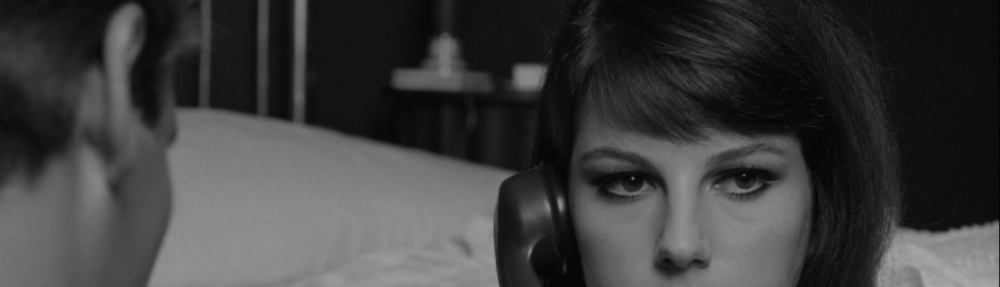
 It is well documented that Shadow of a Doubt was Hitchcock’s personal favorite of his own films. That’s quite a telling statement when you do a quick scroll through some of the titles up for contention. Vertigo, Psycho, Rear Window, North by Northwest, Notorious, even The Birds. And yet the famed “Master of Suspense” chose the often glossed over Shadow of a Doubt. If we take a slightly closer look it makes a great deal of sense as the film follows through with one of Hitch’s most prominent credos, “There is no terror in the bang, only in the anticipation of it.”
That’s, in fact, a great deal of what Shadow of a Doubt is. It’s the cringe-inducing anticipation for what is bound to happen. The inevitable that is plain as day, except not everyone sees it so clearly. But that’s enough ambiguity.
The story opens in a depressed urban city with Charles Oakley (Joseph Cotten) laid out pensively on his bed. Dollar bills are scattered haphazardly across his floor. Soon he learns two men want to talk with him, and he’s not about to get acquainted so he gives them the slip and heads to the one decent place he can think of. Santa Rosa, California, the peaceful abode of his older sister Emma and her family.
What we learn over time is that Charlie is known at large as the “Merry Widow Murderer,” because he has strangled three such women and taken their valuables. Hitchcock playfully alludes to the fact by opening his film with the “Merry Widow Waltz” and it will pop up throughout the entire story if you’re paying attention.
 His train comes barreling towards town with smoke spewing ominously. For now, his oblivious family is just happy to see his face, especially his oldest niece and namesake Charlie (Teresa Wright) who is ecstatic to have something to shake the family out of their funk of normalcy. At this point, there is little to be uneasy about, because Uncle Charlie is not about to do anything rash, but there are a few moments where he gets uneasy. Covering up a paper headline and doing his best to avoid two men taking photos for a national survey. Charlie doesn’t think much of it at first, and it feels just like old times with uncle giving gifts and receiving the royal treatment.
Except the ring he presents to Charlie is plundered jewelry with a mysterious pair of initials engraved on it. Of course, the men interviewing the Newton household are actually trailing Uncle Charlie, and Detective Graham fills Charlie in while also becoming fond of her. But it’s not the kind of news she’s willing to accept. How can she? It’s a late night visit to the local library that finally confirms all her deepest fears. Soon, the telltale signs become more apparent to the audacious girl, and Charlie simultaneously notices the changes in her as well.
This is where the film becomes fidget-inducing because it’s out in the open. Uncle Charlie knows that she knows, and still he remains in their home, in quiet little Santa Rosa, as if nothing has changed. For most of the family, nothing has, but Charlie’s demeanor is completely different. She just wants her uncle gone, away from her family, and then there’s the impending threat that her own life might be in danger. In truth, Uncle Charlie doesn’t want her around, even though it looks like he might get off scotch free. His mind is already so twisted — so far gone — that he coolly attempts to get rid of Charlie, right under the very noses of their family.
It turns into a psychological mind game between uncle and niece, Charlie vs. Charlie. There’s no detective to save her now because he’s already left town and there’s no other direction to turn. She finally does succeed in getting dear uncle to leave town, and it looks like the living suburban nightmare is coming to a close. Then, in a final instant on the outbound train, Hitchcock’s lets off a BANG! The film’s culmination arrives and is just as quickly passed over. It’s done just like that, but it’s not really what was important. All that nerve-wracking build-up — the meat and potatoes of the drama was what was paramount.
Thus, Hitchcock delivers us a shocking nightmare of a film. It’s not anything like Psycho, existing in a far more mundane world. But Shadow of the Doubt brazenly suggests that murder can reach us even in our homes, even in the places that feel the safest. Hitch exhibits his wicked sense of humor with two characters who love to talk murder in Mr. Newton (Henry Travers) and the next door neighbor Herb (Hume Cronyn). They obsess over crime fiction and discussing ways to get away with murder. Little do they know that the man in their midst is trying to do just that.
Teresa Wright is certainly one of my favorite actresses and her role as Charlie is one of her bests highlighting her cordial charm, while also revealing her adeptness in the role of a tortured heroine. We want her to succeed more than anything, and as an audience, we worry for her well-being the entire film. Meanwhile, Joseph Cotten generally plays laconic types, but still, they usually have more goodness than baseness in their souls. Uncle Charlie is a fine role for him because he’s so sweetly cunning and at the same time sadistically twisted.
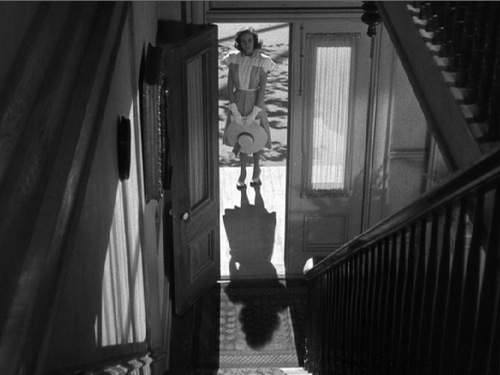 Unfortunately, the role of Detective Saunders feels rather shallow, but that’s hardly something to get stuck on. If that were the case, we could easily point to Charlie’s parents who seem way too old. But they are perfectly average, ordinary folks, as played by Henry Travers and Patricia Collinge. The script work of the preeminent Thorton Wilder (Our Town) and the on-location shooting in the Everytown of Santa Rosa lend a universality to this thriller’s impending dread.
Dimitri Tiomkin heightens the film with his usually stirring, pulse-pounding approach to scoring. Hitchcock’s camera, while in black and white, is nevertheless noticeably dynamic. He always emphasizes the necessary focal points, and extreme close-ups and high angles only accentuate the drama. His use of the stairwells in the house is absolutely marvelous, implying both distance and foreboding in numerous shots. For every shot that Cotten looks menacing, there is an equal number highlighting the pure innocence of Wright. It’s the perfect juxtaposition of character, in a film that is really only your typical see-sawing struggle of good versus evil. Except it takes place in our own backyards.
5/5 Stars
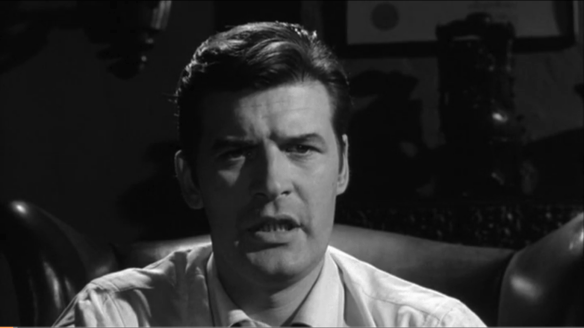 “This long corridor is the magic highway to the Pulitzer Prize” – Johnny Barrett
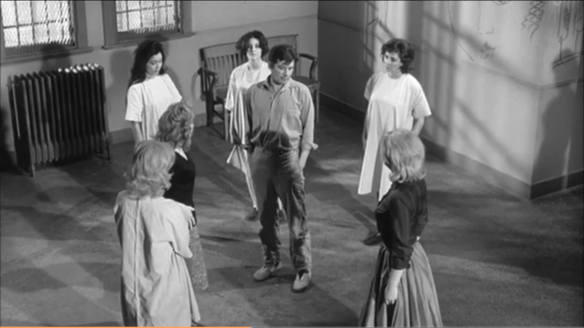 Behind the pearly gates, there are brawls galore and noisy neighbors riddled with all sorts of neurosis, quirks, and ticks. There are the good cop and bad cop who help care for the patients and keep them at bay. Johnny even begins to have hallucinations of his girlfriend drifting through his dreams. He gets introduced to hydrotherapy, dance therapy, and even faces a traumatizing experience at the hands of women in the female ward.
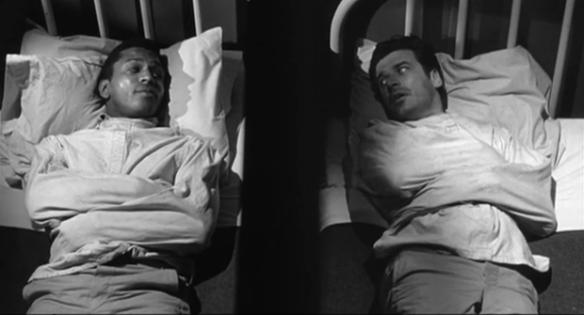 The boisterous, tumultuous chaos of the ward does almost become maddening, even to the viewer. Johnny has a few angry outbursts of his own as the strain of the facility gets to him more and more every day. Electric shock therapy among the other treatments leaves him mixed-up, confused, and overtly paranoid. He’s hardly the man we met in that office so many days ago and even if he got the scoop he was looking for, at what cost? Shock Corridor has a thunderously disconcerting ending worthy of a Fuller production.
 The film industry needs films like Ex Machina. They’re smaller productions, but that usually means they’re more audacious and oftentimes far more interesting. First time director and veteran screenwriter Alex Garland delivers up a story that takes place in an isolated, ultra-modern getaway that’s a helicopter ride away from civilization. Caleb (Domhnall Gleeson) gets dropped into this little piece of paradise thinking he’s won a huge honor, and in truth, he has hit the jackpot. He makes his way to this isolated locale and comes face to face with Nathan (Oscar Isaac), the mastermind behind his little company. We don’t quite understand why Caleb was called in or what the following hours will look like exactly.
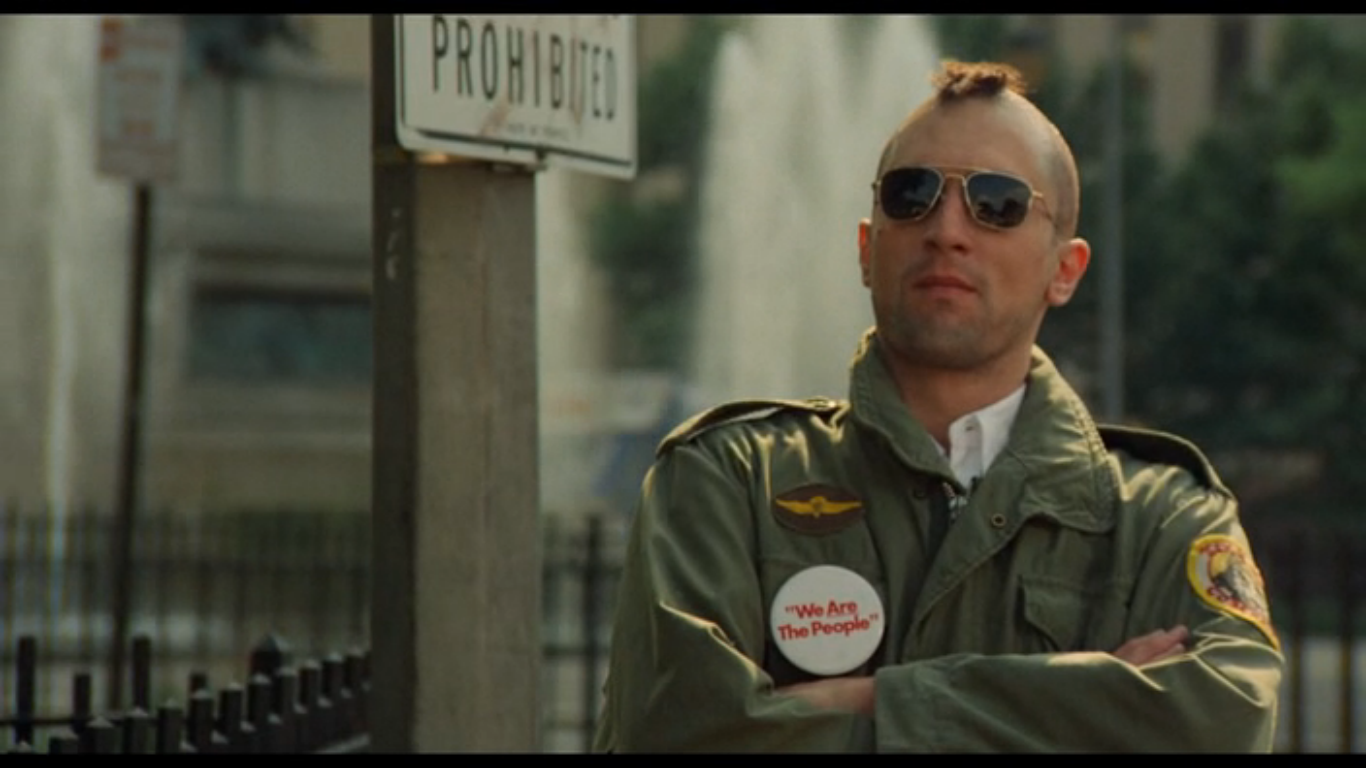
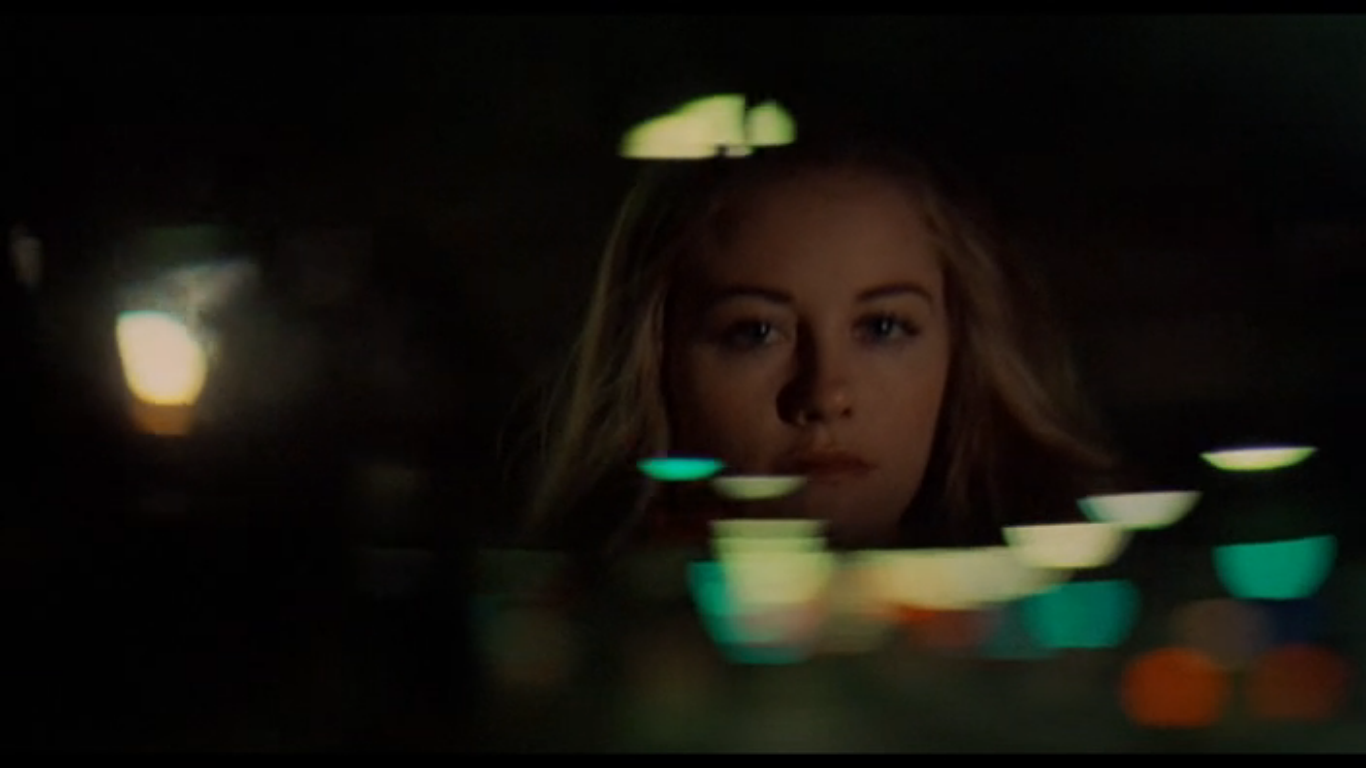
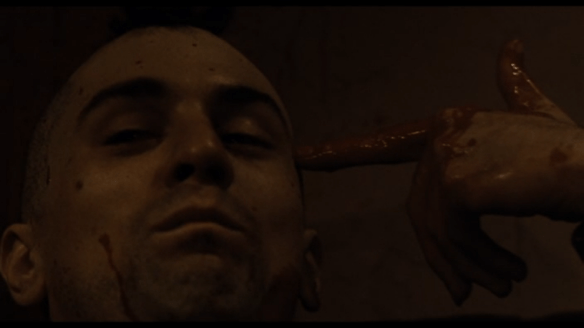 Martin Scorsese’s film has also received pointed criticism for its violence which is hard to downplay. However, Taxi Driver remains interesting because it is not bloated with killing (in fact only one scene is actually bloody). Most of the film has to do with relationships or lack thereof because a lot of what Travis does is watch and listen. It might be Martin Scorsese in a cameo as a jealous husband or a presidential candidate asking Bickle’s opinion from the back seat. Furthermore, like any warm-blooded boy, he knows that Cybil Sheppard is a dream girl. And he has enough compassion to want Iris to have a normal childhood. It’s just that his conscientiousness is misdirected and subverted.





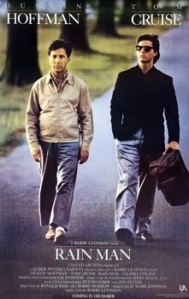 inson doesn’t have a masterpiece per se, but he has some thoroughly enjoyable films in his filmography including Diner and Good Morning Vietnam as two prime examples. Rain Man is similar in that it is an interesting film and a heartfelt film, but not, dare I say, a great film.

 4 Star Films