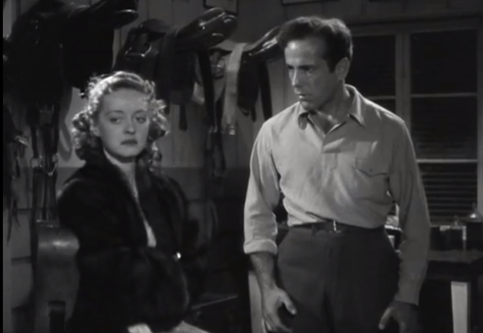
Destination Tokyo (1943) and There’s No Place Like Home

destination tokyo.png

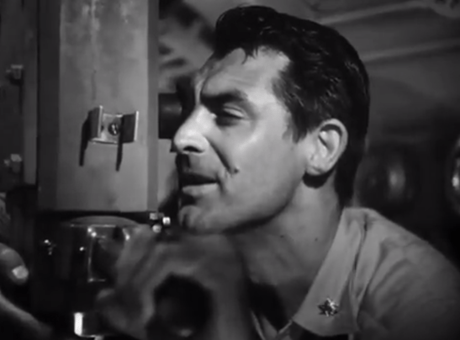
“This is sort of a blind date. We’ll just have to wait and see what happens.” – Cary Grant as Captain Cassidy

No pretense can be made to suggest Destination Tokyo functions as an original entry of a “men on a mission movie” from a couple decades later. For one thing, Cary Grant doesn’t strike one as the soldiering type. He’s not Lee Marvin or Charles Bronson.

However, it must have worked on at least one kid. Years later Tony Curtis would recount how he saw the picture in theaters and the images of Grant looking through the periscope inspired him to enlist (and maybe become an actor).

He ultimately realized both aspirations — even starring with his hero in the Blake Edward’s comedy Operation Petticoat, which ironically, is set aboard a submarine! In Destination Tokyo, Grant is more business but an amiable skipper nonetheless, with a family waiting for him back home. Still, he’s more than prepared to face the task at hand.

Although they are not much of a secret, thanks to the built-in spoiler in the title, Captain Cassady (Grant) waits the designated 24 hours into their excursion before opening their orders. Obviously, they’re headed to Tokyo. They are also required to pick up a package en route: a meteorologist named Raymond (John Ridgely).

What the film does well is creating an ecosystem for characters to be empathized with because once we have the framework of the task at hand, we can readily spend our time getting to know the men onboard.

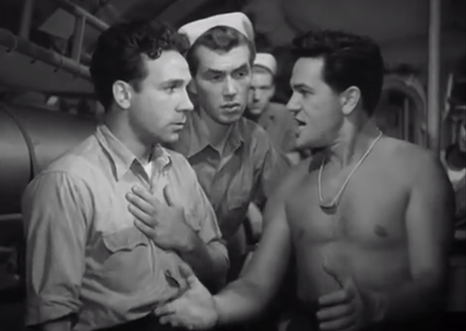
There always must be the callow recruit and this story is no different with Tommy Adams (Robert Hutton) stepping into the role. Meanwhile, John Garfield has a fine time hamming it up as the spirited Wolf enthralling the stir-crazy crew with his exploits with the fairer sex. His active imagination fuels their own hopes and dreams about sweethearts all across the sea, whether they exist or not.

Dane Clark readily complies to the rank and file with his own average G.I. Joe, “Tin Can,” an equally spirited Greek-American intent on getting his chance to make the “Japs” pay. Alan Hale, always counted on for comic relief, is little different here as the bubbly chef Cookie doing his best not to clang pans when they’re diving deep to evade the enemy.

Otherwise, he’s a handy fill in for Santa Claus for a Christmas spent 20,000 leagues under the sea, metaphorically speaking, of course. For someone like Adams, this is his first Christmas away from his family and the accordion accompanied quartet singing out “O Little Town of Bethlehem,” and a few other yuletide favorites is a much-appreciated touch of home.
destination tokyo 2.png

The crew begins to truly feel the weight of circumstance when a pair of Japanese zeroes come upon them on the seas. They let ’em have it with their anti-aircraft deck guns firing into the sky.

One curious stylistic choice is to actually show the enemy pilots raining hell down on them. It hardly feels like an empathetic turn, however, and more of an easy way to label them. If you see someone like this, know they’re the ones doing injustices against us. We’ve got to stick it to them whatever the cost. It becomes more blatantly clear only minutes later. They’re backstabbers.

In a film with an understandable but generally misguided sense of Japanese culture, it does become an intriguing task to begin to unwrap the ideologies being promoted. One cannot quickly forget this is propaganda meant to mobilize mom, dad, and everyone else back at home.  It makes it easier to comprehend how ignorance and general misconceptions can be so widely propagated.

Delmer Daves would soon become well-versed in these kinds of wartime tales from The Very Thought of You to Hollywood Canteen and The Pride of The Marines. One can note actors like John Garfield, Dane Clark, and John Ridgely readily being recycled throughout. However, to its credit, instead of merely painting all Japanese people as terrors, it frames them as victims of a broken system of government.

The token metaphor alighted on are roller skates — those vehicles of carefree child-like recreation — we need more rollerskates in this world including the next generation of Japanese kids. Because it’s a far better alternative than more international conflict.

In the most harrowing interludes, the crew of the USS Copperfin surreptitiously sneak into the minefield of Tokyo Bay under the cloak of an oblivious enemy cruiser. They squeak past the enemy netting and hold their breath as they move into the heart of enemy terrain. Their covert mission continues with three men, including Wolf, going ashore to undertake reconnaissance. It feels somewhat eery for the very reasons two years later nearby locales would be absolutely obliterated by Big Boy and Fat Man.

The balance of the human drama with wartime objectives remains the film’s greatest strength. It’s not all pulse-pounding action necessarily, but it maintains interest through the investment in its characters over the long haul.

An unexpected complication involves an impromptu appendicitis operation. A former pharmacist student, not formally trained as a surgeon, is given the unpleasant task of removing the burst organ based on the written procedures in a textbook. Meanwhile, on land, Tokyo Rose jeers the Allies only for our protagonists to send vital weather reports over the radio to waiting Allied receivers. This entire operation is purportedly under the nose of oblivious Japanese operatives.

The most laughable reaction comes from an incredulous Garfield, “If the Japs pick it up, they’ll think it’s one of their own guys.” He didn’t take into account how stifled John Ridgely’s pronunciation sounds. My Japanese is abysmal, but it doesn’t take a linguistic genius to know he’s probably never spoken a lick of Japanese in his life. But I digress.

The return trip is fraught with bombardment from above as the Japanese get wise and in the ensuing pursuit, the sub gets hammered. The situation is dire with the interior leaking and filling up with water. It’s all hands on deck just to bail them out.

However, when the proverbial fog clears, miraculously, they’ve got off scot-free. The next prominent landmark they see is the Golden Gate Bridge, and it triggers all their fluffy feelings of Americana. After being in foreign waters, the relief of being back home in the good ol’ U.S.A is too great to pass up. As an American who has lived for an extensive period of time in Tokyo, somehow I can relate, though for very different reasons. There’s no place like home.

3.5/5 Stars
Air Force (1943): Howard Hawks Takes on WWII

air force 1.png

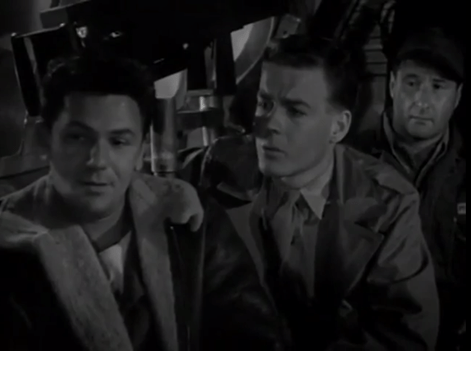
At times, Air Force functions like a staged documentary. It feels both instructive and informed by Howard Hawks’ own passion for aviation. It has the simple task of making sure the folks at home can empathize with their boys up in the air. In fact, it falls short of being a mere instructional manual because its highest purpose is to be a stirring propaganda piece.

Certainly, the War meant all hands on deck, even when it came to filmmaking. You had John Ford famously capturing The Battle of Midway. Frank Capra oversaw the series Why We Fight, as a member of the Army Signal Corps. George Stevens notably took footage of Dachau Concentration Camp after it was liberated. This is Hawks’ contribution to the same effort, mobilizing the American public behind the war, in part, by harnessing their emotions. In this regard alone, Air Force is generally a success.

Although some of its players have been generally forgotten in the modern movie pantheon, Air Force features a surprisingly robust cast of actors. Their leader is pilot “Irish” Quincannon (John Ridgely), who has been charged with leading the crew of the Mary-Ann, a much-beloved B-17 Flying Fortress. Its caretaker is a crusty veteran (Harry Carey) whose own boy is currently stationed in the Philippines.

The rest of them feel like fine red-blooded Americans, from co-pilot Gig Young, navigator Charles Drake, and a youthful Arthur Kennedy as their bombardier. George Tobias adds his humor while John Garfield ably plays the outsider with a chip on his shoulder.

They are a perfect menagerie for Hawks to impose his always cognizant sense of male camaraderie because what more galvanizing situation is there than the throes of war? Very little.  It’s this link — a kind of communal gravitational pull — that helps them weather thick and thin, as the enemy hounds them at every turn. Without it, the picture wouldn’t have much pathos. These relationships are experienced vicariously by the audience.

Their assumedly routine mission is humanized through sendoffs from loving mothers and wives. Later on, they pay a visit to a sister stationed as a nurse on an island hospital. All these touches are very purposeful, implying how each life is interconnected with a web of loved ones and sweethearts. This could be any of us if we grew up in wartime America.

Against these waves of systematic sentimentality, the bad boy cynicism of John Garfield fits like a glove, and he peddles his usual pessimism with ease. For a time, that’s all the conflict we have.

Then, they pick up Japanese radio chatter — it’s odd — they don’t understand what could be happening until they see it for themselves. It is, of course, December 7th, 1941, and they’re right in the thick of the attack on Pearl Harbor. When they finally get a chance to inspect the situation on the ground, the aftermath is understandably grim.

In the moment, creating a broad conspiracy involving fifth column dirty treachery on Hickman Field is an effective paranoia tactic. However, in hindsight, there are a few pernicious details used to paint the scenario, namely, a band of rogue vegetable trucks used to clip the wings of planes on the ground. As if the enemy had ground forces orchestrating sabotage to coincide with the aerial attack. This, in fact, (considering the Munson Report) never occurred.

Regardless, the crew is ordered to get on the move again before any other trouble arrives. Their next leg is Wake Island en route to the Philippines. Along the way, they strike up a playful competition with a pursuit pilot, allowing our men to reconcile their differences. Even a dog christened “Tripoli” conveniently doesn’t like Japs (ie. Mr. Moto)

The ensuing dog fights in the skies feel atmospheric and like a dead ringer for George Lucas’s original Tie Fighter-Millenium Falcon duel, with turret guns blasting away. In this chaos, their one solitary flying fortress becomes an emblematic symbol in itself, representative of the American spirit, grit in the face of adversity, and a never say die mentality.

Battered and broken as it is, their sole purpose becomes putting it back together again, to fight another day, and it’s fitting because that’s very much what America was forced to do after Pearl Harbor. A victory at The Battle of Midway would have meant little if we didn’t get to that point. Air Force seems to suggest, with men as tough of these, we got there and ultimately we prevailed. It’s an easy narrative to swallow about the “greatest generation,” and there is a certain amount of truth in it. However, it’s certainly not a nuanced picture. We know its intentions full well.

The final minutes are all but a foregone conclusion, necessary for closing out the dramatic arc. There’s quite a large deal of bombs bursting, planes crashing, guns blasting — all key elements of the fog of war. Even in their archaic simplicity, there are some thrilling moments. However, most of what’s of interest still remains up in that airplane – – the men we’ve gotten to know along this arduous journey.

Of course, in 1943 the journey wasn’t done yet. Thus, there was the need for this picture in all of its patriotic fervor. In this realm, it’s fairly effective, amassing the third-highest box office pull in its day. There’s no doubt it spoke into a particular cultural moment. For those admiring of Howard Hawks, it’s a less-heralded but still intermittently gripping adventure in the skies, awash with jingoism though it may be.

3.5/5 Stars

Pride of The Marines (1945): John Garfield Plays Al Schmid

pride of the marines.png

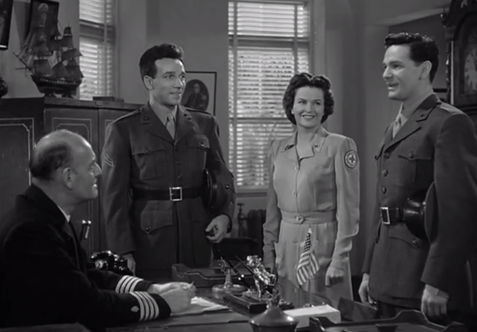
During WWII there’s no question John Garfield was integral to the war effort despite having never served in the military. He did yeoman’s work when it came to morale, through his pictures at Warner Bros, originating the famed Hollywood Canteen with Bette Davis, and going on war bond tours with the likes of John Basilone.

No question he was a devoted champion of the Allied cause and so when he learned of the true-life heroism of marine Al Schmid, flipping through the pages of Life magazine one day, he started the wheels turning in Hollywood. Schmid was a Philadelphia native who was deployed in the deadly warzone of Guadalcanal in 1942. He and two mates held onto their gunnery outpost against hundreds of enemy soldiers. Their valor was not without sacrifice.

There are certain stories you could hardly write better for the cinema screen and The Pride of The Marines is one of them. As such, Schmid’s story fits fluidly into three distinct segments. It begins as a bit of a hometown romance. In the opening voiceover Garfield, in character as Al, explains how Philly and the Liberty Bell is all he’s known and although this is his life, it could have just as easily been someone else’s. There’s no missing that Delmer Daves’ film is a universal flag-waver for the whole country to get behind.

Like any red-blooded American, Al’s a confirmed bachelor, though he loves the company of his landlords, the genial Merchant clan. Jim (John Ridgely) is always good-naturedly tinkering on everything with varied success. His wife Ella May (Ann Doran) is just about the warmest beacon of hospitality one could ever meet. And if they are both benevolent spirits, their bubbly daughter Loretta (Anne E. Todd) is equally so. Al is affectionate toward them all, even as he remains fiercely independent. No girl the resident matchmaker tries to set him up with will make him think otherwise.

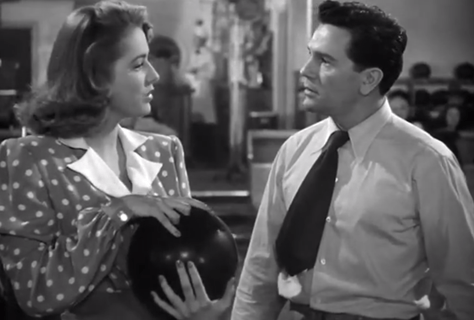
It’s much the same when he finds a quivering Ruth Hadley (Eleanor Parker) at the front door in the dark. A fuse is blown. The lights are out. The family scurries around as a brusque Garfield lets her in. He’s prepared to tear her apart as she confirms all his assumptions about the typical girl-next-door.

This is the rockiest of meet-cutes but I must say, I like it because there is this instantaneous conflict. No disrespect to Dennis Morgan in The Very Thought of You, but Garfield brings his brand of tougher authenticity that’s far more compelling. The beauty of Parker is not simply being an attractive face — on par with any of the Hollywood starlets of the 1940s — there is an earnestness and a feistiness present in her very being.

It comes out over a miserable bowling date tacked onto their already awful evening. She’s been continually humiliated, and she retaliates with her bowling ball and a forceful march out the front doors, which receives whoops and hollers from all the patrons. This is when we realize we have a story and with it a true love affair.

pride of the marines 2.png

At first, it’s tentative. The second stint begins as Al prepares to ship out after Pearl Harbor. Nothing has been agreed upon between them. He’s noncommittal. She’s not one to beg and plead, though she has her own private desires. Their hours together are dwindling and in one final burst of emotion, he asks for a promise: to wait for him and he provides a token of his faithfulness. They’re tied together now like we always knew they would be. There were too many sparks for it to be any other way.

The war can really be summed up in one extended scene played out within the morass of war. Enemy “Japs” wade across the divide toward their waiting machine gun encampment, mowed down in the mayhem. They taunt them throughout the night, coming relentlessly, hour after hour, only to be stopped dead in their tracks, piling up everywhere.

I couldn’t help feeling some amount of conflict in witnessing all this. I am an American and I love John Garfield as much as the next fellow but this senseless killing — even in a fairly chaste old Hollywood movie — still feels like too much. The problem is it featuring war at its most intimate.

“Don’t shoot until you see the whites of their eyes” is a practical axiom, but it also makes hand-to-hand combat far too personal. The film tries, but you cannot keep the enemy completely at arm’s length. Watching something like Fire on The Plains (1959) and we get an idea of what their side of the story might be. In this case, a stir-crazy Schmid holds them off in a gutsy stand that, nevertheless, leaves him without the use of his sight.

Phase three is arguably the most significant yet. He must start to grapple with this new reality, even as he’s rehabilitated in an army hospital in San Diego with some of his wounded buddies. He’s lying to himself, believing an operation will give him back his vision. The letter he dictates to be sent to a concerned Ruth paints much the same tale. Unfortunately, it doesn’t work that way.

The best shot comes in the moment of truth when the bandages are off in the darkness and as a flashlight is about to be brought up to his face, the camera focuses on his jet black hair and goes black as the voices keep talking. The image says enough already. We know the outcome without seeing anything or, precisely, because we don’t see anything…

Still, Al’s not ready to come to terms with reality nor is he prepared to tell Ruth. He wants to disappear so she’s not burdened with his disability; he’s even more dismayed to learn the presentation of his Navy Cross will take place back home. Because a “Marine doesn’t lean on nobody.”

pride of the marines 3.png

The old conundrum is not a foreign one. Each one of us wants to be loved, but what if you come back and we are not the same person — disabled or maimed in some way — that our significant other fell in love with? Will they still take you back or loathe the very sight of you? The answer is not always obvious.

Ultimately, it is his solicitous caretaker Virginia (Rosemary DeCamp) and the moral support of his buddies, including Lee (Dane Clark), pushing him forward. In one private phone call, the nurse confirms her suspicions. Ruth fits into the unconditional love category. She’s not going down without a fight, even if it’s a battle over the heart and soul of her disconsolate husband.

We need not dwell on what happens next. The imagination can all but fill it in. A bit of deception, the warmest of welcomes home, and the long haul ahead, forged by two people together as one. Al Schmid would die in 1982 and receive burial in Arlington Cemetery, while his beloved wife would follow him there in 2002.

Predating the likes of Best Years of Our Lives and The Men, The Pride of The Marines digs into the trials of soldiers coming home from war. Garfield is the most capable man I can think of to bear the brunt of this trauma. He battles the demons with his usual grit.

When he’s not at the center of the drama, it falters a bit into the typical didacticism. All the boys with honest, real-life problems, nevertheless, feel like they’re being used to preach to the audience about the plight of the G.I. It’s real, but the heavy-handed roundtable instigated by Daves gets in the way of everything of interest.

The starry-eyed adulation Loretta showers upon him about his exploits in Guadalcanal is also peculiar to me. “You killed 200 Japs, didn’t you Al?” She sounds breathlessly incredulous at this gargantuan feat; it’s like a trophy. I couldn’t help feeling a bit queasy about the statistics in this domestic context. It just goes to show my conflicted nature as a Japanese-American (who lived a stint in Japan) trying to parse through the complexities of World War II.

What’s not difficult to comprehend is just how brilliant Garfield and Parker are as a couple and if they do a fine job, then their real-life counterparts are even more extraordinary. Because they weren’t picking up a salary from Warner Bros. They were out in the trenches in the real world, living life, and facing everything together.

3.5/5 Stars

Dancing Lady (1933): Joan Crawford & Clark Gable

Screenshot 2020-03-27 at 84300 AM

You know the drill. In the throes of the Depression, the idle rich fritter their wealth away at such social events as striptease and then attend the ensuing night court until they get bored with the whole affair. Tod Newton (Franchot Tone) is one of their ilk, but he’s more engaged than others thanks to the pretty girl on the other side of the courtroom.

Down-on-her-luck Janie Barlow (an effulgent Joan Crawford) is a casualty of a police raid undertaken on the saucy dancing joint she’s been working at. Beyond being smitten, Tone (Crawford’s real-life husband for a time), is invested in helping give her a leg up, ulterior motives notwithstanding.

If it’s not obvious already, Dancing Lady has a premise to rival Warner Bros’ superlative successes with risque backstage, rags-to-riches musicals like 42nd Street. So, while the plot is nothing special, it somehow taps into Crawford’s innate sense of ambition as an actress.

There’s a feeling she’s not entirely acting a part; she’s driven to make it to the top. It’s this impetus that leads her to stick to “thousand-to-one-shots” over any man — even Park Avenue know-it-alls swimming in cash. She’s going to make it of her own accord. She’s going uptown toward the art world.

The script purposefully bears down on the vernacular to differentiate the patricians from the plebians and with it Janie’s attempts to make something of herself — first, through improved diction and then a newly cultivated wardrobe.

Without knowing it, she’s probably aspiring to the entertainment funded by such nincompoops as Mr. Bradley and his roly-poly walking gag of a son Junior. They are a father and son comic echo chamber if you will, and they also hold the purse strings for one of the industry’s latest productions.

It’s not altogether glamourous stuff but Patch Gallagher (Clark Gable) and his taskmaster-like regimen, turning chorus girls into a full-fledged production, is the “big time” for someone like Janie. The only problem is getting an audition. The head honcho has his right-hand man Steve (Ted Healy) run interference for him — it didn’t go so well for a wisecracking Eve Arden. Still, the “Dutchess” is an assiduous gal if there ever was one.

Director Robert Z Leonard is evidently enamored with his whip pans, but he does evoke pace rather well, especially when Crawford tries furiously to catch up with Gable as he streaks down the sidewalk. While it’s a cliched rom-com montage that would be recycled time-and-time again, it still stands out within the context of the film. The leads don’t speak a word to one another for several minutes at least.

In what feels like a non-sequitur, the Three Stooges make a lightning-quick cameo. Well, they actually show up twice, posing as stagehands. It’s true they feel completely at odds with Joan Crawford’s story arc, but it’s delightful to see them, even momentarily, as she continues her ascension. This is only to be surpassed by the appearance of Fred Astaire! (And I nearly forgot to mention Nelson Eddy, so there you go).

Tone continues to go to great lengths to win her affections, secretly bankrolling her star vehicle, dancing and dining her, and flaunting his swimming pools. When all else fails, he resorts to taking her to Cuba, conveniently far away from the other man in her life and the career she’s chosen.

The red-hot sparks are given a literal gymnasium to work themselves out in — positively buzzing between Crawford and Gable — as they get in their morning exercise to keep their svelte dancing figure and brawny physique respectively. It goes unspoken, but an unwritten rule of storytelling tips us off that antagonism usually denotes love. They have copious amounts ready-made to dish out at one another.

Unfortunately, by this point, the story gets less and less interesting by the minute as it continues to sink into the preconceived notions of the genre. In other words, what we suspect to be derivative proves itself to be precisely that. It speaks to the charisma of the stars who make the well-trod paces watchable, even engaging, and there are a few momentary delights around the fringes.

The final extravaganza is a not-too-veiled Busby Berkeley knockoff infatuated with beer. The surreal foray that follows offers up a luxuriant carousel of beauties and giant fan blades strapped with women — not to mention the surreal moment when a host of old maids go behind a curtain only to be dismantled to come out as gorgeous dancing ladies.

With Fred Astaire showcased prominently alongside Joan in a very fluffy ensemble, it felt strangely out of place. Astaire and Rogers had yet to be placed together and it’s true their trajectories could have been so much different. I don’t know a thimbleful about dancing, but at the very least, Crawford has an earnestness on taps. Though, she’s not quite Ginger Rogers either. No one ever said she was.

With Tone’s gigolo scorned and “The Duchess” going in to check on her dejected “Duke” after their stunning success, there’s a sense the working-class heroes are being reunited in a triumphant victory for all the blue-collar folks in the audience. In other words, it’s not just Depression-era pap, there’s this genuine element of wish fulfillment.

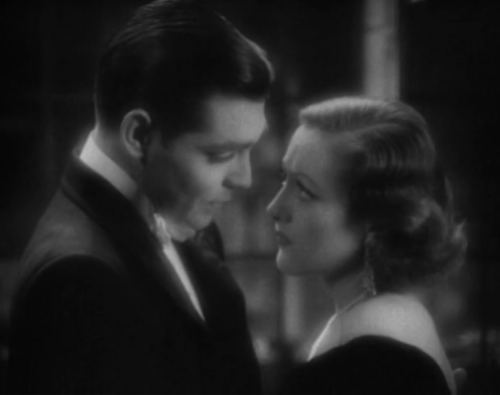
The movie is gracious enough to supply one last obligatory scene between Crawford and Gable for contemporary audiences. Because there are a lot of distractions (and some unique surprises like Astaire), but the romantic chemistry is present and delivered on a silver platter with the kiss that the whole movie’s been culminating to. Surprising, I know. What’s the axiom? Give the people what they want? Dancing Lady is case and point.

3.5/5 Stars

Possessed (1931): Joan Crawford and The “In” Crowd

Screenshot 2020-03-24 at 65703 PM

We open up on the Acme Paper Box Co., which has a down-and-dirty industry strewn about its edges. If the people flooding out of the factory are any indication, this will be a dusty, grubby, little picture.

Two of their employees are Al Manning (Wallace Ford) and Marian Martin (Joan Crawford). He’s a concrete worker with a penchant for bricks, and he’s also positively smitten with her. Meanwhile, her gaze is focused somewhere else. She’s not about to settle for “happiness on an installment plan.”

It’s summed up by the train tracks — a handy conduit for the luxurious upper classes who coast by with their dancing, music, and cocktails. They have no idea about a life like Marian’s, nor do they have any reason to care about it. However, she gravitates toward them, peering in at their affluence from the outside. She would do anything to breach the space in between.

She does meet one fellow as he knocks a few drinks back and stares out at the sorry landscape. They strike up a momentary conversation; it’s nothing more and nothing less, but it leaves an impression. Among other things, he tells her there two kinds of people: those who are “in” and those who are “out.” And before he’s whisked away, he offers her one of his cards like a (drunk) gentleman.

Richard “Skeets” Gallagher, a character who ultimately becomes of minor importance, nevertheless fascinates me for some unequivocal reason. As best as can be described, he is the kind of actor who feels stuck in the 1930s, and I mean it as a kind of backhanded compliment. There’s a frequency to his voice perfect for radio tones but somehow it’s hard to see him existing outside the era. That’s perfectly alright.

At any rate, intrepid Marian having eaten the fruit, so-to-speak, and gained knowledge about their world, can never go back to her simple ignorance. Instead, she returns to her mother and Al telling tales of what she’s just seen.

In the city, folks see the world as a woman’s oyster. Poor folks think men are meant to go out and get whatever they can out of life; women are meant to stay where they and get married. If anything is obvious, Joan Crawford’s not one for the shabby status quo. So she goes out and does something about it.

However, she really is in a sorry state, showing up on the doorstep of the one man she knows in town. With nothing else to lose, she tries to sneak her way into a lucky break, fumbling around brazenly, foot in her mouth, but she’s definitely got guts. There are no pretenses when she tries to get in with his friends; she’s a straight-forward gold digger and she knows what she wants.

For some, that’s a turnoff. For self-assured up-and-coming statesmen Mark Whitney (Clark Gable), he finds it oddly attractive and so he gladly leads her by the arm and allows her the benefit of his bounty. A few years down the road she’s made strides in the life of a social hostess. For all intent and purposes, she acts as the perfect wife. Directing the servants, choosing the wine, throwing dinner parties like a seasoned professional.

What’s the big reveal, you ask? They’re not married. They have a mutual agreement and being pragmatic seems to have paid off. Even as she continues to educate herself in the finer things, including French and German loves songs, there’s still something in her upbringing that sympathizes with a lowly tramp brought to one of their gatherings. The woman feels woefully, even uncomfortably, out of place, surrounded by so much class.

Marian realizes no manner of jewels or perfume can totally cover her own genetic makeup. The gravest development in the story starts in Crawford’s own character. She settles in and softens up. In some ways, she wants marriage, because she’s gone and fallen in love. It’s no longer a convenient relationship with fringe benefits.

Right here, it’s evident how it courts similar themes as Back Street or any movie about women trapped in somewhat unenviable positions in a society where their only recourse is to take what they can get by any means necessary. We pity them even as some of their actions feel unfortunate.

Al comes to the city bitten with the same bug that once got her, with the goal of making “the big time,” asking favors from the man she’s already attached to. He’s utterly ignorant of what he’s stepped into — what Marian’s arrangement entails — still, he knows what he wants.

It should be noted Clark Gable never gets a lingering closeup as fine as the ones extended to Crawford. After all, her name is over the title credits, not his. But what’s refreshing about his character — he doesn’t feel like an out-and-out cad — there’s some integrity to him. Still, life must complicate everything. Their relationship begins to disintegrate, on the behest of friends and advisors, as he must make a choice between a political career a woman.

A new normal is soon established. The wheels of the political movement begin to spin, unnamed naysayers look to stir up scandal against him, and Marian somehow evaporates into the background. The final scene is the lynchpin of it all. Joan Crawford feels like an anonymous civilian walking through the rain with her umbrella and mac amid the usual foot traffic. They all make their way to a grand pavilion with posters of her man plastered on all sides.

In a purely cinematic moment, she takes the stand on his defense and gives a tearful, overly sincere annunciation of his character. It wins over the audience as she’s overcome with emotion and stumbles out in tears.

Again, the key is that we follow Joan. We are with her as she bursts through the doors and totters her way out onto the street with the rain pelting her as she labors up the stairs…That’s when her leading man comes and wraps her up in his arms. It’s what these old movies were made for. The final embrace propelled by emotion and buoyed by the attractive glamour of their stars.

Enough films of the era take a bleaker road; it’s safe enough to give this one its Hollywood ending. It is Hollywood after all, the land where Lucille Laseurr could become Joan Crawford: one of the most indelible figures Hollywood ever created.

3.5/5 Stars

Alias Nick Beal (1949): Ray Milland’s a Devil

Alias_nick_beal (1)

This is my entry in the CMBA Politics on Film Blogathon.

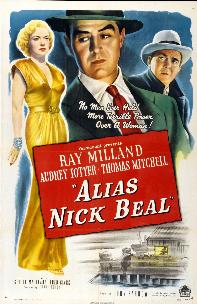
Alias Nick Beal handily flips the paradigm of cinematic angels in vogue with Hollywood, specifically during the 1940s. You could make a whole subgenre out of them. As its name suggests, the lynchpin character of the entire movie is Nick, though this is admittedly only a pseudonym. Across time and space, he’s come in many forms, under many names, including the serpent, Lucifer, or the Devil.

Ray Milland portrays him in bodily form, providing a deliciously evil turn in fine threads. He’s not quite the “blonde Satan” out of Dashiell Hammett’s Sam Spade literature, but he’s almost there, about as close as you might possibly come in the flesh. With such a devious figure pulling the strings, Alias Nick Beal becomes noir mixed with myth and allusion in a rather unusual manner. It is the first of its kind: a Faustian noir.

The story itself opens in more conventional territory. There’s an earnest, hard-working district attorney named Foster (Thomas Mitchell) who is looking to clean up local corruption, manifested as always by cigar-chomping Fred Clark with his host of slot machines and bookies just looking to rake in the dough.

Try as he might, he’s never been able to deal the definitive blow to the town’s graft. Regardless, he’s an upstanding man of principle with a devoted wife (Geraldine Wall) of many years and a solid base of friends, including local minister Reverend Garfield (George Macready). Of course, even someone like him falls to temptations; they seem innocent at first even honorable. The trajectory of his entire political career starts to change for the better, although his personal relationships are poisoned beyond repair. More on that later.

For now, he has an inauspicious meeting at the local watering hole, the dubious China Coast Cafe. It’s the kind of joint that can only exist in the foggy back lots of some Hollywood studio (in this case Paramount Pictures).

It’s the cheap, low-lit atmospherics of such an obviously stylistic or phony facade that make Alias Nick Beal feel like low-grade entertainment. With noir, however, this often proves more of a blessing, and what’s more remarkable is how impressive the cast manages to be. The cafe also happens to be a fitting place to meet the devil’s incarnate.

No, Foster doesn’t go and sign the pact right then and there. His new acquaintance is far too cunning, far too diabolical to be so direct. But it comes soon enough as his new undue influence makes an insidious impact on the politician’s life. Isn’t it true that small habits compound as days, weeks, months, and years go by before you realize how much you’ve actually changed? Whether good or bad.

Simultaneous with his public ambitions, Foster’s reverend friend helps run a boys’ home not unlike similar storylines in Boy’s Town or Angels With Dirty Faces. It’s a conventional if generally uninteresting element. The one moment prodding the movie’s core conflict with a stick comes with the daily Bible reading.

Nick doesn’t want to be caught dead near the good book, but the minister opens it all the same as is his practice reading the following words to his charges:

“The earth is the Lord’s, and the fullness thereof; the world, and they that dwell therein. For he hath founded it upon the seas and established it upon the floods. Who shall ascend into the hill of the Lord? Or who shall stand in his holy place? He that hath clean hands, and a pure heart; who hath not lifted up his soul unto vanity, nor sworn deceitfully. He shall receive the blessing from the Lord, and righteousness from the God of his salvation.”

If they’re not obvious already, the passage is an implicit call for Foster — to make him take heed — a warning against his current trajectory. Nick knows if Foster heeds the words, all his tireless work in interference will be thwarted. However, he’s still got some tricks up his sleeve.

One of them is named Donna Allen (Audrey Totter), a dame he found out on a street corner by the same upstanding establishment he just happened to meet Foster at. Audrey Totter does her gloriously acerbic rendition for this strange character and plays it nice and tender as well. It’s a fluid performance for a peculiar role calling for a hooker to get promoted in status to that of a campaign manager and confidante.

Suddenly, the works of devils and angels don’t look altogether dissimilar. After all, he raises this woman of ill-repute out of the gutter, gets her an apartment, drapes her in mink coats and stoles. However, it’s the ulterior motives that are most revealing.

Because eventually, Nick has worked his way up — greasing the wheels of Foster’s ego as it were — so they can start talking about the murky grays of politics. His line of arguments are deceptive to the point he has his victim finds himself conceding on the same points of moral bedrock as Claude Rains in Mr. Smith Goes to Washington.

They buy into the lie that this is the only way to get anything done. Maybe it is partially true. Who am I to say? Conveniently, in the other picture, Thomas Mitchell was the wisecracking journalist who could observe from a comfortable distance. In this one, he’s embroiled right in the middle of the mess.

With Nick Beal constantly needling him and all the conflicting forces and voices in his life swelling, it really is a tug-of-war for his soul. Everyone wants a piece of it. His wife, the reverend, Nick, even Donna. It’s the intent that colors their true character.

Thus, Alias Nick Beal is an impeccably noirish take on spiritual warfare — the necessity of “pinning the devil to the mat” — before he totally makes you into a self-serving, arrogant person. Given the context it’s already working within, Nick Beal is a creative riff on Faust, but it never feels like full-fledged noir since the moralism is laid on a bit thick.

Neither of these elements is altogether detrimental, but it does feel like the movie is diluted in all its efforts. It’s this curious amalgam of disparate points of interest and self-reflexive in its orchestration with Milland being allowed to be villain and impresario. Again, the pieces and the resulting performances are intriguing, but it feels too cut-and-dry in the scripting department.

There’s never the great intrigue of watching a movie where we imbibe the sense of drama, romance, laughter, or whatever else. It feels like a story is being spun for the sake of Nick Beal so we can see him pulling the strings in front of the camera. Meanwhile, other themes are either cast aside or never fully explored. They could have been the building blocks for another movie entirely.

All told, I’d put it a couple rungs under the likes of The Bishop’s Wife and Here Comes Mr. Jordan. And it’s not quite on par with director John Farrow’s The Big Clock or His Kind of Woman. Milland is enough to make it nearly worth it.

3/5 Stars


You Can’t Take It With You (1938): Quality Capra

you can't take it with you 1.png

This is my post in The 120 “Screwball” Years of Jean Arthur Blogathon put on by the Wonderful World of Cinema!

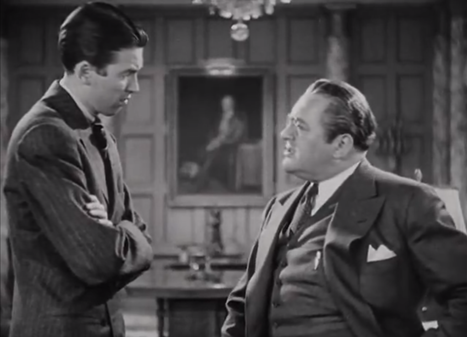
Mr. Kirby (Edward Arnold), or A.P. as his deferential colleagues call him, is a business magnate with innumerable successful endeavors. He has the full pockets to go along with a career full of shrewd decisions. And the latest scheme he’s worked up just might be the granddaddy of them all, that is, if it weren’t for the obliging grandfather in his way.

It stands to reason if Kirby can secure the 12 blocks around the Ramsey company, his one sole remaining competitor, he can cripple them out of business with a large scale monopoly, therefore controlling the munitions industry outright.

It’s a representation of the ugliest strain of free market capitalism. This is not the type of carte blanche you want ruling business, especially in Frank Capra’s world. Still, Kirby wants no interference and that means even Martin Vanderhoff must go. He throws one of his cronies, the perpetually twitching Clarence Wilson, at the problem to get it resolved by any means necessary.

But lest you think the man is merely an old crank who won’t sell out, Lionel Barrymore (now crippled by worsening arthritis) walks into the picture on crutches and mesmerizes the entire audience with his instant charisma. This isn’t quite UP, nor is he just a silly little man gumming up the works. Well, maybe he is, but he finds strength in family. That and his given temperament are all the better for doing battle with Mr. Kirby, indirectly though it maybe.

Lionel Barrymore is defined in modern generations solely by the curmudgeon Mr. Potter and little else. What You Can’t Take It With You is a superlative reminder of is just how magnetic an actor he was in all sorts of parts. Here he serves as the affable glue holding the picture together at the seams and spinning wisdom throughout the neighborhood.

It begins by recruiting other “lilies of the field” including the timid Mr. Poppins (Donald Meek) who leaves behind the job he’s been slaving away at to follow his passions. You see, he makes things.

you can't take it with you 2

There’s something innately compelling about the life Mr. Vanderhoff leads. In fact, it’s a bit of a practical utopia. He doesn’t work. He follows his fancy, whether sliding down the banisters, playing his harmonica, or going to the graduations to listen to the speeches. Still, he gets by and feels deeply contented holding malice towards none. The prayers he sends up to the big man upstairs are irreligious, frank, but genuine in nature.

His family takes much the same approach ,and they’ve built for themselves a comfortable if altogether quirky family commune.  Tony Kirby’s not far off when he surmises it’s “Like living in the world of Walt Disney.”

Grandpa does all the aforementioned activities including collecting stamps because it’s what he likes best. Mr. Sycamore makes fireworks because he never grew up and mother writes plays because a typewriter was delivered to the house by mistake. Mr. Poppins feels right at home in the basement workshop devoted to all sorts of fanciful tinkering with a raven hopping about. Meanwhile, the precocious Essie (Ann Miller) jaunts around in ballet slippers to her husband’s xylophone playing.

Charles Lane’s IRS income tax man paying a house call and grating up against the libertarian, pragmatism of Grandpa is a hint of conflict just waiting to come to a head. Of course, all of this would add up to nothing if it weren’t for the central romance spawning the indelible chemistry between James Stewart and Jean Arthur.

Because they are a bit of the prototypical Romeo & Juliet passion. He’s set up in his father’s business with no aspirations whatsoever to take over the family firm, and she is his typist with no status to her name. But we never once forget who these people are, and they are adorable together.

They forego the stuffy ballet for two front row seats at a much more attractive park bench, complete with daydreamy small talk and a personal show by a pack of real toe-tapping tykes. Then, it comes to meeting the parents at a well-to-do restaurant and in the sheer awkwardness of the scene, one cannot help but reminisce about Hepburn and Grant’s own high jinks from Bringing up Baby. This one involves a humorous tag, some phantom mice scurrying about, and so on and so forth (you get the idea).

you can't take it with you 4

However, the creme de la creme has to be his parents coming over for dinner to meet Alice’s family under the most embarrassing circumstances, just as whimsical bedlam sets in. Xylophones, dancing, darts, exploding fireworks. You name it and they’re doing it. In fact, it’s enough for them to get raided by the police and serve time down at the courthouse waiting for bail — the Kirbys included. It’s the proverbial nail in the coffin.

I’m not sure if he was genius or not, but Capra had a knack for capturing the organic mayhem of a bustling courtroom to a tee. You Can’t Take It With You‘s finale uses the judicial arena to bring the story out of despair. There are words traded, a $100 fine enacted, and the passing of the charity hat, with the same outpouring of generosity from the common folk George Bailey would later be blessed with. Even the benevolent judge (Harry Davenport) throws into the pot.

And obviously, there is no Capracorn without the inspired quill of Robert Riskin. Watching more and more of Capra’s collaborations with Robert Riskin, there is the sneaking suspicion that the screenwriter has as much to do with this American optimism we so often attribute to the director. Because the words, the scenarios, the characters are constructed in such a way to draw on these deep-running themes time and time again.

You Can’t Take It With You is an unequivocal reminder that these prevailing themes of humanity never quite go away; they only reimagine themselves and return with a vengeance. The patriarch laments the fact nowadays most everyone says “Think the way I do or I’ll bomb the daylights out of you.” If this aphorism was true in a pre-war society, think how much more pertinent it remains in a hyper-polarized, antagonizing social media age.

You can scoff out their resolutions as needlessly naive or champion them as eternal optimists. Regardless, in the world dreamed up here, it’s not just the lion laying down with the lamb. The banker can play harmonica with the country bumpkin and pick up the Russian in a fireman’s carry. If that’s not a bit of paradise, I’m not sure what is.

4/5 Stars


Drums Along The Mohawk (1939): Ford, Fonda, and Colbert

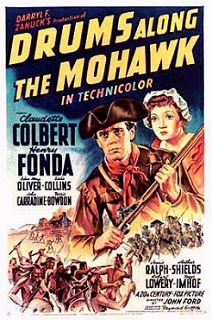
Drumsalongthemohawk.jpgRecently, it’s come to my attention there is really is a dearth of colonial America pictures between the likes of Disney’s Johnny Tremain and Mel Gibson’s The Patriot. The reasons seem somewhat obvious at least in the current day and age. Period pieces cost money and such material feels crusty unless you spice it up with ingenuity a la Hamilton.

For anyone who might want a dose of debatably historical entertainment, there’s Drums Along The Mohawk. Because what it cannot claim in the realm of accuracy, it more than makes up for with the usual shading of classic Hollywood reined in by a consummate professional directorial eye like John Ford’s.

This particular narrative begins with a newly wedded couple in Colonial America Lana (the always glamorous Claudette Colbert) and Gil (a severe-looking Henry Fonda). The ceremony takes place in a grand estate, and it’s true Lana comes from a wealthy family. In this regard, it’s easy to buy Colbert in this part given her image and even easier to comprehend her dismay when she is met with the stone-cold reality of frontier life.

Because, as it happens, Gil has sectioned off a plot of land near the Mohawk River, building a rudimentary log cabin just to get them started as they get on their feet as farmers. For his wife, it’s a shock to the system with the pelting rain and a late-night visit by the generally benevolent Native American: Blueback.

Fresh off their honeymoon, they make the acquaintance of the dubious John Carradine with allegiance to the Tories, matched by veiled threats of a potential Indian uprising. Otherwise, all the rest of the local folks are amicable, welcoming the Martins into their tight-knit community with open arms.

Like any God-fearing populous, they have church on Sundays and a ragtag militia carried away by the “Spirit of ’76.” It proves inconsequential when their homes get ravaged and razed to the ground by marauding Indians, an admittedly faceless tribe, catalyzed by a loyalist.

Until this point, Along The Mowhawk is not altogether compelling, despite our director and leads. However, it settles into its own when our protagonists have nothing; it forces them to make a crucial decision. They seek refuge on the farm of a blunt widow with enough gumption (and covert kindness) to make a new life seem feasible.

The word from the church pulpit is the most hilarious foray in comedy as the preacher takes a dig at Massachusetts men and notes the battle at hand, meaning that all men are expected to report or else be hung! He ends it with a resounding Amen. It’s old-time religion if there ever was such a thing, complete with an earsplitting “Hallelujah” from one of the good Christians.

A worthy image in the Ford catalog comes when the men march off in their column snaking down the dirt road, off into the distance, with the womenfolk watching them leave. It has the tangible sense of space — the assurance of a painting — informing the best pictorials of the director. The simplest measure of excellence is the fact it’s pleasing to the eye.

But of course, when soldiers go off to war some die and the rest come back as changed men. We recall the horror, the almost shell-shocked nature, of war.  Henry Fonda plainly detailing what they saw out in the thicket when they got ambushed is too real. You begin to remember this is right on the advent of WWII. WWI is still a heavy burden on America’s mind as the war to end all wars.

Within the context of this film, it becomes an even more complicated comparison when you place the antagonism of Americans versus The British of the colonial era with the soon-to-be conflict between Britain and The Nazis. In fact, Ford seems to make a distinction between calling the enemy “Tories” versus the British. In 200 years allegiances have changed a great deal.

However, it wouldn’t be a true Ford picture without folks kicking up their heels in a fit of merriment to fight off the dark tides with a joyful show of community. Ward Bond gets his finest moments opposite Mrs. McKlennar, calling into question her prowess in drinking and kissing. She gaily obliges. Meanwhile, in a lowly lit corner, Lana prays these good times might never end. Of course, they do.

Homes are burnt to the ground again. The townsfolk are forced to fall back to their fort to stave off the enemy onslaught in one valorous stand. It feels like a melding of apocryphal American Revolution history, “Remember The Alamo” sentiment and a moderate dose of Ford’s own mythologizing about the frontier. It’s not his very best, but there is a basic flare for the spectacle.

If we might try to encapsulate the reverberating theme to the last line, it would be fitting to evoke Revolutionary War General Nathanael Greene who is quoted as saying, “We fight, get beat, rise, and fight again.” Ford’s film reinforces this as being the American way. The only question remains who really gains the right to this way of life.

3.5/5 Stars

Jesse James (1939): Tyrone Power & Henry Fonda

jesse james 1.png

Reputed screenwriting scribe Nunnally Johnson starts off on clever footing by giving his mythic western hero an obvious antagonist. It was the railroad — that lawless iron horse — forcing Jesse James into the position of a criminal. Though he would evolve over time into the complicated human being projecting his legend, at least in the beginning, he was all but driven to take the mantle of an outlaw. At least in this telling. 

In making his hero fully sympathetic, Johnson has cast James as a western Robin Hood righting the wrongs perpetrated against him and others based the bloodthirsty land grabbing of railroad companies. Brian Donlevy, still yet to be promoted from his heavy roles, makes his rounds swindling the general populous and using more persuasive tactics to swipe their holdings.

Content notwithstanding, Jesse James is just about the glossiest possible extravaganza, you could offer a cold-blooded outlaw. The early Technicolor is gorgeous to behold, and in these prime early years of their careers, Tyrone Power and Henry Fonda aren’t in need of any favors.

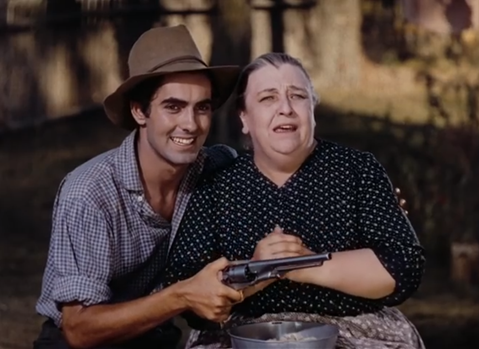
Jesse James (Power) is nothing more than a gee-whiz country bumpkin when we first set eyes on him. His big brother Frank (Henry Fonda) sits in the house lazily chawing on tobacco. Despite living with their concerned mother (Jane Darwell), they aren’t squeamish about sticking up for their own. They also aren’t about to be squandered out of their land without a fight, and they’re ready to oblige any strong-armed tactics thrown their way. Dunlevy doesn’t stand a chance.

As they flee into the night with reward posters calling for them to be dragged in for a hefty reward, they on take the mantle of fugitives almost out of necessity. It’s not merely about absconding with payloads for their own pleasure. This is a form of just retribution to be enacted against the corrupt machine belching smoke and literally railroading every poor sap in its way.

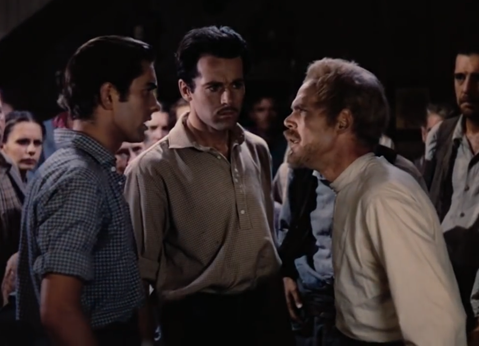
A codgerly newspaperman (Henry Hull) is one of their primary champions, though each week spawns a new tirade, whether it be lawyers or dentists or any insufferable faction who are all destroying society as we know it. Rufus Cobb is one of the voices rallying the public on Jesse’s behalf because it is his daughter Zerelda (Nancy Kelly) that the man has an eye for, but he also genuinely likes the lad.

jesse james 2.png

Even as the James’ boys notoriety grows, Jesse and Zee get hitched in an impromptu church wedding. They find out, even among this congregation, they have a great deal of friends.

For every conceited businessman represented by diminutive railroad baron Mr. McCoy (a comically demonstrative Donald Meek), there is another humble, salt-of-the-earth human being like local Marshall Will Wright (Randolph Scott). He knows the law, in all its strictness, calls for him to chase down James as a craven villain. In his own way, he’s cheering for him to live another day, even as he turns the other way on at least one occasion.

It’s this sense of good faith and the pleading of his wife leading Jesse to turn himself into the authorities for a fair trial. The judge has vowed for leniency as negotiated by the marshall. They’re all for a fresh slate. Mr. McCoy is not such an understanding fellow. All he thinks of are dollars and cents. He uses his resources to bring in his own judge and make a harsher sentence stick.

However, he’s hardly counting on Frank James. He happens to be a brazen fellow, and when he vows to come in and retrieve his brother from jail before the stroke of midnight, you better believe he’ll keep his word or else be taken for a fool. Even after their thrilling escape — one of the most gratifying successes of the picture — we fall into a bit of a rough patch.

Not only has Jesse gone off on his own to leave his family to live without the specter of his reputation, he begins to change with the constant pressures and paranoia weighing on him daily. He’s no longer the same good-natured kid who once went on the run in a righteous coup against extortion.

While not a film you look for poignancy in, Henry Fonda is present and he does deliver one monologue that speaks to something supremely candid. Jesse has become hard and crazed, systematically alienating all those around him. And if there’s anyone who can speak to him, it’s his brother Frank. Fonda handles the scene with his usual subtleness dumping all these obvious grievances in the lap of his own flesh and blood. He encourages him to draw if he needs to. Frank’s not squeamish about it, but it’s his last-ditch effort to speak some sense into his kid brother.

What will come of Jesse if he doesn’t trust those who have still stuck with him? Of course, among the faithful, there is often a Judas. In this case, Robert Ford (John Carradine), intent on getting a payoff for stabbing his old compatriot in the back.

We understand implicitly we are reaching the beginning of the end. First, they get corralled in a town after a bank job and a hail of bullets comes raining down from any number of windows. This is not what does him in. If you’re acquainted with the history, you’re aware he got knocked off by a double-crossing skunk. Then, again, this is not the Sunday school truth. If anything, Johnson relishes tinkering with the details and coloring in the tall tales to fit his ambitions.

The verdict? Jesse James feels a bit sluggish as it runs its course. There’s not enough action or bank robberies in the span of the film to make it really feel alive with the overarching aura of the James brothers. In its most watchable moments, it functions, fundamentally, like a family drama. Even if the movie is only a minor oater, Tyrone Power and Henry Fonda are the main attractions, and they rarely disappoint.

3.5/5 Stars

Dark Victory (1939): Bette Davis at Her Best

dark victory 1.png

Dark Victory reminds one how eclectic the Warner Bros. stock company was in 1939 because, in a Bette Davis vehicle, the first visage to present itself is none other than a wry Humphrey Bogart. The movie is a veritable grab bag of assorted talent from Bogart to Ronald Reagan and even kindly, bushy-browed Henry Travers. Despite still being a supporting player (his ascension would come in two years), Bogey is having a grand old time as a smart-mouthed horse trainer named Michael O’Leary.

He is under the employment of one Judith Traherne (Davis) who is coming off her most recent bender, living it up in local social circles. It’s an obvious first impression although, as time goes on, we get quite a different understanding of who she is as a human being. It’s often the case trials and tribulation mixed with romance have a habit of bringing out the truest essence of an individual.

For the Davis character, it begins inauspiciously enough. We expect her to be a frivolous, spirited socialite partying, drinking, smoking cigarettes, like any self-respecting belle in her position. In such a world the happy-go-lucky playboy Alex (Ronald Reagan) seems to be an impeccable match.

Her best friend Ann (Geraldine Fitzgerald) is the doting sounding board who might as well be a part of Judith. At any rate, she functions as a guardian angel constantly worried about the other’s well-being. She never fails to be by Judith’s side in all manner of circumstances — it’s almost uncanny — but cinematically, she becomes the necessary foil on which our heroine transfers all her fears.

This is a crucial relationship as the story progresses. For it is Ann who bears the brunt of the sorrow, in effect, freeing Judith to push bravely forward. Ann cries the tears so her friend doesn’t have to. But I’m getting ahead of myself. We must put it out there now that tragedy strikes.

The events are instigated in one frightening instance when Judith all but runs her horse through a jump out on the range. They are both shaken up, but the fall is written off as a lingering after-effect of the previous night’s merriment.

Still, the incidents persist. One afternoon Judith takes a tumble down the stairs while later confiding in her friend about other isolated moments and the recent hangover-induced headaches she hasn’t been able to shake.

While Judith remains peppy and bright, in all manner of speaking, there’s no question these developments have left her frazzled — her nerves undone by this unexplained erratic behavior.

At about this time, our other important character is introduced, a well-respected brain surgeon (George Brent) who is all but prepared to give up his booming practice for a more relaxed mode of medicine. It is only as a favor to a friend he even takes a look at Ms. Traherne (As a  minor side note, it’s staggering to acknowledge this was the eighth out of eleven onscreen appearances Brent made opposite Bette Davis!).

His subsequent examination is basic but wholly conclusive, and it is a clever bit of exposition instigated by director Edmund Goulding. We learn instantly the doctor’s new patient is losing some of her ocular and motor skills. It’s evident something is wrong. Though he does not frighten her in the moment, he has suspicions she is stricken with cancer.

The consequence. She’s going to die. It’s only a matter of time. The main conundrum suddenly thrust upon the doctor and Ann is a deplorable one: To tell her in all truthfulness what is inevitable or let her live in ignorance so her final days might be blissful.

What do you expect to happen? Of course, they never get the chance to make the decision. Two words: prognosis negative, are all Judith needs to put it all together. She feels betrayed and disdains their pity. She will never be the same.

The way Davis approaches each of these scenes with almost a spastic giddiness makes it different than what one might typically consider mainline Bette Davis, whether The Little Foxes or All About Eve. If anything, it reveals her immense aptitude at projecting different sides of humanity. Because she seems so very superficial only to subvert all our expectations with an unassailable strength, bolstering her in her waning days.

dark victory 2.png

The tear-jerking melodrama is a precarious affair because it must throw out all sorts of tragedies and sentimentalities while all the while compelling the audience such that they don’t completely laugh off the whole idea as poppycock. After all, it’s about the easiest thing in the world to dismiss such a picture — we’ve seen enough soaps in our days to grow weary of them — but the good ones take us through the paces and still manage to get to us.

Dark Victory is no person’s idea of a perfect film, but it does what it sets out to do quite stupendously. Even as someone never quick to fawn over Bette Davis, there’s no recourse but to laud her performance.

Not often am I fond of a Davis character, even the ones you’re meant to like. Dark Victory teeters somewhere in the middle for a while, but the sheer tornado frenzy of giggling life in the face of death wins out. It’s a testament to Davis more than anyone else as she all but sticks the landing, carrying the magnitude of the drama with her implacable performance.

The title itself, Dark Victory, initially sounds morbid or like it’s indicating some form of vindictive revenge. And yet really, this is a happier story imbued with hope in the face of said tragedy. It is a victory over the dark even as the light dissipates for Judith.

In reality, the trills of lasting romance and fearlessness in the face of the great unknown offer her vindication over her struggles. We are not meant to weep over her lot in life. Instead, taking a cue from her own outlook, we must lean into the sweetness in lieu of the tragedy.

4/5 Stars