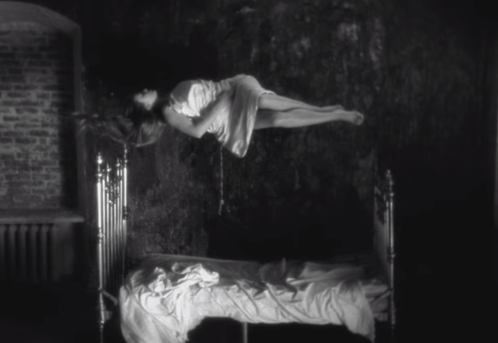
Paris, Texas (1984)

Paris,_Texas_(1984_film_poster).pngIt occurs to me only someone with an outsider’s perspective would choose to make this movie, which is void of any typical Hollywood flair. No American would have thought in a million years to cast Harry Dean Stanton (a lifelong character actor) and Dean Stockwell (an all but forgotten child star) while capturing such a cross-section of America. Therein lies a moderate amount of the allure in Paris, Texas

We must begin with the locales. There’s little doubt they are indeed as American as they come and yet director Wim Wenders, backed by a joint French and West German venture, has embarked on something distinctly his own. The film’s title perfectly reflects this blending of Americana with European sensibilities. 

Of course, the Heartland of the U.S.A. is evident as well. Anyone who has trekked across Middle America stayed in a cheap motel or found the nearest rest stop knows it well because it turns up so many other places aside from Texas.

It is a film reflecting the degradation of America as much as the austere beauty. Cinematographer Robby Muller captures rundown junk, forgotten turn-offs, billboards, and roadside diners because they are just as much a part of the American experience as any amount of decadence. One might say they are even more indicative of the generally accepted cultural status quo. 

Especially in its opening moments, Paris, Texas readily evokes a bit of the ruggedness of the Old West. What others might envision as the mystique of America with one of its distinctly original mythologies. It is the kind of imagery at home in a Ford picture who was himself one of the foremost purveyors of the American mythos.

The hard-edged twang of Cy Cooder’s utterly distinctive slide guitar score gives us a very concrete inclination of our world. The only time I can recall anything similar might be the minimalist music to go along with Murder by Contract (1958).

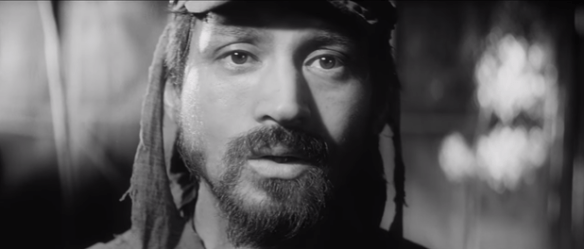
Travis materializes in our story almost like an extra-terrestrial life form. He wears his iconic ensemble of a red baseball cap with his suit and tie. Red tones course through the entire film in fact. There’s no missing it again and again. However, in these opening moments, it does feel like Travis never had a true beginning just as he merely dissipates in the end. This almost otherworldly quality readily dictates the entire conventionality of the landscape.

When his brother Walt (Stockwell) receives news of his whereabouts he goes to fetch him. He and his wife (Aurore Clement) are the ones with feet firmly placed in a sort of reality. He is a billboard ad man and they have taken in Hunter (Hunter Carson) as their own son.

Stanton is catatonic and yet there is a near robotic purposefulness to his steps. He has a bit of Forrest Gump but this is not quite right. He undoubtedly is plagued by some form of amnesia, which nonetheless is never fully acknowledged. Walt expects his brother to talk after four years off the grid and he rarely obliges. 

As they travel back to Los Angeles, the movie rolls along leisurely, content to be almost cavalier with its runtime. Because it wouldn’t be a road trip if you didn’t take your sweet time but it’s certainly a European strain of road film.

As such we might easily segment Sam Shepard’s story it into three parts. The opening moments in Texas set the scene, there’s the interim in Los Angeles, environmentally so different, and then the final odyssey back into the heart of Texas.

Surely the film lacks pure authenticity but instead, we are met with a spellbinding subtlety equal parts poetic and mundane. We must only watch the characters a few moments to know they hardly function as we would.

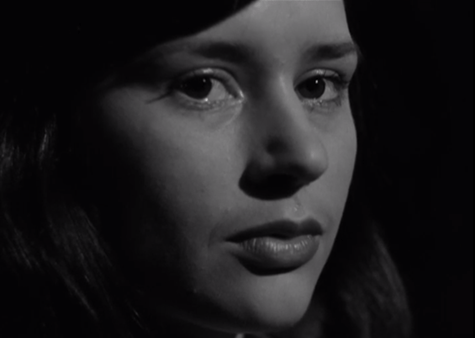
It starts with Stanton and radiates out from there down to his son and finally his long-lost wife Jane (the exquisite Nastassja Kinski ) who is the object of his journeying. There is parental negligence going all but unquestioned. They never seem to cling to bitterness even the little boy seems mature beyond his years, ready to embark to the ends of the earth with his recently arrived father. It’s as if this one quest galvanizes their relationship without question. There is no need to put words to it. They intuitively understand each other as flesh and blood, no matter the years that may have gotten between them.

Stanton himself is a walking corpse who nonetheless never seems in need of sustenance or sleep. And the extraordinary phenomenon, thanks to time, is the establishment of a new status quo, a slightly modified version of the world, which we readily come to accept. Maybe it’s the foreigners perspective I mentioned in passing or a more pensive contentment with the world. I cannot say exactly lest the film loses some power.

Regardless, the final act by some piece of cinematic ingenuity manages to be gripping. Perhaps as an audience, we become more attuned and simultaneously conditioned to the pacing. Because while the journey might seem slight it’s no less of a journey. 

With one concrete lead — a bank in Houston, Texas — father and son set off to find the third member of their fragmented family, staking out the bank with walkie-talkies and waiting for her to arrive. Finally, she does and Travis finally makes contact in a garish back alley peep show.

However, ironically, despite the sullied outer layer, it’s in this environment of anonymity provided by a phone connection and a two-way mirror that allows him to communicate with her in the adjoining room. The pretenses of such a place fall away as the film manages to unearth a tragic intimacy of heartbreak and melancholy in the wake of lost love.

The immaculately staged climax is made up of a monologue — a moment shared between a man and a woman — as he recounts their story. It’s a single scene that must go on for 10, 15, 20 minutes. Except we never realize it. She thinks she is providing a service to the person on the other end of the line, being a listening ear, and she is. But then he solemnly recounts their romance and recognition begins to don on her face.

He pours out his heart matter-of-factly and honestly, turned away from the glass as not to see her in this compromising world. It makes it exponentially easier for the words to leave his lips as she listens captured in every painful recollection just as he is. But there is no emotional outbreak, breaking of glass, or the like. This is purely an exercise in loneliness and regret.

Not until after the fact does the boldness of this scene set in because it’s so easy to get caught up in the moment. We understand the implications and yet we’re desperately trying to perceive the situation, wanting to know if she recognizes him. Even more so we want to know what they will do.

Striking the perfect note of resolution and continued inscrutability, mother and son are finally reunited in a maternal embrace and just as he arrived into the world, Travis fades into the night just as easily.

I can imagine Paris, Texas is a place that is meaningful to Travis just as Nevers and Hiroshima hold importance to the lovers in Hiroshima Mon Amour (1959). It’s really not a place at all but a part of his identity, a destination he is hoping to get to, a dream he is doggedly pursuing on earth. He is ever searching, always wandering, but in the midst of it, he maintains an unswerving capacity for love. Even though he’s made mistakes we can hardly comprehend, family remains his guiding compass.

4.5/5 Stars

The Song of The Thin Man (1947)

the song of the thin man 1.png

The Song of The Thin Man is really and truly the swan song of the series and while I did enjoy most of the additions, there is a sense that it was time to end the franchise. The year is 1947. The war is over. Things have changed. It really has little to do with William Powell and Myrna Loy being older or past their prime, because they are still a joy to watch working in tandem and they’re hardly over the hill.

But in some respects, society didn’t need Nick and Nora anymore. They were more like a touch of nostalgia than an up-and-coming force because they were born out of the Depression years and though they grew and matured as characters well after that, it seemed like as good a time as any to let them be.

Their son, little Nick Charles Jr. (a young Dean Stockwell) is a precocious lad like his father.  His behavior is deserving a spanking though his father is averse to giving it out even on his wife’s behest. But this was never meant to be a family comedy. Even Asta was always a sidekick and not a focal point.

Most of the film is conceived on a luxury liner, the S.S. Fortune amid nightclub musicians and patrons who have come out for a charity benefit put on by the wealthy David Thayer. It’s the perfect locale for, you guessed it, murder.

The center point of it all is Tommy Drake, the band leader scrapped for cash and with plenty of bones to pick with any number of people. He wound up gunned down from behind. In introducing all the players, it’s safe to assume they’re potential suspects too. There’s songbird Fran Page (Gloria Grahame), the ship’s proprietor Phil Brant (Bruce Cowling), and the soused musician Buddy Hollis (Don Taylor). It’s Brant and his forbidden fiancee, Janet Thayer (Jayne Meadows), who come to the Charleses so that Phil’s name might be cleared.

Bess Flowers turns up in a fairly visible role given her usual penchant for bit parts in hundreds of high profile films. Leon Ames returns to The Thin Man universe in an unusual circumstance of the same actor taking on a different role. Helen Vinson who played his wife previously was not available for the picture and so the exquisite Patricia Morrison (currently 102 years young at the time of this viewing) filled the part instead. Even noir regular Marie Windsor shows up as a gangster’s moll although I’m not sure if she even utters a word.

Anyway, back to the business at hand, Nick and Nora Charles and the mystery. One of the best parts of the film is watching the Charleses be introduced to the jazz beatnik culture craze and their guide is none other than Clinker (Keenan Wynn) a real hip cat on the reed who happened to be aboard the liner when the murder occurred.

It should be noted that when rock n’ roll came Beethoven could be found rolling in his grave. Currently, his bust simply looks begrudgingly from his perch, given the state of affairs with the contemporary music scene.

Interestingly enough, there aren’t many police authorities running around to get in the way. It’s all Nick Charles joined by his wife and, in this case, Clinker who has connections to really help them understand the scene.

Although the setup and the characters are interesting enough, the film probably has the least satisfying finale of any of the Thin Man films. It winds up back on the ocean liner but it somehow doesn’t come off like its predecessors. Even the fact that the picture is a good 20 minutes shorter than the earlier films seems to suggest the beginning of the end. But on the bright side, for once Nick was able to retire for good — to his bedroom that is. It’s fitting, really. Mr. and Mrs. Charles gave us plenty of laughs. They deserve to rest in peace.

3.5/5 Stars

The Thin Man Goes Home (1945)

thin man goes home 3.png

Sometimes it’s necessary to go back to the basics. We’ve been introduced to the social elite of New York and San Francisco, invited along to giant family estates, and frequented the race track and wrestling rings. It only makes sense that at some point we would finally be introduced to their roots.

What is the occasion, you ask? Nick has a birthday coming up and what better way to surprise his parents (Harry Davenport and Lucille Watson) then popping in on them in his hometown of Sycamore Springs? It’s not the most comfortable of trips, crammed together with other passengers; before resigning themselves to the luggage car, for Asta’s sake, where he gets accosted by the local livestock. But be it ever so humble, say it with me, there’s no place like home!

The premise is plainly given but this might just be the most enjoyable installment since After the Thin (1936).  That is not to say the other entries were not amusing. They most certainly were. But there’s something gratifying about getting to know Nicky’s community a little better. Due to the passing of W.S. Van Dyke, it is Richard Thorpe who takes up the reins without too many noticeable hiccups or maybe there are just enough.

There’s the inevitable running into a plethora of old acquaintances of all sorts of ticks and demeanors. Most curious among them is the aptly named Crazy Mary (Anne Revere) or the starstruck young debutante Laurabelle Ronson (Gloria DeHaven). Nick takes each reunion in stride while also finding time to fix tables and fiddle with deadly hammocks all to the mild amusement of his better half.

The comedic range of gossip around town is astounding as the whole neighborhood drums up a story about how the town’s most famous citizen has returned to investigate a homegrown murder. It couldn’t be further from the truth, until it becomes true. What happens is the most ludicrous of murders yet, with a young man (Ralph Brooks) showing up on the Charles’ doorstep only to get the axe a minute later.

Mr. Brogan (Edward Brophy), a reformed greeting cards salesman, is always coming out of the bushes to give Nick a tip but of course, he didn’t see or hear the murder. Still, he provides his services to the amateur detective by pulling his wife away for an evening.  Myrna Loy in the humorous tailing sequence showcases her talents, making the scene into her own shining moment away from her husband. Though they are inseparable in one sense, the film benefits from these digressions as wayward as they might seem.

There are so many juicy tidbits to latch onto but one of the most crucial is a fateful painting of a windmill that Nora buys her husband as a birthday present,l due to some childhood significance. But there’s also a couple (Leon Ames and Helen Vinson) anxious about getting their hands on the piece for its perceived value. It’s no small coincidence the painting was attributed to the deceased victim.

At the Charity Bazar, the Charles make their appearance and Asta hops up on the counter to pay a visit to a house check girl in the periphery (I have no idea why this caught my eye). Meanwhile, Loy is forced into a jitterbug with an eager sailor serving as a convenient diversion. Nick doesn’t want her to be with him while he goes snooping around upstairs. And in these moments you see the allure of the Charles marriage.

The husband is the quintessential bachelor-type who nevertheless makes an affectionate husband and his beautiful Nora, a high-brow socialite, is ever the understanding wife. But beyond this archetypal pairing, you have the wryly comic tug-of-war between them as the smirking Nick always looks to throw his wife off the track and she always does her best to stay right there by his side.

In fact, the payoff looks different in the small town as everyone of possible motive is gathered into the drawing room but also it is Nora and not Nick who becomes the master of ceremonies, quelling their objections and keeping the audience under raps while her husband gets ready to make his appearance.

Given the crazy nature of the murder, it would be safe to reason the finale would be a little wild too and that assumption holds. But that cannot take away from what this film has to offer. Because what is The Thin Man without Nick and Nora Charles? It would be nothing and yet in this picture, they both continue to shine as they always did together. Even as the years progress, they don’t change all that much. The only thing that’s different is Nick has made strides with his drinking hobby which has been traded out for a flask of cider. One can only surmise the reason for this change was the wartime ration on liquor.

3.5/5 Stars


Shadow of The Thin Man (1941)

the shadow of the thin man 1.png

Little Nick Charles Jr. is growing up and his loving daddy, in lieu of fairy tales, reads to his son about the horse races. Some things never change. Despite an unfortunate stereotyped-laden portrayal provided by Louise Beavers, the picture quickly settles into another enjoyable jaunt.

In fact, it’s a perfect day for the races until Nick gets pulled over for speeding. That’s only the beginning. Because the cop proves to be a big fan of Mr. Charles. After all, if we haven’t realized it already, he is a household name. Everybody seems to know him. Policemen, conmen, jockeys, and anyone else you can possibly pull out of a hat. It makes no difference. By now, his wife never shows an ounce of surprise. She only smiles, nods, trades pleasantries and never says another word about it.

The recurring gags keep coming with yet another former acquaintance with a grubby nickname like “Fingers” running into Nick and inquiring if the dame he has in tow is his new girlfriend. It seems like no one ever thought him one to get married.

It’s all good fun and there’s even the return of Nick’s old buddy, old pal, Lt. Abrams (Sam Levene reprising his role). This sense of world building and the introduction of characters was always The Thin Man series at its best, but there’s also business at hand — a jockey named Gomez has been whacked.

However, Nick tries to avoid getting pulled into yet another case by patronizing the arts, namely a wrestling match. It’s one of the film’s most delightful diversions but there’s also a sneaking suspicion it must tie into the case somehow. The forces lurking in the shadows hang over the racetrack murder like a stench and they’ve got there hands in all the places, including the press. Maybe even higher up too.

A youthful Donna Reed makes an early appearance as a naive secretary and while still growing as an actress, there’s no doubting her sincerity that always shined through in all her work. With writers Albert Hacket & Frances Goodrich, then James Stewart and Sheldon Leonard also involved in earlier installments, and Reed being featured here, it does seem The Thin Man was a bit of a training ground for It’s a Wonderful Life (1946).

But back to the current business at hand. Molly’s beau Paul (Barry Nelson) is a prime suspect when murder strikes again. With the young couple right at the center of the mess, compassionate Nora wants her Nicky to get them out of it and that he does.

Also, tied up in the case are stuttering Rainbow Benny, famed acting instructor Stella Adler in one of her actual roles as Claire Porter, Frank Faylen as a nervous ticket booth operator, and you guessed it, a whole host of others.

Still, Nick finds time to get accosted by kids while taking Nick Jr. around on the carousel. While Asta’s best gag is getting trapped in a revolving door chasing after a fugitive. Myrna Loy doesn’t get as much screentime as she should but as usual she provides a calming and still slyly comic presence. The continuity provided by W.S. Van Dyke is there as well though this is the first script not penned by the screenwriting duo Hackett & Goodrich.

By now it’s all but inevitable. Everyone gets rounded up to the police precinct. Nick Charles takes center stage bringing wifey along and Lt. Abrams is in the middle of it all for good measure. But he’s really only the white noise and perfect stooge as Nick deduces his way to the finale as he always has. It’s true that the formula feels a tad overspent but seeing as Hollywood is used to beating dead horses to a pulp recently, this one doesn’t feel that bad. At least it’s a good time and we still have Powell and Loy as amiable as ever with a continous spritzing of humor.

3.5/5 Stars

Another Thin Man (1939)

another thin man 1.png

Parenthood hasn’t slackened the good-natured give and take between Mr. and Mrs. Charles or Mr. Charles drinking habit either. The only difference now is that Nick affectionately calls his other half “mommy” and they have a little more work getting their nurse to watch over the baby — Asta’s new younger brother.

For the most part, they have a hands-off parenting approach with the infant Nick Jr. which is a bit of necessity given they need time to solve a mystery. Sure, it starts out innocent enough. They plan to take a trip out to the country to pay a visit to an old friend Colonel McFay (C. Aubrey Smith) who is desperate for Nick’s counsel on an issue of utmost importance.

So they head out to the country to an old family mansion that just so happens to be the perfect space for an “And Then There Were None” scenario. Except this one has Nick and Nora Charles at the center of it all and the cast of characters fits into their world.

After the Colonel is found dead in his study following a piercing gunshot, the police swarm the grounds looking for clues, but Asta winds up tampering evidence again. Meanwhile, their flighty nurse (Ruth Hussey) takes off without leaving a forwarding address. The dead man’s daughter is beside herself with grief compounded by fear when someone kills her prized dog and takes a shot at her. It doesn’t help that she’s caught between two men who love her (Patric Knowles) and her father’s secretary (Tom Neal).

The most obvious suspect is a threatening thug named Church (Sheldon Leonard) who’s been having dreams about the Colonel’s impending death. He’s in cahoots with a deadly dame and the ever faithful Dum-Dum (Abner Biberman). A big man with specs (Don Costello is somehow tied up in this business too. Yet Nick is never one to show his hand too early and he lets things play out.

Having enough of the country life, our heroes get back to the big city to do some sleuthing at the West Indies Night Club while still finding time for made-up meet-cutes and the usual playfulness. One particularly visually uproarious sequence involves Nick Jr.’s first birthday party complete with a playpen for of babies and kindly ex-cons just out of the real pen.

There’s the tell-all finale and it’s as befuddling as any mystery drama. That hardly stops Nick Charles though. It must be admitted that the final stretch outside of the haunted mansion loses a little bit of its traction because the story is stacking moment after moment on top of each other. By the sheer number of characters, it pulls the wool over the eyes once more. And yet again the Charles’ quiet weekend away became the biggest newspaper headline.

While not quite on snuff with its two predecessors, this picture is still carried by the insouciant charm of its impeccable leads and yet another host of quality character players. You’ll notice among them Tom Neal (Detour), C. Aubrey Smith, Ruth Hussey, Sheldon Leonard (It’s a Wonderful Life), Marjorie Main (Ma Kettle), Abner Biberman (His Girl Friday), Virginia Grey, and many, many more. Those were the days of great supporting stars and phenomenal studio stars for that matter. This would be William Powell and Myrna Loy’s 8th film together out of a mindboggling 14. That in itself is a remarkable feat.

3.5/5 Stars

After The Thin Man (1936)

after the thin man 1.png

The reason to watch The Thin Man series was never murder. Sure, like its predecessor, this follow-up has the pretense of a mystery plot but that’s merely a trifle in comparison to the return of Nick and Nora Charles.

The novelty of this picture is no longer that it once more brings crime and comedy together because that’s what the original film did. We already have the formula, the groundwork set before us, and certain expectations. But what it does even in its opening vignettes is further develop its leads by transplanting the New York socialites to the world of San Francisco which brings with it different colorations and really an extension to this fanciful world that they live in.

William Powell and Myrna Loy are just delightful with teasing ever whip-smart interplay but we also see the class dimensions being played up too. All of a sudden, their marriage of such stark opposites comes into clearer focus and we love them even more.

Nick seems to know someone on every street corner most of them being hoods and shifty conmen begging the question just what he did in his previous life (I can’t ever remember being told)? Meanwhile, Nora comes from money and runs in a certain society that’s slightly averse to the constant verbal barbs and nose-thumbing of her husband. You see, he seems to have no respect for respectable folks. Her family can’t stand Nikolai as he’s called. But he loves his wife and she loves him.

The fact that the action is set over The New Year blesses the film with jovial gaiety and champagne bubbles that add a little pizzazz to your run-of-the-mill murder of passion. Meanwhile, the dubious Lychee Club takes its place front and center because a couple implicated persons are tied up with the establishment. One of them, named Dancer, runs the joint while his star performer Polly and her brother Phil also seem caught up in something shady. If you had to put a name to it you might call it extortion.

Then a slimy playboy (and unfaithful husband) is found murdered after a night carousing at the club with the chorus girl. That effectively gets his devastated wife accused of murder with her longtime beau (James Stewart) going to great lengths to defend her.

We could keep running off the list of suspects but to no avail, and it has the typically gung-ho cop Lt. Abrams (Sam Levene) understandably suspicious as he tries to make head or tails of the whole mess. Of course, he has Nick Charles on his side and a good thing too.

Asta is up to his old tricks running off with a vital clue and Nick’s up to his old tricks having his wife locked up in prison so that he can bail her out. Despite her longsuffering lot in life, she gets in some comic retribution of her own while maintaining a dazzling marriage full of mutual understanding.

Because, in one sense, Nick Charles is a complete imbecile, a habitual jokester, and yet he’s just serious enough to warrant some respect in the crime-solving trade and just sincere enough to hold onto his wife for posterity. Again, that’s all part of his charm. If he wasn’t so good at solving crimes, it’s doubtful people would give him the time of day. Though his wife does continuously and that’s what really counts. That’s the heartbeat of this entire franchise.

The Charles also realize humanity’s aspirations of sleeping the day away and it’s true they can get away with settling down for breakfast just as everyone else is finishing up dinner. That’s their lifestyle. I’m sure most of us hold a deep-seated desire for it in some cockeyed way. But most of us can’t solve murders on a whim either. So they get to be our surrogates on both accounts.

I won’t say he’s the epoch of amateur sleuthing, as the company includes the Sherlock Holmes, Miss Marples, and Jessica Fletchers of the world, but Nick Charles is one of the wittiest individuals to hold the mantle.

It must be noted that he was a creation of the Depression, a needed respite from the day-to-day, but you get the sense that today he comes off as a bit callous. Surely a man who knows so many undesirable characters was aware that there was a Depression on. And yet you see, that’s precisely the trick. In this world, such an event does not exist.

There’s no need to worry about it and this alternate reality instead gets to occupy itself with murder and excess, jokes and romantic patter. It truly is escapism and a gift to the masses. No wonder people loved Nick and Nora so much because it really does seem like they filled a need at the time.

While he’s not the center of attention nor is his role all that meaty until the final moments, James Stewart is nevertheless entertaining in this early part with a slam-bang finish that gives a glimpse of the passionate intensity he offered as an actor. It was full steam ahead for both him and The Thin Man series though you might say his future was a little more promising.

4/5 Stars

A Christmas Story (1983)

a christmas story 1.png

The premise is ludicrously simple. Ralphie wants a Red Rider BB Gun for Christmas. It’s his one aspiration. His sole desire in life. But of course, every conceivable adult simply dismisses him, their choice phrase being that mainstay of our modern lexicon, “You’ll shoot your eye out!”

Peter Billingsley remains an icon of the 1980s much in the same way Fred Savage would become one a few years down the road. In fact, it’s no surprise. Because their performances were of a very visual nature but it was the insights of their adult selves (in this case Jeane Shepherd) that lent a certain irony to everything they did in childhood.

Look at Bob Clark’s film and The Wonder Years and you see some very plain points of similarity. Most obviously the television series borrowed this narrative device liberally from its very conception. It lets its young protagonists’ imaginations run wild in colorful ways, but Ralphie did it first.

What proves to be most appealing about this perennial Christmas marathon favorite is the very fact that there is very little agenda and it functions mostly as numerous bits and pieces of anecdotal experiences related to us in a matter-of-fact fashion.

There are the infamous triple dog dares that lead to the inevitable pole licking at the school playground. There’s the ever notorious leg lamp, won in a contest, their proud father’s (Darren McGavin)  glorious victory exhibited for the whole neighborhood until their mother (Melinda Dillon) breaks it accidentally on purpose.

It’s the era of Little Orphan Annie on the radio, ovalteen, decoder rings, The Wizard of Oz, and Bing Crosby and The Andrew Sisters singing their greatest hits. Parents resorted to archaic forms of punishment, namely, mouths washed out by soap and the threat of bodily harm.

In the schoolyard, the roost is always ruled by the biggest bird until it comes out that the bird, in this case, one Scut Farkus is actually a chicken after an unfettered Ralphie begins whaling on the resident red-headed bully.

The infamous bunny suit from Aunt Clara donned by Ralphie on Christmas morning is one of the lasting images as is younger brother Randy wrapped up in puffy winter clothing, or watching a defeated Ralphie get slowly nudged down the slide by a griping Santa Claus at the local mall.

The now anachronistic Chop Suey Palace makes an appearance as does  Ralphie’s Old Man’s constant curse-laden crusade against the furnace. Each subsequent tale is contained as part of this familial lore, a bit murky and at the same time mythical. It turns out to be absurdly even darkly comical in its vignette-driven escapades but that provides much of the substance of its charm.

However, that very nature makes it difficult for me to become unequivocally attached to this picture. Because it’s not an exercise in pathos, though still being steeped in nostalgia and references to the mores of Middle America in some far off, bygone era. It evokes the period but does so with a somewhat trivializing sense of humor.

But what strikes me about the picture, specifically in the Christmas scenes is how the most memorable and, dare we say, “special moments” that we remember around the holidays are the ones with mishaps and circumstances that while derailing our perfect expectations, simultaneously become our most cherished memories. Because life at its best isn’t a cookie cutter experience. It’s full of all those misshapen weird outcomes that bulge out and disrupt life in ways that we can only look back on and laugh. Christmas was never meant to be perfect. Have you looked in the mirror lately? As humans, we are far from it.

That’s what this story sums up quite impeccably. It’s not so much a moral tale or a movie of themes but the scripting and setting get at the essence of a time and place where desiring a Red Rider BB Gun is enough. There doesn’t need to be more — at least not in childhood — that’s what adulthood is for. Even then a child-like perspective, especially during the holidays, is something to be desired.

4/5 Stars

Review: Holiday Affair (1949)

holiday affair 1.png

Holiday Affair might be a bit of an oxymoron as far as Christmas movies go. It’s not too far off the truth to christen it an old-modern Christmas classic, at least depending on how you define your terms.

It’s a Christmas picture that has all but sailed under the radar since its original release in 1949 though it has, rather recently, gained some modest recognition around Christmastime. Given Robert Mitchum’s normal workload for RKO, it feels like an outlier in comparison with most of the dramatic or noirish crime fare he was usually expected to star in. And part of this might have been due to circumstance — circumstance that might also explain why this picture wasn’t such a big hit.

Mitchum was fresh off his famed drug bust for narcotics possession which ironically, far from killing his career, managed to project his image as a bad boy and a major box office draw. But Howard Hughes wanted to try and soften his image and the picture in the pipeline was Holiday Affair. It’s certainly not what we are normally accustomed to for a Mitchum vehicle. Contemporary audiences might have concluded the same.

In earlier iterations, the film was slated to star the intriguing cast of Montgomery Clift, James Stewart, and Teresa Wright. In fact, it’s interesting to note Wright could have been in the Christmas classic of two years prior, The Bishop’s Wife (1947) as well. Alas, she did not end up in either picture. Still, that should in no way dismiss what we actually received.

Although visibly quite young for the role of the widowed mother Mrs. Dennis, Janet Leigh makes it work due to a pluckiness and genuine chemistry that buoys her relationships with her on-screen son (Gordon Gebert) and both of her male counterparts (Mitchum and Wendell Corey).

What brings them all into the most curious of love triangles is a momentary interaction at the toy store. Connie Ennis is a comparative shopper a little too eager to purchase a model train and Steve Mason (Mitchum) is the employee on the other side of the counter.

Though he doesn’t say anything, he’s got her pegged. Sure enough, she comes back to return the gift but instead of reporting her he lets it slide — only asking her never to come to his department again. He subsequently gets fired and is back on the streets, biding his time in order to realize his dreams of becoming a shipbuilder in California.

Meanwhile, Connie doesn’t have an affluent lifestyle but perhaps more important than that, it’s a generally happy existence. Her husband was killed in the war, yes, but she and her son Timmy have a tight-knit relationship. They’re truly there for one another. It’s no fluke she constantly calls her pint-sized man of the house, Mr. Ennis. Because it’s true. He is the most important man in her life.

Although there is another man who is hoping for the privilege to become a part of their family. Carl (Corey) is a divorced lawyer who has long made his intentions plain to Connie. It’s just a matter of figuring out if she’s ready for marriage. And he seems like a good practical man to go through life with. Still, that isn’t everything.

Because Robert Mitchum is added to the equation and between both men, Timmy finds Steve a lot more fun and I think it’s reflected particularly well in the relaxed performance that Mitchum gives.

He’s surprisingly compelling in his scenes with the child because, again, he may have the image of a tough guy but when you watch him speak there’s no pretense. He’s not talking down to the kid. He nearly treats him as an equal or at least not in the condescending manner that adults often have. That’s the key.

The rest of the story, including the final act, doesn’t need spelling out. You probably already can gather some sense of what will unfold. But this film is a reminder that predictability isn’t king. Sure, it’s present but there are also a plethora of idiosyncratically enjoyable moments to be relished.

Among other things, they involve gaudy neckties, hobos, salt and pepper shakers, feeding orphan squirrels, and eating with the seals in the park. A delightfully ornery Henry ‘Harry’ Morgan provides a cameo at the Police Precinct that helps draw out some of the film’s more absurd digressions.

There’s a lovely marital toast and an equally awkward confession. But more than any of this there’s the realization of what family might be and what true happiness looks like during the holidays.

In an earlier moment, in typical Mitchum fashion, he taps the lady of the house on the shoulder and proceeds to kiss the surprised Connie before proclaiming “Merry Christmas.” End scene. Or on Christmas morning little Timmy springs in on his mother to wish her a “Merry Christmas” of his own. It’s these little trifles that make this a congenial outing for those craving a bit of nostalgic yuletide cheer.

3.5/5 Stars

Review: Miracle on 34th Street (1947)

miracle on 34th street.png

From its opening motif of a man nitpicking the arrangement of reindeer in a shop window, Miracle on 34th Street skates away on a delightful journey that evokes both fanciful whimsy and a liberal amount of holiday sentimentality. However, it’s also one of the finest examples and greatest purveyors of holiday cheer ever and that’s in spite of an original theatrical release that Daryl Zanuck slated for the summer of 1947.

Still, all of this aside, the major heartbeat and the effervescence of the picture falls on the shoulders of that precocious gentleman Edmund Gwenn in the most iconic performance of his career. No matter your leanings, be it a sentimentalist or a pragmatic realist, at the very least, he makes you want to believe in Santa Claus. And what’s striking is how he embodies such a man.

Because we could get into a debate on whether he is the real thing or if he truly is delusional and thus, we would have to be alarmed by this entire ordeal. Yet the results speak for themselves as do the fruits of his labor which help to uplift an entire city.

It’s true that he lays down a trail of hints from the outset at the Macy’s Thanksgiving Day Parade about his origins. If you’re paying attention and know the score they are easy enough to notice. However, he’s never pompous in proclaiming his exploits.

What draws everyone to him is this genial charm that cannot be fabricated. It’s all him.  There is no shred of an egomaniac or a mentally disturbed person. In fact, he feels the complete antithesis of many of the adjectives we might toss out to describe the commercialized Christmas so prevalent today (and even back then).

Alfred, the young janitor, and a personal favorite expresses the sentiment aptly. “It’s all about, Make a buck. Make a buck. There are a lot of bad “isms” to choose from but arguably the worst is commercialism.”  And it’s Kris who helps to rail against that holiday status quo when he finds himself working as Macy’s floor Santa.  In fact, it almost feels like a necessity that all these things come to pass because not only are people forgetting about him but more importantly, they are forgetting the core tenets of the season.

There are several scenes in particular that put a heartbeat to a little bit of the magic that courses through this picture — a picture that director George Seaton dearly wanted to make as did John Payne. Because it exudes something so remarkable that has proved timeless in years since. Even Maureen O’Hara, though initially skeptical of returning to Hollywood from her oasis in Ireland, relented because she was taken by the story.

miracle on 34th 2.png

As someone always interested in the periphery, one of my favorite moments involves Thelma Ritter. It’s only a small sequence but she plays a harried mother who wants to go home and soak her feet after struggling to find her son a toy fire engine. The joy is watching Santa put the color back into her face when he incredulously evokes the spirit of giving. She’s flabbergasted by this unprecedented piece of goodwill. It’s the calling card of a true Santa.

Then there’s the little Dutch girl who pleads with her foster mother to see Santa. And it’s pure magic, again, because they form a connection when Santa breaks out into her mother tongue and they’re able to sing a Christmas song together. There’s so much underlying context made beautiful by the fact that we have to read deeper to extract the meaning. Surely viewers knew this girl was a casualty of WWII but beyond that, the fact that Santa is able to cross this perceived language divide is in itself a near miracle.

As someone who does not speak Dutch, I’m not privy to the precise conversation but it’s easy to empathize because here Santa Claus has made someone on the outside feel known and loved. It’s telling these precise events strike a chord with young Susan (Natalie Wood) also.

Certainly, it’s about time to fill in the story’s nucleus and of course, sandwiched in between this broader narrative, involving so many people, is a very personal one. It really is a case study and it’s noted as such by Kris Kringle and his devoted follower Fred (John Payne). They fight a two-front war to work on the most obdurate, rational minds in New York, Doris (O’Hara) and her pragmatic little girl Susan (Wood) who has been trained up by the best.

Ironically, Kris’s war on commercialism very much subverts the longheld spirit of capitalism as we watch the foremost toy companies, namely Macy’s and Gimbel’s pitted against each other looking to outdo one another in the realms of helpfulness and good cheer.  It’s simultaneously hilarious and downright uplifting.

But there must be more because goodness very rarely moves forward wholly unimpeded. The antagonist in this scenario is a curmudgeon, insignificant company psychologist named Sawyer (Porter Hall in a particularly testy role) whose own misgivings about holiday cheer cause him to suggest Kris be put in a mental institution. The case of the holiday season begins when Santa is put on trial.

There is a logical conclusion with a respected judge (the character journeyman Gene Lockhart) presiding but don’t expect it because this is a story about miracles and a film about intangibles and a jolly old man spinning his spellbinding magic for the good of mankind.

miracle on 34th 3.png

To the last knowing wink, it tests our faith in the man but even today it never seems like a picture to outright shirk reality. Instead, it’s more founded on cultivating all that is good and life-giving when you tone down the hard-edged pragmatics that leave no room for imagination or faith of any kind.

Because oftentimes, when those reservoirs are sucked completely dry, you are left with people who lack joy, contentment, charity, and goodwill for their fellow man. From such wastelands come the Mr. Sawyers. If you close yourself off completely to this season or this film, you might just feel yourself left a little empty inside.

More than anything else, Miracle on 34th Street is a story of childlike faith as this is much of what the season is supposed to be indicative of. The ultimate gifts of love, joy, and peace require an openness in order to receive them fully.

All there is left to do is to close with an excerpt of prose far more learned and impassioned than my own, penned to an inquisitive girl named Virginia. Because this film very well could be the proof behind the words:

Yes, Virginia, there is a Santa Claus. He exists as certainly as love and generosity and devotion exist, and you know that they abound and give to your life its highest beauty and joy. Alas! how dreary would be the world if there were no Santa Claus! It would be as dreary as if there were no Virginias. There would be no childlike faith then, no poetry, no romance to make tolerable this existence.

We should have no enjoyment, except in sense and sight. The external light with which childhood fills the world would be extinguished…Only faith, poetry, love, romance, can push aside that curtain and view and picture the supernal beauty and glory beyond. Is it all real? Ah, Virginia, in all this world there is nothing else real and abiding.

5/5 Stars

Meet Me in St. Louis (1944)

meet me in st louis 1.png

One thing that can be said of Meet Me in St. Louis is that it captures the milieu of an era while simultaneously being quintessential Vincente Minnelli. Every man, woman, and child is dressed to the tee and enraptured by love and the grand promises of the World Fair full of dancing the Hoochie-Coochie with their special Tootsie Wootsies.  It’s cheerfully opulent in such a fashion that some might consider it almost garish and others will deem it the height of turn-of-the-century elegance.

There’s no doubt that the director had one of the most phenomenal palettes of any filmmaker from any time period. Certainly, this extends to the mise en scene and the costumes adorning his stars — pulled right out of Sears Roebuck circa 1900. But the other crucial aspect is that Minnelli seems to handle his talent with kid gloves or at least he creates an environment for them to flourish.

Of course, front and center of the Technicolor extravaganza is Judy Garland who would marry her director the following year and you get the sense that she had fallen in love with how beautiful he was able to make her on film. It’s true that she’s a striking sight to behold, only magnified by the world she traipses through, surrounded by her kin and singing to her heart’s content.

Still, if the set design is such a grand expression of the film’s potency and visual appeal, it’s necessary to point out again that this is far from a Judy Garland show; there is an ensemble component even if she’s the scene-stealer.

Margaret O’Brien is a riot because she plays little Tootie in the most ingratiatingly precocious way possible. Though it must be admitted she has a bit of a morbid side too. We meet her on an ice wagon telling a man how she’s going to give her doll a nice funeral and later on, of course, she takes the heads off all the snow people.

However, there’s also a whole Halloween interlude starring Tootie and their sister Agnes that feels more like a ghoulish Guy Fawkes day than its modern incarnation of door-to-door candy grabbing. Maybe Halloween has gotten tamer than we give it credit for. Put up against the film’s more mirthful moments, it comes off a tad alarming.

But then again, the story continually goes back to its roots in the centrality of the family unit. Its very integrity is in jeopardy of being disrupted when Father (Leon Ames) drops the news that they will be moving to New York from St. Louis. It comes off horrifically. It’s imperative to remember that in order for those heights to be so gay there must be a steady stream of romantic heartbreaks and personal roadblocks which the picture gladly provides.

There’s a lovely scene staged around the piano between Mr. and Mrs. Adams (Ames and Mary Astor) where like in so many other instances song becomes the perfect expression of the current mood. Based on where the camera is situated, the stairwell in the back is visible and you see the shadows of figures before they inch back into the frame and subsequently back into the family room. It’s a visual representation of the family staying rooted together even after a spat — constantly retracting — then contracting back together in continuous motion.

Without question, the well-remembered “The Trolley Song” is a giddy number that outshines any of the others but that’s because it is the summation of romantic euphoria that Esther (Garland) is feeling for her beau (Tom Drake). Meanwhile, “Have Yourself a Merry Little Christmas,” though hauntingly melodious, is quite easy for me to rip out of the context of this film.

meet me in st louis 2.png

Meet Me in St. Louis has never been a yuletide film for me in a similar fashion to how Holiday Inn (1942) is not so much attached to “White Christmas” or holiday cheer as the Michael Curtiz picture from 1954. Perhaps its influence isn’t as deeply rooted in my childhood recollections as some of its contemporaries. But then again, Meet Me in St Louis evokes Christmas in the same way that some of the cinematic adaptations of Little Woman (1933, 1949, or 1994) conjure up the season in the context of family. Perhaps that’s how it should be.

In its day, the film was a smash hit only to be outshined by that prior behemoth from David Selznick Gone with the Wind (1939) and it’s easy to draw up parallels if not simply visually speaking. Both films boast breathtaking imagery and extraordinary color photography for the era that even today can rightfully be considered landmark stuff. Still, that doesn’t mean that everything else has improved with age. Make the concessions where you will and the film can be a good-natured classic or even a Christmas perennial favorite. In my estimation its middling in both categories. Still, that can’t completely detract from its finer attributes. Namely Minnelli’s striking color scheme which remains second to none.

4/5 Stars