Pickup on South Street (1953)

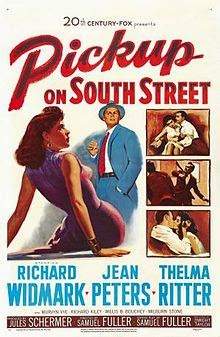
bf34b-pickuponsouthstreetFrom American cult film director Samuel Fuller comes a brief, yet potent film-noir laced with communism, pickpocketing, and a lot of shady business on the streets of New York.
Grifter Skip McCoy (Richard Widmark) is just recently out of the can, and he is back on the streets up to his old tricks again swiping wallets. His victim this time around is a pretty young dame named Candy (Jean Peters) who has a mission of her own to drop off a package. Neither of them knows quite what they have gotten into and to start off with, nothing happens. What exactly has Skip stumbled upon? The answer includes microfilm, spies, and the Commies. All of a sudden things are hot, as McCoy tries to cut a deal with the Reds, and Candy tries to recover the film she unknowingly lost. Candy gets caught in the middle of her boyfriend who is sided with Communists and Skip who wants to cash in on his good fortune. Between Skip and Candy begins a wild and passionate love affair that seems destined for disaster. Both have their own agendas, but it is ultimately Candy who drops hers because of her new found affection. McCoy is callous at first but he comes around, in the end, leaving this noir on a surprisingly positive note.
Thelma Ritter was usually colorful in her many screen appearances and she has another memorable turn as the wheeler-dealer Moe Williams in this film. However, Moe does not just deal ties and secrets; she is a woman with a conscience and a touch of good old-fashioned patriotism. In her own simple way, she is a hero whether people know it or not.
Widmark played a similar conman in Night and the City (1950), but this time around things worked out a little differently for his character. The pickpocket sequences were perhaps less elaborate but still similarly intricate to Robert Bresson’s Pickpocket (1959). It is possible that he got some of his inspiration from Fuller’s work here.
This is a real communist era thriller that Fuller injects with passion, grit, and some unadulterated violence. It is not a pretty film necessarily, but that is not what Fuller is going for, and he never does. Instead, as a former journalist, he reveals to his audience the nitty-gritty of South Street up close and personal. He succeeds with flying colors in delivering a first rate scoop of uncompromising pulp.
4/5 Stars
Forty Guns (1957)

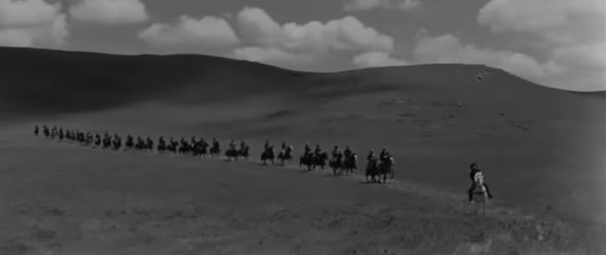
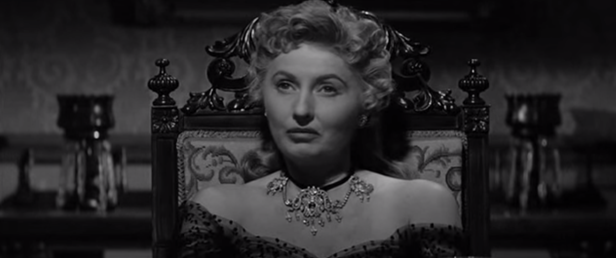
6fb70-fortyguns1Samuel Fuller has got an eye for style, cinematic scope, and at times, subversive mayhem. It’s no coincidence that Forty Guns was shot in Cinemascope, and it is one of the enjoyments of watching this film, which constantly bounces back and forth between long shots and close-ups. To start things off, Barbara Stanwyck is Jessica Drummond, the “High Ridin’ Woman with a Whip,” and she is the heiress of a self-made frontier empire.

It helps to tote forty guns around with her, but she is not as unethical as she would appear at first glance. On the other side are the Bonnell brothers, former gunslinger Griff (Barry Sullivan), number two man Wes (Gene Barry) and then the baby Chico. After they arrive in town, on behalf of the Attorney General, the nearsighted sheriff (Hank Worden) is gunned down by a drunken troublemaker who just happens to be Drummond’s kid brother. Then his buddies proceed to trash the town all in the name of good fun.

Soon Griff straightens Brockie out and Jessica comes into town to retrieve him. Next, Griff comes with a warrant to Jessica’s ranch and in a memorable scene, literally made for Cinemascope, the warrant gets passed down the table. Jessica wants no trouble but soon a crooked sheriff named Logan (Dean Jagger) want to finish off Griff. It doesn’t go so well and he gets more and more jealous of Jessica’s increasing love for the oldest Bonnell brother.

Ultimately, Brockie ends up in the clink, but he uses his sister as a shield in an attempt to escape. For once Griff loses his cool and sprays him with bullets and that’s not all. For good measure, Fuller has Griff ride solemnly off in his buckboard only to have Jessica scamper after him. The power dynamic see-sawing once again.

Yet again, Fuller never seems to do anything conventionally or demure. His film has a reformed gunfighter who calls his former profession that of a freak. The leading female character dominates most everyone else and has a ballad written about her. There are tornadoes that envelop the screen. Then, only Fuller would have the audacity to kill someone during their wedding ceremony, and he does it without skipping a beat.

Among other things, it is a film about guns, brothers and sisters, and love. Griff packs a gun on him. Jessica always has guns behind her. Griff has a younger brother who has much to learn. Jessica’s brother will never learn. That being said, the inventive visuals, typical brutality, and the memorable casting of Stanwyck were all in a day’s work for Samuel Fuller.

4/5 Stars

The Best Films of Sam Fuller

“A film is like a battleground. It’s love, hate, action, violence, death—In one word, emotions.”

1. Pickup on South Streetfuller
2. The Steel Helmet
3. The Crimson Kimono
4. The Naked Kiss
5. The Big Red One
6. Park Row
7. Forty Guns
8. Shock Corridor
9. Scandal Sheet
10. Underworld U.S.S.
11. Fixed Bayonets
12. White Dog
13. House of Bamboo
14. Pierrot le Fou

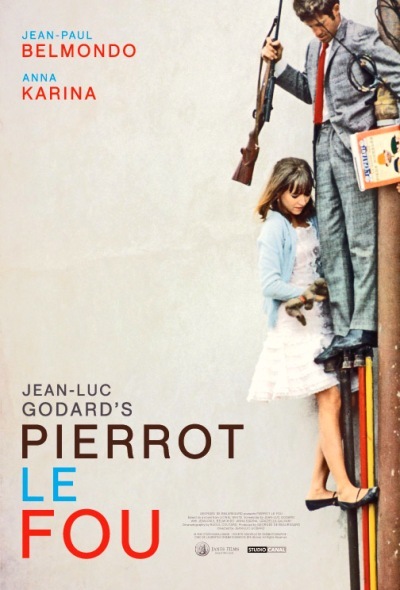
Pierrot Le Fou (1965)

Directed by Jean-Luc Godard and starring Jean Paul Belmondo and Anna Karina, this film is chock full of poetic musings, literary allusions, pop culture images, and so on. Belmondo is a Frenchman who is unhappy with his life and marriage. When a young woman he is already acquainted with comes to watch his child, they eventually elope together. Ferdinand goes with Marianne to her apartment only to find a corpse and they must flee the scene from two gangsters. Now on the run, the two lovebirds are intent on living life and making their own Hollywood inspired movie that they can both star in. Their aspirations lead them to live a wild life on the move, but finally they settle down for a awhile in the French Riviera. Ferdinand is content with a quiet life of philosophizing but Marianne is discontent with this life right out of a Robert Louis Stevenson novel. They finally move on and stop at a night club where they face one of their pursuers. After some mishaps Ferdinand and his girl get separated. Finally they are reunited only to have Marianne turn on “Pierrot” for her real boyfriend. The final moments are filled with gunfire, a suitcase full of money, blue paint, and dynamite. You could say that everything blew up in Ferdinand’s face, and you would be quite correct.

4/5 Stars