Review: Playtime (1967)

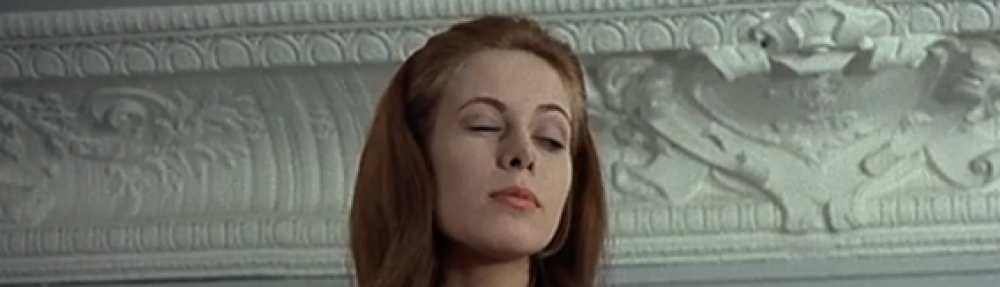
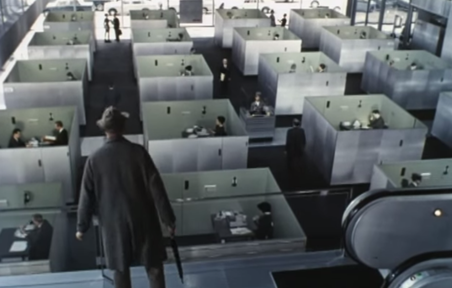
playtime1Playtime is a film that really can be broken into a number of set pieces elaborately constructed by director Jacques Tati. The vignettes begin, surprisingly enough, in an airport terminal, and a group of excited Americans are getting ready for a Parisian vacation. Mr. Hulot (Tati himself) is waiting to have a meeting in a glass office building, however, he soon gets lost in a maze of cubicles, playing cat and mouse with his contact.

Quite by accident, he wanders into an international trade exhibition and the tourists just happen to be there too. While there they are introduced to the latest gizmos, gadgets, and inventions to move society forward. They include silently slamming doors and retractable glasses. In typical Tati fashion, he gives us a glimpse of the old world from Mon Oncle. All that is left is one meager flower stand and a brief reflection of the Eiffel Tower.

Bumping into an old war buddy, M. Hulot is invited over and thus begins a long sequence in an apartment building. What makes it unusual is that the audience is left out on the street, but we can see multiple interiors through the glass. Thus, the conversation becomes unimportant, and the charades inside paired with the street noise is all we notice.

One of the most substantial sequences takes place in a place called The Golden Corkscrew. It is a packed house and the nightclub barely seems prepared for such an evening. Tiles are loose, food runs out, a band member comes late, the chairs leave marks on the backs of patrons, and much much more. Hulot stumbles in and comes in contact with several previous acquaintances. He also makes a few new friends including a boisterous American and a friendly female tourist.

After the crazy night, the morning comes and Hulot says goodbye to his new American friend but not before leaving her with a parting gift to remember her memorable time in Paris. It may not be the Paris of old, but it is still a cheery place made by its people who still remain the same even when the times change.

Jacques Tati’s Playtime took numerous years to complete and it was the most expensive French production at the time. It makes sense though because it truly is a magnificent piece of cinema. It is full of beautifully choreographed sequences and elaborate sets. Mr. Hulot often finds himself wandering through this labyrinth of modern Parisian humanity. Tati teases us, however, filling his world with Hulot doppelgangers.

Even when the gangly protagonist is on screen, he often pops off and on for minutes on end. He is no longer the primary focus of the film. Tati also takes great interest in the sterile modern society of glass, steel, and technology. The screen is filled with a wide array of individuals, which makes it fascinating to simply people watch. Furthermore, Tati almost refuses to use closeups, thus allowing the camera to capture more.

Playtime is slightly slower, to begin with than I remember, but it has wonderfully subdued humor paired with social commentary. Tati’s film may not have a lot of decipherable dialogue, but there sure is a great deal of noise. His sound effects seem to rival The Three Stooges in comical impact, often filling the void usually devoted to talking. It is moments like these where you see similarities to the old silent comics like Chaplin and Keaton.

Playtime is all about the minutiae and these moments are probably exhibited best at the nightclub. So much happens and much of it goes unnoticed, but oftentimes when you pick up on something the payoff is great because you slowly begin to notice more and more. Tati does not have to announce it, but he puts it there to be seen. For instance, there is the fish that is never served but is constantly being seasoned. Then, the doorman who opens the door without any glass. Finally, there is the waiter who gets all the ripped, torn and otherwise ruined articles of clothing. Together all these moments create some immensely funny sequences.

Another thing about Tati’s film. There is really no conflict. He is addressing the changing times, but at its heart, Playtime is just that. Light-hearted recreation.

5/5 Stars
Bananas (1971)

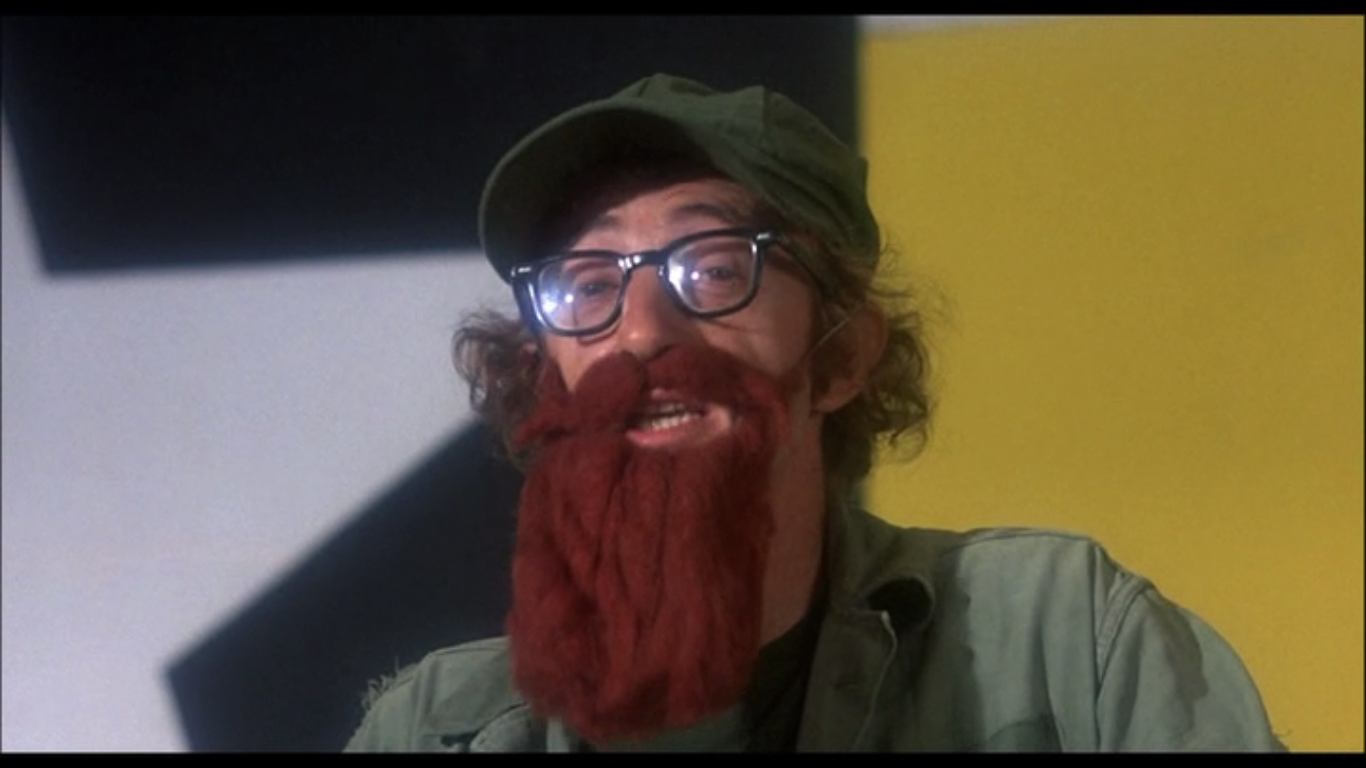
ad341-bananasIn the vast realm of Woody Allen films Bananas feels more like Take the Money and Run (1969) with its zany comedy than his later films which often take on a more somber and philosophical note.

A South American assassination with play-by-play commentary by Howard Cosell is the epitome of this film’s humor. A coup de’tait follows in the banana republic of San Marcos and somehow Fielding Mellish (Allen) fits into this picture. He starts out as an inept machine tester, gets beat up on the subway by thugs and falls for a female activist named Nancy (Louise Lasser). In order to impress her he heads to South America and winds up joining a revolutionary group.

Now somehow made president of the rebels, he heads back to the United States to gain support and funds. However, he ends up on trial and things are not looking too good for him. However, he gets back with Nancy and she agrees to marry him. The films ends with the consummation of their marriage book ended nicely by commentary by Howard Cosell once more. Woody Allen has always been a comedian and Bananas truly fits its title. It is utterly wacky.

3.5/5 Stars

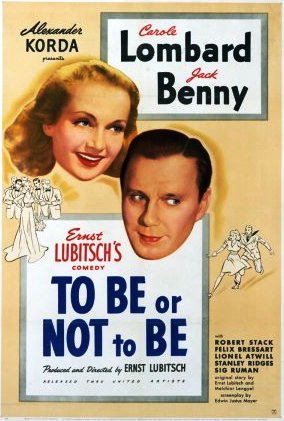
To Be or Not to Be (1942)

Starring Jack Benny and Carole Lombard with director Ernst Lubitsch, the film follows a group of actors in Poland during the outbreak of World War II. All too soon their act seems to be in jeopardy and they must put on the most important performance of their lives. Benny and Lombard are a husband and wife acting duo, who with the help of their troupe must stop a spy from giving damaging information to the Nazis. With the help of their acting and disguises, they are able to pull off the monumental task. This satire is so extraordinary because it made fun of the Nazis and found humor in that subject at the same time their villainy was occurring. Benny certainly seems out of place in Poland and he is not much when it comes to performing Hamlet, but I suppose that’s part of his charm. He is so vain and suspicious of his wife and yet he ends up a hero.

When I first saw this film I expected major laughs and it really does not have that, at least not in the way that Chaplin lampooned Hitler in the Great Dictator. Here Lubitsch weaves a somewhat darker story and yet it causes us to smile because of this Polish acting troupe that embodies the words of Shakespeare that “All the world’s a stage.” He meant it to be metaphorical but they take it to heart and their acting turns into reality. The bit player Greenberg goes as far as reciting the Jewish part of Shylock from the Merchant of Venice and it ultimately saves their lives. As such the film often switches back in forth from stage to actuality and pretty soon it is hard to separate them. The the plight of these people was close to Lubitsch, but he also was adept at the romantic comedy. Thus, despite the constant bickering and the trials faced by Joseph and Maria Tura, we cannot help but laugh at their love story. To Be or Not to Be is not your everyday comedy, but instead it occupies its own unique niche. Hopefully no one walks out on it!

4/5 Stars

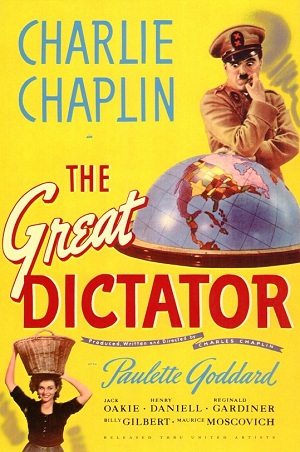
The Great Dictator (1940)

ac211-the_great_dictatorStarring Charlie Chaplin with Paulette Goddard, this satire blatantly critiques Hitler and the Nazis. The film opens during WWI where a little solider (Chaplin) saves an important military man. However, as a result he lands in a hospital with amnesia. All the while the power hungry dictator of Tomania, Adenoid Hynkel (also Chaplin) is on the rise. The man with amnesia returns to his barber shop in the Jewish ghetto and there he catches the eye of a beautiful girl Hannah. However, as Jews they are not safe, and even when things start improving, quickly Hynkel puts down his iron fist. The barber and another dissident are imprisoned, Hannah is in trouble, and Hynkel is ironing out his differences with Benzino Napaloni. However, after a gutsy escape, the barber poses as Hynkel and makes an impassioned plea to the people.

I see this film as a drama full of pathos. It is important to realize that is is not trying to make light of the situation but it is in fact condemning what Hitler was doing at the time. I think that is part of the brilliance and universality of Chaplin’s films. He could balance drama and comedy so aptly, making it possible for him to tackle this controversial topic head on. Furthermore, even though this was his first true talkie he still kept one foot in the silent age in his portrayal of the barber (very similar to the Tramp), and yet he also acknowledged the very present danger of Hitler. This film has some wonderful moments, but I think the two that really stick out are the opening speech by Hynkel which blatantly derides Hitler’s mannerisms and rhetoric. Then, in a complete 360, Chaplin gives his powerful speech aimed to rally mankind. Overall, it is a stellar duel performance from Chaplin and Goddard is as radiant as ever. That mustache certainly did not hurt the film either!

5/5 Stars

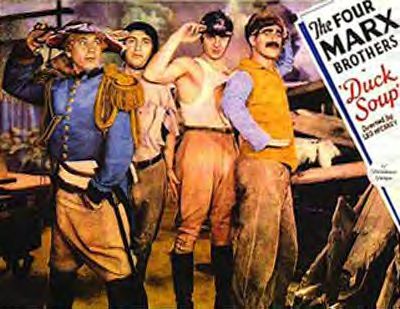
Duck Soup (1933)

47a2d-duck_soupArguably the greatest movie of The Marx Brothers, Duck Soup takes place in the country of Freedonia where Rufus T. Firefly (Groucho) is appointed the new leader. All too soon he proves to be incompetent and the ambassador from the rival country of Sylvania wishes to start a war with Freedonia so he can take over the country. He enlists the help of a wily woman as well Chico and Harpo who are spies. Chico is caught and his trial ultimately leads to war. However, he is also Firefly’s secretary of War and with the Brothers leading things it is sure to be zany and wild. Beside the ever present puns and quips, some memorable moments include the opening serenade, the street vendor scenes, the famous mirror sequence, and of course the war at the end. This would be the last film with Zeppo but the other brothers would move onto MGM and keep their career going. This film is good but upon seeing more of their films I would say I appreciated A Night at the Opera more.

4.5/5 Stars