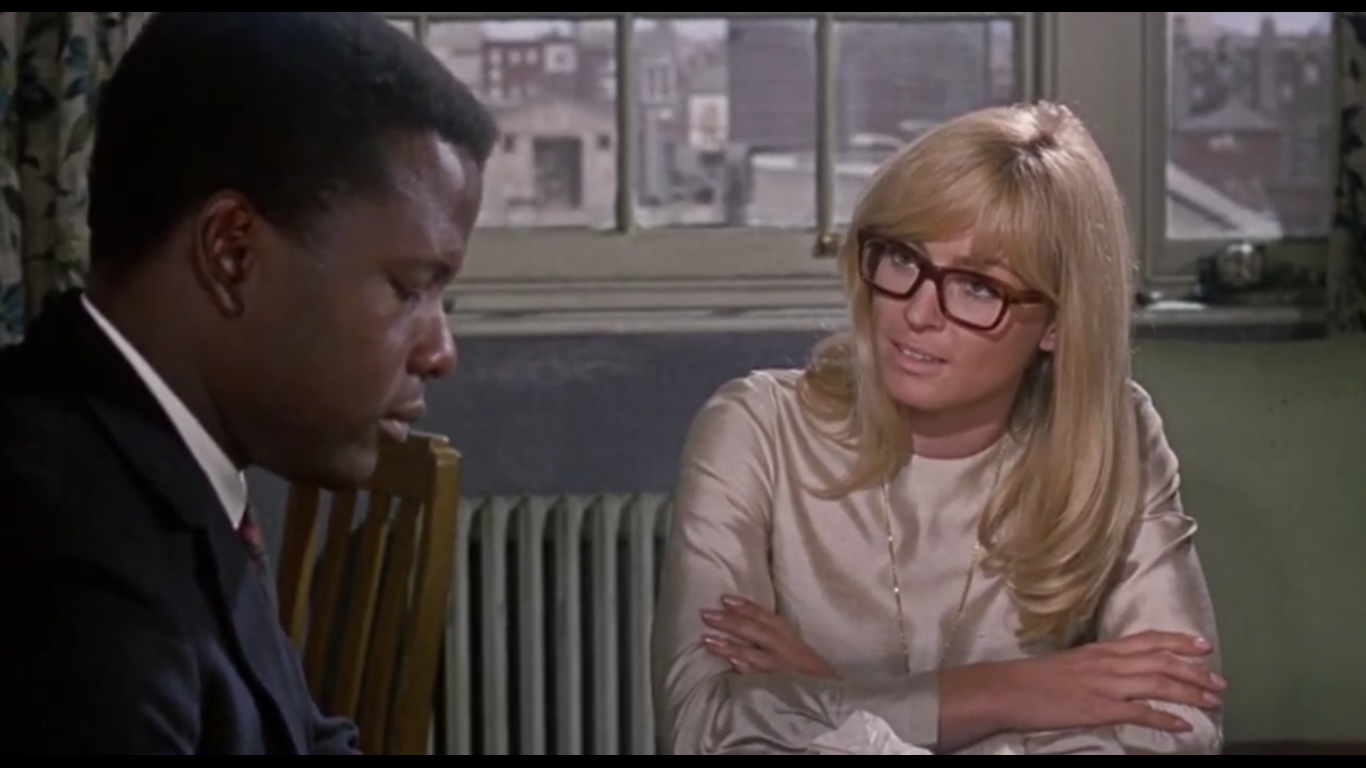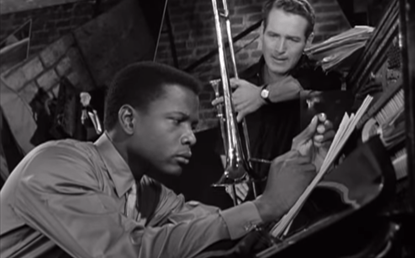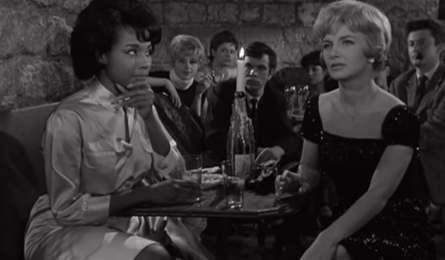
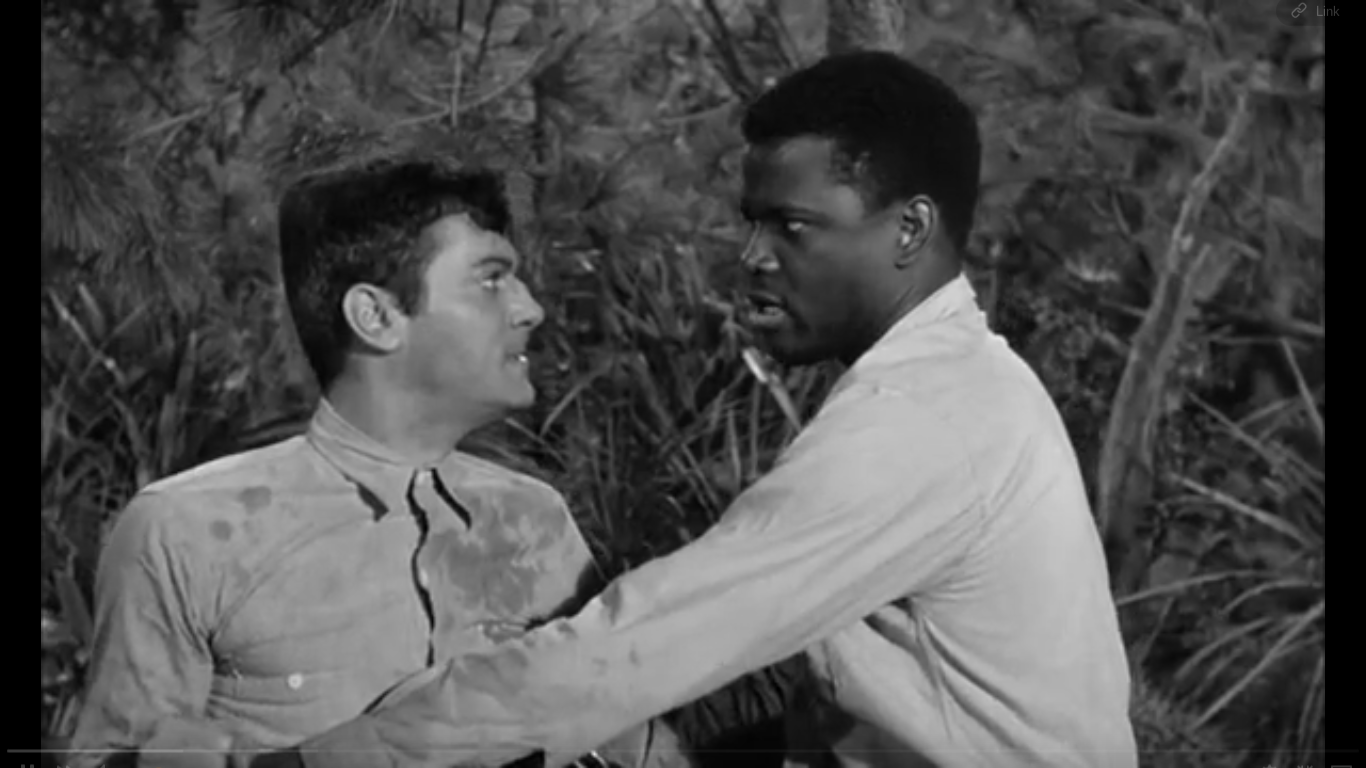
The Defiant Ones (1958): Tony Curtis and Sidney Poitier

I can’t have made this up myself, but The Defiant Ones is a testament to the pithy axiom that proximity breeds empathy. Stanley Kramer has very clear intent when he builds the premise of his story out of a white and black prisoner, in the era of Jim Crow, who are chained together for the majority of the movie.

He’s not squeamish about hammering us over the head with the implications. These two men, who escape from a prison truck must work together in order to survive and evade the hordes of police dogs and trackers on their tails (led by Theodore Bikel and Charles McGraw). In fact, the push and pull between Bikel and McGraw in their carriage of justice is a mirror for our primary leads, a persistent reminder that these are four men separated mostly by circumstances.

At times, these circumstances all feel perilously didactic, but Noah (Sidney Poitier) and Joker (Tony Curtis) are the movie’s saving grace as it should be. What’s most phenomenal about Poitier and Curtis’s performances as they take on the harrowing terrain of the movie is just how taxing it seems, and there’s a definite physicality to their plight that fully manifests on the screen.

It’s torrents of rapids or getting trapped in a mud pit together and struggling to fight their ways up the sides These moments overwhelm us and at times feel excruciating. But they bring us into each moment and make them feel real and palpable even when the perfectly orchestrated set-up fails to do so. This is the underlying tension of the entire movie.

Although the two men could care less for one another, if not for self-preservation, there are momentary hints of altruism the farther they go along the trail together. They go through the wringer, nearly getting hung after making a desperate attempt to score some provisions in a local settlement after dark. Claude Akins is one of the warmongers with retribution on his mind. Again, Lon Chaney Jr. plays his counterpoint and a man with a timid reservoir of mercy.

In another prolonged interlude, after having survived, they sneak away to a rural homestead run by a widowed mother (Cara Williams). She at one time becomes their captive and then nursemaid, providing care and sustenance to a wounded Joker while only mildly tolerating Noah. It’s here in a formative moment where their physical chains are finally cast off, only for the bonds of camaraderie to cement between them. The once tenuous partnership has progressed toward something verging on mutual respect.

Even as the woman schemes to run off with her new man while leading Noah astray, Joker for the first time in his life fights against the color line. Because complicity is so easy. But his indignant conscience rumbles inside of him, and he goes after his friend to warn him of the hazards that lie ahead.

One of the most galling sequences occurs earlier in the picture when Noah recounts how he was always taught as a young man to “Be Nice” and then his wife went and taught his son the same thing. Of course, “Be Nice” feels like the coded language of deeply entrenched oppression with blacks having to play up to whites just for the sake of survival if not a seat at the social table.

What it engenders in Noah is deep-suited anger for all his natural life. It’s the kind of gall, Joker can’t quite understand. But when he follows Noah toward the Swamp, he’s showing incremental change can be a powerful thing in itself.

One could argue the ending shows how far the film was willing to go. In other words, The Defiant Ones could only go so far. James Baldwin talks in The Devil Finds Work (If my memory holds) about how Poitier’s character does the valiant thing in the end for the white man (while black audiences screamed at him to get away on the train car).

Obviously, if he did not sacrifice for his newfound friend it would sully the film’s theme while further complicating the resolution. The white world was not quite ready for that ambiguity even as black audiences clamored for greater freedom in life and on the screen.

But if I’ve learned anything about Stanley Kramer, his films very rarely aspire to social realism as much as they are parables under the guise of docudrama. Their purpose is clear and their messages unabashed. Years later we look at the Defiant Ones or Guess Who’s Coming to Dinner and we desire more out of them. Even Sidney Poitier as an actor was often admonished for never quite going far enough when it came to portrayals of his people. There was always something at fault.

Still, when I look at this picture, I see Kramer’s intentions and remember I am so quick to dismiss the past from my enlightened present. Because it’s so easy to do.

However, it feels apt to end with Poitier’s own words about his director:

“Stanley was always a forerunner of terribly good things; He was the type of man who found it essential to put on the line the things that were important to him. People have short memories: in the days he started making films about important social issues, there were powerful Hollywood columnists who could break careers. He knew this, and he said to himself, ‘What the hell’, either I do it or I can’t live with myself.’ For that attitude, we’re all in Stanley Kramer’s debt. He’s an example of the very best of a certain type of filmmaker.”

Kramer’s not one of the greatest filmmakers of all time, but perhaps as Poitier suggests he’s the best of a certain type of filmmaker. Surely that is enough.

4/5 Stars

To Sir, With Love (1967): Sidney Poitier As a Mentor

In the 1950s Blackboard Jungle was one of the early pivotal roles for Sidney Poitier where he plays a disaffected youth who is ultimately mentored and encouraged by his teacher: Glenn Ford. Thus, it seems fitting, at the height of his own powers in 1967, Poitier left the student behind and graduated with To Sir With Love leaving an indelible mark on a new generation.

By now it feels like a rather tame vestige of Swinging London. In this world, Poitier feels like a cultural anachronism. Yes, he’s black but there’s also a difference in class. Because he has a level of propriety that feels immediately at odds with the British working-class milieu that goes with grungy streetcorners and gossip on the double-decker in London’s East End.

However, director James Clavell envisions a story where Sidney Poitier fits seamlessly into a British world because he was himself a seasoned man of the world having grown up in Australia, gone to war in Asia, and made a career for himself in Hollywood. It does feel like a unique bit of casting for the time, but it also suggests Clavell’s confidence and understanding of his star’s capabilities.

It’s true Mark Thackeray comes to the school with a background in engineering and a world of experience, but he also has ideals and as he figures out his life, he wants to do something meaningful. His new class has a far different context — hard lives — where teachers are observed more like enemies than mentors. They distrust authority and look destined to revolt against yet another victim, first, sawing off a leg of his desk, attempting to drop projectiles on him, and generally undermining his authority by any means possible.

The score gets weirdly antsy, and it doesn’t do Poitier’s performance any favors when he fully blows his top, if not out of vitriolic rage then certainly righteous indignation. Still, he carries this turning point with aplomb, embodying everything I want to be but can rarely muster with a steely resolve.

Following in the footsteps of Ford, he’s strong. He has a backbone. But he also has a caring spirit, and he’s willing to help these kids when no one else will. He speaks to them not as cloying little children but as adults who are capable of rational thoughts and feelings. They employ a certain level of decorum and yet in response no subjects are considered off-limits.

The museum montage is a bit disruptive, but it feels like a relic of the ’60s overlayed by Lulu’s chart-topping theme. In truth, it was a product of necessity with the needed permits falling through. Still, it’s a sign of something greater. There is a trust that forms between a teacher and his pupils even as their horizons are broadened to things they would have never given a thought to before.

If the movie is about one teacher’s task of not simply subduing a classroom but winning their respect and admiration, then, there several specific test cases that prove prudent to consider.

The most precocious and romantic member of the class, Pamela Dare (Judy Geeson), begins to form a crush on Mark, and he does his best to cultivate her talents while at the same time encouraging her to reconnect with her mother.

Then, there’s Denham (Christian Roberts). He has the bad boy scruffiness of a wannabe Keith Richards or Jagger, and his redemption is another one of Thackeray’s ongoing projects. There’s a standoff with the P.E. Teacher where Sir teaches them a lesson about the unfairness of the world only to suffer for it. Then, of course, we’re reminded of lingering racism in all walks of life. This prevailing sentiment is no different here than across the pond.

One key to Thackeray’s success (apart from being Sidney Poitier) is because he actually shares their world and still rose out of it. Not a great deal of focus is given to it. Still, it’s hard not to see how Thackeray’s background mimics Poitier’s own, originating from humble means to become such a prominent and successful figure with extraordinary elocutionary powers. He’s able to command that classroom (and the screen) with the sound of his voice and the reason that lies behind it. He’s wasn’t born with all these abilities, but he certainly polished them.

I’ll be the first to avow, To Sir, With Love is not exactly auteur cinema, but it goes to show the weight a performance can have. I appreciate what the picture stands for and the way Poitier delivers it provides a genuine weightiness. He instills lessons about apologizing when you know somehow else is in the wrong and extending forgiveness to those who don’t deserve it. In a boxing match he exerts dominance quietly and not as an aggressor. Maybe elements of the movie feel antiquated, but I dearly hope that these do not.

In terms of his performance, the way he carries a briefcase or drops a letter into the red mailbox with a slight affectionate tap, you can’t sum them up, and they don’t mean anything by themselves and still, these are the hallmarks of his performance. And of course, there’s that dance. Somehow this is Poitier personified: he’s imbued with such dignity, and we receive that, but he’s also a man measured by joy as much as rage. Tenderness as much as ferocity.

The final “Lady’s Choice” dance where he takes up his spot on the floor opposite Pamela is one of the film’s sweetest culminations. And when the more traditional trappings evaporate into a raucous number by The Mindbenders, he’s more than game to groove along with it. In fact, he seems to relish the moment just as we do. It’s the film’s crowning gift of mutual affection and respect. I couldn’t help thinking that the life that each one of those teens offers up will be a testament to Sir. Because his investment reaped so much reward.

Yes, To Sir, With Love follows the expected trajectory and still it becomes more about the riches along the way expressed through minor victories and then incremental interactions leading to steady levels of understanding and growth. Do schools actually change like this? Do teachers actually make a difference? Can class rebels be reformed just like so? And does a man likely give up on ambitions for the greater good? I don’t know if I can answer these succinctly (or if I want to answer them), but perhaps that isn’t the point.

To Sir, With Love is an exhortation to never stop trying to be that difference. Is it futile? The world would have us believe it’s so. Am I cynical? Most certainly. I felt a particular kindred spirit to Mr. Weston. And yet movies come along and remind us we should have a go at a heartless world anyway.

Bar that opening scene and a jaunt to the market or a quick moment ironing clothes, we rarely see Poitier outside the four walls of that school. It’s as if he exists to be there as a beacon and a guide for those students. I wanted him and Suzy Kendall to really get together. There’s the semblance of romance and only a warm hint.

But again, I fall back on Poitier’s powerhouse performance, which makes us dream of something better. He bears all our hopes and cares, standing in for any teacher we ever had or wished we had.

I resonated with the movie anew because I spent some time in another country working at a school where many of the students might be classified as “rejects,” and yet on my best days, I felt such a connection to them. I wanted dearly for them to succeed, and Sidney Poitier as he is incarnated up on that screen is a far greater man than I. I can only imagine how he felt.

4/5 Stars

Lilies of the Field (1963): Starring Sidney Poitier

The ample joys of Lilies of the Field come out of it being a kind of modern-day parable. It’s a modest and simple story, shot over 15 days by director Ralph Nelson, with a source novel gaining inspiration from the passage of the Christian scripture:

“Consider the lilies of the field, how they grow: they neither toil nor spin, 29 yet I tell you, even Solomon in all his glory was not arrayed like one of these. 30 But if God so clothes the grass of the field, which today is alive and tomorrow is thrown into the oven, will he not much more clothe you, O you of little faith?”

It means different things for our two leads, one who keeps a handy pocket edition for easy travel and the other with a giant tome of a Bible ready to quash everything around it. The image becomes a pertinent one.

Because the film itself concerns itself with an itinerant handyman played by Sidney Poitier. His car is sputtering so he stops by the nearest establishment to get some water for his thirsty engine: it happens to be cared for by a troop of Nuns.

He wants to get out of their sphere of influence as soon as possible. They hardly speak a lick of English. They are Catholic and he is Baptist. And yet he finds himself doing work for them. At first, it’s hardly out of altruism but they are a persistent bunch.

Their leader, Mother Maria (Lilia Skala), has grand visions about what Homer Schmidt (Smith) can do for them thanks to his pair of strong arms. She’s resolute that God will build them a “shapel” and Homer is the readymade conduit.

Of course, he has no such ideas, and he’s interested solely in a buck. He’s ready to do one job for them, get a meal, and then move on with his life. Remember these were the early 60s. Poitier later in the decade would come off stately. He was a doctor, a police officer, a teacher. Here there’s a freedom and playfulness to his movements indicative of a different kind of man.

If there’s any major development to the movie it’s how they slowly teach one another something. Homer comes to understand what it is to slow down, to be present, and to bless other people with your skills. These sisters want nothing more than a place of worship, and he can give them so much. But it’s not just a selfish act of individuality and pride either. It becomes something when others join in to help finish what he began.

However, the Mother is a stern and unyielding lady in her own right. She believes in God’s daily Providence but sometimes at the expense of the human beings around her. She sees them only as tools in God’s plan rather than fellow human beings worthy of thanks and appreciation. Over time she too softens and admires Homer for the monumental thing he has accomplished.

Because ultimately he does bring their dream to fruition. He’s got the dogged resolve to make them their chapel, not because of monetary gain but just because he can. As alluded to already, it begins as a mission of self-aggrandizement.

Both Homer and the Mother can bear a little humbling, and yet in their corner of the world, they see some marvelous things. Homer uses his ingenuity to become the contractor for the project as the local members of the sisters’ parish help finish the building.

Although it’s not a movie of means, it makes up for it with heart and performance. On first look, it seems rather surprising the movie would be such an award boon for Poitier, and yet there’s something warm and appealing about his characterization. Years later there’s still something more to it. There’s a freedom and an energy imbued in him.

He can be exuberant with his shirt off, then badgered and forbearing. They feel like universally human traits that we can understand and relate to. The singing of “Amen” reverberates throughout the movie even if Jester Hairston’s resounding voice sounds nothing like Poitier.

Others like the affable bartender (Stanley Adams) are pragmatic when it comes to issues of faith, the local priest on wheels (Dan Frazer) isn’t overly pious, but he seems a decent human being with genuine aspirations and honest shortcomings. The one other solitary white man (Ralph Nelson himself), a local contractor, seems like he could represent a hedge of racism (Using the word “Boy”), but Poitier fires right back and readily treats him as an equal. They too form a mutual understanding even as he marvels at Homer’s accomplishments. He feels indispensable and Poitier certainly is for the movie.

Except for a rather conspicuous English lesson early on explaining what the colors “white” and “black” mean, from vinyl records to his skin tone, no reference to Poitier’s race is needed. It occurs to me this film, set out in the rural desert, feels like a tale of cultural outsiders, and if not outsiders then at least characters who rarely received Hollywood treatment in the ’60s. We have a black handyman, a parish of European nuns, and then a host of Latino workers.

They couldn’t be more disparate, and yet somehow their ecosystem comes together and blossoms. Whether it’s a shared sense of faith or even a basic human understanding, they gather together and create something beautiful. I can only imagine that this is part of what drew Poitier to such an unassuming picture. Today it still stands modestly alongside some of his best performances.

4/5 Stars

4 Living Legends Part 5

Here is another entry in our ongoing series of Classic Hollywood Stars who are still with us. This is an effort to acknowledge living legends who are well-deserving of our appreciation.

Marsha Hunt (1917-)

Marsha Hunt is one of Classic Hollywood’s amazing centenarians. Before having her career sabotaged by the Hollywood Blacklist in the age of McCarthyism she showed surprising utility in a range of pictures including Pride and Prejudice (1940), Kid Glove Killer (1942), Cry Havoc (1943),  and most memorably in Raw Deal (1948).

Eva Marie Saint (1924-)

Aside from starring in such perennial classics as On The Waterfront (1954) and North by Northwest (1959), she was also married to her husband Jeffrey Hayden for over 60 years, until his passing in 2016.

Angela Lansbury (1925-)

With her starring lead as amateur sleuth Jessica Fletcher in Murder, She Wrote, it’s sometimes easy to forget how early Angela Lansbury started her career in Hollywood. Some of her wide-ranging performances included Gaslight (1944), Picture of Dorian Gray (1945), The Manchurian Candidate (1962), Bedknobs and Broomsticks (1970), and, of course, Beauty and The Beast (1991).

Sidney Poitier (1927-)

There is so much to be said about Sidney Poitier’s impact on American cinema and representation of African-American masculinity. His catalog is still staggering to this day going beyond high profile successes from ’67 like In The Heat of The Night, To Sir With Love, and Guess Who’s Coming to Dinner. No Way Out (1950), Defiant Ones (1958), Paris Blues (1961), Lillies of The Field, and A Patch of Blue (1965) are all worth searching out, among many others.

Paris Blues (1961)

paris blues 1.png

I’m the first to admit I’m no jazz connoisseur but I dig it. In this age that we now live in of shuffling and song roulette — where the single has surged passed a cohesive album in terms of singular importance — there has been some small amount of education going on for me.

Awareness of some of the classics is starting to set in. There’s recognition of a few of the heavy hitters like Miles Davis, John Coltrane, Bill Evans, Dave Brubeck, Count Basie, and of course Duke Ellington. When we hear even the briefest interludes of “Take The A Train” we will grab a hold of it. Ellington provided the score for Paris Blues including some of his beloved classics and they couldn’t be more fitting.

Because Martin Ritt’s film is hot when it comes to jazz — you can feel it wafting through the air and giving an added layer of sensuality to the already romantic milieu of the Parisian streets. This is a propitious factor married with the fact the picture also takes its shoot right to the streets of Paris, even filling out the cast with a few native supporting players.

Less than a decade before, we had Roman Holiday (1953) and now we have something that might just do the same for France, except with an extra flavoring of brass and a rhythm section. The cast couldn’t be better with two of Ritt’s former students from their Actor’s Studio days, power couple Paul Newman and Joanne Woodward. Equally compelling is another legendary leading man in Sidney Poitier and Diahann Carroll as beautiful and sophisticated as ever. I admire them all.

paris blues 2.png

However, in translating the source material to the silver screen, you could easily say the story lost most of its clout. Harold Flender’s original novel was about two interracial romances between two vacationing Americans and two expatriate jazz musicians working in Paris. However, this was Hollywood in 1961. Although the script teases the original storyline when Ram Bowen (Newman) comes onto Connie Lampson (Carroll) on an inbound train, it was not meant to be — quickly brushed off for more conventional demarcations.

Believing the public was still not ready for such portrayals, the studio got cold feet and smoothed things out by making sure everyone ended up with their “kind.” It’s Lillian Corning (Woodward) who gets starstruck with the trombone player and her friend eventually softens to the handsome saxophonist Eddie Cook (Poitier).

Acknowledging this grievance, the only thing that makes me mildly okay with the change is that the husband and wife duo of Newman and Woodward get paired opposite each other so we see real-life romance partially channeled into the movie. While the four leads look great together and there’s indubitable chemistry, somehow it still feels like something is missing.

paris blues 3.png

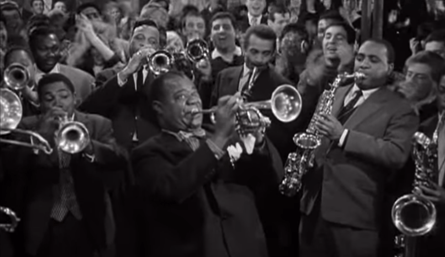
Louis Armstrong leading a parade of brass into the jazz club is a shining moment full of uninhibited synergy that fills up the underground space in the most joyous of fashions. As he always does, Wild Man Moore brings down the house. But the real issue is the lack of pizzazz outside these performances.

The story meanders without creating enough interludes ripe with meaning. They’re either cutesy momentary snapshots of lovebirds in Paris or understated pieces of human drama. Not by any means bad but what the picture might have used were some sustained sequences of action in places where it floundered. Most vividly I can recall the Vespa ride through the streets or even the party which is raided by the local police which helped make Roman Holiday a landmark.

There is nothing so memorable here. Instead, some characters leave on the train they arrived on and others stay behind. Musical aspirations and romance are continuously being weighed. Whether we care that deeply about any of it is up for debate.

Worst of all, these issues are only exasperated by the fact that the story no longer has one of Martin Ritt’s finest attributes, a theme of social importance. Because in a Pre-Civil Rights age, Paris Blues could have been a much more moving statement; instead, it’s a middling love story.

Poitier gets one conversation with Carroll where he candidly vocalizes that in Paris he’s a man or he’s a musician. To borrow someone else’s words, “he’s judged not by the color of his skin but by the content of his character” and even more so by his artistry. It spawns a minor spat but the opportunity to make a statement — a statement without the utterance of words even — was lost before it even began. Perhaps the wasted potential hurts more than anything. Like the musicians at its core, Paris Blues is ultimately a lightweight.

3/5 Stars

No Way Out (1950)

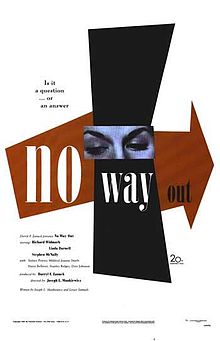
220px-No_Way_Out_(1950_film)_posterI had a preconceived notion that No Way Out might be the kind of social drama that was groundbreaking for its day and by today’s standards looks mundane and quaint. 65 years have passed and this film from Joseph L. Mankiewicz still packs a wallop, believe it or not. We are blessed with the first major role for screen icon Sidney Poitier as young doctor Luther Brooks. His main antagonist is Richard Widmark playing a racist scumbag like he does best, and Linda Darnell also gives a key performance, although her career would soon be on the decline.

The film opens with the young interning doctor — Poitier was only 22 at the time –getting ready for a night shift. His first customers just happen to be Johnny and Ray Biddle, who both got it in the leg after a botched robbery attempt. At first glance, their wounds look superficial, but Luther notices Johnny is disoriented. His diagnosis is a brain tumor so he tries to administer a spinal tap which ends up unsuccessful, partially due to Ray’s constant berating. But Ray has no sympathy; all he knows is that this black doctor has killed his brother. A white doctor could have saved him and all his prejudiced beliefs of blacks are confirmed. At least that’s what he tells himself in his narrow little mind.  Luther even goes to his superior Dr. Wharton (Stephen McNally), and although he cannot be absolutely certain, he maintains confidence in Luther’s competence.

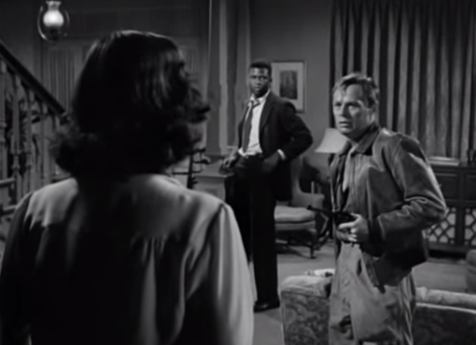
nowayout1Again that bears little importance to Ray and he will not grant them the opportunity to do an autopsy. After all, his mind is already made up. So the next best thing is to track down Johnny’s former wife Edie (Darnell), who has pulled herself out of the gutter which is Beaver Canal and made a modest living for herself. They want her help, and unbeknownst to them, she does go see Ray. You can see it in how they interact with each other. She was Johnny’s wife once, but there was something between them and Ray won’t let her forget it. That’s undoubtedly why she wanted to get away, but Ray brings out the worst in her. Even as they speak, her racist sentiments come bubbling to the surface. It’s in her veins after all. It doesn’t help that unrest is building in the city. A riot is at hand and the slow build-up leading to the imminent rumble is boiling with tension. Mankiewicz does something important here. He shows both perspectives. I cannot help but think some things have not changed a whole lot over the years. Black vs. white. The same racism. The same belligerence. The same lack of understanding.

nowayout2Of course, after that is all done, that still does not wrap things up with Ray. He still has to settle a score with Luther and he uses Edie against her will. They set a trap at the home of Dr. Wharton for the unsuspecting Luther, and this scene has vital importance to the film, not simply because Biddle and Brooks come face to face once more. This is the scene where Edie must make a choice. Really it’s the universal choice. Stand passively by as injustice is being done or take a stand against it.

So you can make your own diagnosis, but this was not a superficial message movie. It hits fairly hard. I was even surprised by how often Ray Biddle lets the N-word fly. It completely fit Widmark’s characterization, but the production codes allowed it. Supposedly the actor apologized profusely after many of his scenes with Poitier, but his performance is nevertheless potent. It’s certainly convicting and we cannot be too quick to find fault with any of these characters because, truth be told, we all have some apathy and narrow-mindedness stuck inside our skulls. No Way Out is a striking reminder of that.

4/5 Stars

To Sir, With Love (1967)

To-sir-with-loveStarring Sidney Poitier and set in London, the plot follows a former architect from British Guiana who becomes a teacher at a high school in a tough area. Early on Mark Thackeray faces a rebellious group of teenagers who dislike education and challenge authority whenever possible. He resolves to keep his temper and yet one day their actions are too vulgar for him and he loses it.

After that he develops a new strategy to treat them as adults and he teaches them practical skills they will need in the real world. He changes how they act and takes them on field trips so that even the most combative one Denham is won over. However, after an incident during gym class which he must diffuse, Thackeray loses the respect of much of the class. His mood changes slightly after receiving another job offer.

Later on in the gym class he is supervising he boxes with Denham. In the ensuing moments he wins Denham and then everyone else over once more. With the year finally over, Thackeray is invited to the year end dance where he is given a gift and serenaded with song (To Sir, With Love by Lulu)! Too choked up to speak he retreats to his office. After a chance encounter he resolves to continue teaching and rips up the other offer.

Besides a good theme in “To Sir, With Love,” Sidney Potier gives a great performance that makes this film both powerful and touching. If you want a small look into Swinging London this is one to watch. Although I am tempted to find fault in this film I find myself focusing on the positives and I will leave it at that.

4/5 Stars

Lilies of the Field (1963)

Original_movie_poster_for_the_film_Lilies_of_the_FieldStarring Sidney Poitier, the film opens with a black construction worker who has an overheated car in the middle of a desert. He spots at the residence of some European nuns to get water. Homer is intent on making a quick pit stop but the mother superior has other ideas. She sees him as a gift from God so that their Chapel might be built. He reluctantly decides to stick around for a little while to help them out and teach them some English. The stubborn Mother Superior wants everything her way and Homer ends up leaving them. Although he realizes he will not get paid, Homer’s ambition to be an architect leads him to eventually start the Chapel for the nuns. He takes on a part-time job and starts the undertaking while the nuns request materials. Soon the locals want to help but Homer is adamant that he do everything. Eventually, they do join in and more materials come. Progress picks up and Homer becomes the foreman. The building is finally put up and yet the proud Mother will not thank Homer. That night she is finally tricked into thanking him and Homer leads them in a spiritual one last time before driving off into the night. This film is a battle of sorts between two strong-willed people. In the end, it brings a great deal of good.

4/5 Stars

A Raisin in the Sun (1961)

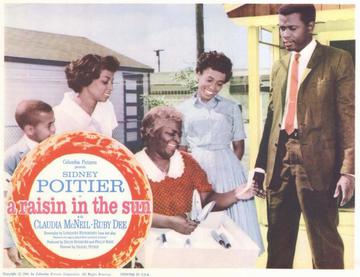
d69d4-raisin_in_the_sun_1961_poster_horizontal_bStarring Sidney Poitier and adapted from a stage play, the film chronicles the lives of an African American family residing in Chicago. The whole family including the matriarch, her unsatisfied son, his wife, his son, and his sister wait excitedly for an insurance check for $10,000. The mother receives the money and resolves to use it in order to buy a nice home for her family in a white community. She then gives the rest to her son who has big plans for it. However, he loses it all leaving the family bitter and worried. In the end Walter does show his integrity and despite the bad situation, the family remains close. A great deal of this film is about the conflict of ideas and interests of the different individuals. It is also memorable since the cast is almost all African American. Poitier is good but it seems the mother steals the show.
 
4/5 Stars
 

Guess Who’s Coming to Dinner (1967)

ff836-guess_who27s_coming_to_dinner_posterThis film directed by Stanley Kramer, has a relatively simple story line revolving around a major issue. Joanna Drayton has fallen in love with a doctor she met only 10 days before and wishes to get married. Obviously, her parents played by Spencer Tracy and Katharine Hepburn, are startled by this whirlwind event. They are even more dismayed when they discover he is a black man. Hepburn’s character lightens to the idea while her husband is adamantly against it. Soon everything becomes even more complicated when the man’s parents are invited to dinner, only to be equally startled. Eventually giving it more thought, Tracy does condone the marriage realizing how much his daughter is in love. This would be Tracy’s final film and he would die only a couple weeks after shooting ended. He and Hepburn do a wonderful job with Sidney Poitier and Katharine Hougton as well. This movie is good and also monumental for the racial issue it covered.

4/5 Stars