
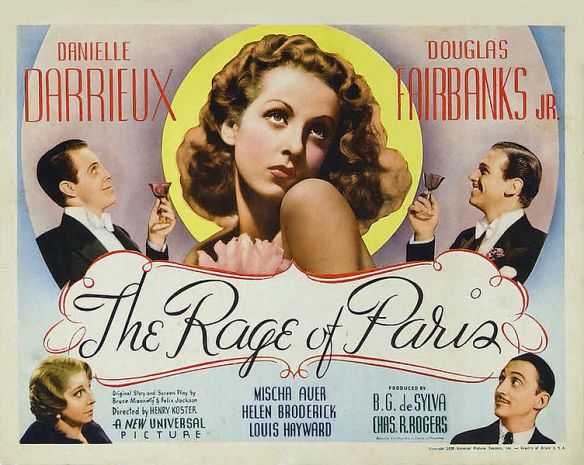
It’s one of those anomalies of life that only a few days before I write this, the renowned Danielle Darrieux celebrated a century on this earth and I watch a film from some many years ago that showcases her budding screen presence. While so many others deteriorate with age, she seems the epitome of aging gracefully. Perhaps it’s the French way in some respects.
But going back into her catalog of films and finding The Rage of Paris you see a fairly straightforward romantic comedy that’s sweet, adorable, cute all those apt superlatives but there’s that one thing stands out nigh 80 years later. I am always squeamish about praise sounding shallow but at 21 years of age, this young actress who came on the world stage with Boyer in Mayerling is a bouncy precocious beauty–a real looker–absolutely mesmerizing to watch as bright eyed and bushy tailed as she manages to be.
Yes, the script follows that time-honored tradition often found in these types of screwball storylines where two individuals who initially despise even to look at each other ultimately fall madly in love and into the same bed with the wedding bells chiming soon thereafter. It’s that sexual tension that is able to develop some sort of romantic passion that gets audiences invested supposedly.
However, as the years have rolled on and I’ve seen more films by Henry Koster I have grown affectionate of his very particular outlook. There’s a certain vein that runs through all the material that he directs–an inherent good-natured charm to it no matter the topic that is always and fundamentally enheartening. He never leaves you melancholy because each picture ends with a smile. That’s the greatest compliment I can honor him with.
So despite the typical nature of the material, Koster’s always sincere perspective and Darrieux’s intoxicatingly endearing performance as a gold-digging yet genuine French model make this one a minor winner. The class divide that always seemed to find its way into screwball plots of the 1930s such as this (sentiments left over from the Depression no doubt), helps to complicate matters but also allows for the necessary amount of empathy to be developed for not only Nicole, the girl desperately trying to find a husband just to survive, but also her main opponent Jim (Douglas Fairbanks Jr.) who has a rustic background of his own.
To be honest, for me Fairbanks doesn’t hold a candle to his father or Darrieux for that matter but the film does have a wonderful assortment of supporting players. The most important ones include Nicole’s core conspirators the worldly wisecracker Helen Broderick and her maitre d’ accomplice (Mischa Auer). All minor criticisms aside and barring any complaints about being overly sentimental or somewhat predictable, The Rage in Paris really is the paragon of a cute picture. I bow in deference to Danielle Darrieux’s career and thank my lucky stars that unabashed sentimentalists like Koster are still available in this oft cynical world that we live in now.
3.5/5 Stars
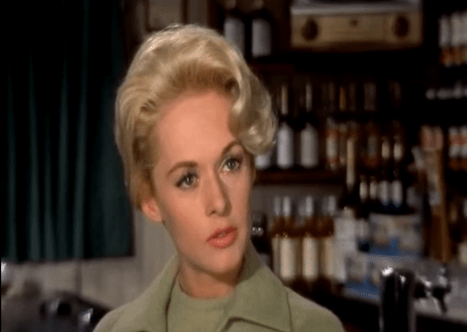 The Birds is about all sort of birds. The ones we are acquainted with initially are actually a pair of humans. Lovebirds you might call them. Except they don’t know it quite yet, but the moment Melanie Daniels (Tippi Hedren) and Mitch Brenner (Rod Taylor) meet in a pet shop, the sparks are already flying — the birds too.
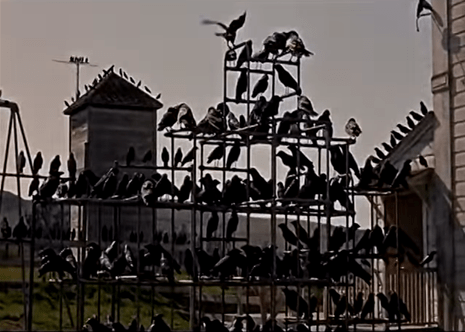 Most assuredly, the film benefits from long stretches of wordless action. The most striking example involves a murder of crows gathering on a jungle gym near the schoolhouse. Never before was the name of their posse more applicable. And while the narrative lacks a true score, the unnerving screeches from the birds is sound enough to send chills down the spine of any audience.
 4 Star Films