
Armored Car Robbery instantly had my rapt attention in part because of its location shooting and due to one place in particular. We start out at L.A. City Hall and soon a shooting and a robbery are being called in from nearby Wrigley Field, which sends Lt. Cordell (Charles McGraw) and his partner out to respond.
It proves to be a false alarm but the setting alone might throw some contemporary audiences for a loop. After all, Wrigley Field is synonymous with the ivy-laden bricks of Chicago, not Los Angeles.
Except L.A. enthusiasts might know that the area once held a Wrigley Field of its own, formerly the home of the original Los Angeles Angels expansion team in 1961. It also served as the backdrop in many classics including Meet John Doe and Pride of the Yankees. Added to that list is Armored Car Robbery, although it only uses a facade of the stadium, which could just have easily been a studio set.
Aside from always being fascinated by time capsule moments — Wrigley Field was all but demolished in 1963 — I had always heard talk of my Grandma growing up down the street in Los Angeles. She was born in L.A. County and her family ran a grocery store in the area. I don’t have much of a picture of that world and so even a brief image like the one provided here gives me a glimpse into yesteryear. But I digress.
Richard Fleischer’s heist noir is an obvious precursor to The Killing for its stadium locale and the ever necessary complications that begin to present themselves in due time. What good is a heist if it doesn’t go completely haywire?
Because of its limited time, Armored Car Robbery spends minutes on the preparations and the actual execution of the job. But the trick is, it’s all so efficient, we are never allowed time to get bored by the usual rhythms. Still, all the information is there for us to be brought into the crime.
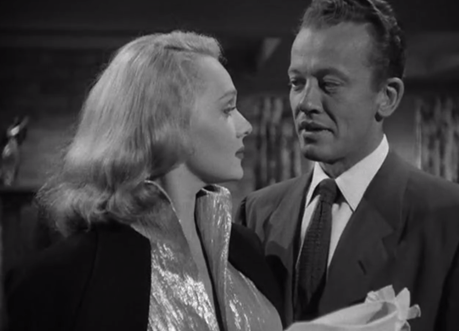
Generally known as defense attorney Hamilton Burger on Perry Mason, William Talman gives a far more insidious turn as a meticulous criminal obsessive about keeping a low profile and tying up every loose end so he can pull off the perfect crime. What’s more, he’s secretly got a bite on his accomplice’s girl, a heartlessly opportunistic blonde bombshell (Adele Jergens).
By night she’s got the entire male populous ogling. By day, she’s looking pretty, hanging around the bar, and getting miffed with her husband (Douglas Fowley), who can’t seem to make any dough. Hence her convenient extramarital operations. Dave Purvis is the man for her, taking charge of two other thugs as they set their sights on $200,000 of cold hard cash.
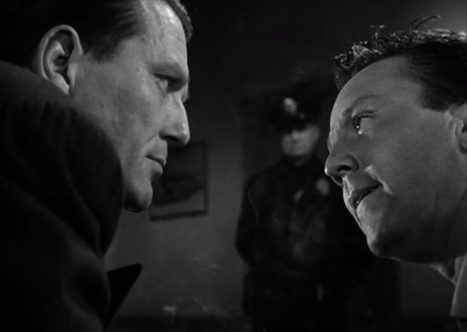
But there’s always a slip-up. There can hardly be a heist genre without the wrench that causes everything to hurtle out of control. As it turns out, Lt. Cordell (Charles McGraw) and his partner are on the beat, responding to the subsequent distress call at Wrigley immediately. The culprits aren’t expecting it, and the ensuing shootout leaves one of the officer’s dead in the line of duty and one of the gangsters badly injured. Soon the alarm has been raised with roadblocks set out everywhere and the police force on high alert for the four fugitives.
For the rest of the film, Cordell must live with this galling injustice, stewing day and night in his own distraughtness and copious amounts of lukewarm coffee. First, jaded by the untimely murder of his partner and then saddled with a wet-behind-the-ears replacement (Don McGuire). Although the new recruit nevertheless proves to have a certain amount of gumption when it counts.
The film employs a low-budget airport terminal ending — one of the few times it lets slip its meager means — but the film goes for the narrative jugular. We see precursors to the likes of The Big Combo, The Killing, and even Bullitt. On multiple occasions, it’s not at all squeamish about letting the bullets fly and the death toll rises as a result. And it’s this disregard for the sanctity of life that gives the narrative real heft. No one is protected and there we have grounds for a thrilling drama.
These kinds of stories are awesome pulp classics with a stripped-down punchiness that’s instantly gratifying. RKO was such a wonderful studio in this regard for giving us such raw delights. They don’t make them like this anymore. We waste too much time.
While not completely related, one should note RKO is the only of the major classic studios that completely folded. Those were the good old days. But all good things must come to an end. Wrigley got demolished. Actors die. Studios close down. That’s why cinematic memorials are often so important. They allow us to journey back into the past.
4/5 Stars


 4 Star Films