Yesterday (2019): How I Longed for a Bit More

Yesterday_(2019_poster)The majority of movies have to fight to earn our allegiance. However, Yesterday really does have a foolproof premise because, from the outset, it can bank on a viewership who will already have memories crowded with the Beatles and as the Fab Four play a key role in the story, you already have a huge cross-section of humanity as a potential fanbase.

Then, for good measure, you have Ed Sheeran for any of the younger folks who might not be old enough to remember the good old days. If its goal was to come out a little better than even, it would almost be there before the movie began. Although this might be too cynical an outlook for such a delightfully sentimental endeavor like this, and Sheeran is actually quite likable having a go at playing himself.

Regardless, Yesterday is the definition of a high concept storyline. Imagine something like this. You woke up tomorrow, after a freak of nature, and you were the only person in the world who knew The Beatles. All credibility aside, it does tickle one’s fancy and Danny Boyle and Richard Curtis work accordingly during some of the movie’s best bits.

There are endless possibilities to explore including other pop cultural staples also getting disrupted in a similar vein. The film chooses a few that feel completely arbitrary but no less enjoyable: cigarettes, Coca Cola, Oasis, and you guessed it, Harry Potter.

The other component a Beatles saturated audience will appreciate is Jack Malik’s (Himesh Patel) daily struggles to drum up all the lyrics to tunes like “Eleanor Rigby.” Because, of course, he doesn’t have the safety net of the internet to help him recall “she was picking up rice in the church” or that “Father McKenzie was “darning his socks in a night where there’s nobody there.” He must go at it — quite comically — by trial and error.

In this way, Yesterday manages to touch the surface of its potential though it admittedly doesn’t feel complete — at least in a satisfying manner. Granted, I only feel an obligation to point this out since it proves such an agreeable film, directed by a veteran like Danny Boyle, that also happens to be bolstered by the catalog of the greatest band of all-time.

Richard Curtis remains the great British romantic, and we see this throughout the movie. It always seems to be his greatest asset and also his major undoing. In his favor, Patel and Lily James have an unadorned if altogether amiable chemistry. There’s little legwork to get us to like them, and so we can cheer for them unabashedly.

We can say much the same about their peanut gallery (including Sheeran), although there are a few misses. Their roadie Rocky ups the oddball quota as the dysfunctional sidekick while Kate McKinnon, a particularly irksome American road manager, feels like less of a much-needed antagonist and more of a pale imitation to lampoon a self-possessed music industry.

The core romance is a crucial piece, but it felt like it might have come off more substantially had there been more supplementary elements. I can think of a couple areas going beyond simply playing with the new reality more extensively. Themes of fame, art, and authorship in a generation drunk on social media, 15 minutes of fame, and remixes also come to mind. We start to see how it impacts Jack, but it never feels like it gets to its fully-realized potential.

The closest I can come to explaining it is the fact Yesterday never earns its Groundhog Day finale. Because, like Phill Connors, Jack is given an extraordinary power — in this case the Beatles’ catalog — but it never feels like he reaches the same depths of despair before he is granted his revelation and the love of his life.

It feels like Yesterday takes liberties or short cuts with its story, since it thinks we already understand, and instead of wanting it to go anywhere more challenging, we’re here for the music (which isn’t entirely false).

Whereas Jack is only one individual, what made the Beatles was the fact there were four of them. He sings the whole catalog and yet they belong to this group who rode the wave of Beatlemania, fame, critical success, and impending discontentment together.

Malik does get a brief moment with two people who at least share the same knowledge he has and yet in all other regards, he’s by himself as a singer-songwriter. We never really comprehend what one would imagine is the sheer debilitating weight of loneliness in its full force.

I am intrigued by Jack Barth’s original story and where it might have taken the conceit. Logistics or licensing aside, what if Paul McCartney and Ringo Starr actually did come out of the woodwork to oust the imposter (instead of merely being teased in the James Corden dream sequence).

What if the two Beatles fan who actually did still remember the old songs came not bearing olive branches in the form of a yellow submarine, but some malicious intent? It’s not much and yet would it have at least given Jack more hurtles to work past?

As is, a lot of the movie feels like clip shows featuring montages played to iconic tracks. It’s easy enough to get away with it because the songs are beautiful, Patel is charismatic and a fine vocalist and nothing else ever ruins the mood.

SPOILER ALERT: What could be better than bringing John Lennon back from the dead to share a bit of sage advice to the pilgriming stranger he doesn’t know? He feels like a wonderfully insignificant man of 78 living a peaceful life of contented solitude. It’s another agreeable invention.

And yet, if I’m honest, I’d rather listen to McCartney’s own remembrance “Here Today.” Then, instead of seeing Jack go gallivanting around Liverpool for inspiration or trying to fake to Ed how he was inspired to write “Hey Jude,” I’d rather see Paul return to his roots with James Corden in Car Pool Karaoke.

That’s it isn’t it? The Beatles are so much about context and what we bring to them. In one way, Yesterday works so well because even the titular track allows us to wax nostalgic by tapping into what we carry with us.

But it can’t quite get us over the hump, because it is an imitation; it is not the real thing, and part of what makes these songs great is where they come from and the lads who brought them into the world. Their fingerprints are all over every one and so history is not some plug-and-chug phenomenon where any four fellows could have been stuck together to become the Beatles.

Jack realizes something along these lines, which is part of the reason he makes the final decision he does — to crowdsource them, in a sense. But for the sake of the movie, there’s nothing to be done about it. We’ve spent the entire film listening to a stand-in, though the love story does leave us some breadcrumbs to pick up and feel warm and fuzzy about.

It was partially a joke when I told myself the end credits were the best part, but I got to listen to the real “Hey Jude” for seven glorious minutes. There’s nothing that can beat that. If you’re a Beatles fan with a generous streak Yesterday might very well be an unmitigated delight. There’s a lot to like. Whether it’s entirely greedy or not, I found myself wanting a bit more.

3/5 Stars
Slightly Scarlet (1956): Starring Arlene Dahl and Rhonda Fleming

slightly scarlet 2.png

It’s a grievous offense, but I must admit to clumping Rhonda Fleming and Arlene Dahl in a category together. They are both redheads of immense beauty, around the same age, and while they both featured in some quality films, they never quite reached the apex of a Maureen O’Hara or a predecessor like Greer Garson. It’s highly unfair I know. Still, in an effort at transparency, it’s inevitably the truth.

However, it’s this very element that makes Slightly Scarlet so enthralling, because it’s as if the very premise is playing with my preconceptions. Maybe I am not the only one who holds these feelings.

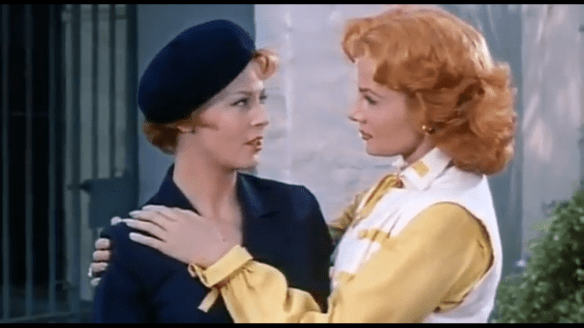
Here we have (Arlene Dahl) coming out of prison after serving a stint thanks to some petty jewel thievery. Her big sister (Rhonda Fleming) is there waiting for her as the fawning, motherly figure resolved to keep her wayward sis out of any more trouble.

Together in the frame, bursting with natural color, they fit so exquisitely opposite one another. This alone has intriguing elements to it, but thankfully there is more. Because Slightly Scarlet is also a film belonging to John Payne, director Allan Dwan, and cinematographer John Alton. At 70 years old, Dwan at this point in his career had logged nearly 400 features — an utterly astounding benchmark.

Payne, meanwhile, had forsaken his clean-cut image, working with the likes of Phil Karlson and Dwan to churn out some truly gritty performances. Look up John Alton and you have one of the finest starting points for film noir imagery, period. Even in color, he manages to make it clouded with shadow.

Because Technicolor noir most certainly exists — albeit with lesser frequency — though Slightly Scarlet also has origins in a James M. Cain short story, lending a certain pedigree for sleazy criminals, even if liberties were taken. The picture simultaneously proves worthy company to the ripe feasts of Douglas Sirk and Nicholas Ray from Written in The Wind (1956) to Party Girl (1958). The obvious discordant nature is a draw.

What looks to already be a lurid woman’s picture is met with an undercurrent of political graft and corruption. John Payne is a bit of a hatchet man for a local mobster (Ted de Corsia), integral in influencing all his local operations. He’s derisively nicknamed ‘Genius’ for his shrewd tactics, and yet his boss thinks he will never get on the top of the heap. He’s always out for himself, selfishly.

However, the words prove prophetic as Ben Grace (Payne) all of a sudden does switch sides. Here our narratives get tied together because Ms. Lyons (Fleming) is secretary to up-and-coming mayoral candidate, Frank Jansen (Kent Taylor). Grace is able to supply the dirt to run the gangster Caspar out of town. He’s conveniently found a tape incriminating his former boss in a murder. It’s a surefire way to win an election, and he’s not above such tactics.

The staging is exaggerated from the outset, and the photography is lush — part Technicolor galore the other old tried and true Alton chiaroscuro, which he somehow manages in a entirely color production. At its best, the movie revels in the sordid details and over-the-top theatrics, milking every bit of drama out of the scenario. There’s nothing half-baked or tactful about it. Still, it’s armed with pizzazz aided by a hammy, ever swirling score.

Dahl, playing the sex-crazed klepto of a younger sister, literally gets dragged out of her house for her latest offense. In another scene, when she’s slapped across the face, she simply purrs at the man with beguiling eyes, “You play rough too!” As her latest companion tries to lay his mitts on the goodies inside a safe, Dorothy lounges around the abandoned beach house before setting her sights on a harpoon gun, which she has a frisky bit of fun with. It’s all a gag to her and played against the relentlessly somber, hard-bitten Payne, it only accentuates the inordinate oddities.

slightly scarlet.png

While Rhonda Fleming holds down the necessary role as the conflicted central figure and Payne is one of the suppliers of the hard-boiled elements, it is Dahl who titillates and has the most gratifying task as she is given range to be saucy, unhinged, and altogether uninhibited. It fits the scenario.

The subsequent developments are manifold. Mainly that Dorothy starts vying for her sister’s new man, even as she skips out on her therapy sessions. The compulsion to steal exerts itself again with dire consequences, especially in the wake of the political election.

However, as it turns out, Payne is not quite as reformed as he might have led everyone to believe. He’s as pragmatic as he is cynical, getting a ‘Yes Man’ installed as the new city sheriff as he moves in on the mob’s old territory, turning the racket into his own.

Our heroine finds herself utterly conflicted. Between the man she’s fallen for who’s no good — and seems to be in company with her sister — and then the white knight who loves her dearly. The final confrontation, returning to the beach house, does not pull its punches, between spear guns, handguns, and sadistic, even masochistic inflictions of pain.

It’s a fitting shot of volatile adrenaline to cap a movie daring to fluctuate wildly all over the spectrum. It’s not a dignified or a particularly measured effort by any stretch of the imagination, but in pushing its melodramatic tendencies to the max, Slightly Scarlet proves itself more than capable of diverting stretches of crimson entertainment.

3.5/5 Stars

Love in The Afternoon (1957): The Wilder Touch

220px-Love_in_the_afternoon_(1957)_-_movie_poster.jpgBilly Wilder, more than any screenwriter I’ve ever known, has a knack for voiceover narration. What other novices consider a crutch to feed us information, he uses as an asset to set tone, story, and location, while offsetting the image with the spoken word.

Take the beginning of Love in The Afternoon, for instance. The voice is unmistakable. The place too. The tone, typical Wilder. We are given a tour of the Left Bank, The Right Bank, and in the in-between, where men and women can be seen in the throes of “amour,” as it were.

The presence of Maurice Chevalier is unquestionably a nod to Wilder’s hero Ernst Lubitsch who utilized the dashing Frenchmen in many of his most successful operettas. Now, although graduating to a more mature part, he nevertheless maintains a similar persona. He is suave, charming, and still embroiled in romantic trysts, albeit on the outside looking in, literally — as a highly adept private investigator.

Already in the opening sequence, although this might be the closest Wilder ever got to his idol in content, it becomes obvious their definitive styles could not be more diametrically opposed. “The Lubitsch Touch” was very much trying to put a name to an impeccable sense of visualizing comic situations with a kind of shorthand, provided the audience is in on the joke as well. Not that Lubitsch’s work with screenwriter Samson Raphaelson lacked verbal wit or that the younger filmmaker’s oeuvre lacked visual flair. Far from it.

However, Wilder’s style is predominantly devoted to the written word, imbuing the comic situations with a bite and wittiness, which under other circumstances might be stale. The beauty is one approach is not inherently better than the other and as time has been fairly good to both men, it’s needless to pick favorites (though I do love Wilder).

John McGiver, by all accounts, is in his debut, but he’s got the flustered British husband down, fully intent on finishing off his rival who has stolen away his wife from him. He called on the services of Claude Chavasse (Chevalier), and the man’s almost too successful.

Legendary international playboy extraordinaire Frank Flannagan (Gary Cooper) almost ends up shot to bits, if not for Chavasse’s own daughter. His pride and joy, Arianne (Audrey Hepburn), is currently attending a music conservatory, and her father has kept her shielded from his sordid work life. This has hardly kept her from sneaking into his files and being enraptured by the romantic trysts and fairytale romances found within his records.

The cream of the crop is Flannagan who is experienced in the ways of the world and romancing — an attractive existence she can only dream of. It tickles her fancy and so she goes to save him. It’s her good deed, to allow his life to continue as is.

One invaluable component of his seduction is the four-piece ensemble “The Gypsies” and their tune “Fascination” becomes a bit of a code word for the certain je ne sais quoi that happens between two people caught up in passion.

Billy Wilder has an equally astute ability in using music to punctuate his comedy through frenzied strings, featured in everything from Love in The Afternoon to Some Like it Hot and One, Two, Three. If those tactics don’t quite pan out, he inserts a handy bit of Americana like Mickey Mantle’s batting average.

The greatest development in this rom-com occurs when Flannagan finds himself enthralled by the peculiar girl who wound up on his balcony and saved his neck. She is so sensitive, a wisp of a girl, so different than the women he has known before. He also knows very little about her but desires to entertain her along with his other conquests.

Not to be outdone, Ariane strives to play a part worthy of his reputation. She takes on the facade of a femme fatale with rows of lovers of her own to rattle off in her dictaphone for his bemusement — completely turning the tables on him. Truthfully, she couldn’t be more in love with him, but she suspects a man of his reputation is not quick to change his womanizing ways.

Before getting to the goods, it seems necessary to mention the elephant in the room. Gary Cooper was about 56 years old when this picture came out, and Audrey Hepburn was 28. Just looking at the numbers makes one cringe a bit, and the most uncomfortable thing is how it shows up onscreen.

I do adore Audrey Hepburn. She’s so innocently sweet with the same demure eloquence and pristine diction exhibited in every one of her pictures. Crawling around in her elegant attire looking for her lost shoe is as endearing as any moment she has. It makes us appreciate her all the more. Because she is so very lovable.  And Gary Cooper is usually fine — everyone knows him as the 20th-century representation of All-American manhood — but together it does feel a bit stiff and uninspired.

Our star does his best but he was never a romantic comedy lead in the manner Cary Grant was. There you have part of his problem. Because even the two Lubitsch comedies he appeared in — Design for Living and Bluebeard’s Eighth Wife — were hardly the preeminent offerings from either man.

In some cases, one plus one does not always add up sufficiently. Although it’s the greats who often transcend such equations to give us something of exponential worth. Unfortunately, Cooper plus Hepburn is fine but never enters any purely magical, uncharted territory. Like she did with Gregory Peck or maybe even Cary Grant. It’s not simply a matter of the uncomfortable age discrepancies. It has to do with out and out compatibility.

There is another major qualm too. Namely the mammoth length of the narrative seemingly dragging leaden in the middle. Because it relies on the chemistry of our leads more than any other element or supporting character, the subsequent weaknesses become all the more evident.

However, you might remember a few years after starring with Audrey Hepburn, Cary Grant had one of his first non-romantic rolls playing matchmaker in Walk, Don’t Run. Maybe it’s a thankless job, but without the piece (seen also from Charles Coburn on occasion) you would not have the glue to hold the movie together. Here Maurice Chevalier swoops in lithely again to bring the story to its closure.

He puts the ball in Cooper’s court, to evoke an American sporting metaphor, giving the man his daughter is in love with the license to play with the dramatic irony. Their relationship is only resolved in the last possible moment. In the nick of time, Frank Flannagan saves his reputation — maybe he’s not a bad sort after all — though the final kiss is still a bit disconcerting. (What I wouldn’t give for Jack Lemmon right about now.)

We can concede Love in The Afternoon comes in for a final landing tying everything together along those two lines, with the Parisian passion shrouded by the Wilder malaise and yet supplied a touch of tearful sentimentality. In the end, Ariane and Frank spend a life sentence together of the best sort. If you’ve been in love you know what it’s like. You don’t need this movie to show you.

3.5/5 Stars

Friendly Persuasion (1956): Gary Cooper’s Quaker Clan

220px-Poster_-_Friendly_Persuasion_01The when is 1862. The where is Southern Indiana. We find ourselves in the throes of Quaker country as envisioned by novelist Jessamyn West and brought to the screen by his eminence, William Wyler.
What follows is a lovely opening gambit with a goose about as anthropomorphic as they come without completely shattering the sense of movie realism. He nips our little narrator, a Quaker lad named Jess (Richard Eyer) in the seat of the pants to punctuate our mellow tale on a comical note.

Authenticity, historical, religious, or otherwise, is not what Friendly Persuasion is concerned with. We might call it into question on any number of accounts. Still, it is packed full with enough tweeness for every “thee” uttered by the kindly Quakers who exist within the frames.

The gentle satire is of a certain warmth and unassuming candor, we cannot help but smile at because unadulterated goodness leaves behind a luster. Indeed, it is one of the finest attributes of the picture. Their matriarch (Dorothy McGuire) is zealously religious and abhors violence, but we can hardly label her unkind. Meanwhile, the man of the house (Gary Cooper) is about as genial as they come.

As with most small-town communities, about the most exciting experience you can possibly partake in is a traveling carnival. Imagine you’re a Quaker and then every stray stimulus and forthcoming attraction becomes 10 times more novel.

The ascetic folks pushing the boundaries of their normal sensibilities is played for a bit of humor. It might be dancing a jig gaily with a handsome beau, trying a hand at a musical instrument a salesman is trying to peddle, or a young boy getting the itch for gambling in the form of the ever-dubious shell game.

Cooper winds up winning a pair of sleeve holders, which look eerily similar to a pair of garters, while a stocky Quaker boy gets caught up in a wrestling match only to back down as it begins to impinge on his beliefs. He has vowed like all his brethren never to hurt anyone. From an outsider’s perspective, it is perceived as weakness and worse yet a dereliction of duty when it comes to fighting for your country. Because the Civil War is on everyone’s mind.

Friendly Persuasion becomes a diluted effort due to its length, which, while giving adequate time for many asides and quaint observations, takes away from the import of the material. It’s not quite capable of navigating the straights between social issues and jocularity — it’s never quite assured — settling for a rocky path.

The young soldier, Gard (Peter Mark Richman), is the force tying the family to the war directly as he has eyes for their daughter, while still maintaining his duty toward the Union Army. It stays in the periphery for a time. However, it’s inevitable, with the extent the war is spreading, they must make decisions of their own. This is what is being set up for each individual character, and they must react accordingly.

However, this is not solely about a message of pacifism, but in a society split up of many religious sects and political factions, it is a film with some sense of continued relevance. It even dabbles with the same dichotomy as Sergeant York (1941), having to do with the commandment entreating the adherents not to murder. The question remains: is there a semantic difference between murder and killing? More important still, is there a difference in the hearts of men. The film has to forge its own path.

Separately, Gary Cooper and Dorothy McGuire appear suited for the material as they both bring a certain sensibility and ingrained honesty to nearly every part. Side by side, the chemistry between the two of them seems relatively absent and not simply because of their mundane temperaments. It could do with the fact Coop never wanted the actress to play opposite him, to begin with. Ingrid Bergman was his choice, but she passed on it.

Anthony Perkins’ role is slight in the way all his performances seem to be, and yet their unassuming skittishness somehow imbues them with their own brand of resonance. It’s true, after only his second film, the writing on the wall said he was destined to be a great star. They weren’t wrong; his career just didn’t end up quite as people might have expected. Of course, Norman Bates was a jarring subversion of his image, simultaneously redefining (and typecasting) it for all posterity.

While it’s easy enough to think of them as being on different strata, Perkins feels like he could easily be an earlier version of Tommy Kirk from Old Yeller (1957). Where a boy is put through the gauntlet and must come to terms with harsh realities of life. Of course, McGuire would again play the maternal figure in the latter Disney production.

In this picture, she gets her moment with the homestead being overrun with Rebs. Doing her best to keep her composure through hospitality, she nevertheless lets one of them have it over the head with a broom for going after the family goose. Cooper’s own confrontation with a Rebel soldier occurs in an open clearing, serving as his final test and a bit of a case study the film puts in front of us.

He passes, and it’s not what we usually expect from Cooper. Not only were audience expectations undone, but Cooper himself seemed to think the hero he was, and played on-screen, would have normally acted differently. We can make a judgment call on whether or not he was right.

One is reminded High Noon (1952) succeeded in its storytelling with a lean running time featuring a very concrete progression of scenes. Coop was an archetypal hero, even one of the western greats in Will Kane, but we also know where we will be going when the clock strikes 12. There is not the same urgency to Friendly Persuasion — it’s much looser  — ultimately too good-natured to hammer home its themes with any amount of authority. There’s no fault in a lighter tone per se, but it could have amounted to a whole lot more providing there was tauter plotting.

3/5 Stars

Classic Movie Beginner’s Guide: John Wayne

Our next addition to our classic movie guide is one of the most beloved mainstays of American popular culture and the western mythos. That’s right. We’re talking about Marion Morrison better known to the viewing public as John “The Duke” Wayne.

As is the case, we will provide 4 films to get you started and it must be acknowledged this is a foolhardy task. This man starred in over 170 films over his prolific career so to whittle it down is near impossible! Regardless, let’s get started, Pilgrim.

Stagecoach (1939)

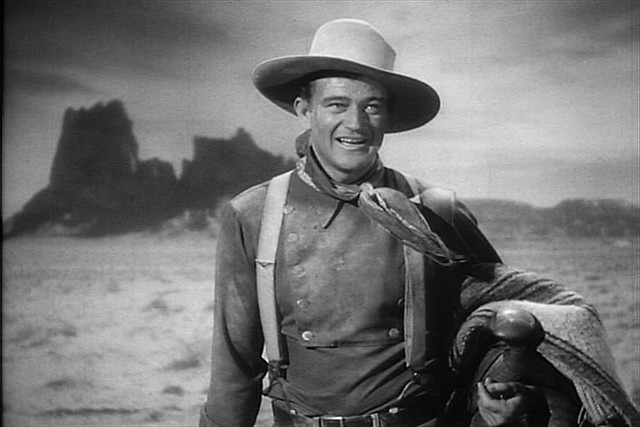
This shouldn’t be much of a surprise because Stagecoach is the film that made John Wayne. He’d already been in dozen of movies after going from USC football player to Hollywood bit player on the urging of John Ford. Here the director frames the Ringo Kid as a hero, and Wayne does the rest spearheading an impressive allotment of talent including Claire Trevor, Thomas Mitchell, and John Carradine.

The Quiet Man (1952)

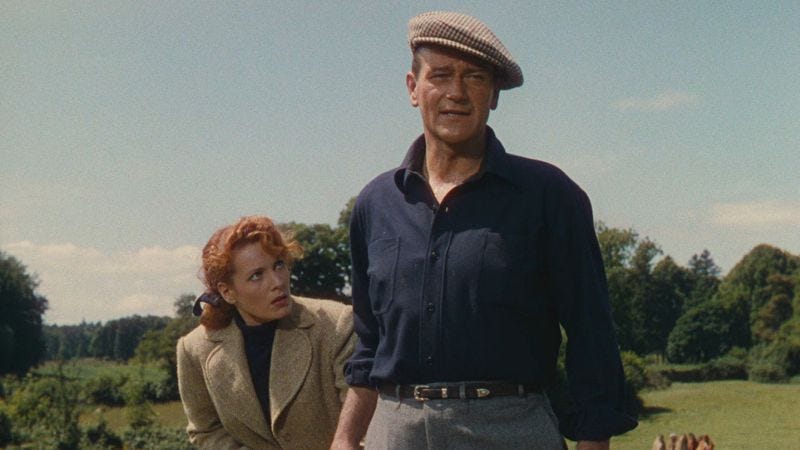
John Wayne is known for westerns and for good reason. But The Quiet Man is indicative of his talents outside of the genre. Not only is it another John Ford collaboration, it also pits our star against his most formidable leading lady the irrepressible Maureen O’Hara. The glorious Irish scenery and the charming brogues lay the groundwork for a classic romance. You should also catch them in Rio Grande, McClintock!, and Big Jake.

The Searchers (1956)

Image result for the searchers 1956

I know I’m going heavy on the John Ford movies, but this revenge western is the granddaddy of them all as Wayne plays Ethan Edwards, one of his most vengeful incarnations (although Red River is right up there!). The final shot of Duke lumbering out of the log cabin framed in the doorway is an unforgettable moment in movies.

True Grit (1969)

Related image

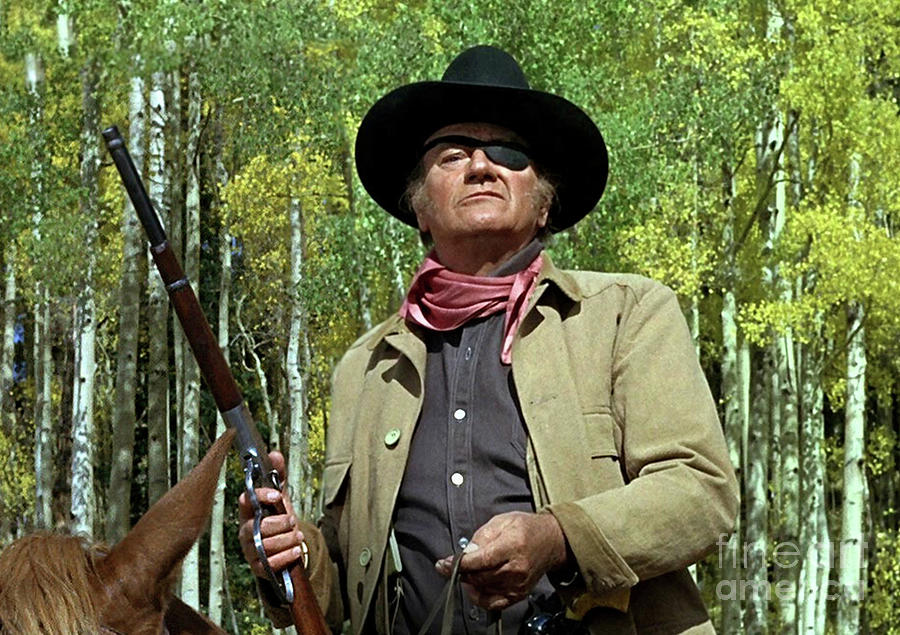
I wanted to include some late-period John Wayne. Sure, he won an Oscar for the eyepatch-wearing U.S. Marshall Rooster Cogburn, but I could care less about that. The film works because of his crotchety persona. When he faces off against Lucky Ned Pepper in the open clearing, reins between his teeth, guns blazing, it’s the epitome of the John Wayne persona.

Worth Watching:

The Long Voyage Home, They Were Expendable, Fort Apache, She Wore a Yellow Ribbon, Rio Bravo, The Man Who Shot Liberty Valance, The Shootist, and many more!

Star Wars: The Rise of Skywalker (2019): An Adequate Force Awakens Sequel

Star_Wars_The_Rise_of_Skywalker_poster.jpgYou might say I turned up to Star Wars: The Rise of Skywalker out of respect for the dead. Because we’ve lost many of our beloved figures. Han. Luke. Carrie Fisher. Peter Mayhew. Kenny Baker. You get the idea. And from the rumblings I couldn’t avoid hearing, it felt like Star Wars might be dead on arrival too.

After seeing the final installment of Disney’s Star Wars trilogy, my reaction is hardly so dramatic, and you can judge whether that is a good or bad portent. In many ways, it succumbed to all the fears a myriad of voices had shouted out in years gone by. In others regards, it still managed to be entertaining, albeit with a host of caveats.

There’s a nagging conflict inside of me not unlike the dark or the light side of the force — this tug-of-war between Rey (Daisy Ridley) and Kylo Ren (Adam Driver). I want to enjoy Skywalker for all its delights and at the same time, it does feel like a bit of an out of body experience.

Because I look at this film, and it zooms by. There’s plenty of spectacle, likability, and adorableness to get us in the seats; it’s so easy to pass over the lapses (as it is with just about anything when its played against John Williams’ magnum opus).

Highlights include the return of Lando (Billy Dee Williams), another cameo worthy of a buzz of adulation. In this episode, C3PO (Anthony Daniels) has more license to jabber on (though R2D2, yet again, feels decidedly less important). There’s also a particularly hallowed place for Carrie Fisher within the film acting as a nice tribute.

The relationship between Rey and Keylo remains the most dynamic and intriguing element, carrying itself through the series as they maintain their intimate connection through the Force.

Daisy Ridley was positioned as the heartbeat of the franchise, and she more than proves her mettle navigating the last leg of the journey with an earnest conviction. Adam Driver is her near equal. Not perfect, but there’s something not entirely phoned in about him, an issue Poe (Oscar Issac) and Finn (John Boyega) sometimes fall prey to. Invariably, Rey and Keylo have it out in a turbulent lightsaber duel recalling some of the epic glories of old.

However, now that the third and final trilogy is done, it does feel a bit haphazard, like it was dashed off without giving immense thought to how all the pieces fit together. Rose (Kelly Marie Tran) feels all but cast aside, her place filled by two new strong female characters (Keri Russell and Naomie Acker) not without their charms, but really it’s too little too late. One questions why they showed up now and not in The Force Awakens.

A continuous trail of blatant MacGuffins and exposition along with a deus ex machina in the form of a giant convoy stuff the story end-to-end. To that point, the finale feels drawn out in a cavernous throne room high on mind-numbing spectacle but somehow empty of the genuine conflict I felt when Luke faced Darth Vader or when father saved son.

Did it all feel like a lie after what Rian Johnson’s film had suggested? Was it like a last-minute patch job to bring Emperor Palpatine (Ian McDiarmid) back for an ending that looked eerily familiar, simply drawn out on a bloated scale? Somehow bigger explosions and darker interiors didn’t help the film’s case. It’s like anything. Bigger isn’t always better. Excess can make it lose its significance.

Because while Star Wars was always a broad galaxy, it remained grounded through characters and very personal stories we could relate to about family and friends. And whether it was entirely true or not, it always felt like George Lucas was some kind of marionette master who had at least an inkling of a plan for his world.

With Disney’s trilogy, we have been left wondering and as a result, there’s been a general lack of cohesion, which has been aggravated the further we’ve gone into this revamped franchise. Abrams feels like he’s making a sequel to The Force Awakens and thus if Rian Johnson’s movie didn’t exist, it might mesh better. But The Last Jedi does exist as is, and it deserved a finale worthy of the questions it dared to ask.

I’ll do something I’ve never done before by quoting myself from an earlier review. Because with The Last Jedi I said all of  Rian Johnson’s breaks with tradition would be worth it if the subsequent film could stick its landing:

I resolutely admire Rian Johnson for his choices because it seems like he’s made a Star Wars film that is hardly cookie cutter in nature and the fact that it will not please everyone is a marvel (no pun intended) given the usual reality that blockbusters are supposed to be easy on the eyes while hardly divisive. Though flawed, it’s a relatively bold movie in running time, in how it utilizes its characters, and ultimately how it chooses to depart from its longheld traditions.

The Rise of Skywalker falls back on what is, for the most part,  familiar. This partially comes down to giving J.J. Abrams the impossible task. Instead of saying this is the end of one trilogy, it’s implied this is supposed to be the thrilling summation of eight other films spanning over 42 years. That’s like catching force lightning in a thimble. Of course, he’s not going to be able to pull it off.

I very rarely cast aspersions on anyone, but I think it’s safe to direct our ire toward Disney if there is any blame to be had. Time has reminded us over and over again, Disney was more invested in their lucrative commercial investment than giving us the best story they could.

Marvel was the initial template, and we’ve seen films of wildly uneven quality with the worst functioning as soulless potboilers made to order on schedule. Star Wars is too dear for me to riddle it with such criticisms. It’s a fault and a bias to be sure, but I will say, out of any of the Star Wars films, Skywalker comes the closest to what I feared. I remember vividly my reactions to Rogue One in 2016, a film I modestly enjoyed for exploring New Hope nostalgia:

My loyalty towards the franchise (more so than DC or Marvel or Star Trek) makes me also fear the continued mechanization of this world into a continuing box office cash cow. With film after film, story after story, it’s indubitable that Star Wars too will lose its allure. It will be run into the ground or become besmirched by some egregious plot hole, discontinuity, or for some far worse fates…

Even as Rian Johnson boldly ran roughshod over Star Wars lore, it feels as if this final film has done it a major disservice by falling back on the status quo. It goes beyond plot points for me. The writing off of Snoke is easy enough, even the clarification on Rey’s parentage (Obi-Wan pulled a similar trick on Luke if you remember).

But it’s the fact that none of this film’s digressions carry more than an ounce of surprise or what we might term movie magic. There’s nothing to take our breath away or make the hair stand on end. Everything it has in terms of charm and charisma is pent up inside those characters — those protocol and astromech droids, that wookie, etc. — and I do love them as much as anyone else.

Still, I was ill at ease trying to appreciate the moments we’ve been granted and feeling, simultaneously, they’re not quite right. We deserved something better from Disney who has served us up a Ghost of Star Wars Past.

President Lyndon B. Johson famously said something to the effect that when he lost Walter Cronkite on the Vietnam issue, he had lost public opinion. There’s a related point here somewhere, and here it is.

While my older brother’s not quite Walter Cronkite, I consider him one of the most thoughtful, well-versed Star Wars fans out there. He pored over the books, played the card games, collected the collectibles, and will no doubt remain a resolute Star Wars fan for years.

However, his reaction to this latest film was lukewarm at best. If I didn’t make it clear already, he loves Star Wars. In my little pocket of the world and the manner in which I perceive this galaxy as a very real and personal entity we cherished, it feels like someone has lost.

If not the Rebels, or Disney (who will rake in more money than ever), then it’s the fans who had such a profound affection for this franchise they wanted something more than a purely wish-fulfilling imitation. It felt so close yet so far from a long time ago in a galaxy far far away. The movie emphatically proclaims “The Dead Speak!” Sometimes it’s best to let them rest in peace. Something I’m not sure Disney understands or is willing to do.

3.5/5 Stars