Double Feature: Apartment for Peggy & Take Care of My Little Girl

Recently I was appreciating some films starring Jeanne Crain, an alluring actress who was at the height of her popularity during the ’40s and ’50s. Although she was rarely touted as a preeminent actress, I wanted to highlight two films of hers that more than highlight her appeal.

Both Apartment for Peggy and Please Take Care of My Little Girl are set in the context of college in the post-war years. One has Craine as a newlywed wife tracking down student housing and in the latter film she plays a naive college freshman with sorority aspirations.

Read my thoughts on the two films below:
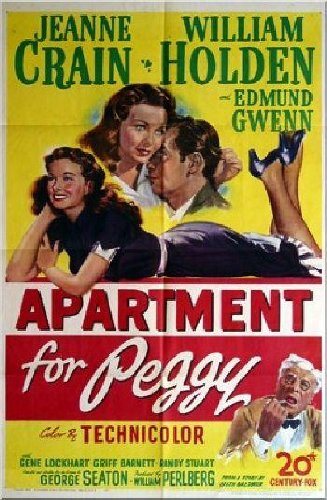
Apartment for Peggy (1948)

Apartment for Peggy is one of those Classic Hollywood films packed with pleasant surprises. The first of them is Edmund Gwenn. He’s best remembered as Kris Kringle in Miracle on 34th Street. Here he’s directed once more by George Seaton this time playing a listless university professor.

He lives off his pension in his crusty old abode spending his evenings with the same colleagues playing the same music they have for years. However, one evening he quite matter-of-factly announces his aspirations to commit suicide. He’s very rational about it. Still, his doctor won’t give him more than two sleeping pills at a time so he dutifully stores them up for a rainy day.

Then, something else far more momentous happens. He meets a young woman (Jeanne Crain) on a bench. Peggy Taylor motors about 1,000 miles per minute — her mind and conversations leapfrogging all over the place — so her new acquaintance can barely get a word in edgewise. He’s bowled over by her irrepressible zest for life. She’s precisely the person to prickle the professor’s curmudgeonly sensibilities. But she’s also the best equipped to turn Mr. Hypothetical’s life upside down for the better.

Because she tackles just about anything she sets her mind to with this same infectious verve. This is not just the age of the GI Bill (her husband is currently a student), but they are also dealing with a housing crisis. She puts her ear to the ground and manages to scrounge up a space in Pop’s decrepit attic. He’s quite against the imposition and still, Peggy keeps ping-ponging off the walls leaving no room for a rebuttal.

It’s one of many miracles how she spruces up the space and puts it through an astounding transformation. This is just the beginning. With Pop’s begrudging help, she conceives a daytime course for wives and mothers so they can learn about the great philosophers of the modern age (Spinozi included). They want to receive intellectual stimulation on par with their husbands so they can communicate with them.

Pops soon learns his new students are intrinsically driven to learn, and the professor is delighted to serve as their instructor because they seem to intuitively understand his teaching as his most receptive pupils. Their discussions are life-giving. You see already how Peggy single-handedly resurrects the old man so he’s able to see the world with new vim and vigor. Now it’s his turn to return the favor.

William Holden is just about the most innocuous thing about the picture, and that’s not to say he’s bad. Still, this is a picture made by the chemistry of Crain and Gwenn. It acknowledges the generation gap chafing between most any generations with varying perspectives on life with a comic touch. However, any conflict on the part of the elders ultimately engenders mutual affection.

Best of all, it’s a film about ideals and worthwhile pragmatism where the merits of both are made evident. But then again, film is not so much a science as it is a philosophy, an art — concerned with humanities — and the film works in this manner.

It gives off the appearance of a light, inoffensive comedy as we conceive would exist in post-war America. There are many. Certainly, this is true. However, it also sheens with warmth and goodness. Seeing the movie multiple times, the appeal of its brand of geniality just continues to bloom.

3.5/5 Stars

Take Care of My Little Girl (1951)

Sorority movies certainly feel like they’re solely made to meet an audience demand as a convenient cash grab. Take Care of My Little Girl wasn’t the first picture in this genre as I can think of at least a couple predecessors like Sorority House and These Glamour Girls (1939).

However, this movie actually had its origins in the master’s thesis of Peggy Goodin, who eventually turned her research into a novel. She was particularly concerned with how racial and religious discrimination played out in the highly moderated spaces of college sororities. To be clear, 20th Century Fox’s adaptation excises all of this commentary by casting their stable of homogenous Hollywood starlets (Jeanne Crain, Jean Peters, Mitzi Gaynor, Betty Lynn et al.) and a couple of male heartthrobs.

And yet that doesn’t mean the film doesn’t come with any teeth. For its day, it was actually rather controversial if only for its forthright portrayal of the social politics and hazing rituals that have continued to go under scrutiny generations later. The film looks different and yet at its core, it speaks to the very same issues we see today.

Jeanne Crain has such a radiant poise, it’s so easy to like her and not only like her but admire her for how she cares about others. Because she’s a shoo-in as a legacy at Tri-U sorority. Just as importantly, she’s probably the prettiest girl on campus. Not even the resident mean girl Dallas (Peters) can blackball her.

Liz cares deeply for her friends and isn’t totally swayed by the popularity contests even as she strives to make a good impression. She strikes up a rapport with a slightly cynical G.I.-turned-student (Dale Robertson), who helps advise her on classes and thrumbs his nose at the establishment after everything he’s been through. He recognizes something different in her that he likes.

Still, she’s not totally impregnable. Like any young person, she wants to be well-liked helping the class flirt (Jefferey Hunter) with the answers to his French exam. This in turn leads to being pinned. She’s the talk of the sorority house. And yet she’s not easy to categorize.

The picture is surprisingly poignant and perceptive. It’s not some hyperdramatic, superficial portrait of college life even if it’s playing to a specific audience. Also, thanks in part to Crain, there’s a genuine candor to the picture and a visible evolution to this young woman.

It may not be a lot, but it’s something. We do see her change as a human being. Surely college life looks so different now 70 years on from what we’re used to, and yet there are elements that have not changed. We still have fraternities and sororities and social hierarchies. I was aghast to realize even bluebooks have been around for well nigh a century!

This movie doesn’t necessarily suggest these institutions are inherently bad. However, sometimes we believe that tradition is good only because it’s the way things have always been done. But there should be better reasons. There need to be dissenters and people to challenge the status quo. There need to be brave folks who are willing to do what is right compared to what is easy. People who are loyal to their friends rather than simply playing the games for want of status and approval.

Even if the Epstein Brothers’ script forgoes some of the most intriguing aspects of the original story, I appreciate that they explore their topic with something a little bit more involved than superficial exploitation. It actually strives to be about something, however small.

3.5/5 Stars

The Classic Movie Beginner’s Guide: Jeanne Crain

As we do periodically, we wanted to help classic film fans get better acquainted with some of the stars of yore. This week we’d like to focus on the career of Jeanne Crain. Crain (1925-2003) was an actress who came to the attention of audiences in the 1940s and 50s. She was known as a lovely romantic star and a fine ice skater.

At the height of her stardom, she was featured in a couple of high-profile films by Joseph L. Mankiewicz as well as starring alongside the likes of Dana Andrews, Gene Tierney, Cary Grant, and Frank Sinatra.

Here are four films to consider:

State Fair (1945) - IMDb

State Fair (1945)

Many people probably recall the ’60s remake, but Jeanne Crain starred in the original opposite Dana Andrews in the first of four pictures they made together. It remains one of the quintessential movies about Iowa life as exemplified by the country fair. Craine would appear with Andrews later in Duel in The Jungle, Madison Ave., and Hot Rods to Hell.

Apartment for Peggy (1948)

It would be easy to pick other school-related films like Margie (1946) or Please Take Good Care of my Little Girl (1951), but it’s hard not to settle on this delightful post-war comedy. Between the zany, good-natured scatterbrains of Crain and the curmudgeonly charm of Edmund Gwenn, the film is so easy to root for.

A Letter to Three Wives (1949)

Along with Pinkie, it’s probably Crain’s most acclaimed film and it certainly looks better years later. Its main problem is being cast in the shadow of All About Eve. Otherwise, this tale of three wives with three husbands and one case of infidelity remains a gripping exploration of marriage.

People Will Talk (1951)

It’s a movie that’s increasingly impossible to categorize. It deals with topics of suicide and unwanted pregnancy. It was unwittingly made in the maelstrom of McCarthyism, yet with the romantic pairing of Cary Grant and Jeanne Crain, it comes off as a delightfully peculiar comedy full of whimsy.

Worth Watching: Leave Her to Heaven, Margie, The Model and The Mariage Broker, Cheaper by The Dozen, O Henry’s Full House, The Fastest Gun Alive, Man Without a Star, The Joker is Wild,

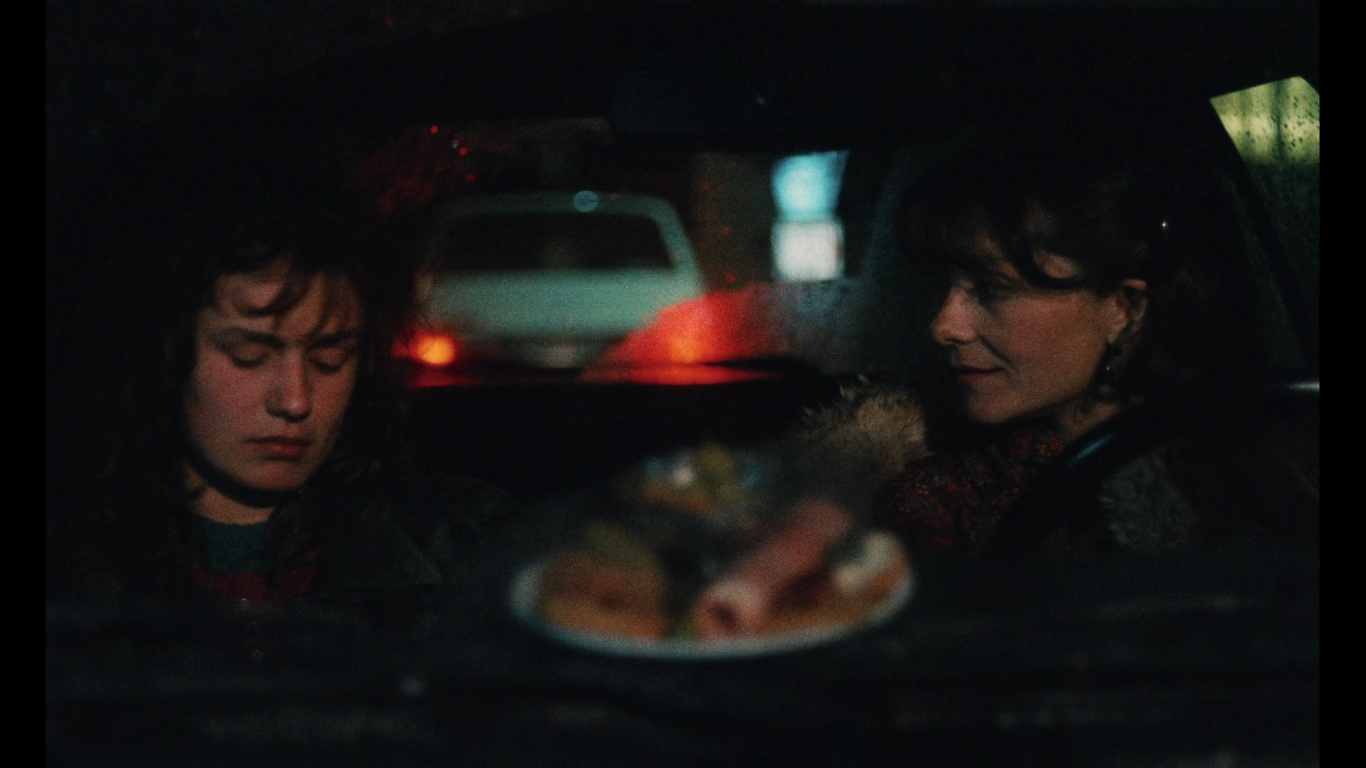
Vagabond (1985): Agnes Varda’s Empathetic Kane

Vagabond (or Sans toit ni loi, in French) plays as the sum of a fairly dismal life but not an unworthy one. For those familiar with Agnes Varda’s filmography, whether the penchant for seascapes or her concerted empathy for the discarded, it’s easy to see how this picture fits in with the others. In many ways, it blends her sensibilities for narrative fiction and her later documentary work like The Gleaners and I.

However, from a storytelling perspective, Vagabond also plays as her Citizen Kane, except she sets her sight on someone on the complete opposite end of the human spectrum. It’s curious how the paragon of money and power could somehow share fundamental things in common with a proud, young drifter. They feel so isolated and in some sense unknowable because they rarely allow others in.

Citizen Kane is a veritable jungle gym of technical invention and play. There’s never been anything quite like it, but the qualm I always maintained on early viewings is how there’s no connection. Because this is the point. It feels a bit hollow. We never get to truly know Charles Foster Kane because he never really let anyone know him.

The curious thing is how Varda derives so much concern for her subject. If we don’t end up knowing a great deal about her personal biography, it does feel like we at least appreciate her as a ceaselessly proud and increasingly worn-down human being.

I have so little history with Sandrine Bonaire and know only that she made an auspicious appearance in Maurice Pialat’s A Nos Amour (1983). However, watching her is a pleasure; she looks like a more stoic predecessor to Brie Larson.

In many ways, Bonaire’s character informs the structure of the film and so it functions well. She is an itinerant young woman, free and apparently happy with her lifestyle. It’s easy to label her as a vagrant and a loafer. She never holds down a consistent job and maintains a brusque belligerence in the face of others. It makes her fiercely independent, and skeptical about the prevailing philosophies of life.

Through it all, we don’t know where she will go; she fosters these short, finite relationships that have a definite beginning and end, and then she moves on to her next destination. There’s no goal or visible endpoint. All we have is the frame of the story to give us some reference to make sense of her life.

It’s composed of scenes featuring these kinds of visual ellipsis as people she interacted with recount their meetings. Each person views her in a different light, and we must come to understand her in this piecemeal fashion only through the perspective of others.

There’s a bohemian family of shepherds who used to be a part of the establishment but now live a rural, much simpler life taking care of livestock. The closest thing she has to a friend and a saint is a beautiful academic (Macha Méril), who has spent her life researching a fungus brought over during WWII that is slowly killing the local trees. She has a conscience and a warm spirit. Far from deterring her, the girl’s standoffish nature of cigarettes and glowering glances only seems to bring out greater adulation. There’s a hint her benefactor feels it too.

A Tunisian farmhand with a welcoming spirit is another person of generosity in her life. They seem to have nothing in common, and yet they bond because they have shared a similar experience of the world as perennial outsiders. He’s the only person she actually shares her birth name with: It’s Mona.

But our protagonist opens herself up only to get hurt. He offers to let her stay in their quarters and help take care of the local vineyards. It’s another brief promise of something beyond a drifter’s life, however small. Still, upon his coworkers’ return, they’re not agreeable to having a woman in their midst. She’s forced to push on again. It’s the life she’s used to, and yet the circumstances make the moment a far more painful point of departure.

There are signs that this is not sustainable no matter how romantic it might seem. Mona befriends an old white-haired lady slowly dying in her grand estate after posing as her maid. Would Mona have been a friend of Charles Foster Kane? This is the closest thing we have to answer, although it too becomes a closed door as the woman’s only kin, a young nephew is anxious to get what’s coming to him.

In a bit of serendipity worthy of Varda’s husband Jacques Demy, there is a kind of interwoven fate to these relationships as some of them begin to fold over on one another and interconnect with Mona in the middle. But this must not be mistaken for Providence.

Her lot becomes increasingly bleak, and there’s obvious intent here. There’s no other place to go. Whether Varda failed to show them before or not, I started to notice the makeshift carpet shoes Mona wears on her feet. She feels all the more pitiful falling in with dubious company and beginning to drink more.

She’s also accosted by some local practical jokers who run about town throwing paint bombs in a mad show of anarchy and artistic expression. There’s no rhyme or reason to it per se, although it leaves her more disillusioned and covered in brown paint that makes her look even more feeble than before. Then, a fire takes her belongings, and she must flee in the wake of an angry confrontation. She’s offered no respite.

At once such a proud and independent individual, she looks so dejected when we finally leave her shivering in her blanket trying to stay warm as a dog barks at her from right outside. It does feel as if the window has closed for her. She had glimpses of other lives and yet they all amounted to nothing. And she is left with nothing.

Freedom is such an exhilarating thing, not being totally beholden to the strictures of the world around us. But it’s equally terrifying being cast out into a life where we have no one to care for us, no one there to love or be loved by. Here again, Vagabond and Kane are so closely related. Whether we die in a luxurious bedroom or a ditch by the roadside, it doesn’t much matter. The outcomes are the same. There’s something ultimately deceptive and debilitating about their respective freedoms. It’s not freedom at all.

4.5/5 Stars

Le Bonheur (1965): Varda’s Sunshine Horror Film

The aesthetic of Agnes Varda’s Le Bonheur is strikingly deliberate. Her title cards are filled with sunflowers. All her characters — members of a lovely little family — wear a rainbow of colors. There’s a verdant gaiety to the forest landscape around them. The score comprised of the buoyant elegance of Mozart does wonders to accentuate this very salient mood. In short, it’s gorgeous. Surely this is happiness personified.

In the middle of the 1960s, that turbulent time of upheaval and the nouvelle vague, it deigns to be domestic and cheerful in a way Godard would never dare and Truffaut could only manage through a boyish point of view.

But it has such a vibrant and daring color palette on par with anything in Contempt (Bardot included), Pierrot Le Fou or Weekend. In fact, this could very well be her answer to a glorious Jacques Demy musical (her husband) and a predecessor to Stolen Kisses and Bed and Board.

The couple’s children are adorable as they toddle around, ride in the back of the family truck or feed sugar cubes to their daddy’s horse — the bicycle he rides home from work every afternoon. Like any young kids, they like to imagine, they’re enthralled by a newborn baby, and they take naps (under the mosquito netting their mother puts out in the forest for them).

By this point, the movie could feel sickening and twee, but there’s an impulse to see the movie out and where it might go. It leaves some questions about a dramatic situation with its title (especially with how fiercely unironic it resolves to be from the outset).

When they return home to their idyllic town, it’s little different. True, the husband, Francois (Jean-Claude Drouot), wants to see a western at the cinema — a prototypical American film. His wife Therese (Claire Drouot) is enchanted by a French film, the first pairing of “[Bridgette] Bardot and [Jeanne] Moreau.” Otherwise, they seem perfectly aligned, going to work and raising their family together.

This all quite effectively lulls us into a false sense of security. Varda knows quite well what she’s doing. As an audience, we want to believe this is what life is like, but we are privy to a movie and so something must change…If there is a source of drama, it’s when the man starts to flirt with a local telephone operator Emilie (Marie-France Boyer). Even this tête-à-tête is light and affable. They feel innocent enough. Hardly prepared to wreck a home.

His wife and his lover aren’t mirror images exactly — they look different — but Varda does very little to distinguish their visible traits (ie. blonde vs. brunette or juxtaposed costuming choices).  They’re both pretty young blondes, affable, draped in bright colors. It feels like a curious coincidence until it builds into something more.

This trifling love affair morphs into exactly the kind of circumstances the exterior does its best to dispel. Surely infidelity does not have license to break into such reverie and tear a family apart. This does not fit with the perfect marital equation or the glorious mise en scene.

So we begin to discover a kind of perturbing even disheartening dissonance about the picture as it continues to break with reality. It builds and begins to ambush us with new contradictions.

Here is a man deliriously happy, both with his wife and then with another woman. He assures his new love, “I have enough joy for both of you. Happiness works by addition.” Then when he cordially breaks it to his wife he says, It’s as if he has 10 arms to love her and he has extra arms (to love someone else).

It doesn’t matter how emphatically or candidly he says those words. They come off poorly. Even as he continues to live in his rapturous dream world without consequence, for the first time the words ring out in the landscape with an inherent hollowness. It’s yet another signal of paradise lost. We have hit upon a point of no return.

Le Bonheur is devastating in a manner that I never would have imagined. Because Varda finally does allow the film’s glorious bliss to crack even if the tone and coloring never waver or fade. The way the young carpenter relives one horrifying moment over and over again in front of the camera feels reminiscent of C.S. Lewis when he wrote about grief and how “The same leg is cut off time after time.”

However, now we have a suspicion of where it might go. The final few minutes of Le Bonheur are not a total surprise; they do feel like a shocking betrayal of our initial assumptions. This is not a criticism; it simply shows how effectively the movie evolves over time while maintaining a certain surface-level palatability. It’s ceaselessly beautiful to look at even as the currents turn.

Whatever its reputation, Le Bonheur feels commensurate with some of the most unnerving psychological horror films and thrillers I’ve seen through the ages. I think of the uneasy denouement of Gone Girl or the unsettling conspiracies in Rosemary’s Baby or Get Out. The curious part is how the perpetrators have no idea what they have done. It’s not a film of premeditated plots, more “happy” accidents, and this in itself is terrifying.

Because we have the same set dressings, the same motifs — almost everything feels the same — but we have an entirely different context. If we’ve settled back into a comforting equilibrium, then something almost imperceptible grates at us. Something has soured with the happiness set before us. It establishes a level of disquietude I won’t forget for some time. Surely something is not right here. I leave it to each viewer to reconcile it for themselves.

4/5 Stars