CMBA Blogathon: Classic Hollywood Stars on The Dick Cavett Show

This is my entry in The CMBA Spring Blogathon: Big Stars on the Small Screen

There are several more recent late-night hosts like Stephen Colbert or Conan O’Brien who have managed to use the truncated form (and podcasts) to try and go deeper with guests beyond surface-level pleasantries. Colbert even had Dick Cavett on his show, and I’m sure he’s not the only one.

However, as I’ve pored over more and more of his interviews over on Youtube, it feels like Dick Cavett was often the gold standard for lengthier, in-depth discussions will all sorts of talents and luminaries. He had several Beatles on his show, boxing champions, prominent thinkers, along with plenty of Classic Hollywood talent. And his show in its various forms acted as a representation of the dying art of the extended interview.

Cavett’s gift seemed to be his capacity to somehow straddle two worlds. He was an intellectual with a dry comic wit, but also a midwesterner who dressed mostly innocuously and came off unassuming. He looked establishment and yet crammed his shows full of personalities like Janis Joplin and Muhammad Ali.

Often the pairing of his guests seems downright peculiar (ie. Joplin and Raquel Welch for one). However, when he was given the opportunity to sit down with one individual and have a conversation, there were often some wonderful tidbits that came out in the process. And he has a non-grating style of asking the questions we want to know without making them sound totally asinine. He also normally took time to listen.

It does feel like he sits down, not for an interview, but for a chat with a friend. And in some cases, people like Groucho and Brando became his friends in real life even as he did his best to coax answers out of the most reticent guests by making them feel comfortable.

I could spend a significant amount of time just discussing some of the directors he had on his show like Alfred Hitchcock, Orson Welles, even Frank Capra, but I thought I would focus on a handful of the stars. Here we go:

Groucho Marx (1969 and 71):

Cavett was quick to praise Groucho as one of his heroes, and it’s fun to watch them together full of laughter but also genuine affection. You can tell the appreciation is mutual between them and it makes the discussions lively.

One anecdote involves Groucho’s encounter with Greta Garbo in the elevator. Not seeing who it was, he pulled her hat brim way down over her head, and when she gave him a withering look, he apologized and said, “I’m terribly sorry, I thought you were a fellow I knew in Kansas City.” That’s Groucho to a tee.

In one candid moment, Groucho says he doesn’t read the news anymore before bed because it’s just a remake of what he’s been hearing all day. It goes to show there’s nothing new under the sun or in the news cycle.

Fred Astaire (1970 and 71):

This is a lovely set of interviews. Astaire is quick to deflect praise and mentions how he doesn’t like watching his old movies because he’s always thinking about how he could do it better. He also provides some insight on a few of his numbers from films like Funny Face. It turns out he’s still got it and besides dancing with Dick, he does a seated rendition of “A Fine Romance” much to the audience’s jubilation.

It turns out his grandson likes the Beatles, and Astaire even owns some of their records himself. On top of his career as a dancer (or “hoofer”), he wrote quite a few songs of his own. I recall seeing him do a rendition of his composition “City of the Angels,” but I could not find it anywhere online.
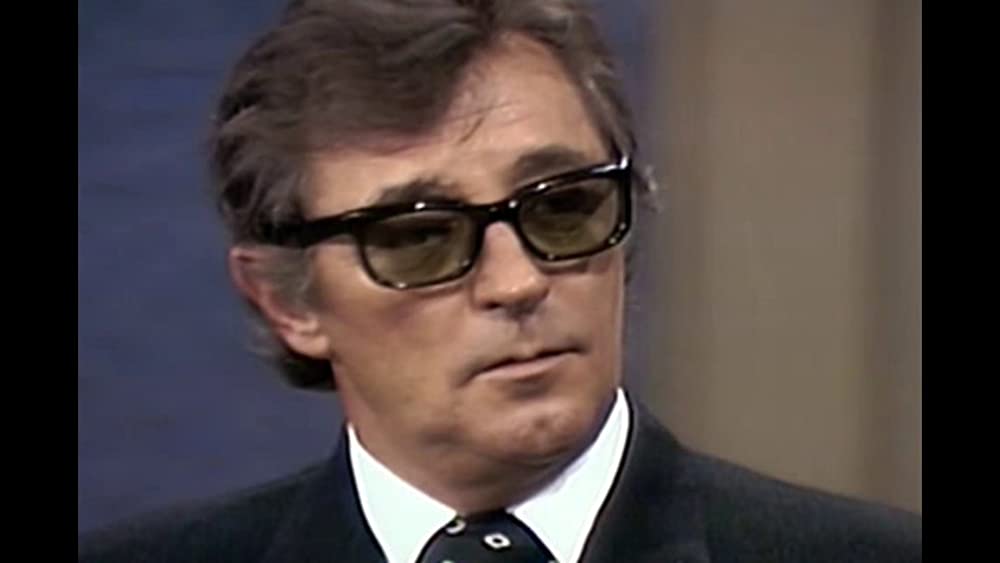
Robert Mitchum (1971)

Mitchum is an actor I’ve grown to admire over the years, and Cavett makes a point of acknowledging he was known in Hollywood as a tough interview. However, he’s surprisingly forthcoming. He talks about his school years, his time in a southern chain gang, his famous drug bust, and also insomnia.

He recounts sitting in on a Hopalong Cassidy movie with his wife early in his career and eavesdropping on a lady saying, “That is the most immoral face I’ve ever seen!” He made a career out of it starting as a “mule” for RKO as he called it. Since the air date is around Ryan’s Daughter’s release, he also mentions an experience when he was in Ireland with Richard Harris, and he got in an altercation with a local who mistook Mitchum for Kirk Douglas! Otherwise, I’m impressed by his use of words like convivial and peregrination.

Bette Davis (1971)

Bette Davis is such a vibrant personality, and she regales the audience with her early career, her battles with Warner Bros, and how she ties into Gone With The Wind lore. She calls Eroll Flynn the most beautiful man to ever live, and the most charming, but in her estimation, he could not have played Rhett Butler.

She also shares how she perceives Now, Voyager would have developed after the credits, in that her protagonist would have ultimately ended up with Claud Rains’ character because he had a strength perhaps missing from Paul Heinreid. Davis talks more about her friendship with Rains — a man she called “witty, amusing, and beautiful.” She even takes time to mention her most repulsive screen kiss with an actor who (in 1971) was still alive and therefore left nameless. Although she is quick to praise some English actors including Richard Harris and Dirk Bogarde.

Marlon Brando (1973)

Marlon Brando feels like another person who was notoriously difficult to pin down. Here he’s quite candid about his thoughts on racism against minorities and, at the time, the quite controversial boycott of the Academy Awards.

When Cavett tries to talk about acting style, Brando makes the case that all human beings are acting all the time in life just to survive. Cavett’s trying to get at how what Brando does is far and away from what anybody else can manage, but perhaps it’s semantics.

Brando goes on to say that acting is a good business — a worthy craft — but he doesn’t think of it in terms of art like other people. It’s intriguing since many would laud him for being a part of some of the most artistic production of the 20th century. (Side note: Brando uses the word “inured” which I thought was pretty impressive).
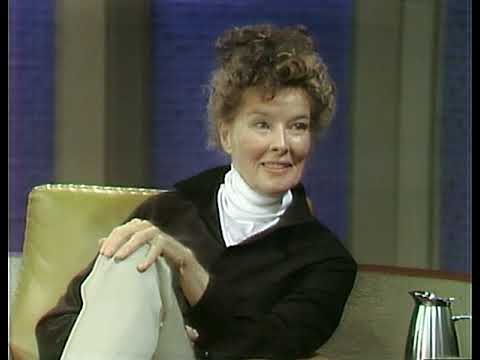
Katharine Hepburn (1973)

Like Bette Davis, Katharine Hepurn was considered for Gone With The Wind as she had working relationships with the producer David O. Selznick and the original director George Cukor. She and Cavett also spend some time talking about Humphrey Bogart, and Hepburn says he was a gent with good manners and completely different than his persona. She said Spencer Tracy always seemed a bit uncomfortable as a man being a professional actor, but Bogey seemed to love it and be proud of his job.

She calls the movie business thrilling, but she had no interest in immortality or people remembering her in the year 2050. As we’re now only a couple decades away, I can say that people certainly will remember stars such as her, and we’re thankful for their movies and interviews like these to help keep their stories alive for ensuing generations. I count myself among this lucky group who can reap the benefit of this readily available visual history both on the big and small screen.

For fun, I wanted to make a list of their films including my personal favorites. In no particular order off the top of my head these were my choices:

Duck Soup (1933)
Night at The Opera (1935)
Swing Time (1936)
The Band Wagon (1953)
-Out of The Past (1947)
-Night of The Hunter (1955)
-The Little Foxes (1941)
All About Eve (1950)
The Godfather (1972)
On The Waterfront (1954)
Philadelphia Story (1940)
The African Queen (1951)

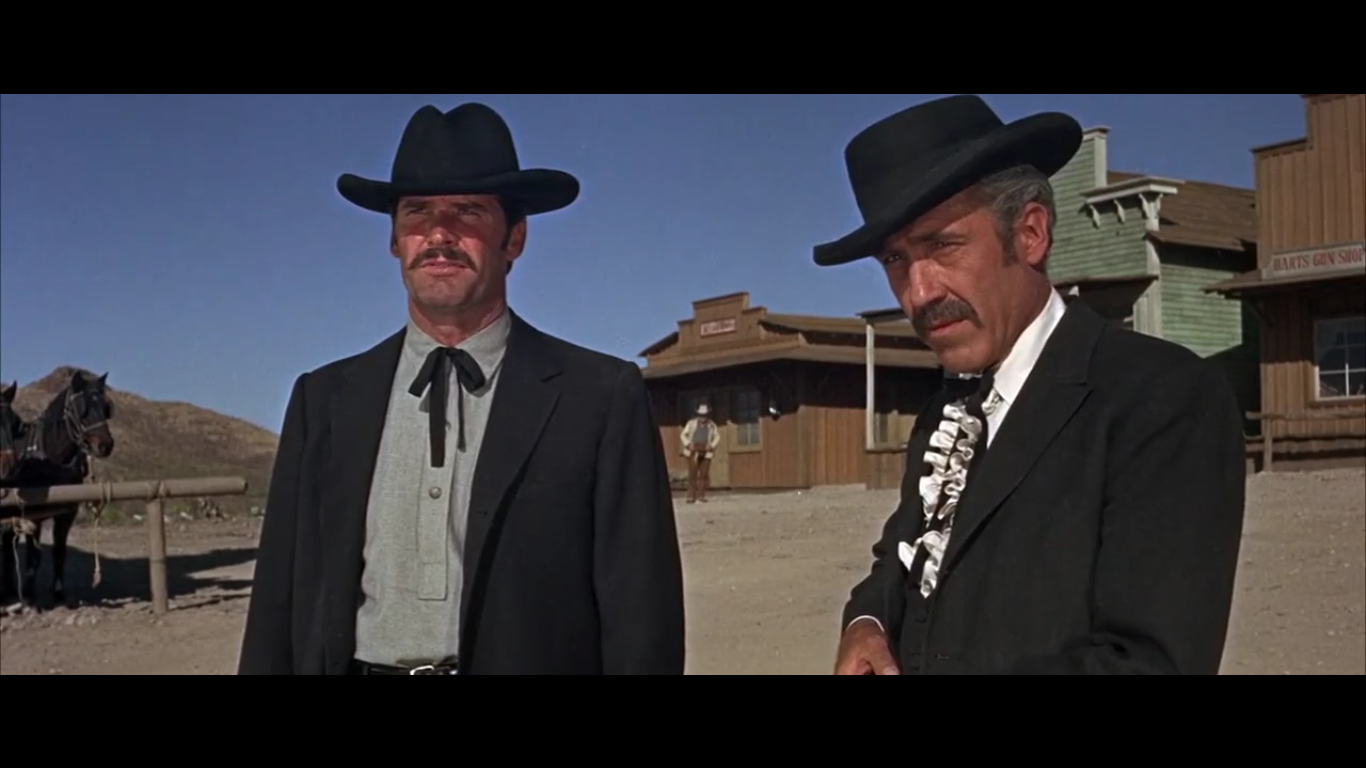
Hour of The Gun (1967): James Garner and Jason Robards

The story is as old as the mythology of the West. You cannot avoid tales of Tombstone, Arizona on October 26, 1881 and the famed Gunfight at The O.K. Corral. John Ford covered the events most famously in My Darling Clementine headlined by Henry Fonda, Victor Mature, and Walter Brennan in the title roles.

A generation later, Burt Lancaster and Kirk Douglas teamed up to do their version. And the lineage runs a lot wider and deeper than this. It leaves one to wonder how many ways you can retell the same story with the same central characters.

Director John Sturges answers the question almost immediately by doing away with the one scene that this whole mythology effectively hinges on. The movie opens with the gunfight at the O.K. Corral, which feels more like a glorified street fight, done in seconds, with Clanton standing by and unharmed by the events at hand. Whether it plays more to the timber of actual history or not, it sets a precedent and recontextualizes everything we must relearn about these legendary figures of the West.

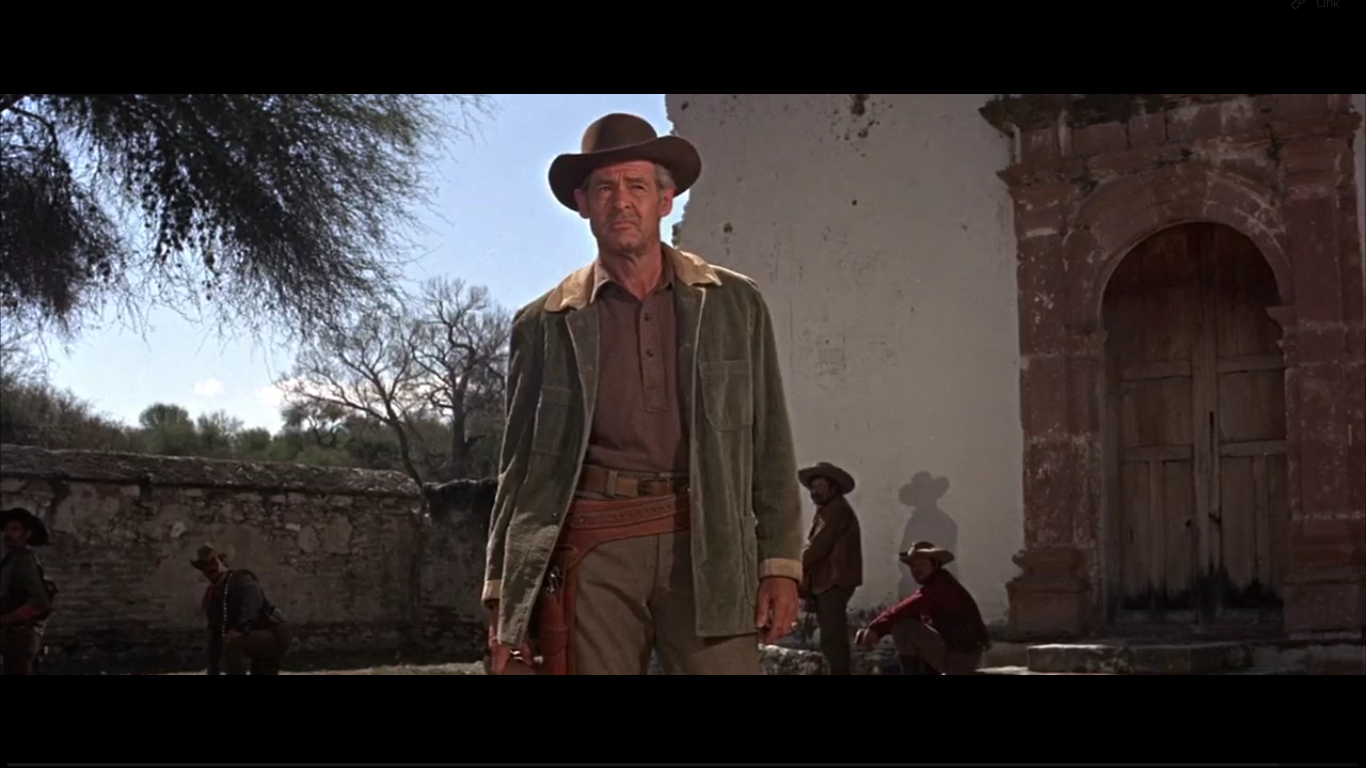
The men who play them are more than up to the task because of what they bring to the characterizations. Their names should be familiar. James Garner. Jason Robards. Robert Ryan. They are featured prominently in the title credits like figures on the marquee.

There might be some questions of where the movie might possibly go from here because it quickly disposes of its most “climactic moment,” underwhelming or not. Still, there manages to be a story built off the foundations of this inciting incident.

It becomes part courtroom drama momentarily, then it’s a town-wide conspiracy against the Earp brothers, and it finally turns deadly when they are ambushed with shotguns in the dead of night. The bloody gunfights and surreptitious ambushes are quickly deliberated over in the very same courtroom. There’s a kind of legal impasse.

Ryan always managed to be a fine villain, and it’s no different here. He plays Clanton as a shrewd businessman with most of the town on his payroll including sheriffs, public prosecutors, and a bevy of wanted gunmen (including a young Jon Voight). Though he never pulls the trigger himself, he has many minions in his pocket prepared to do his bidding. It’s a lot more convenient since he has the money to spend.

Hour of the Gun also feels like a western straddling two generations. Garner and Robards represent it well. Garner’s Maverick and to some extent his Local Sheriff put a different spin on the western genre as a kind of anti-western star, at least compared to the James Arness or Chuck Connors archetypes.

And Jason Robards, who only a year later would find his way into Sergio Leone’s epic spaghetti opera Once Upon a Time in The West, is equally adept in such an environment. He can be rugged and tough but not without a kind of wry sense of humor and intuition. We like them both for who they are. First, as performers and then as two of the West’s most prominent figures: Wyatt Earp and Doc Holliday respectively.

Lucien Ballard was a Hollywood veteran with saddlebags full of movie credits including many entries shooting his wife and leading lady Merle Oberon. Jerry Goldsmith takes on scoring duties with work that observes the purview of the West while reminding us of his crucial role in future New Hollywood and blockbuster hits.

It’s curious how the movie hews closer to history, and it looks to dispel myth and tell a version of the tale that feels more like a procedural. In some ways, it is a more modern expression of the western, though John Sturges is not in the Eastwood, Peckinpah, or even Leone school.

He was actually the very same man who helmed The Gunfight at The O.K. Corral with Lancaster and Douglas. But this is hardly a reworking in the way Howard Hawks remade Rio Bravo multiple times. Rather it feels like Sturges is intent on telling the tale with different terms more to his liking.

Initially, it builds off the legacy of The Magnificent Seven and The Great Escape where there’s something honest and sure about its telling, but it’s not gun shy. There’s still a sense of violence and ambiguity in other ways. Because hypocrisy exists in a world where as long as men have warrants and badges or they are fighting wars, killing is legalized. In all other contexts, it’s not permissible.

It becomes so easy to bend the rules either in service of good and often in the service of evil. Hour of The Gun ultimately is quick to distance itself from the comfortable morality of earlier westerns. This too is a bridge to its future brethren in the genre.

Doc is the man who ultimately assembles the troops; it’s a sequence we know well and somehow Sturges’s best films always captured this brand of male camaraderie — the kind of scenes that little boys of a certain generation aspired to. Getting together with their friends to fight the baddies. There’s still a sense of good fun and the kind of innocent naivete the western used to breed. Though it never amounts to anything.

It all comes down to Wyatt Earp and his personal vendettas. Garner shows a ferocity and a simmering rage that’s rare in him or at least he hides it well often through down-home charm or a coward’s prerogative. Here he’s driven by a sense of justice for the deaths of his brothers. He’s not squeamish when it comes to searching it out either.

The ending could not be a further departure from its predecessors. It feels like the dilapidated, windswept ruins and facades in pictures like Vera Cruz or Butch Cassidy and The Sundance Kid where the classic western modality goes to die in some sense.

Wyatt finally completes his search for Clayton and comes face-to-face with the man who was so very hard to find. Doc and some bandits stand by testily as Earp flips his badge to his friend, signaling this is a personal action not enacted under the letter of the law.

It’s a quick, unsentimental climax, but it stays true to the opening depiction of the O.K. Corral. I would not hasten to say it’s realistic as much as it gives a more murky and unembellished version of the story. Still, whether he meant to or not, Sturges effectively revises one of the most quoted American myths adding yet another complicating footnote to how we come to understand it. All other things considered, from the imagery to this commitment to a raw account of history, Garner and Robards are still the ones who make the picture.

3.5/5 Stars

The Tall Men (1955)

We open in Montana 1866 with the Allison brothers (Clark Gable and Cameron Mitchell), two former Confederate soldiers, leaving behind the “heartbreak memory of Gettysburg” for the promise of wealth in California. But first they must traverse frostbitten exteriors.

It’s no picnic as they join forces with Robert Ryan and face a treacherous trail overtaken by blizzard conditions. It chills your bones just watching them wade through the snow, fighting against the icy landscape.

When Jane Russel gets into the picture, the story and the dialogue start to pick up. She always had a way with words — and meeting in a snowstorm has a way of bringing folks together — she’s quickly trading repartee with first Gable and then Mitchell. Ryan just sits by and lets them have at it.

Gable and Russell end up in a cabin together out of the cold. It’s not quite the “Walls of Jericho,” but as Gable cooks up some meat over the fire, and she warms her feet on his back with a few playful kicks, the moment becomes the highlight of the picture thus far. We understand and appreciate the human connection unfolding before us going beyond dialogue or plot points even the nature outside. It’s about two people connecting with one another in a movie but also as individual performers.

In fact, I liked it all very much until I realized I was being imposed upon by a story and a plot. The characters are forced apart and spend the night pouting in their separate corners. It feels like a cheap rom-com ploy in a movie that might have been about something far more gripping and substantive. Instead, it becomes a feeble excuse to inject some amount of tension into the picture.

Sadly, it’s never able to reignite the same alluring lightheartedness of their opening introduction. They’re too busy trying to be distraught with one another to make time for much fun. In this way, Raoul Walsh is not Howard Hawks.

Ryan is frankly subdued if fairly determined with what he wants, be it cattle driving, making money, or charming the women he keeps company with. In his own quiet, self-assured way, he’s out for status and remains the envy of every other man. He can never be mistaken for a villain or even a real rival for Gable. They never play it that way. Even when his hot-headed brother, played by Mitchell gets belligerent, Gable’s quick to defuse the situation.

There’s also little push or purpose to the ensuing cattle drive as it is more of a conduit for the romantic tension, and it hardly seems to be enough to carry the weight of such a lengthy picture. Jane Russell is given ample opportunity to sing, bathe herself, and remove her stockings for the camera. Whatever the contemporary audience might have clamored for, it’s a sorry use for her talents and adds very little to the film.

They do indeed run tall in this movie. What the title fails to mention is how each man is pretty old, past the prime of a cowboy, and so we’re asked to let it slide. It’s almost laughable that Cameron Mitchell is meant to be a youthful hothead. Instead, it feels like he’s caught in a state of arrested development. It could be worse.

So while there’s a desire to see the mythos of the West played out in front of us on a grandiose scale, the movie never quite manages the whole package. Walsh is a consummate professional, and he makes the images as grand and as resplendent as he knows how with all the resources availed him. And yet the narrative itself — the sinew that makes up the story — never hits a lasting resonance. One exception might be a thrilling standoff with some Kansas extortionists.

Alas, there isn’t very much more to appreciate on the journey. It does feel like a sizeable waste of talent even as the film itself has vistas well worth our time.  It is a pity because I couldn’t think of a better way to draw up a western than enlisting the help of Clark Gable, Jane Russell, and Robert Ryan at the height (or even the trough) of their powers. Surely they were deserving of a bit more consideration.

3/5 Stars