Bitter Victory (1957)

“He and you and I will become a part of history — of its futility” – Richard Burton as Jim Leith

Bitter Victory is a curious confluence of talents and material. Nicholas Ray was earmarked to helm this British war movie with French-American backing. Aside from the primary leads, the rest of the cast was purportedly decided by lottery.

The film’s aesthetic is somehow impeccably represented by the wide array of combat dummies shot in black in white accentuating the muted tones of a rational military drama. It’s instigated by a secret mission behind enemy lines in Benghazi. This is North Africa during WWII.

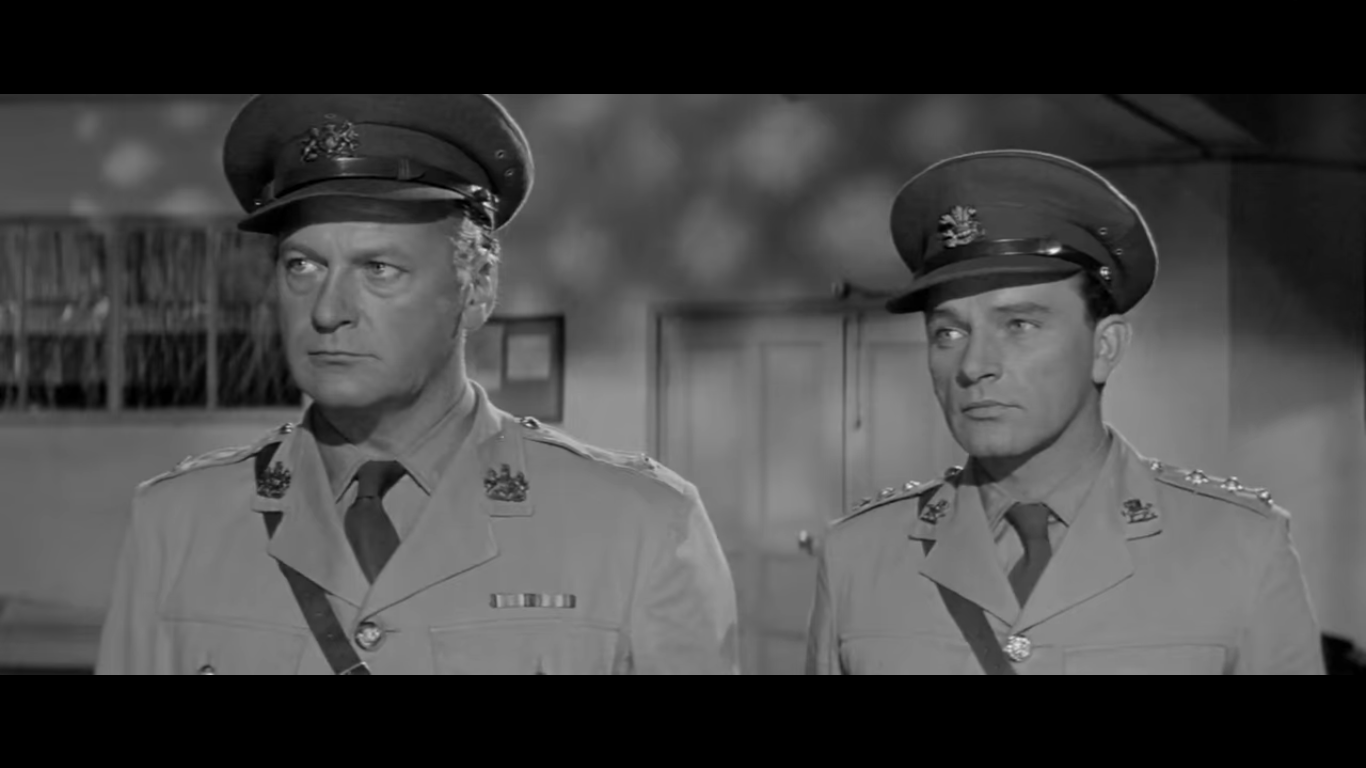
There are two men being considered to lead the excursion: A curt, lifelong soldier Major Brand (Curd Jurgens). He’s by the book and adamant no one see his weakness. Then, a young, handsome fellow named Captain Leigh (Richard Burton) with a certain no-nonsense perspicuity and a background in ancient artifacts, not the mechanisms of war. He’s volunteered to serve his country. Whatever that means.

There are some pleasantries, and they take off to the club for the enlisted, a momentary calm before the work at hand. Thrown into the narrative as we are, it becomes apparent these are characters with some kind of overlapping history in a broad sense, and we become aware of their subtext involving a woman (Ruth Roman).

At first, it isn’t so engaging. The soldier with the sound effects and pyrotechnics at the bar seems to do more with his inebriated histrionics than them. Still, Ray ends the mounting sequence with a kiss in a carriage. Except before we see it in full, the carriage whisks away in this brilliant bit of kinetic energy playing out on the screen.
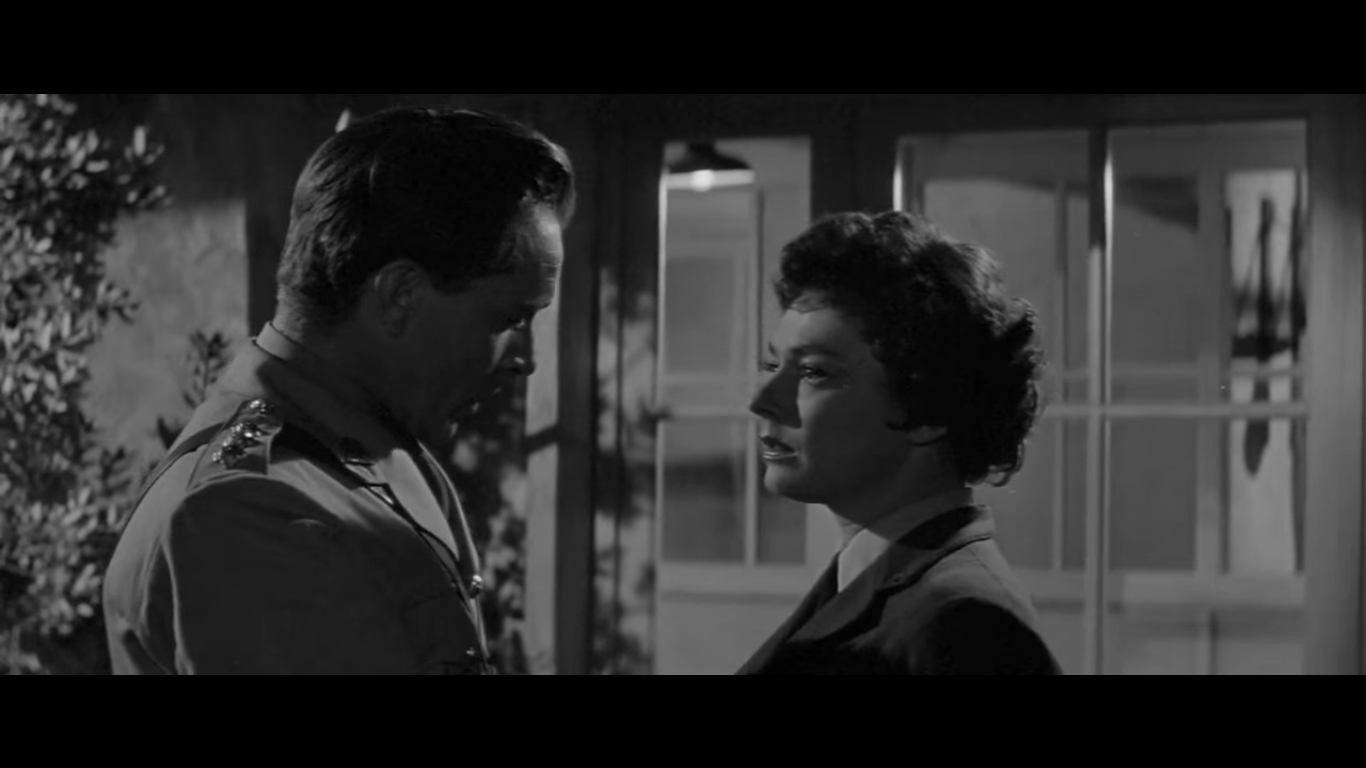
Roman is more mature and less delicate than we’ve ever seen her, partially thanks to the military garb but also due to the men she’s kept in her life. They’ve toughened her even as they grapple with romance.

It’s hardly a movie of jingoism as Burton represents a kind of jaundiced pessimism that would be his closest companion in The Spy Who Came in From The Cold as well. He’s hardly an adherent to wartime hero worship. And if Jurgens is beholden to the strictures of military protocol, he certainly doesn’t allow them to make him a joyful spirit. He’s constantly living life dictated by honor, fear, and his own inadequacies in command.

But we must remember there is a task at hand. They gather their company of recruits. Their plans are relayed through a model in a control room and curiously everyone seems to laugh off what might happen if their transportation a la humpback camel doesn’t make it to their rendezvous.

Soon they’ve become robed infiltrators cloaked by night loitering around the streets under Nazi occupation. Murder in the dark is silent though no less traumatic when it comes, even when it involves taking the life of an enemy in the line of duty.

These mission scenes have a clean and efficient luster, hardly dawdling when it comes to the action and as they disappear into the night and fight a skirmish over the sand dunes, it’s another perfect encapsulation of their clandestine task.

But the futility rushes back to Captain Leigh when it comes to the wounded. An enterprising soldier suggests getting a stretcher for a fallen comrade — but the pragmatist notes they would bleed to death in an hour — so the soldier goes down to offer a cigarette as a final consolation. He has an inherent human kindness and there’s something in Burton’s eyes as he watches. Is it regret or helplessness? Such decent showings of goodwill don’t come easily to him.

For some explicable reason, he stays behind as the others move forward. It might have been an order, but it might as well be to spite his superior. Whatever the reason, it’s hardly as baffling as Jurgens being cast as an Allied soldier. It feels like a gross mischaracterization no fault of his own.
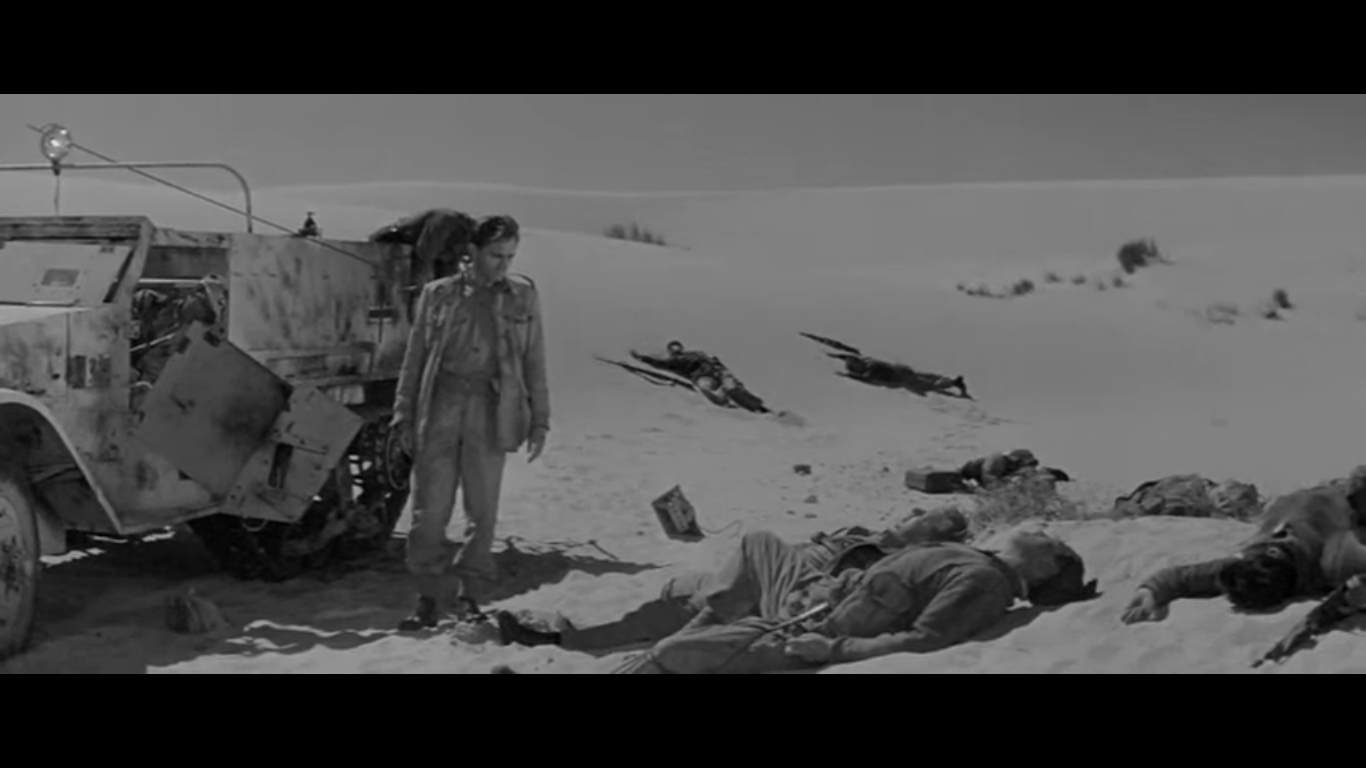
Bitter Victory does continue to tease out a version of the love triangle involving  David and Bathsheba where the man in the position of power is jealous for another man’s wife. Here the tables are turned. At the same time, the movie does feel like the antithesis of many “men on a mission” movies because it rarely feels bloated by pace, set pieces, and bits of narrative exposition and execution.

The character conflict becomes of greater interest than the actual task at hand. This is the movie’s wellspring because Burton and Jergens cultivate a mutual distaste throughout the entire movie. It continuously simmers and reaches the extremes of venomous vitriol. It’s more poisonous than the Germans, or even scorpions up a pant leg.

Burton bemusedly admits, “I kill the living and I save the dead,” and yet he still manages to scoff at his superior. “You have the Christian decency that forbids killing the dying man, but approves the work of a sharpshooter.” War so often seems to operate in baffling hypocrisies. It doesn’t make sense nor are the outcomes of war particularly equitable. They never have been.

When Roman clings to the arm of one of the barracks mannequins for support, her innate tenderness makes it feel like a totem for the man who didn’t come back. Again, it’s this dissonance of conflicting moods and emotions — what the military exonerates and exults in the service of duty and what the present company of soldiers standing by knows to be actually true.

The visual metaphor becomes even more overt when the same dummy is pinned with a medal. It comes to represent the core dilemma of the movie caught between duty, heroism, and the very manner in which we express and memorialize our sense of wartime. There are no easy answers. By the time Burton and Ray are done with us, they’ve blistered us to our core. You know a war picture has probably succeeded when it galls you and leaves you even momentarily disconsolate.

3.5/5 Stars
Run for Cover (1955)

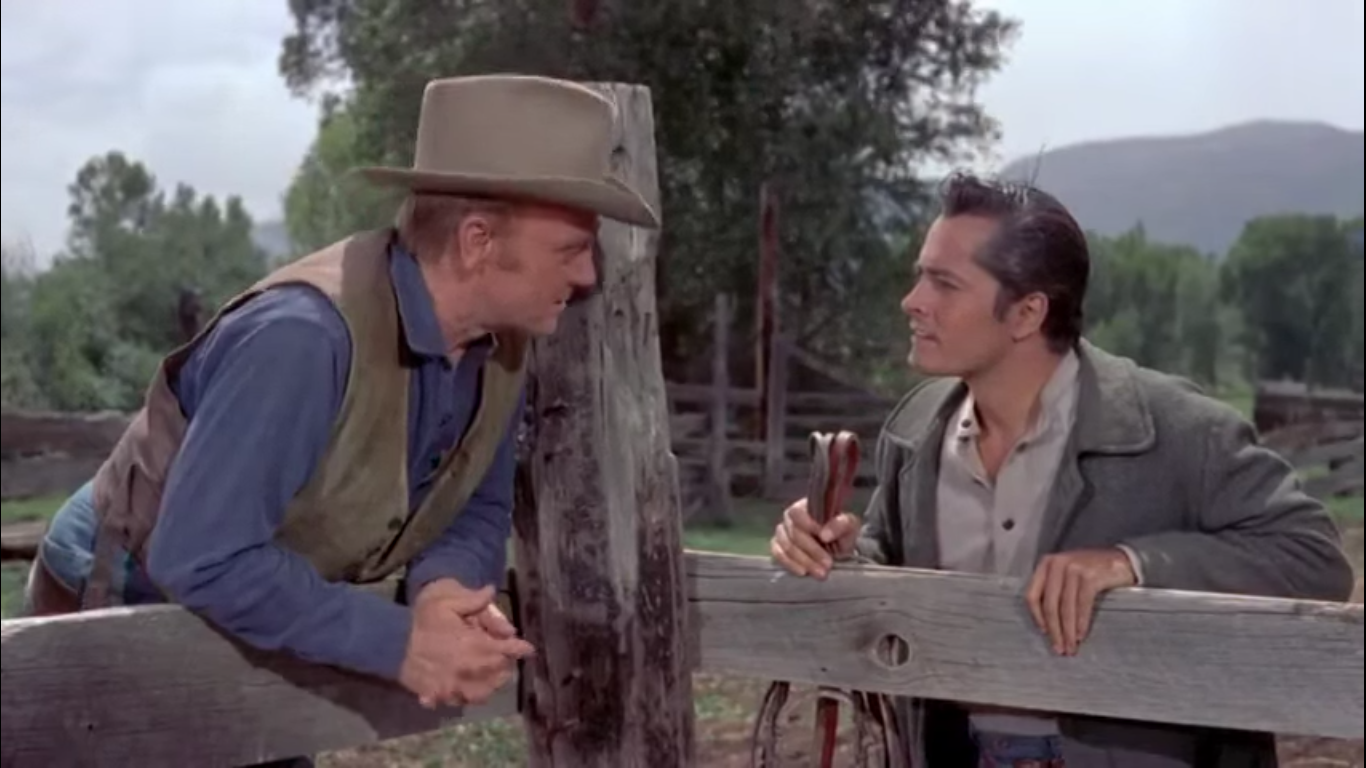
Run for Cover is rarely talked about in conversations of westerns, but there’s something fascinating about getting a James Cagney-led sagebrusher.  Like seeing Edward G. Robinson in The Violent Men, it’s hard not to read his entire history of gangster pictures into his backstory because although it’s a different decade, genre pictures still hold a place in the viewing public’s hearts.

Before they broke out with the likes of Hud, Harriet Frank Jr. and Irving Ravetch penned the story this movie was based on. Although it hardly has the pedigree of Nicholas Ray’s Johnny Guitar, the images of the picture are still stunning in their own right shot on location in Aztec, New Mexico.

The opening premise is frankly pretty corny. Cagney meets John Derek at a watering hole very conveniently. They ride on together with no apparent purpose except to get to the nearby town. Then, in a freak misunderstanding, while they’re shooting some scavengers out of the sky, the two men are mistaken for train robbers, and they have a bag full of cash literally dropped in their laps.

The locomotive heaps on the coal to race back to town to sound the alarm after their close scrape with the “outlaws.” Realizing what has happened, Cagney, always the level-headed one, looks to follow behind and return the money. They have nothing to hide. Still, there’s only one way this might end.

The mountains in the background are towering — truly awesome to look at — but there are more pressing matters at hand. It’s rather foreboding. It’s been some time between viewings, but there definitely are elements of The Ox-Bow Incident and Johnny Guitar here where the lynch-mob mentality takes over the local populations driven mostly by fear and traumatic experience.

However, this is all a false start, a way of developing the scenario ahead of us. It’s about that same man played by Cagney — now the town marshal — and his young companion who’s stricken with a life-altering injury. They must figure out what it means to live their lives.

Cagney rarely got a lot of late-period credit. There’s White Heat and then One, Two, Three comes to mind — these are marvelous showcases for his tenacious talents. Run for Cover is rarely talked about, whether it’s in the context of ’50s westerns, the career of Nicholas Ray, or that of Cagney himself.

But it does feel like another picture to buttress his legacy with. Not because it’s some grand masterpiece; he proves that he can make a slighter, quieter picture like this sing. Because his talents were not always purely bellicose or irascible. He has a more general charisma even later in his career.

He’s summed up so beautifully in a crucial scene. The doctor says Derek will never walk again. Cagney won’t hear of it, and he walks into the adjoining room as the boy lies on the floor crying out that he can’t get up. As their kindly Swedish benefactor (Viveca Lindfors) attends to him, Cagney simply beseeches him to “get up.”

There’s an authority in his words that feels almost Christ-like. It might seem like it comes out of a place of callousness, but really there is so much concern there. He doesn’t want the boy to give in and waste his life. In some manner, he is a miracle maker, a man of faith looking to bring the best out of this boy.

it’s a fairly slow-paced, straightforward western and this means much of the brunt of the movie must be carried by the merit of the performances — the relationships cultivated between them.

John Derek feels like little more than a pretty face, and the young actor might have said as much, but Cagney seems generous to him just as his character is generous to his young companion enlisting him as his deputy. He gives him credence and importance in this movie that he wouldn’t get otherwise without such a consummate professional to partner with.

There is some menace in the picture. Ernest Borgnine represents one — a shifty outlaw — and later some godless out-of-towners come tumbling into church mid “Christ The Lord is Risen Today” prepared to raid the bank.

What Run for Cover has to its advantage is how it turns all manner of dynamics on its head. The sheriff lambasts the townsfolk who are so righteous, so willing to condemn others, even as they are supposed to represent civilized society.

Then his one protégé becomes the film’s final and most crucial point of conflict, and this is not just like the Searchers, the ornery old man budding heads with the impetuous youth.

It’s a different kind of complication as they must face off against one another and come to terms with who they are down to their very core.  There’s a clear-cut emotional intensity that can only be resolved in one telling act. It’s tragedy and redemption all rolled up into one, and here we have something that feels distinctly of Nicholas Ray.

3.5/5 Stars

Born to Be Bad (1950)

“When you came here that first day, I fell flat on my face over your suitcase. I never really got up.” – Joan Leslie as Donna

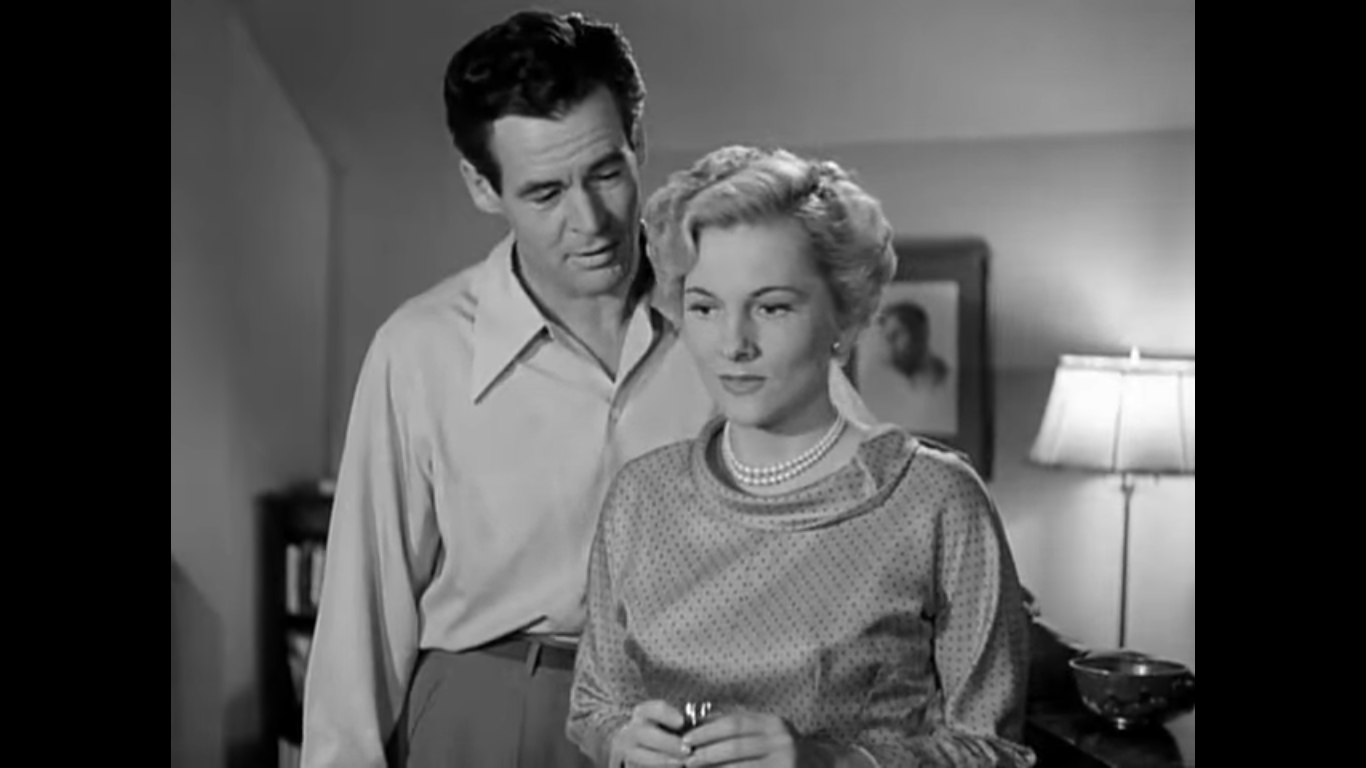
Born to Be Bad is not high-grade stuff. Its trashy exploitive title says as much, but it’s also worthwhile for exactly these reasons. Nicholas Ray would make a name for himself in Technicolor — not black and white — capturing a bevy of emotive performances from the likes of James Mason and James Dean. But it’s easy to forget some of his earlier films are equally stirring. Bogart in In a Lonely Place or Robert Ryan in On Dangerous Ground.

There’s something lighter, more convivial about the performances in Born to Be Bad, but straight down the line, it offers up a thoroughly intriguing cast. It has to do with how they can play off one another and couple up with various character dynamics forming between them.

We have a disorientating beginning because we don’t see Joan Fontaine, but someone who turns out to be Joan Leslie. She’s older now, mature, assured, and still more ebullient than I ever remembered her before in the early Warner Bros. days.

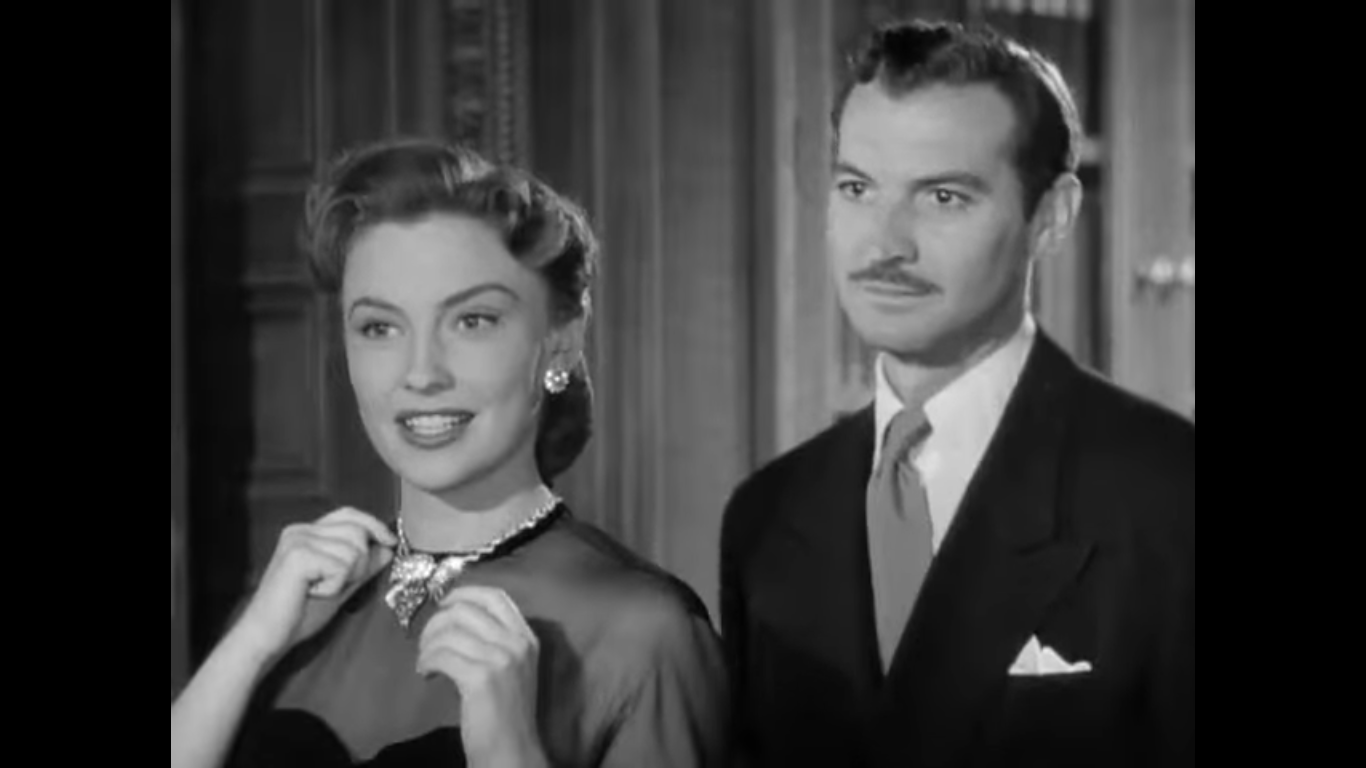
Within the context of the picture, she has reason to be. She’s deliriously happy, about to marry the love of her life, a rich moneybags (Zachary Scott), and yet she still finds time for a job and other wisecracking male companions. One’s a painter (Mel Ferrer), the other a purported novelist (Robert Ryan). There’s a happy-go-lucky familiarity to it all. We almost forget what the movie is meant to be about.

Then, Joan Leslie trips over a suitcase, her hair tossed violently askew, and she looks up to see the soft features of none other than Joan Fontaine perched on a couch. The unassuming beauty is her usual diffident self. However, this iteration of her screen image holds a manipulative underbelly.

As Cristabel ingratiates herself into Donna’s good graces and initiates designs on her man, it’s almost easy enough to dismiss her actions as first. She wheedles her way bit by bit until it’s more and more evident her ingenue from Rebecca or Suspicion has gone sour and self-serving.

Even when he’s partially a victim, Zachary Scott manages to give off a smarmy veneer. Robert Ryan has his own curious introduction, berating Cristabel when she’s on the phone, but it’s not a party line. He’s in the house and she wanders into the kitchen to see the stranger raiding the icebox. At first, she’s indignant. Then she starts to fall for his blunt charms.

Ryan would join forces again with Ray in On Dangerous Ground, and he seems like the kind of actor the director can use well. There’s a raw incisiveness to him that can function durably without sacrificing certain levels of emotional honesty. Because he has an unsparing frankness about him that one can either appreciate or become royally turned off by. Very rarely does Ryan elicit an apathetic response.

Fontaine does her part beautifully — her eyes constantly flittering around. In one particular conversation between Scott and Ferrer, she casually listens as she takes in the scene around her, just happy to be in such a place. She manages to be so helpful and so helpless getting everything she wants as a result.

Donna’s preparing to storm off to London, her relationship with Curtis torn asunder. Her pointed remarks to her rival have a delightful sting: “Somebody should have told the birds and the bees about you.” I don’t know what to make of it, but there’s something in Joan Leslie’s eyes when she’s been slighted that’s reminiscent of Marsha Hunt — a glint that Fontaine never owned. Leslie provides her a fine foil as we continue to explore a variation on the All About Eve dynamic.

Two exemplary shots of juxtaposition happen in adjacent scenes with Fontaine’s sparkling features framed on the chest of her man as she reposes there and, of course, there are two of them. She’s so good at flitting back and forth between two men. They both speak to her in different ways or rather, they both offer something unique that she can benefit from.

The jilted lovers, Leslie and Ryan, fall in together as friends and business associates if not romantic partners because there is something more in the works. Cristabel finally gets caught in her lies, though Born To Be Bad has a fairly lightweight ending. No one gets tragically wounded and everyone seems to laugh it off or get their wrist slapped. It’s not noir, nor is it effectively weighty, but it’s an intermittent pleasure to watch if you’re fond of the players. It more than lives up to its title.

3.5/5 Stars

Berlin Express (1948)

Added to the landscape of The Third Man, Germany Year Zero, and A Foreign Affair, Berlin Express is a fascinating portrait in the rubble-film genre. These are the pictures on the cutting edge of filmic history, shooting on-location in the post-war world that was still licking its wounds and putting the pieces back together across France, Germany, and really any other place that was directly affected.

Although we see the IG Farben Building — famously Eisenhower’s command post after the end of the war — it’s the bombed-out world surrounding it that proves the most telling. Even as the newsreel narration feels overbearing after a certain point (it doesn’t have the wry verve of Carol Reed), we’re getting to see elements of the world as it was at that precise moment. Jacques Tourneur is at his best with evocative canvasses to work against, and the post-war landscape certainly fits the bill.

It is a different take on The Third Man milieu. You get the seedy, grungy impoverished nature of the world, tramping around the train station where men fall to the ground for a dropped cigarette while peddling any miserable trinket they possibly can.

But the drama also considers the zones of the newly divided Germany by calling up characters of each rank and nationality. They are all very overtly represented and implicated in this story.

It commences with a train loaded with passengers of all different nationalities who make for a convenient focal point for our story because they come to represent the Allies looking to consolidate power and pave the way for the Cold War in a decaying imperialistic society.

One can’t help but think of archetypal train tales like Christie’s Murder on The Orient Express or Hitchcock’s The Lady Vanishes. However, the movie shares more in common with The Narrow Margin than some may realize. Even Charles McGraw, who would play the protagonist in the later Richard Fleischer B picture fills a part in this one.

Here he’s helping to smuggle a very crucial German leader (Paul Lukas) across the country to help the reunification efforts. The remnants of the Nazis would love to get their hands on him or do away with him for good. They are the film’s primary evil — lurking in the negative space — until they are finally forced to show their hand.

Merle Oberon calls on the sense of camaraderie from each Allied faction to help her find the missing doctor because it’s true that despite the best-laid plans, betrayal is imminent. He is far from safe. They group off to search in all the local back alleys and hellholes.

At this point, Robert Ryan seizes his chance because he’s taken an immediate shining to the French girl Lucienne (not to be confused with the film’s cinematographer Lucien Ballard). It’s amazing to acknowledge approximately 49 minutes into the picture Oberon and Ryan finally get together in what feels like a more traditional Hollywood dynamic with the headliner stars linked romantically. Until this point, however, it’s very much (and very purposefully) a picture by committee.

Ryan for his part is fairly straight-laced and likable, Oberon is principled, and the other blokes add their own touches of good humor or contrarian perspectives. It never feels like a consistent drama and there are whole patches of dialogue broadcasting its intentions too readily. Of course, this has been the cardinal sin of screenwriting since the dawn of time. Closely connected to the storytelling commandment passed down from Billy Wilder: Thou shalt not bore.

But when Tourneur is able to take moments and work them out through dynamic visual means, we get something wholly worthwhile. Even as it’s not always superb storytelling, watching Robert Ryan punch it out in a vat of beer in an abandoned brewery, cloaked in the shadows of noir, is the movie at its very best.

Close behind is when a wounded clown incognito totters onto the stage to uproarious laughter only to topple right on top of the camera as the investigating military police are left to pick up the pieces.

In such moments, it doesn’t matter where it happens or what it means so much as how it is executed for our benefit. We feel the impact. Or later on the train, with a traitor in their ranks, a violent act is perpetrated and implausibly reflected out a train window. Whether it makes total sense, the core of the action is relayed to the audience in such an ingenious fashion.

Then, the movie wraps up with more wry, slightly disdainful commentary about the bombed-out ruins of Berlin as if it’s a sightseeing tour. It runs in tandem with many of the more staged moments promoting a lasting message of goodwill. Alas, it was not to be.

So while the film can never get out of the shadow of propaganda or cast off its noble intentions, for viewers interested in something more timeless, Berlin Express has a handful of genuinely gripping moments belying any bouts of heavy-handedness. It’s relatively easy to latch onto the good and tolerate the rest.

3.5/5 Stars