

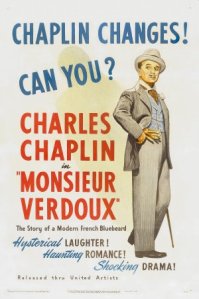
 Prior to the making and release of Monsieur Verdoux Charlie Chaplin had undoubtedly hit the most turbulent patch in his historic career and not even he could come out of scandal and political upheaval unscathed. To put it lightly his stock in the United States plummeted.
You would think that he more than anyone would have been aware of his current state of affairs. It’s a plausible assumption and yet that’s precisely what makes the release of his latest film during that very climate all the more remarkable.
Chaplin always had a handle on emotional clout and he was the king of pathos but with time as film evolved he did evolve with it and it could easily be said that his sound pictures were imbued with much more prominent political overtones, most notably in The Great Dictator and Monsieur Verdoux. The first was a blatant lambast of the world’s resident tyrannical dictator and his cronies with a tremendous bite that goes beyond simple comedy. The latter film takes a broader scope that’s not quite as evident at first.
It shares similarities with Shadow of a Doubt, Kind Hearts of Coronets, or even The Bigamist and it took inspiration from a passing whim of Orson Welles. But Chaplin plants his particular drama in the previous decade–the age of poverty and depression and that allows him to relate his protagonist once more to the plight of man as the Tramp did perennially. However, Chaplin’s latest incarnation is a far cry from the Tramp and no doubt on purpose. Chaplin had officially retired the character after Modern Times, but with the similarly depicted Jewish Barber in The Great Dictator, Monsieur Verdoux was a character with no semblance of his predecessors.
For lack of a better term, he is a wife killer, a Bluebeard, a gentleman murderer and there’s no other way to put it. Yes, he began as a bank teller with an invalid wife and little boy who hit hard times following the crash. True, he maintains his pretenses at civility and yet here is a character so vastly different from all others because for once Chaplin is making his hero difficult for the audience to like. At the very least, he’s a conflicted hero and as such the contemporary viewer was not about to pity him given Chaplin’s already muddied reputation. This was another nail in the coffin and it’s probably part of the reason Verdoux was generally scorned by the American Public at the time. But now, with the clouds of the cultural moment dissipated we can look at Chaplin’s blackest of comedies without the established biases.
The narrative is comprised mostly of Verdoux cycling from wife to wife, town to town, identity to identity with such fluidity it’s mindboggling. Our only indication that he’s moved is the ubiquitous image of the locomotive always chugging along to the next destination. But we’re introduced to this whole charade through the most curmudgeon, bickering household ever known to man in the Courvais.
The only reason they matter for this story is that Verdoux has married their sister who has just recently taken all her money out of the bank and vanished. Only the culprit knows what happened but presently he busies himself with tidying up his affairs in one location so he can check in on his other “business endeavors.” To Annabelle (Martha Raye) he is a sea captain away months at a time which explains his frequent absences.
Consequently, his Pigeon also has to be one of the most annoying chatterboxes of all time. It makes sense he’s crafting a poison to kill her even if it’s not quite forgivable. He also calls upon his second asset the rightfully suspicious Lydia while looking to woo the affluent Marie Grosnay who happens to be less of a boob than the rest of his conquests. Though he is a persistent devil. Soon enough wedding bells chime again and that becomes the fateful day when his many strands get tangled in one brief moment at his latest marriage ceremony.
If nothing else it suggests that the time is running out as global tensions rise and Verdoux finds his fortunes dwindle in the wake of his imprisonment. But now on trial, he’s allowed to be up on the stand and mount his final defense–his rebuttal against the indiscretions of mankind. Ultimately, it’s an invariably cynical take on the ways of the world comparing his spree of mass killing to the prospects of the very scientific mass destruction of the world at present. It’s all business, war and anything else you can imagine, merely profiteering endeavors to get ahead. As he walks off to the guillotine the Priest asks him if he has anything to confess and strikingly he asserts, “I am at peace with God, my conflict is with man.”
This is where we overtly see Chaplin’s stance once more as he stands up on his soapbox as it were but he gave us some indications earlier on as well. Verdoux’s most telling interactions come in the form of chance encounters with a particular young woman. At first, he sees her as a test case for his poison, but soon he’s taken with her words, the way she sees the world. It affects him deeply (You better go before your philosophy corrupts me ). And in a striking parallel to Limelight several years later, Chaplin’s character falls to his demise as this young woman’s fortunes increase. She doesn’t forget him. But the rest of the world isn’t quite so kind.
Monsieur Verdoux goes to the chopping block deservedly so as did Chaplin but the verdict’s still out on whether he deserved it all. Perhaps that’s what his film is getting at. He was full of faults as a human being but then again we all are. It makes sense that God is other, perfect, and outside of our messiness. It’s the rest of us that cause ruin, pain, and suffering. That’s where the blackness of this comedy finds its source and it’s something to ponder and then resolve to allay with doses of love and compassion.
4/5 Stars
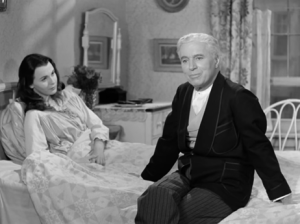 The glamour of limelight, from which age must pass as youth centers
 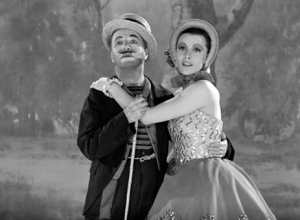 But now no one’s there. The seats are empty, the aisles quiet, and he sits with a dazed look in his flat the only recourse but to go back to bed. It’s as if the poster on the wall reading Calvero – Tramp Comedian is paying a bit of homage to his own legend but also the very reality of his waning, or at the very least, scandalized stardom. It adds insult to injury.
 It’s important to know that he writes off such an assertion as nonsense and one can question whether this is Chaplin’s chance at revisionist history or more so an affirmation of his life’s actual trajectory–working through his current reality that the world questions (IE. Marrying a woman much younger than himself in Oona O’Neil who he nevertheless dearly loved).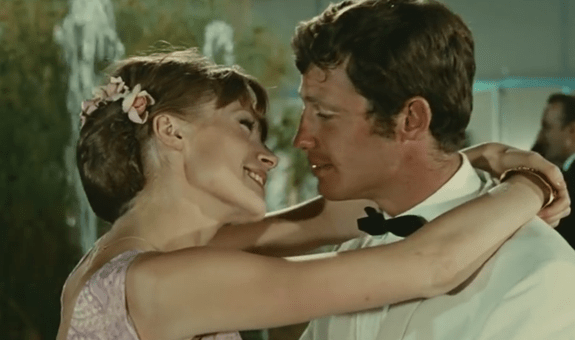

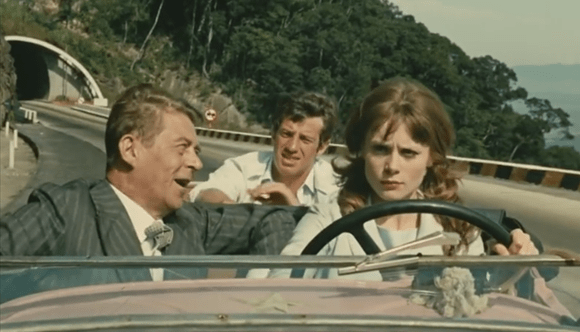
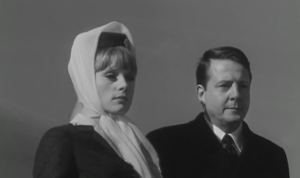 There might be an initial predilection to call The Soft Skin Francois Truffaut’s most conventional film to date, but for me, it shows at this fairly early point in his career he seems to have grasped the main tenets of traditional filmmaking. Because his first films are full of life, energy, and idiosyncratic verve that easily charm their audience but here we see a film that in most ways looks like other classic works, well constructed and still quite engaging. Because within this very framework Truffaut is able to play around with issues that in themselves are still quite compelling. Love, intimacy, infidelity, and the like. Even with familiar names like Truffaut and Raoul Coutard, it feels very un-Nouvelle Vague. And that’s okay.
 Blanche Dubois and Stanley Kowalski. They’re both so iconic not simply in the lore of cinema history but literature and American culture in general. It’s difficult to know exactly what to do with them. Stanley Kowalski the archetypical chauvinistic beast. Driven by anger, prone to abuse, and a mega slob in a bulging t-shirt who also happens to be a hardline adherent to the Napoleonic Codes. But then there’s Blanche, the fragile, flittering, self-conscious southern belle driven to the brink of insanity by her own efforts to maintain her epicurean facade. They’re larger than life figures.
 Cat People has one of those sensationalized B-picture premises and there are moments when its meager aspects let slip that this is a low-budget effort, but within those restrictions, it moves with a certain purpose and chilliness. It’s true that producer Val Lewton had a B-movie renaissance going on at RKO Studios and Cat People is one of his treasures.
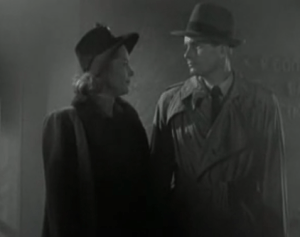 At Oliver’s work, talk around the water cooler is made compelling in that his best pal and colleague is the sensible Alice (Jane Alexander) always ready to lend a listening ear. She’s genuine in accepting Irena for who she is because she can tell that Oliver earnestly loves her. But at the same time, she serves as a contrasting figure — someone who is completely different than this enigmatic creature.
 Themla & Louise hardly feels like typical Ridley Scott fare but then again, neither is this a typical movie. It pulls from numerous genres that have been depicted countless times before from buddy movies to caper comedies, road films, and the like. But perhaps the intrigue begins with the two leads.
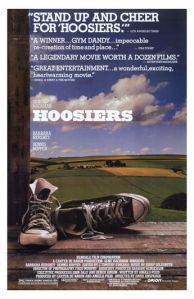 The last time I saw Hoosiers it was on VHS and I was only a boy and I hardly remember anything. Gene Hackman yelling. Dennis Hopper as a drunk. Jimmy the boy wonder, “The Picket Fence”, and of course Indiana basketball at its finest. But in those opening moments, as he drives into town and walks through the halls of his new home, I realized just how much I miss Gene Hackman. Yes, he’s still with us but the moment he decided to step out of the limelight and retire from his illustrious career as an actor, films got a little less exciting. His passionate often fiery charisma is dearly missed.
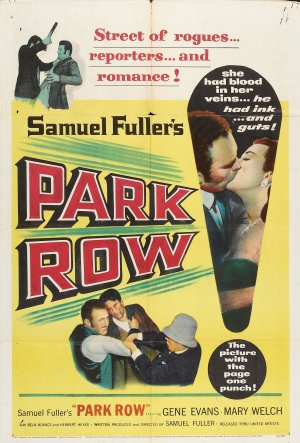 It’s no secret that Sam Fuller cut his teeth in the journalism trade at the ripe young age of 18 (give or take a year) and so Park Row is not just another delicious B picture from one of the best, it’s a passion project memorializing the trade that he revered so dearly.
 4 Star Films